Showing posts with label Noirism.... Show all posts

Saturday, 7 September 2019

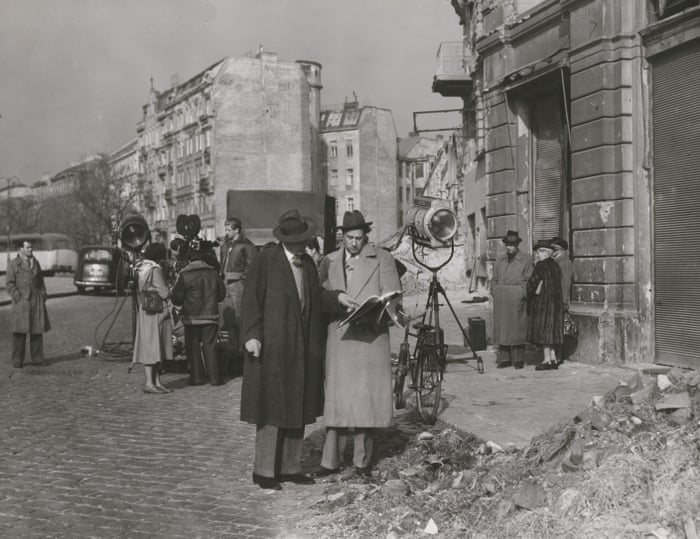
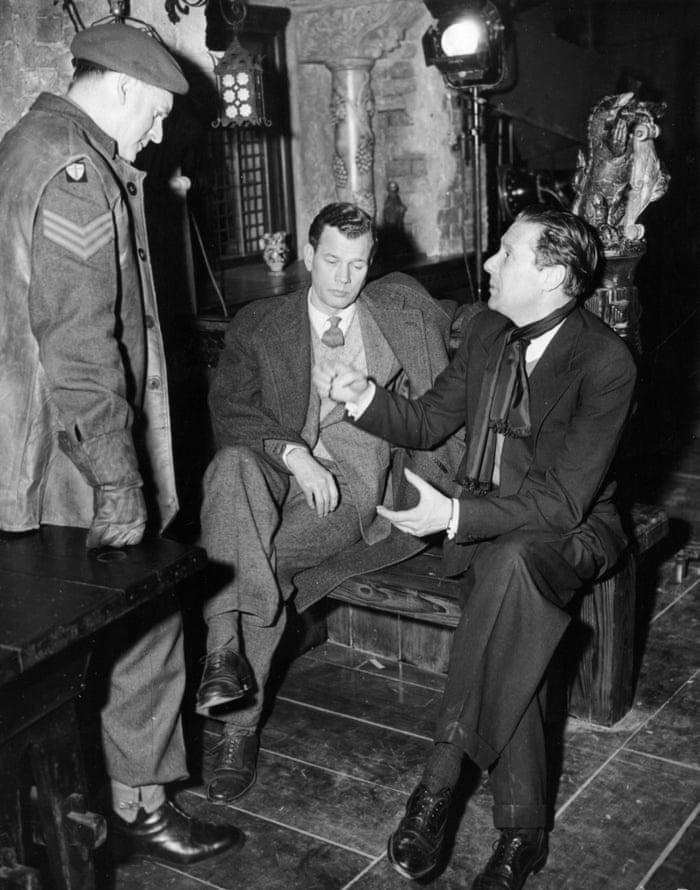
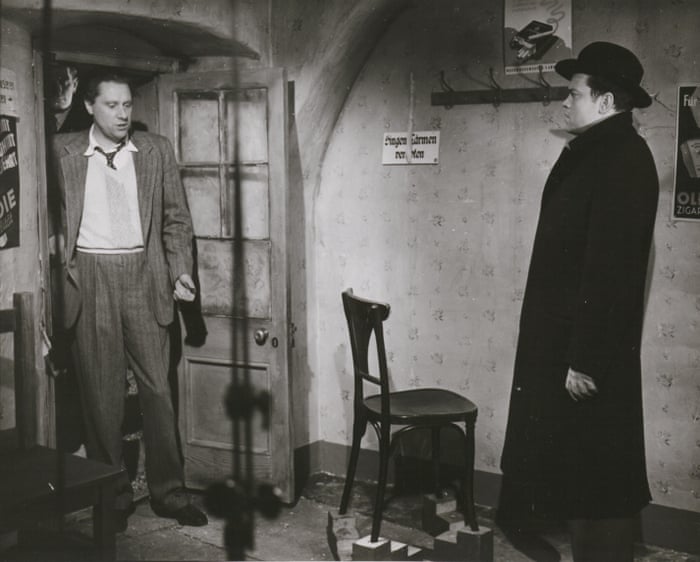
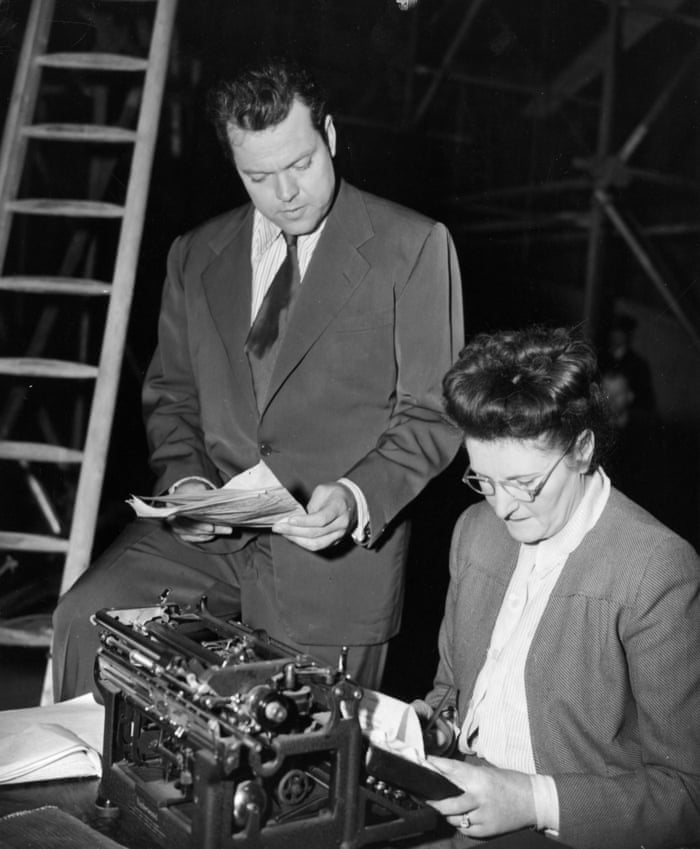
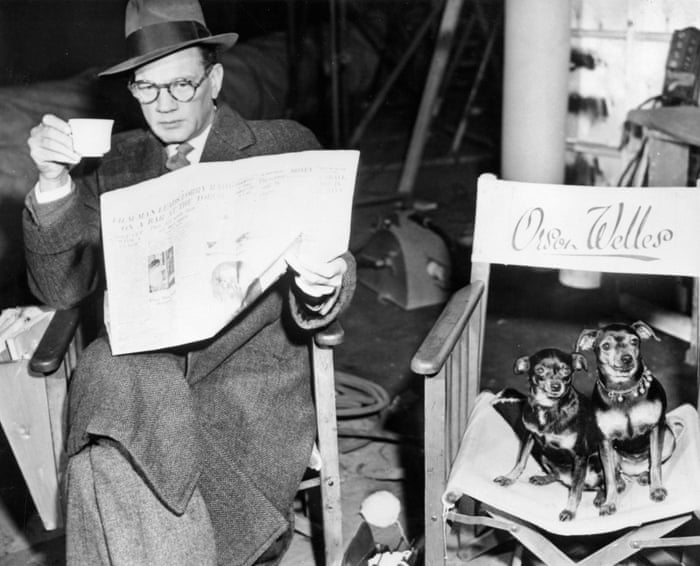
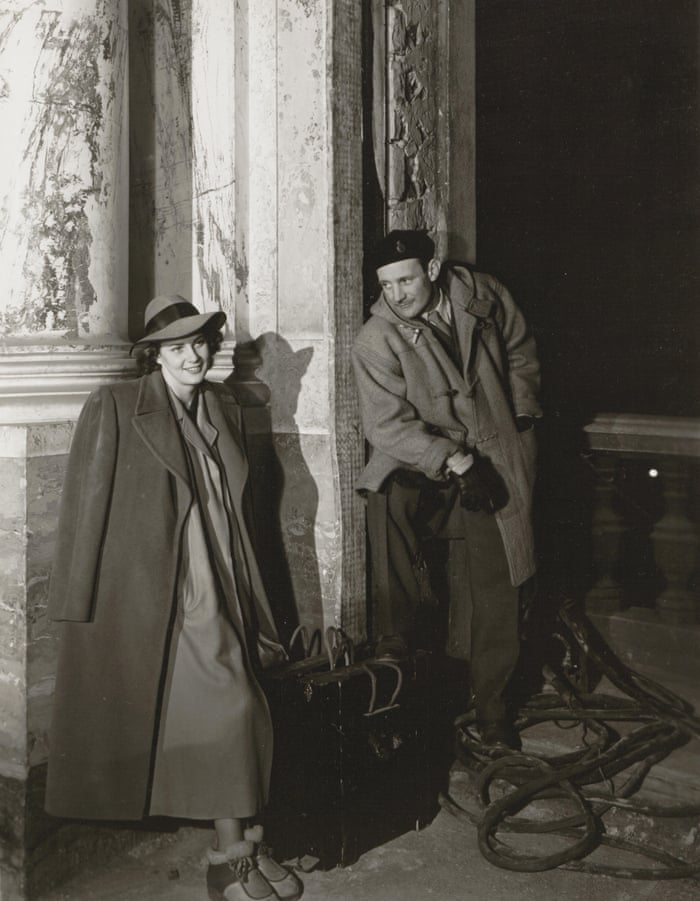
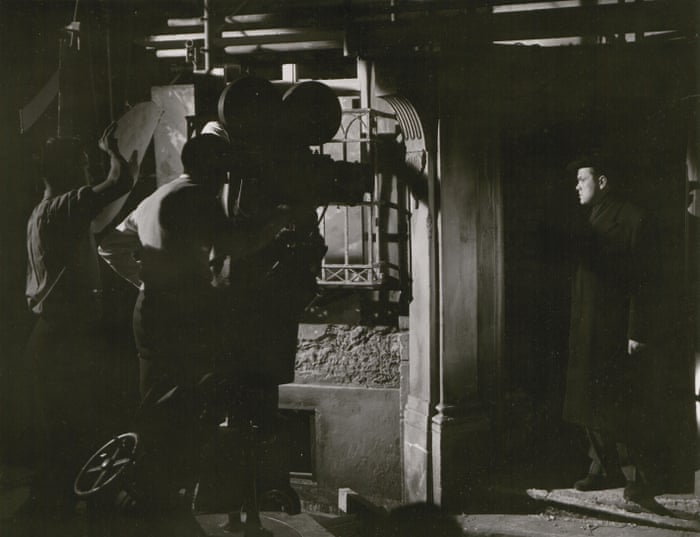
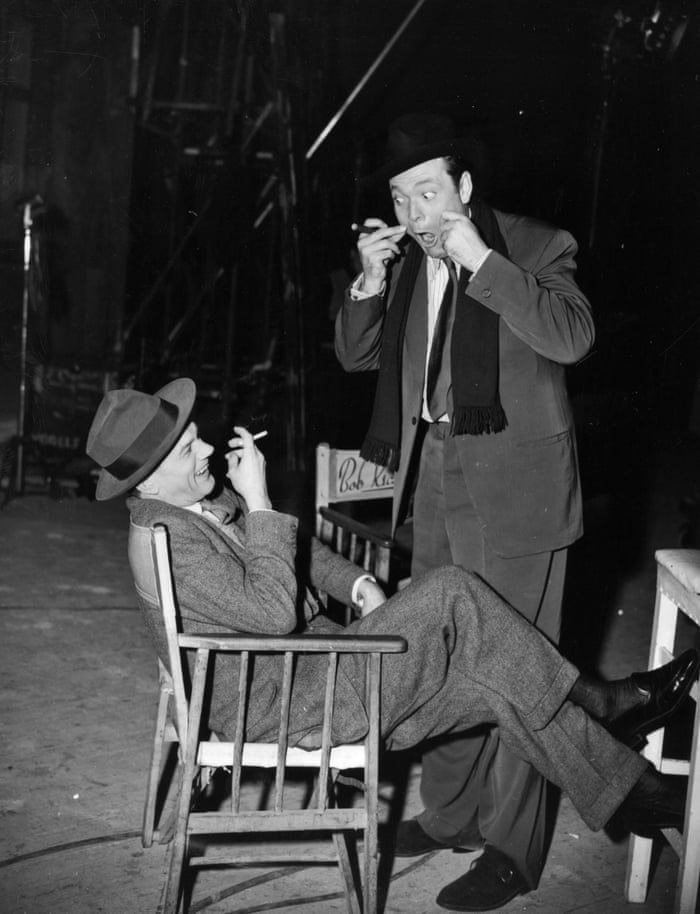
The Third Man: Behind the Scenes...

Image result for the third man on the set
Carol Reed with Orson Welles


Jospeh Cotten with Reed discussing a scene


Bernard Lee, Cotten and Reed


Reed and Welles on set


Welles and Reed


Welles and script supervisor, Peggy McClafferty


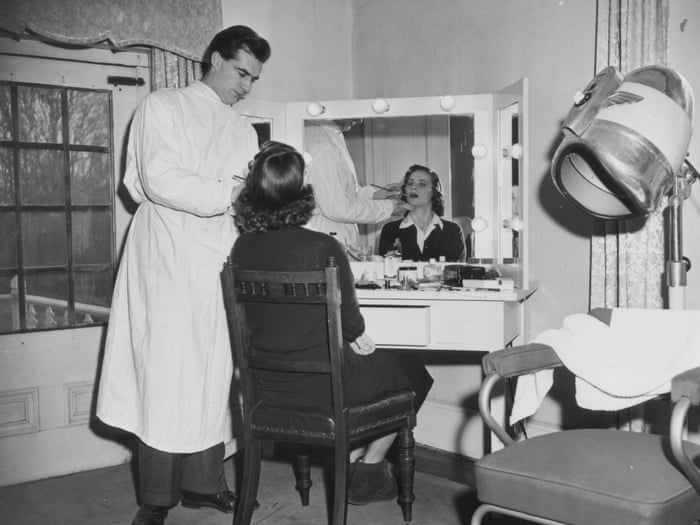
Alida Valli with George Frost, make-up artist


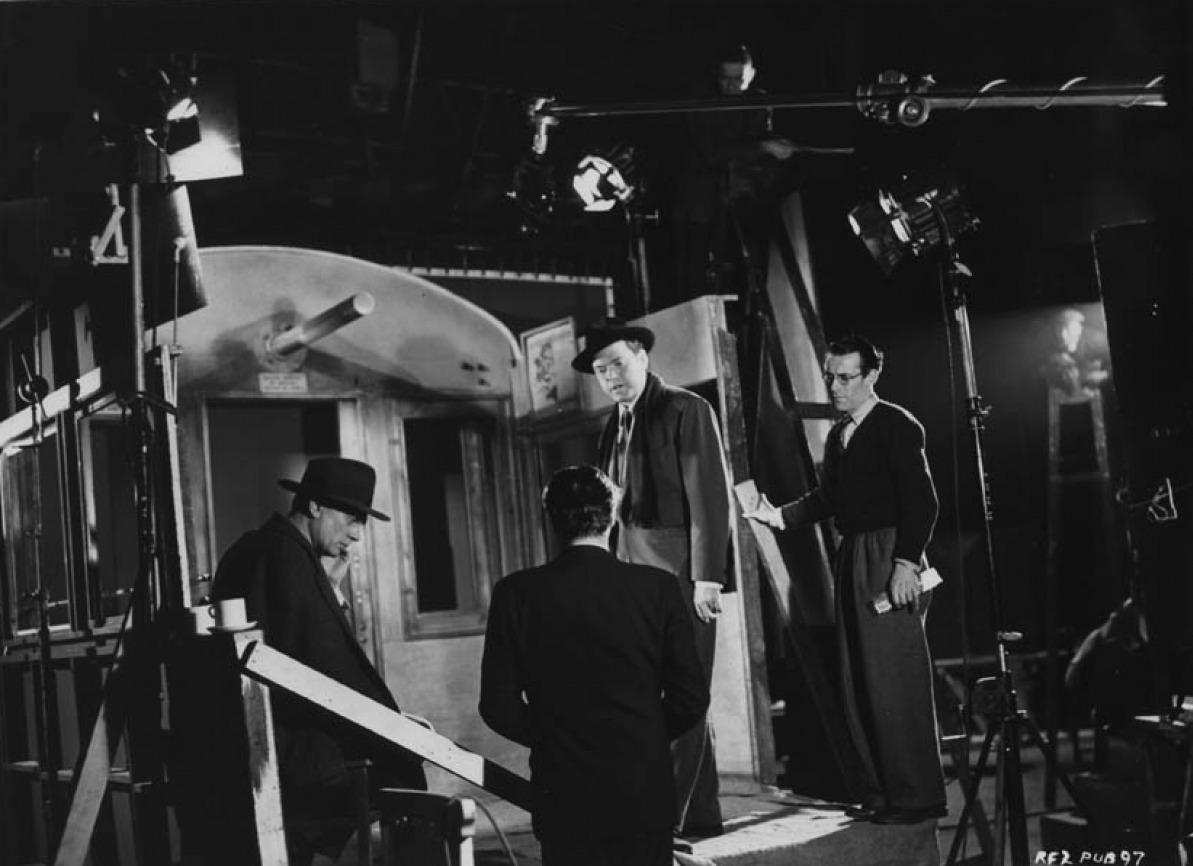
Setting up the Ferris wheel scene


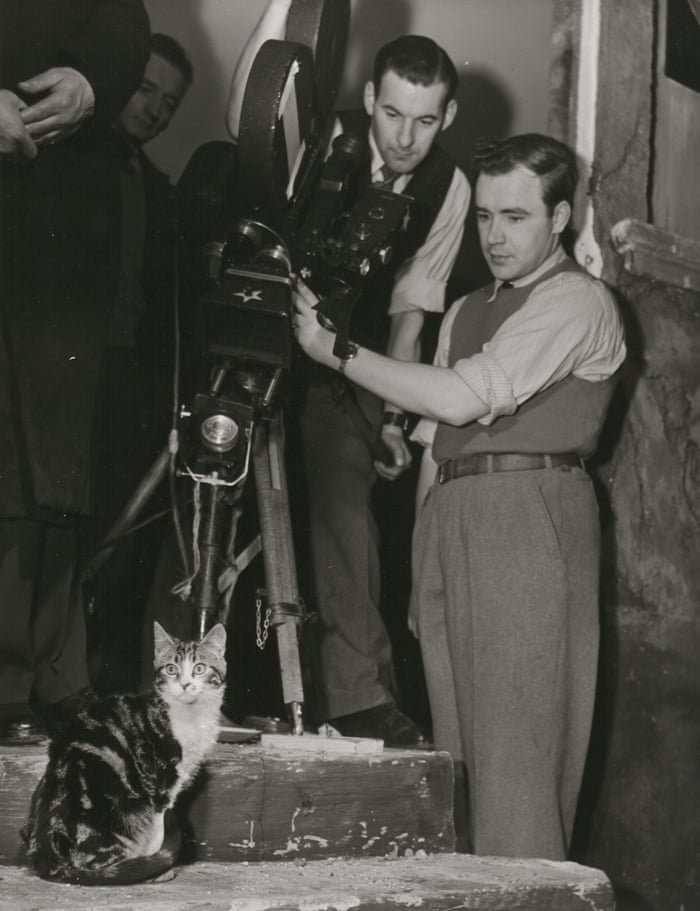
Filming the cat in the doorway sequence


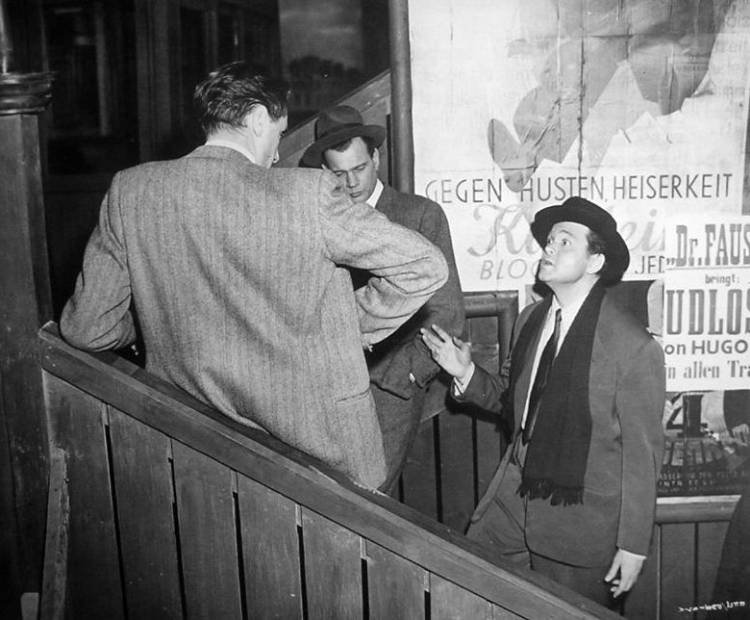
Reed, Cotten and Welles


Cotten relaxing with friends


Valli and Trevor Howard


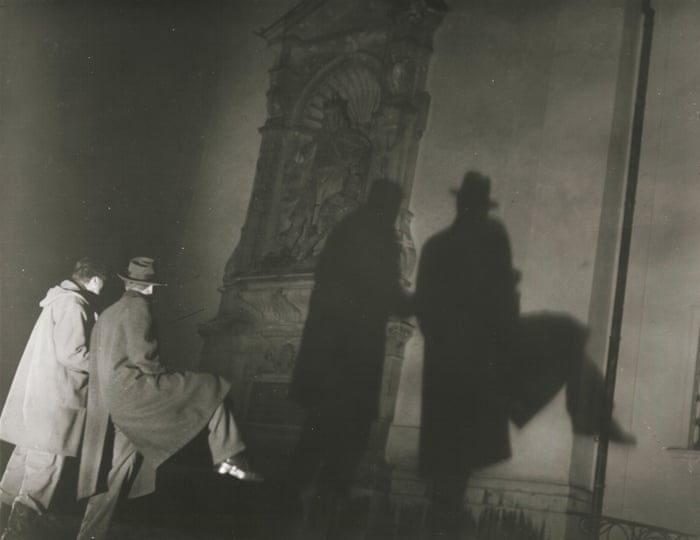
Setting up the doorway scene


Cotten and Welles messing about


Reed and Cotten playing with shadows and light


Welles and Reed


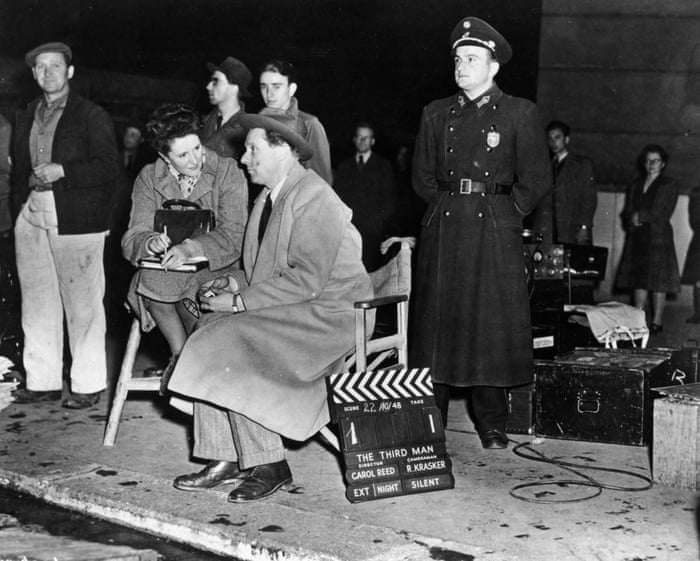
McClafferty and Reed watching a scene


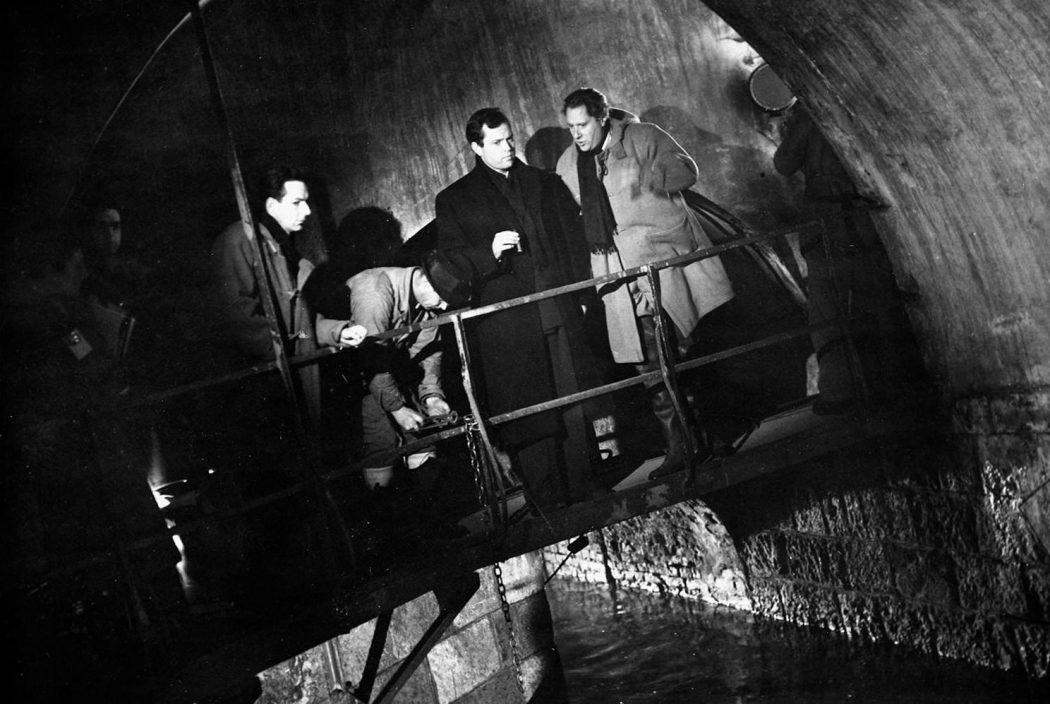
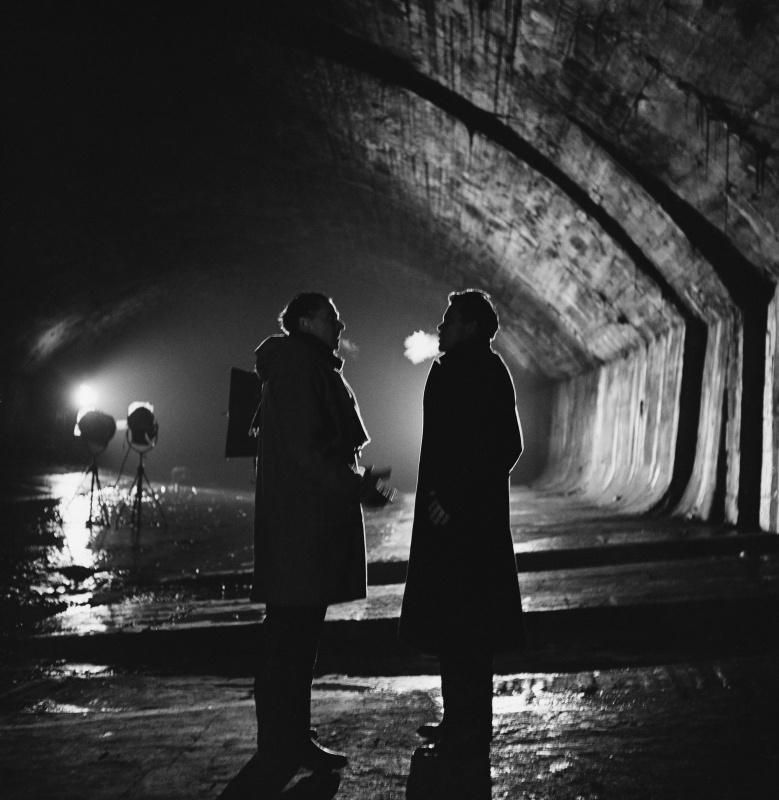
Shooting the sewer sequence


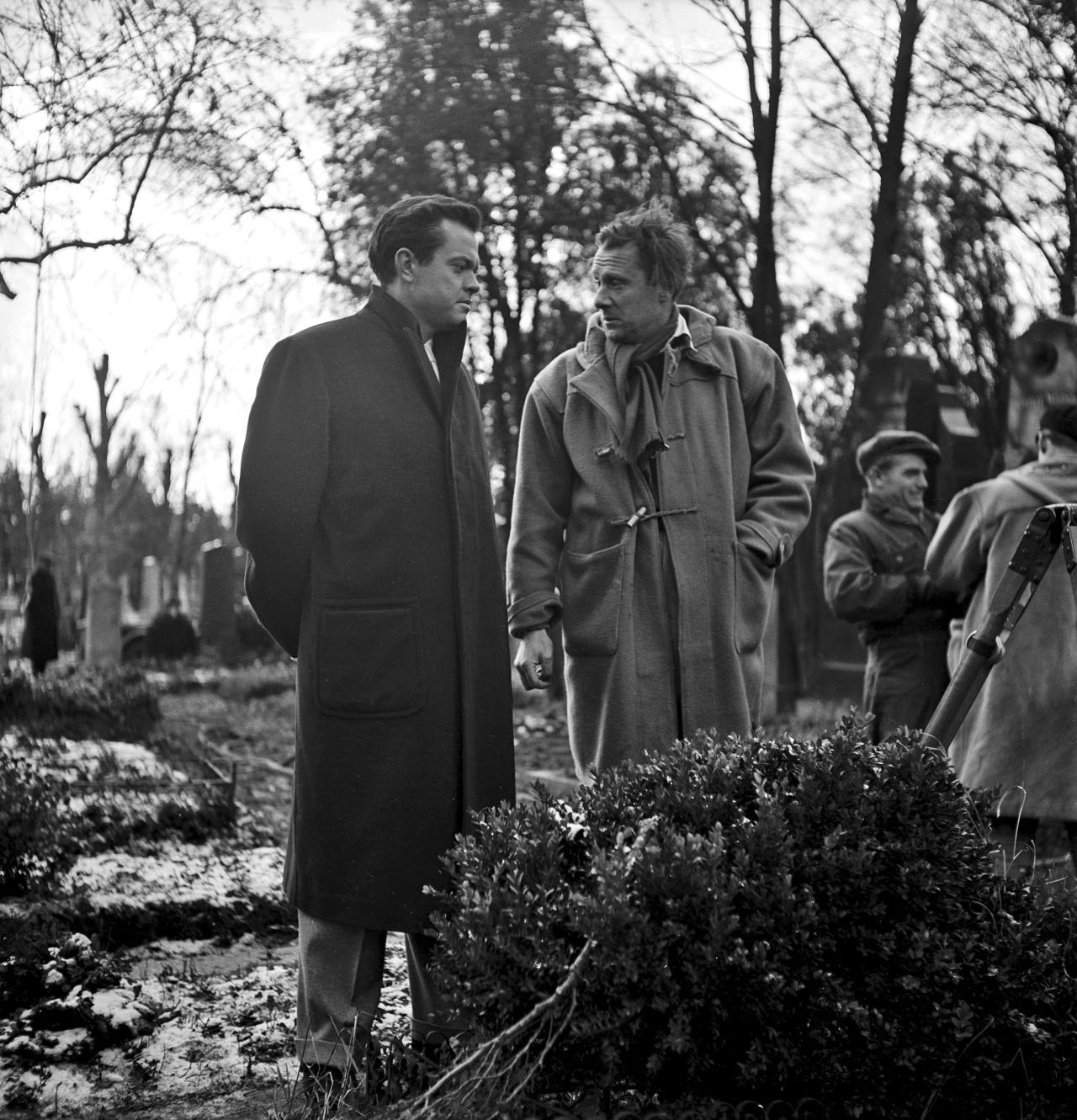
Welles and Reed in the graveyard

Friday, 30 August 2019

Ten Great Noirs

Related image
Jacques Tourneur's Out of the Past - the quintessential noir

'A pas de deux of sex and violence': a poet's guide to film noir
Claustrophobic and nihilistic, a disturbing universe with dramatic lighting. An award-winning poet explains why he immersed himself in film noir for his Booker-prize shortlisted debut novel

Robin Robertson
The Guardian
Mon 12 Nov 2018

I watched film noir before I knew it had a name, growing up with these black-and-white B-movies that appeared at odd hours on 70s television. It was only when I moved from Scotland to London that I saw them, properly, on the big screen, and understood them for what they were: the cinema of the city, steeped in the city’s fascination and fear. All the ambivalence I felt arriving in London as a young outsider was there in the mood and the images of these films, and I soon learned why they spoke to me so directly. These classic 40s and 50s movies – which seem like a distinctly American art form, like blues or jazz – were mostly not made by Americans but by emigres: Jewish directors and cinematographers who had fled Nazi Germany and ended up in Hollywood, bringing their expressionist aesthetic and their deep terrors to celluloid. These refugee artists were among the “huddled masses” that built America; the kind of people that are now, it seems, unwelcome.

Despite living most of my life in cities, I’ve never really written about them. When I decided I would, I knew it had to be US cities, immediately after the war, when the American dream started to falter; that the soundtrack would be jazz, and that much of the tonal qualities would come from film noir. I watched about 500 films before writing The Long Take – listening for the idiom, watching the camera techniques, the editing, working out the geography of the city location shots – and it was these 10 movies that I kept returning to: the ones that, for me, capture the classic spirit and style of this brief but hugely influential cycle of films.

Out of the Past (1947) dir: Jacques Tourneur

Regarded by many as the quintessential noir, Out of the Past offers most of the classic elements of the style: voiceovers, flashbacks, a labyrinthine plot, a doomed male obsessive and a femme fatale – with Robert Mitchum and Jane Greer playing these roles effortlessly. In a tragedy told as a dream, these complex, mysterious characters emerge from the shadows to deliver their lines: “Is there a way to win?” says Greer’s character, and Mitchum deadpans back: “There’s a way to lose more slowly.” I used that perfectly weighted line as the subtitle to The Long Take.

Brute Force (1947) dir: Jules Dassin

A prison stands in for the city: a walled theatre of meaningless degradation and punishment, where the only language left is violence. The carceral imagery of Brute Force was certainly something I drew on in my descriptions of New York and Los Angeles. As much an existential drama as a prison-break movie, this is a claustrophobic and nihilistic film lit up by wonderful acting. It’s an ensemble piece like a stage play, brilliantly cast – inside and out. Burt Lancaster is superb in the lead role, but even he is upstaged by Hume Cronyn as the sadistic, power-hungry Captain Munsey, who beats a prisoner with a rubber hose to a recording of Wagner’s Tannhäuser.

Ride the Pink Horse (1947) dir: Robert Montgomery

A little-known non-urban noir, with Robert Montgomery directing himself as Gagin, a war veteran on a mission to New Mexico to avenge the death of a fellow soldier at the hands of a war profiteer. The embittered ex-soldier coming back from slaughter to find his country corrupted was a reality of late-40s America, and a recurrent theme in early noirs, and I was influenced by aspects of the plot-line here and in other films that address the problems of veterans, such as Act of Violence and Crossfire. A stunning long-take opening sequence in a bus station establishes Gagin’s character as driven, exhausted, alienated and seemingly stripped of all emotion. It is only when he encounters the carnival horses of the town’s carousel, and the kindness of the locals, that the fiesta – and the symbolic wheel of life – can begin to turn.

T-Men (1947) dir: Anthony Mann

After the stilted prologue that encourages us to see the film as a fact-based story of the brave actions of US treasury agents, the real noir underworld quickly emerges – particularly in the extraordinarily elegant and stylised steam-bath murder. Along with The Big Combo, this is one of the most visually stunning films in the cycle, with cinematographer John Alton filling each frame with contrast and tension, deep focus and unorthodox camera angles. I hoped to have Alton at my shoulder while I was writing, for his painterly eye and his gift for combining economy with sudden beauty.

Criss Cross (1949) dir: Robert Siodmak

Opening with an amazing aerial shot of downtown Los Angeles, slowly descending to a nightclub parking lot where the lovers – Burt Lancaster and Yvonne De Carlo – are locked in a secret embrace, Criss Cross is an 88-minute plunge into their fated world, a drop into doom. Despite much of it being shot in daylight (around Bunker Hill, a now vanished part of Los Angeles), Criss Cross is a dark, fatalistic tragedy. I have my character Walker in The Long Take visiting the shoot above the Hill Street tunnels (which feature on the book’s cover), and talking to the director.

Gun Crazy (1950) dir: Joseph H Lewis

Seen by some as the precursor to Bonnie and Clyde, this is the story of Bart, a gentle, decent man with an unhealthy obsession with guns. When he encounters Annie Laurie in a sharp-shooting sideshow, the pas de deux of sex and violence begins. She wants more things, nicer things, and leads him – her co-dependent in addiction – into increasingly serious crimes. As the film develops into a cross between a road movie and a western, their first bank robbery is an exquisitely staged long-take shot from inside their car. It’s a perfect expression of their amour fou, their fugitive world where sex and death are on the same line: “We go together … like guns and ammunition.” What is extraordinary is that it’s not cinematic grandstanding, but a tiny naturalistic drama that feels like an improvised film within a film: an improvisation embedded in an edited, scripted construct.

Night and the City (1950) dir: Jules Dassin

Along with The Third Man, this is a great British noir, the compulsive, concentrated morality tale of Harry Fabian, a spivvy American hustler in London who wants to make it big, played magnificently by Richard Widmark – volatile and paranoid, giggling insanely. It co-stars the fabulous Gene Tierney and has a first-rate British cast, including Googie Withers and Herbert Lom. The film’s director, Dassin – thrown out of Hollywood by HUAC and McCarthy – turns postwar London into an expressionist trap, a nightmare city teeming with cripples, beggars and informers, like something out of Kurt Weil or Tod Browning. Filmed in 1949, the final scene under Hammersmith Bridge could have been shot yesterday. I live 10 minutes away, and I think about this film every time I walk along that stretch of river.

The Big Combo (1955) dir: Joseph H Lewis

Directed by the maverick Joseph H Lewis, with cinematography again from Alton, The Big Combo includes more dingy sexuality, casual violence and repressed, sadomasochistic relationships than any other noir. Cornel Wilde is the moral touchstone: a decent cop who goes too far into this vile world, trying to rescue the pure, defiled Susan Lowell (Jean Wallace), only to suffer torture by hearing aid. An inventive, deeply atmospheric film: dark, disturbing and beautifully shot. Walker watches the movie three times in The Long Take: “He saw its hard lines all the way home through the fog: / the raking headlamp opening up a wall, the shadows / tightening in around this spoon of light that’s dragged / across the metal doors, snapped back to darkness.”

Kiss Me Deadly (1955) dir: Robert Aldrich

Made in 22 days in and around Los Angeles, Kiss Me Deadly is about speed and violence, fast cars and freeways: a world of moral decomposition, corruption and brutality, with nuclear apocalypse as the only cleansing agent. From the opening credits, with “DEADLY” then “KISS ME” scrolling down over the speeding road, this is a highly sensory film about the interaction of the human and the machine. Brilliantly photographed by Ernest Laszlo, the movie is visually jagged, angular and out of kilter, with its characters alienated and dehumanised, disorientated by their landscape. It is a film of its time: frenetic, fractured and deeply paranoid. We also see into the future, with the recognition of a social selfishness and greed that was to become endemic. As Walker says in the The Long Take: “When we want everything and give back nothing / the otherworld will be unlocked, and our whole world taken away.”

Touch of Evil (1958) dir: Orson Welles

The film opens with a celebrated long take tour-de-force: an unbroken three-minute craning and tracking night shot where a time bomb is placed in the trunk of a car, exploding just across the busy US-Mexico border. Unlike those in Ride the Pink Horse or Gun Crazy, the long take here is almost operatic in its certainty. Like many of Welles’s films, Touch of Evil was taken out of his hands and butchered by studio chiefs. Forty years later, it was rebuilt by the great editor Walter Murch, based on all existing material and closely following the Welles memo. Salvaged, and dramatically improved, it is still a flawed work – appropriately, perhaps, as it’s about a flawed man. The final shot – of Quinlan floating dead in a filthy canal – is a wholly appropriate sign-off to the noir cycle.

https://www.theguardian.com/film/2018/nov/12/a-pas-de-deux-of-sex-and-violence-a-poets-guide-to-film-noir#comments

At a time when the term 'noir' is overused to describe any low-lit television thriller with a troubled protagonist hunting down a borderline psychopath (preferably in Swedish or Danish with subtitles), this is a nice little intro, though he overplays - as is common - the standard Film Studies/Pop Culture view that the style was down to the work of German emigres during and after World War II. 

Expressionism had hit America long before noir. It was so popular in the 1920s, for example, that the great German director F W Murnau was invited to Hollywood to make Sunrise, a 'realistic' romantic tale using expressionistic techniques. John Ford, who would be familiar with the style from years of working in the cinema and who was an admirer of the work of Eugene O'Neil, the Irish American playwright influenced by European expressionism on stage, uses it to great effect in The Informer and in that quintessential Western, Stagecoach - a huge influence on Welles - where there isn't a city in sight. 

Moreover, the low lighting and use of fog/smoke were often features of taut crime features made at Warner Brothers to disguise their low budgets - and Warners became the home to several significant noirs.

The simple timeline approach negates the influence of literature on the genre or - as Robertson mentions - of World War II. Some of the best noirs feature men broken by the war (Dmytryk's Crossfire, for example, where ex-soldiers seem unwilling or unable to return to their former lives and exist in a dreamscape of darkened rooms, circling around a nasty anti-semitic crime. 

Robertson refers to the use of the femme fatale, an attractive woman wrought to lure the 'hero' into a deeper and more disturbing series of events than at first he realises. A throwback to gothic literature and beyond, to be sure, but also  symbolic of the threat to masculinity felt by males when they returned from World War II to find that women had taken their jobs and were no longer prepared to be home-makers. 

The timeline view also does no credit to the influence of French films like Pepe Le Moko or Daybreak or indeed, to the work of later French film-makers which could be labelled as noir, like Jean-Pierre Melville's crime films, like Le Samourai. 

I could quibble about Robertson's selection, of course. While Out of the Past has to be on there, I would need Siodmak's The Killers, the afore-mentioned Crossfire, Pepe le Moko and Daybreak, Hawks' The Big Sleep, Cromwell's Dead Reckoning, Hitchcock's Strangers on a Train, Reed's Odd Man Out (I'd have The Third Man, but it gets a nod in the article) and as a great 'latter day' noir, Ivan Passer's (look: another emigre!) Cutter's Way. Trouble is, I wouldn't want to drop any of Robertson's films: I'd need a list of at least 30!

Tuesday, 11 July 2017

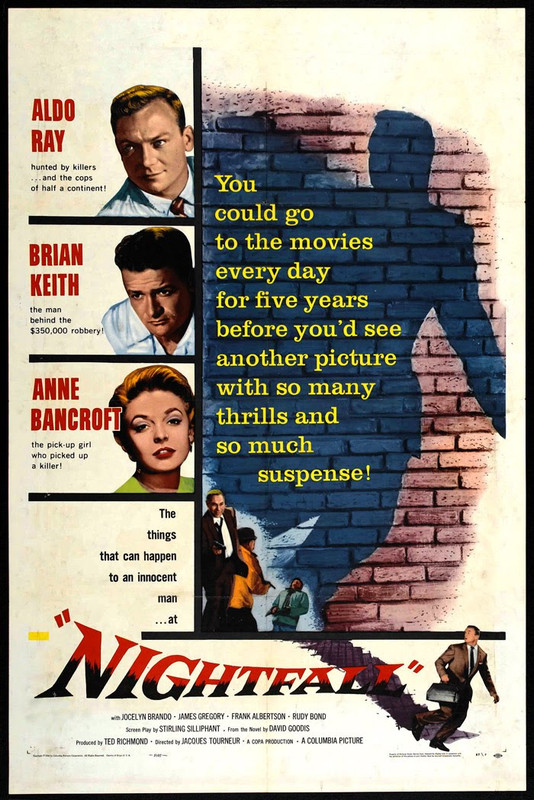
Noir of the Week #6* - Nightfall (Jacques Tourneur, 1957)


Nightfall: Not so black and white


Frank Black
11 July 2017

Thanks to his work with Val Lewton in the 1950s and that late gem, Night of the Demon (1957), Jacques Tourneur will be forever associated with the horror genre, but a considered look at his career will see that this supreme stylist made films in many genres, including one of the greatest film noirs, Out of the Past (1947).
Image result for nightfall 1957
Nightfall is a smart little crime drama, tightly-scripted by Stirling Silliphant and based on a novel by David Goodis, who wrote several noirish thrillers that were adapted into movies, including Down There, filmed by Francois Truffaut as Shoot the Piano Player (1960), Delmer Daves’ Dark Passage (1946) and The Burglar, directed by Paul Wendkos (1957).

Like Out of the Past, an event from the protagonist’s history comes to determine his life in the present and flashbacks play a key role; however, unlike Out of the Past’s one flashback section, the narrative in Nightfall is punctuated by a series of flashbacks that explain the origin of the events until past meets present in snowy Wyoming and the story is violently resolved.
Image result for nightfall 1957
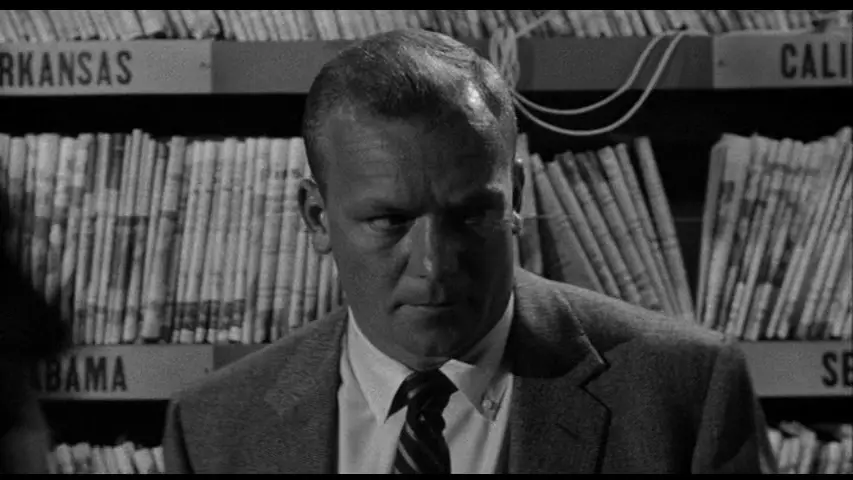
Tourneur presents the audience with an enigma from the outset. A young man, Art Rayburn (Aldo Rey), who has taken the name Jim Vanning, wanders through a newsstand, checking out newspapers from across the United States. He asks for one from Evanston, Illinois, but it’s the only one they don’t have, symbolising that this is a man out of place. To underline this, when the lights flicker on, Vanning, shot from behind, reacts with a nervous jump, as if someone is after him. Who is this man and why does he act this way?
Related image
Leaving the brightness of the shop, he is filmed in long shot from across the street, bathed in classic Tourneur chiaroscuro, implying guilt or trouble - or perhaps someone about to emerge from the darkness of his past. He looks over his shoulder as if he fears he’s being followed – and it seems he is. Crossing into the shot is Ben Fraser (James Gregory), who we later discover is an insurance investigator, and he walks up to Vanning and makes small talk before catching a bus home.

The nature of the suspected crime isn’t revealed at first, but throughout the film, Fraser seems to doubt Vanning’s guilt, expressing this to his wife, Laura (Jocelyn Brando), and on several occasions Tourneur uses editing to hint at a bond between them; for example, after Laura goes to make Fraser a drink, there’s a cut to coffee being poured at Vanning’s table.

The narrative emphasises the role of chance and coincidence, which play on Vanning’s paranoia. In a bar, he meets a young model, Marie (Anne Bancroft) and it seems like she’s hitting on him and wants the loan of some money to pay her bill; of course, in keeping with generic norms, they hit it off. Leaving the bar, he’s jumped by the two killers who’ve been tracking him and they order her to go away. It seems like the classic noir femme fatale set-up, but it becomes apparent that it wasn’t intentional: there was no set-up and she really did need the money to pay her for her drink. He pointedly tells her, “… you were unlucky enough to talk to me tonight.”
Image result for nightfall 1957
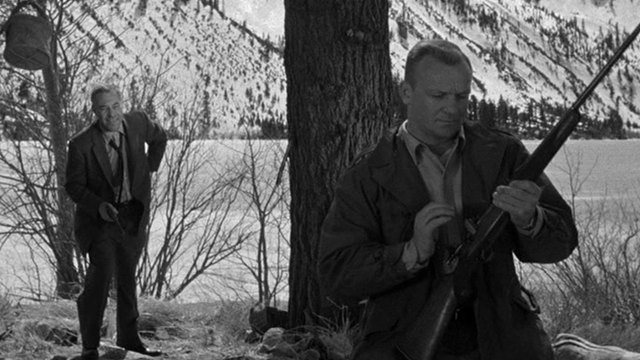
The foregrounding of coincidence continues throughout the film; indeed Vanning’s initial involvement with the killers is purely down to unconscious chance as revealed in one of the flashbacks set in the snow-covered wilds of Wyoming where a hunting trip with his friend, Doc Gurston (Frank Albertson), is interrupted by an accident when a car swerves off an icy road.
Image result for nightfall 1957
Gurston and Vanning rush to help, but the crash victims turn out to be bank robbers, the subdued, almost eerily pleasant John (Brian Keith) and the borderline psychotic Red (Rudy Bond), prefiguring the kind of relationship between killers that feature in Quentin Tarantino's work. Gurston fixes John’s arm and then is shot by Red, who also shoots Vanning and leaves him for dead. He’s alive, of course, and on waking, he finds the robbers have taken Gurston’s bag instead of the one filled with cash. Vanning escapes, by now with John and Red in pursuit, and he leaves the bag hidden before running off and creating a new life for himself, all the time in the knowledge that he has gone from being the hunter to the prey.
Image result for nightfall 1957 laura makes fraser a drink
Tourneur’s cinematographer was Burnett Guffey, an Oscar-winner for his work on Fred Zinneman’s From Here to Eterntity (1953) and, later, for Arthur Penn’s Bonnie and Clyde (1967), but also well-versed in noir over a series of films that included Nicholas Ray’s masterpiece, In a Lonely Place (1950). He makes stunning use of the stark, dazzling landscape of the snowy Wyoming hills juxtaposed with the moody blacks and greys of the scenes in the present, particularly during the sequence when the killers take Vanning to an oilfield at dusk to extract information.
Image result for nightfall 1957 vanning talks to fraser
The claustrophobic and threatening environment of the constantly moving predatory derricks contrasts with the flashbacks of the clean, natural white open spaces of Wyoming, while the editing helps create tension for the audience, prolonging Vanning’s captivity. As the flashbacks reveal more, the stark whiteness becomes sullied with the presence of John and Red. Of course, Wyoming looks clean because of the snow, but it’s the snow that later hides the reason behind the killers’ pursuit of Vanning: the dirty money stolen in the bank-job.
Image result for nightfall 1957 outside the church
It’s also in Wyoming that things finally come to a head. Escaping the city with Marie, Vanning takes a bus to locate the money, unaware that the diligent Fraser is only a few seats behind them. Finally, he approaches Vanning while he waits outside a church for Marie. The mise-en-scène positions Vanning as an outsider and with his back towards the camera, the shot echoing the earlier one where he flinches when the lights come on at the newsagents just before Fraser enters his life; the presence of the church, however, hints at confession and redemption. The scene is carried by Rey and Gregory’s easy-going, naturalistic style as Vanning opens up to Fraser and confirms the latter’s suspicion that he has been innocent all along.

After Red shot Doc Gurston, he forced Vanning to pick up the gun that killed him. By chance, Red fails to kill Vanning but his fingerprints were now on the rifle and – another coincidence - unbeknownst to the killers, Gurston’s wife had sent Vanning unrequited love letters, so he became a suspect for the murder as well as the robbery.

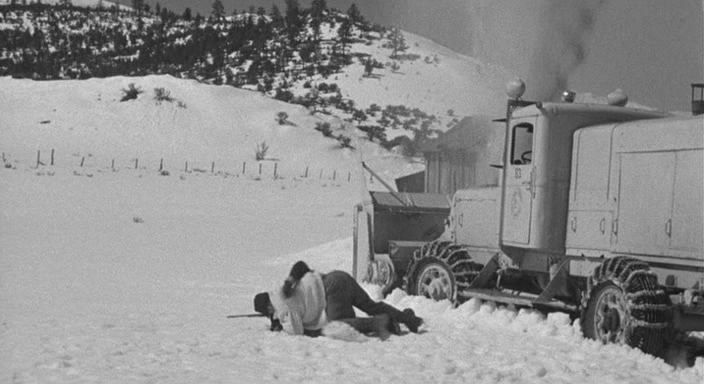
Coincidence rears its head again when Vanning, Fraser and Marie go to locate the money in the melting Wyoming snow. They approach a shack seemingly in the middle of nowhere and as Vanning walks around it, the angle of the camera reveals John and Red, the contrast in their manner engendering further anxiety, but they squabble and John’s low key approach is his downfall as Red shoots him dead in the same cold-hearted manner as he killed Gurston. Vanning launches himself towards John’s gun and a fight ensues on board a snow plough. While the will it/won’t it suspense of whether or not it will demolish the shack where Fraser and Marie are tied up conjures up the Perils of Pauline, real tension is created by Tourneur’s use of close-ups of Red and Vanning as they tussle in the plough’s cabin and when the former is pushed out, the use of the point of view shot as the blades come whirling closer to Red underlines his own stark brutality – and perhaps gave the Coen Brothers something to allude to when they made Fargo almost forty years later.
If you can ignore the awful theme tune crooned by Duke Ellington alumnus Al Hibbler, this is a rewarding late period noir, with an engaging, twisted plot, superbly handled by a master of mood and suspense and well-acted by a cast of fairly minor players.


* Okay, maybe more like once in a blue moon...


Monday, 18 July 2016

Definitions of Film Noir...

Burt Lancaster in The Killers (1946)

Here's an interesting piece from The New Yorker a couple of years ago exploring the slippery boundaries of film noir. It's particularly timely now when we live in an age where any number of lazy TV critics assign the term to crime shows that have labyrinthine plots and low lighting. See for example, the constant references to 'Scandi-Noir' by writers in The Guardian.

Although Brody refers to the significance of the trauma caused by World War Two, a side product of that is surely the emasculating role of women - often, but not always (see The Reckless Moment (Maz Ophuls, 1949  http://fridaynightboys300.blogspot.co.uk/2015/01/noir-of-week-5-reckless-moment-max.html ), the femme fatale and the fear, or at least recognition, that women had become empowered during the war by taking traditional male roles in industry while the men were away fighting for their country.

I also suspect - or hope - that Brody doesn't mean t o imply that the definition of a Western is quite as rigid as this piece implies, whether defined by visual iconography or thematic concerns.

Paul Kelly in Crossfire (1947): “You’re wondering about this setup, aren’t you?”

Film Noir: The Elusive Genre

Richard Brody
The New Yorker
23 July 2014

There are two terrific film-noir series taking place in New York right now, one at Film Forum, “Femmes Noir,” the other, at the Museum of Modern Art, “Lady in the Dark: Crime Films from Columbia Pictures, 1932-1957.” But only the Film Forum series uses the word “noir,” and moma’s avoidance of the term makes perfect sense.

Film noir is a peculiar genre. A Western is identifiable by people on horseback in the West; a musical involves singing and dancing; a war movie shows war. Even the so-called women’s picture was a movie that featured women prominently. But the directors who worked in film noir didn’t use that term to describe their work. One searches in vain for the term in the interviews with some of the genre’s crucial creators—Otto Preminger, Don Siegel, Fritz Lang, Robert Aldrich, and Edgar G. Ulmer—by Peter Bogdanovich in his great collection “Who the Devil Made It.” The first appearance of the term “film noir” in this magazine is from 1971; the first in the New York Times is from 1973.

For that matter, the term wasn’t even endemic in French cinephilic circles. When François Truffaut discussed his film “Shoot the Piano Player” soon after its release, he spoke of it in terms of “B movies” and “gangster films”; when Jean-Luc Godard talked about “Breathless,” he said that he wanted to make a “gangster film” and also referred to “films policiers.”

The documentation on the subject is ample and fascinating, as provided in a richly detailed historical post by M. E. Holmes at a Web site devoted to the French critic Nino Frank, who coined the term in 1946. Holmes’s meticulous discussion of the use and rise of the term cites Frank’s work liberally, and highlights what he found so remarkable in the films in question:

Thus these “noir” films no longer have anything in common with the usual kind of police reel. They are essentially psychological narratives with the action—however violent or fast-paced—less significant than faces, gestures, words—than the truth of the characters, this “third dimension” I discussed a short while ago.

The movies in question, Frank argued, aren’t procedurals or whodunits, they’re character studies and sociological investigations. Holmes traces the fascination with these Hollywood crime dramas of the forties through the work of other French critics of the postwar years:

It is clear that one of the key elements in the welcome given by the French critics to the American “films noirs” was the feeling that serious European influence lay behind their modern American settings and panache. Later commentators have pointed to stylistic influences from prewar German films, but for the 1946 critics the primary consideration was not one of style. It was rather that they believed in cinema’s twofold function: as an absorbing entertainment and as a potential force for good, not through reinforcing conventional morality but through its ability to expose corruption and injustice. They had seen at first hand the prewar struggles of European filmmakers to speak out against evil in their films, and felt that the new American crime films could represent the opportunity for a surreptitious continuation of that work within unashamedly entertainment films.

In other words, Frank and the critics who joined him in his praise of the newly dubbed genre were interested in exactly the sorts of things that the young enthusiasts of Cahiers du Cinéma—Truffaut, Godard, and company—didn’t care about at all: the politics and sociology of cinema, the cinema of social criticism. The big French book on the subject of film noir was written, in 1955, by Raymond Borde and Étienne Chaumeton—two critics associated with the magazine Positif, Cahiers’s bitter rival. French Wikipedia sums up the opposition well, if tendentiously;

Raymond Borde was a member of the editorial board of Positif from 1954 to 1967. A member of the Communist Party until 1958, he was a partisan of [politically] engaged cinema and took a stand against Cahiers du Cinéma and the filmmakers of the New Wave, whose politique des auteurs and rightist tendencies he denounced.

The term “film noir” has come down to us as a product of a subordinate strain of French criticism, different from the one that came to dominate cinematic discourse with the concept of auteurism, as well as to dominate filmmaking itself through the innovations of the New Wave. It had no currency among Hollywood filmmakers of the forties and fifties, for the simple reason that French criticism over-all had little influence in the U.S. until the rise of the New Wave. (Though it would be interesting to try to trace the term in Cahiers through the years—a concordance is needed.) And, even as film noir has become firmly entrenched in the cultural vocabulary, its strangeness remains. That’s why I’m partial to the choice of moma’s curators to cite the simplest unifying factor in their series—the element of crime—that both predates the rise of film-noir style and, above all, that survives it.

I wrote here a few years ago about the genre, and I cited four factors that contributed to its rise: “the influence of German Expressionism, the liberating innovations of Orson Welles, the new importance of independent producers, and the probing of wartime traumas.” German filmmakers fleeing the Nazi regime, such as Lang, Preminger, Ulmer, Robert Siodmak, Max Ophuls, and Billy Wilder brought their shadowy, fragmented aesthetic to Hollywood. Welles (who was also a director of film-noir classics, including “The Lady from Shanghai”) gave directors, including his venerable elders, a sense that anything was possible, even in Hollywood. The sudden weakening of studio control over production (the result of court battles) gave independent producers, many of whom were very sympathetic to artistically original directors, a much freer hand. And then there’s the war, with its terrors and disruptions.

The four movies that Nino Frank cites in his primordial 1946 essay are “The Maltese Falcon,” “Laura,” “Murder, My Sweet,” and “Double Indemnity.” All of them were made during the Second World War (though “The Maltese Falcon” was made in 1941, before the United States was involved in combat). The film historian Sheri Chinen Biesen makes a convincing case, in her book “Blackout,” that there are two separate strains of film noir—one arose during wartime, the other followed it:

These early noir films created a psychological atmosphere that in many ways marked a response to an increasingly realistic and understandable anxiety—about war, shortages, changing gender roles, and “a world gone mad”—that was distinctive from the later postwar paranoia about the bomb, the cold war, HUAC, and the blacklist, which was more intrinsic to late 1940s and 1950s noir pictures.

I’m not sure that the distinction is as precise or as clear as she suggests. For instance, I don’t think that there’s a difference in kind between Siodmak’s “Phantom Lady,” from 1944, and “Criss Cross,” from 1949, or between Lang’s “The Woman in the Window,” from 1944, and “While the City Sleeps,” from 1956. But I do think that she’s right to call attention to the historical specificities on which the genre (if, indeed, it’s a genre) thrived. Many of the crime dramas of the nineteen-thirties had much to do with the Depression; those of wartime reflected the war (though it’s a critical temptation to read the war into any film contemporaneous with it), and those that came after the war—well, by definition, they reflect postwar life.

That’s why it’s strange to think of film noir as a genre—at least, as an open-ended one. A Western is a Western is a Western, whether it’s filmed by Thomas H. Ince in 1916, by John Ford in 1939, or by Clint Eastwood in 1992. The same is true of war films, comedies, and, yes, crime movies. But the film noir is historically determined by particular circumstances; that’s why latter-day attempts at film noir, or so-called neo-noirs, almost all feel like exercises in nostalgia.

http://www.newyorker.com/culture/richard-brody/film-noir-elusive-genre-2

Monday, 6 July 2015

Orson Welles and Touch of Evil


How Orson Welles shattered the Hollywood image
Big, grizzled, with spit and stubble, Orson Welles dismantled the notion of what a movie star should look like. As it returns to cinemas, Michael Newton celebrates his Touch of Evil, the last great film noir of Hollywood’s golden age

Michael Newton
Thursday 2 July 2015

In Jonathan Swift’s Gulliver’s Travels, Gulliver finds himself in the kingdom of Brobdingnag, where the people are 60ft tall. Scale is everything; blown up to gigantic proportions the human face becomes rough, pitted, the seemingly immaculate skin unmasked as imperfect. In the 20th century, Brobdingnag transformed into the picture house, a place for the pygmy public to stare up at the great stars. However, far from seeming less perfect, the enlarged human face seemed more wonderful, smoothed-out by celluloid, unattainable. Yet still strangeness clung to these super-sized persons, those colossal faces.

Welles understood this, and so returned us to the Swiftian vision. In his movies, the human face that cinema loves and dwells on shows its potential for ugliness; blown up to the size of the cinema screen it looks not enchanted and godlike, but all too human and flawed. Time and again, the alienated gaze of his films confronts us with the astonishment of the human face, there in his use of closeups that come in too close. Somehow the angle of vision is off-kilter, and we see only the spit and stubble, the pockmarks and pores. This disabused image of people extends into Welles’s understanding of character. Unlike some Hollywood directors, he never lost sight of the blemishes in the human face and soul. He is one of the few film-makers of the American 1940s and 50s who is never kitsch. His films resist the Lilliputian proportions of a TV or a computer: they belong to the big screen.

Welles’s genius, too, was larger than life, a man with a talent always threatening to burst the bounds of the studio system it was supposed to flourish in. He was not only one of the most striking and inventive film-makers who have ever lived, he was also a curious example of the movie star, operating within mainstream cinema while simultaneously dismantling his audience’s conceptions of what a movie star might be. Just as Welles’s films began with words, with the things that his people say, so his presence rests in large part on the growling, rumbling cello tones of his voice. It is a curiously physical sound, one that summons up the body behind it. That feels apt, for in watching Welles’s work across more than 40 years, from Citizen Kane (1941) to F for Fake (1973), the metamorphosis of that body turns out to be where the attention lingers. On screen Welles embraced the collapse of his own handsomeness – the face’s wrinkles and carved-out lines, the grizzled hair, the ever-expanding waist. In Touch of Evil (1958), Marlene Dietrich fails to recognise Welles in the police detective, Hank Quinlan. Puzzled by the amazing degradation of that body, she lets him know, “You’re a mess, honey”, merely voicing what the audience was likely already thinking. Already in Citizen Kane, Welles had pictured his own ageing; he began his screen-acting career as an old young man, and he reached the summit of it, in Chimes at Midnight (1965), as a young old man, playing Falstaff, that corrupter of youth.

Following the abortive release of Kane and the mutilation by the studio of his next movie, The Magnificent Ambersons (1942), Welles’s career as a director was forever hampered in the US, while his life as an actor – and voice-over narrator - more or less flourished. For a while, he was both a studio problem and an authentic movie star; it delighted the gossip columnists that he was married to another star, the forces’ sweetheart, Rita Hayworth. Soon he fell away from being a leading man and launched into a lifetime of cameos and special appearances, the kind of actor who could salvage a film with a few good scenes. Yet in a clutch of movies – The Lady from Shanghai (1947), The Third Man (1949), Touch of Eviland his Shakespeare films, especially Chimes at Midnight, he is much more than that, being there what he had once been in Citizen Kane, an exemplary version of the compromised person, the perfect embodiment of our imperfection.

Directed by Welles as well as starring him, The Lady from Shanghai is a film noir composed of sweat and sleaze; it begins with a threatened gang-rape, takes us to a man who wants to be murdered and leaves us in a crazy, shattered realm where killing is just an expression of desire. The very inventiveness of the camera here makes the film seem sordid, trapping us inside a place of moral and visual distortion. Only a couple of years after Hiroshima and Nagasaki, the Bomb haunts this movie, lending an everyday story of marriage and murder an apocalyptic darkness. Watching the film, it becomes hard to shrug off the knowledge that people are incomprehensible, their motives obscure, their meaning occluded. At the end, it bewilderingly slips into using Mandarin, while Welles’s character, drugged, watches a Chinese opera, an art form naturally understood by the locals in the audience, but to him that is a baffling confusion. Everyone is ugly in this film, except the leads of course, and especially the sublime Hayworth, though her beauty (at Welles’s insistence – he made her cut off her long red hair) appears a concoction, a made-up peroxide blonde with sculpted eyebrows. As she moves among the drooling, ogling men, her skin looks smooth and clean – as though it has been carved from sugar icing. In this realm of confusion, Welles plays Michael O’Hara, a Hemingwayesque, independent man, a romantic dupe in a world where to be alive is to be in pain. Welles’s Irish accent is (to my British ears) an embarrassment of Dick van Dyke proportions, yet he here conveys as he could so well an injured sensibility, the pudgy naivety of a boy half-grown up into the life of the corrupt.

Though his movies tender a darkened sense of others, in this fabricated world Welles was himself both ringmaster and victim. As an actor, he was at his best playing saloon-bar Candides. Though he often played “villains”, he always brought to such roles a boyish joie de vivre that grants even the blackest characters a youthful unworldliness. He could find innocence in evil, and there is no better example of this than in his wonderful performance as Harry Lime in Carol Reed’s The Third Man (1949).

Lost inside that film, I can still imagine myself, just as I used to as an adolescent, as Holly Martins (played by Joseph Cotten), the feckless, foolish, well-meaning idiot that he is. And perhaps my entire romantic life has been coloured by my teenage admiration for Alida Valli as the elusive Anna. Yet I never dreamed for a moment that I could be Harry Lime, for between him and this viewer lay the unleapable chasm of charm. By some ineffable magic, Lime, like Welles, just makes everything seem such fun. Welles denied that cinema acting should be in essence understated, and indeed the keynote of all his performances is gusto. He was a man who couldn’t turn himself down. Though he never looks stagey and has none of that hitting-the-back-of-the-theatre impact that can make Laurence Olivier look overblown on film, he nonetheless fills the screen, simply by letting us share something of the energy and power that was part of who he was and part of how he performed himself to others.
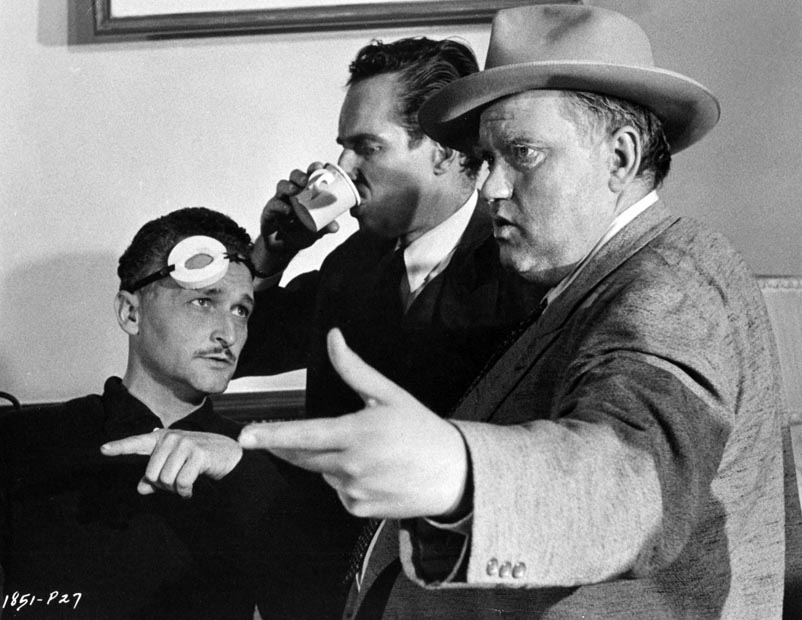
After years away from Hollywood, Touch of Evil was Welles’s comeback film; in commercial terms, it didn’t work out, but as a movie it’s an amazing piece of work. While The Lady from Shanghai ushers us into strangeness, Touch of Evil places us inside a world of oppression, where bullies thrive and intimidation is the rule. It’s a noir that is genuinely black-hearted, the romantic colours of the genre blooming over only its two fading film stars, the worldly-wise Marlene Dietrich and Welles himself, playing the good bad cop, Hank Quinlan, a man who puts convictions and his hunches over the inconveniences of the law. It’s arguably Welles’s finest performance. He works wonders here; to take only one example, whenever anyone offers him some booze, as a reformed alcoholic he replies brusquely “I don’t drink”, until one time, when all is collapsing, he says it and then catches sight of the whisky glass he has just drained. Then comes the miracle of his performance: somehow Welles registers the jolt of the fact with an entirely blank face, signalling his own fall by apparently making no sign at all.

All Welles’s films feel delirious, replete with a weirdness that breaks up the standard Hollywood fare and shatters it into fragments, into a pattern of visionary shocks. In Touch of Evil, this hallucinatory intensity is especially strong; its beatnik thugs are out of a David Lynch nightmare, and the screen seems as drugged as its victimised heroine, played by Janet Leigh, who, as in Psycho, displays bad luck in choosing motels. Yet the drugs turn out to be not hallucinogens or narcotics, but sodium pentathol, the “truth drug” – much as Welles’s dark imaginings perhaps offer the unvarnished truth about things.

There is a touch of lament, an end-of-season feel about Touch of Evil, the last great film noir of Hollywood’s golden age. The movie contrasts the pianola (“it’s so old, it’s new”) with rock‘n’roll, and the faded glamour of the old stars, Dietrich and Welles, with the virile emptiness of the new guys, such as Charlton Heston. Old Hollywood was busy beginning to die, though maybe only Welles knew it then. From now on, his career lay back in Europe, and, in the 1960s and 70s, he became a great European art-house film director, still creating masterpieces.

Chief among them is his version of Shakespeare’s Henry IV plays, Falstaff: Chimes at Midnight. The film has so much that’s good – John Gielgud as Bolingbroke; one of the greatest, most brutal battle scenes of cinema – but in one respect it seems seriously deficient: it lacks laughter, and laughter is Falstaff’s essence. I believe that despite his humour and his humanity, Welles’s view of the world was too dark to bring out this element in the old fat knight. Yet he truly embodies other equally vital aspects of the character. In conversation with Peter Bogdanovich, Welles declared that everyone acts all the time, and that in each and every conversation we’re busy performing ourselves. Though this has its general application, and its Shakespearean resonances, it nonetheless feels less of a universal statement, more of a self-diagnosis. For Welles and Falstaff have much in common: both of them live as actors on the stage of everyday life, as self-dramatisers, as players.

Watching the entertaining TV programme he made, Around the World With Orson Welles, you see just what a glorious flirt he was, how much he enjoyed acting the role of raconteur. Yet when he talks to a group of Chelsea Pensioners, he looks out of place, where the quiet dignity of the old men, the settled proprieties of their beliefs exposes their interviewer as a man betrayed by his own eloquence. Yet what eloquence it was! Welles is one of the few civilised voices in cinema, a Europeanised American, a preserver of urbane values. There’s a touch of Henry James about him, and of those wide-eyed cynics and sophisticated dreamers Hemingway and Fitzgerald. Talking to the Chelsea Pensioners, one mentions that they are officially “living in independent retirement”. “Great word, ‘independent’,” says one of the old soldiers. “Yes, it is,” says Welles. Everything about the worlds he summoned up in film and in his acting, the uniqueness and humanity of that sustained vision, shows that he meant it.

http://www.theguardian.com/film/2015/jul/02/orson-welles-a-touch-of-class
Monday, 29 June 2015

Martin Scorsese on The Third Man...


Extra Large Movie Poster Image for The Third Man (#1 of 8)

Martin Scorsese on 'The Third Man': The best revelation in all cinema
A reissue of 'The Third Man' is released on Friday. The Hollywood director Martin Scorsese reveals how Carol Reed's classic British noir from 1949 has influenced him and why it feels as fresh as ever

Martin Scorsese
Tuesday 23 June 2015

I saw The Third Man for the first time on television in New York, with commercial interruptions. I think I was about 15 years old, maybe 16. I saw Citizen Kane around the same period. I remember that I wanted to see the film on its first release, but was unable to do so, which created a mystique about the film. The theme was a radio hit, but my first viewing was on TV, around '56 or '57. But even with commercial breaks on a 16-inch screen, the power of the picture, the surprise, the entertainment, the film-making itself… a revelation. Expressive style, virtuosity – I became fixated, obsessed.

I couldn't wait to see the film again, but I had to wait until it was shown on television, maybe four or five months later. It wasn't the optimum viewing condition, I still lived in a small apartment with my family, so it was difficult to find the concentration and quiet I needed to figure out why the picture affected me so much. I was becoming aware of film-making itself around this time, about storytelling, about extraordinary cinematic experiences.

Simultaneously, a young priest who was a mentor to me and some friends gave us Graham Greene's books to read. The Power and the Glory had quite an effect on me. There was a stage version of it off-Broadway, and a live TV play with Laurence Olivier and George C Scott, also. Graham Greene's Catholicism had a strong impact on me, his themes of sin and redemption. I was very much aware of Graham Greene's contribution to The Third Man before seeing it. And I had seen his name on the credits of The Fallen Idol, in particular, the combination of Graham Greene and Carol Reed. I also admired Odd Man Out, as both of these films were shown on TV constantly.

I remember going to a place on 14th Street called Movie Star News where they had 8 by 10 glossies, production stills, and I bought a beautiful set of The Third Man, including some great artwork, and a great shot of Anton Karas under a table in the recording studio. They heard him playing his zither in a nightclub in Vienna, and when they went into the studio in London it didn't sound the same. They figured out that acoustically it would sound more like it had in the nightclub if they had him play under a table.

About four months ago, I screened a beautiful 35mm print of the picture for my daughter and her friends. "Why do we keep watching this?" I suppose it's [Joseph] Cotten and [Alida] Valli – that's the emotional core of the picture. For instance, the scene where Holly Martins (Cotten) finally goes to her apartment. He's a little drunk, and he tells her he loves her and he knows he doesn't have a chance. That's when she says, "The cat only liked Harry." So that leads right into the great revelation of Harry Lime in the doorway with the cat – which is iconic. But it's more than that – it's one of the great epiphanies in movies: the cat turning the corner and nestling itself on those wing-tip shoes, and then Harry Lime being revealed when the light is turned on in the doorway and it shines in his face.

Remember Walker Percy's great novel The Moviegoer? He refers to that moment in such a beautiful, special way. It became a moment internationally, a shared experience for a vast audience seeing that film. It's not just a dramatic revelation – there's something about Orson Welles' smile at that point that shifts everything to another level, and it sustains no matter how many times you see it. Welles comes into the picture about halfway through. That's the first time you actually see him, after you've spent so much time picturing him in your mind because everyone has been talking about him and thinking about him. So that might be the best revelation - or the best reveal, as they say - in all of cinema.

When Holly Martins finally meets Harry face to face on the Ferris wheel, you expect Harry Lime the criminal. Instead, he just jauntily walks up, says, "Hey, come on, let's take a ride." It's just a casual conversation… about all those dots moving around down there, and do you mean to tell me that if somebody came to you and said you could make a lot of money, but the only catch is that every once in a while, one of those dots might stop moving, you'd really say no? And then the great line—"Tax-free, old man, tax-free." And not to mention, Harry's response to, "You used to believe in God" – "Oh, I still do believe in God, old man. I believe in God and Mercy and all that. But the dead are happier dead. They don't miss much here, poor devils." Welles' contribution is enormous, of course. He inhabits the character. It's all a perfect fit.

You can't talk about The Third Man without recognizing the incredible contribution of [cinematographer] Robert Krasker. Those night scenes, the streets they wet down, the reflective surface it creates. Mad magazine did a memorable parody of The Third Man, picturing water trucks all over the city with massive hoses watering down every street. Then there's the city of Vienna itself, split up into four sections, with people living in beautiful baroque apartments, the camera pans and we see half of it in ruins. There's this extraordinary sense of a world that's come apart, accentuated by the off-centred cameras, the canted angles. It depicts the emergence from mass psychosis, 60 million people killed in the war, a civilization destroying itself: the camera style expresses that. The images never feel grounded. There's a story about when William Wyler, the great director, saw the picture and, as a joke, sent Carol Reed a level to keep his camera straight.

When the picture was released, the music became popular all around the world. That Third Man theme was a part of our lives. That sound was so strong, raw, yet jaunty. The sound of the zither itself feels ironic and provocative. I later found the actual soundtrack of the picture on an LP – it still sounds better than the CD. The zither music is a character in The Third Man, reflecting the madness and the desperation of that ruptured world, the feeling that anything can happen at any time. The upbeat irony of it…

Has it had an influence on my career? When I saw it, I was ripe for it – ready to understand what you can do with the camera. The themes of the picture made me feel comfortable about dealing with similar kinds of characters, characters you'd consider undesirable - the charm of evil. I did a paper on the film when I was 18 at NYU. The professor had different ideas. He wrote a note on the paper: "Remember, it's only a thriller." I disagreed. We know what happens in Psycho or Vertigo or The Red Shoes. So why do we keep watching? If some dismiss a work because it "fits" into a genre, then why does it sustain repeated viewings? It's more than the plot twists and surprises of the story. Certainly, it's the characters, the world they inhabit, the love stories, the trust and betrayals – the human heart. Each presented with intelligence, wit, and a very real joy of film-making, while still feeling fresh.

I hope The Third Man reissue prompts re-evaluation of the work of Carol Reed, a wonderful film artist.

This is an exclusive transcript taken from a filmed interview with Martin Scorsese. Additional writing by Martin Scorsese.

http://www.independent.co.uk/arts-entertainment/films/features/martin-scorsese-on-the-third-man-the-best-revelation-in-all-cinema-10340553.html