Monday, 3 December 2018

Larry Carlton: working with Steely Dan and Joni Mitchell

Image result for larry carlton joni mitchell
Larry Carlton’s sessions with Steely Dan and Joni Mitchell

musicaficionado.blog
29 August 2018

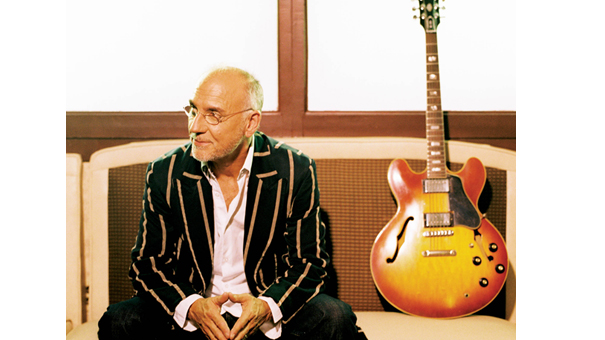
As a music aficionado I have a fascination with album credits. It used to be my primary method of making connections between artists, albums and songs I love. When I hear a great piano accompaniment or a drum track, I immediately browse through the liner notes and credits to find out who the musician might be. In the days when record stores enabled impromptu meetings of like-minded music lovers, a favorite topic was the sharing of this knowledge with others and finding more clues from album covers to lead me to the next album. Many albums omitted those credits, especially when the musicians where hired studio professionals. A few exceptions to this in the 1970s are albums by two of my favorite artists, who were unique in providing detailed listings of all musicians who played on their records: Steely Dan and Joni Mitchell. And one name kept coming up on both of their album sleeve notes, as I scrutinized the fine print to find out who was the guitar player who played all these magnificent licks and solos. This is my tribute to Larry Carlton’s amazing work on their 1970s albums.

Carlton first played with Steely Dan on the 1975 album Katy Lied. The band became a studio entity at this point, hiring the best session musicians in LA and New York. He played only on one tune, Daddy Don’t Live in that New York City No More. A good performance, but nothing like what he would contribute to the band’s next album, The Royal Scam. No less than four session guitar players were invited to the recording of that album, and Carlton plays on many of the songs.

Don’t Take Me Alive, a song whose lyrics always reminded me of the Al Pacino movie Dog Day Afternoon, released the previous year, is one of Carlton’ finest moments on the album. Two of his best musical assets, the melodic solos and the guitar tone, are on display here. If you were wondering about the long chord that starts the song, Carlton remembers: “There was no chord in front of the beginning of the song, nothing. Just ‘wham’. I don’t know what else we tried, but Donald was the one who finally just said, ‘Why don’t we just put a big chord in front of it?’ It was that simple. I went out into the room where my amp was and stood in front of it and tweaked until there was the right tone and then I did four or five or six of those chords to where everything rang. They adjusted the limiter and everything so it really sat like they wanted it to. But Donald was right.”

Carlton’s finest moment on the album and what many consider his best solo in the band’s catalog, is on the opener, Kid Charlemagne. The song about the rise and fall of a drug dealer, likely inspired by Owsley Stanley III, the underground chemist who single handedly freaked out the city of San Francisco in the 1960s, was a great opener for the band’s darkest album. Carlton is all over this song, with a 50 seconds solo that starts at 2:18, full of twists and turns. He does not let up in the outro either, with more tasteful licks as the song fades out. Donald Fagen: “He’s a real virtuoso. In my opinion he can get around his instrument better than any studio guitarist. He’s also quite a good blues player. He did the solos on ‘Kid Charlemagne.’ The middle solo he did in two takes and we used parts of both. The last solo was straight improvisation.” On an album full of excellent guitar work by other musicians such as Denny Dias, Dean Parks and Elliott Randall, Larry Carlton’s role on this album stands out as the most critical. Walter Becker: “If that is the definitive Steely Dan guitar album, then Larry Carlton is the reason why. He contributed quite a bit to the tunes. There would be lot of volatile people with volatile music styles in the room and, in a lot of cases, it seemed to me that Larry, more than anybody else, was holding things together rhythmically and in other ways.” Carlton recalled the sessions for Kid Charlemagne: “Once we found a tone that we all agreed on, Donald Fagen and Walter Becker would say, ‘Yes, that’s cool,’ then really it was just a case of, ‘You want to try one?’ And they would hit the red button and it’d maybe be, ‘How you doing?’ and I’d say, ‘Yes, let’s try it again.’ Then all of a sudden some magic starts happening. Very patient, there were no suggestions of licks or anything like that. I did two hours’ worth of solos that we didn’t keep. Then I played the first half of the intro, which they loved, so they kept that. I punched in for the second half, so it was done in two parts and the solo that fades out in the end was done in one pass.” All in a day’s work.

A few words on Larry Carlton’s celebrated guitar tone are in order. We start with the amp. Remembering that session, he also recalled: “I can’t remember why but I decided to take my little Tweed Deluxe with my 335 and that became my lead sound with Steely Dan.” Making the list of Guitar Player magazine’s top 50 guitar tones of all time, he shaded some light about his technique: “I have the claw thing happening down there on the strings when I play. It lets me know where I’m at, but I’d have better technique if I held my hand free of the strings. I pick hard. In fact, I overplay the instrument. I’ve been squeezing a pick since I was six, and the pressure has curved by index finger. At this point, my hands have molded themselves to fit the guitar.” About that Tweed Deluxe: “That’s the amp that I used for the Steely Dan sessions and I don’t even remember why and how I’d brought the Tweed in, because I didn’t use it on any other sessions, only the Royal Scam, Aja, and Donald’s Nightfly album.”

Saturday, 1 December 2018

Johnny Cash: Ballads of the American Indian

Related image
The Bitter Tears of Johnny Cash
As singer Johnny Cash built ties with the American Indian movement, the record industry lashed out — and the FBI began to surveil him as a radical.

Antonino D'Ambrosio
The Investigative Fund
9 November 2009

In July 1972, musician Johnny Cash sat opposite President Richard Nixon in the White House's Blue Room. As a horde of media huddled a few feet away, the country music superstar had come to discuss prison reform with the self-anointed leader of America's “silent majority.” “Johnny, would you be willing to play a few songs for us,” Nixon asked Cash. “I like Merle Haggard's 'Okie From Muskogee' and Guy Drake's 'Welfare Cadillac.'” The architect of the GOP's Southern strategy was asking for two famous expressions of white working-class resentment.

“I don't know those songs,” replied Cash, “but I got a few of my own I can play for you.” Dressed in his trademark black suit, his jet-black hair a little longer than usual, Cash draped the strap of his Martin guitar over his right shoulder and played three songs, all of them decidedly to the left of “Okie From Muskogee.” With the nation still mired in Vietnam, Cash had far more than prison reform on his mind. Nixon listened with a frozen smile to the singer's rendition of the explicitly antiwar “What Is Truth?” and “Man in Black” (“Each week we lose a hundred fine young men”) and to a folk protest song about the plight of Native Americans called “The Ballad of Ira Hayes.” It was a daring confrontation with a president who was popular with Cash's fans and about to sweep to a crushing reelection victory, but a glimpse of how Cash saw himself — a foe of hypocrisy, an ally of the downtrodden. An American protest singer, in short, as much as a country music legend.

Years later, “Man in Black” is remembered as a sartorial statement, and “What Is Truth?” as a period piece, if at all. Of the three songs that Cash played for Nixon, the most enduring, and the truest to his vision, was “The Ballad of Ira Hayes.” The song was based on the tragic tale of the Pima Indian war hero who was immortalized in the Iwo Jima flag-raising photo, and in Washington's Iwo Jima monument, but who died a lonely death brought on by the toxic mixture of alcohol and indifference and alcoholism. The song became part of an album of protest music that his record label didn't want to promote and that radio stations didn't want to play, but that Cash would always count among his personal favorites.
Related image
The story of Cash and “Ira Hayes” began a decade before the meeting with Nixon. On the night of May 10, 1962, Cash made a much-anticipated New York debut at Carnegie Hall. But instead of impressing the cognoscenti, Cash, who had begun struggling with drug addiction, bombed. His voice was hoarse and hard to hear, and he left the stage in what he described as a “deep depression.” Afterward, he consoled himself by heading downtown with a folksinger friend to hear some music at Greenwich Village's Gaslight Café.

Onstage was protest balladeer Peter La Farge, performing “The Ballad of Ira Hayes.” A former rodeo cowboy, playwright, actor and Navy intelligence operative, La Farge was also the son of longtime Native activist and novelist Oliver La Farge, who had won a Pulitzer Prize for his 1930 Navajo love story, “Laughing Boy.” The younger La Farge had carved out an intriguing niche in the New York folk revival scene by devoting himself to a single issue. “Pete was doing something special and important,” recalls folksinger Pete Seeger. “His heart was so devoted to the Native American cause at a time that no one was really saying anything about it. I think he went deeper than anyone before or since.”

Cash never pretended that music could stay immune from social, but he tried his best to “not mix in politics.” Instead he talked about the things that unite us like the dignity of honest work. “If you were a baker,” he told writer Christopher Wren in 1970, “and you baked a loaf of bread and it fed somebody, then your life has been worthwhile. And if you were a weaver, and you wove some cloth and your cloth kept somebody warm, your life has been worthwhile.”

Raised in rural poverty on the margins of America, Cash empathized with outsiders like convicts, the poor and Native Americans. But his identification with Indians was especially deep — even delusional. During the depths of his early '60s drug abuse, he convinced himself, and told others, that he was Native American himself, with both Cherokee and Mohawk blood. (He would later recant this claim.)

At the Gaslight, once he had listened to “Ira Hayes' and La Farge's other Indian protest tunes, including ”As Long as the Grass Shall Grow“ and ”Custer,“ Cash was hooked. ”Johnny wanted more than the hillbilly jangle,“ Peter La Farge would write later about meeting Cash at the Gaslight. ”He was hungry for the depth and truth heard only in the folk field (at least until Johnny came along). The secret is simple, Johnny has the heart of a folksinger in the purest sense.“ In fact, Cash had written an Indian folk protest ballad of his own in 1957. ”I wrote 'Old Apache Squaw,'“ Cash later explained to Seeger. ”Then I forgot the so-called protest song for a while. No one else seemed to speak up for the Indian with any volume or voice [until Peter La Farge].“

Cash, like many in the 1960s, could see that everything that was certain, rigid and hard was breaking apart. Social movements were blossoming. But the thunderous American choir that was singing ”We Shall Overcome“ and ”We Shall All Be Free“ drowned out the cry of the loose-knit Native movement. As Martin Luther King and other leaders steered their people toward legislative victories that would further integrate them into a society they were locked out of, the rising tide of Native youth activists wanted something different.

”In my mind, Native people could not have a civil rights movement,“ American Indian Movement activist and musician John Trudell says. ”The civil rights issue was between the blacks and the whites and I never viewed it as a civil rights issue for us. They've been trying to trick us into accepting civil rights but America has a legal responsibility to fulfill those treaty law agreements. If you're looking at civil rights, you're basically saying 'all right treat us like the way you treat the rest of your citizens'. I don't look at that as a climb up.“ Rather than pursue assimilation into the American system, Native American activists wanted to maintain their slipping grip on sovereignty and the little land they still possessed.

By the early '60s, the burgeoning National Indian Youth Council (NIYC) was attempting to stake its own claim for their equal share of justice. With the expansion of fishing treaty violations and the breach of two major land treaties that led to the loss of thousands of acres of tribal land in upstate New York for the Tuscarora and Allegany Seneca (the story behind La Farge's ”As Long as the Grass Shall Grow“), the NIYC, led by Native activists like Hank Adams, responded by adapting the sit-in protest. Rechristened as the ”fish-in,“ the NIYC disputed the denial of treaty rights by fishing in defiance of state law. Fish-ins were held in New York and the Pacific Northwest.

The fish-in tactic worked in helping build some public support, but it did little to stop the treaty violations. Instead, the U.S. government ramped up its efforts to crush any momentum the Native movement was building. Oftentimes their tactics were brutal and violent. ”This was the time of Selma and there was a lot of unrest in the nation,“ remembers Bill Frank Jr. of Washington state's Nisqually tribe. ”Congress had funded some big law enforcement programs and they got all kinds of training and riot gear-shields, helmets. And they got fancy new boats. These guys had a budget. This was a war.“

By 1964, the Native American cause had attracted the interest of another celebrity. On March 2 the NIYC gained national attention as actor Marlon Brando joined a Washington state fish-in. Already an outspoken supporter of the civil rights movement, Brando's very public support and subsequent arrest for catching salmon ”illegally“ in Puyallup River helped to boost the Native movement. Brando's involvement with the Native cause had begun when he contacted D'Arcy McNickle after reading the Flathead Indian's book ”The Surrounded,“ a powerful novel depicting reservation life in 1936. Brando's involvement in Native issues led to government surveillance that lasted decades. His FBI file, bursting with memos detailing possible means of silencing the actor, quickly grew to more than 100 pages.

Three days after Brando's arrest in Washington, Cash, fresh off the biggest chart success of his career, the single ”Ring of Fire,“ and having just finished recording a very commercial album called ”I Walk the Line,“ began recording another, very different album. When Cash left Sun Studios for Columbia in the late 1950s, he believed his rising star would give him the creative capital to produce and record something a little outside the pop and country mainstream — albums of folk music and live prison concerts. He was alternating folky albums like ”Blood Sweat and Tears,“ a celebration of the working man, with commercial discs laden with radio-ready singles. ”Ring of Fire,“ which had reached No. 1 on the country charts and had crossed over to pop, had bought him the permission of Columbia to make an album of what he called ”Indian protest songs.“

In the two years since Cash had first met La Farge and listened to ”The Ballad of Ira Hayes,“ Cash had educated himself about Native American issues. ”John had really researched a lot of the history,“ Cash's longtime emcee Johnny Western recalled. ”It started with Ira Hayes.“

As Cash explained, ”I dove into primary and secondary sources, immersing myself in the tragic stories of the Cherokee and the Apache, among others, until I was almost as raw as Peter. By the time I actually recorded the album I carried a heavy load of sadness and outrage.“

But Cash felt a special kinship with Ira Hayes. Both men had served in the military as a way to escape their lives of rural poverty longing to create new opportunities. Plus, both suffered from addiction problems; Cash and his pills and Hayes with alcohol. He decided to anchor the album with ”The Ballad of Ira Hayes.“ And since the song had provided the spark for Cash's vision, it just felt right that he should learn more about the song's subject.

Cash contacted Ira Hayes' mother and then visited her and her family at the Pima reservation in Arizona. Before Cash left the Pima Reservation, Hayes' mother presented him with a gift, a smooth black translucent stone. The Pima call it an ”Apache tear.“ The legend behind the opaque volcanic black glass is rooted in the last U.S. cavalry attack on Native people, which took place on Apaches in the state of Arizona. After the slaughter, the soldiers refused to allow the Apache women to put the dead up on stilts, a sacred Apache tradition. Legend says that overcome by intense grief, Apache women shed tears for the first time ever, and the tears that fell to the earth turned black. Cash, moved by the gift, polished the stone and mounted it on a gold chain.

With the Apache tear draped around his neck, Cash cut his protest album. He recorded five of La Farge's songs, two of his own, and one he'd co-written with Johnny Horton. All were Native American themed. ”When we went back into the studio to record what became 'Bitter Tears,'“ Cash bassist Marshall Grant says, ”we could see that John really had a special feeling for this record and these songs.“
Related image
Yet the album's first single, ”Ira Hayes,“ went nowhere. Few radio stations would play the song. Was the length of the song, four minutes and seven seconds, the problem? Radio stations liked three-minute tracks. Or maybe disc jockeys wanted Cash to ”entertain, not educate,“ as one Columbia exec put it.

”I know that a lot of people into Johnny Cash weren't into 'Bitter Tears,' “ explains Dick Weissman, a folksinger, ex-member of the Journeymen and friend of La Farge. ”They wanted a 'Ballad of Teenage Queen' not 'The Ballad of Ira Hayes.' They wanted 'Folsom Prison.' They didn't want songs about how American's mistreated Indians.“

The stations wouldn't play the song and Columbia Records refused to promote it. According to John Hammond, the legendary producer and Cash champion who worked at Columbia, executives at the label just didn’t think it had commercial potential. Billboard, the music industry trade magazine, wouldn't review it, even though Cash was at the height of his fame, and had just scored another No. 1 country single with ”Understand Your Man“ and No. 1 country album with ”I Walk the Line.“

One editor of a country music magazine demanded that Cash resign from the Country Music Association because ”you and your crowd are just too intelligent to associate with plain country folks, country artists and country DJs.“ Johnny Western, a DJ, singer and actor who for many years was part of Cash's road show, recalls a conversation with ”a very popular and powerful DJ.“ According to Western, the DJ was ”connected to many of the music associations and other influential recording industry groups. He had always been incredibly supportive of John.“ Western and the DJ started discussing Cash's new album and the ”Ira Hayes“ single. ”He asked me why John did this record. I told him that John and all of us had a great feeling for the American Indian cause. He responded that he felt that the music, in his mind, was un-American and that he would never play the record on air and had strongly advised other DJs and radio stations to do the same. Just ignore it until John came back to his senses, is what he told me.“

”When John was attacked for 'Ira Hayes' and then 'Bitter Tears,'“ explains Marshall Grant, ”it just ripped him apart. Hayes was forced to drink by the abuse and treatment of white people who used and abandoned him. To us, it meant Hayes was being tortured and that's the story we told and it's true.“

When ”Bitter Tears“ and its single did not get the attention he felt they deserved, Cash insisted on having the last word. He composed a letter to the entire record industry and placed it in Billboard as a full-page ad on Aug. 22, 1964.

”D.J.'s — station managers — owners, etc.,“ demanded Cash, ”Where are your guts?“ He referred to his own supposed half Cherokee and Mohawk heritage and spoke of the record as unvarnished truth. ”These lyrics take us back to the truth ... you're right! Teenage girls and Beatle record buyers don't want to hear this sad story of Ira Hayes ... This song is not of an unsung hero.“ Cash slammed the record industry for its cowardice, ”Regardless of the trade charts — the categorizing, classifying and restrictions of air play, this not a country song, not as it is being sold. It is a fine reason though for the gutless [Cash's emphasis] to give it a thumbs down.“

Cash demanded that the industry explain its resistance to his single. ”I had to fight back when I realized that so many stations are afraid of Ira Hayes. Just one question: WHY???“ And then Cash answered for them. ”'Ira Hayes' is strong medicine ... So is Rochester, Harlem, Birmingham and Vietnam.“

As Cash later explained, ”I talked about them wanting to wallow in meaninglessness and their lack of vision for our music. Predictably enough, it got me off the air in more places than it got me on.“ In reality, however, as Cash noted in his letter, ”Ira Hayes“ was already outselling many country hits. Ultimately, thanks in part to aggressive promotion by Cash, who personally promoted the song to disc jockeys he knew, ”Ira Hayes“ reached No. 3 on the country singles charts, and ”Bitter Tears“ peaked at 2 on the album charts.
Image result for johnny cAsh AT WOUNDED KNEE
Later, long after ”Bitter Tears,“ and after he'd won his battle with drugs, Cash would dial back his claims of Indian ancestry. But he never wavered from his support for the Native cause. He went on to perform benefit shows on reservations — including the Sioux reservation at Wounded Knee in 1968, five years before the armed standoff there between the FBI and the American Indian Movement — to help raise money for schools, hospitals and other critical resources denied by the government. In 1980, Cash told a reporter: ”We went to Wounded Knee before Wounded Knee II [the 1973 standoff] to do a show to raise money to build a school on the Rosebud Indian Reservation“ and do a movie for ”Public Broadcasting System called 'Trail of Tears.'“ He joined with fellow musicians Kris Kristofferson, Willie Nelson and Robbie Robertson to call for the release of jailed AIM leader Leonard Peltier.

Since Cash first recorded ”The Ballad of Ira Hayes“ in 1964, many musicians have recorded their own versions. Kris Kristofferson is one of those musicians. He summed up the spirit behind Cash's now nearly forgotten protest album in his eulogy for Cash, who died in 2003. Cash, he said, was a ”holy terror ... a dark and dangerous force of nature that also stood for mercy and justice for his fellow human beings.“ Four years before his famous concert at Folsom Prison, four years before the American Indian Movement formed, and at the pinnacle of his commercial success, Cash insisted on producing an uncommercial, deeply personal protest record that was a close as he could come to truth. He would always cherish it. ”I'm still particularly proud of 'Bitter Tears,'“ Cash would say near the end of his life, while talking about the topical music he recorded in the 1960s. ”Apart from the Vietnam War being over, I don't see much reason to change my position today. The old are still neglected, the poor are still poor, the young are still dying before their time, and we're not making any moves to make things right. There's still plenty of darkness to carry off.“

Research assistance for this article was provided by the Investigative Fund of The Nation Institute.
Thursday, 29 November 2018

Bernardo Bertolucci RIP

Image result for bernardo bertolucci
Bernardo Bertolucci obituary
Film director acclaimed for Last Tango in Paris and the Oscar-winning The Last Emperor

Ronald Bergan
The Guardian
Mon 26 Nov 2018

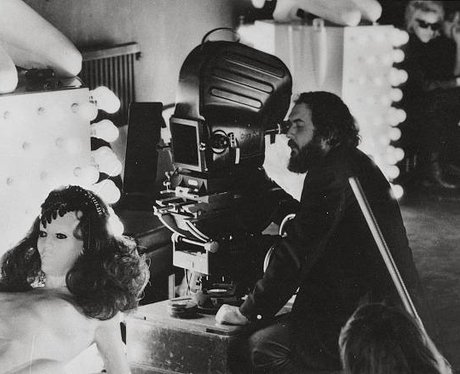
Having already made a reputation as one of the greatest Italian film directors of his generation, Bernardo Bertolucci, who has died aged 77, gained worldwide notoriety with Last Tango in Paris (1972), mainly as a result of its explicit sex scenes. In his depiction of the painful, loveless, joyless relationship between a middle-aged American man (Marlon Brando) and a young Frenchwoman (Maria Schneider), Bertolucci set out to show, he said, that “every sexual relationship is condemned”.

Fifteen years later, Bertolucci gained his greatest international triumph with The Last Emperor (1987), which won nine Oscars. According to Bertolucci, cinema is “a truly poetic language”, a claim that many of his films justify. He had started out as a poet, with his collection In Cerca del Mistero (In Search of Mystery) winning the Viareggio prize in 1962, as his father had done before him.

He was the son of Attilio Bertolucci, a well-known Italian poet, and Ninetta (nee Giovanardi), a school teacher. As a boy Bernardo often accompanied his father to the cinema in Parma, the city where he was born and brought up, and began making 16mm films when he was 16 years old. He got to know the poet Pier Paolo Pasolini through his father, and when Pasolini made his first film, Accatone (1961), Bernardo was hired as production assistant.

A year later he directed his first feature, The Grim Reaper (La Commare Secca), based on a five-page story outline by Pasolini. It told of an investigation into the murder of a prostitute in Rome, seen from different perspectives of different people on the events of her last day. Each episode, as told to the unseen investigator, was filmed in a different style. It is, as the director admitted, the film of “someone who had never shot one foot of 35mm before but who had seen lots and lots of films”.

Before the Revolution (1964), a far more personal film, explores the problems of a selfish middle-class young man who is torn between radical politics and conformity, and between a passionate affair with his young aunt and bourgeois marriage. He opts for respectability on both counts. The film, loosely based on Stendhal’s The Charterhouse of Parma, is technically impressive, as is Bertolucci’s ability to articulate themes, such as the betrayal of a totemic father and the connection of the libido with politics, that would mature in his later work. However, as with the film’s hero, there is an element of the dilettante in Bertolucci’s approach.

This impression grew stronger in Partner (1968), which is an undigested homage to Jean-Luc Godard, about a young man literally divided into two by having a double. Derived from Dostoevsky’s short novel The Double, and updated to the Rome of 1968, it has the central character, played by Pierre Clémenti, speaking French while all the rest speak Italian. In the same year, Bertolucci was credited with the story of Sergio Leone’s Once Upon a Time in the West.

Bertolucci’s reputation was greatly enhanced when he joined forces with the cinematographer Vittorio Storaro, who had been a camera operator on Before the Revolution. The Spider’s Stratagem (1970), the first of eight films they made together as director and director of photography, easily transposed the Jorge Luis Borges story Theme of the Traitor and the Hero from Ireland to Italy. As oedipal and labyrinthine as its source, it concerns a young man who revisits the village in the Po valley where his father was murdered by the fascists in 1936, and gradually discovers that his father, whom he had considered a hero, was really a traitor.

The Conformist (1970) most successfully brings together Bertolucci’s Freudian and political preoccupations in an ironic study of pre-war Italy (beautifully captured by Storaro) and an attempt to penetrate the mind of ordinary fascism. The childhood trauma of having shot a chauffeur who tried to seduce him, together with his own repressed homosexuality, is a strong factor in making Marcello (Jean-Louis Trintignant) contract a bourgeois marriage and offer his services to the fascist party, for whom he is asked to assassinate his former professor. The Conformist saw the full flowering of Bertolucci’s flamboyant style – elaborate tracking shots, baroque camera angles, opulent colour effects, ornate décor and the intricate play of light and shadow that give his work such a distinctive surface.

After the release of Last Tango in Paris in Europe, Bertolucci was indicted by a court in Bologna for making a pornographic film. Although he was acquitted, he lost his civil rights (including his right to vote) for five years and the Italian courts ordered that all copies of the film should be destroyed. In recent years, further controversy surrounded the extent to which Schneider had consented to elements of the film shoot.

The worldwide acclaim and box office for Last Tango in Paris helped Bertolucci obtain the vast financial resources needed to embark on the long-planned project 1900. With this $6m, five-hour epic, released in 1977, Bertolucci turned away from the introspection of his previous films and tried to make a popular movie of the class struggle using the style of both American epics and the socialist realism of the Russian cinema of the 30s. Italian history is seen through the diverging lives of Olmo (Gérard Depardieu), the son of a peasant woman, and Alfredo (Robert De Niro), the son of the lord of the manor (Burt Lancaster), both born on the same day, 27 January 1901, through to Italy’s Liberation Day, 25 April 1945. Often bombastic and didactic, it enters greatness in the last 30 minutes.

Luna (1979) was the story of a passionate mother/son relationship, in which an internationally renowned opera singer (Jill Clayburgh) has an almost incestuous relationship with her spoiled teenage son who is searching for a father. Bertolucci’s virtuosity is undeniable in the film, which threads together a series of splendid scenes (or arias and duets) on the string of an opaque plot.

The Tragedy of a Ridiculous Man (1981) was Bertolucci’s first film to deal with contemporary Italy since 1964. The elliptical, quasi-thriller tells of a factory owner and self-made man (Ugo Tognazzi), who sees his son being forcibly hustled into a car. The police suspect the victim of colluding in his own kidnapping because of his far left sympathies. The reverse of the Spider’s Stratagem, in which a son investigates his father’s life, this ambiguous view of terrorism failed to please the public and critics mainly because the crime is not solved.

It was six years before Bertolucci was able to make another film. In the meantime, he wrote two screenplays based on Dashiell Hammett’s Red Harvest, which he hoped would be his first film set in America. When nothing came of it, he went to China to shoot The Last Emperor in English. It was the first western film to be made almost entirely in China with active official Chinese participation. The biopic of Pu Yi, China’s last emperor or “Son of Heaven” who is “re-educated” by the Maoist regime, is a fascinating, sumptuous epic, covering nearly 60 years of China’s cataclysmic history.

Another exploration of the Bertolucci theme of the upper classes learning about working-class life, the film looks every cent of its $21m cost, which included paying for 19,000 extras, 9,000 costumes, and 2,000 kilos of pasta for the Italian crew. Especially impressive was Storaro’s luminous photography, capturing the golden splendour of the palace in the Forbidden City.

After his two-year sojourn in China, Bertolucci completed what he called his “eastern trilogy”, his exploration of non-western cultures, which opened up his work to existential and philosophical themes: The Sheltering Sky (1990), shot in Algeria, Morocco and Niger, and Little Buddha (1993), shot in Bhutan and Nepal.

The former, based on Paul Bowles’ mystical, metaphysical semi-autobiographical novel, followed an egocentric American couple travelling to find the meaning in their relationship. Bertolucci felt that The Sheltering Sky had much in common with Last Tango in Paris. “Isn’t the empty flat of Last Tango a kind of desert and isn’t the desert an empty flat?” he asked. But despite the beautifully captured arid landscapes, the film itself was dramatically arid.

Little Buddha sets the ancient tale of Siddartha (Keanu Reeves) and his quest for enlightenment alongside a contemporary story of an eight-year-old American boy who may be the reincarnation of a famous Buddhist master. The film, which contrasts the two worlds by underlining the blue tonality of Seattle and the red and gold of the oriental story, was aimed at children, though it was more simplistic than simple, and pleased neither children nor adults.

After his expensive, exotic enterprises, Bertolucci returned to home ground, working on a smaller, more intimate scale with Stealing Beauty (1996), a minor piece about a teenage American girl’s sexual awakening at a villa in Tuscany, inhabited by artists and bohemians, and Besieged (1998), set in Rome, which focuses on the relationship between a reclusive English pianist and his young African housekeeper. Made originally for Italian television, Besieged gave Bertolucci a chance to rediscover a kind of spontaneity in film-making which he felt he had lost since the 1960s.

Bertolucci then tried to recapture the spirit of the student uprising in Paris in 1968 in The Dreamers (2003), but its events provide only a background to a cloistered ménage-a-trois whose main preoccupations are sex and the movies. Paying homage to Jean Cocteau’s Les Enfants Terribles, the film is the apotheosis of Bertolucci’s cinephilia, always an element in his films.

Owing to serious back problems, he used a wheelchair and did not make another film for nine years. Me and You (2012), his first Italian movie since 1981, was a relatively modest affair with a small cast and largely one location – a cellar in which a teenage boy is holed up with his half-sister.

Bertolucci is survived by his second wife, the screenwriter and director Clare Peploe, whom he married in 1978. His first marriage, to the actor Adriana Asti, the female lead in Before the Revolution, ended in divorce.

• Bernardo Bertolucci, film director, born 16 March 1941; died 26 November 2018

Tuesday, 27 November 2018

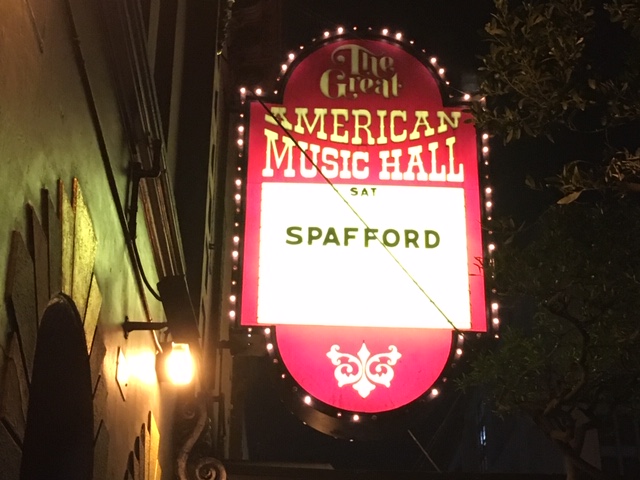
Los Lobos at The Filmore, Chapter 20


Perdiccas
San Francisco
Sunday 25 November 2018

Los Lobos are now in their 45th year as a band.

David Hidalgo missed Friday night with a bad back, so Friday was the Cesar Rosas show. They flew in accordion maestro Josh Baca from Texas to fill out the band and enable the Tex-Mex part of the show.

Hidalgo was back for Saturday - see photo - but Josh Baca stayed on, so it was an even more eclectic mix.

Talking to their roadie after the gig, Hidalgo has only missed six shows ever. Unbelievably, I saw one of them, in Austin this year. 

They had been nervous before Friday, unsure as to how a set of only Cesar’s blues rockers would go down. Bit of a cliche, but they pulled it off.

Saturday was normal Los Lobos, ending with a 15 minute “Bertha” and encore with the Blasters song “Marie Marie”.

These shows were a double header with L.A. punk band X, now in their 40th year. X were very loud.

Roll on next year...

Ah, but there's more...

Perdiccas (attired, you'll notice, in Ravenscroft shirt) with Conrad Lozano

Your intrepid reporter just ran into (Los Lobos bass player) Conrad Lozano on Market Street. Really nice guy. Couldn’t resist. Anyway the 20 year Fillmore pilgrimage makes a nice story.

Monday, 26 November 2018

Nic Roeg RIP

Image result for nic roeg
Nicolas Roeg: a daring film-maker of passionate and visceral brilliance
Roeg will be remembered for a clutch of masterly films – including Don’t Look Now, the best scary movie of all time, and the unclassifiable Man Who Fell to Earth

Peter Bradshaw
The Guardian
Sat 24 Nov 2018

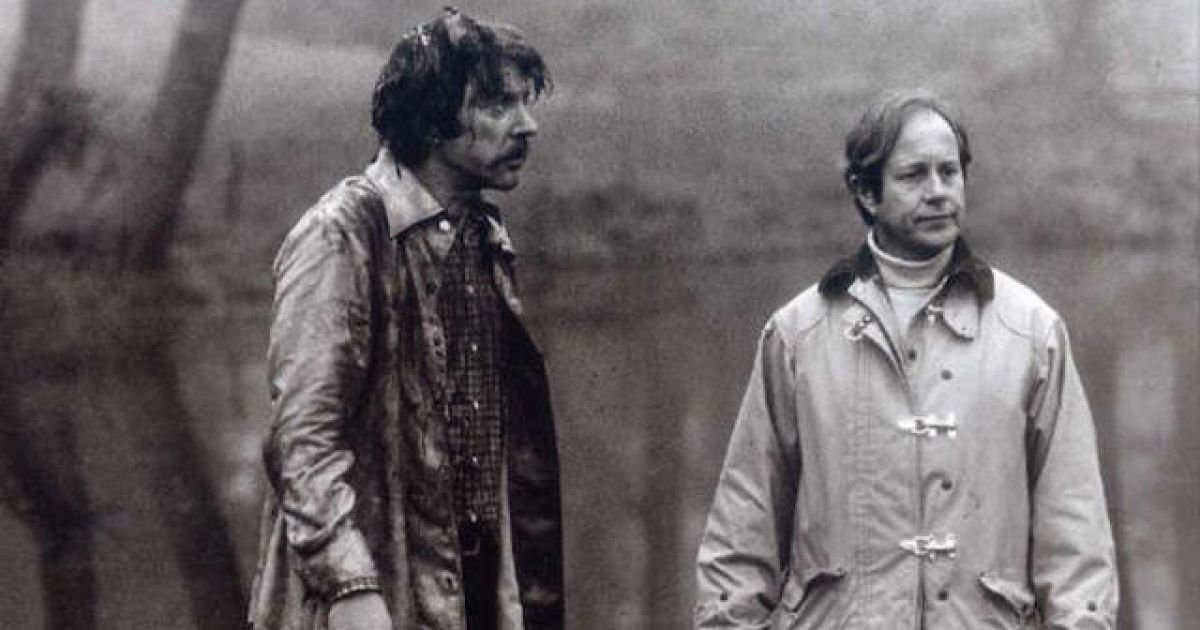
Afew years ago I wrote to Nic Roeg, explaining that I was working on a talk for the radio about his 1973 masterpiece Don’t Look Now, the story of how a couple’s dead child appears to make contact with them in the eerily dark and echoing waterways of Venice. He invited me to tea at his west London house – the elegant neighbourhood, incidentally, of his 1970 film Performance. We got on to the subject of the unspeakably painful “death” scene at the beginning in which the young daughter of Laura and John, the couple played by Julie Christie and Donald Sutherland, drowns in a garden pond while wearing the red anorak to which she is greatly attached.

As I was about to talk about symbolism, Roeg interrupted to tell me that while shooting, that little girl’s father had been in attendance, and every time he called “Action” and the girl sank below the water’s surface, this man could not stop himself jumping into the water to save her. No matter how vehemently Roeg assured him it was safe, he just jumped in, again and again. To get the shot, this man almost had to be physically restrained. It was just too real, too painful, too terrifying. Anyone who has seen the film can understand: the fear and the grief are agonisingly real, despite the irrational chill that attends John’s telepathic sense that something is wrong before the event. I can close my eyes now and see Sutherland, crying out in agony, as he heaves his daughter’s dead body out of the water: it is an image as memorable, more memorable, than the famous sex scene or the supernatural encounters in Venice. Roeg’s films, for all their formal daring, their dreamlike and exotic inventions, their narrative-order experiments, were passionate and visceral. You could compare him, at various stages in his career, to Hitchcock and Kubrick – but Roeg was candid about sex and human relationships in a way that they weren’t.

The great sex scene in the Venice hotel room between Christie and Sutherland (invented by Roeg: it does not exist in the Daphne du Maurier short story it was based on) in which scenes of their lovemaking are disorientatingly mixed in with scenes of them dressing afterwards, is one of his great coups. It is intensely erotic, interspersing the languorous aftermath into the sex like a kind of inverted foreplay. And it is a rare example, maybe the only example, of a movie sex scene in which the participants are not having sex for the first time. (Although it is the first lovemaking since their child’s death.) This is sex between two people who know each other very well. And Christie and Sutherland are for me the most convincing married couple in screen history. Only a film-maker of Roeg’s delicacy and humanity could have created such emotional reality in the middle of a scary movie.

Don’t Look Now was part of an incredible stretch of great films for Roeg who, after a career in cinematography which would have been quite enough for most mortals, came to directing remarkably late: Performance (1970) Walkabout (1971), Don’t Look Now (1973), The Man Who Fell to Earth (1976) and Bad Timing (1980). And even after that he continued to make excellent movies, including Insignificance (1985), the Terry Johnson-scripted fantasy of Marilyn Monroe meeting Albert Einstein, Track 29 (1988), the sensually charged Dennis Potter drama with Gary Oldman and Roeg’s partner Theresa Russell, and his Roald Dahl fantasy The Witches (1990) with Anjelica Huston.

Performance (co-directed with Donald Cammell) is an extraordinary film which only gets more extraordinary as time goes by: it is a vivid time capsule of the experimental bohemianism of the late 60s and early 70: a gangster movie, a crime movie, a movie by and for freaks that plugged into the zeitgeist just as it was getting blearier and more cynical. James Fox is the London gangster who holes up in the west London pad of the reclusive rock star played by Mick Jagger. The spiritual cousin of Dennis Hopper’s Easy Rider (1969), Performance was a freewheeling, free-thinking road movie which stayed put and journeyed into the mind’s dark interior.

His Walkabout (1971) was another sexually and spiritually dangerous movie, an Australian new wave gem which deserves to be continually revived on screens big and small, but somehow isn’t: the story of two children who are left alone in the outback and befriend an Indigenous Australian boy who helps them survive. Roeg also here deserves to be noted for working with the great dramatist Edward Bond, and seeing how Bond’s rarely employed brilliance could supercharge the movies.

Roeg’s The Man Who Fell to Earth (1976) was another unclassifiable, generically unlocatable masterpiece, a film which like Performance harnessed the charisma of a rock god: in this case David Bowie. It is a glorious concept album of a film, or a hyper-evolved midnight movie cult classic in the manner of Roger Corman, with something of 2001. Bowie is the intergalactic visitor to Earth on a mission to save his own stricken planet. The scene in which he faints and has to be carried into his hotel room has a bizarre, fetishistic eroticism that no other director could even guess at.

Bad Timing (1980) is another toweringly transgressive and challenging masterpiece from Roeg, something that at the time upset moralists and thrilled cinephiles (who were also, perhaps, secretly upset as well). Maybe now is the time for cinemas to re-release it in a double bill with Douglas Sirk’s Magnificent Obsession (1954). It also reminds me a little of Dennis Potter’s chilling play Brimstone and Treacle — and at a further remove, of Almodovar’s Talk to Her. Art Garfunkel plays an American psychiatrist who has conceived an obsession with a beautiful American woman played by Theresa Russell. The agony of their relationship is revealed in disordered scenes. The title of the movie may be an ironic comment on Roeg’s audacious attitude to storytelling, or to the tragic fault in our lives generally: the times being out of joint.

And as if that wasn’t enough for us all, he produced a later gem which some consider to be his greatest, and certainly most underrated film: Eureka, in 1983, based on the mysterious true-crime case of Sir Harry Oakes, the fabulously wealthy goldmine owner murdered in his luxurious home. Roeg cast Gene Hackman as the plutocrat whose wealth has somehow transmuted in his mind, through an anti-alchemy of greed and paranoia, into an unending fear that everyone wants to take his money. Eureka is a brilliant Jonsonian parable of human misery.

What an extraordinary film-maker Nic Roeg was, a man whose imagination and technique could not be confined to conventional genres. He should be remembered for a clutch of masterly films, but perhaps especially for his classic Don’t Look Now, not merely the best scary movie in history, but one infused with compassion and love.

Saturday, 24 November 2018

John Bluthal RIP

Related image

John Bluthal obituary
Stage and screen actor who appeared in popular sitcoms including Never Mind the Quality, Feel the Width and The Vicar of Dibley

Anthony Hayward
The Guardian
Mon 19 Nov 2018

The actor John Bluthal, who has died aged 89, forged a long and successful acting career in Britain that began in the golden age of television in the 1960s, when he provided a foil to the comedy legends Michael Bentine, Eric Sykes, Peter Cook and, over several decades, Spike Milligan.

Bluthal soared to the top of the bill when he starred alongside Joe Lynch in the sitcom Never Mind the Quality, Feel the Width (1967-71), the pair playing respectively the Jewish jacket-maker Manny Cohen and the Irish trouser-maker Patrick Kelly running a business in the East End.

In the series created by Vince Powell and Harry Driver, which had an audience of up to 20 million, Manny sees Patrick as a bigoted Catholic while Patrick regards Manny as an ignorant heathen. Tailoring is the only thing that binds the two men together. There was also a 1973 film spin-off.
Two decades later, Bluthal provided support to Dawn French’s woman priest Geraldine Granger in another popular sitcom, The Vicar of Dibley, created by Richard Curtis. In both series (1994-98) and in various specials until 2013, he played Frank Pickle, the parochial church council secretary at St Barnabas fastidiously taking the minutes. When Pickle comes out as gay after 40 years in the closet, no one hears this revelation because he makes it on a local radio station – and listeners turn off in advance because of his reputation for being boring.


For another sitcom, Home Sweet Home (1980-82), Bluthal returned to Australia – his home for more than 20 years before settling in Britain – to star as Enzo Pacelli, an Italian immigrant taxi driver. It was another culture-clash comedy, with the ham-fisted Enzo keen to champion his Italian values while his three Australian-educated children embrace the culture of their adopted country.

John was born Isaac Bluthal in the southern Polish town of Jezierzany, in Galicia (now Ozeryany, in Ukraine), to Israel, who worked in the family wheat mill, and Rachel (nee Berman). In 1938, a year before Hitler’s invasion, the nine-year-old Isaac, his sister Nita and their Jewish parents left behind antisemitism in Poland and fled to Australia, where he became known as John.

He was educated at University high school, Melbourne, and showed a talent for accents and impersonations. In 1947, he began training in speech and drama at the Melbourne Conservatorium. Two years later, he appeared at the Budapest youth festival, then moved to London to perform in variety venues and in plays at the Unity theatre.


For several years, he moved between Britain and Australia, before spending the rest of the 1950s building a solid CV in theatres in Melbourne and Sydney. He appeared alongside Bentine in the revue Colored Rhapsody (Tivoli theatre, Melbourne, 1955) and with Leo McKern in The Rainmaker (Elizabethan theatre, Sydney, 1956). Bluthal also performed with Bentine’s fellow Goon Show star Spike Milligan in the 1958 Australian TV special The Gladys Half-Hour and the first two series of The Idiot Weekly (1958-59) on radio.

In 1960, a year after settling in Britain, he played Charlie in the Ray Galton and Alan Simpson-scripted sitcom Citizen James, starring Sid James. He followed this with episodes in the comedy series Sykes and a…(1961), and provided one of the radio voices in the classic Hancock TV series episode The Radio Ham.

He reunited with Bentine in two series of the madcap sketch show It’s a Square World (1961 and 1963) and joined Cook and Dudley Moore in a 1965 episode of Not Only … But Also.


However, Bluthal’s most prolific work with this new generation of groundbreaking writers and performers was alongside Milligan; he was a supporting player in a string of radio programmes, such as The Omar Khayyam Show (1964) and The Milligan Papers (1987), and in TV series including the long-running, surreal sketch show Q… (1969-80), its 1982 sequel, There’s a Lot of It About, and in the series Milligan in … (1972-73). Bluthal and Milligan also appeared on stage together in the satire The Bedsitting Room (Mermaid and Duke of York’s theatres, 1963), written by Milligan and John Antrobus, and in the film The Great McGonagall (1975).

“Working with Spike is agony because he is impetuous and chaotic,” Bluthal explained of Milligan, who was prone to manic depression. Milligan was reputed to have said of his fellow actor: “I love John, but he’s so temperamental.”

On British TV, Bluthal also voiced Commander Wilbur Zero and other characters in Gerry Anderson’s puppet series Fireball XL5 (1962-63). In Australia, he starred as JJ Forbes in the 1981 comedy drama And Here Comes Bucknuckle.


He appeared in many British comedy films of the 60s and 70s, with parts in Carry On productions, the Doctor pictures, and Pink Panther films as well as the Beatles movies A Hard Day’s Night (1964) and Help! (1965). He went to Hollywood for the first time in his mid-80s to play a Marxist professor alongside George Clooney in the film Hail, Caesar! (2016).

However, Bluthal declared theatre to be his first love. He succeeded Ronald Moody in 1961 as Fagin in the original production of Lionel Bart’s hit musical Oliver! in the West End (New theatre) and had many roles with the National Theatre company.

Bluthal returned to Australia to live in Sydney, near his family, in 1999. In 1956, he married the actor and singer Judyth Barron. Although they eventually separated, the couple remained friends; she died in 2016. He is survived by their daughters, Nava, a singer, and Lisa, an actor and singer.

• John Bluthal (Isaac Bluthal), actor, born 12 August 1929; died 15 November 2018

https://www.theguardian.com/tv-and-radio/2018/nov/19/john-bluthal-obituary

Friday, 23 November 2018

Wednesday night's set lists at The Habit, York

Da Elderly (right) with two drunken fans

The Elderly Brothers: -
He'll Have To Go
Walk Right Back


Ron Elderly: -
Make You Feel My Love
Need Your Love So Bad
You Better Move On


Da Elderly: -
Via Con Dios
I Believe In You
One Of These Days


The Elderly Brothers: -
When Will I Be Loved
The Price Of Love
All My Loving
Then I Kissed Her
I Saw Her Standing There


We ended up running the show as our usual host was poorly and so started off with a couple of songs to open the proceedings. It was very quiet for the first hour or so, so we gave players 3 songs instead of the usual 2 and as others arrived we got through without any hitches.....apart from not getting the reverb unit to work (only one player noticed!!). After my set, kicking off with a Les Paul and Mary Ford classic, I accompanied taxi-driver Chris on Bring It On Home To Me, Birds and Only Love Can Break Your Heart. After closing with some up-tempo Elderlys standards, the audience wanted more, so we continued playing requests (wherever we could) unplugged until closing time. We even played Happy Birthday to an appreciative punter. Great fun!


Tuesday, 20 November 2018

The Streets of San Francisco...


Street poverty in San Francisco is appalling. Twenty years ago, at least people slept in doorways. Nowadays they just sleep anywhere on the sidewalk. Human faeces are visible and the place is a health hazard. Signs such as “help, have AIDS, need food” are not uncommon.

Took a walk through the Tenderloin on Saturday, which is horrible. People queuing for food, a lot of them either drunk or stoned, and mainly Black.

The Amtrak ticket clerk was telling me that a few months ago there was a prestigious sales conference in the city and they cleared the streets of homeless to create a better impression. He has recently started driving for Uber to make a bit of extra cash. Demand for Uber is massive here because Twitter and Google are based in the Bay Area and the tech kids have so much money, they will call an Uber to travel two blocks. He says the trickle down economy is working for him. 

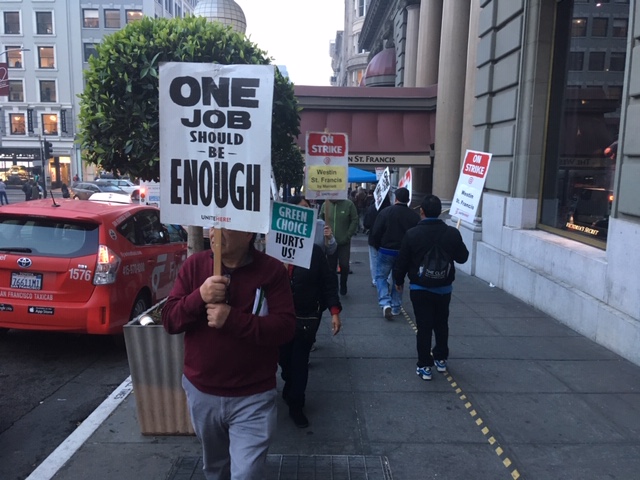
The photo shows striking workers outside the Marriott hotels. Mostly Latino. They were making a hell of a din.

- Perdiccas