Saturday, 15 September 2018

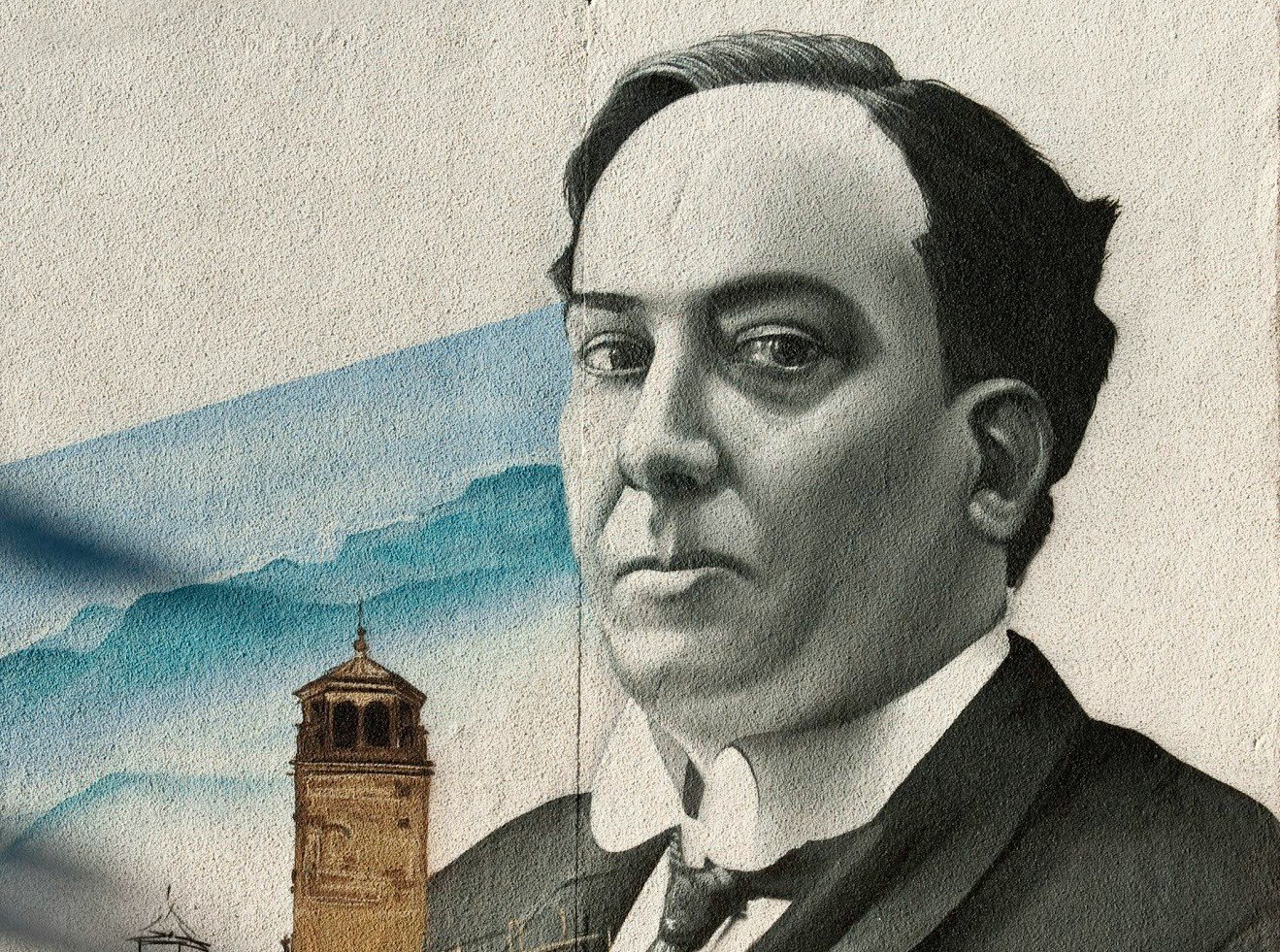
Dead Poets Society #86 Antonio Machado: The Wind, One Brilliant Day

Image result for antonio machado

The Wind, One Brilliant Day by Antonio Machado

The wind, one brilliant day, called
to my soul with an odor of jasmine.

'In return for the odor of my jasmine,
I'd like all the odor of your roses.'

'I have no roses; all the flowers
in my garden are dead.'

'Well then, I'll take the withered petals
and the yellow leaves and the waters of the fountain.'

the wind left. And I wept. And I said to myself:
'What have you done with the garden that was entrusted to you?'


Friday, 14 September 2018

Wednesday night's set lists at The Habit, York

Da Elderly discussing the possibility of adding Rat in the Kitchen to his set with a man who could tell him a thing or two

Ron Elderly: -
Yesterday
The Air That I Breathe


Da Elderly: -
Love Song
You've Got A Friend


The Elderly Brothers: -
All I Have To Do Is Dream
When Will I Be Loved
Walk Right Back
When I Saw Her Standing There


Busy at times, quiet at times......one of those nights at The Habit open mic. Ron's planned set list was scuppered when our host kicked off with Jealous Guy and 3rd act on, regular Chris, sang Dock Of The Bay! We were entertained by a new chap sporting a great-sounding ukulele, particularly on Labi Siffre's It Must Be Love. The Elderlys finished off the show proper and the after-show jam had folks singing along for another hour or so.

Thursday, 13 September 2018

Tuesday, 11 September 2018

Paul Simon - In the Blue Light - and beyond?

Image result for Paul simon
For Paul Simon On His Retirement — Wisdom From My Grandpa Joe

Dan Epstein
forward.com
5 September 2018

My grandfather had a surprise for me. Seven years after buying his 1971 Buick LeSabre, he’d finally decided to get with the times and install an eight-track cassette player under the car’s dashboard. This in itself was not surprising, as he was a talented amateur pianist and violinist who genuinely loved music, even if his taste ran hard toward the Mantovani/Lawrence Welk end of the spectrum.

No, what surprised me was the tape that was playing when I climbed inside his car: “Simon and Garfunkel’s Greatest Hits.” Anything that even vaguely smacked of longhaired hippie music (or longhaired hippie anything) was absolutely anathema to Grandpa Joe; and yet, here we were, bobbing our heads in time to the di-di-di’s of “Mrs. Robinson.” “I like these boys,” he said, offering not so much an explanation as a magnanimous proclamation. “They can really sing, and they write beautiful songs. I think they’ve got something there!”

Even though I was only 12 at the time, I knew that Grandpa Joe was a little late to the party on this one, though I certainly wasn’t about to kill the mood by pedantically informing him that Paul Simon and Art Garfunkel had actually broken up when I was still in preschool. Still, until that moment, I hadn’t fully understood the sheer breadth of Simon & Garfunkel’s appeal. My parents and their friends had spun the duo’s records in fairly regular rotation while I was growing up, and songs like “The Sound of Silence,” “I Am a Rock” and “The 59th Street Bridge Song (Feelin’ Groovy)” always sounded to me like poetically composed snapshots from the grim and grimy New York City that my folks had left behind for the green parks of Ann Arbor, Michigan, when I was still a toddler. And as I grew older and began to learn about the tumultuous decade of my birth, songs like “America,” “Scarborough Fair/Canticle” and “Mrs. Robinson” became aural talismans of that era. But as far as I could tell, Grandpa Joe had no particular associations at all with Simon & Garfunkel’s music; he simply liked their voices and liked their songs. That was good enough for him — and, I suspect, for many of the others who have purchased “Simon & Garfunkel’s Greatest Hits” over the years, a record that has sold more than 14 million copies in the United States alone, making it the best-selling album in this country by any duo, ever.


While you couldn’t exactly call Simon & Garfunkel “America’s Beatles” — even if they did create “Bookends,” the closest thing any American recording artist ever got to “Sgt. Pepper’s Lonely Hearts Club Band “— they did occupy a similar position in the musical firmament. S&G and the Fab Four both wrote songs that appealed to everyone, from revolutionaries to retirees, songs that were covered by everyone from Elvis to Aretha; both groups broke up in 1970, leaving us with grandiloquent statements on their way out the door (“Bridge Over Troubled Water” and “Let It Be,” respectively), and both produced stunning bodies of work during the 1960s that cast long shadows over the musical landscape of the 1970s, as well as the subsequent solo careers of the individual former members. Just as a Beatles reunion was the constant subject of conjecture up until John Lennon’s death in 1980, Paul Simon couldn’t make a peep in the 1970s without being asked about a reunion with Art Garfunkel — and every time they did actually reunite (to record the 1975 song “My Little Town,” and for tours in 1982 and 2003–04), the questions would inevitably flare back up as soon as the two men went their separate ways.

Unlike John Lennon and Paul McCartney, though, Simon & Garfunkel were never a straight songwriting partnership; with the exception of “The Boxer,” for which Garfunkel received a co-writing credit, and the traditional “Scarborough Fair,” S&G’s biggest and best songs were all written by Simon. Garfunkel may have had the angelic voice and the groovy Jewfro, but Simon had the serious songwriting chops — and the release of his first three singles (“Mother and Child Reunion,” “Me and Julio Down by the Schoolyard” and “Duncan,” all from the 1972 “Paul Simon”), made it clear that his pen was far from dry.

Forty-eight years after Simon & Garfunkel’s split, Simon has announced that he will be retiring from the road following his current Homeward Bound — The Farewell Tour, which finishes on September 22 with a show at Flushing Meadows Corona Park. In conjunction with the final leg of the tour, the 12-time Grammy winner will also be releasing a new album, “In the Blue Light”; due out September 7, and co-produced with longtime collaborator Roy Halee, the album will feature 10 of Simon’s favorite songs from his back catalog, all rearranged and rerecorded with a stellar cast of musicians, including Wynton Marsalis, Bill Frisell, Jack DeJohnette, John Patitucci and Steve Gadd.

What’s interesting about “In the Blue Light” is that all the songs included could essentially be classified as “deep cuts.” While I do remember occasionally hearing “One Man’s Ceiling Is Another Man’s Floor” (from his 1973 smash “There Goes Rhymin’ Simon”) and “Rene and Georgette Magritte With Their Dog After the War” (from the 1983 underrated “Hearts and Bones”) on FM radio, songs like “How the Heart Approaches What It Yearns” (from the 1980 “One-Trick Pony”), “Can’t Run But” (from the 1990 “The Rhythm of the Saints”) and “Questions for the Angels” (from the 2011 “So Beautiful or So What”) have probably fallen through the cracks for all but the most ardent Simon followers. As Simon is someone who has always taken his songs and songwriting very seriously, it’s not surprising that he’d take the opportunity with “In the Blue Light” to gently tap his fans on the shoulder and say, “Hey, don’t forget about these.”

Even more interesting, perhaps, is what isn’t on “In the Blue Light”: namely, anything from his blockbuster 1986 album, “Graceland.” It could be that Simon simply considers the recordings of “Graceland” to be definitive and feels no need to revisit or remake any of the songs from that LP. But I suspect that this is also his way of deftly shifting the spotlight away from the controversial-yet-commercial colossus that revived his career but ultimately proved impossible to follow.

It’s fascinating to consider how differently Simon’s career might have played out if it hadn’t been for “Graceland.” Much like Paul McCartney, Simon spent the ’70s writing songs that were essentially a straightforward and commercially fruitful evolution of the music he’d made with his previous outfit; though fresh sounding and occasionally even inventive, hits like “50 Ways To Leave Your Lover,”“Slip Slidin’ Away” and “Still Crazy After All These Years” didn’t make anyone gasp incredulously, “Whoa, that’s Paul Simon?” He dabbled a bit in film, demonstrating his little-seen comedic talents as the sleazy record producer Tony Lacey in Woody Allen’s “Annie Hall” (Allen reportedly gave Simon carte blanche to improvise his lines, insisting only that he work the phrase “very mellow” into the dialogue), and portraying a less-successful version of himself in the Robert M. Young-directed “One-Trick Pony,” a beautiful bummer of a film that tanked at the box office in the fall of 1980 — though it did produce “Late in the Evening,” which would be the last top 10 U.S. hit of Simon’s career.

Simon’s next album, the 1983 “Hearts and Bones,” was originally conceived as a Simon & Garfunkel reunion album, to be recorded on the heels of the duo’s massively successful reunion tour — and it might actually have been a hit if Garfunkel had stayed with it up to the finish line. But there wasn’t a big market for a Paul Simon solo album in a world besotted with Duran Duran and Culture Club, and the record’s gently cerebral sound and deeply personal songs about Simon’s unraveling relationship with his second wife, Carrie Fisher (the “one and one-half wandering Jews” of the lovely title track comprised these two), ultimately doomed “Hearts and Bones” to be the least commercially successful record of Simon’s post S&G career, at least up to that point.

If you’d bet then that Simon would bounce back three years later with a multiplatinum album of considerable cultural significance, you’d have been widely mocked — and then, when it actually came to pass, probably been burned as a witch. Certainly, nobody at Warner Bros., Simon’s label at the time, was predicting big things for “Graceland”; the company released the album with little fanfare in the fall of 1986. “It could be that I’ve reached the point in my career where I can’t be a viable commercial force in popular music,” Simon told The New York Times shortly before the record’s release. “But even if the album is not a hit, in the future I don’t plan to modify anything.”

To be fair, an album by an aging singer-songwriter of diminishing commercial power newly besotted with the township music of South Africa probably didn’t look like a slam-dunk to anyone involved at the time, even Simon; certainly, very little on the record sounded like anything he’d done before. But timing is everything, and “Graceland” hit the streets at a moment when interest in South African politics and music was rapidly increasing. Though Simon had violated the worldwide cultural boycott imposed upon the country because of its government’s apartheid policies by recording part of the album in Johannesburg with South African musicians — and though the album still raises thorny questions today about cultural appropriation (and maybe straight-up thievery, since Los Lobos saxophonist Steve Berlin has claimed many times that Simon stole his band’s music for the closing track, “All Around the World or the Myth of Fingerprints”) — there’s no denying the important role that songs like “The Boy in the Bubble,” “Diamonds on the Soles of Her Shoes” and “Under African Skies” played in bringing South African music to millions of listeners in the United States and elsewhere. Along with Peter Gabriel’s “So” (which came out a few months earlier), “Graceland” inspired countless Western listeners to explore African sounds for the first time.

But the album’s unexpected success — it wound up selling an estimated 14–16 million copies worldwide — also painted Simon into a strange corner. Though he’d been working “world music” influences into his songs since the 1970 Simon & Garfunkel hit “El Condor Pasa,” he was now cast as an intrepid musical explorer who traveled the far corners of the globe to discover exotic new sounds and styles for the delectation of Western audiences. I’ll never forget working the counter at a record store when “The Rhythm of the Saints” came out; the mad rush of neighborhood yuppies to grab the follow-up to “Graceland” on its first day of release was something to behold, with many of them picking up extra copies for co-workers back at their offices. “Where is Paul going to take us now?” seemed to be the question that hung in the air.

That time out, Simon was incorporating Brazilian rhythms, instrumentations and musicians into his songs, along with West and Central African dance music. But while certainly tasteful enough, and even interesting at times, “The Rhythm of the Saints” audibly lacked the vibrant joy of “Graceland,” and Simon’s increasingly elliptical songwriting seemed almost like an afterthought to the album’s musical experiments. It was the one time in Simon’s career where he seemed to be chasing his own tail instead of his muse; though the album sold respectably (2 million copies in the United States alone), I wasn’t at all surprised when my record store wound up returning several boxes of the CD to the distributor.

It would be seven years before Simon returned with new music, this time with “Songs from the Capeman,” containing his cast-augmented performances from the Broadway musical he wrote with Derek Walcott on the life of Hell’s Kitchen murderer Salvador Agron. Savagely reviewed by critics, the stage production was a disaster, and the accompanying album didn’t fare much better; still, I couldn’t help but respect Simon for sticking his neck out with the project, and the music’s mixture of gospel, doo-wop, rock and Latin rhythms at least seemed more in his wheelhouse than another world music adventure would have been — even if I had been secretly hoping for an album of Simon songs set to Maori nose flute.

While Simon certainly hasn’t shied away from musical exploration on his subsequent albums — he collaborated with sonic wizard Brian Eno on the 2006 “Surprise,” while the 2016 “Stranger to Stranger” utilized electronic beats from Italian dance artist Clap! Clap! and custom instruments build by the late music theorist Harry Partch — they’ve all come across as overly personal and even whimsical, like the experiments of a mad scientist in his basement. Which is, frankly, why they continue to feel engaging and fresh. “There are a lot of preconceptions [about my new work] because I have been familiar to the public for 50 years,” Simon told Rolling Stone in 2016. “They go, ‘Is it going to be “Graceland”? Is it going to be “Me and Julio Down by the Schoolyard”? Simon and Garfunkel? “The Capeman”? To get people to listen with open ears, you have to really make something that is interesting, because people are prepared for it not to be interesting.”

And while he’s calling it quits from the stage, I highly doubt that “In the Blue Light” will be the last we hear from Paul Simon. It may be late in the evening as far as his career is concerned, but all the music is still seeping through. And yes, Grandpa Joe, I think he’s got something there.


Dan Epstein’s most recent book is “Stars and Strikes: Baseball in the Bicentennial Summer of ’76.” He is a frequent contributor to Rolling Stone and the Forward.

https://forward.com/culture/music/408085/for-paul-simon-on-his-retirement-wisdom-from-my-grandpa-joe/

Monday, 10 September 2018

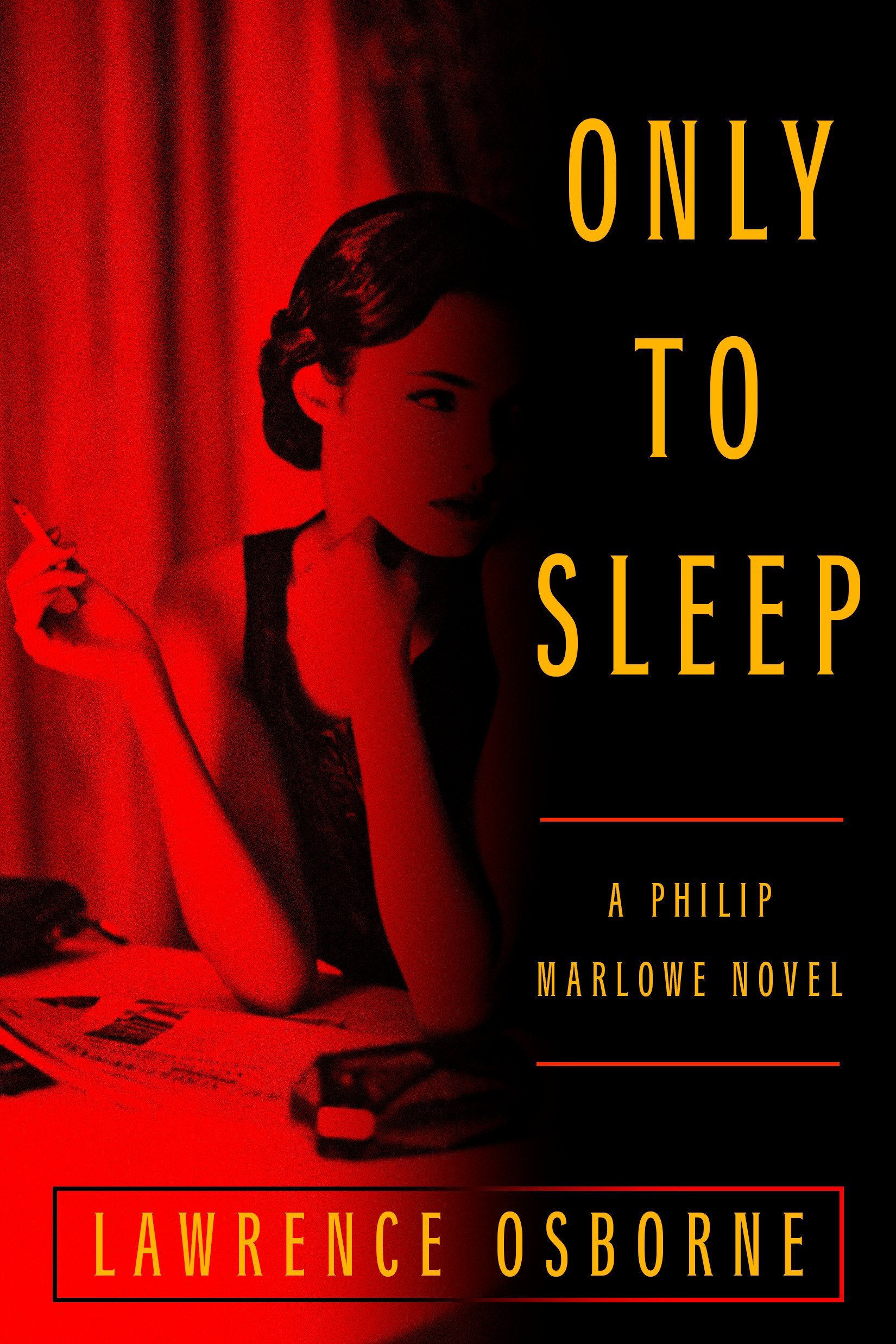
Only to Sleep by Lawrence Osborne: the return of Philip Marlowe

Image result for lawrence osborne only to sleep
Only to Sleep 
By Lawrence Osborne
256 pp. Hogarth. $26.

It’s 1988 and Philip Marlowe Is Retired. But Not for Long

By Laura Lippman
The New York Times
17 July 2018

My stepson had read all of J. R. R. Tolkien by age 10, even “The Silmarillion.” Mourning for a world in which there were no more hobbits to follow, he tried to write his own adventure for Tolkien’s characters. I understood the impulse; as a teenager, I wrote short stories based on a relatively obscure novel that had managed to inspire a film and a short-lived television show. (This novel is named in a document in my safe deposit box and will be revealed at my funeral service.) Almost every reader has known this desire for more. The results have ranged from the“Oz” sequels to “Fifty Shades of Grey.”

When these stories emerge from the genre known as fan fiction — noncommissioned, uploaded to the internet for anyone to enjoy — they’re frequently derided. But a fan’s notes are rooted in a passion seldom matched by the authorized versions. The latter, even if better crafted, have a hard time escaping that cash register ka-ching pinging beneath each word. Estates also err on the side of caution. The keepers of the“Gone With the Wind” flame authorized “Scarlett” and fought “The Wind Done Gone”; surely, it should have been the other way around.

The best plan is to find fans-in-waiting, writers with genuine passion and encyclopedic knowledge; Ace Atkins, recruited by Robert B. Parker’s heirs for the continuation of the Spenser series, is a good example. Parker, as it happens, was scouted by the estate of Raymond Chandler to finish a Philip Marlowe book (“Poodle Springs”) and write an additional one(“Perchance to Dream”). Then, as in a fairy tale, the kingdom fell silent for many years. Four years ago, John Banville, albeit under the name of his crime-writing alter ego, Benjamin Black, published “The Black-Eyed Blonde.” Now Lawrence Osborne, an accomplished writer of fiction and nonfiction, has been asked to imagine a new case for Philip Marlowe and — have a smell from the barrel, all you gunsels and able grables — it crackles.

I approached the book as wary as a — forget it, I’m not going to succumb to the urge to match Chandler’s (and now Osborne’s) signature similes. The setup is brisk and disarming. The year is 1988 and Marlowe is a retiree in Mexico — Baja California, which, at the end of the Reagan era, is “what all of California once looked like.” His days are routine, although part of the routine is rather odd. On weekends, he frequents a bar with a machine called El Electrucador — put your fingers on the pad, withstand the shock and get a free shot of mezcal. “I figured the shocks were doing my intestines and hair roots some good. People said I looked much younger when I came back from my weekends. They said I looked ‘returned from the dead.’ At my age, I’ll take any compliment.”

Oh, and he walks with a silver-tipped cane, a cane that hides a blade worthy of the Bride in “Kill Bill.” Do I really need to tell you to keep an eye on that cane?

Weekends in Ensenada’s casinos, weekdays at a hotel called La Fonda, playing cards and eating roast suckling pig — this has been Marlowe’s life for almost a decade. Then two insurance men “dressed like undertakers” walk into La Fonda’s terrace bar. They’ve been told that Marlowe is the “best that money couldn’t buy.” An American named Donald Zinn has died under mysterious circumstances in a remote coastal village, leaving $2 million to his much-younger wife. The insurance men think there might be mitigating circumstances that could affect the payout.

Zinn and his wife, Dolores, had been drowning in debt from bad real estate investments. Surprise, surprise, the widow is gorgeous — and possibly lethal. “She had the level interest in something new that a leopard has. While it decides whether you can be killed or not, its eyes are remarkably gentle and serene.” Still, Marlowe is instantly smitten. He fantasizes about whisking her around a dance floor, preferably to “Begin the Beguine.”

And this is where Osborne comes into his own, only 20 pages in. Dames once literally fell for Marlowe; consider Carmen Sternwood in “The Big Sleep,” collapsing into his arms within minutes of meeting him. She was still doing a variation on this shtick in the 1978 screen version, when Marlowe was played by a careworn Robert Mitchum only a few years out from collecting Social Security. But Osborne’s Marlowe is finished with the romance game, and he knows it. He’s frankly envious that the 71-year-old dead man, so near his age, “had gotten to lie next to this beauty night after night, like Gandhi among his Nereids.”

The best P.I. stories build slowly and keep the stakes relatively small. Osborne, who worked as a reporter along the border in the early 1990s, knows Mexico well and he passes that knowledge along to Marlowe. The former private investigator quickly establishes that the dead man on the beach might not have been Donald Zinn, but some poor patsy with Zinn’s ID. The game is afoot, with just the right amount of reversals and double-crosses. If certain moments seem illogical — well, that too is part of the Chandler oeuvre.

The book’s greatest suspense centers on Osborne’s fealty to Chandler’s Marlowe, especially in the description set out in Chandler’s 1950 essay,“The Simple Art of Murder.” The key passage begins, rather famously: “But down these mean streets a man must go who is not himself mean, who is neither tarnished nor afraid.” It continues at great length, delineating the man’s — always a man’s, forever a man’s — sexual habits (“neither a eunuch nor a satyr”), his way of speaking, his code.

Chandler was doing what writers often do, making a case for his own brand of art — while taking potshots at writers who did it differently, such as Agatha Christie and Dorothy L. Sayers. As someone who has written P.I. fiction, I don’t always subscribe to Chandler’s dictates, particularly his assertion that “in everything that can be called art there is a quality of redemption.” So I’m wide open to Osborne’s version of Marlowe, which forces us to wonder at times whether he’s still a man of honor.

He’s definitely a man still full of similes and metaphors — about women, the weather, the color of the skies in the dusty Mexican towns he visits. When “Perchance to Dream” was released, Martin Amis, writing in these pages, argued that most readers couldn’t spot the difference between Chandler’s and Parker’s rhetorical flourishes — both had written too many duds. I believe Chandler simply fell back on those flourishes too often, resulting in a low winning percentage. Osborne does it slightly better, although I would still prune a few. (Dolores’s eyes are also likened to “the shiftiness of a vagrant, the ever-moving pupil that reminds you of an apple bobbing in dirty water.” Man, that’s one hard-boiled Halloween party.)

But this is a quibble with a novel that exceeded my expectations, a gripe as petty as —

Naw, I’m still not going to risk it.

Saturday, 8 September 2018

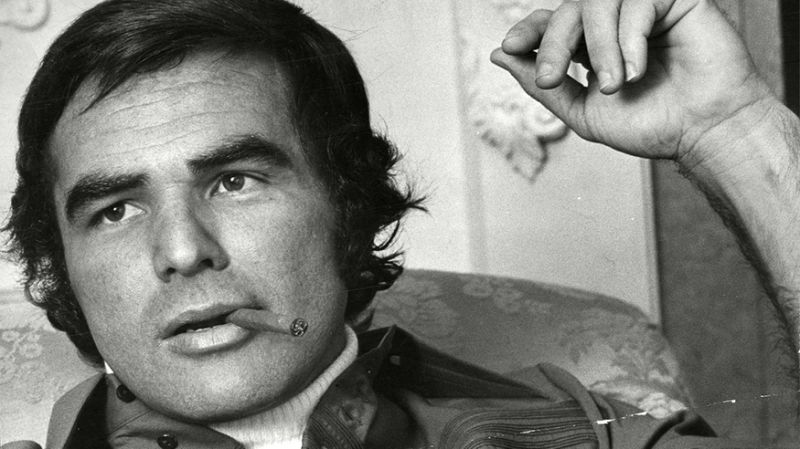
Burt Reynolds RIP

Image result for burt reynolds
Burt Reynolds obituary
Genial, energetic and prolific star of film and TV best known for his acclaimed performances in Deliverance and Boogie Nights

Brian Baxter
The Guardian
Thu 6 Sep 2018

No Hollywood star has exposed his emotions, his love life, career and ambitions, or his body, quite as openly as did Burt Reynolds, who has died aged 82. He acted in scores of films, directing many of them, and produced and appeared in hundreds of TV movies and series. Many were eminently forgettable, though a role in Boogie Nights (1997) won him a best supporting actor Oscar nomination. It was his extravagant and explosive lifestyle, aspects of which affected his career, that often made the headlines.

In 1972, the year of his breakthrough in Deliverance, widely regarded as his best work, he became America’s first male centrefold, appearing nude in Cosmopolitan. The magazine sold 1.5m copies and this photograph was discussed more than his performance as the belligerent adventurer Lewis. The publicity upset conservative Hollywood and possibly cost him abest actor Oscar nomination; in a 2015 interview he said that he regretted having done the shoot.
Image result for burt reynolds
Further notoriety came from his marriages, the first to the comedian Judy Carne, the second to the actor Loni Anderson. Both ended in divorce, the latter acrimoniously in 1995, after an 18-month dispute over his wealth and the custody of a son, Quinton. Long and widely publicised affairs with other actors, including Sally Field and Dyan Cannon, and with the singer Dinah Shore, who was many years his senior, also fuelled the publicity machine. Reynolds said that Shore taught him about the finer things in life and Field was the person he had loved the most

He was a very physical actor who often did his own stunts, and had initially hoped to become a professional football player. Throughout his career, which effectively began in 1959 with the TV series Riverboat, he claimed to have one of the three quickest tempers in Hollywood, alongside those of Gene Hackman and Clint Eastwood. This caused fights, and during the filming of Heat (1986) he hit and severely injured the film’s director, Dick Richards, who sued him for assault.

The altercation came during a dismal period in Reynolds’s life, when an addiction to the painkiller triazolam and severe weight loss had led to widespread rumours that he had been diagnosed with Aids. In fact, his debilitating illness had been caused by a fight scene that went disastrously wrong during the shooting of City Heat (1984), in which he co-starred with Eastwood. Reynolds was hit with a real bar stool rather than a fake one, and suffered a broken jaw, leading to year-long complications with his teeth, jaw and inner ear.

Yet in 1981 he had been voted the world’s top box office attraction for the fifth consecutive year, and his film The Cannonball Run had been one of the year’s highest earners. That film was one of many, beginning with White Lightning (1973), that contributed to Reynolds’s good ole boy image, aimed at the drive-in audience and blue-collar workers. Others in that frantic, car-oriented and stunt-dominated style included the Smokey and the Bandit films.

Born in Lansing, Michigan, Burt was the son of Burton Reynolds, who had been in the military and later became a police chief, and his wife, Fern (nee Miller). After the family moved to Florida, Burt attended Palm Beach high school and won a sports scholarship to Florida State University. When a shattered knee and damaged spleen put paid to his plans to become a footballer, he headed for New York, hoping to become an actor.
Image result for burt reynolds clint eastwood
There he took various menial jobs while he sought work in the theatre. A small role in a production of Mr Roberts starring Charlton Heston, while sharing a flat with the volatile actor Rip Torn, kept him afloat financially until he offered to do a dangerous stunt in a television show. Other parts followed, leading to a contract with Universal and a two-year stint as Ben Frazer in Riverboat.

Reynolds stayed faithful to the small screen and enjoyed success in many series including Gunsmoke (1964-65), Hawk (1966), Dan August (1970-71), BL Stryker (1989-90) and the intelligent Evening Shade (1990-94), which won him an Emmy. He also directed for television and appeared in dozens of miniseries and movies. He was a regular guest on chat shows and entertainment specials, and repeatedly featured on the Tonight Show with Johnny Carson; during the latter’s absences, Reynolds enjoyed huge success deputising for him and especially relished a lively encounter interviewing Carne.

His big-screen appearancesbegan modestly in 1961. He was frequently cast as an American Indian, thanks to claimed Cherokee blood on his father’s side. Sam Fuller’s ill-fated Sharkand a thriller, Impasse (both 1969), were followed by a role as Detective Steve Carella in the Ed McBain-inspired film Fuzz (1972).

John Boorman’s Deliverance propelled him into another league. A riveting outdoor adventure, based on a bestseller, it told of four men who challenge nature and themselves on a weekend trip shooting the rapids down a river high in the Appalachians. This nightmare journey and its vision of a society despoiling the land became a huge critical and commercial success. Between 1972 and his accident on City Heat, Reynolds starred in 30 movies, and survived potentially damaging publicity in 1973 when he became involved in the mysterious death of the writer David Whiting during the filming of The Man Who Loved Cat Dancing. A verdict of accidental death was eventually recorded.
Image result for burt reynolds
Reynolds directed his first feature, Gator, in 1976; then The End (1978) and Sharky’s Machine (1981). His commercial acclaim rested on his energetic characterisations including Gator, the Bandit in the Smokey and the Bandit movies, JJ McClure in the Cannonball Run successes, and numerous cop and adventure films – many directed by his former stuntman and friend Hal Needham. A commitment to one of these, Stroker Ace (1983), caused him to turn down the role in Terms of Endearment that subsequently went to Jack Nicholson, who won an Oscar. This was a bad career move comparable to his decision not to play James Bond when Sean Connery left the franchise.

Nevertheless he maintained an opulent lifestyle, and at various times owned six substantial homes, a fleet of cars, a helicopter and a jet with two pilots on standby.

He interspersed the action flicks with better movies, which included two for Robert Aldrich. He was a football-playing convict in The Longest Yard (1974) and a cop seduced by Catherine Deneuve in the stylish Hustle (1975). Aldrich said of him: “Behind that false humour and false modesty is a bright man who paid his dues. His charm is only part of the man – he’s a strong-willed, self-centred businessman who does what serves Burt. And so he should.”
Image result for burt reynolds catherine deneuve
Silent Movie (1976), the satiric Semi-Tough (1977), Starting Over (1979) and Best Friends (1982) earned him kudos, as did founding a community project near one of his homes in Jupiter, Florida. The Burt Reynolds Theater allowed him to return to the stage and attracted friends and fellow actors to work in modern classics. Among regulars there were Martin Sheen, Charles Durning, Julie Harris and Field.

After the commercial failure of City Heat and his illness, Reynolds initially worked little. The nadir of his career came when a chain of restaurants he had financed closed with debts of $15m. He refused to file for bankruptcy and accepted whatever work was offered. He took the Cary Grant role in a feeble revamp of His Girl Friday, updated from journalism to television and entitled Switching Channels (1988). There were voiceovers, including one for All Dogs Go to Heaven (1989), and appearances as himself in documentaries, as well as in Robert Altman’s The Player (1992).

In 1989 he had enjoyed a minor comeback in the amiable comedy Breaking In, but it was swamped by such failures as Rent-a-Cop (1987), the psycho-horror film The Maddening (1995) and the Canadian-made Frankenstein and Me (1996). The dire TV spin-off Bean (1997), in which he took fifth billing, proved popular and he followed that with a return to real form.
Image result for burt reynolds
Boogie Nights was an ensemble piece, brilliantly directed by Paul Thomas Anderson. As a porn movie director Reynolds gave a charismatic and assured performance that gained him critical kudos and a new lease of life. He notched up an incredible two dozen screen and television appearances over the next few years. He starred in three TV movies as Detective McQueen, returned to directing with The Last Producer (2000) and co-starred with actors as diverse as Sylvester Stallone in Driven (2001) and Julie Christie in Snapshots (2002). He was among an all-star line up in the prestigious television miniseries Johnson County War (2002).

For whatever reason – money or confirmation of his existence in a changed Hollywood – Reynolds worked relentlessly. His credits exceeded in quantity, if not quality, those of the previous decade. Performing voiceovers for video games including Legend of Frosty the Snowman (2005) was a low point. Other work included full-length TV movies and straight-to-video features such as End Game (2006) and Randy and the Mob (2007), in which he remained uncredited.
Related image
Better material showed he still retained screen presence. He was the “me” to Mary Tyler Moore in the feelgood TV movie Miss Lettie and Me (2002) and met his acting match with Bruce Dern in the violent western Hard Ground (2003), where as aggressive partners they hunted a sadistic killer.

In 2005, The Longest Yard was revamped in comedy mode. Thirty years earlier Reynolds had played the lead brilliantly in Aldrich’s tough version of the same story (titled The Mean Machine in the UK) about prisoners and their warders on opposing football teams. Here he was effective as Coach Scarborough in a massive hit which earned double its $80m budget on first release.

Another commercial success followed with a spin-off from the TV series The Dukes of Hazzard, returning Reynolds to the car-crashing territory of earlier years. Then he was in the aptly named Forget About It (2006) – among many movies – until the amiable A Bunch of Amateurs (2008), in which, as a fading star, he goes to Britain to play King Lear at Stratford, only to find that it is a local company, not the RSC. Its success relied on him, Imelda Staunton and Derek Jacobi. The irony of the casting was unmistakable, as were the jokes about Deliverance in Without a Paddle (2004) or the title of Not Another Not Another Movie (2011) about a studio willing to produce rubbish for cash.
Image result for burt reynolds a bunch of amateurs
A hectic life, multiple health problems (including a back operation in 2009 and heart bypass surgery the following year) and financial concerns behind him, Reynolds settled for a marginally less arduous work schedule, maintaining a home in Florida while working steadily in television and cinema.

He made guest appearances in several well-regarded TV series including Ed (2003), Archer (2012) and Burn Notice (2010), observing that he had notched up 300 credits in the medium. He could also be seen or heard in video productions and voiceovers in films, plus leading roles in features, although one at least had a total budget of less than his personal fee for acting in Smokey and the Bandit.

These included a disaster movie, Category 5 (2014), Elbow Grease and the horror film Hollow Creek (both 2016). He kept on working even after his sardonic portrayal of a veteran performer, The Last Movie Star (2017), and appears in a comedy to be released in December, Defining Moments.

In 2015 Reynolds published a follow-up to his 1994 autobiography My Life, which had been dedicated to Quinton. The new book, co-written with Jon Winokur, was called But Enough About Me and was intended, he said, “to set the record straight”. It covered his personal and working relationships during a six-decade career with the great and good of Hollywood. He ruefully noted that his choices – professionally as well as romantically – had not always been wise. In addition to James Bond, he had turned down Die Hard which confirmed the superstar status of Bruce Willis.

But while the search for cinematic respectability and an Oscar continued to elude him, he could take satisfaction in numerous other accolades and in holding the record as the only star to have been the US’s top box office attraction for five consecutive years.

He is survived by Quinton.

• Burt Reynolds (Burton Leon Reynolds), actor, born 11 February 1936; died 6 September 2018

https://www.theguardian.com/culture/2018/sep/06/burt-reynolds-obituary
Friday, 7 September 2018

Wednesday night's set lists at The Habit, York


Ron Elderly: -
The River
Just My Imagination


Da Elderly: -
Romancing Tonight
In The Morning Light


The Elderly Brothers: -
When A Man Loves A Woman
He'll Have To Go
Medley: High Heel Sneakers/It's All Over Now


The bar was busy for most of the evening and the open mic had more than enough players. Our host Simon kicked off with a Dylan rarity, Mama, You Been On My Mind. A new chap had everyone joining in with Pink Floyd's Wish You Were Here. Dave from Leeds entertained,as usual, with Willie Nelson's Funny How Time Slips Away and one hit wonder Pinball by Brian Protheroe. Da Elderly was roped in to back taxi-driver Chris on Neil Young's Birds and Sam Cooke's Bring It On Home To Me. The after-show jam went on very late with a good crowd shouting out requests and joining in throughout. Another stonkingly good night in The Habit!

Thursday, 6 September 2018

Clive James on the genesis of The River in the Sky

Image result for clive james
Clive James on his new epic poem: ‘The story of a mind heading into oblivion’
In and out of hospital, the writer felt compelled to write something new – an epic, with himself as the hero

Clive James
The Guardian
Sat 1 Sep 2018

Until a few days ago, I was a patient in Addenbrooke’s hospital, here in Cambridge, while a busload of nurses and doctors strove to persuade my temperature to stop acting like a wobbling yo-yo. Or anyway I assume they arrived by bus. I myself arrived by ambulance, strapped down against any tendency to slide on to the floor like a speeding custard.

It was a low moment in my recent medical history, but once again the combined efforts of my family and the Addenbrooke’s crash-cart crew dug me out of the hole, so that I have emerged in time to witness the launch of my epic poem, The River In The Sky.

Beautiful title, isn’t it? I can ask that rhetorical question in all modesty because I didn’t think of it. It’s what the Japanese call the Milky Way and nobody in the west has ever heard the phrase without immediately starting to write a book.

I started writing my book the year before last, or I started to write a poem with that title. More precisely, I finally admitted to myself that a sheaf of unfinished poems belonged together. It’s conceivable that they belonged together in the wastepaper basket, and there might soon be critics who say so; but it seemed to me that a small stack of would-be poetic fragments were adding up to the same story, the story of a mind heading into oblivion.

I could imagine the cheer that would go up from my publishers when they heard what I was hatching. The cheer would be the sound of a sock-drawer full of baby mice being fed milk from an eye-dropper.

There hasn’t been, they might pipingly point out, a hit long poem since Tennyson’s Maud, and even Tennyson, a shrewd operator for a dreamy poet, tended to overestimate the initial appeal of any poem longer than a snappy lyric. Maud was a showcase for his technical virtuosity but it was still a whopper.

There is a true anecdote, which all would-be epic poets should bear in mind, about Ruskin’s wife fatally admitting to Tennyson at some social gathering that she had not yet read his poem Maud, which she had heard a lot about. (That last bit was probably the fatal trigger.) Generously keen that she be no longer deprived, Tennyson recited the whole thing to her from memory. Having detected signs of restless inattention on her part, he recited it to her again.

Reeling against the sceptical uproar of the sock-drawer mice, all I can say about my new, and perhaps terminal, poetic project is that it’s not your usual kind of epic. For one thing, it’s quite short. In that regard it’s bang up to date. The great scholar John Carey, the world expert on Paradise Lost, has tacitly conceded, by editing a trimmed version, that a bit more shortness was what Milton’s epic needed.

Christopher Ricks, Professor Carey’s only living rival for cleverness (how like Matthew Arnold’s Sohrab and Rustum they are, dominating the horizon with mighty use of arms) has pointed out that when a poet makes an allusion to someone else’s poetry he should be offering a bonus, not demanding an entrance fee.

Mindful of this admonition, I have been careful in my own poem to keep everything mine, as it were – partly out of a conviction that if you aren’t ready to start again, you shouldn’t start. Hence my mini-epic spends almost none of its time proving that I have read Shakespeare. As somebody deservedly obscure once said: I tried him once, and he was full of quotations.

Nor does my epic have an epic hero. Instead, it’s got me, going nowhere. In the text, apart from the occasional side-trip to the Great Barrier Reef, I don’t even get to Heaven, except to the extent that Heaven is here on Earth. But that’s something I’ve been convinced of since I was a child, and saw my mother weeping at the news of my father’s death: that Heaven and Hell are both here, with us.

Heaven is here in the way my granddaughter seems continually to pick up speed when she drives my wheelchair, as if she were heading for Andromeda, which is in the poem, too: zillions of light years away but on its way here, unless we’re on the way there. Scientists, I understand, are divided on the subject.

My poem also touches Heaven, or tries to, when dancers dance to its incidental music. The narrator dances the tango with a blind girl in Buenos Aires, on a stone terrace beneath the weeping stars. It really happened, or I think it did: there is always the possibility that I was dreaming even at the time, and only thought I was treading clouds of bliss.

But unless I miss my guess, even the best and most beautiful things about Heaven are here now, or were here just recently. In my text, the Everly Brothers are still singing harmony. But aren’t they doing that still, and won’t they always?

And Hell is here, too, but happening to other people, if you’re lucky. I’m still one of the lucky ones, and that’s the very thing that my quarrel with the Almighty is about. It’s all very well saving me from the killer microbes yet again, but what’s He doing giving a mishmash of a spine to that little girl down the corridor, the little girl whose mother is wearing out from anxiety right there before your eyes? What the devil is He thinking of?

Perhaps He isn’t thinking of anything, which would kind of leave it with us. This is the main reason, in my view, that epic poems are bound to grow shorter: because the titanic war in the beyond will be continually rescaled as a crap-shoot in the back of a garage. Milton had rogue angels falling through space from crystal battlements. We will have dusty children bursting from hunger, and grown men behaving like smug maniacs because they honestly think that they are worth more than women.

But there will still be epic poems, because every human life contains one. It comes out of nowhere and goes somewhere on its way to everywhere – which is nowhere all over again, but leaves a trail of memories. There won’t be many future poets who don’t dip their spoons into all that, even if nobody buys the book. And anyway, who says it will be a book? Maybe it will just go bleep. There is a multi-wheeled camera running loose on Mars that doesn’t even know where it is, but it can still go bleep.

At which point, growing tired again now – I’m back in my office, but it takes an effort to walk from one end of it to the other – I should thank my elder daughter Claerwen for painting the book’s starry cover, and for pointing out to its dim-witted author that the reason the thermometer showed a higher reading back then was that his temperature really had gone up through the roof.

Now that I am home again, my wife has taken over the job of ramming the thermometer into my ear, and it seems to me that she is doing so with more finesse lately, perhaps partly because I have dedicated my epic to her. Try it boys, along with the bunch of roses.

‘All is not lost…’

The opening verses of The River In The Sky

All is not lost, despite the quietness
That comes like nightfall now as the last strength
Ebbs from my limbs, and feebleness of breath
Makes even focusing my eyes a task –
As when, before the merciful excision
Of my mist-generating cataracts,
The money-spiders dwindled in their webs
Between one iron spandrel and the next
On my flagstone verandah, each frail web
The intermittent image of a disc
That glittered like the Facel Vega’s wheel
Still spinning when Camus gave up his life,
Out past the journey’s edge. Just such a dish,
Set off with dew-drops like pin-points of chrome,
Monopolises my attention here
In Cambridge as I sit wrapped in the quiet,
Stock still and planning my last strategies
For how I will employ these closing hours.
But no complaints. Simply because enforced,
This pause is valuable. Few people read
Poetry any more but I still wish
To write its seedlings down, if only for the lull
Of gathering: no less a harvest season
For being the last time. The same frail wheel
Could decorate my father’s clean white headstone
In the cemetery at Sai Wan Bay, Hong Kong:
One of my gateways to the infinite
First built when I was just a little child
And flew a silver Spitfire through the flowers –
Clumps of nasturtiums sopping with their perfume –
As if they were low-lying, coloured clouds
There in Jannali, in the summer heat.
Now, one last time, my fragile treasures link
Together in review.

In ancient days
Men in my job prepared for endless travel
Across the sea of stars, where Pharaoh sailed
To immortality, but now we know
This is no journey. A long, aching pause
Is all the voyage there will ever be.
Already it is not like life. I shan’t
Caress the hetaerae of Naukrates,
Only their images: paint on a wall,
Not vivid like a bowl of porphyry,
But pale, chipped, always fading. Here forgive me
When you come kindly visiting, as both
Our daughters do, for you three built the start
Of this tomb when you helped me weed my books
And then arrange the ones left, walls of colour
The sunlight will titrate from spring to autumn.
Rich shelves of them, these lustrous codices,
Are the first walls I see now in the morning
After the trek downstairs, though when I walk
On further, painfully, I see much more –
Boats in the windows, treasures on the terrace,
As if I weren’t just Pharaoh’s tomb designer
But the living god in the departure lounge
Surrounded by his glistering aftermath –
Yet everything began in these few thousand
Pages of print and plates. Books are the anchors
Left by the ships that rot away. The mud
The anchors lie in is one’s recollection
Of what life was, and never, late or soon,
Will be again.

• The River In The Sky is published by Picador on 6 September at £14.99.

https://www.theguardian.com/books/2018/sep/01/clive-james-poem-story-mind-heading-obivion