Thursday, 17 February 2011

Kenneth Mars RIP

Producers star Kenneth Mars dies

AP
Tuesday
15 February 20

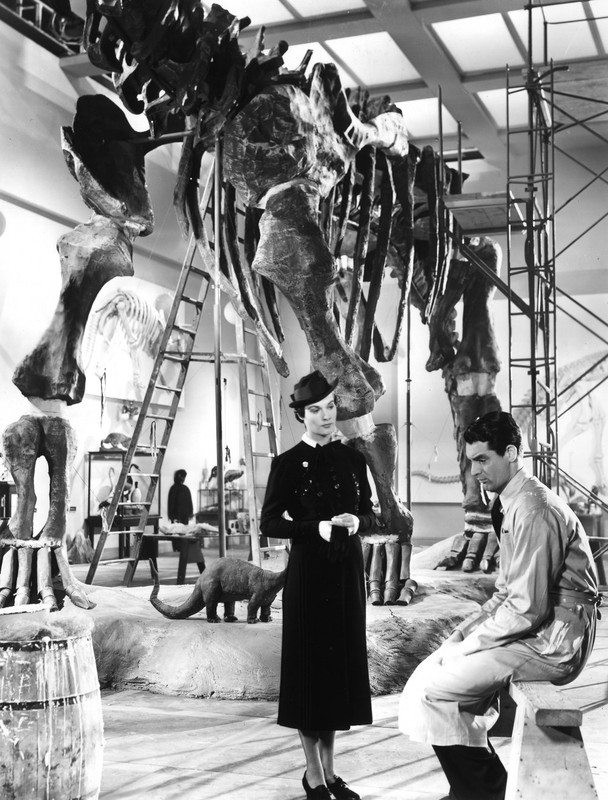
Kenneth Mars, a Mel Brooks collaborator who played a Hitler-worshipping playwright in The Producers and an earnest police inspector with a malfunctioning artificial arm in Young Frankenstein, has died at 75.

The Mars family said the actor died on Saturday of pancreatic cancer at his home in Grenada Hills, California.

In Brooks' 1968 romp The Producers, Mars co-starred as Franz Liebkind, a Nazi enthusiast whose play, Springtime For Hitler, is the basis for a scheme by two conniving showmen (Zero Mostel and Gene Wilder) to fleece investors by putting on a surefire Broadway flop.

Brooks cast Mars again in 1974's Young Frankenstein as the constable poking around the castle grounds on the trail of mad scientist Wilder's monster.

In both films, Chicago-born Mars demonstrated his talent for vocal farce, lending over-the-top German accents to the characters.

Mars' nearly 50-year career included a long list of voice credits, including The Little Mermaid, The Jetsons* and The Land Before Time movies and TV series.

Other film credits were Woody Allen's Radio Days and Shadows And Fog, and Peter Bogdanovich's What's Up, Doc. His television work featured regular roles on Malcolm In The Middle, Fernwood Tonight and the 1960s series He & She.

On stage, Mars appeared in such plays as The Affair and Anything Goes.

He is survived by two daughters, Susannah Mars Johnson and Rebecca Mars Tipton, and six grandchildren.

http://www.independent.co.uk/news/people/news/producers-star-kenneth-mars-dies-2215521.html

* The 1985-87 version


Tuesday, 15 February 2011

Habit Jam Session 6 Feb


Kerouac on Shearing

"Dean and I went to see Shearing at Birdland in the midst of the long, mad weekend. The place was deserted, we were the first customers, ten o'clock. Shearing came out, blind, led by the hand to his keyboard. He was a distinguished-looking Englishman with a stiff white collar, slightly beefy, blond, with a delicate English-summer's-night air about him that came out in the first rippling sweet number he played as the bass-player leaned to him reverently and thrummed the beat. The drummer, Denzil Best, sat motionless except for his wrists snapping the brushes. And Shearing began to rock; a smile broke over his ecstatic face; he began to rock in the piano seat, back and forth, slowly at first, then the beat went up, and he began rocking fast, his left foot jumped up with every beat, his neck began to rock crookedly, he brought his face down to the keys, he pushed his hair back, his combed hair dissolved, he began to sweat. The music picked up. The bass-player hunched over and socked it in, faster and faster, it seemed faster and faster, that's all. Shearing began to play his chords; they rolled out of the piano in great rich showers, you'd think the man wouldn't have time to line them up. They rolled and rolled like the sea. Folks yelled for him to "Go!" Dean was sweating; the sweat poured down his collar. "There he is! That's him! Old God! Old God Shearing! Yes! Yes! Yes!" And Shearing was conscious of the madman behind him, he could hear every one of Dean's gasps and imprecations, he could sense it though he couldn't see. "That's right!" Dean said. "Yes!" Shearing smiled, he rocked. Shearing rose from the piano, dripping with sweat; these were his great 1949 days before he became cool and commercial. When he was gone Dean pointed to the empty piano seat. "God's empty chair," he said. On the piano a horn sat; its golden shadow made a strange reflection along the desert caravan painted on the wall behind the drums. God was gone; it was the silence of his departure. It was a rainy night. It was the myth of the rainy night. Dean was popeyed with awe. This madness would lead nowhere."

From On the Road

George Shearing RIP

Jazz pianist George Shearing dies at 91

George Shearing, a top British jazz artist, came to the U.S. in 1946, then hit on a musical formula that established him in the jazz world and made him one of its leading artists for half a century.

By Jon Thurber
Los Angeles Times
February 15, 2011

George Shearing, the elegant pianist who expanded the boundaries of jazz by adding an orchestral sensibility and a mellow aesthetic to the music, has died. He was 91.

Shearing died Monday of congestive heart failure at Lenox Hill Hospital in New York, said his manager, Dale Sheets. Shearing had not performed publicly since taking a fall at his New York City apartment in 2004, but he continued playing piano.

A prolific songwriter, Shearing once introduced "Lullaby of Birdland," written in 1952 in celebration of the fabled New York nightspot and its radio show, by saying: "I have been credited with writing 300 songs. Two-hundred-ninety-nine enjoyed a bumpy ride from relative obscurity to total oblivion. Here is the other one."

Shearing, who was born blind, first came to America from his native England in 1946. His first job was intermission pianist at a New York club during a Sarah Vaughan engagement. He took a similar post at another club during an Ella Fitzgerald engagement and sometimes filled in her for pianist, Hank Jones.

He continued as a struggling, scale-earning unknown until early 1949, when he hit on a formula that would establish his jazz identity.

Leonard Feather — the jazz critic, producer and composer who discovered Shearing in 1937 — suggested that the pianist add a guitarist and a vibraphonist to the standard rhythm section to make up a quintet. The personnel in that first group were diverse both in race and gender and included John Levy on bass, Denzil Best on drums, Marjorie Hyams on vibraphone and Chuck Wayne on guitar.

The group went into the recording studio and came out with "September in the Rain," which sold nearly a million records. Their first New York engagement came in April 1949 at the Café Society Downtown. They then went on a national tour, and by the end of the year, Shearing's group was voted the No. 1 combo in a reader poll by jazz magazine Down Beat.

With this group, Shearing developed what came to be known as "the Shearing Sound," which involved not only the makeup of the band — vibes and guitar generally were not both found in quintets — but also the style in which he played the piano. He used the "block-chords" technique to create a big, lush, orchestral sound. In his book "The Jazz Years: Earwitness to an Era," Feather wrote that Shearing "developed a new and unprecedented blend for his instrumentation."

In that technique, a New York Times writer noted some years ago, "both hands play melodies in parallel octaves with a shifting cloud of chords in between."

Shearing worked primarily with his quintet for much of the next three decades. The personnel shifted but over the years included some of the finest names in jazz, including Cal Tjader and Gary Burton on vibes and Joe Pass and Toots Thielemans on guitar, though Thielemans was better known as a harmonica player.

From the early 1950s on, Shearing had steady work in the recording studios, first with MGM, where he was under contract from 1950 to 1955, and then with Capitol Records for 14 years. With Capitol, he recorded albums with some of the best singers of the day, including Peggy Lee, Nancy Wilson and Nat King Cole, and achieved substantial chart success in the late 1950s and early '60s.

Though the commercially successful quintet was his bread and butter, Shearing in time began to feel limited by it and grew tired of life on the road. At one point, he told New Yorker jazz critic Whitney Balliett, his quintet did 56 concerts in 63 days.

"George drives himself harder than you notice," bassist Al McKibbon once told Feather. "One night in Oklahoma City, I saw him literally fall asleep in the middle of a chorus of 'Tenderly.' He woke up with a start and carried right on."

Shearing disbanded the group in 1978. For most of the rest of his career, he appeared mainly in solo, duo or trio settings.

His work in duos and recording contracts with Concord Records and then Telarc in the 1980s seemed to revitalize him. He recorded five albums with singer Mel Torme that were critically and commercially successful.

His autobiography, "Lullaby of Birdland," was published in 2004.

Born Aug. 13, 1919, in the Battersea district of London to working-class Cockney parents, Shearing was one of nine children. He started playing piano and accordion at age 5 but didn't receive formal musical education until he spent four of his teenage years at the Linden Lodge, a school for the blind.

It was there that he learned Bach, Liszt and music theory. It was also during that time that he became interested in jazz by listening to recordings by American pianists Meade Lux Lewis, Earl Hines, Art Tatum and Fats Waller.

At Linden Lodge, Shearing showed enough potential to earn a number of scholarship offers from universities. But after graduating, he went to work in a local pub where he earned about $5 a week and tips for his playing.

Within a year, he had joined Claude Bampton's big band, a 15-piece unit made up of blind musicians who played compositions by Jimmie Lunceford and Duke Ellington.

Feather discovered Shearing playing as a swing accordionist in a London jam session. He quickly arranged for Shearing to record for English Decca and, although that recording date was not Shearing's first, it was the one that set his career in motion.

With Feather's help, Shearing got a regular radio program on the BBC. He had a Dixieland band and was also his country's leading boogie-woogie pianist. Soon he was being called Britain's answer to the great American pianist Teddy Wilson, and for seven consecutive years he was chosen his country's most popular jazz pianist by Melody Maker magazine.

While playing in an air-raid shelter, Shearing met his first wife, Beatrice Bayes, known to friends as Trixie. They married in 1941 and had one daughter, Wendy Ann, before divorcing in the early 1970s. He later married Eleanor Geffert, who survives him, as does his daughter.

Over the years, he played for three U.S. presidents — Gerald Ford, Jimmy Carter and Ronald Reagan — and for Queen Elizabeth II. He was knighted by the queen in 2006. An anecdote he related to Feather about his brush with royalty said much about his sharp wit:

"When we were preparing to be received [by the queen], I was told that the directive is: Do not extend your hand until the queen extends hers. I said, well, either somebody's going to have to cue me or she'll have to wear a bell. But somebody did cue me," Shearing said.

http://www.latimes.com/news/obituaries/la-me-george-shearing-20110215,0,1741942.story

Bob Wails at the Grammys

Monday, 14 February 2011

Neil gets a Grammy at last!

Is There Life on Mars?

Terry's review of Craig Raine's How Snow Falls is in the new edition of The London Magazine: http://thelondonmagazine.org/issues/feb-march-2011/

New Bogart Biography

Tough Without a Gun: The Extraordinary Life of Humphrey Bogart
by Stefan Kanfer
Philip French enjoys an account of Humphrey Bogart's journey from a troubled, wealthy family to movie royalty

Philip French
The Observer
Sunday 13 February 2011

Born in the last days of the Victorian era into a well-established New York family, Humphrey Bogart went from riches to even greater riches as he became one of Hollywood's highest-paid actors. His father was a wealthy, Yale-educated doctor addicted to alcohol and morphine, his mother a successful magazine illustrator and heavy drinker, and they were constantly at each other's throats. Emerging from this troubled household Humphrey became a rebellious figure at his exclusive prep school and then in the navy, where he acquired the famous scar on his upper lip, possibly when struck while escorting a fellow sailor to jail but, more likely, in a brawl – certainly not, as claimed, in battle. He was later to remark that he was "Democrat in politics, Episcopalian by upbringing, dissenter by disposition".

He sampled more conventional trades before drifting into acting, appearing in a succession of wholly forgotten Broadway plays, mostly playing society types. After an abortive couple of years in Hollywood, he eventually found success on stage in 1935, cast against type as gangster Duke Mantee in Robert Sherwood's pretentious Depression drama, The Petrified Forest. It was the only play of significance he appeared in and is rarely revived (Richard Yates's novel Revolutionary Road begins with its heroine appearing in an amateur production). But the film version took him back to Hollywood for good.

As a contract performer at the mercy of studio boss Jack Warner, Bogart was put into several movies a year, most of them watchable, only a few distinguished, and after his success as Duke Mantee, usually as a hoodlum. He did, however, play a tough district attorney opposite Bette Davis in Marked Woman (1937), now most famous because Graham Greene misheard Bogart describe the Chicago crime scene as "feudal". What Bogart actually said was "futile", but Greene based his whole review in The Spectator on the parallels between US city politics and medieval barons.

Bogart was on the third of his disastrous marriages to actresses, this time Mayo Methot, who drank as much as he did but couldn't hold it as well, when true success came in 1941. First there was the sympathetic criminal "Mad Dog" Roy Earle in High Sierra, then private eye Sam Spade in The Maltese Falcon. The following year Casablanca gave him his most celebrated role as Rick Blaine, the anti-fascist activist who brushes aside accusations of patriotism and idealism while putting duty before love. Casablanca captured the spirit of the second world war and defined the point where Bogart's public persona and off-screen personality met.

His next important film, Howard Hawks's To Have and Have Not, teamed him with a newcomer, the 18-year-old Lauren Bacall. His junior by 25 years, she was his equal, capable of matching him drink for drink, cigarette for cigarette, wisecrack for wisecrack. Until his death in 1957 they were "Bogey and Betty", Hollywood's most fashionable and emulated couple, or at least until "Debbie and Eddie" (Debbie Reynolds and Eddie Fisher) arrived to reflect the zeitgeist of the new, conformist Eisenhower era that Bogart railed against. The best film he made with Bacall was The Big Sleep, his performance as Philip Marlowe eliciting from Raymond Chandler the tribute that provides Stefan Kanfer's biography with its title. His best work was done by the time he made The African Queen in 1951, the first of his five films in colour.

His last days, when he struggled with cancer while never lowering his consumption of cigarettes and liquor, were an example of Hemingwayesque grace under pressure. He did, however, spend quite a few of them in the company of Sinatra's Rat Pack, a collection of narcissistic show-offs about as far as you could get from the ethos of authenticity and understatement by which he lived. Kanfer draws heavily on the definitive 700-page Bogart by AM Sperber (who spent years doing research) and Eric Lax (who pulled it together after her death). The result is readable enough, except for a certain stylistic vulgarity (eg "a dress that showed plenty of poitrine") and a distressing number of minor errors.

Where Kanfer becomes really interesting is in his final chapters on the growth of the Bogart legend in the half-century since his death, which has seen his ghost giving advice to Woody Allen in Play It Again, Sam, the verb "to Bogart" becoming a 60s counter-cultural term for hanging on to a spliff, his image appearing everywhere and his films constantly revived and quoted. Most significantly, Kanfer celebrates and attempts to define the way his sense of moral probity and cool deportment has survived and become increasingly potent. "Those in search of the Bogart style will have a hard time finding it in movie theatres," he concludes. "Today it flourishes elsewhere: in the principled action of individuals uncomfortable with compromise and conformity, in classic fiction, in the theatre. And of course in old films."

http://www.guardian.co.uk/film/2011/feb/13/humphrey-bogart-stefan-kanfer-review

Sunday, 13 February 2011

Lost Films Found

Silent films recovered: These new releases are oldest in a long time

By Peter Finn
Washington Post Staff Writer
Tuesday, February 8, 2011; 9:21 PM

In a large mahogany box embellished with silk pockets and Cyrillic lettering, 10 lost pieces of America's cultural heritage recently landed in Culpeper, Va. - thanks, in a roundabout way, to the Soviet Union and a bureaucratic penchant for filing.

The box, a gift from the Boris Yeltsin Presidential Library to the Library of Congress, contained digital copies of 10 silent films that had been thought to be lost to history. The titles, such as "Valley of the Giants," produced in 1919, and "The Call of the Canyon," produced in 1923, may seem unfamiliar, but the movies were made by some of the era's biggest names.

"We knew going back to the '60s and '70s that [the Russians] had American films, but no action was taken," said Patrick Loughney, chief of the Library of Congress facility in Culpeper where the movies are being stored. "These are important films by significant directors and actors. They are great discoveries."

The movies were delivered late last year through a Russian-American working group on library cooperation, and they represent the first installment in a cache of up to 194 early American films that will eventually be repatriated. There are classics by directors who include Cecil B. De Mille and Sam Wood and gems starring such actors as Mary Pickford and Sessue Hayakawa.

Exactly how Russia ended up being the sole proprietor of precious American films is something of an accident of history.

More than 80 percent of American movies made in the silent era, which ran from about 1894 to 1929, no longer exist. The silver nitrate stock on which they were recorded decomposes unless stored properly, and Americans at the time didn't value film preservation. In many cases, the only reason archivists know certain movies existed is because the titles were dutifully copyrighted.

The Soviets, however, were more diligent.

Between 1913 and 1941, about 1,300 American films were distributed in Russia, which became the Soviet Union after the 1917 revolution. While the Russians and Soviets did not appreciate all that they received - many of the films included warnings that they depicted a "moral and social situation" that was "reprehensible" - they were relatively good at making sure that what they had was kept in good condition in a state film archive.

"When you read the titles of these films and see what they are about, you get the impression they were created not in the last century - 100 years ago - but only yesterday in Hollywood," said Vladimir I. Kozhin, head of the Russian presidential property department, speaking at a hand-over ceremony for the movies last October. "The films are all about general human values. The films are about that which is eternal."

One of the films is "You're Fired," a 1919 full-length movie directed by James Cruze and starring Wallace Reid and Wanda Hawley. The movie is about a wealthy ne'er-do-well who has to prove he can hold down a job to win the approval of his girlfriend's father.

Not the most startlingly original storyline, but a wonder merely because it survived.

"Some of the shots are so sharp," said John Carter, a film restoration technician at the Library of Congress, running a segment of the film. "This is amazingly clean. The Russians did a lot of work before copies were made."

The movies are being stored at the Packard Campus for Audio-Visual Conservation in Culpeper, and filmgoers may get a chance to see them at the campus's theater, an exquisite copy of a 1920s Los Angeles cinema that is open to the public free of charge.

The campus was built with a $155 million grant from the Packard Humanities Institute, the largest private gift ever to the legislative branch. The foundation's president is David W. Packard, scion of the Hewlett-Packard fortune and a film buff.

The facility, completed in 2007, is a 415,000-square-foot complex that incorporates a huge blast-proof bunker originally designed to keep up to 100 Federal Reserve employees, and billions in coin and currency, safe from Soviet nuclear attack.

Now the Cold War complex is a cold-storage site preserving the reels of old Hollywood for time immemorial, or at least the next several hundred years. The bunker has 128 vaults containing 140 million feet of nitrate stock, part of the largest collection of film, audio and television material in the world. And the Russian gift is a sparkling addition, librarians said.

The Russians are keeping the original reels but are making digital copies of the movies the Americans want.

"The library is committed to reclaiming America's cinematic patrimony," said Librarian of Congress James Billington, who thanked the Russians for "making this cultural recovery effort possible."

The Library of Congress has presented the Boris Yeltsin Presidential Library with a list of Russian films in its possession, including rare documentary footage from the 1920s and 1930s. Loughney said the Russian library was also interested in film of major Russian cultural figures who fled the Soviet Union, such as the dancer Mikhail Baryshnikov.

Film librarians in Culpeper have begun the work of restoring the movies found in Russia. Each of the returned films was spliced with Russian inter-titles - the boards that appeared during silent movies to show a piece of dialogue or explain a scene.

Library conservationists will attempt to find the original text. If it can't be found, the boards will be translated into English to re-create something close to the original wording.

Loughney said lost films continue to surface in the most unusual places. A 1927 John Ford film, "Upstream," was recently found in New Zealand, he noted.

"There are potentially hundreds of films out there," Loughney said. "We hear rumors of things in China."

Between 1913 and 1941, about 1,300 American films were distributed in Russia, which became the Soviet Union after the 1917 revolution. While the Russians and Soviets did not appreciate all that they received - many of the films included warnings that they depicted a "moral and social situation" that was "reprehensible" - they were relatively good at making sure that what they had was kept in good condition in a state film archive.

"When you read the titles of these films and see what they are about, you get the impression they were created not in the last century - 100 years ago - but only yesterday in Hollywood," said Vladimir I. Kozhin, head of the Russian presidential property department, speaking at a hand-over ceremony for the movies last October. "The films are all about general human values. The films are about that which is eternal."

One of the films is "You're Fired," a 1919 full-length movie directed by James Cruze and starring Wallace Reid and Wanda Hawley. The movie is about a wealthy ne'er-do-well who has to prove he can hold down a job to win the approval of his girlfriend's father.

Not the most startlingly original storyline, but a wonder merely because it survived.

"Some of the shots are so sharp," said John Carter, a film restoration technician at the Library of Congress, running a segment of the film. "This is amazingly clean. The Russians did a lot of work before copies were made."

The movies are being stored at the Packard Campus for Audio-Visual Conservation in Culpeper, and filmgoers may get a chance to see them at the campus's theater, an exquisite copy of a 1920s Los Angeles cinema that is open to the public free of charge.

The campus was built with a $155 million grant from the Packard Humanities Institute, the largest private gift ever to the legislative branch. The foundation's president is David W. Packard, scion of the Hewlett-Packard fortune and a film buff.

The facility, completed in 2007, is a 415,000-square-foot complex that incorporates a huge blast-proof bunker originally designed to keep up to 100 Federal Reserve employees, and billions in coin and currency, safe from Soviet nuclear attack.

Now the Cold War complex is a cold-storage site preserving the reels of old Hollywood for time immemorial, or at least the next several hundred years. The bunker has 128 vaults containing 140 million feet of nitrate stock, part of the largest collection of film, audio and television material in the world. And the Russian gift is a sparkling addition, librarians said.

The Russians are keeping the original reels but are making digital copies of the movies the Americans want.

"The library is committed to reclaiming America's cinematic patrimony," said Librarian of Congress James Billington, who thanked the Russians for "making this cultural recovery effort possible."

The Library of Congress has presented the Boris Yeltsin Presidential Library with a list of Russian films in its possession, including rare documentary footage from the 1920s and 1930s. Loughney said the Russian library was also interested in film of major Russian cultural figures who fled the Soviet Union, such as the dancer Mikhail Baryshnikov.

Film librarians in Culpeper have begun the work of restoring the movies found in Russia. Each of the returned films was spliced with Russian inter-titles - the boards that appeared during silent movies to show a piece of dialogue or explain a scene.

Library conservationists will attempt to find the original text. If it can't be found, the boards will be translated into English to re-create something close to the original wording.

Loughney said lost films continue to surface in the most unusual places. A 1927 John Ford film, "Upstream," was recently found in New Zealand, he noted.

"There are potentially hundreds of films out there," Loughney said. "We hear rumors of things in China."

http://www.washingtonpost.com/wp-dyn/content/article/2011/02/08/AR2011020806347.html

The movies:

1. Valley of the Giants (1919, director: James Cruze, starring: Wallace Reid, Grace Darmond)

2. You’re Fired (1919, director: James Cruze, starring: Wallace Reid, Wanda Hawley)

3. The Conquest of Canaan (1921, director: Roy William Neill, starring: Thomas Meighan, Doris Kenyon)

4. Kick In (1922, director: George Fitzmaurice, starring: Betty Compson, Bert Lytell)

5. The Call of the Canyon (1923, director: Victor Fleming, starring: Richard Dix, Lois Wilson)

6. Canyon of the Fools (1923, director: Val Paul, starring: Harry Carey, Marguerite Clayton)

7. Circus Days (1923, director: Edward F. Cline, starring: Jackie Coogan, Barbara Tennant)

8. The Eternal Struggle (1923, director: Reginald Barker, starring: Renée Adorée, Wallace Beery)

9. The Arab (1924, director: Rex Ingram, starring: Ramon Novarro, Alice Terry)

10. Keep Smiling (1925, director: Albert Austin, starring: Monty Banks, Anne Cornwall)

http://www.popmatters.com/pm/post/132849-thought-to-be-lost-forever-10-american-silent-films-come-home/

The Lady in the Lake

Saturday Play - Classic Chandler - 2. The Lady in the Lake

Derace Kingsley, a wealthy businessman, hires Marlowe to find his estranged wife Crystal. Kingsley fears that rich, reckless Crystal may have got herself into a scandal and the last place she was known to have been was a resort called Little Fawn Lake. Toby Stephens plays Philip Marlowe in a landmark series bringing all Raymond Chandler's Philip Marlowe novels to Radio 4.

Philip Marlowe...Toby Stephens Derace Kingsley...Sam Dale Mildred...Barbara Barnes Degarmo..Steve Toussaint Bill Chess...Nathan Osgood Adrienne...Claire Harry Lavery...Lloyd Thomas Sheriff Patton...Sean Baker

Dramatised by Stephen Wyatt Directed by Claire Grove

In 1939 Raymond Chandler created a different kind of detective, the fast-talking, trouble seeking Californian private eye Philip Marlowe, for his great novel The Big Sleep. This series brings all the Philip Marlowe novels to Radio 4's Saturday Play. The Big Sleep 1939, Farewell My Lovely 1940, The High Window 1942, The Lady in the Lake 1943, The Little Sister 1949 and The Long Goodbye 1953, and two lesser known novels, Playback 1958 and Poodle Springs, unfinished at the time of his death in 1959. The series will be aired in Spring and Autumn 2011.

Toby Stephens is best known for playing megavillain Gustav Graves in the James Bond film Die Another Day (2002) and Edward Fairfax Rochester in the BBC television adaptation of Jane Eyre (2006). In autumn 2010 Toby starred as a detective in Vexed, a three-part comedic television series for BBC Two. He also made his debut at the National Theatre as George Danton in Danton's Death.

Marlowe is a character the R4 audience think they know, but do they? He is a moral man in an amoral world. This is California in the '40's and 50's, as beautiful as a ripe fruit and rotten to the core, reflecting all the tarnished glitter of the American Dream. The police are corrupt. The businessmen are well-heeled racketeers with politicians in their pockets and their daughters have gone to the bad. It is the taxi-drivers, maids and bartenders who restore Marlowe's faith in human nature. They scratch out a living at the bottom of the pile and Marlowe is there with them, in his shabby office with its cracked sign and no air-con, waiting for the next client to walk through the door.

Raymond Chandler was born in Chicago, but spent most of his boyhood and youth in England, where he attended Dulwich College. In 1919 he returned to the United States, settling in California, where he eventually became director of a number of independent oil companies. The Depression put an end to his business career, and in 1933, at the age of forty-five, he turned to writing, publishing his first stories in Black Mask. By the time he published his first novel, The Big Sleep (1939), featuring the iconic private eye Philip Marlowe, it was clear that he had not only mastered a genre but had set a standard to which others could only aspire. He died in 1959.

Stephen Wyatt (dramatist) is a Sony Award Winning Playwright. Recent work for R4 includes dramatising three of the Complete Ripley series including The Talented Mr Ripley for Saturday Afternoon, The Yellow Plush Papers for 11.30am and Tom Jones for Classic Serial. His original play Memorials for the Missing won a Sony Award in 2008.

Listen on BBC iPlayer: http://www.bbc.co.uk/i/yddnm/

Last night's set list

At the Waggon & Horses, York: -

Out On The Weekend
Don't Let It Bring You Down
Already One
The Old Laughing Lady
How Have You Been
*
Star Of Bethlehem
Heart Of Gold


* A John Sebastian song.

They seemed to like it but I know I was shite. And this was my first ever paid gig!

Friday, 11 February 2011

Out and About with Prefab Sprout #5


A somewhat truncated version, but they're at the Holy Jesus Hospital...

Our Lady of Alvinos turns up La Nois

The first lady of France is hitting the studio with U2 producer Daniel Lanois

The first lady of France, Carla Bruni-Sarkozy, is coming to Los Angeles. It’s not a diplomatic endeavor, but a musical one: she will spend time in Southern California this year to record a new album, according to a report in one of France's largest daily newspapers, Le Figaro.

Bruni is heading to America this year to record her fourth proper album. The singer’s last release, Comme Si De Rien N'Ă©tait, was released in 2008.

She is expected to record new material soon in California with Silver Lake-based producer Daniel Lanois, known for his work in the past with artists such as U2.

Bruni makes her acting debut in Woody Allen’s romantic comedy Midnight in Paris, which will open this year’s Cannes

http://www.hollywoodreporter.com/news/carla-bruni-la-bound-record-97360

Thursday, 10 February 2011

Milton Glaser


Last night's set list

At The Habit, York: -

Is It Only The Moonlight?
Love Song
Falling
Hey Babe
Powderfinger
Long May You Run
I Believe In You
I Don't Want To Talk About It
Oh Lonesome Me
Old Man


They just kept asking for more till my voice gave out.

Wednesday, 9 February 2011

Musical Interlude

Salinger Writes...

Inside the Mind of a Young J.D. Salinger

The late author's second short story for Esquire appeared in our October 1945 issue. So did this brutally honest letter he wrote to us — never before published online — in which he questions his ability to ever write a novel

J.D. Salinger writes: "I am twenty-six and in my fourth year in the Army. I've been overseas seventeen months so far. Landed on Utah Beach on D-Day with the Fourth Division and was with the 12th Infantry of the Fourth until the end of the war here. The Air Corps background for This Sandwich Has No Mayonnaise comes naturally because I used to be in the Air Corps. Have also been in the Signal Corps. Am also a graduate of Valley Forge Military Academy. After the war I plan to enlist in a good, established chorus line. This is the life. I've been writing short stories since I was fifteen. I have trouble writing simply and naturally. My mind is stocked with some black neckties, and though I'm throwing them out as fast as I find them, there will always be a few left over. I am a dash man and not a miler, and it is probable that I will never write a novel. So far the novels of this war have had too much of the strength, maturity and craftsmanship critics are looking for, and too little of the glorious imperfections which teeter and fall off the best minds. The men who have been in this war deserve some sort of trembling melody rendered without embarrassment or regret. I'll watch for that book."

http://www.esquire.com/the-side/feature/young-jd-salinger-letter-012810

Out and About with Prefab Sprout #4


Paddy busking at the Monument