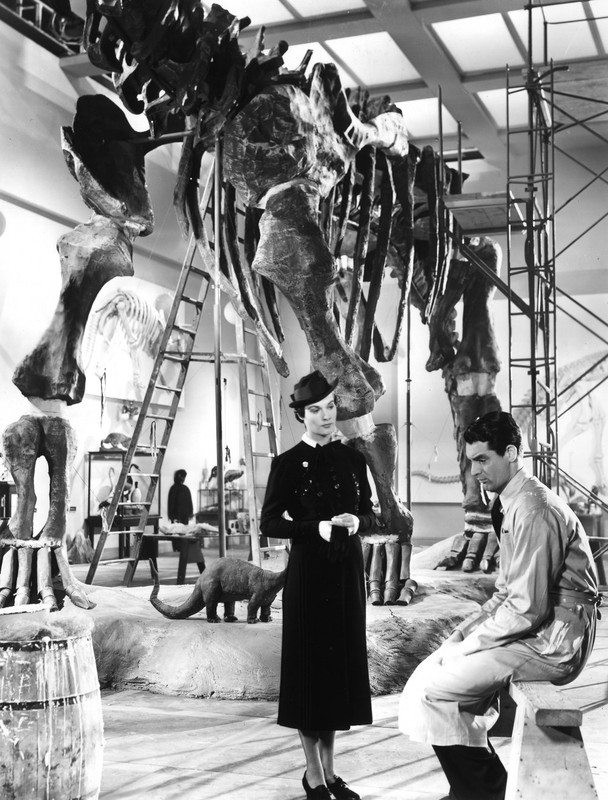
Farmer's son and Marks and Spencer's mannequin - coming to an arena near you.
Wednesday, 21 July 2010
Professional Geordies: No.8 in a series. Collect them all!
Farmer's son and Marks and Spencer's mannequin - coming to an arena near you.

Tuesday, 20 July 2010
Rich Hall - The Dirty South
 Rich Hall sets his keen eye and acerbic wit on his homeland once again as he sifts truth from fiction in Hollywood's version of the southern states of the USA. Using specially shot interviews and featuring archive footage from classic movies such as Gone With The Wind, A Streetcar Named Desire and Deliverance, Rich discovers a South that is about so much more than just rednecks, racism and hillbillies. Four days left to watch it...
http://www.bbc.co.uk/iplayer/episode/b00t26zf/Rich_Halls_The_Dirty_South/
The heavy use of trailers instead of film clips, by the way, is down to the BBC refusing to cough up the dough for the rights.


Monday, 19 July 2010
Under the influence
 Caravaggio's Supper at Emmaus, circa 1600
 N. C. Wyeth's Wild Bill Hickcok at Cards, 1916

More Caravaggio
 Caravaggio: A Life Sacred and Profane, By Andrew Graham-Dixon
 Allen Lane £30
Reviewed by Cristopher Bray
July 4, 2010
Caravaggio's was a life of chiaroscuro - from the spotlit blackness of his art to the shadows in his heart
Lucky Andrew Graham-Dixon. It has taken him far longer than he expected - more than 10 years, in fact - to write this book. Which means that it is being published just in time to accompany the 400th anniversary celebrations of Caravaggio's death and, an added bonus, the discovery in Italy of remains that scientists have identified as the painter's. Right now, the galleries of Florence are flooded with fans, while anyone who has been in Rome these past few months can't help but have seen - or stood in - the queues at the Quirinale for its Caravaggio show. For its closing weekend, it stayed open all the way from 9am on Saturday to 10pm on Sunday to ensure the Eternal City's midnight art hags could have their sacred fix.
But then, night-time is the right time for looking on Caravaggio. As Graham-Dixon's endpaper reproduction of the tenebrous Beheading of St John the Baptist reminds you, his man was painting it black long before Goya. Darkness was Caravaggio's stock-in-trade, and what illumination there is in his images is focused with the precision of a spotlight on a movie star. His figures seemingly carved from light, he practically invented film noir three-and-a-half centuries before the fact. Nor is Martin Scorsese's habit of using quick camera cuts to enter a scene halfway through a revolution in storytelling technique. As Marty tells Graham-Dixon, he got the idea from looking at Caravaggio's flash-frozen Judith Beheading Holofernes in the Palazzo Barberini.
But Derek Jarman's homo-hysterical biopic aside, the movies have shown a mystifying lack of interest in telling us Caravaggio's own story. Mystifying because, as Graham-Dixon's page-turner of a narrative makes plain, this wasn't just a life sacred and profane, but one of action, intrigue and dirty deeds. You want a screed of swear words for a script? Few pages of Caravaggio go by without our hero telling someone to shove something up their arse. You want a Goodfellas-style scrap in a restaurant? Just film the scene at the Osteria del Moro in which our hero is served artichokes, some cooked in butter, others in oil, and asks the waiter which are which. "Smell them, and you will easily know," comes the reply. At which point Caravaggio smashes a plate and thrusts its now-jagged edge into the cheek of this "fucked-over cuckold" of a maître d'. You want a bad-shave pimp bleeding to death on a tennis court after a knifing from your hero? Just be sure to write one Ranuccio Tomassoni into your screenplay.
Not, Graham-Dixon contends, that the two men had argued over a game of racquets (as earlier biographers thought). Rather, he says, they were duelling over a woman. Fillide Melandroni was a Sienese courtesan in Tomassoni's employ when Caravaggio met her and asked her to model for him (she is likely the girl he posed as the Virgin Mary in Rest on the Flight into Egypt). Subsequently, she took up with the painter on a more permanent basis, and her former boss was a little put out. Incidentally, Caravaggio may not have meant to kill Tomassoni when he stabbed him in the femoral artery. Graham-Dixon thinks it "entirely possible Caravaggio was... attempting to make mincemeat of his testicles".
Though the lineaments of this story - from Caravaggio's brutish strutting through counter-Reformation Rome to his ennobled exile on Malta and Sicily, through to his impoverished, malarial death on the beach at Porto Ercole - are well known, there is much that is new here. Refreshing to have it pointed out, for instance, that Caravaggio was not gay - not just because he swung both ways, but because the concept of fixed sexuality was unknown to seicento Italians.
No less invigorating are Graham-Dixon's readings of the Caravaggio oeuvre. And though some of his iconographic hermeneutics are a little far-flung, there's no gainsaying the depth of research behind them. "It is often said there is a hidden self-portrait reflected in the carafe," writes Graham-Dixon of the Uffizi Bacchus. "I have inspected the painting under high magnification and there is no such self-portrait." I believe him.
http://www.independent.co.uk/arts-entertainment/books/reviews/caravaggio-a-life-sacred-and-profane-by-andrew-grahamdixon-2016517.html
Who Killed Caravaggio?

An investigation into the life and death of the great Baroque artist Caravaggio, who died in 1610 aged only 39 after a life full of violent incident. Art critic Andrew Graham-Dixon travels from Rome to Naples, then to Sicily and Malta, where Caravaggio died four years after being exiled from Rome for killing a man in a street fight.
http://www.bbc.co.uk/iplayer/episode/b00t4jx0/Who_Killed_Caravaggio/
As cold cases go, this is fairly chilly, but it held me for an hour: the paintings are wonderful and Graham-Dixon is an intelligent, engaging detective. Seven days left to watch it on iPlayer.
The Maples Stories
 The Maples Stories
by John Updike
These 18 short stories beautifully chart the arc of Richard and Joan Maple's relationship
Natasha Tripney
The Observer
Sunday 11 July 2010
Over the course of his long and prolific career, John Updike wrote a series of stories about Richard and Joan Maple, charting their marriage from its fresh, uncertain early days through to their eventual separation and divorce. The first of these 18 stories, "Snowing in Greenwich Village", was written in 1956 and showed the couple still tentatively feeling their way into their married life. Updike would revisit the Maples repeatedly over the next couple of decades, depicting the various shifts and rifts in their relationship as children arrive, four in all, their sex life tails off and the world around them changes.
The prospect of infidelity and the shadow cast by other lovers, real and imagined, looms large in many of the stories; in "Your Lover Just Called", they feed each other's jealousies, picking and probing. Updike is, as ever, sensitive to the fuzzy line between love and hate, the things people do to hurt one another, with and without meaning it, and the many tiny intimacies and outrages that make a marriage.
The stories are full of striking passages – the eroticism and awkwardness of Joan's undressing in front of her husband long after the sex has seeped out of their relationship in "Nakedness"; the vulnerabilities that are exposed in "Giving Blood"; the uneasy heat of "Wife-Wooing" – and Updike's rich prose, his rhythmic, acute, fertile and, at times, even somewhat glutting use of language.
The collection ends with "Grandparenting", with the now greying Maples, both remarried, awaiting the birth of their daughter's first child, still tied together by old, familiar threads, even though their time as husband and wife is long behind them.

http://www.guardian.co.uk/books/2010/jul/11/maples-stories-john-updike-review
Sunday, 18 July 2010
Songs for the New Depression
 Loudon Wainwright III: 10 Songs for the New Depression(Proper)
Robin Denselow
guardian.co.uk
Thursday 15 July 2010 23.16
It's been 40 years since he recorded his first album, and he's now probably less well known than his children Rufus and Martha, but Loudon Wainwright is still on impressive form. His last album, a tribute to the great country singer and banjo player Charlie Poole, was an ambitious affair that featured more than 20 musicians and singers, but this is a pared-down, DIY set, in keeping with the mood of the new songs. It was recorded in the studio but Wainwright is backed only by his own guitar and ukulele (with a few spooky effects added in for Halloween 2009), and he sounds as easy-going and spontaneous as he does on stage. Wainwright specialises in highly personal, bittersweet lyrics, and that's still his style on this quirky concept set that includes a couple of reworked songs from the 1930s depression. The best track, House, is a finely constructed song about economics and relationships that tells the story of a couple who plan to get divorced but stay together because they can't sell their house, "so maybe it's a good thing". Elsewhere, he cheerfully matches bleak lyrics against upbeat melodies, as on the opening Times Is Hard, where the man once compared to Dylan announces "you folks need some cheering up ... it ain't me, babe". This is Wainwright at his best.
http://www.guardian.co.uk/music/2010/jul/15/loudon-wainwright-iii-cd-review

Saturday, 17 July 2010


Friday, 16 July 2010
Writers at Warwick

This archive has over 200 recordings of writers from all disciplines and includes both readings of their work and discussions which afford an insight into their creative process. From the poetry of the 1970s to the latest Writers at Warwick events, the archive contains recordings of writers such as Basil Bunting, Germaine Greer, Salman Rushdie and Sarah Waters - not to mention such FNB favourites like Hugo Williams, Barry MacSweeney, Tom Pickard, Paul Muldoon and Allen Ginsberg (the poet of choice for ex-FNB Paul McConkey).
You can search for recordings, use an A-Z index of writers, view collections of recordings or browse by date, genre or theme. The entire archive is free of charge and can be used only for educational and research purposes.
http://www2.warwick.ac.uk/fac/arts/english/writingprog/archive/writers/
Thursday, 15 July 2010
Glen David Gold interviewed about Sunnyside - after the tiresome advert...
 Glen David Gold on writing Sunnyside
Sarah Crown and Elliot Smith
guardian.co.uk
Tuesday 21 July 2009
Glen David Gold on SunnysideGlen David Gold won commercial and critical success with his debut novel, Carter Beats the Devil. Eight years later, he's back with a new novel, Sunnyside, which follows the life of Charlie Chaplin against the backdrop of the first world war and the birth of the film industry. He talks to Sarah Crown about writing real figures into his fiction, the pleasures and pitfalls of research and the lure of Chaplin himself.

http://www.guardian.co.uk/books/video/2009/jul/16/glen-david-gold-sunnyside


Wednesday, 14 July 2010
Tonight's set list
At The Habit, York: -
Falling
One More Time
Harvest
The Needle And The Damage Done
Blackbird
Long May You Run
A raucous evening, could barely hear myself above the din. The poor lass on after me was virtually inaudible. Gave the new Martin a run through it's paces - much appreciated by the host who must have much better hearing than me. Not difficult I know.
Falling
One More Time
Harvest
The Needle And The Damage Done
Blackbird
Long May You Run
A raucous evening, could barely hear myself above the din. The poor lass on after me was virtually inaudible. Gave the new Martin a run through it's paces - much appreciated by the host who must have much better hearing than me. Not difficult I know.
Went The Day Well?

Philip French reviews a FNB favourite:
Went the Day Well?
One of Alberto Cavalcanti's supreme masterworks
Philip French
The Observer
Sunday 11 July 2010
Alberto Cavalcanti (1897-1982), born in Brazil to Italian parents, is one of the key figures in movie history. He studied law and architecture in Europe before making a reputation in France as a production designer and a pioneer director of the style that became known as poetic realism. In the mid-1930s John Grierson recruited him for the British documentary movement (his most famous picture from that time is Coal Face), and during the second world war Michael Balcon brought him to Ealing to give the studio's output a shot of documentary realism. Known to his colleagues as "Cav" and signing his movies with just his surname, his first film there was Went the Day Well? (1943), the best, most ferocious picture of the war years. He followed it with three films very much in the British vein Balcon sought to mine: Champagne Charlie, a celebration of the mid-Victorian music halls, Dead of Night, a portmanteau movie of supernatural stories, and a decent version of Nicholas Nickleby that takes its style from Cruickshank's illustrations. He subsequently made the noir classic They Made Me a Fugitive before attempting to revive the Brazilian movie industry.

 Rereleased along with the retrospective, Went the Day Well? is a brilliant propaganda thriller developed from Graham Greene's story "The Lieutenant Died Last" about a platoon of German paratroopers in British uniform taking over an English village as the vanguard of an occupation force. It has a sharp sense of place just this side of satire, makes the principal villain an upper-class fifth columnist and is shocking in its ruthlessness. As a 10-year-old in 1943 I found immensely comforting its clever device of using a flashback to suggest that the events took place several years before Britain emerged victorious from the second world war.
 Went the Day Well? is one of Cavalcanti's two supreme masterworks, the other being Dead of Night, though for the latter film he shared the directorial credit with Charles Crichton, Basil Dearden and Robert Hamer, but he was responsible for the greatest episode (the one featuring Michael Redgrave as a ventriloquist whose dummy gains the upper hand) and the linking sequences. Themes of identity and class, of appearance and reality run through his films, and there's an authority and decisiveness that make them the work of a true auteur.
http://www.guardian.co.uk/film/2010/jul/11/went-the-day-well-film-review
The excellent David Borwdell and Kristin Thompson seem to agree: http://www.davidbordwell.net/blog/?p=2303
The opening of Went The Day Well?


Tuesday, 13 July 2010
No Suite but so sweet: CSN 4th July 2010 - review by Ian Ravenscroft
 CSN at the Royal Albert Hall 4th July 2010
Woodstock
Military Madness
Long Time Gone
Blue bird
Marrakesh Express
Southern Cross
In Your Name
Long May You Run
Deja Vu
Wooden Ships
Military Madness
Long Time Gone
Blue bird
Marrakesh Express
Southern Cross
In Your Name
Long May You Run
Deja Vu
Wooden Ships
Helplessly Hoping
Norwegian Wood
Midnight Rider
Girl From The North Country
Ruby Tuesday
What Are Their Names?
Guinnevere
Delta
Cathedral
Our House
Behind Blue Eyes
Rock n' Roll Woman
Almost Cut My Hair
Norwegian Wood
Midnight Rider
Girl From The North Country
Ruby Tuesday
What Are Their Names?
Guinnevere
Delta
Cathedral
Our House
Behind Blue Eyes
Rock n' Roll Woman
Almost Cut My Hair
Encores
Love the One You're With
Teach Your Children
Love the One You're With
Teach Your Children
From the first chords of Woodstock to the finale Teach Your Children, CSN were cohesive as if the years of excess had never been. And those harmonies were so sweet, particularly on the covers Norwegian Wood and Girl From The North Country. The 3 were in high spirits with Crosby on fine form. Stills was roundly booed for a dig at BP. Nash's song In Your Name was delivered in a lilting country style with excellent supporting guitar work by Stills. It sounded much more complete a song than the version on Nash's box set.
Crosby said that they just had to do a song by "the tall thin Canadian" and the boys duly delivered a harmony soaked Long May You Run. Ironic when you think that Neil's deletion of Crosby and Nash's harmonies from that particular song once left deep scars in their relationship.
One of my favourite Crosby songs, Delta was prefaced with the story of how Jackson Browne forced him to finish it at Warren Zevon's house when Croz was too far gone (to quote Neil). Crosby's son James Raymond played piano and you could tell his dad was proud.
There were a couple of times when Nash had nothing to do but watch Stills playing blistering guitar breaks. The mental picture of Bez from the Happy Mondays flashed before my eyes and the whole thing took on a rather comic aspect (sorry Graham). Stills guitar work was amazing though. There was a manic edge to his playing that was at times mesmerising.
Overall a most enjoyable concert - get that covers album done quickly lads.
IR


Subscribe to:
Posts (Atom)