Saturday, 4 June 2016

Muhammad Ali RIP


Muhammad Ali obituary
One of the greatest heavyweight boxing champions the world has seen, with courage, conviction and wit that made him an inspirational figure

Frank Keating
Saturday 4 June 2016

Muhammad Ali, who has died aged 74, was acclaimed by many as the greatest world heavyweight boxing champion the world has ever seen. He was certainly the most charismatic boxer. His courage inside and outside the ring and his verbal taunting of opponents were legendary, as were his commitment to justice and his efforts for the sick and underprivileged.
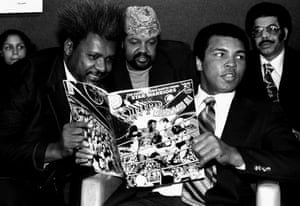
The world heavyweight champion is pictured with promoter Don King holding a comic book in which Ali is shown beating Superman.
Three times world champion, Ali harnessed his fame in the ring to causes outside it. He was a convert to Islam and the personification of Black Pride. He anticipated the anti-Vietnam war movement of the 1960s by refusing to join the armed forces.

He made goodwill missions to Afghanistan and North Korea, delivered medical supplies to an embargoed Cuba, and travelled to Iraq to secure the release of 15 US hostages shortly before the first Gulf war. Repellent though he found many aspects of US foreign policy – and repellent as the establishment found him when in 1967 it banned him from the ring for three years for refusing the draft – the nation embraced Ali as time passed, realising his unique ambassadorial value. In 2005, he received his country’s highest civilian honour, the presidential medal of freedom, from George W Bush, an incumbent whose views he must have detested.
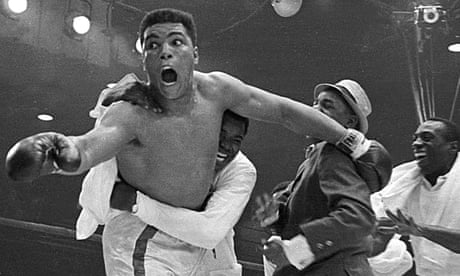
But it all stemmed from boxing. His matchless magnificence, the self-proclaimed “greatness”, was invented early as a cheery prizefighter’s publicity stunt. It was a greatness that was to balloon and achieve near-universal acceptance as he became acknowledged as a beacon not only for downtrodden African Americans but for global Islam as well, not to mention the anti-war movement or poverty in developing countries. In the middle of press conferences, reporters would earnestly ask him about solving the Palestine problem, or if he could have a quiet word with Moscow about President Ronald Reagan’s star wars programme. Ali was a rebel with a cause – lots of them.

He played the sovereign to the hilt. He played the victim. He played the clown. He played the camera. But, above all, he played the sport. He was the best heavyweight boxer there had ever been since the Marquess of Queensberry set down his rules in 1867, undeniably the best since Kid Cain KO’ed Sugar Ray Abel. First as Cassius Clay, then as Ali, this remarkable boxer totally reset the marks, utterly changed all inviolate techniques and tenets. Four years after winning the light-heavyweight gold medal at the 1960 Olympic games in Rome, he won the undisputed professional world heavyweight championship, taking on all comers. He was to regain the title twice, an achievement that remains unmatched. His career in the professional ring spanned an astonishing 21 years. Of 61 contests, he lost only five, four of them when he was long past his majestic best. Thirty-seven victories were knockouts.
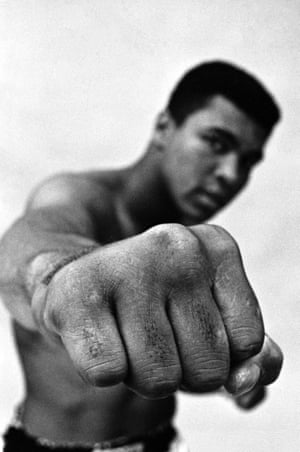
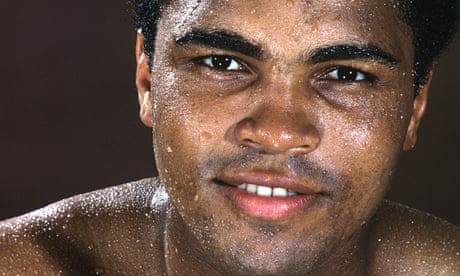
A much celebrated portrait showing Ali’s fist.
Ali’s fabled predecessors in his kingdom were Jack Johnson, Jack Dempsey, Gene Tunney, Joe Louis and Rocky Marciano. Johnson was a puncher-boxer and dandy; Dempsey an uncomplicated hitter; Tunney had grace and nerve and fast feet; Louis’s fast hands punched in a blur of combinations, and he had a killer instinct as well as chivalry; Marciano had relentless oomph and steam-hammer cruelty. Ali had every single one of all those qualities in abundance, as well as timing, intelligence, wit and an extraordinary courage which, in the end, becursed his wellbeing. Yet, through the final third of the 20th century, rheumy-eyed, scarred and bent-nosed ancients would shake their heads at his virtuosities, sigh, and insist that the big, bold champions of their far tougher olden days would have ambushed, cornered, speared and most damnably done for the swankpot in no time. But as the fearless Ali strutted on, inventing new ways, new scenes, new angles, new endings, those croaking pronouncements of veterans petered out. No one believed them any more, not when Ali was in his prime, in his pomp.

He was born the eldest son of Cassius and Odessa Clay in Louisville, Kentucky, and named Cassius Marcellus after his father. His mother was listed on the birth certificate as a household domestic, his father as a signwriter. The family lived on Grand Avenue in the segregated city’s black west end. In the Kentucky state census rolls, all four of his grandparents were described as “free coloureds”. One of Odessa’s grandfathers, Tom Moorehead, was the son of a white man called Moorehead and the partner of a slave named simply as Dinah. Odessa’s other grandfather was a white Irishman, Abe O’Grady, born in County Clare, who married a “freed slave woman, name unknown”.
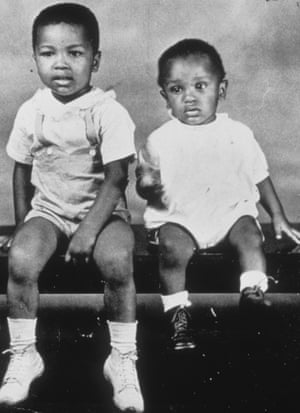
A young Cassius Clay is pictured (left) with his younger brother.
It was a small but happy family (there was soon a second son, Rudolph), in which penury was taken for granted. The brothers were both good boys, the neighbours recalled, unfailing attendees of the Baptist Sunday school. Odessa was a serene and saintly homemaker, though her husband was a rascally tale-teller and liked to drink. This led to occasional court appearances. He paid the fines and, as a self-imposed additional penance, painted religious murals for various Baptist chapels around the city. The two boys would sometimes help. “Louisville was more peaceful, less dangerous then,” Rudolph recalled many years later, “except if we strayed off-limits, then white boys would threaten: ‘Hey, nigger, get back to your own.’”
Young Cassius was no scholar, and by the end of his schooling, only an occasional attendee. He could scarcely read or write when he graduated from Central high school in 1960, and ranked 376th in the graduation class of 391. Long before then, however, his abundant energies had been devoted to boxing.

When he was 12, in October 1954, his cherished bicycle was stolen. The white policeman, Joe Martin, to whom he reported the theft, happened to be the organiser of a boys’ boxing club in the basement of the city’s Columbia auditorium. He never got his bike back, but it was a life-changing encounter. Encouraged also by a black trainer, Fred Stoner, within two months the spindly, sassy youngster weighing 90lb had won (on a split decision) his first official three-minute, three-round amateur bout against another rookie, Ron O’Keefe. Over the next six years he contested a further 107 junior bouts, won two national Golden Gloves titles and two national Amateur Athletic Union titles, and was chosen for the US team for the 1960 Olympics. He leapt to such glamour with relish – and a nerveless, original skill – and in the final of the 178lb (light-heavyweight) division, the 18-year-old defeated – and bewildered and perplexed – the three-times European champion Zbigniew Pietrzykowski, of Poland.
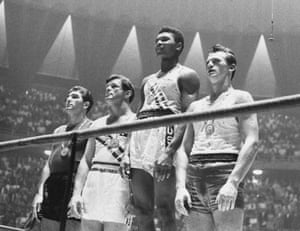
Clay stands atop the Olympic podium after winning gold.
These were the first Olympics to be televised live around the world. And the world took notice. I did, for sure, and remember thinking: “This madcap kid doesn’t even hold up his guard. He just dances and sways – and punches in lightning flashes.” I still recall Neil Allen’s prescient report in the Times: “The American has given the impression of being so much a showman that we have waited throughout the tournament for someone to wake him up with a solid punch. Nobody has, and in the final last night Clay, like some loosely strung marionette, put his punches together in combination clusters and pummelled the Pole about the ring. Only great courage kept the triple European champion on his feet. We still have not seen whether the new gold medallist can take a punch but I expect him to be among the professionals next year so we shall know his worth soon enough.”

And so it came to pass. In 1960 a consortium of old-money Kentucky businessmen were ready to launch the young Olympian’s paid career – with a $10,000 down payment and a guaranteed $333 a month against ring earnings (the latter was split 50/50 for the first two years, then 60/40 for the next four of the six-year contract). It was a good, fair deal, and three days after signing, on 29 October 1960, Clay made his debut as a pro and defeated in six one-sided rounds Tunney Hunsaker, a former chief police officer, in Louisville’s packed Freedom Hall. Hunsaker lived off the history of it till his death 40 years later. The consortium hired a canny veteran, Archie Moore, as Clay’s trainer, but the two never got on and instead he went south to Florida, to Angelo Dundee’s celebrated Fifth Street gym in Miami. The skilled and caring Dundee was to be at Ali’s side and in his corner for the next 21 years.

As his fleet and rangy physique bulked up, his looks and build now matched his charm and cheek. The artist LeRoy Neiman observed: “Suddenly he resembles a piece of classical sculpture with no flaw or imperfection, his features and limbs flawless and perfectly proportioned.” The engaging nature, too, began to resonate as Clay cut a swathe through the well-selected heavyweights’ Second Division and he allowed his ego full rein on self-promotion. Imitating the white, vaudeville television love-to-hate wrestler Gorgeous George, his forecasts bragged the precise round he was going to win, sometimes combining such box-office larks with couplets of doggerel. One was: “I’ll Just Say ‘Boo!’/He’ll Go in Two” (Lamar Clark, KO 2); another was “Ol’ Mitt Likes t’Mix/He falls in Six” (Alex Miteff, KO 6). In 1963, Clay returned to Europe for his first foreign professional fight against Henry Cooper (“London’s a Jive/’Enery Lasts Five”), and although he was floored for the first time, he duly stopped Cooper in the fifth – as he had predicted.
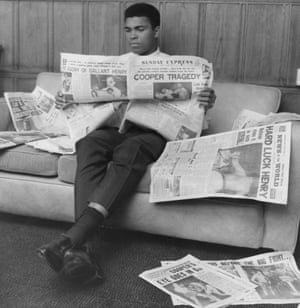
Ali reads the Sunday Express newspaper after demolishing Henry Cooper in their second fight in 1966.
Spring 1964 was momentous for Clay in several ways. Dundee, daringly, deemed him ready for Sonny Liston, the world heavyweight champion. Liston smiled for once. The boxing fraternity chortled. This, or so the knowing forecast went, would be the end of a half-diverting saga of an appealing loudmouth. We would hear of him no more, for Liston and his ogre status made both an art and science out of first, intimidation, then sadistically inflicted pain. Hadn’t Liston not long before humiliatingly laid to waste, twice inside six minutes, the Olympic champion of 1956, Floyd Patterson?
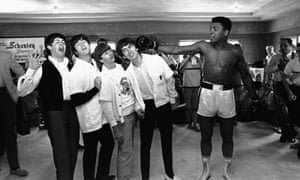
Clay poses with The Beatles who were in New York in 1964 for an appearance on the The Ed Sullivan Show. Clay was preparing for his world heavyweight title fight with Sonny Liston.
Liston was presumed invincible and the greenhorn, fresh-faced challenger was an unprecedented 8-1 underdog – odds that lengthened when, at the weigh-in, Clay’s apparent hysterics had doctors pronouncing him traumatised by fear. Come the bell, the upstart nervelessly played it cool, almost a laughingly gay matador, his speed of hand and foot totally nullifying Liston’s wicked jab, the key to his armoury. Dismantled brick by brick and tile by tile, Liston aged 10 years in less than 20 minutes and retired on his stool before the start of the seventh (the round in which the challenger had predicted “the ol’ bear would be trapped and wrap’t”). On 25 February 1964, Clay was crowned world heavyweight champion for the first time. In the rematch in May 1965, Liston keeled over in a fainting funk inside a round.
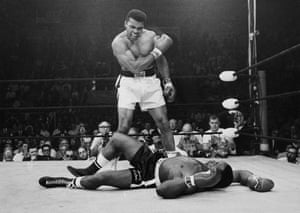
Ali stands over Liston as their 1965 rematch in Lewiston, Maine ends in dramatic fashion. The bout lasted only two minutes and 12 seconds, with Liston having been floored by what was known as the ‘Phantom Punch’. Many observers claimed Liston had taken a dive, a rumour that persists to this day.
Two days after his first defeat of Liston, Clay announced his conversion to Islam, and on 6 March, he changed his name to Muhammad Ali. Liston later complained that the Black Muslims, a separatist sect, had threatened him in an attempt to throw the fight. Old ham boxing writers were happy to believe him, and so were America’s rightwing rednecks. Such a charge was at least given credence as the newly renamed boxer was a minister in the Nation of Islam, and the group’s self-proclaimed “messenger”, Elijah Muhammad, had, to all intents, become the boxer’s manager. (Ali was to convert to orthodox Islam in 1975.)
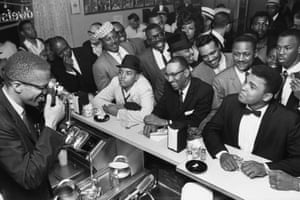
Clay celebrates with Malcolm X. Rumours had already circulated that Clay had joined the National of Islam religious movement, and he finally declared them to be true the day after beating Liston.
The US of the mid-1960s was a nation seething with racial undercurrents. (Malcolm X was assassinated in 1965 and Martin Luther King three years later.) The rest of the world was comparatively oblivious to all of this, and while to a large, white tranche of the US, Ali became public enemy No 1, his televised contests with Liston had girdled the globe so, even by then, whatever name he chose, his sporting legend was assured.

However, for all his brilliance in the ring – hands as fast and deadly as a cobra’s strike, feet in a riverdance blur never before seen in a heavyweight – America’s inevitable white backlash to his religious defiance bit back with merciless retribution. This change of mood among white Americans coincided with Ali’s second US army call-up to serve in Vietnam. Although he had already failed in 1964 the draft’s preliminary intelligence tests in literacy and numeracy (placed at just 16 in an elementary attainment level of 30) – “I said I was the greatest, not the smartest” – fresh calls for his induction came in 1966.
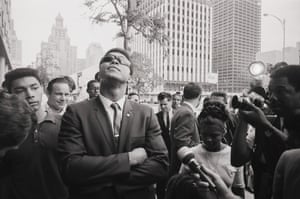
Ali looks skyward as he leaves court in Houston after a federal judge tossed out his last legal effort to avoid being drafted into the army. Ali refused to fight in Vietnam on account of his religious beliefs.
Establishment outrage reached spittingly aggressive proportions when Ali, pleading deferment on religious grounds, told reporters: “I ain’t no quarrel with them Vietcong … no Vietcong ever called me ‘nigger’.” Within an hour, outraged, all US boxing bodies suspended his licence and stripped him of his title. In June 1967, a court confirmed the ban unanimously. Ali was prevented from boxing until 1970 – that is, between the ages of 25 and 28, which undoubtedly should have been the pinnacle and prime of his athletic resplendence. His really “greatest” years were arguably stolen. (The conviction for refusing to join the armed services was reversed in June 1971 by the US supreme court.)

When the three-year ban expired, he returned to the ring, in October 1970, with a three-round stoppage of Jerry Quarry in Atlanta, Georgia, although observers could already detect a glimmer of unease about his work. He knew the ravishing speed and the split-second timing of his punches were fractionally out of kilter. He never reclaimed the full package; lost property, stolen property. I was pleased, at least, to have witnessed his pre-ban splendours – say, against Cleveland Williams at Houston in November 1966, or Zora Folley in New York in March 1967.
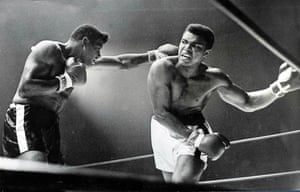
Ali evades a left hand jab from Floyd Patterson in their 1965 bout. Clay retained his title by technical knock-out in the 12th round.
Nor, after the ban, it must be said, was Ali’s passing, nasty and vindictive side ever again in evidence, such as when he bullyingly and hurtfully “carried” the hapless, injured Patterson in 1965, or malevolently taunted to painful humiliation for the full 15 rounds Ernie Terrell, who had addressed Ali as Clay at the weigh-in at Houston in 1967. Those were not pretty sights.

If the two fights with Liston, epic in their theatricality and outcome, had begun to compile the legend, then the three contests with the uncomplicated, brooding warrior Joe Frazier, in 1971, 1974 and 1975, clinched the immortal deal. Here was an unmissably dramatic, defining, second act. Only six months after the exile’s return against Quarry, Ali squared up to the remorselessly committed hitter “Smokin’ Joe” to challenge for his own usurped title. After a thunderously pulsating, draining 14 rounds it was dead-level. In the last, a fearsome Frazier hook crunched into Ali’s jaw, broke it, and dumped him on the canvas, sprawling on his back. Frazier deservedly won the decision – but the fact that Ali somehow gathered himself to his feet and attempted to fight back not only had the fans round the world swooning at the heroism, but it gave notice of the added, and unconsidered, ingredient that would embrace Ali for the rest of his life.
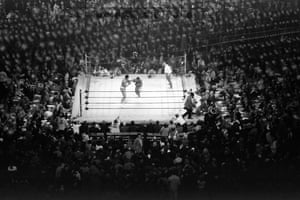
Joe Frazier takes on Ali during their heavyweight fightat Madison Square Garden in 1971.
Should we call it adversity? Well, here is sheer, dauntless, leonine courage. Worldwide love of, and tributes to Ali today are not so much for his astonishing, upfront, youthful and winning talents, but for his bravery at heaving himself from the canvas that New York night in 1971.
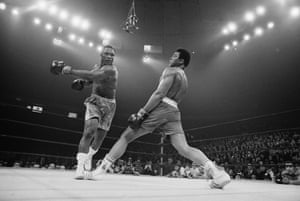
Ali steps away from a punch during the fight. Frazier became the undisputed heavyweight champion of the world by winning a unanimous 15-round decision in what was known as The Fight of the Century. It was Ali’s first ever professional defeat.
Ali avenged that defeat by Frazier with a points victory in the return contest in the same New York ring three years later. In 1975, the last payday was generous enough for the two ageing fighters to meet for a third time in Quezon City, in the Philippines – “the Thrilla in Manila”. The venom and pain of it was excruciating. To all intents, it was a requiem for both men’s illustrious prizefighting. It ended with Ali collapsing but, by minutes, the winner because Frazier was mercifully retired by his cornermen at the end of the 14th and penultimate round. They had nearly beaten each other to death. The doyen of British sportswriters, Hugh McIlvanney, was at the ringside: “There was nothing morbid or sadistic about the thrill that their performances sent through the blood. What we felt was awe at the spectacle of two extraordinary men setting new limits for themselves, pushing back the boundaries of their courage, their physical and psychological capacity.”
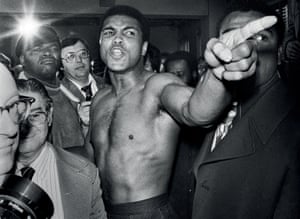
Ali gets animated in 1974 before the long-awaited rematch with Frazier. A
A year before what should have been, by every doctor’s recommendation, the (sort of) triumphant last hurrah in the Philippines, Ali’s global ambassadorial obsessions saw him stripped for battle in the even more unlikely setting of Kinshasa (then Zaire, now the Democratic Republic of the Congo). The posters for this contest dubbed it “the Rumble in the Jungle”. It was probably the seminal boxing match of all time, the dramatic unities perfectly in place: perceived goodie v baddie, impossible odds, totally unforeseen outcome.

The 25-year-old George Foreman was cast as the behemoth beast, but boxing had not seen a hitter of such concussive, one-punch power, demonstrated in Jamaica when he took the title from Frazier. Ali might possibly have had an answer in his prime, but not now, not at a fading, spent-force 32 years old. But as well as his wilful courage, in this (what we thought) would be the last chapter of his glories, we came also to marvel at the brazenness. For seven sweltering rounds, against all prognoses, Ali allowed Foreman, the brutish, one-blow Goliath, actually to punch himself out on his arms, as Ali himself lay on the ropes, head back as if out of a bedroom window to check if the cat was on the roof. Ali called it his “rope-a-dope” trick – and the world caught its breath when finally he came off the ropes, feinted with his left and, with a single right hander, felled the bewildered Foreman.
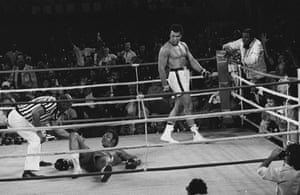
Referee Zack Clayton counts out Foreman in round eight of the title bout, after Ali’s ‘rope-a-dope’ tactics had worn the young champion out.
Unaccountably champ again, Ali went on boxing. He had easily enough of a fortune left, however generous he was with it, and in the ring he was now being hit with increasing regularity and hurt. In February 1978, he lost the title to the workaday Leon Spinks and regained it once again that September – but tiredly, for now the feet were flat, the reflexes dull, the senses dimmed. His speech was slurring badly.

He retired, came back, retired again and was just short of his 39th birthday when he allowed himself to challenge the giant he-man Larry Holmes in October 1980. He was calamitously, cringingly, beaten up over 10 rounds by a mercifully unvenomous Holmes – but badly beaten up he still was. It was not till December 1981 – just five weeks off 40 – that sense and his friends coaxed him from the ring and quietly led him away after a last humbling from Trevor Berbick in the Bahamas.

Ali’s health nosedived almost at once. Soon he was seen scarcely able to talk or walk, his speech descending into inaudible mumbles, the once stimulating “Ali shuffle” becoming a harrowing shamble. It was pitifully obvious that Parkinson’s disease was severely debilitating his brain and limbs. Yet the soulful, mischievous brown eyes still spoke eloquently of his wit and charm. With pride, difficulty and a dignified, if silent, eloquence, he lit the torch to open the 1996 Olympic games in Atlanta. Thousands wept as he did so.
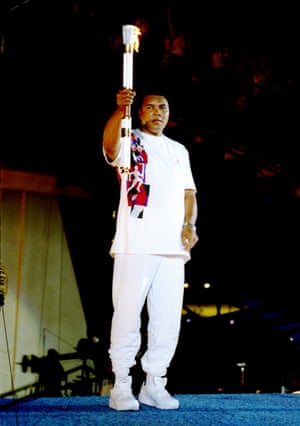
An emotional moment for Ali, who, visibly shaking due to the effects of Parkinson’s disease, holds the Olympic torch during the Opening Ceremony of the 1996 Olympic Games in Atlanta.
At the turn of the millennium, Ali was voted, far and wide and undisputed in umpteen countries, man of the century, sportsman of the century, and personality of the century. In 2005 he opened a museum built in his honour in Louisville. And in 2011 he made rare public appearance the funeral of his former opponent, Frazier. At last year’s opening ceremony of the Olympic Games in London, he seemed extremely frail and was only able to walk a few steps. However, he received a rapturous reception from the 80,000-strong crowd.

Ali is survived by his fourth wife, Lonnie; and by two sons and seven daughters.

• Muhammad Ali, boxer, born 17 January 1942; died 3 June 2016

https://www.theguardian.com/sport/2016/jun/04/muhammad-ali-obituary

Friday, 3 June 2016

Bob Dylan goes shopping in Newcastle - and other strange tales...

From eating challenges to Bob Dylan's shopping - tales from Newcastle's hidden past
Bizarre stories featuring a potted head, a turtle hat and Dylan on a shopping spree might just make you think twice about Newcastle’s past

Emily Merritt
2 June 2016
So you think you know Newcastle? Well, think again. Even the most ardent Geordie will be stunned by the hidden history of Newcastle.

Hidden Newcastle reveals twisted and unexpected tales from the city’s past.

Bizarre stories featuring a potted head, a turtle hat, Queen Vic’s unpaid bill and Dylan on a shopping spree might just make you think twice about Newcastle’s history.

These tales from across the centuries are drawn from old books and documents housed in Tyne & Wear Museums & Archives and also feature in the Hidden Newcastle app developed with help from NE1 Ltd.

Take a step back in time to discover things you never knew.


The shirts they are a changin’

Shoppers and staff at Marcus Price, Newcastle’s premier fashion store, would have been forgiven for thinking someone was playing a joke on May 6, 1965 – because in walked Bob Dylan. He was accompanied at the Groat Market shop by his manager and musician Alan Price, where he bought a black jacket, pink shirt and multi-coloured tie. Owner Marcus Price said: “Good sellers were three-buttoned, straight-fitting jackets with narrow lapels and muted stripes, ‘flower power’ shirts and ties to match.” Shop manager David Bell recalls that Dylan was very well-mannered and polite. He said: “The teenage assistants were very excited, but didn’t hassle him for autographs.” Keen observers said Dylan wore the jacket that night on stage at the City Hall.

The self-proclaimed genius of William Martin

William Martin, brother of the printer John Martin, was a man of science and established himself as a local eccentric in the early 19th century.

He became publicly known for denouncing famous inventors of the day and famed for his unusual hat – a turtle shell framed in brass. Martin falsely claimed to have designed the High Level Bridge.

Queen Victoria's unpaid bill

When it was announced that on September 27, 1849, Queen Victoria would be passing through Newcastle by rail on her way from Balmoral to London, city dignitaries decided to use the occasion for a Royal opening of the newly-completed High Level Bridge. The city had never seen a monarch since Charles I in 1647. But Victoria’s train was late and although she listened to addresses from the corporations of Newcastle and Gateshead in the centre of the bridge she would only look out of the west-facing window – much to the disappointment of the majority of the 60,000 crowd who had waited in the rain for hours. A civic reception and lunch had been organised in the Banqueting Room of the Old Castle where a window had been removed to provide an entrance from the bridge via a platform. The queen, however, had lunched at Howick in Northumberland. Indignant councillors, aldermen and burgesses nevertheless went ahead with the celebrations – and sent the bill to the royal household. It was never settled.

Potted head on Amen Corner


“Ann Seth respectfully informs her friends and the public that she has begun to make sausages, black puddings and that she prepares potted head and various other articles in the eating line. Customers may rely on the utmost neatness and cleanliness being observed in dressing and victuals; and all favours will be gratefully received and punctually attended to. Newcastle - 1802”

A gunboat takes up position

A general strike was called by the Trades Union Congress (TUC) on May 4, 1926, to support the miners in their quarrel with the mine owners, who wanted to reduce their wages by 13% and increase their shifts from seven to eight hours. Huge numbers of transport workers, dockers, printers, builders, steel and power workers stayed off work. The government declared that Britain was “threatened with a revolution” and attempted to take control of the BBC, while the Roman Catholic Church called the strike “a sin”. On May 5, a warship was despatched to the Tyne in a demonstration of authority. A few days later, police had to quell a major riot in the Bigg Market and strikers in Northumberland derailed the Flying Scotsman train.
A tragic rooftop chase

In the early hours of August 29, 1932, street musician Robert William Hall died after a dramatic rooftop chase by police. He fell from the Benwell Hotel, on the outskirts of Newcastle city centre, after an attempted burglary. During the pursuit, Hall – also known as Robert Dodds and William Jones– had knocked down a chimney pot and threw slates and masonry on to the crowd gathered below. In attempting to knock off another stack, he fell into the hotel’s back yard, fracturing his skull. An accomplice was arrested. Hall’s criminal career included a shooting in Chicago for which he served an 11-year term in Sing Sing Prison in New York, and threatening police with a razor during a break-in at The Forth Hotel.

Lewd houses and night walkers

Men and women suspected of living off immoral earnings and criminal gains in the 1700s were listed in what was called The Rogue’s File. They included alleged prostitutes, “brothel keepers” and publicans who lived around Castle Garth, Castle Stairs and the Quayside.

At one house, “lewd persons pay 12d for the use of beds in the daytime plus half-a-crown for the night”. Jane Turner, “common and of low plight”, was reputed to visit soldiers frequently at the Guardhouse but the later companionship of “gentlemen” led to her adopting “an improved appearance”. John Reed Smith of Bank Side reported “he has several times lay with her”. John Reed Smith was obviously no gentleman.

Mary Smith kept the “very disorderly” Goat Ale House at the Quayside and on marrying Charles Cadwell, moved to Gateshead where they opened another tavern “with the sign of the Goat” (now displayed in the Shipley Art Gallery, Gateshead). It was “not only a bawdy house but a residence of Cadwell’s gang and other thieves and pickpockets”.

Howay the president

On May 6, 1977, Jimmy Carter, 39th President of the United States received the honorary freedom of Newcastle. The Civic Centre, where the presentation was made, had seen nothing like it – the president had been in the White House for only a few months when he elected to make Newcastle his first stop on a European tour.

To a huge roar of appreciation, Coun Hugh White, Lord Mayor of Newcastle, welcomed Mr Carter – whose roots are in Georgia– saying: “Mr President, sir, you are a Georgian; you have now become a Geordie.” An even greater roar went up when the president, clearly relishing the occasion, replied: “Howay the lads”. He continued: “I’m very grateful to be a Geordie now, and I’m deeply grateful at the tremendous welcome that you’ve extended to me.”


Skipper Clarke - the gormandiser

A Newcastle joiner was challenged to an eating and drinking wager at a public house in 1742. Skipper Clarke, “the gormandising eccentric”, tucked into a 10lb (4.5 kilos) leg of mutton, a large loaf and six pints of ale – the last of which was laced with snuff. Undeterred, he polished off the lot inside two hours. On another occasion, at a Christmas dinner, he was presented with seven sheep’s plucks (internal organs) originally intended for the family’s dogs, plus a pound of bread, three quarts (3.4 litres) of broth mixed with an ounce of jalap (a laxative), a quart of small beer – low alcohol normally given to servants and children – and a pint of ale.

He ate four of the plucks and had he been alone, Clarke would have finished all seven, but was deterred by his host’s scrutiny. From then, people with a voracious appetite were known as Skipper Clarke.

He was found dead in 1779 in Folly Chare, Sandgate, “through want and the inclemency of the weather”. He had by then been long regarded as a mean and miserly beggar, but in his room, hidden in a marrow bone, were 95 guineas and £24 in Portuguese gold.

Miss D Jeck - the Siamese elephant

As an opener for a stage show, an elephant walking from Edinburgh to Newcastle takes some beating. It took four days for Miss D Jeck the Siamese elephant and her entourage “preceded by her keeper without rope or chain and with perfect indifference”, having set off from Edinburgh on August 25, 1830. Bad weather had prevented her being brought by sea.

Crowds had gathered all along the 120-mile route to witness the unique occasion and several thousand greeted her arrival in the town at Barras Bridge. Straight away, “this noble animal” was taken to the Theatre Royal (then located on Mosley Street), entering through a specially-widened stage door.

That evening “she exhibited her wonderful performances” without showing any signs of fatigue. Included in Miss D Jeck’s daily diet were 76 pounds (34 kilos) of potatoes, 60 pounds (27 kilos) of hay, 11 quarter loaves and a bushel (36 dry litres) each of bran and oats. As well as water, she was allowed as much beer and wine “as anyone chose to give her”. After her Newcastle performances, Miss D Jeck was taken by steamer to her next engagement in London.

The Spanish Crown

The Spanish mistress of a pub landlord on Side, Newcastle, is celebrated in several ways. He changed the name of the Crown to Crown Posada – Spanish for inn or lodging house – while, hidden under the wallpaper, are paintings depicting flamenco dancers and other Spain-inspired scenes. The murals, painted in 1927 by an unknown hand, come to light only when the pub near the Quayside is being redecorated.

Harry Hotspur - football’s hot-head

A Scots army led by the Earl of Douglas entered Newcastle in 1388 only to be met by the forces of Henry “Hotspur” Percy – renowned as a fierce warrior and son of the 1st Earl of Northumberland. The two sides engaged in a skirmish at Barras Bridge, which included hand-to-hand combat between the leaders.

Douglas captured the Percy family pennant before riding west to join the rest of his army. Harry Hotspur – so called because of his impetuous nature – became the hero of Shakespeare’s Henry IV Part One and gave his name to Tottenham Hotspur FC – the Percy family had an estate in London. Hotspur died at the Battle of Shrewsbury in 1403, shot in the eye by an arrow – a scene portrayed on The Hotspur pub sign on Percy Street.

Get well soon

Long before it was marketed as an energy drink in several flavours, Lucozade was aimed at people who were ill. Lucozade was created by chemist William Owen in a shop in Barras Bridge, Newcastle, in 1927. He already operated a mineral water factory and had worked for several years developing the glucose syrup carbonated tonic drink to provide a pleasant tasting, easily digestible, quick source of energy. It was soon made available in hospitals throughout Britain under the name Glucozade until 1929 when its name was altered to Lucozade.

The world’s first dog show

The regular Poultry Show at the Town Hall and Corn Exchange was boosted on June 28-29, 1859 with the addition of a Sporting Dogs section. What has become to be recognised as the world’s first dog show was restricted to setters and pointers only, judged on symmetry of shape and purity of breed, and attracted 60 entrants from across the country.

Local gunmaker William Rochester Pape supplied two valuable guns as prizes. Winner of the best setter was owned by William Jobling of Morpeth and best pointer belonged to J Brailsford of Knowsley in Lancashire. Later that same year another dog show was organised in Birmingham.

Police mount chastity patrols

Freezing early-winter weather wasn’t going to stop 4,000 Beatles fans queuing for a whole weekend to buy tickets to see the Beatles. They started lining up at the City Hall on October 25, 1963 for the concert that November – and waited patiently for the next 48 hours. While friends and families kept up a constant supply of soup and sandwiches, worried parents asked police to mount “chastity patrols” to protect the morality of the young girls camped out on the pavement. When the box office finally opened, 130 people were hurt in the stampede.

Muhammad Ali eating a stottie cake on tour in England, Tyneside 17th July 1977
Ali meets the Geordies
During the 1970s the official most recognisable face on the planet belonged to Muhammad Ali. So, on July 16 1977 Eldon Square Recreation Centre became the centre of the earth’s recreation when the world heavyweight champion came to town. His “Ali Meets The Geordies” live television interview with commentator Reg Gutteridge was part of a whistle-stop tour of Tyneside which included sparring with young boxers at Newcastle boys’ clubs and the blessing of his and his wife Veronica’s marriage at a South Shields mosque. Celebrated poet and playwright Peter Mortimer was moved to commemorate the visit in rhyme; one verse going:

“With your butterfly stance

And your sting like a bee

The Geordies say welcome

To Muhammad Ali.”

At Eldon Square, Ali said that Geordie welcome was the one of the greatest he’d ever experienced – anywhere – and the people made him feel like a king.

Women in men’s clothing

Women are undeniably entitled to be regarded on equal terms to men – although we all agree their legal and moral rights still have some way to go, even in the 21st Century. So, what of the two women in 1417 who dressed in male clothing to enable them to approach the shrine of St Cuthbert at Durham Cathedral closer than was legally permitted for females?

Matilda Burgh and Margaret Usher’s bold plan was thwarted and the punishment handed down was for them to walk on three holy days in front of the procession in St Nicholas’ Church and on three other festival days at All Saints Church “habited in the dresses in which they committed the offence”. Both women were in service to Peter Baxter and his wife in Newcastle and the pair were ordered to attend the spiritual court at Durham to answer a charge of being complicit in the affair.

The Barras Bridge bombers

An explosion at Barras Bridge Post Office in the early hours of June 10, 1913 bore all the hallmarks of an attack by suffragettes. Alterations were being made to the building and the timing of the incident suggests that damage to property to raise awareness of their cause was preferable to human casualties.

Two policemen in the area saw a bright flash “followed by a report”. Burnt fuses and gunpowder were later discovered, as was some damage to stone facings and brickwork.

The attack was part of a long campaign for equal rights for women and Newcastle at the time was a breeding ground of radical activity. In 1909, Winston Churchill, then First Lord of the Admiralty, had a visit to the city constantly interrupted by protestors, as did Chancellor of the Exchequer David Lloyd George a few months later.

The family who bought freedom

On August 3, 1846, escaped slave Frederick Douglass, invited by the Newcastle Anti-Slavery Society, gave a talk in the Salem Methodist Chapel on Hood Street. Douglass, born into slavery, had borrowed papers from a free black sailor to escape to New York and from there sailed to Britain.

At the lecture, “Slavery, the Free Church and British Agitation against Bondage”, the influential audience included Quakers Ellen Richardson and her sister-in-law Anna who were so moved they set up a fund and began negotiations to buy his freedom from slave-master Thomas Auld.

Douglass later wrote: “Without any suggestion from me, they… bought me out of slavery, secured a bill of sale of my body, made a present of myself to myself, and thus enabled me to return to the United States and resume my work for the emancipation of the slaves.”

And the price of freedom? £150 (then $750).

If you enjoyed this, why not try out Hidden Newcastle City Walk, or our ghoulish Hidden Newcastle Halloween special, featuring even more tales of the bizarre and the unexpected.

http://www.chroniclelive.co.uk/news/history/eating-challenges-bob-dylans-shopping-11419435

And my own favourite, sadly not mentioned in the Chronic: 

Characters of Old Newcastle Number 25: Jimmy Giblets

Andrew 'Jimmy' Gibbons, known to one and all as Jimmy Giblets, was, for many years, the toast of Victorian Newcastle. This Jarrow-born lad rose to the top of his trade as a butcher and his store dominated the Grainger Market for over two decades. His chicken pies were nominated to represent the city in the prestigious Tartes du Monde competition in Paris in 1882 and he was rewarded for his services by receiving the royal stamp of approval when he was made Pie-Maker to the Queen in 1884, after which he revelled in his local nickname, the Butcher of Newcastle.

He was a personable, not to say jovial, man and many people swore by his products. No-one thought anything of his high turn-over of staff, until the morning that young Alice Fentiman, who, it was claimed, had a crush on Mr Giblets, arrived early for work to help him prepare for the day. To her horror, she saw him slipping an eyeball into one of his famous chicken pies. She screamed for help and the rest is history.

In court, when asked to account for 13 missing members of his staff, he sought to blame his behaviour on the pressures of the job, but his sort always do, don't they?

Sentenced to death by hanging, he was being transported to Durham Jail when a wheel came off his coach and it crashed into an embankment. In the ensuing melee, Mr Giblets made clean his escape.

No-one knows for sure what happened to him, but it was rumoured he boarded a packet steamer for Morocco where he threw in his lot with the Barbary Coast pirates.

It is not thought that he ever returned to England, though if you are inclined to believe in the supernatural, the fate of Miss Fentiman might interest you. Shortly after her unfortunate discovery, she had moved out of Newcastle to the countryside around Hexham where she met and married a young farmer, James Henderson, but it would seem she was never able to exorcise those visions of horror that she had witnessed and she took to alcohol and then to the road. On the 13th of April, 1927, A local rector, walking to church, heard screaming from a field and when he looked up he saw, as he later described it, a black convulsing mass - so black it seemed to absorb daylight - covering the corner of a field. He ran towards it, but his vision was at first obscured by trees and when he entered the field, a ragged clamour of rooks broke in alarm from their scavenging and scattered into the sky. Curious as to what had attracted their attention, the rector, at first hesitantly, edged forward until he came upon the dead body of Alice Fentiman. Despite the undoubted presence of so many birds, he was careful to observe that the only signs of mutilation were that her eyes had been pecked out...

As late as the 1960s, renowned British folklorist Richard Mercer Dorson recorded young girls singing these words in a skipping rhyme in the Scotswood area:

"One, two, three, four:
Who's that knocking at the door?
It's Giblets Jim, Giblets Jim;
If there's eyes in the pies,
It's got to be him."

Food for thought, indeed...

Wednesday, 1 June 2016

Paul Simon: The Art of Songwriting

Paul Simon är aktuell med sitt nya album, ”Stranger to stranger”.
Paul Simon's Journey of Discovery

Paul Zollo
31 May 2016

All lyrics by PAUL SIMON

It’s just hard working
The same piece of clay
Day after day
Year after year
Certain melodies tear your heart apart
Reconstruction is a lonesome art

From “Stranger to Stranger”

The same piece of clay. In this artist’s hands, that clay is composed of two elements– language and music. Yet within these fundamental forms, he’s made magic for decades.

A song, especially compared to sprawling works like movies and novels, is a small, limited form. But within these limitations, great songwriters have discovered unlimited possibilities. And of all the legendary songwriters of his generation, and those who came in their formidable wake, Paul Simon’s always been remarkably ingenious at discovering these new possibilities. The man has gone to great lengths– artistic, geographic and more– never to repeat himself.

Back in 1970, for example, after having written all the songs on Bridge Over Troubled Water, one of the most popular and beloved albums of all time, he faced the quandary of how to follow that. His famous partnership with Art Garfunkel had come to another ending, and Simon was at the crossroads. So what did he do? He went to Jamaica where he recorded the ska/reggae tracks which became “Mother and Child Reunion.” Lightyears removed from “Bridge” and yet mysterious and compelling and great in a whole other way, it was a clear sign that this songwriter had just started. This self-declared “poet and a one-man band” cased out early on the unchained potential of bridging separate worlds of music to reach new places with song.

It’s been a remarkable ride ever since. Now comes Stranger To Stranger, a poignantly charged song cycle reflecting on the opposing dynamics of modern times. From the class divisions that result in millions of Americans living on the streets, to the timeless love that hold us together, he shows us all sides of our current human drama. But with songs for the ages.

Most songwriters, not unlike matadors, do their finest and most definitive work in their early years. Simon, though, has matched and surpassed the greatness of his first work several times. Though revisionists try to paint his career as a series of disconnected stages from which he’s had assorted comebacks, in fact it’s been an extended, unbroken arc of song sustained over decades. He’s the train which never stops for long, on journeys close and far-flung, long after others have derailed or crashed altogether.

Rather than rely for long on tried or true methods, even those which have led to some of the most beautiful and memorable songs of our time, he’s continually found new avenues down which he journeys that keep him interested and inspired. He is, as he said a few years back, more excited by what he discovers than what he invents, and this journey of discovery endures.

But it’s a journey informed by decades of deep immersion in all aspects of song craft. These discoveries are shaped by a songwriting spirit in love with rhyme and meter, as well as the use of conversational, modern language. It’s at that juncture where his songs lyrically live, fusing the colloquial with enriched language. He does it so smoothly, words flowing with organic grace, that the occasional use of a complex interlocking rhyme scheme emerges so musically, so in the groove, that it doesn’t come off as contrived. It simply rings like a pure bell-tone, like something so right:

They say all roads lead to a river
Then one day the river comes up to your door
How will the builder of bridges deliver
Us all to the faraway shore?
From “The Insomniac’s Lullaby.”

But it’s always been about the marriage – the merger if you will – of words and music. Always the delicate balance is at play. These words are charged precisely because they are injected with the fire of pure music. The changes, the grooves, the melodies that emerge, all coalesce to make a bed for the lyrics. These are not words imposed onto a track. These are words discovered in the heart of the track itself, in the essential play of melody and harmony and rhythm.

The result is exultant. More than anything, what emerges here most prominently is energy. There is nothing uncharged here or indifferent, nothing listless. The artist is as plugged into the electric current of song than ever: the sonics, the chords, the lyrics, the instrumentation, the vocal delivery – all of it speaks to a profusion of joyful, creative vigor. This is a man in his element. Unlike celebrated peers who bemoan both the songwriting and recording process, Simon seems as excited – and interested – in both as ever. Sure, he’d be the first to say that songwriting is never easy, and that over the years it has slowed down considerably. But he’d also say he loves recording and the challenge of translating songs into records, and of discovering arrangements and instrumentation as inventive as the songwriting.

On his previous album, So Beautiful Or So What, he embraced sampling in a big way, folding in found elements from old recordings, such as fire & brimstone sermonizing and Sonny Terry harmonica exhortations. As opposed to traditionalists, for whom digital recording is anathema, Simon’s always keen to use any new tool he can, and bring it to his piece of clay. This time around he’s embarked on another musical expedition –one created in the past but with limitless modern musical applications –into the realm of micro-tonal music, as realized on instruments invented by Harry Partch.

It all started with what became the album’s final song, a Simon gem of whimsy, human weakness and wisdom, “Insomniac’s Lullaby.” It’s a gentle waltz-time ballad that starts with a prayer to the Master Poet:

Oh Lord, don’t keep me up all night
Side by side with the moon
With its desolate eyes
Miles from the sunrise
The darkness inviting a tune
The Insomniac’s Lullaby…

From “The Insomniac’s Lullaby”

In unusually extensive liner notes for this album, Simon explains that Partch heard 43 tones in an octave – as opposed to the twelve tones we have on the piano or guitar in Western music – and to play these micro-tones, Partch invented his own orchestra of instruments, each with exotic names such as Cloud Chamber Bowls, Sonic Canons, Marimba Eroica, Kithara and Chromelodeon. Their music entranced Simon, who has always admitted to being captured in life not only by song but by sound. It was the sound of doo-wop groups, for example, that led him to harmony singing. It was the sound of African street music – that fusion of electric guitars and accordion and vocals, reminiscent of doo-wop – that led him to Graceland and beyond.
Now this, a love of the notes between the notes. Another instance of discovering the unlimited where others find only limits. Partch’s music, Simon wrote, “evokes an aural response that goes beyond the ear’s perception of `out of tune’ and into a strange, often eerily beautiful, landscape of sound.” That landscape is laid lovingly throughout the album, bringing beautifully understated and haunting textures to these tracks, multi-chromatic waves and washes of sound that sweep and creep wondrously through the songs. Although the concept of micro-tonal music injected into Simon songs might seem unmoored and chaotic, in actuality it’s deeply affecting, as mysterious and yet elegant as a Simon lyric. Rather than distract, these alien sounds become the ideal ingredient to underscore the beauty and new ground broken in these songs.

And as always, it’s all about the songs. Regardless of the instrumental attire of any Simon album, they are forever unified by that dynamic inherent in all his work: deeply developed, committed songwriting. Within a percussive brew both haunting and intoxicating come poignant melodics, and, as always, the unexpected Simon words, fleshing out songs which are simple and complex at the same time, and resound with humor and grace.

Years ago his friend Phoebe Snow called his song “Something So Right” the “ultimate love song.” It wasn’t hyperbole; to this day few songs have touched that vulnerable inability to fathom a love so perfect. Until his song “Hearts and Bones,” which lifted the love song up into a new realm.

But now comes a new essential love song, the title song, “Stranger To Stranger,” which weds one of the most haunting and elegant melodies to words of sweet poignancy. It’s based lyrically on a musing, wondering what would happen if he and Edie, his wife of many years, were to meet again as strangers, for the first time. He likens their union to that which lives deep in the soul of every songwriter, the marriage of words and music. Long ago he was the one who spoke of the “crucial balance” at the heart of every song, the merging of music and words. Now this:

Words and melodies
Easy harmony
Old-time remedies

From “Stranger To Stranger”

It’s a long melody, and a complex one, requiring several listenings to process. But it’s well worth the time it takes to fully absorb, as it’s one of the most beautiful melodies this master melodist has yet composed. A song of great grace and also whimsy, it reveals a songwriter completely in control of all the elements, tenderly folding colloquial candor in with words enriched and devotional, wed to a melody of deep adoration:

I cannot be held accountable for the things
I so or say
I’m just jittery
I’m just jittery
It’s just a way of dealing with my joy.

From “Stranger To Stranger.”

When I interviewed him back in 1992, I was rather awestruck that this king of guitar-based songwriting could make such a radical shift, jettisoning his old method of writing songs with guitar and voice to write instead to a track. It’s how he reached Graceland, and so many of the songs which have come since. Asked if this approach –writing to a track – wasn’t an especially hard way to write a song, he said, “Sure. But there is no easy way. It’s all hard.”

That admission spoke volumes then, as it still does, about the audacious ambition of this artist. The tireless devotion to bringing songs – and the records of songs – to a new place. Randy Newman said, “Simon’s a tough guy. You can hear it. I mean, he goes to Africa!”

After Graceland, Simon and Roy Halee created The Rhythm of the Saints, another rhythmic journey that resulted in remarkable songs, by going to Brazil and elsewhere to capture the initial grooves. But after that album, Simon seems to have realized he no longer needed to travel the world to get great tracks. And so he started cooking them up – with a great diversity of music and musicians – at home.

On this one, entranced by the rhythms of flamenco dancing, “particularly hand-clapping and dancing heels on a wood floor,” he brought a Boston flamenco troupe to New York – “two clappers, one dancer, a cahon player, and Jamey Haddad on frame drum” – and created the rhythmic bed for four of these songs, leading him to new material both funny and dark, and often both in the same song, including “The Riverbank,” “The Werewolf,” “Wristband” and “Stranger to Stranger.”

His appetite for new sounds is ravenous. Always musically curious in the world, forever hungry for new sounds, he looks forwards as well as back for new input. In Milan on tour he met the Italian electronic dance music composer Clap! Clap! – aka Digi G’Alessio – and invited him to contribute electric textures and grooves to three tracks here, all sent from his home studio in Sardinia...

... The cover of the album is a close-up of a 2010 portrait of Simon by the legendary Chuck Close. Though mostly paralyzed by catastrophic spinal artery collapse since 1988, Close has exemplified the triumph of the artist over limits. Robbed of his ability to use his hands, he mastered a technique of affixing brushes to his wrists to create his immense, intricate grid-like portraits. It’s a lesson in artistic determination connected with Simon’s unflagging resolve, always to work within, and ultimately transcend, any limits.

Except for Graceland, Simon rarely has written liner notes for his albums. (Garfunkel famously wrote the liners for Sounds of Silence). But for this we get fairly extensive notes detailing the often rhythmic and sonic origins of these songs. Relating beautifully the dry-spell from which he emerged, he offers a great lesson to all songwriters: That even having been to the summit of the songwriting mountain so many times, he’s as anxious and hollow as any songwriter with a blank page, unsure if ever he will again ascend:

“This album began, as mine often do, in a season of emotional winter: barren landscape, no ideas, anxiety about no ideas, lethargy leading to increased caffeine consumption—in short, a not-atypical basket of writer’s feelings, when the urge to create is stirring, but nothing comes of it.”

But the dry spell got broken, as they often do, by meagre musical seeds from which whole songs blossomed, hurling the songwriter into the song without a moment for gratitude : “All of this changes,” he wrote, “without a `Thank you, Lord’ or `Phew, glad that’s over’—when a few chords coalesce, or a rhythmic idea snaps into play.”

True, the songwriter might be too deep in the river to be thankful for the ride. But for those of us who have had our lives enriched, defined and expanded by the songs and records from this one man, we remain grateful. In a world where it seems the value of everything is diminished or fading, the songs of Simon continue to flourish and amaze. And in times like these, when the divisions between people are more severe than ever, few things matter more than the timeless, unlimited power of song.

Read the rest here: 

Monday, 30 May 2016

Brian Wilson Presents Pet Sounds at The Sage, Gateshead 2016

Image result for brian wilson sage gateshead 2016
Brian Wilson Presents Pet Sounds at The Sage, Gateshead

Frank Black
29 May 2016

A packed house paid homage to Brian Wilson and his amazing band as they played the celebrated Pet Sounds album and a collection of hits and deeper cuts.

This was Wilson’s third time at The Sage after his 2004 Smile show at Newcastle City Hall and I’d be lying if I didn’t say that his vocal delivery has become more idiosyncratic. At times, he belted out the numbers, at others, he opted for a lounge singer approach. Perhaps because at he’s now 73, he sang fewer leads than previous visits but was more than ably supported by fellow Beach Boys Al Jardine, Blondie Chaplin and Al’s son and former Beach Boys touring band member, Matt Jardine, who hit the high notes Wilson can no longer reach.

The first half was a mix of hits and ‘deeper cuts’ and a superb reminder of the range of Wilson’s song-writing. While it was sad to him ceding the bridge on Surfer Girl to Chaplin, it was a pleasure to see the latter take lead vocals and play some blistering guitar on Wild Honey, Funky Pretty and Sail on Sailor, for which, of course, he was the original vocalist.

Long-time Wilson band member and conductor and arranger Paul Von Mertens referred to Chaplin, who, after spending so long playing with the Rolling Stones bizarrely sports their somewhat weathered appearance, as ‘the real deal,’ but surely that accolade belongs to 73 year-old Al Jardine. He may have lost a bit of his upper register, but his voice remains remarkably like it was 50 years ago and he retains a boyish enthusiasm for the music. His take on Cotton Fields was alone worth the price of admission.

Despite the occasional flub, the notoriously ill-at-ease Wilson was in good humour throughout, putting the band through their paces to sing the chorus of John Fogerty’s Proud Mary before stopping them and adding wryly, “We don’t know the rest…”

Pet Sounds followed the interval, with Wilson singing God Only Knows as the obvious highlight, followed by a standing ovation, though Wilson and the Jardines' rendition of Sloop John B was equally appreciated. After the sound of the train passing and the barking dogs faded, Good Vibrations kicked in for a rousing finale until Wilson sang an affectingly hesitant Love and Mercy to round off the night.

Leaving any gig is a downer and a good one like this, even more so, but the foyer was filled with an air of melancholy, like the fade at the end of Caroline, No. There was something extra poignant about this show: it’s likely to be his last tour and while he still wants to record, the door is closing on a remarkable career.

Wilson had commented as he left the stage at the interval that this was music therapy. And it was. For everybody.

Sunday, 29 May 2016

Paul Simon talks about Stranger to Stranger - album now streaming...


Image result for stranger to stranger

http://www.sodajerker.com/episode-88-paul-simon/

Paul Simon's latest album, Stranger To Stranger, is due out June 3.
First Listen: Paul Simon, 'Stranger To Stranger'
Paul Simon's latest album, Stranger To Stranger, is due out June 3

Tom Moon
26 May 2016

When we first meet the Street Angel, three tracks into Paul Simon's new Stranger To Stranger, he uses a bebop riff to describe what he does. "I make my verse for the universe ... I write my rhymes for the universities, and I give it away for the hoot of it ... A tree is bare, but the root of it goes deeper than logical reasoning." No one talks to this person, so Simon, longtime champion of underdogs, lends a sympathetic ear. Naturally, he discovers not just a homeless person, but a thinking man, a soul prone to reflection.

A few songs later, this character returns as the star of a drama in some unlucky ER. There's a boisterous carnival groove with lots of percussion — the soundtrack of a celebration in his head? Riding atop this pulse is an anxious mantra: "I can't talk now / I'm in a parade." This could be the Street Angel jabbering into a make-believe phone, or a medical professional's jargon for peak ER traffic; either way, the phrase grows more surreal with each repetition. Soon enough, reality intrudes. Simon switches his voice to monotone to evoke the procedural call-and-response of official paperwork:

Diagnosis: Schizophrenic

Prognosis: Guarded

Medication: Seroquel

Occupation: Street Angel

When the parade roars back up again, it's newly chaotic, more defiant and weird. We're never quite sure what's happening inside this character's head, or what's occurring out in the world. We're also unclear about what happens: Does he survive to rhyme another day? Or is the Angel destined for the queue in heaven's waiting room, a place Simon sketched brilliantly in "The Afterlife" from 2013's So Beautiful Or So What?

The slight "In A Parade" has much less description than "The Afterlife"; it's more dramatic vignette than deep commentary. But its portrayal of that fine line between madness and genius is startlingly visceral — it's a scene, a slice, a rendering of mental imbalance from deep within the maelstrom in progress; one that makes no judgment and draws no conclusions.

That's pretty much the game throughout Stranger To Stranger, Simon's 13th solo album. It's more opaque than Simon's recent works, less forthright and declarative, less locked onto linear tracks. Its tales unfold in shards and mumbled asides, oddly unsettling repeated phrases and strange prophecies. These don't always seem haunting at the start, but they become that way — as the details fill in, or don't, as Simon's telegraphic shorthand implies multiple meanings. You can't read the lyrics to these songs and expect to "get" them; you have to surrender to the slurpy backward vocals, the sharp crack of drumsticks, the whole experience.

Contrasting the unspoken tremors of interior life with the outside world's endless parade of diversions, Simon sounds like someone who's given up trying to force the scattered message-bombardment of daily life into an orderly narrative. This should be liberating, but no weight has been lifted from his shoulders; abandoning the business of parsing life's big mysteries has brought him no peace. In the title track, he talks about being jittery and explains it by saying, "It's just a way of dealing with my joy" — and you don't immediately believe him, because everything around him sounds like a somber elegy. Forget joy; nothing in the audio landscape suggests so much as a wan obligatory smile, let alone the jitters.

Most of the time, the jitters live in and travel happily through the musical accompaniment, lifting the upbeat lyrics and animating the dour ones. Since at least Graceland, Simon has built his songs around specific rhythms — or short, Morse-code-like rhythmic phrases that acquire their power through churning repetition and subtle variation. Some of these are descended from funk or gospel: The trance pulse of "Wristband," which evokes a memorable scene from Birdman, celebrates the simmering tension of '70s cop-show soundtracks. Elsewhere, Simon weaves trace elements of rhythms from around the world into music that's deep and powerful yet somehow not self-consciously "global." It's not easy to connect the relentless whomp of samba to the nimble-fingered chop of flamenco guitar to the chatter of salsa's metallic percussion, but Simon makes it sound that way. This herding of disparate ideas into a cohesive whole has become one of his enduring sonic signatures — pop as a language of exuberant dances and polyrhythmic upheavals.

As inventive as these tapestries are, there's a quiet sense here that Simon, composer of hundreds of profound and enduring songs, is battling himself and his catalog every time he sits down to write. Simon discussed this in a recent interview with Bob Boilen for All Songs Considered, suggesting that he may now seek creative outlets beyond music. And he refers to his artistic struggle in the enigmatic title track: "Most of the time it's just hard, working the same piece of clay day after day, year after year." This confession comes after he's described his work in a series of short, almost dismissive disconnected lines — first "words and melodies," then "easy harmonies," followed by the sad clincher, "old-time remedies."

Even within the few Stranger To Stranger songs that hearken back to moods and chord sequences Simon has used before, there's no rewriting going on. His music still pulses with the feeling of invention; he's still discovering new ways to communicate, new percussive beats, challenging new frameworks for observations about joy, death and everything in between. These new songs are not as easily parsed as "Bridge Over Troubled Water," but that doesn't mean they're not as artful. They're just remedies and salves of a different sort. They're just the isolated vision-bursts and flashes of clarity that sometimes occur when you look up and realize you're trapped in the middle of a parade.

Album now streaming: http://www.npr.org/2016/05/26/478834628/first-listen-paul-simon-stranger-to-stranger

Friday, 27 May 2016

Bob Dylan - Daniel Kramer book and exhibition at The Snap Gallery, London, 2016


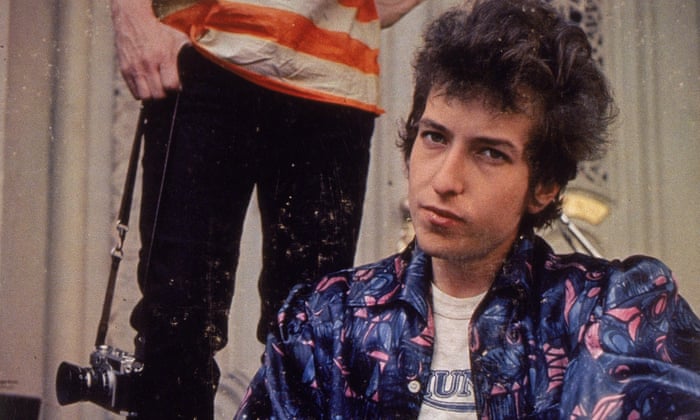
Bob Dylan’s Highway 61 Revisited album cover, shot by Daniel Kramer

Bob Dylan unseen: Daniel Kramer discusses rare images from the 1960s
Capturing classic album sleeves and private moments on 35mm, Kramer spent a breathless 12 months with the musician, who turned 75 yesterday

Interview by Jim Farber
Wednesday 25 May 2016 

Daniel Kramer picked a good time to pester Bob Dylan about setting up a photo shoot. It was early 1964, a few months before Dylan went electric. Kramer, a well-known photojournalist specializing in artist portraits, knew nothing of Dylan before he heard him sing the politically charged song The Lonesome Death of Hattie Carroll on the Steve Allen Show. “Then I began regularly sending notes, and making calls, to the office of Dylan’s manager, Albert Grossman, asking for a one-hour session,” Kramer recalled. “The office always said no.”

But six months later, when Grossman himself picked up the phone for one of Kramer’s calls, things changed. “He just said, ‘OK, come up to Woodstock next Thursday,’” Kramer remembers.

Upon Kramer’s arrival at Grossman’s home, the one-hour photo session stretched to five hours, and was followed by encounters over the next 12 months which resulted in some of the best-known shots of Dylan ever taken. Now those photos, many which have never been seen before, have been published in A Year and A Day (Taschen), a book named for the timespan Kramer and Dylan spent together between 27 August 1964 and 28 August 1965.

Here, Kramer talks about some of those images.


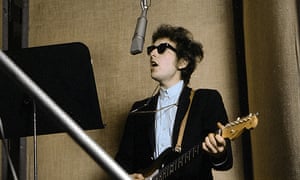
He’s electric

This was shot in Columbia Records’ studio in New York. It was part of the Bringing It All Back Home recording sessions. Bob did the album with acoustic instruments on one side and electric on the other. People say Dylan went electric at the Newport Folk Festival. That’s not true. He did it months earlier, right here in Studio A.


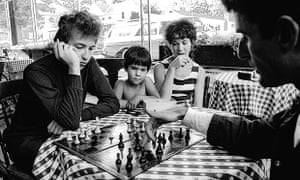
Playing chess with Victor Maymudes at Bernard’s Cafe Espresso, a favorite hangout spot in Woodstock, 1964.
This was shot up in Woodstock. Dylan used to go up there when he wanted to get out of the city to write music. It was taken the first day I met him, during that five-hour session. He didn’t want to sit for just a normal portrait. He said to me: “Do what you want.” So I shot him around Albert Grossman’s house. Then it was time to go to lunch. This was at an outdoor part of a local cafe where Dylan went regularly. The chess shot wasn’t set up. It was just part of how Dylan was spending his day. He was playing chess with his road manager, Victor Maymudes. The woman and her son were just locals who knew Dylan from coming to the cafe. Interestingly, that cafe was later converted into the Center for Photography in Woodstock. Forty years after I made this picture, I had a show in that same facility featuring these photos.


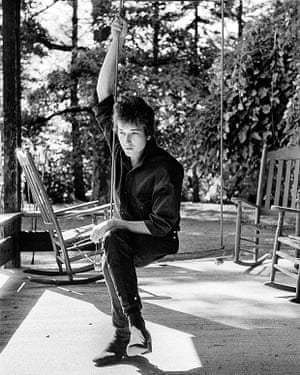
‘He suggested I photograph him on the swing. His mood changed when he stood up and he pumped the swing higher and higher.’

That’s the porch of Albert Grossman’s home. There’s a series of swing pictures in the book, all taken in that first session. Bob looks glum, but I have some in the book where he’s standing up on the swing pumping hard and smiling. It just a couple of guys taking some pictures that day to see what we could do. It was all unsaid. Dylan is very smart about these things. He knows how to work with the camera.


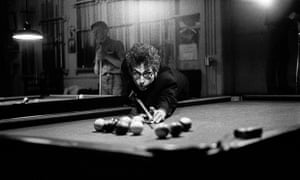
At a pool hall in Kingston, New York, December 1964

This shot was taken a few months later, in Kingston, New York, down the road a piece from Woodstock. We went to the pool hall in the evening after dinner. Victor Maymudes went and so did Bernard, who owned the cafe in the chess picture. Dylan’s a pretty good pool player. No one bothered him. He has a little more privacy around him than most performers. People understood that.


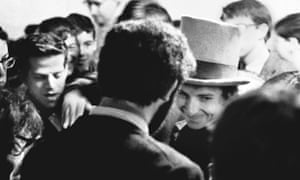
Surrounded by fans after a show at Town Hall, in Philadelphia, 10 October 1964

After I showed the first pictures to Dylan and Albert Grossman, Bob said to me, “I’m going to play in Philadelphia next week. Would you like to go?” If you want to be a good photographer, you need three things: you need a camera, a phone and you need to say “yes”. I had never heard Dylan play live. So I drove with them in their station wagon to Philadelphia and we got to know each other a little more. He wanted to know about the work I had done with Salvador Dalí. I was an assistant to a photographer who worked with Dalí a lot. Dylan and I were discussing Dalí’s ability to be a showman. He’s the opposite of Dylan. Dalí made a whole business out of “here I am”. This shot was taken after the Philadelphia show in one of the rooms off the lobby. He’s signing autographs and smiling for his fans. He was still accessible then.


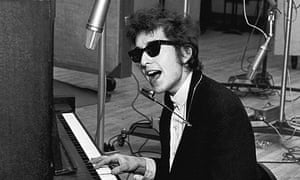
‘It was obvious from the very beginning of the recording sessions that something exciting was happening.’

This is from the recording session for Bringing It All Back Home. I was surprised to see that he played piano. And he played it well!


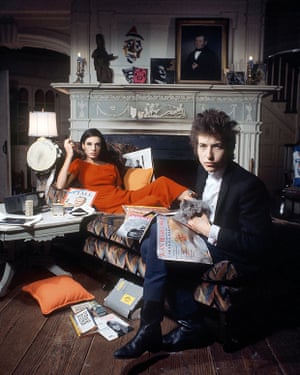
An outtake from the Bringing It All Back Home album cover shoot with Sally Grossman, Woodstock, January 1965
This is one of the shots I’ve been sitting on for 50 years. It has never been seen before. I wanted the shot to express the fact that Bob Dylan was about to change. He’s not the guy in the leather jacket any more. Now, he’s the guy in the dark sport blazer wearing nice cufflinks. There’s no guitar in the shot because I saw him not as any one kind of performer but as a prince of music. I had been in the sessions for the album, so I knew now who he was musically. The photo was shot in Albert Grossman’s house. The room was the original kitchen of this house that’s a couple hundred years old. The fireplace is big enough to cook in. The divan, which was multicolored, was a gift from Mary Travers, of Peter Paul and Mary, to Albert and his wife, Sally, for their wedding. Bob contributed to the picture the magazines he was reading and albums he was listening to. Bob wanted Sally to be in the photo because, well, look at her! She chose the red outfit.

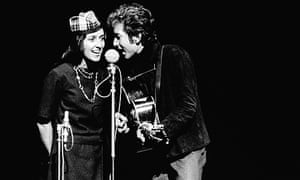
“It seemed inevitable that the particular talents of Bob Dylan and Joan Baez would find their way on to one stage during the winter of 1964–65.”

Dylan was going to do this concert with Joan for Halloween night, 1964, in a show that became one of his Bootleg Series records. It was at Philharmonic Hall in Lincoln Center. I always photographed him from wherever I wanted. But at that concert, I was told by the house manager that photographers had to be up in a press booth. They can’t roam around. I told Albert when we were backstage with Bob, and at that moment, the house manager walked by and said: “Can we bring the curtain up?” Albert said: “You can, just as soon as you give Dan permission to shoot from wherever he wants.” Now you understand Albert Grossman. One shot here is of Bob and Joan at Philharmonic Hall. The shot [not shown] of them waiting at the train station to get to a plane was the next day.


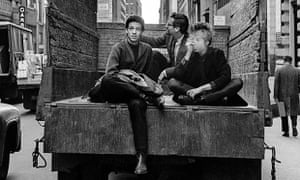
One of several unpublished photos of Bob Dylan on 5th Avenue with Peter Yarrow, of Peter, Paul and Mary, and the guitarist John Hammond Jr.

Here Dylan is with Peter Yarrow, of Peter Paul and Mary, and John Hammond Jr. Bob calls me one day and says: “We’d like to come over, go down in the street and make some pictures.” This is right in front of my studio on 39th Street between 5th and 6th Avenue. There was this truck there, so now we had a prop. Another picture that day was used on the back of Bringing It All Back Home, the one with the police officers. Forty years later, I get a phone call – “are you the guy that made that picture on the back of the album cover showing that policeman? That’s my grandfather. Can we get a print?”


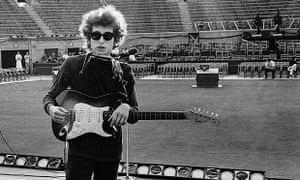
Soundcheck before the show, Forest Hills Tennis Stadium, Queens, New York, 28 August 1965

This is shot on my last day with Dylan. It’s from the afternoon before the Forest Hills show. That was the first full official show going electric, unlike Newport, where he just did a few numbers. There was some booing from the audience. Not much. Writers make such a fuss over that. He’s holding the electric guitar which sold at Christie’s a few years ago for $1m. It’s the most money ever paid for an electric guitar. I made a life-sized version of this picture for the auction as evidence – look, it’s Bob with that guitar!


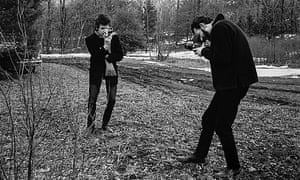
Kramer had a backstage pass to both the private and public Dylan in the seminal year when he became an international superstar

Here, Bob and I are having a shootout in March of 1965. He’s taking a shot of me with a very important camera. It’s the same one you see in the background of the cover of Highway 61. It’s a 35mm Range Finder Nikon. No one asked him to shoot me. Bob just liked the camera and he was very playful.
Photos from Dan Kramer’s A Year And A Day will be on display at The Snap Gallery, London, SW1, starting 18 June


Book launch exhibition - Daniel Kramer - Bob Dylan: A Year and A Day

Details of our new exhibition and book launch

In June 2016 we are hosting an exhibition for Daniel Kramer to mark the launch of his new limited edition Taschen book, Bob Dylan: A Year and A Day, which we are now offering to our clients. A Year and a Day costs £450, and if you want one you can order one from us right now.

I am in the very fortunate position that I have turned every page of A Year and A Day, and read every word, and can vouch for it being something really special.

Daniel Kramer first photographed bob Dylan on 27 August 1964 in Woodstock, and his final photographs of Bob Dylan were taken on 28 August 1965, just over a year later. Dan was in the studio when Bob Dylan recorded Bringing It All Back Home, and took the grammy nominated cover photograph for that album, and its follow up Highway 61 Revisited. He photographed Dylan live in many guises - solo, duetting with Joan Baez, and in his final session, electrified with The Hawks at Forest Hills Tennis Stadium - and behind the scenes, relaxing off stage with friends.

Dan's work needs no introduction to Bob Dylan fans, who will no doubt already own his 1967 book, Bob Dylan: A Portrait of the Artist’s Early Years. This was the first major photographic work about Bob Dylan, and contained 140 black and white photographs.

Old vs new

Given that Dan's first book will be on the book shelf of any self respecting Bob Dylan fan, I thought I should shed some light on how the new book, A Year and a Day, differs.

First, it is a whole lot bigger. It measures 12.5 x 17.5 inches (approx), and has 288 pages. I counted 190 photographs, so up considerably from the 140 in the first book, and with unpublished material included.

Second, A Year and a Day contains a selection of 15 colour photographs, including previously unpublished colour session photographs from Bringing It All Back Home and Highway 61 Revisited. The first book was all black and white.

Third, there is a signed limited edition version. We are offering what the publishers refer to as the Collectors edition of the book, which is a limited edition of 1,765 numbered copies, each one signed by Dan Kramer, and costs £450. It is a hardcover, and comes in its own printed clamshell box. The slipcase has the book title on the front, no picture, and once you lift open the clamshell lid, you find the book inside. The cover of the book has a tight-close-up head shot of Bob Dylan from the first session in Woodstock on 27 August 1964.


Fourth, A Year and a Day has some really nice design aspects. A number of the spreads fold out, so that you get up to four full size photographs visible at one time, rather than the usual two. This works particularly well on a spread showing four photographs of Bob Dylan at the piano during the recording of Bringing It All Back Home.

The book is organised into six chapters, covering Woodstock, Philadelphia Town Hall, Recording Bringing It All Back Home, Bob and Joan, Early 1965, and finally Forest Hills. Each chapter has accompanying text by Dan Kramer, who has great insights and a relaxed and easy-going writing style.

All this comes as a highly recommended package. Please do buy one now to be assured of securing your copy of this limited edition.

Here's the link to where you can do that online - or you can call us at the gallery on 0207 493 1152 to place your order.

On timing, I am told by the distributors that we will have copies of the book available at the gallery at the end of May, and we have started to take orders for them now. We will get them to you just as soon as they arrive. We will give you details of the June gallery exhibition in a later update.

http://www.snapgalleries.com/?page=NewsView&itemid=749

Thursday, 26 May 2016

Last night's set lists

At The Habit, York: -

Ron Elderly: -
I'll See You In My Dreams
Sunny Afternoon

Da Elderly: -
Is It Only The Moonlight?
Into The Light

The Elderly Brothers: -
Crying In The Rain
The Boxer
Medley: Sweet Caroline/Hi Ho Silver Lining
Sea Of Heartbreak
Putting On The Style
Wonderful World
Walk Right Back
When Will I Be Loved
I Saw Her Standing There

What started as a rather quiet night just kept getting busier. There were plenty of players and plenty of Dylan covers (for his 75th Birthday - on Tuesday) inc. It's All Over Now, Baby Blue, Mr Tambourine Man and Tomorrow Is A Long Time. The Elderly Brothers set, which included 'new' songs by Lonnie Donegan and Sam Cooke, was extended by two encores!

Tuesday, 24 May 2016

Happy 75th Bob

It's the only way to celebrate!

Burt Kwouk RIP

Burt Kwouk, Pink Panther star, dies aged 85

Nick Serpell
BBC
24 May 2016

Burt Kwouk, who was best known for playing Inspector Clouseau's manservant Cato in the Pink Panther films, has died aged 85.

He appeared in seven Pink Panther films opposite Peter Sellers as Clouseau's servant who regularly attacked his employer to keep him alert.

He also starred in BBC sitcom Last of the Summer Wine from 2002 to 2010.

Born in Manchester but raised in Shanghai, the actor was awarded an OBE in the 2011 New Year Honour List.

A statement issued by his agent said: "Beloved actor Burt Kwouk has sadly passed peacefully away. The family will be having a private funeral but there will be a memorial at a later date."

On the big screen Kwouk also appeared in three James Bond films including Goldfinger and You Only Live Twice.

Kwouk had a long TV career, appearing in numerous TV shows including The Avengers and Doctor Who. He also played Major Yamauchi in the 1980s wartime television drama Tenko.

He joined long-running sitcom Last of the Summer Wine as electrician Entwistle - a part that was written with him in mind.

The actor appeared in Harry Hill's comedy series in the 1990s and also gained a cult following when he presented Channel 4's interactive gambling show Banzai from 2001-2004.
Burt Kwouk appeared alongisde Brian Murphy and Russ Abbot in Last of the Summer Wine

Many fans have been paying tribute on social media and sharing their favourite clips of Kwouk as Cato.

Film director Duncan Jones tweeted: "Just heard the wonderful Burt Kwouk has passed away. Lovely man. Was willing to work with film students like myself."

Al Murray also tweeted how he "was very lucky to have worked with Burt Kwouk on the Harry Hill show way back when".

'Allo 'Allo! actress Vicky Michelle tweeted a picture of herself with Burt Kwouk and said she knew him well through their charity work with the Heritage Foundation.

"Fab actor, lovely fun and gentle man," she said.
Kwouk played Major Yamauchi in Tenko, the popular drama which was set in a women's prison camp in World War II

Kwouk started acting when he returned to England in 1954 after his family's wealth was wiped out in the 1949 revolution.

His big break came 10 years later when director Blake Edwards offered him the part of Cato Fong, opposite Peter Sellers's Inspector Clouseau.

His double act with Sellers was hugely popular with fans and he continued in the role of Cato after Sellers died in 1980, appearing opposite Roger Moore and Roberto Benigni when they took on the role of the bumbling French detective.

Kwouk said he never expected the part to continue for such a long time, starring in his first Pink Panther film in 1974 and the last in 1992.


"They were always a lot of fun because after a while I got to know Cato quite well and I liked Cato because he never argued with me and he never borrowed money from me. I liked playing Cato quite a lot," he told the BBC in 2011.

Talking about his career after being awarded an OBE for services to drama, the actor said working on the James Bond movies was a special experience.

"Bond movies are always great fun because everything about them is big, expansive, huge - the sets are big, the amounts of money that is spent is huge as well, and the whole thing has a big atmosphere about it. And actors like doing that kind of thing."

But if he had to pick a favourite role, the star said it would be the first time he "had a featured role in a good movie".

"You always remember your first of anything - your first house, your first car, your first child, your first woman - you always remember those things and this was a picture made in 1958.

"It was The Inn of the Sixth Happiness which starred a great lady called Ingrid Bergman, I remember that very fondly."

He is survived by his wife Caroline Tebbs, who he married in 1961 and a son.

Monday, 23 May 2016

Steely Dan: Dallas and Sail the Waterway

Dallas/Sail The Waterway” (1972)

S Victor Aaron
15 June 2014

“Dallas” and “Sail The Waterway” were recorded by the initial Steely Dan band in 1972 and together comprised a pre-Can’t Buy A Thrill single. We know that promo singles were pressed; they’re still in circulation. What is less certain is whether the single ever made it to general public release. That just can’t be verified because, if it was, it sold too poorly to be sure.

Becker and Fagan seem to agree with the lackluster reception to these songs; they haven’t allowed them to be included in any SD compilations, you can’t get it on cassette or CD and in an interview the duo have labeled these tunes “stinko.” Though the melodies are a bit straightforward for what would soon become typical for them, I’d hesitate to say they were putrid. Far from it.


Jim Hodder, their drummer at the time, took lead vocals duties on “Dallas,” and the underrated croon that gave a lift to “Midnight Cruiser” nailed it on this song, too. Skunk Baxter’s pedal steel steered the song in a decidedly country direction, perhaps more so than the song’s composers really wanted in hindsight. It fits the whole character of this tune perfectly, though.

The country-rock band Poco covered “Dallas” a few years later for their Head Over Heels LP and, though it lacks Skunk’s distinctive pedal steel, this is one of the rare instances where a Steely Dan song done by someone other than Steely Dan is a match for the original. For those of you who love to connect dots, Poco at the time had future Eagle Timothy B. Schmidt in the band, a studio backing vocalist on several Steely Dan recordings including “Rikki Don’t Lose That Number.”


Fagen takes over the vocal reigns for “Sail the Waterway,” and the B-side track is decidedly more in the rock vein, similar in style to “Kings,” and quite good harmonies along with a tangy blues lead guitar (Baxter again?). Come to think of it, I like it even better than “Kings”; it only needed a little more studio polish.

Brilliance wasn’t present at the dawn of the greatest American rock band of the ’70s, but you can surely tell from the “Dallas/Sail The Waterway” single that they were well on their way there.

http://somethingelsereviews.com/2014/06/15/steely-dan-sunday-dallassail-the-waterway-1972/