Sunday, 12 February 2017
Saturday, 11 February 2017
David Bowie Stamps...
The Royal Mail are to release a set of David Bowie postage stamps.
The set of 10 stamps will be on sale from March 14 from either local Post Offices or online by clicking here.
The stamps will feature the album artwork for Hunky Dory, Aladdin Sane, “Heroes”,Let’s Dance, Earthling and ★ as well as four additional stamps of Bowie live from the 1973 Ziggy Stardust Tour, the 1978 Stage Tour, the 1983 Serious Moonlight Tour and 2004’s A Reality Tour.
The stamps will also be available as a range of limited edition sets, including a presentation pack, a First Day Cover set with the six David Bowie Special stamps and a First Day Cover set with the David Bowie live stamp sheet.
There will also be individual framed stamp and print sets, a Berlin Years souvenir cover and an Album Art fan sheet.
Friday, 10 February 2017
Dead Poets Society #26 John Clare: I Am
I Am by John Clare
My friends forsake me like a memory lost;
I am the self-consumer of my woes,
They rise and vanish in oblivious host,
Like shades in love and death's oblivion lost;
And yet I am! and live with shadows tost
Into the nothingness of scorn and noise,
Into the living sea of waking dreams,
Where there is neither sense of life nor joys,
But the vast shipwreck of my life's esteems;
And e'en the dearest--that I loved the best--
Are strange--nay, rather stranger than the rest.
I long for scenes where man has never trod;
A place where woman never smil'd or wept;
There to abide with my creator, God,
And sleep as I in childhood sweetly slept:
Untroubling and untroubled where I lie;
The grass below--above the vaulted sky.
Thursday, 9 February 2017
Alan Simpson RIP
Alan Simpson obituary
Co-writer of TV comedy classics such as Hancock’s Half Hour and Steptoe and SonDennis Barker
The Guardian
Wednesday 8 February 2017
Alan Simpson, who has died aged 87, was half of one of Britain’s most successful comedy writing partnerships. Simpson, it is always said, patiently banged away at a manual typewriter while his partner, Ray Galton, strode up and down the room declaiming ideas or dialogue. They made an odd couple, but it worked. Together they wrote the scripts for Tony Hancock’s radio and TV shows, and for many comedy plays, and they created Steptoe and Son, which ran for eight series between 1962 and 1974, with a peak audience of nearly 30 million. Simpson said he always wanted to write about working-class characters – mostly losers – whom he felt he understood.
He was born in Brixton, south London, the son of Francis and Lilian, and moved at a young age to Mitcham where his family lived in a two-up-two-down terrace house; his father, a milkman, died when Alan was 16. He attended Mitcham grammar school but left early and worked as a shipping clerk. Aged 17 he contracted tuberculosis and spent two years at the Surrey County Sanitorium in Milford, near Godalming. The only other young patient in his ward, feeling equally isolated and lonely, was Galton. The two youths became soul mates. And they made each other laugh.
They had another piece of luck: what amounted to an apprenticeship in radio comedy. Another patient, an engineer, got a radio from an old RAF Lancaster bomber working so that they were all able to listen to the American Forces Network from Munich. Their rations of British radio comedy from the BBC were augmented by American shows featuring Bob Hope, Jack Benny, Don Ameche, Phil Harris and Amos ’n’ Andy. The pair began to see the value and mechanism of situation comedy, which Simpson was later to define as: “Half an hour, with no funny voices or jokes as such, all comedy inspired by the characters, and a complete storyline, with no interruptions by a singer or instrumentalist.”
Using a broom cupboard as a studio, and recruiting a radio engineer and special effects man from other patients, the two of them wrote and presented on sanitorium radio their first show, Have You Ever Wondered? According to the 89th issue of the sanitorium’s Milford Bulletin, published on 9 May 1949, it was “slick, up-to-the-minute, with a dash of satire, a worthy effort indeed”.
Once they were discharged (thanks to the arrival of antibiotics), they produced sketches for a church concert party in Mitcham. Beryl Vertue, an old school friend and later collaborator, remembered Simpson at that time as being very tall and an elegant dancer.
But his horizons were broadening. He and Galton wrote to Frank Muir and Denis Norden, the most successful broadcasting comedy writers of the day, offering to work for them in the most menial capacities. This they were never obliged to do so. They sent in a script and were invited to the BBC’s Broadcasting House for a “chat”.

Though Simpson gave up his job as a shipping clerk, his mother ruled that if he was not able to pay his 30 shillings a week contribution to the household budget within a month, he would have to return to it. With Galton, in 1951 he supplied the well-known comic Derek Roy with jokes at five shillings a go for his Happy Go Lucky radio programme, after which the duo were put on the show’s payroll at eight guineas a week. They ended up writing all the shows, an hour once a fortnight, for 20 guineas each.
They knew they had “arrived” when Hancock offered them 25 guineas. The comedian had made a name for himself in the BBC shows Educating Archie and Kaleidoscope and in 1954 he was given his own radio series, Hancock’s Half Hour, in which he played an exaggerated version of himself. Galton and Simpson wrote the scripts, establishing a form of comedy based on character and situation, rather than sketches and gags. They continued to script the show when it was adapted for television in 1956, altogether writing 160 radio and TV programmes for Hancock between 1954 and 1961.
The pair also joined forces with the funny men Eric Sykes, Spike Milligan, Frankie Howerd and Johnny Speight, who went on to create Till Death Us Do Part, to form their own co-operative writers’ agency, Associated London Scripts. Vertue started as a typist and ended up running the company, which merged with the Robert Stigwood Organisation in 1968.
Galton and Simpson wrote every word Hancock uttered in his show for seven years. Eventually, though, the comedian fell out with his writers and thought he could do better. The cinema film The Punch and Judy Man, in which Hancock played an ill-fated impresario, and for which Galton and Simpson were originally to write the script, turned out to be a sea of disagreements, and Hancock sacked his scriptwriters.
After their association with Hancock ended, the BBC commissioned Galton and Simpson to write 10 one-off short plays, which became the first series of the long-running strand Comedy Playhouse. Number four in the series, The Offer, featured two rag-and-bone men living in Shepherd’s Bush.

When Tom Sloane, the head of BBC light entertainment, offered the writers their own series based on the characters, Steptoe and Son was the result, wringing uproarious comedy from the plight of the elderly Albert Steptoe, played by Wilfrid Brambell, and his would-be upwardly mobile son, Harold (Harry H Corbett), trying to earn a living out of collecting and selling junk. The show was an immediate success, with the BBC running a second series straight after the first. Altogether four series aired between 1962 and 1965, with another four between 1970 and 1974.
Further work for the pair included a seven-part series for ITV called Galton and Simpson Playhouse, in 1977, and some other stage and television plays. By now, Galton and Simpson worked from a Mayfair office, and Simpson lived in a large house in Sunbury-on-Thames. When his wife, Kathleen, died suddenly in 1978, he vacated their home for a smaller house built in its grounds, and more or less retired from writing.
Among the many awards he received, jointly with Galton, were the Guild of TV Producers and Directors’ Scriptwriters of the Year (1959), the Screenwriters’ Guild best comedy series for Steptoe and Son (1962, 1963, 1964 and 1965), the Screenwriters’ Guild best comedy screenplay in 1972, and the Writers’ Guild of Great Britain lifetime achievement award (1997).
After the shock of his wife’s death, Simpson became a bon vivant and sports supporter – he had already been president of Hampton Football Club for many years – and made a career for himself as a professional after-dinner and business conference speaker. He also spent a lot of time driving in his Rolls-Royce around France, exploring restaurants and vineyards.
But he remained close friends with Galton, and they collaborated again in 1998 for the BBC’s Galton and Simpson Radio Playhouse series, celebrating 50 years of their writing partnership, in which they adapted four of their early TV scripts for radio: Clicquot et Fils, Nought for Thy Comfort, A Clerical Error and The Offer.
Both writers were appointed OBE in 2000.
• Alan Simpson, comedy writer, born 27 November 1929; died 8 February 2017
Wednesday 8 February 2017
Alan Simpson, who has died aged 87, was half of one of Britain’s most successful comedy writing partnerships. Simpson, it is always said, patiently banged away at a manual typewriter while his partner, Ray Galton, strode up and down the room declaiming ideas or dialogue. They made an odd couple, but it worked. Together they wrote the scripts for Tony Hancock’s radio and TV shows, and for many comedy plays, and they created Steptoe and Son, which ran for eight series between 1962 and 1974, with a peak audience of nearly 30 million. Simpson said he always wanted to write about working-class characters – mostly losers – whom he felt he understood.
He was born in Brixton, south London, the son of Francis and Lilian, and moved at a young age to Mitcham where his family lived in a two-up-two-down terrace house; his father, a milkman, died when Alan was 16. He attended Mitcham grammar school but left early and worked as a shipping clerk. Aged 17 he contracted tuberculosis and spent two years at the Surrey County Sanitorium in Milford, near Godalming. The only other young patient in his ward, feeling equally isolated and lonely, was Galton. The two youths became soul mates. And they made each other laugh.
They had another piece of luck: what amounted to an apprenticeship in radio comedy. Another patient, an engineer, got a radio from an old RAF Lancaster bomber working so that they were all able to listen to the American Forces Network from Munich. Their rations of British radio comedy from the BBC were augmented by American shows featuring Bob Hope, Jack Benny, Don Ameche, Phil Harris and Amos ’n’ Andy. The pair began to see the value and mechanism of situation comedy, which Simpson was later to define as: “Half an hour, with no funny voices or jokes as such, all comedy inspired by the characters, and a complete storyline, with no interruptions by a singer or instrumentalist.”
Using a broom cupboard as a studio, and recruiting a radio engineer and special effects man from other patients, the two of them wrote and presented on sanitorium radio their first show, Have You Ever Wondered? According to the 89th issue of the sanitorium’s Milford Bulletin, published on 9 May 1949, it was “slick, up-to-the-minute, with a dash of satire, a worthy effort indeed”.
Once they were discharged (thanks to the arrival of antibiotics), they produced sketches for a church concert party in Mitcham. Beryl Vertue, an old school friend and later collaborator, remembered Simpson at that time as being very tall and an elegant dancer.
But his horizons were broadening. He and Galton wrote to Frank Muir and Denis Norden, the most successful broadcasting comedy writers of the day, offering to work for them in the most menial capacities. This they were never obliged to do so. They sent in a script and were invited to the BBC’s Broadcasting House for a “chat”.
Though Simpson gave up his job as a shipping clerk, his mother ruled that if he was not able to pay his 30 shillings a week contribution to the household budget within a month, he would have to return to it. With Galton, in 1951 he supplied the well-known comic Derek Roy with jokes at five shillings a go for his Happy Go Lucky radio programme, after which the duo were put on the show’s payroll at eight guineas a week. They ended up writing all the shows, an hour once a fortnight, for 20 guineas each.
They knew they had “arrived” when Hancock offered them 25 guineas. The comedian had made a name for himself in the BBC shows Educating Archie and Kaleidoscope and in 1954 he was given his own radio series, Hancock’s Half Hour, in which he played an exaggerated version of himself. Galton and Simpson wrote the scripts, establishing a form of comedy based on character and situation, rather than sketches and gags. They continued to script the show when it was adapted for television in 1956, altogether writing 160 radio and TV programmes for Hancock between 1954 and 1961.
The pair also joined forces with the funny men Eric Sykes, Spike Milligan, Frankie Howerd and Johnny Speight, who went on to create Till Death Us Do Part, to form their own co-operative writers’ agency, Associated London Scripts. Vertue started as a typist and ended up running the company, which merged with the Robert Stigwood Organisation in 1968.
Galton and Simpson wrote every word Hancock uttered in his show for seven years. Eventually, though, the comedian fell out with his writers and thought he could do better. The cinema film The Punch and Judy Man, in which Hancock played an ill-fated impresario, and for which Galton and Simpson were originally to write the script, turned out to be a sea of disagreements, and Hancock sacked his scriptwriters.
After their association with Hancock ended, the BBC commissioned Galton and Simpson to write 10 one-off short plays, which became the first series of the long-running strand Comedy Playhouse. Number four in the series, The Offer, featured two rag-and-bone men living in Shepherd’s Bush.
When Tom Sloane, the head of BBC light entertainment, offered the writers their own series based on the characters, Steptoe and Son was the result, wringing uproarious comedy from the plight of the elderly Albert Steptoe, played by Wilfrid Brambell, and his would-be upwardly mobile son, Harold (Harry H Corbett), trying to earn a living out of collecting and selling junk. The show was an immediate success, with the BBC running a second series straight after the first. Altogether four series aired between 1962 and 1965, with another four between 1970 and 1974.
Further work for the pair included a seven-part series for ITV called Galton and Simpson Playhouse, in 1977, and some other stage and television plays. By now, Galton and Simpson worked from a Mayfair office, and Simpson lived in a large house in Sunbury-on-Thames. When his wife, Kathleen, died suddenly in 1978, he vacated their home for a smaller house built in its grounds, and more or less retired from writing.
Among the many awards he received, jointly with Galton, were the Guild of TV Producers and Directors’ Scriptwriters of the Year (1959), the Screenwriters’ Guild best comedy series for Steptoe and Son (1962, 1963, 1964 and 1965), the Screenwriters’ Guild best comedy screenplay in 1972, and the Writers’ Guild of Great Britain lifetime achievement award (1997).
After the shock of his wife’s death, Simpson became a bon vivant and sports supporter – he had already been president of Hampton Football Club for many years – and made a career for himself as a professional after-dinner and business conference speaker. He also spent a lot of time driving in his Rolls-Royce around France, exploring restaurants and vineyards.
But he remained close friends with Galton, and they collaborated again in 1998 for the BBC’s Galton and Simpson Radio Playhouse series, celebrating 50 years of their writing partnership, in which they adapted four of their early TV scripts for radio: Clicquot et Fils, Nought for Thy Comfort, A Clerical Error and The Offer.
Both writers were appointed OBE in 2000.
• Alan Simpson, comedy writer, born 27 November 1929; died 8 February 2017
Wednesday, 8 February 2017
Tuesday, 7 February 2017
Magritte? Reet?

This is not Magritte
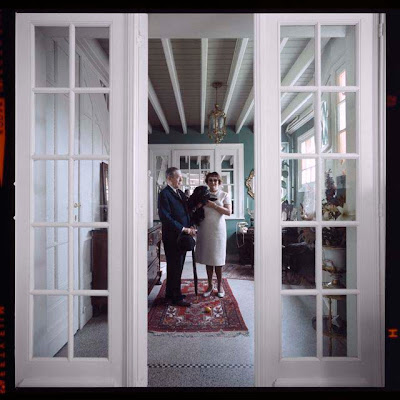
To coincide with a major exhibition of Surrealist artist, Rene Magritte's work at Tate Liverpool, Richard Strange broadcasts from Magritte's former apartment and the recently opened Magritte Museum in Brussels to piece together the exceptional vision and by contrast, determinedly ordinary life of this outwardly conventional man who constructed intriguing and bizarre images, imploring us to "put the real world on trial".
Monty Python's Terry Jones holds forth about Magritte's genius for juxtaposition, eminent writer, Suzi Gablik recalls staying with the Magritte's during the 1960s, Naresh Ramchandani explains why Magritte's paintings underpin advertising and artist Gavin Turk pays homage to the master.
Ever since the 1960s, we've seen Magritte's works, eager to find hidden meanings within them. But the artist fiercely resisted interpretation, imploring us to question our own inquiry and what reality we believe to be true.
His famous painting - "Ceci n'est pas une Pipe", (This Is Not A Pipe), shows the image of a pipe "You can't smoke it, you can't suck it - it's no more a pipe than an apple!" implored the artist.
"My painting is visible images which conceal nothing; they evoke mystery and, indeed, when one sees one of my pictures, one asks oneself this simple question, 'What does that mean?'. It does not mean anything, because mystery means nothing either, it is unknowable."

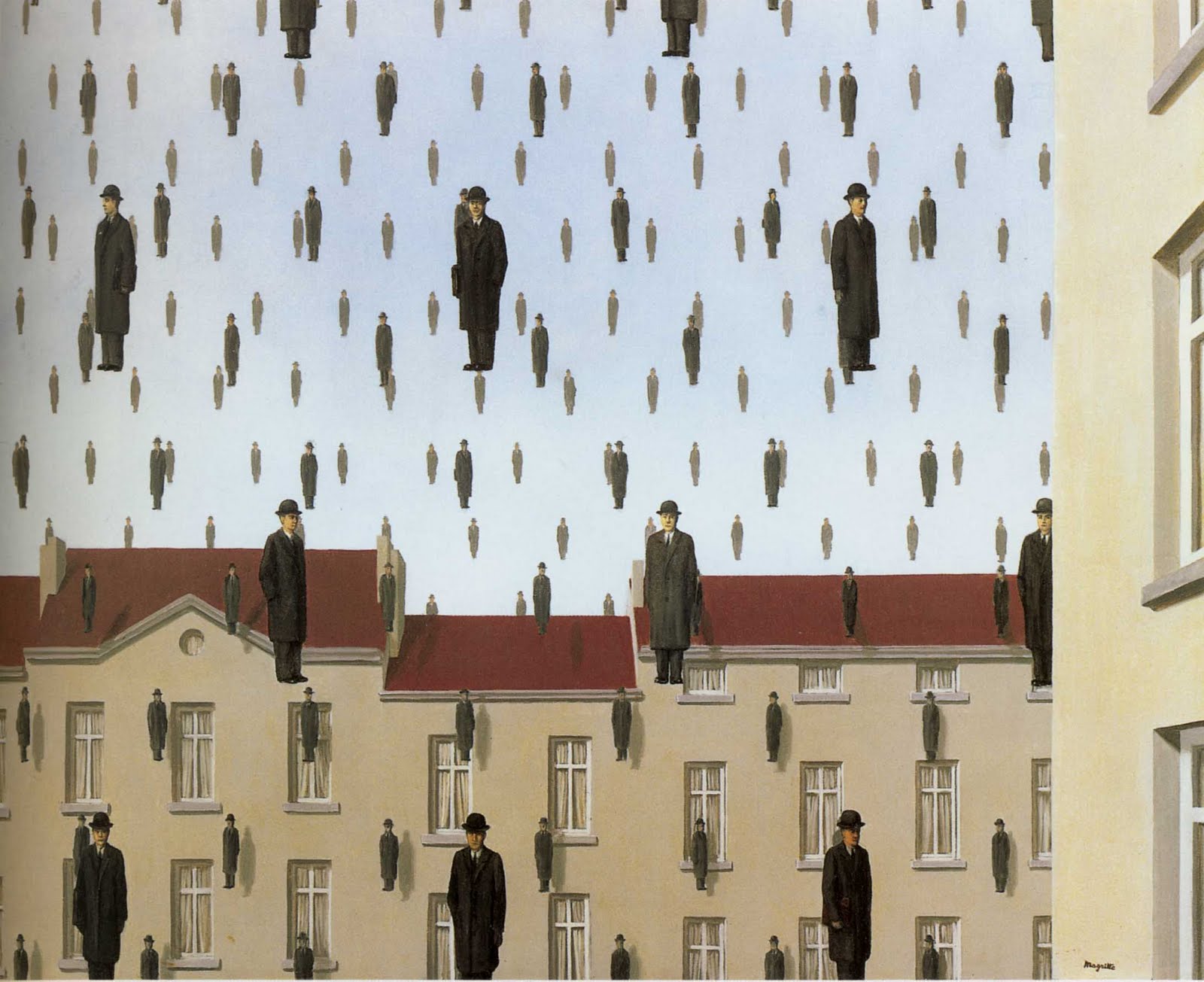
Magritte used a language of brick walls, sky, apples, rocks, bowler-hats and drawn words, to explore how images work and how strange they are. He played with scale, perspective, shadow and illusion. A rock floats, an apple fills a room, suited men rain down on a city...
He was often mistaken as a bank clerk; his external appearance (in bowler hat) at odds with his anarchist heart.
Producer: Kate Bland.
Listen to it now - but hurry: you only have 29 days to do so...
Monday, 6 February 2017
Sunday, 5 February 2017
Saturday, 4 February 2017
Friday, 3 February 2017
Dead Poets Society #25 John Betjeman: Business Girls
:format(jpeg):mode_rgb():quality(90)/discogs-images/A-436157-1270122948.jpeg.jpg)
Business Girls by John Betjeman
Autumn winds are blowing down
On a thousand business women
Having baths in Camden Town
Waste pipes chuckle into runnels,
Steam's escaping here and there,
Morning trains through Camden cutting
Shake the Crescent and the Square.
Early nip of changeful autumn,
Dahlias glimpsed through garden doors,
At the back precarious bathrooms
Jutting out from upper floors;
And behind their frail partitions
Business women lie and soak,
Seeing through the draughty skylight
Flying clouds and railway smoke.
Rest you there, poor unbelov'd ones,
Lap your loneliness in heat.
All too soon the tiny breakfast,
Trolley-bus and windy street!
Wednesday, 1 February 2017
Bob Dylan - Triplicate
Bob Dylan’s First Three-Disc Album — Triplicate — Set For March 31 Release
31 January 2017
Each disc to be presented in a thematically-arranged 10-song sequence, illuminating compositions from great American songwriters interpreted by Dylan through his artistry as a vocalist, arranger and bandleader.
(Columbia Records; New York, NY; January 31, 2017) A three-disc studio album from Bob Dylan,Triplicate, will be released on March 31, featuring 30 brand-new recordings of classic American tunes and marking the first triple-length set of the artist’s illustrious career. With each disc individually titled and presented in a thematically-arranged 10-song sequence, Triplicateshowcases Dylan’s unique and much-lauded talents as a vocalist, arranger and bandleader on 30 compositions by some of music’s most lauded and influential songwriters. The Jack Frost-produced album is the 38th studio set from Bob Dylan and marks the first new music from the artist since Fallen Angels, which was released in early 2016.

Triplicate will be simultaneously released in several configurations, including a 3-CD 8-Panel Digipak, a 3-LP vinyl set and a 3-LP Deluxe Vinyl Limited Edition packaged in a numbered case. Triplicate is also available for pre-order on iTunes, and one of its recordings, “I Could Have Told You,” can now be streamed via a “Vinyl Video” on YouTube. All physical products are also available for pre-order in the bobdylan.com store.
For Triplicate, Dylan assembled his touring band in Hollywood’s Capitol studios to record hand-chosen songs from an array of American songwriters including Charles Strouse and Lee Adams (“Once Upon A Time”), Harold Arlen and Ted Koehler (“Stormy Weather”), Harold Hupfield (“As Time Goes By”) and Cy Coleman and Carolyn Leigh (“The Best Is Yet To Come”). The titles of the individual discs are ‘Til The Sun Goes Down, Devil Dolls and Comin’ Home Late.

The artist’s two previous albums of classic American songs, last year’s Fallen Angels and 2015’s Shadows in the Night, were both worldwide hits and garnered Grammy Award nominations in the category of Best Traditional Pop Vocal Album. Fallen Angels achieved Top Ten debuts in more than a dozen countries, including the United Kingdom, the United States, Italy, The Netherlands and Austria, while Shadows in the Night debuted in the Top 10 in seventeen countries, with #1 debuts in the United Kingdom, Ireland, Sweden and Norway.
Both albums received worldwide critical acclaim, with Randy Lewis writing of Fallen Angels inThe Los Angeles Times, “[Dylan] immediately liberates songs from the big band/big orchestra world from which they emerged, and in which they are most frequently revisited…. [He] reaches to the blues at the core of many of these songs. Thus, they elicit the ache of romantic yearning and loss that often gets subsumed by swelling orchestral forces, background choirs or by singers who are more focused on crafting elegant vocals than finding emotional resonance.”
The Telegraph’s Neil McCormick awarded Shadows in the Night five out of five stars and described the work as “spooky, bittersweet, mesmerizingly moving [with] the best singing from Dylan in 25 years.” Jon Pareles wrote of that album in the New York Times, “Mr. Dylan presents yet another changed voice…a subdued, sustained tone….Shadows in the Night maintains its singular mood: lovesick, haunted, suspended between an inconsolable present and all the regrets of the past.”
Tuesday, 31 January 2017
Monday, 30 January 2017
Sunday, 29 January 2017
John Hurt RIP
Sir John Hurt obituary
British actor became an overnight sensation after playing Quentin Crisp in the 1975 television film The Naked Civil ServantMichael Coveney
The Guardian
Saturday 28 January 2017
Few British actors of recent years have been held in as much affection as Sir John Hurt, who has died aged 77. That affection is not just because of his unruly lifestyle – he was a hell-raising chum of Oliver Reed, Peter O’Toole and Richard Harris, and was married four times – or even his string of performances as damaged, frail or vulnerable characters, though that was certainly a factor. There was something about his innocence, open-heartedness and his beautiful speaking voice that made him instantly attractive.
As he aged, his face developed more creases and folds than the old map of the Indies, inviting comparisons with the famous “lived-in” faces of WH Auden and Samuel Beckett, in whose reminiscent Krapp’s Last Tape he gave a definitive solo performance towards the end of his career. One critic said he could pack a whole emotional universe into the twitch of an eyebrow, a sardonic slackening of the mouth. Hurt himself said: “What I am now, the man, the actor, is a blend of all that has happened.”
For theatregoers of my generation, his pulverising, hysterically funny performance as Malcolm Scrawdyke, leader of the Party of Dynamic Erection at a Yorkshire art college, in David Halliwell’s Little Malcolm and His Struggle Against the Eunuchs, was a totemic performance of the mid-1960s; another was David Warner’s Hamlet, and both actors appeared in the 1974 film version of Little Malcolm. The play lasted only two weeks at the Garrick Theatre (I saw the final Saturday matinée), but Hurt’s performance was already a minor cult, and one collected by the Beatles and Laurence Olivier.
He became an overnight sensation with the public at large as Quentin Crisp – the self-confessed “stately homo of England” – in the 1975 television film The Naked Civil Servant, directed by Jack Gold, playing the outrageous, original and defiant aesthete whom Hurt had first encountered as a nude model in his painting classes at St Martin’s School of Art, before he trained as an actor.
Crisp called Hurt “my representative here on Earth”, ironically claiming a divinity at odds with his low-life louche-ness and poverty. But Hurt, a radiant vision of ginger quiffs and curls, with a voice kippered in gin and as studiously inflected as a deadpan mix of Noël Coward, Coral Browne and Julian Clary, in a way propelled Crisp to the stars, and certainly to his transatlantic fame, a journey summarised when Hurt recapped Crisp’s life in An Englishman in New York (2009), 10 years after his death.
Hurt said some people had advised him that playing Crisp would end his career. Instead, it made everything possible. Within five years he had appeared in four of the most extraordinary films of the late 1970s: Ridley Scott’s Alien (1979), the brilliantly acted sci-fi horror movie in which Hurt – from whose stomach the creature exploded – was the first victim; Alan Parker’s Midnight Express, for which he won his first Bafta award as a drug-addicted convict in a Turkish torture prison; Michael Cimino’s controversial western Heaven’s Gate (1980), now a cult classic in its fully restored format; and David Lynch’s The Elephant Man (1980), with Anthony Hopkins and Anne Bancroft.
In the latter, as John Merrick, the deformed circus attraction who becomes a celebrity in Victorian society and medicine, Hurt won a second Bafta award and Lynch’s opinion that he was “the greatest actor in the world”. He infused a hideous outer appearance – there were 27 moving pieces in his face mask; he spent nine hours a day in make-up – with a deeply moving, humane quality. He followed up with a small role – Jesus – in Mel Brooks’s History of the World: Part 1 (1981), the movie where the waiter at the Last Supper says, “Are you all together, or is it separate cheques?”
Hurt was an actor freed of all convention in his choice of roles, and he lived his life accordingly. Born in Chesterfield, Derbyshire, he was the youngest of three children of a Church of England vicar and mathematician, the Reverend Arnould Herbert Hurt, and his wife, Phyllis (née Massey), an engineer with an enthusiasm for amateur dramatics.
After a miserable schooling at St Michael’s in Sevenoaks, Kent (where he said he was sexually abused), and the Lincoln grammar school (where he played Lady Bracknell in The Importance of Being Earnest), he rebelled as an art student, first at the Grimsby art school where, in 1959, he won a scholarship to St Martin’s, before training at Rada for two years in 1960.
He made a stage debut that same year with the Royal Shakespeare Company at the Arts, playing a semi-psychotic teenage thug in Fred Watson’s Infanticide in the House of Fred Ginger and then joined the cast of Arnold Wesker’s national service play, Chips With Everything, at the Vaudeville. Still at the Arts, he was Len in Harold Pinter’s The Dwarfs (1963) before playing the title role in John Wilson’s Hamp (1964) at the Edinburgh Festival, where critic Caryl Brahms noted his unusual ability and “blessed quality of simplicity”.
This was a more relaxed, free-spirited time in the theatre. Hurt recalled rehearsing with Pinter when silver salvers stacked with gins and tonics, ice and lemon, would arrive at 11.30 each morning as part of the stage management routine. On receiving a rude notice from the distinguished Daily Mail critic Peter Lewis, he wrote, “Dear Mr Lewis, Whooooops! Yours sincerely, John Hurt” and received the reply, “Dear Mr Hurt, thank you for short but tedious letter. Yours sincerely, Peter Lewis.”
After Little Malcolm, he played leading roles with the RSC at the Aldwych – notably in David Mercer’s Belcher’s Luck (1966) and as the madcap dadaist Tristan Tzara in Tom Stoppard’s Travesties (1974) – as well as Octavius in Shaw’s Man and Superman in Dublin in 1969 and an important 1972 revival of Pinter’s The Caretaker at the Mermaid. But his stage work over the next 10 years was virtually non-existent as he followed The Naked Civil Servant with another pyrotechnical television performance as Caligula in I, Claudius; Raskolnikov in Dostoevsky’s Crime and Punishment and the Fool to Olivier’s King Lear in Michael Elliott’s 1983 television film.
His first big movie had been Fred Zinnemann’s A Man for All Seasons (1966) with Paul Scofield (Hurt played Richard Rich) but his first big screen performance was an unforgettable Timothy Evans, the innocent framed victim in Richard Fleischer’s 10 Rillington Place (1970), with Richard Attenborough as the sinister landlord and killer John Christie. He claimed to have made 150 movies and persisted in playing those he called “the unloved … people like us, the inside-out people, who live their lives as an experiment, not as a formula”. Even his Ben Gunn-like professor in Steven Spielberg’s Indiana Jones and the Kingdom of the Crystal Skull (2008) fitted into this category, though not as resoundingly, perhaps, as his quivering Winston Smith in Michael Radford’s terrific Nineteen Eighty-Four (1984); or as a prissy weakling, Stephen Ward, in Michael Caton-Jones’s Scandal (1989) about the Profumo affair; or again as the lonely writer Giles De’Ath in Richard Kwietniowski’s Love and Death on Long Island.
His later, sporadic theatre performances included a wonderful Trigorin in Chekhov’s The Seagull at the Lyric, Hammersmith, in 1985 (with Natasha Richardson as Nina); Turgenev’s incandescent idler Rakitin in a 1994 West End production by Bill Bryden of A Month in the Country, playing a superb duet with Helen Mirren’s Natalya Petrovna; and another memorable match with Penelope Wilton in Brian Friel’s exquisite 70-minute doodle Afterplay (2002), in which two lonely Chekhov characters – Andrei from Three Sisters, Sonya from Uncle Vanya – find mutual consolation in a Moscow café in the 1920s. The play originated, like his Krapp, at the Gate Theatre in Dublin.
His last screen work included, in the Harry Potter franchise, the first, Harry Potter and the Philosopher’s Stone (2001), and last two, Harry Potter and the Deathly Hallows Parts One and Two (2010, 2011), as the kindly wand-maker Mr Ollivander; Roland Joffé’s 1960s remake of Brighton Rock (2010); and the 50th anniversary television edition of Dr Who (2013), playing a forgotten incarnation of the title character.
Because of his distinctive, virtuosic vocal attributes – was that what a brandy-injected fruitcake sounds like, or peanut butter spread thickly with a serrated knife? – he was always in demand for voiceover gigs in animated movies: the heroic rabbit leader, Hazel, in Watership Down (1978), Aragorn/Strider in Lord of the Rings (1978) and the Narrator in Lars von Trier’s Dogville (2004). In 2015 he took the Peter O’Toole stage role in Jeffrey Bernard is Unwell for BBC Radio 4. He had foresworn alcohol for a few years – not for health reasons, he said, but because he was bored with it.
Hurt’s sister was a teacher in Australia, his brother a convert to Roman Catholicism and a monk and writer. After his first short marriage to the actor Annette Robinson (1960, divorced 1962) he lived for 15 years in London with the French model Marie-Lise Volpeliere Pierrot. She was killed in a riding accident in 1983. In 1984 he married, secondly, a Texan, Donna Peacock (divorced in 1990), living with her for a time in Nairobi until the relationship came under strain from his drinking and her dalliance with a gardener. With his third wife, Jo Dalton (married in 1990, divorced 1995), he had two sons, Nicolas and Alexander (“Sasha”), who survive him, as does his fourth wife, the actor and producer Anwen Rees-Myers, whom he married in 2005 and with whom he lived in Cromer, Norfolk. Hurt was made CBE in 2004, given a Bafta lifetime achievement award in 2012 and knighted in the New Year’s honours list of 2015.
John Vincent Hurt, actor, born 22 January 1940, died 27 January 2017
Saturday, 28 January 2017
Friday, 27 January 2017
Wednesday night's set lists
At The Habit, York: -
Ron Elderly: -
Make You Feel My Love
Black Is Black
Tell Me
Da Elderly: -
Into The Light
Only The Moonlight
Albuquerque
The Elderly Brothers: -
When Will I Be Loved
Don't Throw Your Love Away
The Singer Not The Song
Sha La La La Lee
Devoted To You
Happy Together
Kathy's Clown
I Saw Her Standing There
A quiet one, on what was a bitterly cold night. Apart from very conspicuous consumption of Scotch, the only nod to Burns' Night was a lovely rendition of Wild Mountain Thyme by regular Deb. The dearth of players meant 3 songs apiece instead of the usual 2 and an extended Elderly Brothers set. An hour or so spent earlier trawling through songs not played for some time yielded several old favourites including a Rolling Stones B-side and songs by The Searchers, The Small Faces and The Turtles. Kathy's Clown was a request from a member of the audience. Things livened up a little after midnight with a full-on sing-song session for those with no homes to go to!
Thursday, 26 January 2017
Mary Tyler Moore RIP
Virginia Heffernan
The New York Times
25 January 2017
Mary Tyler Moore, whose witty and graceful performances on two top-rated television shows in the 1960s and ’70s helped define a new vision of American womanhood, died on Wednesday in Greenwich, Conn. She was 80.
Her family said her death, at Greenwich Hospital, was caused by cardiopulmonary arrest after she had contracted pneumonia.
Ms. Moore faced more than her share of private sorrow, and she went on to more serious fare, including an Oscar-nominated role in the 1980 film “Ordinary People” as a frosty, resentful mother whose son has died. But she was most indelibly known as the incomparably spunky Mary Richards on the CBS hit sitcom “The Mary Tyler Moore Show.” Broadcast from 1970 to 1977, it was produced by both Ms. Moore and her second husband, Grant Tinker, who later ran NBC and who died on Nov. 28.
At least a decade before the twin figures of the harried working woman and the neurotic, unwed 30-something became media preoccupations, Ms. Moore’s portrayal — for which she won four of her seven Emmy Awards — expressed both the exuberance and the melancholy of the single career woman who could plot her own course without reference to cultural archetypes.
The show, and her portrayal of Mary as a sisterly presence in the office, as well as a source of ingenuity and humor, was a balm to widespread anxieties about women in the work force.
It modeled a productive style of coed collegiality, with Ms. Moore teasing out the various ironies known to any smart woman trying to keep from cracking up in a world of scowling male bosses and preening male soloists.
“Mary Tyler Moore became a feminist icon as Mary Richards,” said Jennifer Keishin Armstrong, the author of “Mary and Lou and Rhoda and Ted: And All the Brilliant Minds Who Made The Mary Tyler Moore Show a Classic.”
“She only wanted to play a great character, and she did so. That character also happened to be single, female, over 30, professional, independent, and not particularly obsessed with getting married. Mary had America facing such issues as equal pay, birth control, and sexual independence way back in the ’70s.”
The influence of Ms. Moore’s Mary Richards can be seen in the performances of almost all the great female sitcom stars who followed her, from Jennifer Aniston to Debra Messing to Tina Fey, who has said that she developed her acclaimed sitcom “30 Rock” and her character, the harried television writer Liz Lemon, by watching episodes of “The Mary Tyler Moore Show.” Many non-actresses also said that Ms. Moore — by playing a working single woman with such compassion and brio — inspired their performances in real life.
Ms. Moore had earlier, in a decidedly different era, played another beloved television character: Laura Petrie, the stylish wife of the comedy writer played by Dick Van Dyke on “The Dick Van Dyke Show.” Also on CBS, the show ran from 1961 to 1966.
Ms. Moore was the lesser star in those days, but she shared Mr. Van Dyke’s background in song and dance, and as a comedy duo they magnified each other’s charm. Ms. Moore transformed and tamed the vaudeville style that had dominated sitcoms, perfecting a comic housewifely hysteria in Laura, made visible in the way she often appeared to be fighting back tears. Her “Dick Van Dyke Show” performance won her two Emmys.
“I heard something in her voice that got to me,” Carl Reiner, who created and produced the show, once said. “I think the fact that Mary and Dick were dancers gave the whole program a grace that very few programs have.”
Mary Tyler Moore was born on Dec. 29, 1936, in Brooklyn Heights. After living in Queens and Brooklyn, her family moved to California when she was 8. Her father, George Tyler Moore, a clerk, and her mother, the former Margery Hackett, were both alcoholics and, Ms. Moore often said, imperfect parents. The eldest of their three children, Mary would outlive both her sister, Elizabeth Moore, who died of a drug and alcohol overdose in 1978, and her brother, John Hackett Moore, who died of cancer in 1992 after Ms. Moore had assisted him in an unsuccessful suicide attempt.
While she was still a child in Los Angeles, Ms. Moore arranged to live with an aunt, choosing to see her parents only on special occasions.
At 17, she was hired to appear in a series of commercials for Hotpoint appliances in the role of Happy Hotpoint, a caped dancing elf in a body stocking. The ad was shown during episodes of “The Adventures of Ozzie and Harriet.”
In 1955, she married Richard Meeker, a salesman. That same year, she became pregnant, which compromised her effectiveness as an androgynous elf in a fitted costume. Her only child, Richard Jr., was born in 1956. He died in 1980 when a gun with a hair trigger went off in his hands; the gun model was later removed from the market.
After the birth of her son, Ms. Moore danced in various television shows before turning to acting. She had small parts on series like “Bourbon Street Beat,” “77 Sunset Strip,” “Steve Canyon” and “Hawaiian Eye.” As the answering-service girl Sam on “Richard Diamond, Private Detective,” she was more heard than seen: Her character existed only in sexy close-ups of parts of her body, including her mouth, her hands and her elegant legs.
It was another body part, her nose, that was said to have disqualified her from playing Danny Thomas’s daughter on his sitcom “Make Room for Daddy.” She was up for the role, but Mr. Thomas, who took pride in his exaggerated features, decided that her nose was too small to belong to a member of his family.
“The Dick Van Dyke Show” made Ms. Moore, who looked sylphlike in capri pants, a sensation. At Mr. Van Dyke’s behest, however, the series ended in 1966, at the height of its popularity.
Ms. Moore’s marriage to Mr. Meeker had dissolved by 1961, and she met Mr. Tinker, who was then an executive at 20th Century Fox, in 1962. They were married, in Las Vegas, the same year. Together they formed MTM Enterprises, and in the late ’60s, they hit upon an idea for a custom-made showcase.
MTM’s on-air mascot was a meowing kitten, whose image evoked, and gently satirized, MGM’s roaring lion, and the branding clicked. Mr. Tinker and Ms. Moore pitched a show to CBS about a recently divorced woman who was working and living on her own, and the network liked it.
The executives’ only reservation concerned the subject of divorce, which was still forbidden on network television. Some even feared that viewers would assume that Laura Petrie, from “The Dick Van Dyke Show,” had divorced Rob, which was unthinkable. A solution was reached: Ms. Moore’s character would be newly single but not divorced, having recently broken up with a fiancé.
In the show, Mary Richards was an associate news producer at WJM, a local television station in Minneapolis. Ed Asner played her boss, Lou Grant, who was gruff, though essentially tenderhearted; Gavin McLeod was Murray Slaughter, a news writer with a boring life; Ted Knight was the vain, dimwit anchorman, Ted Baxter.
The female characters, as finely drawn as the men, were Rhoda Morgenstern (Valerie Harper), Mary’s neighbor, also single; Phyllis Lindstrom (Cloris Leachman), Mary’s manipulative landlady; Georgette Franklin (Georgia Engel), Ted’s baby-voiced girlfriend (and later his wife); and Sue Ann Nivens (Betty White), the husband-stealing hostess of “The Happy Homemaker.”
That Rhoda was Jewish — as was Lou, the show sometimes implied — was unusual for network television at the time. Similarly novel were hints that Mary was sexually active.
The characters all revolved around Mary, whose naïveté and enthusiasm supplied a generous assist for the others’ eccentricities. Just as she had on “The Dick Van Dyke Show,” Ms. Moore could always make a joke her own when she needed to — and the episodes that put Mary’s humor center stage were the best.
In “Chuckles Bites the Dust,” which is on many lists of the best television episodes of all time (TV Guide ranked it No. 3), Mary is appalled by her colleagues’ irreverent response to the undignified death of Chuckles the Clown, the host of a children’s show on their station. But at his funeral, it’s she who can’t control her giggles. Her struggle to suppress laughter is a comic tour de force. (David Lloyd won an Emmy for writing the episode, one of 29 the show won over all.)
“The Mary Tyler Moore Show,” which forsook the gag-a-minute sitcom formula in favor of more character-driven humor, soon became one of the most popular shows in television history, aided only partly by its position in CBS’s winning Saturday-night lineup, which also included “M*A*S*H*,” “All in the Family” and “The Carol Burnett Show.”
The writers and producers who worked on “The Mary Tyler Moore Show” went on to develop a raft of other hit sitcoms, including “Taxi,” “Cheers” and “The Simpsons.”
Among the show’s many memorable flourishes was its theme song, “Love Is All Around,” written and performed by Sonny Curtis. The lyrics were rewritten after the first season. The opening lines — “How will you make it on your own?/This world is awfully big, and girl, this time you’re all alone” — were revised to reflect the show’s optimism and devotion to its star:
“Who can turn the world on with her smile?/Who can take a nothing day, and suddenly make it all seem worthwhile?”
The adorableness of Mary Richards as a character — with her pluck and her world-brightening smile — was a mixed blessing for Ms. Moore. After the show was canceled in 1977, she set out to demonstrate her range as an actress, choosing roles in television, theater and film that distanced her from the sweetheart characters for which she had become famous.
Her efforts paid off impressively in “Ordinary People.” Her performance as the stony, guilt-ridden mother Beth Jarrett brought her a Golden Globe award as well as the Academy Award nomination. Afterward she said she based the performance on her aloof father.
Robert Redford, who directed the movie, said he had cast Ms. Moore after seeing her walking alone on a beach and realizing that she had a serious side.
In the meantime, “The Mary Tyler Moore Show” fractured into spinoffs: the sitcoms “Rhoda” and “Phyllis” and the acclaimed drama “Lou Grant,” a rare example of an hourlong series spun off from a half-hour sitcom.
This period represented a winning streak for MTM Enterprises, which was overseen almost exclusively by Mr. Tinker. The company produced not only those spinoffs but also the critical and popular hits “The Bob Newhart Show,” “Newhart,” “WKRP in Cincinnati,” “Hill Street Blues” “St. Elsewhere,” “Remington Steele” and “Rescue 911.”
On Broadway, MTM Enterprises produced Michael Frayn’s farce “Noises Off.”
In the 1980s, Ms. Moore admitted to having a drinking problem. It had started, she said, when she was starring in “The Dick Van Dyke Show” and had finally reached untenable levels. (In 2000, Mr. Van Dyke told Larry King that he was also an alcoholic and that he had also started drinking heavily while working on the show.) Ms. Moore entered the Betty Ford Center for treatment in 1984.
She had had Type 1 diabetes since her 30s and in 2011 underwent brain surgery to remove a benign tumor.
From the late 1970s into the ’80s, Ms. Moore had a string of lackluster, low-rated shows, including a 1978 variety hour, “Mary.” It lasted only three episodes and is notable mainly because David Letterman and Michael Keaton were among the regulars. It was followed that season by a hybrid variety-comedy show, “The Mary Tyler Moore Hour,” which was gone after 11 episodes. None of her shows in those years lasted more than one season.
She also sought roles that would let her express the gravitas she had shown in “Ordinary People.” In 1980, she won a Tony Award for her performance on Broadway as a quadriplegic who wanted to die in “Whose Life Is It, Anyway?”
On television, she played a breast cancer survivor in “First You Cry,” Mary Todd Lincoln in “Gore Vidal’s Lincoln” and the cruel director of an orphanage in “Stolen Babies,” for which she won her seventh Emmy.
In 1995, in an interview with The Times, Ms. Moore was asked if she resented being asked by reporters about Mary Richards. “I think some of them may be trying to find some way to instruct, or to make a judgment about, or in some way set themselves above me,” she said.Photo
“I’ve come to the point in my life where I don’t have to work,” she continued. “I work because I enjoy it. I only enjoy doing things that frighten me a little bit. And I am an actress. I think I am an actress as well as a personality. And I’ve got to keep the actress in me happy.”
In the 1996 movie “Flirting With Disaster,” Ms. Moore played with aplomb the mortifying adoptive mother of Ben Stiller’s character, who at one point lifts her shirt to show her son’s girlfriend how a bra should fit. In 2001, she was executive producer of a macabre television movie, “Like Mother Like Son: The Strange Story of Sante and Kenny Kimes,” in which she also starred as the killer mom Sante.
She also became more willing to indulge in nostalgia. The 2001 television movie “Mary and Rhoda” brought Ms. Moore and Ms. Harper together again, playing older versions of their 1970s characters. (Mary was widowed, and Rhoda divorced.)
A more successful reunion came in 2003, when she starred with Mr. Van Dyke in a PBS adaptation of the Pulitzer Prize-winning play “The Gin Game.” In 2004, she and Mr. Van Dyke reunited again on “The Dick Van Dyke Show Revisited.”
She went on to make several guest appearances in 2006 as a TV host on “That ’70s Show,” which was shot on the soundstage that once belonged to “The Mary Tyler Moore Show.” In 2013, she was reunited with all four of her female “Mary Tyler Moore Show” co-stars on an episode of the sitcom “Hot in Cleveland,” whose cast included Betty White and Georgia Engel. Ms. Moore at last seemed to accept and even embrace the pop significance of the Mary Richards era.
In 2012, the Screen Actors Guild gave Ms. Moore a lifetime achievement award. Ms. Moore and Mr. Tinker divorced in 1981, although they remained friends. In 1983, she married Dr. Robert Levine, a physician, who is her only immediate survivor. The couple lived in Manhattan and on a farm in upstate New York.
Outside her performing career, she was chairwoman of the Juvenile Diabetes Research Foundation International and spoke openly about her own struggle with the disease, diagnosed in the 1960s. A vegetarian, she was also an outspoken proponent of animal welfare, and she established funds for arts scholarships.
The airborne tam o’shanter that appears in a freeze frame at the end of the opening credits on “The Mary Tyler Moore Show” came to symbolize the here-goes-nothingism that Mary Richards, as well as Mary Tyler Moore, always conveyed. In 2002, a statue showing Ms. Moore tossing the hat was unveiled in downtown Minneapolis.
Wednesday, 25 January 2017
Standing Rock Part II

Peter Baker and Coral Davenport
he New York Times
24 January 2017
WASHINGTON — President Trump sharply changed the federal government’s approach to the environment on Tuesday as he cleared the way for two major oil pipelines that had been blocked, and set in motion a plan to curb regulations that slow other building projects.
In his latest moves to dismantle the legacy of his predecessor, Mr. Trump resurrected the Keystone XL pipeline that had stirred years of debate, and expedited another pipeline in the Dakotas that had become a major flash point for Native Americans. He also signed a directive ordering an end to protracted environmental reviews.
“I am, to a large extent, an environmentalist, I believe in it,” Mr. Trump said during a meeting with auto industry executives. “But it’s out of control, and we’re going to make it a very short process. And we’re going to either give you your permits, or we’re not going to give you your permits. But you’re going to know very quickly. And generally speaking, we’re going to be giving you your permits.”
The decisions expanded an effort to unravel much of the policy structure left by former President Barack Obama, who made fighting climate changea central priority. Just a day earlier, Mr. Trump formally abandoned the Trans-Pacific Partnership, an ambitious 12-nation trade pact negotiated by Mr. Obama.
In his opening days in office, Mr. Trump has also modified or reversed Mr. Obama’s policies on health care, abortion and housing while ordering a freeze of any pending regulations left behind by the former administration.
The pipelines were more about symbol than substance but generated enormous passion on both sides of the debate. Mr. Obama rejected the proposed Keystone pipeline in 2015, arguing that it would undercut American leadership in curbing the reliance on carbon energy. The Army sidetracked the Dakota Access pipeline in North Dakota last month in the waning days of the Obama administration.
Environmental activists quickly denounced Mr. Trump’s decisions. “Donald Trump has been in office for four days, and he’s already proving to be the dangerous threat to our climate we feared he would be,” said Michael Brune, the executive director of the Sierra Club.
Mr. Trump made clear on the campaign trail that he saw Mr. Obama’s environmental policies as a threat to the economy and dismissed climate change as a hoax perpetrated by China. Myron Ebell, a climate change denier who headed Mr. Trump’s Environmental Protection Agency transition team, has drafted a 50-page blueprint for how he could eliminate Mr. Obama’s climate change policies. “It is designed to implement all of the president’s campaign trail promises — every single one,” Mr. Ebell said this week in an interview.
A detailed map showing the Dakota Access Pipeline that has led to months of clashes near the Standing Rock Sioux Reservation in North Dakota.

Mr. Trump’s biggest target may be emission rules that would force the closing of hundreds of coal-fired power plants meant to be replaced by wind and solar power. But they are caught up in court battles that could run for months or years.
By contrast, he could more quickly soften Mr. Obama’s rules requiring tougher vehicle emission standards. Mr. Trump met on Tuesday with executives of major American automakers, who complained that before leaving office, Mr. Obama finalized an ambitious E.P.A. rule requiring that vehicles average 54.5 miles per gallon by 2026. Mr. Trump said he would help with burdensome regulations, but offered no specifics.
Mr. Trump could lift a moratorium instituted last year by Mr. Obama on new coal mining leases on public lands. As soon as next month, the Republican-led Congress may pass legislation undoing Mr. Obama’s regulations on the practice of mountaintop-removal coal mining and on leaks of planet-warming methane emissions from oil and gas drilling rigs.
In the meantime, the Keystone and Dakota pipelines provided Mr. Trump with visible ways to demonstrate action. As proposed by TransCanada, an Alberta firm, Keystone would carry 800,000 barrels a day from the Canadian oil sands to the Gulf Coast. Republicans and some Democrats said that it would create jobs and expand energy resources, while environmentalists said it would encourage a form of oil extraction that produces more gases that warm the planet than normal petroleum.
Studies showed that the pipeline would not have a momentous effect on jobs or the environment, but both sides made it into a symbolic test case. The State Department estimated that Keystone would support 42,000 temporary jobs for two years — about 3,900 of them in construction and the rest through indirect support, like food service — but only 35 permanent jobs. Similarly, the government concluded that Keystone’s carbon emissions would equal less than 1 percent of the total greenhouse gas emissions in the United States.
“Keystone has never been a significant issue from an environmental point of view in substance, only in symbol,” said David L. Goldwyn, an energy market analyst and a former head of the State Department’s energy bureau in the Obama administration.
But it was a symbol Mr. Trump found important enough to seize on early in his presidency. He signed an executive memorandum inviting TransCanada “to promptly resubmit its application to the Department of State for a presidential permit” for the pipeline, although the document did not guarantee approval.
The president told reporters he would “renegotiate some of the terms” — including possibly an insistence that the pipeline be built with American steel — but left little doubt that he wanted it approved. “We’ll see if we can get that pipeline built,” he said. “A lot of jobs.”
In a statement, TransCanada accepted his invitation to seek permission again. “We are currently preparing the application and intend to do so,” the company said, vowing that it would create jobs and still protect waterways and other sensitive resources.
The Dakota Access pipeline in North Dakota became the focus of protests when the Standing Rock Sioux Tribe objected to its construction less than a mile from its reservation. The tribe and its allies won victory last month when the Army Corps of Engineers announced that it would look for alternative routes for the $3.7 billion pipeline instead of allowing it to be drilled under a dammed section of the Missouri River.
Mr. Trump signed an executive memorandum directing the Army “to review and approve in an expedited manner” the pipeline, “to the extent permitted by law and as warranted.” In his session with reporters, he added, “Again, subject to terms and conditions to be negotiated by us.”
Mr. Trump owned stock in Energy Transfer Partners, the company that is building the Dakota Access pipeline, according to his most recent filing with the Federal Election Commission. Last month, a spokesman for Mr. Trump said he sold all of his stock in June, but there is no way of verifying that sale, and Mr. Trump has not provided documentation of it.
Critics vowed to keep resisting the projects. Jan Hasselman, a lawyer for Earthjustice, an environmental law group representing the tribe, said Mr. Trump was discarding the findings of a review. “They’re just ignoring the problems that the government has already found,” he said, “and that is the kind of thing that courts need to review very closely.”
In Canada, the government of Prime Minister Justin Trudeau welcomed Mr. Trump’s decision. “We have been supportive of this since the day we were sworn into government,” Jim Carr, the natural resources minister, told reporters. Mr. Carr said the American reversal will lead “to a deepening of the relationship across the border.”
https://www.nytimes.com/2017/01/24/us/politics/keystone-dakota-pipeline-trump.html?_r=1
Subscribe to:
Posts (Atom)