Wednesday, 15 April 2015

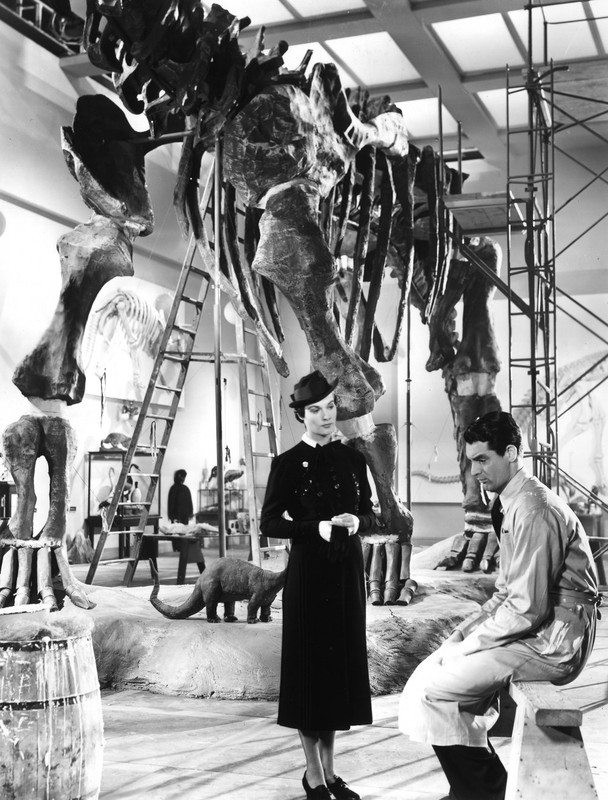
Pearl of Bloomsbury (Anthony Mann, 1959)

Terry Kelly as Zane Grey, proofreading one of Virginia Woolf's novels in her garden

Mann's typically visceral British-set Western recounts the story of Zane Grey's 'lost years,' when he pitched up in London and was taken under the wing of the Bloomsbury Group, following his separation from his wife, Dolly.

Grey, played convincingly by the aging Terry Kelly, is spotted wandering around Russell Square by Virginia Woolf (a fulsome Sophia Loren, who, it has to be said, struggles with the accent); taking pity on him, she invites him home for a spot of tea. Initially, the others in her circle are suspicious of him and in a tense moment atmospherically shot in the reading room of the British Museum, there is a stand off between Grey and Lytton Strachey (David Niven, slightly out of his depth and looking for comedy where there is none), who is, surprisingly, quicker on the draw but a lousy shot. Grey is about to gun him down, but Woolf pleads with him and they all retire to the refectory for home-made crumpets, over which they bond.

Later, in awe of his talent, Woolf secures a lucrative contract for Grey's next novel, Spirit of Bloomsbury, but the 'odious little fascist' Wyndham Lewis (a superb performance by Elisha Cook Jr) appears on the scene, claiming Strachey owes him money for some etchings.

With his Proto-Vorticist gang, attired in black shirts and floral trousers tucked into their boots, Lewis hunts down Strachey. The latter reaches into his pocket for his wallet, but Lewis thinks he is going for his gun and fires three shots at close range. Strachey falls onto the floor, bleeding profusely, and Lewis and his men leave. Thinking, wrongly as it turns out, that his friend is dead, Grey straps on his revolver and vows vengeance, though is implored not to by Woolf who fears losing another of her circle.

Catching up with Lewis outside the Penn Club, he outguns one of the Proto-Vorticists and turns to face Lewis, not realising that another gang member is hiding in the club's porch, armed with a shotgun. Lewis tries to humiliate Grey by reading out a couple of his poorer reviews and calling him by his given name, Pearl. Despite the sniggering of the Penn Club doorman (an early role for Bernard Bresslaw), Grey maintains a brave face and draws on Lewis only to hear the click of the Proto-Vorticist gang-member's gun being cocked behind him. Suddenly a shot rings out: it's Virginia Woolf at the third floor window of the building opposite, armed with Grey's Winchester. "Take-a that, you damned son of a beetch!" she grins, blowing the would-be back-shooter away, as Grey shoots Lewis' revolver out of his hand and warns him to "keep ridin' west and never to come back to London town again."

The movie ends, somewhat unrealistically, when Grey returns to America with Woolf, where he writes his masterpiece, Riders of the Purple Sage, and she takes up painting and changes her name to Georgia O'Keeffe.

The director's cut is now available; this includes the newly-restored ending, long thought lost, along with various extras, such as a 1972 Philip Jenkinson interview with Terry Kelly who confesses to drinking too much tea on set and being worried about being goosed by genial prankster Richard Wattis, who played one of the Proto-Vorticists.

Tuesday, 14 April 2015

Gunter Grass RIP

Günter Grass obituary
Nobel-winning German author who arrived on the literary scene in 1959 with the bestselling novel The Tin Drum

Jonathan Steele
Monday 13 April 2015

Günter Grass, who has died aged 87, was Germany’s best-known postwar novelist, a man of titanic energy and zest who, besides his fiction-writing, enjoyed the cut and thrust of political debate and relaxed by drawing, painting and making sculptures. Bursting on to the literary scene with his bestselling novel The Tin Drum in 1959, Grass spent his life reminding his compatriots of the darkest time in their history, the crimes of the Nazi period, as well as challenging them on the triumphalism of unification in 1990, which he described as the annexation of East Germany by West Germany in which many citizens became victims.

He was always controversial, and sometimes bitterly attacked by critics at home for discussing German victimhood as well as German guilt. Outside his country he was, inevitably, called Germany’s postwar conscience, a label he shared with the older writer Heinrich Böll. In 1999, much later than expected, he won the Nobel prize for literature. The Scandinavian judges praised his “creative irreverence” and “cheerful destructiveness”.

Seven years later, he stunned critics as well as admirers by admitting in the autobiographical Peeling the Onion that at the age of 17 he had been drafted into the notorious Waffen-SS in the last few months of the second world war. Some claimed that he had revealed his long-held secret for cynical reasons to boost book sales, or that he had suppressed it for so long to avoid jeopardising his chances of winning the Nobel. Christopher Hitchens denounced Grass as “something of a bigmouth and a fraud, and also something of a hypocrite”. The former Polish president and Solidarity leader Lech Wałęsa said he was glad he had never met Grass, and urged him to give up his honorary citizenship of Gdańsk, the town where he was born and whose Nazi-era troubles were portrayed in The Tin Drum. Wałęsa later retracted his remarks.

Grass’s adolescence of unthinking patriotism was well known before Peeling the Onion. His father, Wilhelm, was German, and his mother, Helene (nee Knoff) was Polish, and they ran a grocer’s shop in Gdańsk (then the interwar free city of Danzig). Günter joined the Hitler Youth: his political awakening came later, when, after the war, he worked in potash mines and as a stonemason’s apprentice, rubbing shoulders with ex-Nazis and ex-communists. He decided scepticism and moderation were better than ideological extremes, a position he maintained throughout his life.

As a young man, Grass studied painting and sculpture in Düsseldorf and Berlin. He was also a jazz drummer and a poet. But it was The Tin Drum that catapulted him to fame. The book was a biting attack on nazism and the German mentality from which it arose. Eva Figes, the writer who came to Britain on the eve of the war as a Jewish child refugee from Berlin, said she knew immediately that The Tin Drum “was the book the postwar generation was waiting for. It coped with the tragedy of the Third Reich with huge energy and scope. It was inventive, macabre, funny and tremendously important.” The Nobel prize committee said its “frolicsome black fables portray the forgotten face of history”.

The book’s hero and narrator is Oskar Matzerath, a boy who was born with an adult’s ability to think and feel, but who decided never to grow tall. He recounts his life story while in a mental hospital. It covers numerous love affairs as well as the politics of the war, the Red Army’s invasion of Danzig in 1945, the expulsion of the German population, and West Germany’s postwar years. The dwarf’s weapons are a shriek that can break glass and a tin drum he received on his third birthday. He threatens to use violence if anyone tries to remove it. In one extraordinary scene he hides under the platform at a Nazi rally and subverts the marching band by drumming out an Austrian waltz rhythm that the players cannot resist taking up.

The book’s imaginative boldness and wild satirical style were as remarkable as its subject matter. It ended with Oskar’s nightmare vision of a black witch: “She had always been there, even in the woodruff fizz powder [used to make a soda pop substitute], bubbling so green and innocent; she was in clothes cupboards, in every clothes cupboard I ever sat in … it’s her shadow that has multiplied and is following the sweetness. All words: blessed, sorrowful, full of grace, virgin of virgins … Later on four tomcats, one of whom was called Bismarck, the wall that had to be freshly whitewashed, the Poles in the exaltation of death, the special communiques, who sank what when, potatoes tumbling down from the scales, boxes tapered at the foot end, cemeteries I stood in, flags I knelt on, coconut fibres I lay on … the puppies mixed in the concrete, the onion juice that draws tears, the ring on the finger and the cow that licked me … Don’t ask Oskar who she is! Words fail me. First she was behind me, later she kissed my hump, but now, now and for ever, she is in front of me, coming closer.”

The Tin Drum was made into a film almost 20 years later by the renowned director Volker Schlöndorff. It shared the 1979 Cannes film festival Palme d’Or with Apocalypse Now and won the Oscar for best foreign language film of 1979. Grass wrote two sequels, Cat and Mouse (1961) and Dog Years (1963), both also centred on Danzig and its ethnic complexity. Dog Years touched on the mass expulsion of Germans from Gdańsk at the end of the war, a subject Grass was to cover extensively four decades later in Crabwalk (2002), bringing back one of Dog Years’ characters.

Buoyed by his literary success, Grass went into politics in the 1960s, campaigning regularly for Willy Brandt and the Social Democrats. There were rumours that he might take a government job when Brandt became chancellor, though this was never likely. He dedicated a 1972 account of his political campaigning, entitled From the Diary of a Snail, his metaphor for patient but effective progress, to his children.

His cautious, almost pessimistic, approach to politics sat oddly with his driven personality and his image as a rough diamond on the literary scene. Grass was never an intellectual, and liked being seen as a gadfly. He disdained the politics of the anti-Vietnam 1968 generation, even though its members were fired up, as he was, by the sense that Germans of their parents’ generation should honestly face their Nazi past. Grass abhorred extremism, and he thought the 1968ers were dishonest. They refused to accept that German guilt masked countless individual tragedies. Though complicit in nazism in the broad sense, many Germans became victims in the final year of the war, particularly the millions who were forced out of Danzig and other parts of eastern Europe. Grass’s mother, who was raped by Russian soldiers, was herself part of the refugee tide.

Crabwalk dealt with this facet of Germany’s suppression of history, the many instances of victimhood in the shadow of defeat. Its narrator is a 1968er whose narrow and blinkered style of parenting results in his son becoming a neo-Nazi. The book’s central drama is the sinking, in 1945, by a Russian submarine of the Wilhelm Gustloff, a ship carrying close to 9,000 German refugees, mainly women and children, in the Baltic sea. The catastrophe cost four times as many human lives as the sinking of the Titanic, yet it was barely mentioned in public after the war. Grass’s argument was that all Germans, and particularly the liberal left, must look more sensitively at the issue of victimhood as well as villainy in German history. This was not to minimise the crimes of the Holocaust or to balance one evil with another, but simply because the fact of German suffering is part of the historical reality.

Grass was one of the few German writers who could claim to be, if not a public intellectual, at least a public citizen

It was not an issue that could have been handled in Germany in the 1950s, let alone the 80s. Even though it had lost much of its bite by the time Grass wrote Crabwalk, it was still a bold book. The fate of this shipload of civilians, along with that of the millions of Vertriebene (expellees) who were forced at gun-point to abandon well-established German communities in Poland and Czechoslovakia, was the biggest neglected story of the second world war and its aftermath.

Grass wanted to break the taboo that meant that although organisations of expellees emerged to plead their case, mainstream Germany, as well as foreign governments, ignored them because their plight cast Germans as victims. Many individual expellees joined in this collective suppression and did not even tell their children what had happened. A film about the Gustloff came out in the 50s but was quickly forgotten. Ironically, the issue died completely after the treaties with Poland, Czechoslovakia and the Soviet Union that Brandt signed in the early 70s. The better that government-to-government relations became, the harder it was to discuss what had happened to Germans in eastern Europe.

As a leftwinger, Grass could handle the subject sympathetically without being accused of moral equivalence. As the title Crabwalk implies, the book does not approach the issue head-on. Nor is the sinking of the ship the centrepiece either of the narrative or of Grass’s message about suppression. The story is told from the point of view of three generations. The “narrator” is a journalist in his 50s who is urged by his mother, a survivor of the tragedy, to write about the disaster before it gets too late to interview those who were there.

Crabwalk was not the first book by a German author to take up the theme of Germans as victims. WG Sebald’s essay on Air War and Literature, about the horror of the Allies’ carpet-bombing of German cities, had come out in Germany four years earlier. Typically, however, Grass took an issue that had been rising to the surface and gave it an agenda-setting new impetus. He also moved the question of historical amnesia and German victimhood further than earlier writers. Crabwalk discussed the political damage suppression can cause. “In a way you can say the book is too late. But you have the advantage of seeing the story from the point of view of three generations. I wanted to describe this suppression complex and its consequences,” he said.

The book also tried to answer the question of why young Germans, albeit a small minority, could be fascinated by neo-Nazism. One reason, Grass argued, was that the history of the Nazi period was still badly taught in schools and in the German media. “Films tend to portray Nazis as raving idiots. The fact that the Nazi party came to power legally at a time when there were six million unemployed is suppressed,” he said.

Before becoming a troopship, the Wilhelm Gustloff had been run by the Kraft durch Freude (strength through joy) society, which was given the expropriated assets of the trade union movement and throughout the 30s provided heavily subsidised holidays to German workers who had never been abroad before. “You have to explain to young people that this was a ‘classless’ ship. There was a socialist element in nazism, done for propaganda purposes, of course. But it has to be explained,” Grass said, adding that young Germans also needed to be told that in 1938 most European countries, including sections of the governing class in England, admired Hitler as a bulwark against communism.

More controversial, at least within Germany, was Grass’s contribution to the debate on unification, where he found himself criticised, even by social-democratic friends, for romanticism, an unusual charge for a man who called himself a political “snail”. But 1990 was one of those rare moments in history when most people thought speed was the order of the day. For decades, Germans had paid lip service to reunification, never believing it would happen in their lifetimes. When the reformist Soviet leader Mikhail Gorbachev gave the green light for change and the East German authorities opened the Berlin Wall under pressure from thousands of street protesters, people grabbed at the chance of voting for unity. Grass’s notion of a slow march towards unification by means of the two German states’ first becoming a confederation was unrealistic, his friends said.

By then Grass was too well-known to be cowed. He had become an icon, and was confident enough of his convictions not to worry about political isolation even though he was human enough to be wounded. He wrote a long rambling novel,Too Far Afield (1995), to justify his position. His scepticism about German unity sprang in part from his feeling that East Germans were being given a raw deal. Not that he had any sympathy for the East German regime; in the years before unity he regularly travelled to East Germany to meet dissident writers, his fame making it hard for the communist authorities to bar him. He was one of the first West Germans to visit Poland to try to overcome the bitter legacy of Polish-German relations.

But he found it troubling that after 1990 West Germans were more ruthless in rooting out and sacking everyone who was linked, however loosely, to the East German regime, including schoolteachers and university professors, than they had been with former Nazis half a century earlier. “There was the argument that ‘We don’t want to repeat the mistakes of postwar West Germany.’ So the mistakes of West Germany are put on the backs of East Germans. It’s hypocrisy, and pure anti-communism,” he said. “Erich Honecker [the former East German leader] was put on trial though he had been received with a red carpet in Bonn two years before the Berlin Wall came down. I’m not in favour of Honecker but it was ridiculous. A kind of belated revenge.”

Grass took up many global causes, from international debt-relief to environmental pollution. He campaigned vigorously against the US-led war on Iraq in 2003, a cause that matched that of Chancellor Gerhard Schröder’s opposition. But he was not anti-American, and laughingly said the only reason why he had stopped travelling to the US was because of its ferocious bans on public smoking. Grass was never without his pipe.

He was one of the few German writers who could claim to be, if not a public intellectual, at least a public citizen. True to his democratic instincts, he and his German publishers used to conduct seminars for his translators every time a new Grass book appeared. The practice started in 1977 with The Flounder and became a tradition, beloved by translators. The seminars lasted from three days to a week, and Grass took part for most of the time. He hoped writers in Germany and abroad would follow suit.

Other writers always stressed Grass’s narrative skills. Hans Christoph Buch, a novelist and regular contributor to Germany’s liberal weekly Die Zeit, said: “He’s not a great thinker like Sartre. He’s not a brilliant essayist or intellectual like Hans Magnus Enzensberger. He’s a story-teller who writes from the gut.”

The South African novelist JM Coetzee summed up Grass’s work: “He was never a great prose stylist or a pioneer of fictional form. His strengths lie elsewhere, in the acuteness of his observation of German society at all levels, his sense of the deeper currents of the national psyche, and his ethical steadiness.”

That ethical steadiness took a severe knock with Grass’s late admission of his time with the Waffen-SS, trying to resist the Red Army’s advance on Berlin. His unit was not involved in the mass murders of Jews and Poles, but he admitted he had seen the Waffen-SS as “an elite unit” after being rejected when he volunteered for submarine duty at 15. He had previously written that he was involved in anti-aircraft defence before being taken prisoner by the Americans.

The admission sparked a storm of controversy. In sorrow, many of his supporters said the issue was not his membership of the Waffen-SS but his years of silence. In a long essay in Die Zeit, Jens Jessen wrote: “If Grass had spoken of his SS past earlier, he would not have damaged the fury of his moral interventions or his accusations that Germans had not gone far enough in coming to terms with their past. On the contrary he would have strengthened them and made them more credible because of his own Nazi-period mistake. What would it have been like if, while criticising Kohl and Reagan for visiting the cemetery at Bitburg, Grass had added: ‘I could have been one of the young Waffen-SS men buried there’?”

Defenders who dug into Grass’s record discovered that Grass had not concealed his brief SS service from his US interrogators in a PoW camp. His silence was literary. Grass himself put it down to a feeling of shame. “What I had accepted with the stupid pride of youth I wanted to conceal after the war out of a recurrent sense of shame. But the burden remained, and no one could alleviate it,” he wrote. He reminded readers that his mother had suppressed her rape by Russian soldiers for similar reasons. “It was not until after she died that I learned – and then only indirectly from my sister – that to protect her daughter she had offered herself to them. There were no words.”

Perhaps he decided to make the admission before he died, knowing that historians would one day stumble on his record and it would be better for his reputation not to have suppressed it for ever. Whatever the reasons, it is doubtful that the admission changed many minds. It only highlighted postwar Germany’s tortured character, and Grass’s position as its most tortured exponent.

The fact that Germany has become a “normal” country was in large part thanks to Grass. In a conversation with me early in 2003, on the eve of the invasion of Iraq, Grass wondered whether Britain should not confront its own past more honestly. “I sometimes wonder how young people grow up in Britain and know little about the long history of crimes during the colonial period. In England it’s a completely taboo subject … Look at Iraq. This conflict goes back to colonial history. Don’t forget that.”

Grass’s anti-imperialism was directed frequently at the US, initially over Vietnam and later over Central America. He visited Nicaragua in 1982 when rebels who were armed and financed by the Reagan administration were trying to topple the Sandinista government. “How impoverished must a country be before it is not a threat to the US government?” he asked sarcastically. In 2012, he published a poem, What Must Be Said, which described Israel as a threat to world peace because of its threats to bomb Iran. The poem also said the German government might become complicit in war crimes for selling Israel a submarine that could carry nuclear warheads. The Israeli government declared him non grata. Grass responded by comparing the ban on his entering Israel to his treatment by the governments of Myanmar and East Germany.

Though the excitement provoked by his views on German history and German unification continued, his private life became more serene. In 1954, he had married Anna Schwarz, and they had three sons and a daughter. The marriage ended in divorce in 1978, and the following year he married Ute Grunert. This brought him two stepsons, and he also had a daughter from each of two other relationships. The voices of these eight children were featured in a second volume of memoirs, The Box: Tales from the Darkroom (2008). His third and final memoir, Grimms’ Words: A Declaration of Love (2010), took the fairytales of the Brothers Grimm as the starting point for an exploration of the political and social side of his life, noting, for instance, how the figure of Tom Thumb lay behind that of Matzerath.

In the mid-1980s he and Ute moved to the village of Behlendorf, to a remote farmhouse, about 15 miles south of the Baltic city of Lübeck, where he indulged in drawing and sculpture. It was not just a hobby; the sculptures were cast in bronze by a foundry in Munich and put on sale. He did engravings to be used as covers for some of his books. The couple spent part of the summer on a Danish island, and a few weeks in spring and autumn in their house in southern Portugal.

Ute and his children survive him.

• Günter Wilhelm Grass, novelist, born 16 October 1927; died 13 April 2015

http://www.theguardian.com/books/2015/apr/13/gunter-grass

Monday, 13 April 2015

Clive James on Raymond Chandler


The Country Behind the Hill: Raymond Chandler

Clive James
1977

‘In the long run’, Raymond Chandler writes in Raymond Chandler Speaking, ‘however little you talk or even think about it, the most durable thing in writing is style, and style is the most valuable investment a writer can make with his time.’ At a time when literary values inflate and dissipate almost as fast as the currency, it still looks as if Chandler invested wisely. His style has lasted. A case could be made for saying that nothing else about his books has, but even the most irascible critic or disillusioned fan (they are often the same person) would have to admit that Chandler at his most characteristic is just that – characteristic and not just quirky. Auden was right in wanting him to be regarded as an artist. In fact Auden’s tribute might well have been that of one poet to another. If style is the only thing about Chandler’s novels that can’t be forgotten, it could be because his style was poetic, rather than prosaic. Even at its most explicit, what he wrote was full of implication. He used to say that he wanted to give a feeling of the country behind the hill.

Since Chandler was already well into middle-age when he began publishing, it isn’t surprising that he found his style quickly. Most of the effects that were to mark The Big Sleep in 1939 were already present, if only fleetingly, in an early story like ‘Killer in the Rain’, published in Black Mask magazine in 1935. In fact some of the very same sentences are already there. This from ‘Killer in the Rain’:

The rain splashed knee-high off the sidewalks, filled the gutters, and big cops in slickers that shone like gun barrels had a lot of fun carrying little girls in silk stockings and cute little rubber boots across the bad places, with a lot of squeezing.

Compare this from The Big Sleep:

Rain filled the gutters and splashed knee-high off the pavement. Big cops in slickers that shone like gun barrels had a lot of fun carrying giggling girls across the bad places. The rain drummed hard on the roof of the car and the burbank top began to leak. A pool of water formed on the floorboards for me to keep my feet in.

So there is not much point in talking about how Chandler’s style developed. As soon as he was free of the short-paragraph restrictions imposed by the cheaper pulps, his way of writing quickly found its outer limits: all he needed to do was refine it. The main refining instrument was Marlowe’s personality. The difference between the two cited passages is really the difference between John Dalmas and Philip Marlowe. 
Marlowe’s name was not all that more convincing than Dalmas’s, but he was a more probable, or at any rate less improbable, visionary. In The Big Sleep and all the novels that followed, the secret of plausibility lies in the style, and the secret of the style lies in Marlowe’s personality. Chandler once said that he thought of Marlowe as the American mind. As revealed in Chandler’s Notebooks (edited by Frank McShane and published by the Ecco Press, New York), one of Chandler’s many projected titles was The Man Who Loved the Rain. Marlowe loved the rain.

Flaubert liked tinsel better than silver because tinsel possessed all silver’s attributes plus one in addition – pathos. For whatever reason, Chandler was fascinated by the cheapness of L. A. When he said that it had as much personality as a paper cup, he was saying what he liked about it. When he said that he could leave it without a pang, he was saying why he felt at home there. In a city where the rich were as vulgar as the poor, all the streets were mean. In a democracy of trash, Marlowe was the only aristocrat. Working for 25 dollars a day plus expenses (Jim Rockford in the T.V. series The Rockford Files now works for ten times that and has to live in a trailer), Marlowe was as free from materialistic constraint as any hermit. He saw essences. Chandler’s particular triumph was to find a style for matching Marlowe to the world. Vivid language was the decisive element, which meant that how not to make Marlowe sound like too good a writer was the continuing problem. The solution was a kind of undercutting wit, a style in which Marlowe mocked his own fine phrases. A comic style, always on the edge of self-parody – and, of course, sometimes over the edge – but at its best combining the exultant and the sad in an inseparable mixture.

For a writer who is not trying all that hard to be funny, it is remarkable how often Chandler can make you smile. His conciseness can strike you as a kind of wit in itself. The scene with General Sternwood in the hot-house, the set piece forming Chapter Two ofThe Big Sleep, is done with more economy than you can remember: there are remarkably few words on the page to generate such a lasting impression of warm fog in the reader’s brain. ‘The air was thick, wet, steamy and larded with the cloying smell of tropical orchids in bloom.’ It’s the rogue verb ‘larded’ which transmits most of the force. Elsewhere, a single simile gives you the idea of General Sternwood’s aridity. ‘A few locks of dry white hair clung to his scalp, like wild flowers fighting for life on a bare rock.’ The fact that he stays dry in the wet air is the measure of General Sternwood’s nearness to death. The bare rock is the measure of his dryness. At their best, Chandler’s similes click into place with this perfect appositeness. He can make you laugh, he gets it so right – which perhaps means that he gets it too right. What we recognize as wit is always a self-conscious performance.

But since wit that works at all is rare enough, Chandler should be respected for it. And anyway, he didn't always fall into the trap of making his characters too eloquent. Most of Marlowe's best one-liners are internal. In the film of The Big Sleep, when Marlowe tells General Sternwood that he has already met Carmen in the hall, he says: 'She tried to sit on my lap while I was standing up.' Bogart gets a big laugh with that line, but only half of the line is Chandler's. All that Chandler's Marlowe says is: 'Then she tried to sit in my lap.' The film version of Marlowe got the rest of the gag from somewhere else - either from William Faulkner, who wrote the movie, or from Howard Hawks, who directed it, or perhaps from both. On the page, Marlowe's gags are private and subdued. About Carmen, he concludes that 'thinking was always going to be a bother to her.' He notices - as no camera could notice, unless the casting director flung his net very wide - that her thumb is like a finger, with no curve in its first joint. He compares the shocking whiteness of her teeth to fresh orange pith. He gets you scared stiff of her in a few sentences.

Carmen is the first in a long line of little witches that runs right through the novels, just as her big sister, Vivian, is the first in a long line of rich bitches who find that Marlowe is the only thing money can't buy. The little witches are among the most haunting of Chandler's obsessions and the rich bitches are among the least. Whether little witch or rich bitch, both kinds of woman signal their availability to Marlowe by crossing their legs shortly after sitting down and regaling him with tongue-in-the-lung French kisses a few seconds after making physical contact.

All the standard Chandler character ingredients were there in the first novel, locked in a pattern of action so complicated that not even the author was subsequently able to puzzle it out. The Big Sleep was merely the first serving of the mixture as before. But the language was fresh and remains so. When Chandler wrote casually of 'a service station glaring with wasted light' he was striking a note that Dashiell Hammett had never dreamed of. Even the book's title rang a bell. Chandler thought that there were only two types of slang which were any good: slang that had established itself in the language, and slang that you made up yourself. As a term for death, 'the big sleep' was such a successful creation that Eugene O'Neill must have thought it had been around for years, since he used it in The Iceman Cometh (1946) as an established piece of low-life tough talk. But there is no reason for disbelieving Chandler's claim to have invented it.

Chandler's knack for slang would have been just as commendable even if he had never thought of a thing. As the Notebooks reveal, he made lists of slang terms that he had read or heard. The few he kept and used were distinguished from the many he threw away by their metaphorical exactness. He had an ear for depth - he could detect incipient permanence in what sounded superficially like ephemera. A term like 'under glass', meaning to be in prison, attracted him by its semantic compression. In a letter collected in Raymond Chandler Speaking, he regards it as self-evident that an American term like 'milk run' is superior to the equivalent British term 'piece of cake'. The superiority being in the range of evocation. As it happened, Chandler was inventive, not only in slang but in more ambitiously suggestive figures of speech. He was spontaneous as well as accurate. His second novel, Farewell, My Lovely (1940) - which he was always to regard as his finest - teems with show-stopping metaphors, many of them dedicated to conjuring up the gargantuan figure of Moose Malloy.

In fact some of them stop the show too thoroughly. When Chandler describes Malloy as standing out from his surroundings like 'a tarantula on a slice of angel food' he is getting things backwards, since the surroundings have already been established as very sordid indeed. Malloy ought to be standing out from them like a slice of angel food on a tarantula. Chandler at one time confessed to Alfred A. Knopf that in The Big Sleep he had run his metaphors into the ground, the implication being that he cured himself of the habit later on. But the truth is that he was always prone to overcooking a simile. As Perelman demonstrated in Farewell, My Lovely Appetizer (a spoof which Chandler admired), this is one of the areas in which Chandler is most easily parodied, although it should be remembered that it takes a Perelman to do the parodying.

'It was a blonde', says Marlowe, looking at Helen Grayle's photograph, 'A blonde to make a bishop kick a hole in a stained-glass window.' I still laugh when I read that, but you can imagine Chandler jotting down such brain-waves à propos of nothing and storing them up against a rainy day. They leap off the page so high that they never again settle back into place, thereby adding to the permanent difficulty of remembering what happens to whom where in which novel. The true wit, in Farewell, My Lovely as in all the other books, lies in effects which marry themselves less obtrusively to character, action and setting. Jessie Florian's bathrobe, for example. 'It was just something around her body.' A sentence like that seems hardly to be trying, but it tells you all you need to know. Marlowe's realization that Jessie has been killed - 'The corner post of the bed was smeared darkly with something the flies liked' - is trying harder for understatement, but in those circumstances Marlowe would understate the case, so the sentence fits. Poor Jessie Florian. 'She was as cute as a washtub.'

And some of the lines simply have the humour of information conveyed at a blow, like the one about the butler at the Grayle house. As always when Chandler is dealing with Millionaires’ Row, the place is described with a catalogue eye for ritzy detail, as if F. Scott Fitzgerald had written a contribution to Architectural Digest. (The Murdock house in The High Window bears a particularly close resemblance to Gatsby’s mansion: vide the lawn flowing ‘like a cool green tide around a rock.’) Chandler enjoyed conjuring up the grand houses into which Marlowe came as an interloper and out of which he always went with a sigh of relief, having hauled the family skeletons out of the walk-in cupboards and left the beautiful, wild elder daughter sick with longing for his uncorruptible countenance. But in several telling pages about the Grayle residence, the sentence that really counts is the one about the butler. ‘A man in a striped vest and gilt buttons opened the door, bowed, took my hat and was through for the day.’

In the early books and novels, before he moved to Laurel Canyon, when he still lived at 615 Cahuenga Building on Hollywood Boulevard, near Ivar, telephone Glenview 7537, Marlowe was fond of Los Angeles. All the bad things happened in Bay City. In Bay City there were crooked cops, prostitution, drugs, but after you came to (Marlowe was always coming to in Bay City, usually a long time after he had been sapped, because in Bay City they always hit him very hard) you could drive home. Later on the evil had spread everywhere and Marlowe learned to hate what L.A. had become. The set-piece descriptions of his stamping-ground got more and more sour. But the descriptions were always there – one of the strongest threads running through the novels from first to last. And even at their most acridly poisonous they still kept something of the wide-eyed lyricism of that beautiful line in Farewell, My Lovely about a dark night in the canyons – the night Marlowe drove Lindsay Mariott to meet his death. ‘A yellow window hung here and there by itself, like the last orange.’

There is the usual ration of overcooked metaphors in The High Window (1942). Lois Morny gives forth with ‘a silvery ripple of laughter that held the unspoiled naturalness of a bubble dance.’ (By the time you have worked out that this means her silvery ripple of laughter held no unspoiled naturalness, the notion has gone dead.) We learn that Morny’s club in Idle Valley looks like a high-budget musical. ‘A lot of light and glitter, a lot of scenery, a lot of clothes, a lot of sound, an all-star cast, and a plot with all the originality and drive of a split fingernail.’ Tracing the club through the musical down to the fingernail, your attention loses focus. It’s a better sentence than any of Chandler’s imitators ever managed, but it was the kind of sentence they felt able to imitate – lying loose and begging to be picked up.

As always, the quiet effects worked better. The back yard of the Morny house is an instant Hockney. ‘Beyond was a walled-in garden containing flower-beds crammed with showy annuals, a badminton court, a nice stretch of greensward, and a small tiled pool glittering angrily in the sun.’ The rogue adverb ‘angrily’ is the word that registers the sun’s brightness. It’s a long step, taken in a few words, to night-time in Idle Valley. ‘The wind was quiet out here and the valley moonlight was so sharp that the black shadows looked as if they had been cut with an engraving tool.’ Saying how unreal the real looks makes it realer.

‘Bunker Hill is old town, lost town, shabby town, crook town.’ The High Window has many such examples of Chandler widening his rhythmic scope. Yet the best and the worst sentences are unusually far apart. On several occasions Chandler is extraordinarily clumsy. ‘He was a tall man with glasses and a high-domed bald head that made his ears look as if they had slipped down his head.’ This sentence is literally effortless: the clumsy repetition of ‘head’ is made possible only because he isn’t trying. Here is a useful reminder of the kind of concentration required to achieve a seeming ease. And here is another: ‘From the lay of the land a light in the living room. . . ‘ Even a writer who doesn’t, as Chandler usually did, clean as he goes, would normally liquidate so languorous an alliterative lullaby long before the final draft.

But in between the high points and the low, the general tone of The High Window had an assured touch. The narrator’s interior monologue is full of the sort of poetry Laforge liked – comme ils sont beaux, les trains manqués. Marlowe’s office hasn’t changed, nor will it ever. ‘The same stuff I had had last year, and the year before that. Not beautiful, not gay, but better than a tent on the beach.’ Marlowe accuses the two cops, Breeze and Spangler, of talking dialogue in which every line is a punch-line. Criticism is not disarmed: in Chandler, everybody talks that kind of dialogue most of the time. But the talk that matters most is the talk going on inside Marlowe’s head, and Marlowe was making it more subtle with each book.

Chandler’s descriptive powers are at their highest in The Lady In The Lake (1943). It takes Marlowe a page and a half of thoroughly catalogued natural detail to drive from San Bernardino to Little Fawn Lake, but when he gets there he sees the whole thing in a sentence. ‘Beyond the gate the road wound for a couple of hundred yards through trees and then suddenly below me was a small oval lake deep in trees and rocks and wild grass, like a drop of dew caught in a curled leaf.’ Hemingway could do bigger things, but small moments like those were Chandler’s own. (Nevertheless Hemingway got on Chandler’s nerves: Dolores Gonzales in The Little Sister is to be heard saying ‘I was pretty good in there, no?’ and the nameless girl who vamps Marlowe at Roger Wade’s party in The Long Goodbye spoofs the same line. It should be remembered, however, that Chandler admired Hemingway to the end, forbearing to pour scorn even on Across the River and Into the Trees. The digs at Papa in Chandler’s novels can mainly be put down to self-defence.)

The Little Sister (1949), Chandler’s first post-war novel, opens with Marlowe stalking a bluebottle fly around his office. ‘He didn’t want to sit down. He just wanted to do wing-overs and sing the prologue to Pagliacci.’ Ten years before, in Trouble Is My Business, John Dalmas felt like singing the same thing after being sapped in Harriet Huntress’s apartment. Chandler was always ready to bring an idea back for a second airing. A Ph.D thesis could be written about the interest John Dalmas and Philip Marlowe take in bugs and flies. There is another thesis in the tendency of Chandler’s classier dames to show a startling line of white scalp in the parting of their hair: Dolores Gonzales, who throughout The Little Sister propels herself at Marlowe like Lupe Velez seducing Errol Flynn, is only one of the several high-toned vamps possessing this tonsorial feature. ‘She made a couple of drinks in a couple of glasses you could almost have stood umbrellas in.’ A pity about that ‘almost’ – it ruins a good hyperbole. Moss Spink’s extravagance is better conveyed: ‘He waved a generous hand on which a canary-yellow diamond looked like an amber traffic light.’

But as usual the would-be startling images are more often unsuccessful than successful. The better work is done lower down the scale of excitability. Joseph P. Toad, for example. ‘The neck of his canary-yellow short was open wide, which it had to be if his neck was going to get out.’ Wit like that lasts longer than hyped-up similes. And some of the dialogue, though as stylized as ever, would be a gift to actors: less supercharged than usual, it shows some of the natural balance which marked the lines Chandler has been writing for the movies. Here is Marlowe sparring with Sheridan Ballou.

‘Did she suggest how to go about shutting my mouth?’
‘I got the impression she was in favour of doing it with some kind of heavy blunt instrument.’

Such an exchange is as playable as anything in Double Indemnity or The Blue Dahlia. And imagine what Laird Cregar would have done with Toad’s line ‘You could call me a guy what wants to help out a guy that don’t want to make trouble for a guy.’ Much as he would have hated the imputation, Chandler’s toil in the salt-mines under the Paramount mountain had done things for him. On the other hand, the best material in The Little Sister is inextricably bound up with the style of Marlowe’s perception, which in turn depends on Chandler’s conception of himself. There could be no complete screen rendition of the scene with Jules Oppenheimer in the studio patio. With peeing dogs instead of the hot-house steam, it’s exactly the same lay-out as Marlowe’s encounter with General Sternwood in The Big Sleep, but then there was no filming that either. The mood of neurotic intensity – Marlowe as the soldier-son, Sternwood/Oppenheimer as the father-figure at death’s door – would be otiose in a film script, which requires that all action be relevant. In the novels, such passages are less about Marlowe than about Chandler working out his obsessions through Malowe, and nobody ever wanted to make a film about Chandler.

In The Long Goodbye (1953) Marlowe moves to a house on Yucca Avenue in Laurel Canyon and witnesses the disintegration of Terry Lennox. Lennox can’t control his drinking. Marlowe, master of his own thirst, looks sadly on. As we now know, Chandler in real life was more Lennox than Marlowe. In the long dialogues between these two characters he is really talking to himself. There is no need to be afraid of the biographical fallacy: even if we knew nothing about Chandler’s life, it would still be evident that a fantasy is being worked out. Worked out but not admitted – as so often happens in good-bad books, the author’s obsessions are being catered to, not examined. Chandler, who at least worked for a living, had reason for thinking himself more like Marlowe than like Lennox. (Roger Wade, the other of the book’s big drinkers, is, being a writer, a bit closer to home.) Nevertheless Marlowe is a day-dream – more and more of a day-dream as Chandler gets better and better at making him believable. By this time it’s Marlowe v. the Rest of the World. Of all Chandler’s nasty cops, Captain Gregorius is the nastiest. ‘His big nose was a network of burst capillaries.’ But even in the face of the ultimate nightmare Marlowe keeps his nerve. Nor is he taken in by Eileen Wade, superficially the dreamiest of all Chandler’s dream girls.

It was a near-run thing, however, Chandler mocked romantic writers who always used three adjectives but Marlowe fell into the same habit when contemplating Eileen Wade. ‘She looked exhausted now, and frail, and very beautiful.’ Perhaps he was tipped off when Eileen suddenly caught the same disease and started referring to ‘the wild, mysterious, improbable kind of love that never comes but once’. In the end she turns out to be a killer, a dream-girl gone sour like Helen Grayle in Farewell, My Lovely, whose motherly clutch (‘smooth and soft and warm and comforting’) was that of a strangler. The Long Goodbye is the book of Marlowe’s irretrievable disillusion.

I was as hollow and empty as the spaces between the stars. When I got home I mixed a stiff one and stood by the open window in the living-room and sipped it and listened to the ground swell of the traffic on Laurel Canyon Boulevard and looked at the glare of the big, angry city hanging over the shoulder of the hills through which the boulevard had been cut. Far off the banshee wail of police or fire sirens rose and fell, never for very long completely silent. Twenty-four hours a day somebody is running, somebody else is trying to catch him.

Even Marlowe got caught. Linda Loring nailed him. ‘The tip of her tongue touched mine.’ His vestal virginity was at long last ravished away. But naturally there was no Love, at least not yet.

Having broken the ice, Marlowe was to be laid again, most notably by the chic, leg-crossing Miss Vermilyea in Chandler’s next novel, Playback (1958). It is only towards the end of that novel that we realize how thoroughly Marlowe is being haunted by Linda Loring’s memory. Presumably this is the reason why Marlowe’s affair with Miss Vermilyea is allowed to last only one night. (‘ “I hate you,” she said with her mouth against mine. “Not for this, but because perfection never comes twice and with us it came too soon. And I’ll never see you again and I don’t want to. It would have to be for ever or not at all.” ‘) We presume that Miss Vermilyea wasn’t just being tactful.

Anyway, Linda Loring takes the prize, but not before Marlowe has raced through all his usual situations, albeit in compressed form. Once again, for example, he gets hit on the head. ‘I went zooming out over a dark sea and exploded in a sheet of flame.’ For terseness this compares favourably with an equivalent moment in Bay City Blues, written twenty years before.

Then a naval gun went off in my ear and my head was a large pink firework exploding into the vault of the sky and scattering and falling slow and pale, and then dark, into the waves. Blackness ate me up.

Chandler’s prose had attained respectability, but by now he had less to say with it – perhaps because time had exposed his day-dreams to the extent that even he could see them for what they were. The belief was gone. In The Poodle Springs Story, his last, unfinished novel, Marlowe has only one fight left to fight, the war against the rich. Married now to Linda, he slugs it out with her toe to toe. It is hard to see why he bothers to keep up the struggle. Even heroes get tired and not even the immortal stay young forever. Defeat was bound to come some time and although it is undoubtedly true that the rich are corrupt at least Linda knows how corruption ought to be done: the classiest of all Chandler’s classy dames, the richest bitch of all, she will bring Marlowe to a noble downfall. There is nothing vulgar about Linda. (If that Hammond organ-cum-cocktail bar in their honeymoon house disturbs you, don’t forget that the place is only rented.)

So Marlowe comes to an absurd end, and indeed it could be said that he was always absurd. Chandler was always dreaming. He dreamed of being more attractive than he was, taller than he was, less trammelled than he was, braver than he was. But so do most men. We dream about our ideal selves, and it is at least arguable that we would be even less ideal if we didn’t. Marlowe’s standards of conduct would be our standards if we had his courage. We can rationalize the discrepancy by convincing ourselves that if we haven’t got his courage he hasn’t got our mortgage, but the fact remains that his principles are real.

Marlowe can be hired, but he can’t be bought. As a consequence, he is alone. Hence his lasting appeal. Not that he is without his repellent aspects. His race prejudice would amount to outright fascism if it were not so evident that he would never be able to bring himself to join a movement. His sexual imagination is deeply suspect and he gets hit on the skull far too often for someone who works largely with his head. His taste in socks is oddly vile for one who quotes so easily from Browning (‘the poet, not the automatic’). But finally you recognize his tone of voice.

It is your own, day-dreaming of being tough, of giving the rich bitch the kiss-off, of saying smart things, of defending the innocent, of being the hero. It is a silly day-dream because anyone who could really do such splendid things would probably not share it, but without it the rest of us would be even more lost than we are. Chandler incarnated this necessary fantasy by finding a style for it. His novels are exactly as good as they should be. In worse books, the heroes are too little like us: in better books, too much.
http://www.clivejames.com/books/pillars/chandler

Sunday, 12 April 2015

Stan Freberg RIP

Stan Freberg obituary
Humorist who reigned supreme in the field of comedy records

Michael Freedland
Thursday 9 April 2015

In the 1950s, radio was not only the main outlet for pop music: a lot of airtime was allocated to comedy records, and in that field the name of Stan Freberg reigned supreme. The US humorist, who has died aged 88, parodied pop hits of the day, folk tales and television cop series.

His most famous musical number came in 1957, with a take on Harry Belafonte’s Banana Boat Song in which an unfortunate vocalist is dispatched to sing the “Day-O” chorus farther and farther from the microphone until he is outside the studio. Other comedians and impersonators had for years presented their off-centre versions of popular entertainment and its stars, but none did it quite as well as Freberg.

His first solo record, John and Marsha (1951), became a hit in Britain after it was played on Jack Jackson’s Saturday night radio programme Record Round-up. John and Marsha was the title, and indeed the sum of all the words on the disc: a man called John and a woman called Marsha just recited each other’s name, at first simply, then excitedly and finally in a frenzy that led to the BBC banning the record. For years, young couples would devote hours to reinterpreting the routine.

St George and the Dragonet (1953) became better known than the TV detective series Dragnet, on which it was based: “My name is St George. I’m a knight. Saturday July 10, 8.05 pm. I was working out of the castle on the night watch when a call came in from the chief. A dragon had been devouring maidens. Homicide. My job – slay ’em.” In Britain as in America, people took up Freberg’s catchphrase, “Just the facts, ma’am. All I want is the facts.” The storylines of St George and its successors were straight out of Hollywood’s film noir tradition. Freberg took things a stage further and managed to combine various routines from other TV detective series.

For the B side to St George, Freberg took the Little Red Riding Hood story. In Dragnet, the cop who insists on the facts is Joe Friday; in Freberg’s Little Blue Riding Hood, the cop introduces himself with: “This is the woods. My name is Wednesday. I work outta homicide.”

Freberg also had a werewolf story – with a werewolf who, when the moon is full, turns into the most horrific person Freberg could think of: an advertising man. It chimed with his Green Christmas (1958) – in which Scrooge was recast as the head of an advertising agency and Cratchit as an executive who refuses to exploit Christmas in his copy. Nonetheless, he also made a considerable mark of his own in advertising as the pioneer of the funny commercial.

Freberg was born in Los Angeles and brought up in South Pasadena, California, where his father was a Baptist preacher. He would say that radio was so much a part of his life that his family told him he was born “between a Rinso commercial and the NBC chimes”. As a teenager, he went to Hollywood and got jobs voicing cartoon characters at Warner Bros. Among his voices were those of the Goofy Gophers, Chester the dog, the Abominable Snowman, Pete Puma and Junyer Bear. After second world war service in the US army, he worked on radio programmes, including one starring his idol, Jack Benny.

In 1949, Freberg was one of the first entertainers to work regularly in television, before being signed by Capitol Records. “My records weren’t released by Capitol,” he once said. “They escaped.”

Along with the hilarity, there could be a biting touch to his work. In 1958 he turned the old hit The Old Piano Roll Blues into The Old Payola Blues, a commentary on the music industry scandal of producers taking money for playing tunes on the radio. In 1957 he had his own weekly show on CBS Radio, replacing Benny, who had moved on to TV. The following year he received his first Grammy award, for the “Best of” compilation from the radio shows.

All the time, he was continuing to make comedy records. His most successful album was Stan Freberg Presents the United States of America (1961), which made the US top 40. His place in the comedy record market was gradually being taken by people such as Shelley Berman and Bob Newhart – although in 1966 he did make Freberg Underground, and a second volume of Stan Freberg Presents the United States of America eventually appeared in 1996, providing more spoof history.

As well as devising comedy commercials, Freberg made a series of radio appearances parodying cigarette advertising, as part of a campaign to stop the practice. He returned to comedy radio in the early 1990s with a daily syndicated satirical commentary on national affairs that lasted just two and a half minutes. Stan Freberg Here was aired on more than 100 US stations and on the American Armed Forces Radio network.

When asked, at the age of 72, if he intended to retire, he said: “No. I intend to speed up so I don’t get run over by a bread truck.” He continued with cartoon voiceover work until 2011, and that year released a new comedy recording, Songs in the Key of Freberg. In recent years he appeared as a panellist at the Comic Con pop culture convention.

His first wife, Donna, died in 2000. He is survived by his second wife, Hunter, and his son, Donavan, and daughter, Donna Jean, from his first marriage.

• Stanley Victor Freberg, humorist, born 7 August 1926; died 7 April 2015

http://www.theguardian.com/tv-and-radio/2015/apr/09/stan-freberg

Saturday, 11 April 2015

Richie Benaud RIP

Ambassadorial Richie Benaud would always fight shy of criticising players
Australia’s master commentator and former team captain was diligent, meticulous and never saw himself as the main event – enjoy the game could very well be his epitaph

Mike Selvey
Friday 10 April 2015

The true voices of sport, the really memorable ones, are those who transcend a catchphrase or a personality trait, to become recognisable not only for that voice but for the way in which they are imitated. We have all tried the impressions, and they are few: John Arlott’s Hampshire burr (“shirt flapping, elbows working, he runs in …”); Murray Walker’s nasal delivery as a complement to the engine noise around him (“and there goes Ayrton Senna …”); Geoffrey Boycott’s “techneeeeque” perhaps or Henry Blofeld’s “dear old thing”.

But then there was Richie. Always Richie, not Benaud. Perhaps the most imitated of them all, from the comedian Billy Birmingham to just about anyone who has ever followed cricket. Richie was not just a voice or a memorable turn of phrase, but a visual personality too, arguably the most celebrated television commentator of them all.

So when we imitate Richie we do it wearing an imaginary pastel jacket, body turned sideways at 45 degrees but head to the camera, with bottom lip protruding. That in itself would be sufficient to identify him. Then, though, came the words and the manner in which he enunciated, totally distinctive, quite unlike any other: the way in which he alone could say “siveny chew for chew” or “morning everywunnn” or “maaarvellush”.

I can still remember with clarity one of the first pieces of commentary I heard from him, as he did a voiceover for highlights of the 1970-71 Ashes tour: “We pick up play in the seventh over of the day, and it’s Snow bowling to Stackpole”. Shnow. Shtackpole.

It seems, though, that Richie was of his time, a commentator at odds with what Geoff Lemon so memorably called recently “the matiest mates who ever mated” on the current packed-house Channel Nine team, a celebrity band of brothers who do not know when to shut up. Occasionally, in his last couple of years, Richie would get wheeled out for a brief stint, and it felt patronising, as if he were the regimental goat dressed up for the ceremonials. Even then he cut a swathe through the inanity, probably rolling his eyes as he did so.

Richie’s stock-in-trade was always economy of words, an old-fashioned virtue in an age when one aspiring cricket commentator of my acquaintance was told by prospective employers, following a measured, understated debut, that he wasn’t “loud enough. Every ball has to be an event”.

Richie saw himself as a complementary figure to the television pictures rather than the main event with the cricket as a sideshow. He let the pictures do the talking, as it were, and offered nothing that he did not consider would add value to what the viewer could already see. It wasn’t about him.

Which do you think would sit in the memory 30-odd years on? “Great shot by Botham, huge, a maximum” or simply a silence and then “that’s gone into the confectionery stall … and out again”. Who, indeed, would call it a confectionery stall in the first place? Economy of words and a picture painted for ever.

I was struck by the manner in which Richie would always tend towards overstating the skills of players while fighting shy of criticising, as if he felt he was an ambassador for them. There was always mild amusement when he talked about a bowler sending down a “leg-cudder” and “rolling his fingers across the seam” to do so, when we knew the ball had just gone off the seam in the first place. He was investing in them a skill they did not possess, but in so doing was adding mystique.

There were times, too, when he could enter the world of hyperbole and invention, but even then it merely seemed to add gravitas and deep knowledge. So, for example, with not the slightest piece of empirical evidence, a sliding piece of fielding would have “saved, oh, point two of a second” but because Richie said so, that is what it did. And there was never a new non-existent delivery that Shane Warne had apparently developed with which to taunt England before the Ashes that nonetheless Richie was not subsequently able to pick with authority during the series.

It is for others to expand on how wonderful a cricketer he was, and a captain to rank with the finest. The series in which he led Australia against Frank Worrell’s West Indians remains iconic and his post-series broadcasting with Worrell already a masterful piece of what we would now call media relations.

By then Richie was already carving out an alternative career as a journalist, something that he pursued almost to the end. In England he was the figurehead for the News of the World’s cricket coverage, and if this might seem to have been incongruous in a world where ghosted columns tend to rule (and he was incredibly loyal to that particular employer), then those who frequented the press box on a Saturday would always see him set up at a desk, dutifully filing his 800 or 900 words of considered copy, knowing that only a couple of hundred would be extrapolated. He was that diligent.

I have a small personal story of his totally meticulous nature. My family had come to Australia for Christmas during the 2006-07 series, and one of my sons had a book, 100 Greatest Australian Cricketers, into which he was hoping to get as many relevant signatures as he could.

The morning after the Melbourne Test we arranged to see Richie in the lobby of the Langham hotel prior to him returning to Sydney. He arrived promptly to the second, chatted in a fatherly way to what was then an overawed nine-year-old, insisted on using his own pen (fountain, of course) and asked whether Josh was short for Joshua. He wanted to get things right. And so there it is, in a proper, cultured, legible hand: “To Joshua, Always enjoy the game no matter what. Best wishes. Richie Benaud.”

"Enjoy the game" could almost be his epitaph.

http://www.theguardian.com/sport/blog/2015/apr/10/richie-benaud-australia-commentator-captain

Wednesday, 8 April 2015

The Marx Brothers - A Night in Salt Lake City

Utahns helped revive the Hollywood careers of the Marx Brothers
Living History: Marx Brothers honed 'A Night at the Opera' on Utah stage*

Eileen Hallet Stone 
The Salt Lake Tribune
14 April 14, 2013

In 1935, the Marx Brothers and company were taking the business of laughter seriously when they arrived at the Orpheum Theatre in downtown Salt Lake City in 1935 to field-test material for a future film called "A Night at the Opera" before a live audience.

Two years earlier under Paramount Pictures, the Marx Brother's now classic film, "Duck Soup," charmed many, but lacking a solid plot, it riled critics and tanked at the box office.

Despite previous movie successes, including "Animal Crackers," "Monkey Business" and "Horse Feathers," Paramount frowned, and the Marx Brothers looked elsewhere for work. Groucho and Chico returned to the stage and broadcasting; Harpo embarked on a six-week tour of the Soviet Union.

The story goes that, over a friendly game of bridge, MGM producer Irving Thalberg and Chico Marx struck a new movie deal and the Marx Brothers were back in business.

Unlike "Duck Soup," however, "A Night at the Opera" represents an operatic comedy and love story with sight gags, music, generous skits of spontaneous hilarity (you can catch the infamous stateroom scene online) and an everyday storyline that audiences could take to heart.

Working at breathtaking speed while taking pokes at high society, the brothers race to the rescue of two young opera singers — a leading lady and her unrecognized yet highly talented tenor boyfriend. Madly in love, they are separated on stage and in life by a pompous European opera impresario who has other ideas for his star.

"A Night at the Opera," written by James Kevin McGuinness, was adapted for film by George S. Kaufman and Morrie Ryskind. To ensure the movie's "laugh-worthiness" before committing any schtick to celluloid, Thalberg sent the script for a trial run in Seattle, Portland, San Francisco and Salt Lake City.

"We are kicking ourselves we didn't think of this before," Groucho said in the April 13 Salt Lake Tribune. "A successful comedy depends almost entirely upon audience reaction, and if anyone tells you he can sit in Hollywood and judge in advance how much Salt Lake or any other city is going to laugh at any given 'gag' — don't hesitate, put in a hurry call for the psychopathic ward. We expect our greatest help from Salt Lake, for it is our first stop … and we will get a definite idea of the script's value."

Ryskind attended the weeklong performances at the Orpheum's 1,160-seat vaudeville house. The Tribune ran ads: "The Marx Bros., on the Stage, in Person." Tickets for the matinee sold for 40 cents, 55 cents for evenings and kids got in for a dime. The theater was packed.
Utahns helped revive the Hollywood careers of the Marx Brothers
Ryskind recorded audiences' reactions, timed laughs, analyzed groans and reworked the script for the next day's show.

That April 17, The Tribune reported failed gags were "'blue-penciled' so that by the time the organization has been around the four-city circuit, the writers and producers will know pretty well just what and what not to include in the final script for a bang-up picture."

The film was a $3 million hit — and Groucho's favorite.

From 1947 to 1961, Bob Dwan (my sister-in-law Judy's father) directed Groucho's "You Bet Your Life," the radio/television quiz show in which the consummate comic's stunning timing and rapid-fire improvisation captured national ratings.

In his retrospective, As Long As They're Laughing, Dwan described Groucho as an intensely private man whose mother, Jewish immigrant Minnie (née Schoenberg), embodied determination and resolve.

In 1958, Groucho invited Dwan and young Judy to accompany his family to Minnie's hometown in Dornum, Germany, in search of her roots. Stunned, they discovered Schoenberg and every other Jewish name had been stricken from the town's records.

Days later, they were escorted to Hitler's Berlin bunker where, Dwan wrote, a somber Groucho climbed to the top of the rubble, "stood for a moment and danced his eccentric, frenetic Charleston. It was not a casual gesture."

http://www.sltrib.com/sltrib/news/56148615-78/marx-groucho-opera-brothers.html.csp

* among other places...

Utahns helped revive the Hollywood careers of the Marx Brothers
Sloan Schrage
20 February 20th, 2015
 /
SALT LAKE CITY — In 1935, hardly any comedy act was bigger than the Marx Brothers. Groucho, Chico and Harpo had become insanely popular. But by this time, their zany, movie-making style was wearing thin at the box office, so the brothers came to Salt Lake City to prove they were serious about getting their comedy just right.

Two years earlier, the Marx Brothers hit a low point in Hollywood. Their latest film for Paramount Studios, “Duck Soup,” did not connect with critics or moviegoers. In fact, the film did so poorly, Paramount did not seek a new contract with the group.

Enter Metro-Goldwyn-Mayer’s “wunderkind” producer, Irving Thalberg.

“Thalberg wanted comedy in the MGM lineup. They didn’t have much of that,” said BYU film historian James D’Arc. “And, he figured, ‘we’ll catch the Marx Brothers at their low ebb, and I’ll put them into a situational plot.’ ”

A plot was something the Marx Brothers never had before.

“The Paramount films — ‘Monkey Business,’ ‘The Cocoanuts,’ ‘Horse Feathers,’ ‘Animal Crackers,’ ‘Duck Soup’ — were so loosely structured,” said D’Arc. “They were basically strung together gags that people liked, but not enough to create soaring profits for the producers.”

The Marx Brothers take a little time out from their "Night at the Opera" performances for a promotional shoot for a local Ford dealership in April 1935. Behind them is the stage entrance to the Orpheum Theater and the back entrance to the Kearns Building. (Photo: Utah State Historical Society )

Thalberg wanted to hone and craft the Marxes’ comedy so it would work on the screen. He believed the Marx Brothers needed to balance their comedy routines with a good, simple plot that appealed to a broad audience. A-list writers were brought in to develop “A Night at the Opera.”

“The worst thing about comedy,” said D’Arc, “is to have something that drags, or a key payoff or punchline and not have roars of applause or laughs from the audience.”

That April, Thalberg, packed up the Marx Brothers and their team and sent them on a four-city road tour to work out the script's bugs in front of live audiences. He wanted to be sure the jokes were really laughable before shooting one frame of film.

D’Arc said, “This was the first instance I’ve ever heard of in my years of research where they actually did this to try to test and prove comedy situations.”

The road show’s first stop became Salt Lake City’s Orpheum Theater (now called the Utah Theater) on downtown’s Main Street. The former grand Vaudeville house had been turned into a movie palace, and the Marx Brothers were taking it over for a week-long engagement.

“Imagine the opportunity of coming to the Utah [Orpheum] Theater to see the Marx Brothers live — multiple times a day,” D’Arc said.

“There was a lot of anticipation with the Marx Brothers coming to Salt Lake City,” said Eileen Hallet Stone, who has written about the Brothers’ road show in Utah. “I think they wanted to know how regular people — everyday people — take their jokes, take their action. I think Salt Lake was perfect."

She said thousands of Utahns paid 40 to 55 cents to see them live at the Orpheum — considerably more than the average movie ticket. According to Box Office Mojo, the average price of a movie ticket in 1935 was 24 cents.

“It might have been an extravagance, but it was an exciting cost. They were going to be entertained like they’ve never been entertained before.” said Hallet Stone.
Utahns helped revive the Hollywood careers of the Marx Brothers
When you look at Groucho Marx, you think automatically at the black coat and the cigar, and the false mustache and thick glasses," said Hallet Stone. "How exciting is it to see him in person? And then to see Harpo — so sweet, so mellow, so funny — and he comes out, moves around like he doesn’t weigh a pound, but his facial expression is so charismatic. And then when you see Chico — Chico became Italian and that was his persona. So, you could go and make a day of it. It would be like going to Lagoon."

The Marx Brothers and company performed at least four 50-minute shows a day at the Orpheum while the writers carefully observed audience reactions.

“They timed from when the joke was told to the first laugh. And then, they timed how long was that laugh,” said Hallet Stone. “Was it a short laugh? Was it long? Was it somewhere in the middle?”

“Comedy is a science, because what is key to comedy is timing,” said D’Arc. “Between the 50-minute acts, they (the writers) could huddle together, figure out with the Marx Brothers what got laughs, what didn’t — what to trim, what not to trim. Then they would do the next 50-minute segment.”

In the end, it worked.

“Night at the Opera” helped save the Marx Brothers' movie career. That is, with a little assistance from Utahns.

“They didn’t sit back and watch this play happen to them,” said Hallet Stone. “They became a part of it. Not so funny … that was funny.”

“I love the entire film,” said D’Arc, “because it pokes fun at a high-class, nose-in-the-air institution — opera. And, I think, Thalberg and the writers picking the opera as a place for the Marx Brothers to co-exist was brilliant.”

Eighty years after Groucho, Chico and Harpo came to Salt Lake to hone their movie, “Night at the Opera” is generally regarded as one of their best films. Groucho himself considered it his favorite. The American Film Institute ranks it as No. 12 on its list of 100 Funniest American Movies of All Time. “Duck Soup” — which was panned by critics in 1933 — is listed on the same list as No. 5.

As for the Orpheum Theater, the Redevelopment Agency of Salt Lake City hopes to bring it back to its former glory.

It's looking for partners willing to put in the time and money needed to bring new life to the old theater.

http://www.ksl.com/?nid=1205&sid=33539026/

Monday, 6 April 2015

Man of the West - Anthony Mann, 1958


Man of the West review – Philip French on Anthony Mann’s western masterpiece
(Anthony Mann, 1958; Eureka!, 12)

Philip French
Sunday 5 April 2015

Anthony Mann (1906-67), an ambitious master of genre movies, served a long apprenticeship in New York and Hollywood as an actor, assistant director and publicist, before a series of low-budget noir classics led to an eight-movie partnership (five of them westerns) with James Stewart in the 1950s, revealing his superb eye for landscape and the dramatic expression of inner conflict. In 1959 he was replaced on Spartacus by Stanley Kubrick and came to Europe to embark on a third phase in his career with the epics El Cid and The Fall of the Roman Empire. He died while preparing a western version of King Lear.

Mann’s masterpiece (next to last of his 12 westerns) is Man of the West, based on a terse screenplay by Reginald Rose, author of 12 Angry Men. Jean-Luc Godard called it “quite simply an admirable lesson in modern cinema”. It stars an ageing Gary Cooper as Link Jones, a reformed outlaw on his way across Texas to hire a school teacher for his community, who accidentally meets up with the sorry rump of his old gang. They’re on their way to stage a final hold-up under their demented leader, Dock Tobin, Link’s surrogate father (the Lear-like Lee J Cobb). In order to save his own life and two other stranded travellers – saloon entertainer (Julie London in a non-singing role) and an itinerant con man (Arthur O’Connell) – Link must pretend he’s his old, ruthless criminal self.

The landscape they pass through – from verdant pastures to that ultimate symbol of broken dreams, the ghost town – reflects their desolate journey. As in all Mann movies the terrain is challenging, the violence painful, its consequences lethal. On the trail, Link must question whether in impersonating his former self he is in fact uncovering his true, death-dealing identity.

Man of the West was Cooper’s penultimate western and arguably his greatest performance, to which he brought a characteristic blend of decency, resolution and self-doubt. It was his only film with Mann, who thought his longtime collaborator James Stewart unsuited to the role. Apparently the two never spoke again.

This disc does full justice to Mann’s superbly composed CinemaScope images (it’s shot by veteran cinematographer Ernest Haller, co-Oscar winner for Gone With the Wind) and is accompanied by a booklet of useful articles and a full-length commentary.

http://www.theguardian.com/film/2015/apr/05/man-of-west-review-philip-french-classic-dvd-anthony-mann-western-masterpiece

Nope, Phil: The Naked Spur (1953), still unavailable on DVD in the UK, is Mann's greatest work, closely followed by The Man from Laramie (1955), but this is good too - and there's an article on Man of the West and The Naked Spur here - .http://www.jonathanrosenbaum.net/2002/06/mann-of-the-west/

Another great Mann western is The Tin Star with Henry Fonda and Anthony Perkins. Just sayin'...

Friday, 3 April 2015

Wednesday night's set lists

At The Habit, York: -

The Elderly Brothers: -
Will You Love Me Tomorrow
Cathy's Clown
Somebody Help Me
If Not For You
Lucille
Crying In The Rain

Ron Elderly: -
Streets of London
Need Your Love So Bad
I'll See You In My Dreams
Sunny Afternoon

Da Elderly: -
Walk Right In
Things We Said Today
I Don't Want To Talk About It
Only Love Can Break Your Heart

A quiet pre-Easter night at The Habit as it was elsewhere by all accounts. But this didn't dampen the spirits of those who did venture out. Some great turns including a cappella soul and some inspiring tunes from our host. The after-show jam was a joy as usual. Nearly forgot, another 'new' song from The Elderly's too - The Shirelles' Goffin/King classic Will You Love Me Tomorrow.

Thursday, 2 April 2015

Ralph Sharon RIP


Ralph Sharon plays for people enjoying "Tea Time" at the St Julien in Boulder.
Ralph Sharon, Tony Bennett's longtime pianist, dies in Boulder at 91

Matt Miller
The Denver Post
3 April 2015

People in the music business called Ralph Sharon "The Phantom."

Whether it was Carnegie Hall, Radio City Music Hall or the Hollywood Bowl, Sharon — who played piano with Tony Bennett for 45 years — would disappear after every gig.

"As a kid, it was kind of endearing because there were all these famous people surrounding him at all times, and dad was like, 'Let's get dinner, let's go home,' " said Sharon's son Bo. "He was always happy to play, and he was always aware that his role as a father and a husband was first."

After performing nearly 300 shows a year with Bennett for more than four decades, Ralph Sharon retired to Boulder in 2002. On March 31, the 10-time Grammy winner died at the age of 91. Only months earlier, he was still playing shows in Boulder and Denver.

"His passion was music, so if you had a piano and the time for him, he'd be there," Bo Sharon said of his father.

"When he was 84, he was still working four or five days around town. We'd go, 'Dad, you're supposed slowing down.' "

Sharon was born in London in 1923. His mother — a pianist for silent movies — encouraged him to start learning the piano as a child. By the time he was 23, Sharon had a spot in Ted Heath's band, one of the top English swing orchestras of the era. In 1953, he moved to America, and three years later got a call from Tony Bennett.

"The story goes that dad went in for a blind audition and was hired on the spot," Bo Sharon said.

Soon, Bennett and Ralph Sharon became as close as brothers.

"Ralph Sharon was a very talented musician and a gifted musical director who I was honored to work with for many years," Bennett said in a statement to The Denver Post. "He found my signature song, 'I Left My Heart In San Francisco,' so for that alone I will be forever appreciative."

At every show, Bennett would take a moment and thank Ralph Sharon for being with him for so many years, Bo Sharon said.

"That was always a proud moment for me, because the audience would stand up and the audience would clap," Bo said.

Throughout his career, he recorded 30 albums of his own, contributed on all of Bennett's albums for 45 years and, along with his Grammys, won the British Academy of Songwriters, Composers and Authors Gold Badge of Merit.

"Ralph Sharon is a consummate artist, composer, orchestrater, magnificent piano player, writer, humorist. But more than anything he is a great human being," Bennett told the Camera in 2003.

Aside from being a good guy, he was humble, dedicated, and didn't care about fame or money, Bo said. Ralph Sharon only wanted to play music.

"To me he was just my dad, and my father was a very humble man," Bo said. "But I'll quote other people and say he was one of the best accompanists in jazz ever."

Ralph Sharon is survived by his wife Linda and son Bo.

Funeral arrangements are pending. Donations can be made to MusiCares.

http://www.denverpost.com/news/ci_27843620/ralph-sharon-tony-bennetts-longtime-pianist-dies-boulder

Wednesday, 1 April 2015

Philip Levine RIP

Philip Levine, 1928–2015

Dan Piepenbring
February 15 2015

We were saddened to learn that Philip Levine died yesterday at eighty-seven. The U.S. poet laureate from 2011 to 2012, he composed poems that were, as Margalit Fox writes in the New York Times, “vibrantly, angrily, and often painfully alive with the sound, smell, and sinew of heavy manual labor.”

Levine grew up in industrial Detroit during the Depression; the son of Russian Jewish immigrants, he worked factory jobs for Cadillac and for Chevrolet. “You could recite poems aloud in there,” he told The Paris Review in 1988 of his time on the assembly line. “The noise was so stupendous. Some people singing, some people talking to themselves, a lot of communication going on with nothing, no one to hear.”

His time in those jobs would later inform one of his most enduring poems, “They Feed They Lion,” from the late sixties—you can hear him read it above. Levine explained the title in a 1999 interview with The Atlantic:

I was working alongside a guy in Detroit—a black guy named Eugene—when I was probably about twenty-four. He was a somewhat older guy, and we were sorting universal joints, which are part of the drive shaft of a car. The guy who owned the place had bought used ones, and we were supposed to sort the ones that could be rebuilt and made into usable replacement parts from the ones that were too badly damaged. So we spread them out on the concrete floor, and we were looking at them carefully, because we were the guys who’d then do the job of rebuilding them. We had two sacks that we were putting them in—burlap sacks—and at one point Eugene held up a sack, and on it were the words “Detroit Municipal Zoo.” And he laughed, and said, “They feed they lion they meal in they sacks.” That’s exactly what he said! And I thought, This guy’s a genius with language. He laughed when he said it, because he knew that he was speaking an English that I didn’t speak, but that I would understand, of course. He was almost parodying it, even though he appreciated the loveliness of it. It stuck in my mind, and then one night just after the riots in Detroit—I’d gone back to the city to see what had happened—somehow I thought of that line. “There’s a poem there,” I said. “But I don’t know what it is. And I’m just going to walk around for a couple of days and see what accumulates.”

He added in his Art of Poetry interview:

I had been to Detroit after the riots in 1968 and I was struck by a number of things. One was how scared I was. The riots took place in exactly the same neighborhood I grew up in. I went back with a set of rather standard emotions, or standard for me anyway, about how wonderful it was that black people were letting white Americans know what this place was all about. But when I got there I was scared. People were looking at me like I was exactly what I was—middle class, middle-aged, white. There was a kind of boiling up of different emotions that I hadn’t expected, and it was that complexity of emotions that really produced the poem—my own rage toward America, my own anger. I mean, this was the America of the Vietnam War, and to me it was as though we were fighting two racist wars, one in Vietnam and one in the cities of America. We didn’t have Asians, we had blacks to persecute and kill and firebomb, or morally, mentally, and emotionally firebomb. So a lot of those emotions just boiled up.

“They Feed They Lion” offers what the critic Charles Molesworth called “a bestial totem—the exploitative spirit as a universally hungry animal anthropomorphized by a blind greed only humans could recognize … There are few other thirty-line poems that manage to say as much about America as this one.”

In Levine’s best work, the political, the personal, and the poetical seem less intertwined than indivisible: his great subject may have been, as he put it, “the small heroics of getting through the day when the day doesn’t give a shit.” Above is an excerpt from his interview in Anarchism in America, a 1983 documentary, which provides a welcome glimpse into his more casual side. “One of the things that struck me most when I went to Europe,” he says, was

how fucking law-abiding the people were. And how I broke all the laws. I didn’t break the laws so much because I was an anarchist … it was just because I was an American. I mean, if I came to a traffic light, nobody was there, I went through the goddamn thing. It was just an attitude, you know, What’s the point of staying here? … I found that my European neighbors went crazy. ‘Stay in line,’ ‘Be this way’ … And I’d say, Fuck you, you know, first one to the bus gets on … I think it was very American. We are a people who are very smart. We’ve got a lot of street smarts—we know what the lawis all about. We know who made it, and how it gets enforced. I mean, I think if you stop the average American, say, What’s the law all about? Did God make it? They’d say, Oh, bullshit, God didn’t have anything to do with it. You know who made it. John D. Rockefeller made it.

It’s a compact, aggressive sort of manifesto, told in Levine’s frank style. What’s strange about it more than thirty years later is how much his conception of the American people has fallen into disuse—in a way, things are just the opposite now. Most Americans I know would commend what they see as the cavalier, enlightened, aloof European approach to the law; they would characterize Americans, by contrast, as strict, hidebound, and pious to a fault. We’d do well to remember this oh-bullshit side to “the average American,” and probably to heed some of Levine’s other advice, too:

I should stop paying my taxes. I know that the government in Washington is full of terrible people with terrible plans. They will murder people here and abroad to gain more power. Those who have dominated our country most of my adult life are interested in maintaining an empire, subjugating other people, enslaving them if need be, and finally killing those who protest so that wealthy and powerful Americans can go on enjoying their advantages over others. I’m not doing a thing about it. I’m not a man of action; It finally comes down to that. I’m not so profoundly moral that I can often overcome my fears of prison or torture or exile or poverty. I’m a contemplative person who goes in the corner and writes. What can we do? I guess we can hang on and encourage each other, dig in, protest in every peaceful way possible, and hope that people are better than they seem. We can describe ourselves as horribly racist people, which we are, as imperialists, which we have been and are, but we can also see ourselves as bountiful, gracious, full of wit, courage, resourcefulness. I still believe in this country, that it can fulfill the destiny Blake and Whitman envisioned. I still believe in American poetry.

American poetry needs this kind of advocacy more than ever—with Levine’s death, it’s lost one of its most intense, elegantly strident voices.

Levine published a number of poems in The Paris Review, and we’ll share them, in his memory, over the next week.

http://www.theparisreview.org/blog/2015/02/15/philip-levine-1928-2015/

She’s Not Gone

Someone enters your life
on a day you no longer
remember. The years pass,
and she becomes the mother
you never had, the older
sister smoking before breakfast,
the first friend. She lies back
on the worn sofa in the heat
of summer and shares a season
of baseball. When you are
twelve she explains the world,
how the people were sold
down the river, how someone
will always work and waste
away to these essential bones,
muscles, and tendons. She explains
your brother, who at sixteen
needs two clean shirts a day
and will grow to command, she
explains you, who will never,
and she blesses you with a hand
mussing your hair. One day
she is gone, over forty and she
has fallen in love again,
and love has taken her off
to a man with one leg
and no prospects. A postcard
from California and then
a silence that lasts.
The ironing board waits
in the corner, the worn black
shoes are kicked back into
the closet, her yellowing slip
sags on the back of her chair
until your mother, cursing,
tears it into rags and garbage.
You will look and find her
in the long jaws of other
women, in the hard eyes
that can gleam without hope,
you will find her again
and again because with
two open hands, with a voice
that said anything, with
a new smile for each
new loss, she showed you
a world she could die for.

Philip Levine

http://www.theparisreview.org/poetry/3363/shes-not-gone-philip-levine