Tuesday, 19 June 2012
The Last Days of Bill Haley
Falling Comet
More at:
http://www.texasmonthly.com/cms/printthis.php?file=feature3.php&issue=2011-06-01&utm_medium=referral&utm_source=pulsenews
In 1955 "Rock Around the Clock" went to the top of the charts and turned Bill Haley into the king of rock and roll. Twenty-five years later, he was holed up in a pool house in Harlingen, drunk, lonely, paranoid, and dying. After three decades of silence, his widow and his children tell the story of his years in Texas and his sad final days.
by Michael Hall
In the last desperate months of his life, he would come into the restaurant at all hours of the day and take a seat, sometimes at the counter and other times in one of the back booths. He was always alone. He wore a scruffy ball cap, and behind his large, square glasses there was something odd about his eyes. They didn’t always move together. Barbara Billnitzer, one of the waitresses, would bring him a menu and ask how he was doing. “Just fine,” he’d say, and they would chat about the traffic and the weather, which was always warm in South Texas, even in January. He’d order coffee—black—and sometimes a sandwich, maybe turkey with mayo. Then he’d light up a Pall Mall and look out the window or stare off into space. Soon he was lost in thought, looking like any other 55-year-old man passing the time in a Sambo’s on Tyler Street in downtown Harlingen. He had moved there with his family five years before, in 1976. It was a perfect place for a guy who wanted to get away from it all. And he had a lot to get away from. Twenty-five years before, just about everyone in the Western world had known his face. In fact, for a period of time in the mid-fifties, he had been the most popular entertainer on the planet. He had sold tens of millions of records. He had caused riots. He had headlined shows with a young opening act named Elvis Presley and had inspired John Lennon to pick up the guitar. He had changed the world.
More at:
http://www.texasmonthly.com/cms/printthis.php?file=feature3.php&issue=2011-06-01&utm_medium=referral&utm_source=pulsenews
Monday, 18 June 2012
J. M. W. Turner and the Thames
Turner's Thames
In this documentary, the presenter and art critic Matthew Collings explores how Turner, the artist of light, makes light the vehicle of feeling in his work, and how he found inspiration for that feeling in the waters of the River Thames. JMW Turner is the most famous of English landscape painters. Throughout a lifetime of travel, he returned time and again to paint and draw scenes of the Thames, the lifeblood of London. This documentary reveals the Thames in all its diverse glory, from its beauty in west London, to its heartland in the City of London and its former docks, out to the vast emptiness and drama of the Thames estuary near Margate.
Turner was among the first to pioneer painting directly from nature, turning a boat into a floating studio from which he sketched the Thames. The river and his unique relationship with it had a powerful impact upon his use of materials, as he sought to find an equivalent in paint for the visual surprise and delight he found in the reality of its waters.
By pursuing this ever-changing tale of light, Turner also documented and reflected upon key moments in British history in the early 19th century; the Napoleonic wars, social unrest and the onset of the industrial revolution. His paintings of the river Thames communicate the fears and exultations of the time. Turner's greatness as a painter is often attributed to his modern use of colour. Many of his paintings are loved by the British public and regularly celebrated as the nation's greatest art. This film reveals for the first time on television a key inspiration for that modernity and celebrity; a stretch of water of immense importance to the nation in the early 19th century but which today is often taken for granted - the River Thames.
On BBC iPlayers until 26 June: http://www.bbc.co.uk/i/b01jv255/
Alfred Hitchcock - The Man Who Knew Too Much
My favourite Hitchcock film: The Man Who Knew Too Much (1956)
Hitch's second version of this film is dominated by a blonde who refused to be icy – Doris Day
Philip Hensher
The Observer
Sunday 17 June 2012
There is a reliance, too, as so often in Hitchcock, on the stilted performance, notably in the case of the villains. Elsewhere, in Marnie and The Birds, Hitchcock's enjoyment of the poised and glassy presence reaps rich rewards as the surface cracks. Here, the kidnappers present a face of ludicrous and obvious wickedness.
But the film has great beauties, too, especially when it returns to London. The south London scenes of deserted streets and a dusty Brixton chapel – it's St Saviour's in real life – where the child is being held have a grey poetry. And at the centre of the film there is a blonde whom not even Hitchcock could reduce to iciness.
Unlike those other Hitchcock blondes, Tippi Hedren and Grace Kelly, Doris Day was only used once. In a nod to her huge fame, three years after Calamity Jane, Day is permitted a song – Que Sera, Sera. It occupies a crucial point in the plot, but in Day's hands it rises above a piece of mechanism. When Day's character sings the song at an embassy reception, hoping her son will hear her, the ripple of hope, despair and passionate attachment across Day's face is mesmerising, as is the simultaneous surface glitter and smile she puts on to entertain the audience.
Day, for me, is among the most wonderful performers of the 1950s and 60s and here she tears through Hitchcock's control. Often, in his greatest films, there is a beautiful, remote patterning – even in Rear Window and Marnie – which captivates. What is so striking about the second The Man Who Knew Too Much is that, for once, at the very centre, is a figure of passionate humanity. Hitchcock perhaps allowed the rules of his game to be shattered for once by Day's marvellous presence; perhaps he had no alternative and was thoroughly defeated. As I say, he never used her again.
http://www.guardian.co.uk/film/2012/jun/17/favourite-hitchcock-film-man-who-knew-too-much?INTCMP=SRCH
Sunday, 17 June 2012
Alfred Hitchcock at the BFI
Alfred Hitchcock: from silent film director to inventor of modern horror
The director's most powerful and abiding images can be traced back to his early work in silent movies, as the forthcoming season at London's British Film Institute makes clear
Bee Wilson
guardian.co.uk
Friday 15 June 2012
Cary Grant runs through a desolate cornfield, pursued by a crop duster overhead. Ingrid Bergman risks her life to go into a wine cellar, looking for a secret. Eva Marie Saint clambers over the faces of the American presidents at Mount Rushmore. Tippi Hedren is pecked at by mysteriously aggressive gulls. James Stewart watches helplessly from a window as Grace Kelly creeps into a murderer's apartment. Kim Novak drives through San Francisco in a trance-like state wearing a grey suit. Janet Leigh takes a shower at the Bates Motel and never comes out.
These movie images could only belong to one director: Alfred Hitchcock, who from the end of June until October is being celebrated in a definitive season at the British Film Institute in London. What is most striking is that all these scenes are wordless. The new BFI retrospective, The Genius of Hitchcock, is a chance to see how his phenomenal instinct for generating moving photographs that etch themselves on the brain and under the skin went back to his roots in the silent era. Alongside his better-known later work, from both Britain and Hollywood, the season features gala screenings of Hitchcock's nine silent features of the 1920s, which, thanks to valiant fundraising from the BFI, have been fully restored. The pleasures of silent Hitchcock cannot compare with those of the polished all-American studio pictures of the 1940s and 1950s.
Nevertheless, it is startling to observe that his sensibility and knack for unsettling imagery were already formed. Take The Lodger: A Story of the London Fog (1927), about a landlady who suspects that her "queer" lodger is actually a homicidal maniac who targets blondes. With its mix of the domestic and the macabre, we are not too far from Strangers on a Train 24 years later. "Be careful – I'll get you yet!" the putative murderer smilingly warns the landlady's blonde daughter as they play a flirtatious game of chess. Hitchcock's final silent movie, Blackmail (1929), contains a murder with a hand thrashing out of a curtain, foreshadowing the shower scene in Psycho.
This retrospective is a reminder of how prodigious Hitchcock's body of work was. This greengrocer's son from Leytonstone in east London (born in August 1899) had the energy of Dickens and the facility of Picasso, able not merely to adapt his style to changing artistic values but to shape the entire culture of popular film. In Rear Window, he played with the idea that we are all voyeurs at the cinema. With Psycho, he invented modern horror. He was the master of the overhead shot (to signal menace, isolation or omniscience) and the MacGuffin (a plot device that motivates the characters without needing to make any objective sense). His influence is still everywhere. The character of Betty Draper in Mad Men – overgroomed blonde hair, mental fragility, love of horseriding and tailored dresses – is surely a copy of Tippi Hedren's kleptomaniac in Marnie. And would the final section of last year's Oscar-winning The Artist have felt anything like as powerful if it hadn't borrowed large chunks of soundtrack from Vertigo?
There's an endearing photo of the director from 1966, in his trademark black suit next to a tower of all his films. He stands on tiptoe to place the latest addition on the top: Torn Curtain. This was a rare disappointment, a cold war thriller starring Julie Andrews and Paul Newman. But taken as a whole, it is astonishing how many outright masterpieces he created, films you can watch repeatedly, sometimes noticing a new angle, sometimes just thrilling all over again to the same brilliantly framed moments of danger, humour or fear. My top 10 would be Notorious, Vertigo, Rear Window, North by Northwest, The Birds, The Lady Vanishes, Rebecca, Strangers on a Train, The Thirty-Nine Steps and The Man Who Knew Too Much (the second colour version, not the first, though that is memorable too for Peter Lorre's glowering villain). But 10 is nothing like enough. I haven't mentioned To Catch a Thief from 1955. Ostensibly, this is a piece of fluff about cat burglary set in the French Riviera, but it is crammed with moments that are resonant, suspenseful or just plain fun, such as a cigarette being extinguished in a fried egg, Grace Kelly wearing the most ridiculous – yet stunning – gold frock, and one of Hitchcock's most delicious cameos, on a bus, giving Cary Grant a look of plump consternation.
Hitchcock's personal favourite of his movies – a surprising choice – was the relatively unknown Shadow of a Doubt (1943) starring Joseph Cotten as a serial strangler who comes to stay with his adoring older sister and her family in Santa Rosa, California. Bit by bit, the strangler's niece Charlie – who has always doted on her uncle – starts to suspect him. One of many visual cues is the moment when we see Cotten strangling a piece of toast at breakfast. As the tension builds to its climax, the film manifests what the critic Arthur Vesselo called Hitchcock's mastery of contrast, "balancing the normal against the abnormal, slowness against speed, sound against silence, humour against terror".
The cliché about Hitchcock is that the quality of the work was achieved through obsessive control freakery, but consider this: he never gave himself sole writing credit on any of his films. He was happy to work with a range of writers, including John Steinbeck (who wrote Lifeboat, a strange 1944 disaster movie featuring Tallulah Bankhead and a motley assortment of survivors, who end up being saved by the Nazi officer who torpedoed their ship), Thornton Wilder and John Michael Hayes, who wrote four scripts for Hitchcock, including the wonderfully witty Rear Window. Compare and contrast with Orson Welles, whose Citizen Kane was directed by Orson Welles, was produced by Orson Welles, starred Orson Welles and was written by Orson Welles (albeit with the assistance of Herman J Mankiewicz). Having spent two formative years designing title-cards for a movie production company, Hitchcock always understood that film was a collaborative business. Vertigo is as much a showcase for Edith Head's costume designs and Bernard Herrmann's music as it is for Hitchcock's images.
His first and fondest collaborator was his wife Alma Reville, an editor and scriptwriter whom he met in 1921 when working for Famous Players-Lasky in London, on the set of a silent picture called The Prude's Fall. He delayed marrying her for five years, until he had three films under his belt, because – he later hinted – he needed this status to be sure of securing her. Alma's remained the one opinion he minded about most because – their daughter Pat said – "she was the one person who he relied on to tell him the truth". After watching the initial cut of Vertigo, Alma said it was terrific but he must ditch a shot of Kim Novak running across a square where her legs looked fat. "Well, I'm sorry you hate the film, Alma," Hitchcock responded. Sure enough, he cut the offending shot out, even though it caused continuity problems, because without the running, Novak seems to leap from one side of the square to the other. But to please Alma, he changed it. In 1979, when accepting a lifetime achievement award from the American Film Institute, he begged permission to thank four people who had given him the most "constant collaboration". One was a film editor, the second a scriptwriter, the third the best cook he knew and the fourth the mother of his daughter, "and their names are Alma Reville".
The other enduring cliché about Hitchcock was that he was sadistic and controlling to his leading ladies. Donald Spoto's 1983 biography The Dark Side of Genius: The Life of Alfred Hitchcock depicted him as a creep with a mother fixation – a wannabe Norman Bates – whose films were autobiographical projections of his own sick erotic fantasies. For Spoto, he was a "macabre" artist whose unquenchable desire for perfect blondes led him to torture them both on screen and off. It is admittedly true that late in his career something went wrong in his relationship with Tippi Hedren, with whom he became fixated. She was a fashion model when he "discovered" her for The Birds, and he took it upon himself to mould her acting. "I controlled every movement on her face," he told a journalist. The relationship soured on the set of Marnie. Hitch made some kind of indecent proposal to her, as well as chiding her once too often. She then did "what no one is permitted to do. She referred to my weight."
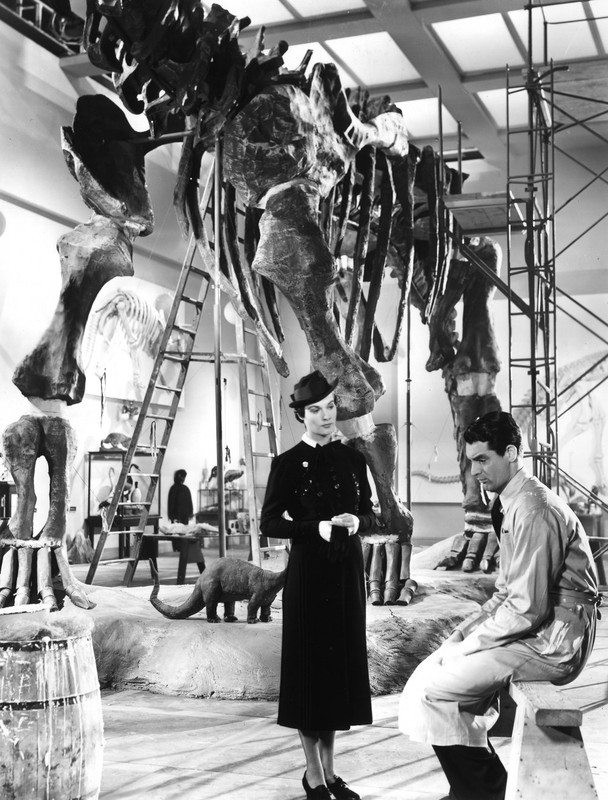
With most of his actors, however, male or female, Hitchcock was remarkably hands-off. "One doesn't direct Cary Grant," he liked to say, "one just puts him in front of a camera." When it came to Grant's clothes, Hitchcock told him to "dress like Cary Grant". This did the trick. The pleasure of watching Cary Grant in a suit – he has a certain debonair way of putting a hand in one trouser pocket – is never greater than in his Hitchcock performances. The director had much the same confidence in James Stewart, mostly leaving him to do his own thing; and well he might, given that Stewart's presence in a Hitchcock film meant an extra million dollars at the box office compared with Grant (or so he told the actor James Mason).
Hitchcock also gave free rein to Doris Day, Stewart's co-star in the 1956 remake of The Man Who Knew Too Much, even though the role was a significant departure from her usual musical comedy. Day played Stewart's wife, a famous singer who is driven to hysteria when her only child is kidnapped on a trip to Morocco. After the location shoot was finished, Day was left feeling puzzled because "not once, in any situation, did A Hitchcock say a word to me that would have indicated that he was a director". When she eventually asked what was wrong, he replied: "But dear Doris, you've done nothing to elicit comment from me." Sure enough, her undirected performance is one of the best in any Hitchcock film, entirely convincing in its depiction of a controlled woman unravelling in grief.
If he did not allow the same latitude to Joan Fontaine in Rebecca (whom he needled into by far the best performance of her career as the nameless heroine) or Kim Novak in Vertigo, it was not because he was a sadist to women, but because it was what the part required. For Vertigo, the script stipulated that the lead character of Madeleine wore a grey suit; indeed it is integral to the plot. So it wasn't exactly helpful when Novak said she'd prefer to wear any colour "except grey". In forcing Novak to wear the grey suit – just as Scottie forces poor Judy to wear it – Hitchcock was only putting the work first.
Colour was not a trivial detail to Hitchcock: the shading of light and dark on a screen was the larger part of cinema. The critic David Thomson argues that an appreciation of Vertigo is a "test case" for whether you are "a creature of cinema"; if you find it implausible – "well, there are always novels". Hitchcock's movies always kept the strong visual sense of his earliest silent pictures. Patrick McGilligan, author of the finest Hitchcock biography (A Life in Darkness and Light, 2003) notes that the most "celebrated sequences" in his films "might as well be silent".
That is certainly true of the famous kiss in Notorious between Ingrid Bergman and Cary Grant. Bergman is Alicia, who agrees to go under cover in Rio de Janeiro, worming her way into the affections of a Nazi Claude Rains on behalf of intelligence officer Devlin (Grant). With its dream cast, it is the most romantic and – for my money – the most perfect Hitchcock film. The scenes in which Alicia is slowly poisoned by the Nazis are as tense as anything he ever did. The kiss between Alicia and Devlin – who spend most of the film proudly denying their love – was cooked up to circumvent the production code's ban on kisses longer than three seconds. Hitchcock asked Grant and Bergman to kiss for a couple of seconds, then disengage and nuzzle each other, then resume, as they talk in low voices about dinner plans. The embrace lasted a total of two and a half minutes, and Bergman said it made her and Grant feel "very awkward". But when you watch it now, the details behind its production fade away. It is so beautiful, you could just sink into it.
If Hitchcock's desires were creepy, it is a creepiness shared by millions of us. Hitchcock once remarked that the Notorious kiss gave the public "the great privilege of embracing Cary Grant and Ingrid Bergman together". As usual, he was right. And though the stars were better and the budgets were bigger, the thrills such a kiss offered were not so very different from the dramatic pictures he and Alma dreamed up in their old silent days.
http://www.guardian.co.uk/film/2012/jun/15/alfred-hitchcock-inventor-modern-horror?INTCMP=SRCH
The Genius of Hitchcock at the BFI, Southbank, London SE1
28 June - 30 November 2012
http://www.bfi.org.uk/genius-hitchcock
Saturday, 16 June 2012
Thursday, 14 June 2012
Last night's setlist
At The Habit, York (with Ron): -
Sea Of Heartbreak
True Love Ways
World Without Love
The Price Of Love
Sloop John B
Crying In The Rain
A lively night with some new players. Excellent sets from regulars Tony Jowando (inc. Hurt and Girl From The North Country) and Colin Rowntree (inc. I'll See You In My Dreams and Simon Smith & His Amazing Dancing Bear). A few beers sunk as well!
P.S. this late post is courtesy of Bt who have messed up my internet connection in York. I have not "gone to another place" as asked earlier!
Sea Of Heartbreak
True Love Ways
World Without Love
The Price Of Love
Sloop John B
Crying In The Rain
A lively night with some new players. Excellent sets from regulars Tony Jowando (inc. Hurt and Girl From The North Country) and Colin Rowntree (inc. I'll See You In My Dreams and Simon Smith & His Amazing Dancing Bear). A few beers sunk as well!
P.S. this late post is courtesy of Bt who have messed up my internet connection in York. I have not "gone to another place" as asked earlier!
The Blaydon Race 2012 - by Terry Kelly
The Writer Runs. Or is it the Runner Writes? Our boy, disguised in jaunty cap, approaches nirvana on a wet Saturday in Blaydon (photo: http://www.flickr.com/photos/34070057@N06/7355647360/in/photostream/)
ALONG with 4,000 other hardy souls, I took part in the Blaydon Race on rain-lashed Saturday night.
It often felt more like surfing than road running, but there was the primeval satisfaction of taking on the very worst the British weather could throw at us.
And since this year also marked the 150th anniversary of the Blaydon Races itself, there was no way I was going to miss out.
The rain was gently pattering down by the time I emerged out of the Metro station, but it just got heavier and heavier.
For some reason, the famous - or infamous - underground toilets in the Bigg Market were locked, so large queues of blokes waited patiently to use a limited number of portable loos.
Realising I wouldn't make it in time, I set off down High Bridge, in search of blessed relief.
Going with strangers is not really advisable, but I noticed a group of male runners heading into a comedy cafe.
My need was great and no joke at all, so I tagged on the back, quickly realising they'd persuaded staff to allow them to use the downstairs toilets, which turned out to be state-of-the-art.
Suitably relieved, I stretched my legs with a jog towards Grey Street, before heading back to the assembled Blaydon racers, many huddling in a bookies' entrance opposite Balmbra's pub.
The sky was coal-black and the rain pulled out all the stops before we could even manage a verse or two of the timeless Blaydon Races song.
My lifelong friend, Jim McCullough, took part in the race for the first time on Saturday night, so there was a little added pressure, apart from the rain.
After wishing Jim all the best, I muscled my way into the already damp 4,000-strong crowd and headed off through Newcastle city centre.
A few brave Saturday night revellers emerged out of pubs to cheer or mock us, but being morally superior runners, we ignored their jibes.
The rain was inches deep as he went gannin' along the Scotswood Road, but I didn't feel like singing Beach Boys classics.
However, I received a boost towards the end when I met up with Corporal Andy Garthwaite, the South Tyneside soldier who lost his right arm when he was hit by a rocket-propelled grenade while serving his country in Afghanistan.
Andy was doing well in the race, but admitted he was "canny tired." I knew how he felt, but pushed on towards the end.
The finish this year was at a place called Shibdon Ponds, where soaken race staff handed out goody bags, including the all-important Blaydon Race T-shirt.
Will I be back for more in 2013? Of course, but I hope the sun has got his hat on next year.
Terry Kelly
ALONG with 4,000 other hardy souls, I took part in the Blaydon Race on rain-lashed Saturday night.
It often felt more like surfing than road running, but there was the primeval satisfaction of taking on the very worst the British weather could throw at us.
And since this year also marked the 150th anniversary of the Blaydon Races itself, there was no way I was going to miss out.
The rain was gently pattering down by the time I emerged out of the Metro station, but it just got heavier and heavier.
For some reason, the famous - or infamous - underground toilets in the Bigg Market were locked, so large queues of blokes waited patiently to use a limited number of portable loos.
Realising I wouldn't make it in time, I set off down High Bridge, in search of blessed relief.
Going with strangers is not really advisable, but I noticed a group of male runners heading into a comedy cafe.
My need was great and no joke at all, so I tagged on the back, quickly realising they'd persuaded staff to allow them to use the downstairs toilets, which turned out to be state-of-the-art.
Suitably relieved, I stretched my legs with a jog towards Grey Street, before heading back to the assembled Blaydon racers, many huddling in a bookies' entrance opposite Balmbra's pub.
The sky was coal-black and the rain pulled out all the stops before we could even manage a verse or two of the timeless Blaydon Races song.
My lifelong friend, Jim McCullough, took part in the race for the first time on Saturday night, so there was a little added pressure, apart from the rain.
After wishing Jim all the best, I muscled my way into the already damp 4,000-strong crowd and headed off through Newcastle city centre.
A few brave Saturday night revellers emerged out of pubs to cheer or mock us, but being morally superior runners, we ignored their jibes.
The rain was inches deep as he went gannin' along the Scotswood Road, but I didn't feel like singing Beach Boys classics.
However, I received a boost towards the end when I met up with Corporal Andy Garthwaite, the South Tyneside soldier who lost his right arm when he was hit by a rocket-propelled grenade while serving his country in Afghanistan.
Andy was doing well in the race, but admitted he was "canny tired." I knew how he felt, but pushed on towards the end.
The finish this year was at a place called Shibdon Ponds, where soaken race staff handed out goody bags, including the all-important Blaydon Race T-shirt.
Will I be back for more in 2013? Of course, but I hope the sun has got his hat on next year.
Terry Kelly
Wednesday, 13 June 2012
Last night's setlists
At the Waggon & Horses, York: -
Set 1: -
How Can We Say Goodbye?
Falling
Love Song
Set 2: -
There Stands The Glass
I Don't Want To Talk About It
Some great turns including 2 pals from Barnsley; one played excellent lap steel (inc. Rollin' In My Sweet Baby's Arms) and the other sounded like Eddie Vedder.
Set 1: -
How Can We Say Goodbye?
Falling
Love Song
Set 2: -
There Stands The Glass
I Don't Want To Talk About It
Some great turns including 2 pals from Barnsley; one played excellent lap steel (inc. Rollin' In My Sweet Baby's Arms) and the other sounded like Eddie Vedder.
Tuesday, 12 June 2012
Monday, 11 June 2012
Matthew Dickman - Chick Corea is Alive and Well
“Chick Corea is Alive and Well!”
Which makes the elegy I wrote for him seem a little distasteful.
Let me tell you, just because you see someone in a black
and white photograph doesn’t mean he’s dead.
Even if you find the photograph in an old-looking
box inside your grandmother’s closet,
the person in it standing against an old Ford
with a goat walking past and a farm in the distance,
he may still be alive, in a nursing home being fed
by a large Kentuckian named Tony, but alive
all the same. And it’s the same with people
much older than you. Just because
they were buying cups of coffee
for a nickel and listening to Sarah Vaughan live
at the Blue Note, they’re not always sleeping
through their hangovers under a quiet blade of grass
in God’s Acre. When I bought the Chick Corea album
and saw him in the silvery sheen of the cover art,
smoking an unfiltered cigarette, the smoke rising
over his face like the hem of a silk dress,
I didn’t even blink. He was dead. And I? I was sad,
listening to his fingers, his poor dead fingers, flying
like ghosts over IT DON’T MEAN A THING
IF IT AIN’T GOT THAT SWING, and thinking
this man’s a genius! playing Ellington like a bartender
plays a Singapore Sling, all that maraschino cherry
sweetness, a little clink of ice, and his voice
doing a kind of mumble-moan
over the keys like a man whose been raised
from the dead, looking down at a woman’s knees
after years in the dirt, singing yeaahh!
yeaahh! this is what I’m talkin’about, yeaahh! this good, sweet life!
–Matthew Dickman
Which makes the elegy I wrote for him seem a little distasteful.
Let me tell you, just because you see someone in a black
and white photograph doesn’t mean he’s dead.
Even if you find the photograph in an old-looking
box inside your grandmother’s closet,
the person in it standing against an old Ford
with a goat walking past and a farm in the distance,
he may still be alive, in a nursing home being fed
by a large Kentuckian named Tony, but alive
all the same. And it’s the same with people
much older than you. Just because
they were buying cups of coffee
for a nickel and listening to Sarah Vaughan live
at the Blue Note, they’re not always sleeping
through their hangovers under a quiet blade of grass
in God’s Acre. When I bought the Chick Corea album
and saw him in the silvery sheen of the cover art,
smoking an unfiltered cigarette, the smoke rising
over his face like the hem of a silk dress,
I didn’t even blink. He was dead. And I? I was sad,
listening to his fingers, his poor dead fingers, flying
like ghosts over IT DON’T MEAN A THING
IF IT AIN’T GOT THAT SWING, and thinking
this man’s a genius! playing Ellington like a bartender
plays a Singapore Sling, all that maraschino cherry
sweetness, a little clink of ice, and his voice
doing a kind of mumble-moan
over the keys like a man whose been raised
from the dead, looking down at a woman’s knees
after years in the dirt, singing yeaahh!
yeaahh! this is what I’m talkin’about, yeaahh! this good, sweet life!
–Matthew Dickman
Saturday, 9 June 2012
Neil Young - on Americana (and more...)
Neil interviewed by John Wilson on BBC Radio 4's Front Row (Friday 8 June 2012)
In a rare extended interview, the Canadian singer-songwriter Neil Young discusses his latest disc, a selection of traditional songs, recorded with the uninhibited rock band Crazy Horse.
The album includes a version of God Save The Queen, the anthem Young recalls singing as a schoolboy in Canada.
Young, who topped the album charts on both sides of the Atlantic 40 years ago with his LP Harvest, also reflects on the role of the protest song in the age of the TV talent show, and considers his own instinctive approach to music-making, and his reluctance to become a crowd-pleaser.
http://www.bbc.co.uk/i/b01jhp10/
In a rare extended interview, the Canadian singer-songwriter Neil Young discusses his latest disc, a selection of traditional songs, recorded with the uninhibited rock band Crazy Horse.
The album includes a version of God Save The Queen, the anthem Young recalls singing as a schoolboy in Canada.
Young, who topped the album charts on both sides of the Atlantic 40 years ago with his LP Harvest, also reflects on the role of the protest song in the age of the TV talent show, and considers his own instinctive approach to music-making, and his reluctance to become a crowd-pleaser.
http://www.bbc.co.uk/i/b01jhp10/
Friday, 8 June 2012
Ray Bradbury RIP
A man who won't forget Ray Bradbury
Fantasy writer Neil Gaiman remembers his friend Ray Bradbury who has died at the age of 91
Neil Gaiman
guardian.co.uk
Wednesday 6 June 2012
Yesterday afternoon I was in a studio recording an audiobook version of a short story I had written for Ray Bradbury's 90th birthday. It's a monologue called The Man Who Forgot Ray Bradbury, and was a way of talking about the impact that Ray Bradbury had on me as a boy, and as an adult, and, as far as I could, about what he had done to the world. And I wrote it last year as a love letter and as a thank you and as a birthday present for an author who made me dream, taught me about words and what they could accomplish, and who never let me down as a reader or as a person as I grew up.
Last week, at dinner, a friend told me that when he was a boy of 11 or 12 he met Ray Bradbury. When Bradbury found out that he wanted to be a writer, he invited him to his office and spent half a day telling him the important stuff: if you want to be a writer, you have to write. Every day. Whether you feel like it or not. That you can't write one book and stop. That it's work, but the best kind of work. My friend grew up to be a writer, the kind who writes and supports himself through writing.
Ray Bradbury was the kind of person who would give half a day to a kid who wanted to be a writer when he grew up.
I encountered Ray Bradbury's stories as a boy. The first one I read was Homecoming, about a human child in a world of Addams Family-style monsters, who wanted to fit in. It was the first time anyone had ever written a story that spoke to me personally. There was a copy of The Silver Locusts (the UK title of The Martian Chronicles) knocking about my house. I read it, loved it, and bought all the Bradbury books I could from the travelling bookshop that set up once a term in my school. I learned about Poe from Bradbury. There was poetry in the short stories, and it didn't matter that I was missing so much as a boy: what I took from the stories was enough.
Some authors I read and loved as a boy disappointed me as I aged. Bradbury never did. His horror stories remained as chilling, his dark fantasies as darkly fantastic, his science fiction (he never cared about the science, only about the people, which was why the stories worked so well) as much of an exploration of the sense of wonder, as they had when I was a child.
He was a good writer, and he wrote well in many disciplines. He was one of the first science fiction writers to escape the "pulp" magazines and to be published in the "slicks". He wrote scripts for Hollywood films. Good films were made from his novels and stories. Long before I was a writer, Bradbury was one of the writers that other writers aspired to become. And none of them ever did.
A Ray Bradbury story meant something on its own – it told you nothing about what the story would be about, but it told you about atmosphere, about language, about some sort of magic escaping into the world. Death is a Lonely Business, his detective novel, is as much a Bradbury story as Something Wicked This Way Comes or Fahrenheit 451 or any of the horror, or science fiction, or magical realism, or realism you'll find in the short story collections. He was a genre on his own, and on his own terms. A young man from Waukegan, Illinois, who went to Los Angeles, educated himself in libraries, and wrote until he got good, then transcended genre and became a genre of one; often emulated, absolutely inimitable.
I met him first when I was a young writer and he was in the UK for his 70th birthday celebrations, held at the Natural History Museum. We became friends in an odd, upside-down way, sitting beside each other at book-signings, at events. I would be there when Ray spoke in public over the years. Sometimes I'd introduce him to the audience. I was the master of ceremonies when Ray was given his grand master award, by the Science Fiction Writers of America: he told them about a child he had watched, teased by his friends for wanting to enter a toy shop because they said it was too young for him, and how much Ray had wanted to persuade the child to ignore his friends and play with the toys.
He'd speak about the practicalities of a writer's life ("You have to write!" he would tell people. "You have to write every day! I still write every day!") and about being a child inside (he said he had a photographic memory, going back to babyhood, and perhaps he did) about joy, about love.
He was kind, and gentle, with that midwestern niceness that's a positive thing rather than an absence of character. He was enthusiastic, and it seemed that that enthusiasm would keep him going forever. He genuinely liked people. He left the world a better place, and left better places in it: the red sands and canals of Mars, the midwestern Halloweens and small towns and dark carnivals. And he kept writing.
"Looking back over a lifetime, you see that love was the answer to everything," Ray said once, in an interview.
He gave people so many reasons to love him. And we did.
http://www.guardian.co.uk/books/2012/jun/06/ray-bradbury-neil-gaiman-appreciation
For a limited period, the two pieces Bradbury wrote for The New Yorker have been made available:
http://www.newyorker.com/online/blogs/backissues/2012/06/ray-bradbury-in-the-new-yorker.html
Last week, at dinner, a friend told me that when he was a boy of 11 or 12 he met Ray Bradbury. When Bradbury found out that he wanted to be a writer, he invited him to his office and spent half a day telling him the important stuff: if you want to be a writer, you have to write. Every day. Whether you feel like it or not. That you can't write one book and stop. That it's work, but the best kind of work. My friend grew up to be a writer, the kind who writes and supports himself through writing.
Ray Bradbury was the kind of person who would give half a day to a kid who wanted to be a writer when he grew up.
I encountered Ray Bradbury's stories as a boy. The first one I read was Homecoming, about a human child in a world of Addams Family-style monsters, who wanted to fit in. It was the first time anyone had ever written a story that spoke to me personally. There was a copy of The Silver Locusts (the UK title of The Martian Chronicles) knocking about my house. I read it, loved it, and bought all the Bradbury books I could from the travelling bookshop that set up once a term in my school. I learned about Poe from Bradbury. There was poetry in the short stories, and it didn't matter that I was missing so much as a boy: what I took from the stories was enough.
Some authors I read and loved as a boy disappointed me as I aged. Bradbury never did. His horror stories remained as chilling, his dark fantasies as darkly fantastic, his science fiction (he never cared about the science, only about the people, which was why the stories worked so well) as much of an exploration of the sense of wonder, as they had when I was a child.
He was a good writer, and he wrote well in many disciplines. He was one of the first science fiction writers to escape the "pulp" magazines and to be published in the "slicks". He wrote scripts for Hollywood films. Good films were made from his novels and stories. Long before I was a writer, Bradbury was one of the writers that other writers aspired to become. And none of them ever did.
A Ray Bradbury story meant something on its own – it told you nothing about what the story would be about, but it told you about atmosphere, about language, about some sort of magic escaping into the world. Death is a Lonely Business, his detective novel, is as much a Bradbury story as Something Wicked This Way Comes or Fahrenheit 451 or any of the horror, or science fiction, or magical realism, or realism you'll find in the short story collections. He was a genre on his own, and on his own terms. A young man from Waukegan, Illinois, who went to Los Angeles, educated himself in libraries, and wrote until he got good, then transcended genre and became a genre of one; often emulated, absolutely inimitable.
I met him first when I was a young writer and he was in the UK for his 70th birthday celebrations, held at the Natural History Museum. We became friends in an odd, upside-down way, sitting beside each other at book-signings, at events. I would be there when Ray spoke in public over the years. Sometimes I'd introduce him to the audience. I was the master of ceremonies when Ray was given his grand master award, by the Science Fiction Writers of America: he told them about a child he had watched, teased by his friends for wanting to enter a toy shop because they said it was too young for him, and how much Ray had wanted to persuade the child to ignore his friends and play with the toys.
He'd speak about the practicalities of a writer's life ("You have to write!" he would tell people. "You have to write every day! I still write every day!") and about being a child inside (he said he had a photographic memory, going back to babyhood, and perhaps he did) about joy, about love.
He was kind, and gentle, with that midwestern niceness that's a positive thing rather than an absence of character. He was enthusiastic, and it seemed that that enthusiasm would keep him going forever. He genuinely liked people. He left the world a better place, and left better places in it: the red sands and canals of Mars, the midwestern Halloweens and small towns and dark carnivals. And he kept writing.
"Looking back over a lifetime, you see that love was the answer to everything," Ray said once, in an interview.
He gave people so many reasons to love him. And we did.
http://www.guardian.co.uk/books/2012/jun/06/ray-bradbury-neil-gaiman-appreciation
For a limited period, the two pieces Bradbury wrote for The New Yorker have been made available:
http://www.newyorker.com/online/blogs/backissues/2012/06/ray-bradbury-in-the-new-yorker.html
Thursday, 7 June 2012
Last night's setlists
At The Habit, York : -
1st set (with Ron): -
Bye Bye Love
Chains
The Singer Not The Song
Walk Right Back
The Price Of Love
Let It Be Me
2nd set: -
Love Song
Love
Cry Baby Cry
Till There Was You
A packed night with plenty of players and a comedian! One chap in a lumberjack shirt did an excellent Old Man and a Ryan Adams song Jacksonville Skyline. Good beer and good craich.
1st set (with Ron): -
Bye Bye Love
Chains
The Singer Not The Song
Walk Right Back
The Price Of Love
Let It Be Me
2nd set: -
Love Song
Love
Cry Baby Cry
Till There Was You
A packed night with plenty of players and a comedian! One chap in a lumberjack shirt did an excellent Old Man and a Ryan Adams song Jacksonville Skyline. Good beer and good craich.
Wednesday, 6 June 2012
Tintin makes a record...
Tintin comic cover fetches record price
Belgian comic artist Hergé, who dreamed up the boy reporter, painted the cover of the book Tintin in America in 1932.
It is one of only five such works of cover art remaining by Hergé.
It shows the young adventurer dressed as a cowboy sitting on a rock, his dog Snowy at his side, as axe-wielding three native Americans creep up behind him.
The previous owner, another Tintin collector, had bought it for 764,218 euros ($979,000) in 2008, which had until now stood as the record price for a comic.
AP
http://www.abc.net.au/news/2012-06-03/tintin-cover-fetches-record-price/4049036
Updated June 04, 2012 10:04:49
A rare hand-drawn illustration of the comic book character Tintin has sold at auction in Paris for a record price of 1.3 million euros ($1.5 million).
It is one of only five such works of cover art remaining by Hergé.
It shows the young adventurer dressed as a cowboy sitting on a rock, his dog Snowy at his side, as axe-wielding three native Americans creep up behind him.
The previous owner, another Tintin collector, had bought it for 764,218 euros ($979,000) in 2008, which had until now stood as the record price for a comic.
AP
http://www.abc.net.au/news/2012-06-03/tintin-cover-fetches-record-price/4049036
Tuesday, 5 June 2012
Tonight's setlist
At the Waggon & Horses, York: -
1st Set: -
Mind Your Own Business
Only Love Can Break Your Heart
Let Your Fingers Do The Walking (aka Good Phone)
2nd Set: -
Is It Only The Moonlight?
Falling
A weird night - entered to the smell of fish & chips - the 'music' bar was filled with bikers demolishing the contents of the nearby chippy. So it was a somewhat ambivalent audience for an open mic night! By the time they left it was fairly late, but a sigh of relief was heard from everyone including the publican.
Some excellent stuff: - Make Me A Pallet On The Floor (Mississippi John Hurt via Gillian Welch) and Folsom Prison Blues by a picker from the Uni and an amazing set from the York Glee Singers (whatever that means) doing a capella versions of From Me To You, Sandman and Smells Like Teen Spirit!!
1st Set: -
Mind Your Own Business
Only Love Can Break Your Heart
Let Your Fingers Do The Walking (aka Good Phone)
2nd Set: -
Is It Only The Moonlight?
Falling
A weird night - entered to the smell of fish & chips - the 'music' bar was filled with bikers demolishing the contents of the nearby chippy. So it was a somewhat ambivalent audience for an open mic night! By the time they left it was fairly late, but a sigh of relief was heard from everyone including the publican.
Some excellent stuff: - Make Me A Pallet On The Floor (Mississippi John Hurt via Gillian Welch) and Folsom Prison Blues by a picker from the Uni and an amazing set from the York Glee Singers (whatever that means) doing a capella versions of From Me To You, Sandman and Smells Like Teen Spirit!!
Monday, 4 June 2012
Saturday, 2 June 2012
Dionne Warwick at the Sage, Gateshead - review by Terry Kelly
Dionne Warwick
Celebrating 50 years in the business, Warwick knows everything there is to know about stagecraft.
Although a throat problem hampered Walk On By and some of the first numbers she performed, the 71-year-old singer from New Jersey built in vocal confidence as the show progressed.
Backed by her top-notch band and a small orchestra, Warwick gave the audience what it wanted as she explored the peerless Bachararch and David songbook, with Alfie, Message to Michael, This Girl's In Love With You and Do You Know the Way to San Jose? all being instant crowd-pleasers.
But Warwick moved into a different gear with a newly-revamped version of I Say a Little Prayer, from her forthcoming album.
Riffing brilliantly on the title phrase, the song proved the vocal highlight of the night.
A Brazilian section possibly outstayed its welcome, but Warwick built towards a popular finale, getting the audience to harmonise on the Bee Gees' Heartbreaker and bringing the show to a close with her 1980s hit, That's What Friends Are For.
Even with a cold, Dionne Warwick remains the real thing.
Terry Kelly
The Sage Gateshead
DESPITE fighting a cold, Dionne Warwick still exuded class for an adoring audience at The Sage.
Celebrating 50 years in the business, Warwick knows everything there is to know about stagecraft.
Although a throat problem hampered Walk On By and some of the first numbers she performed, the 71-year-old singer from New Jersey built in vocal confidence as the show progressed.
Backed by her top-notch band and a small orchestra, Warwick gave the audience what it wanted as she explored the peerless Bachararch and David songbook, with Alfie, Message to Michael, This Girl's In Love With You and Do You Know the Way to San Jose? all being instant crowd-pleasers.
But Warwick moved into a different gear with a newly-revamped version of I Say a Little Prayer, from her forthcoming album.
Riffing brilliantly on the title phrase, the song proved the vocal highlight of the night.
A Brazilian section possibly outstayed its welcome, but Warwick built towards a popular finale, getting the audience to harmonise on the Bee Gees' Heartbreaker and bringing the show to a close with her 1980s hit, That's What Friends Are For.
Even with a cold, Dionne Warwick remains the real thing.
Terry Kelly
Friday, 1 June 2012
Doc Watson RIP
Doc Watson, folk and bluegrass guitarist, dies aged 89
30 May 2012
Grammy award-winning folk and bluegrass guitarist Arthel
"Doc" Watson has died in North Carolina aged 89.
Watson, who was blinded as a child, was known for his lightning-fast style of flatpicking which influenced guitarists around the world.
He won eight Grammy Awards including a lifetime achievement prize in 2004.
Watson died at Wake Forest Baptist Medical Center in Winston-Salem, where he was admitted recently after falling at his home.
"Doc was a legendary performer who blended his traditional Appalachian musical roots with bluegrass, country, gospel and blues to create a unique style and an expansive repertoire," his management company, Folklore Productions, said.
"He was a powerful singer and a tremendously influential picker who virtually invented the art of playing mountain fiddle tunes on the flattop guitar."
Blinded by an eye infection before his first birthday, he learned to play the banjo at the age of five before picking up a guitar in his early teens.
He got his musical start in 1953 playing lead guitar in a country-and-western swing band and became a full-time professional musician in the 1960s.
Watson's mastery of flatpicking helped make the guitar a lead instrument in the 1950s and 1960s, when it was often considered a backup for the mandolin, fiddle or banjo.
For much of his career he toured and recorded with his son, Merle Watson, who died in a tractor accident in 1985. He set up an annual fundraising musical event, Merlefest, in his memory.
The musician played at events across the US from folk festivals to the prestigious Carnegie Hall in New York and recorded some 60 albums, with his most popular songs including Tom Dooley, Shady Grove and Rising Sun Blues.
Country and bluegrass singer Ricky Skaggs paid tribute to Watson saying: "An old ancient warrior has gone home."
"He knew he wouldn't last forever, he did his best to carry the old mountain sounds to this generation," he added.
Neil Portnow, the president of the Recording Academy, praised Watson for his "masterful skills as a musician and his beautiful, emotion-filled voice".
"Watson's immense talent and spirit will be deeply missed, and our sincerest sympathies go out to his family, friends and all who were inspired by his music."
http://www.bbc.co.uk/news/entertainment-arts-18248628
Subscribe to:
Posts (Atom)