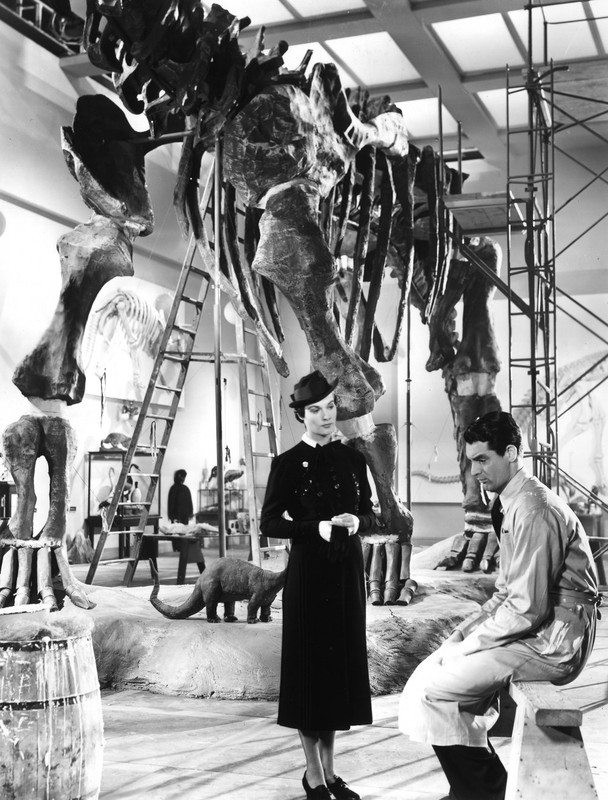
The Major and the Minor (Billy Wilder, 1942)
There's an excellent piece on this wonderfully strange movie here:
See http://yvettecandraw.blogspot.com/2011/07/forgotten-or-overlooked-film-tuesday.html
and another here:
http://spellboundcinema.blogspot.com/2011/04/major-and-minor-1941.html
So let's leave it at that!
Showing posts with label Milland's movies.... Show all posts
Saturday, 23 July 2011
Thursday, 21 July 2011
Ray Milland #5
The Uninvited (1944)
Considered by Martin Scorsese to be one of the eleven best horror films of all time, Lewis Allen’s seductively melancholic ghostly tale, The Uninvited (1944), was one of the first Hollywood films to portray a haunting as a supernatural event in a serious manner; before this, it was someething that could be explained away rationally or it was played for laughs.Partly inspired by the success of Hitchcock’s enigmatic melodrama, Rebecca (1940) and partly by the recent group of Val Lewton’s atmospheric supernatural films, like Cat People (1941) and The Seventh Victim (1943) at RKO, and aware that the Universal horror series was past its best (four more years and Abbott and Costello would be meeting Frankenstein), Paramount were looking for a big budget ghost story hit and they found the basis in Dororthy McCardle’s Rebecca-style haunted house mystery, Uneasy Freehold, set on the south-west English coast.Ray Milland plays London music critic and composer, Roderick Fitzgerald, who, with his sister, Pamela, moves into an old house overlooking the rocky coast of Cornwall. The owner is Commander Beech, who inherited it from his grandmother and had given it to his daughter, Mary Beech Meredith, who has since passed away. Her daughter, Stella Meredith (Gail Russell), is deeply attached to the house, against her grandfather’s wishes, and Rick begins to fall in love with her.After moving in, the Fitzgeralds open up an artist's studio, in which a bouquet of roses wilts away and where they experience an unexplainable drop in temperature. Their dog, who had earlier refused to climb the stairs, disappears and Rick hears a woman sobbing – something that Pamela has already heard.Stella feels a calming presence and smells mimosa, a scent she associates with her late mother; however, she becomes upset and claims her mother died cruelly. She dashes out to the cliff top from where her mother fell, but Rick saves her before she too falls – it’s as if she has been possessed!Local doctor, Dr Scott (Alan Napier), reveals that Stella’s father had an affair with a Spanish gypsy called Carmel, who stole baby Stella and threw Mary Meredith of the cliffs, before succumbing to illness and dying.
During a séance, the ghost communicates that it is guarding Stella, who then becomes obsessed by the spirit of Carmel and she is packed off to a sanitorium by Commander Beech.The sanitorium manager, Miss Holloway, a childhood friend and obsessive devotée of Mary Meredith, tells the Fitzgeralds how she cared for Carmel, but she died of pneumonia; however, Dr Scott tells them she died of neglect, so they set out to bring Stella back.
Realising that Dr Scott and the Fitzgeralds are on their way, Holloway sends Stella home by train, hoping that the spirit in the house will lead her to the cliff edge. When she arrives back, she refuses to listen to her grandfather’s pleas to leave, but the appearance of the spirit causes him to die of a heart attack.Rick, Pamela, and Dr. Scott manage to arrive in time to stop Stella falling off the cliff and back in the house, a physician’s journal discovered by Dr Scott reveals that Carmel gave birth to a child, Stella, and her spirit has returned to be close to her daughter. The scent of mimosa and the sobbing had been emanating from Carmel, whose spirit has been freed by her daughter’s return. However, the jealous spirit of the spurned Mary Meredith remains to be confronted by Rick, who tells her no-one is afraid of her any longer and she finally leaves.
When Hitchcock finished filming Rebecca, producer David O. Selznick wanted the smoke from the burning Manderley to form a large letter “R”. Fortunately, the director had the last word and only filmed a burning monogrammed nightdress. With The Uninivited, Allen wanted to rely on suggestion and atmosphere, but Paramount insisted on the inclusion of several ghost shots during post-production and he was unable to stand up to the producers. The ghost’s features were puportedly modelled by actress Elizabeth Russell (no relation to Gail, but a regular in Val Lewton’s horror movies) and physical form by model and bit-player Lynda Grey. Russell also posed for the large portrait of Mary Meredith that is seen on the wall of Miss Holloway’s office in the film. Fortunately, the ghost shots were removed from the British release and critics praised its chilling atmospheric suggestion.The superbly atmospheric cinematography by Charles Lang won the 1945 Academy Award for Black and White Cinematography.The popular standard, Stella by Starlight, was based on the main (instrumental) theme of Victor Young’s score and helps underline the melancholy mood of the film. It wasn’t until later that Young’s collaborator, Ned Washington, added lyrics and the song became a standard.
Milland did not appear in the weak follow-up, The Unseen (1945). While it was also directed by Allen (and numbered Raymond Chandler among those who received a writing credit), it was more of a murder mystery with shades of George Cukor's recent popular film Gaslight (1944).
Considered by Martin Scorsese to be one of the eleven best horror films of all time, Lewis Allen’s seductively melancholic ghostly tale, The Uninvited (1944), was one of the first Hollywood films to portray a haunting as a supernatural event in a serious manner; before this, it was someething that could be explained away rationally or it was played for laughs.Partly inspired by the success of Hitchcock’s enigmatic melodrama, Rebecca (1940) and partly by the recent group of Val Lewton’s atmospheric supernatural films, like Cat People (1941) and The Seventh Victim (1943) at RKO, and aware that the Universal horror series was past its best (four more years and Abbott and Costello would be meeting Frankenstein), Paramount were looking for a big budget ghost story hit and they found the basis in Dororthy McCardle’s Rebecca-style haunted house mystery, Uneasy Freehold, set on the south-west English coast.Ray Milland plays London music critic and composer, Roderick Fitzgerald, who, with his sister, Pamela, moves into an old house overlooking the rocky coast of Cornwall. The owner is Commander Beech, who inherited it from his grandmother and had given it to his daughter, Mary Beech Meredith, who has since passed away. Her daughter, Stella Meredith (Gail Russell), is deeply attached to the house, against her grandfather’s wishes, and Rick begins to fall in love with her.After moving in, the Fitzgeralds open up an artist's studio, in which a bouquet of roses wilts away and where they experience an unexplainable drop in temperature. Their dog, who had earlier refused to climb the stairs, disappears and Rick hears a woman sobbing – something that Pamela has already heard.Stella feels a calming presence and smells mimosa, a scent she associates with her late mother; however, she becomes upset and claims her mother died cruelly. She dashes out to the cliff top from where her mother fell, but Rick saves her before she too falls – it’s as if she has been possessed!Local doctor, Dr Scott (Alan Napier), reveals that Stella’s father had an affair with a Spanish gypsy called Carmel, who stole baby Stella and threw Mary Meredith of the cliffs, before succumbing to illness and dying.
During a séance, the ghost communicates that it is guarding Stella, who then becomes obsessed by the spirit of Carmel and she is packed off to a sanitorium by Commander Beech.The sanitorium manager, Miss Holloway, a childhood friend and obsessive devotée of Mary Meredith, tells the Fitzgeralds how she cared for Carmel, but she died of pneumonia; however, Dr Scott tells them she died of neglect, so they set out to bring Stella back.
Realising that Dr Scott and the Fitzgeralds are on their way, Holloway sends Stella home by train, hoping that the spirit in the house will lead her to the cliff edge. When she arrives back, she refuses to listen to her grandfather’s pleas to leave, but the appearance of the spirit causes him to die of a heart attack.Rick, Pamela, and Dr. Scott manage to arrive in time to stop Stella falling off the cliff and back in the house, a physician’s journal discovered by Dr Scott reveals that Carmel gave birth to a child, Stella, and her spirit has returned to be close to her daughter. The scent of mimosa and the sobbing had been emanating from Carmel, whose spirit has been freed by her daughter’s return. However, the jealous spirit of the spurned Mary Meredith remains to be confronted by Rick, who tells her no-one is afraid of her any longer and she finally leaves.
When Hitchcock finished filming Rebecca, producer David O. Selznick wanted the smoke from the burning Manderley to form a large letter “R”. Fortunately, the director had the last word and only filmed a burning monogrammed nightdress. With The Uninivited, Allen wanted to rely on suggestion and atmosphere, but Paramount insisted on the inclusion of several ghost shots during post-production and he was unable to stand up to the producers. The ghost’s features were puportedly modelled by actress Elizabeth Russell (no relation to Gail, but a regular in Val Lewton’s horror movies) and physical form by model and bit-player Lynda Grey. Russell also posed for the large portrait of Mary Meredith that is seen on the wall of Miss Holloway’s office in the film. Fortunately, the ghost shots were removed from the British release and critics praised its chilling atmospheric suggestion.The superbly atmospheric cinematography by Charles Lang won the 1945 Academy Award for Black and White Cinematography.The popular standard, Stella by Starlight, was based on the main (instrumental) theme of Victor Young’s score and helps underline the melancholy mood of the film. It wasn’t until later that Young’s collaborator, Ned Washington, added lyrics and the song became a standard.
Milland did not appear in the weak follow-up, The Unseen (1945). While it was also directed by Allen (and numbered Raymond Chandler among those who received a writing credit), it was more of a murder mystery with shades of George Cukor's recent popular film Gaslight (1944).
Saturday, 16 July 2011
Ray Milland #4
Inevitably, it’s pretty hard to reduce Ray Milland’s best movies to a mere ten. After all, Martin Scorsese had to name his eleven best horror movies – he couldn’t settle on ten. And I wouldn’t agree with some of his choices, but that’s another post.
Here are five more Milland movies worthy of note.
Skylark (Mark Sandrich, 1941): Claudette Colbert divorces her business-absorbed husband (Milland) and almost marries slick lawyer Brian Aherne. A moment of crisis forces her to re-evaluate and she returns to her husband. All three leads are particularly good in this sophisticated romantic comedy based on Samuel Raphaelson’s play which had been a hit on Broadway a couple of years earlier. This was Colbert and Milland’s second outing as a romantic couple; they had appeared together the previous year in Mitchell Leisen’s Arise My Love, a romantic comedy with an interventionist message and allegedly Colbert’s favourite film.
Beau Geste (William Wellman. 1939): the best-known adaptation of P. C. Wren’s adventure story is virtually a scene for scene remake of Herbert Brenon’s 1926 version. Milland stars with Gary Cooper and Robert Preston as the Geste brothers who, after Beau (Cooper) and Digby (Preston) confess to stealing a jewel their father was going to sell to raise money, join the Foreign Legion where they have to fight off Tuareg tribesmen and deal with the sadistic attentions of their commanding officer, who suspects them of having the jewel with them. At the end, only John Geste (Milland) is alive and a letter Beau had sent to their stepmother reveals that he had stolen the jewel to protect her because he knew it was fake; she had sold the original earlier and he feared she would be punished by her husband.
The River’s Edge (Allan Dwan, 1957): a contemporary Western-noir in which a couple’s (Anthony Quinn and Debra Paget) struggle to survive on a small ranch in New Mexico is violently interrupted by the arrival of the woman’s murderous ex-boyfriend, Nardo Denning (Milland), who forces them to accompany him across the Mexican border with a suitcase packed with stolen money. The situation worsens when the woman develops a fever and her husband’s leg is trapped by a boulder, leaving them at Denning’s mercy. Sounds like a Coen Brothers movie!
So Evil My Love (Lewis Allen, 1948): Victorian London-set psychological thriller, filmed in noir style by the director of The Uninvited. Olivia Harwood (Ann Todd) is infatuated with art thief and forger Mark Bellis (Milland) and allows herself to be manipulated into blackmailing an old friend, Susan, and her wealthy husband, Henry (who, in turn, is plotting to have his wife committed to a sanatorium because she cannot produce the heir he wants), not realising Bellis is romancing another woman, Kitty (Moira Lister), behind her back. The plan goes awry thanks to the work of a private detective (Leo G. Carroll) and Olivia hits Henry when she confronts her with evidence of Mark’s past crimes (which include murder). He collapses with a heart attack and she becomes more complicit when she convinces Susan to give him some medicine which she has laced with poison. Bellis wants to take Olivia to start a new life in America, but the private detective sends Kitty to see her and she sees a locket around the latter’s neck that she had given to him. When she confronts him, he admits he had been using her but tells her he is now genuinely in love, but she stabs him and heads for the police station.
Alias Nick Beal (John Farrow, 1949): a reworking of the Faust story with Milland in outstanding form as Nick Beal, a smartly-attired habitué of the China Coast wharfside café, who summons Judge Foster (Thomas Mitchell) when the latter exclaims that he would sell his soul to the devil if he could put a city crime boss, Hansen, behind bars. Beal provides the evidence in the form of Hansen’s account books and Foster is nominated for governor, accepting $25,000 for his campaign from his mysterious benefactor. He begins to change from an incorruptible judge into a vain, selfish politician and is persuaded by Beal to enter into a pact with a criminal to get elected. His old allies and even his wife desert him; the only person who stands by him is his old friend Reverend Garfield (George MacReady), who explains his suspicions that Beal is actually the devil! Foster tries to get out of the pact, but Beal implicates him in the murder of Hansen’s book-keeper. When he wins the election but immediately resigns and hold a press conference to admit to fraud. Although he has expiated his sins, Beal still wants his soul and drives him the wharf, where he is confronted by Reverend Garfield…
Here are five more Milland movies worthy of note.
Skylark (Mark Sandrich, 1941): Claudette Colbert divorces her business-absorbed husband (Milland) and almost marries slick lawyer Brian Aherne. A moment of crisis forces her to re-evaluate and she returns to her husband. All three leads are particularly good in this sophisticated romantic comedy based on Samuel Raphaelson’s play which had been a hit on Broadway a couple of years earlier. This was Colbert and Milland’s second outing as a romantic couple; they had appeared together the previous year in Mitchell Leisen’s Arise My Love, a romantic comedy with an interventionist message and allegedly Colbert’s favourite film.
Beau Geste (William Wellman. 1939): the best-known adaptation of P. C. Wren’s adventure story is virtually a scene for scene remake of Herbert Brenon’s 1926 version. Milland stars with Gary Cooper and Robert Preston as the Geste brothers who, after Beau (Cooper) and Digby (Preston) confess to stealing a jewel their father was going to sell to raise money, join the Foreign Legion where they have to fight off Tuareg tribesmen and deal with the sadistic attentions of their commanding officer, who suspects them of having the jewel with them. At the end, only John Geste (Milland) is alive and a letter Beau had sent to their stepmother reveals that he had stolen the jewel to protect her because he knew it was fake; she had sold the original earlier and he feared she would be punished by her husband.
The River’s Edge (Allan Dwan, 1957): a contemporary Western-noir in which a couple’s (Anthony Quinn and Debra Paget) struggle to survive on a small ranch in New Mexico is violently interrupted by the arrival of the woman’s murderous ex-boyfriend, Nardo Denning (Milland), who forces them to accompany him across the Mexican border with a suitcase packed with stolen money. The situation worsens when the woman develops a fever and her husband’s leg is trapped by a boulder, leaving them at Denning’s mercy. Sounds like a Coen Brothers movie!
So Evil My Love (Lewis Allen, 1948): Victorian London-set psychological thriller, filmed in noir style by the director of The Uninvited. Olivia Harwood (Ann Todd) is infatuated with art thief and forger Mark Bellis (Milland) and allows herself to be manipulated into blackmailing an old friend, Susan, and her wealthy husband, Henry (who, in turn, is plotting to have his wife committed to a sanatorium because she cannot produce the heir he wants), not realising Bellis is romancing another woman, Kitty (Moira Lister), behind her back. The plan goes awry thanks to the work of a private detective (Leo G. Carroll) and Olivia hits Henry when she confronts her with evidence of Mark’s past crimes (which include murder). He collapses with a heart attack and she becomes more complicit when she convinces Susan to give him some medicine which she has laced with poison. Bellis wants to take Olivia to start a new life in America, but the private detective sends Kitty to see her and she sees a locket around the latter’s neck that she had given to him. When she confronts him, he admits he had been using her but tells her he is now genuinely in love, but she stabs him and heads for the police station.
Alias Nick Beal (John Farrow, 1949): a reworking of the Faust story with Milland in outstanding form as Nick Beal, a smartly-attired habitué of the China Coast wharfside café, who summons Judge Foster (Thomas Mitchell) when the latter exclaims that he would sell his soul to the devil if he could put a city crime boss, Hansen, behind bars. Beal provides the evidence in the form of Hansen’s account books and Foster is nominated for governor, accepting $25,000 for his campaign from his mysterious benefactor. He begins to change from an incorruptible judge into a vain, selfish politician and is persuaded by Beal to enter into a pact with a criminal to get elected. His old allies and even his wife desert him; the only person who stands by him is his old friend Reverend Garfield (George MacReady), who explains his suspicions that Beal is actually the devil! Foster tries to get out of the pact, but Beal implicates him in the murder of Hansen’s book-keeper. When he wins the election but immediately resigns and hold a press conference to admit to fraud. Although he has expiated his sins, Beal still wants his soul and drives him the wharf, where he is confronted by Reverend Garfield…
Wednesday, 13 July 2011
Ray Milland #3
The Premature Burial (Roger Corman, 1962): gripping Roger Corman adaptation of Edgar Allan Poe’s tale (and the first Corman Poe not to star Vincent Price), that features Milland as a man tormented by the fear that his father died buried alive after a cataleptic attack. He designs a crypt rigged with escape devices – then he suffers his own attack of catalepsy, which a doctor misdiagnoses as a fatal coronary.
A Man Alone (Ray Milland, 1955): a gunfighter, Wes Steele (Milland), alone in the wilderness discovers the aftermath of a stage robbery, in which all the passengers were killed. He rides to town on one of the loose horses and reports what he has seen but finds himself not only accused of the crime, but also of the murder of a local banker. He hides in the basement of a house where the sheriff lives with his daughter. This tightly scripted little film, a paranoid Western-noir, highlights small-town corruption and the mentality of the mob and was Milland’s directorial debut.
The Big Clock (John Farrow, 1948): a snappily-paced film noir told in flashback. Crime magazine publisher Earl; Janoth (Charles Laughton) murders his wife after wrongly assuming she is having an affair; he decides to frame her ‘lover’ and sets his editor-in-chief George Stroud(Milland) on the case – not knowing that he is the man he had seen her with!
Earl Janoth: [talking on intercom to Steve Hagen] On the fourth floor - in the broom closet - a bulb has been burning for several days. Find the man responsible, dock his pay.
X: The Man with X-Ray Eyes (Roger Corman, 1963): an ambitious science-fiction film in which Milland plays Dr Xavier, a scientist carries out experiments with X-Ray vision that go horribly wrong. His visual capacity begins to increase but his ability to control it decreases and he can no longer see the world in human terms, just in forms of lights and textures that his brain cannot completely comprehend. Eventually, he claims he can see things at the edges of the universe and an "eye that sees us all.” A pastor tells him that this is "sin and the devil," adding: "If thine eye offends thee... pluck it out!" and Xavier blinds himself rather than see anything more.
Dial M for Murder (Alfred Hitchcock, 1954): hugely underrated thriller adapted from Frederick Knott’s successful stage play, somewhat in the Gaslight vein. Former tennis pro Tony Wendice (Milland) discovers his wife (Grace Kelly) is having an affair with an American crime writer (Robert Cummings) and decides to have her murdered, but she kills the hired assassin and is sentenced to death until Wendice makes one key mistake…
“Do you really believe in the perfect murder?”
Monday, 11 July 2011
Ray Milland #2
Ten Ray Milland movies you really ought to see - in no particular order, as usual, and over two posts for a change...
The Major and the Minor (Billy Wilder, 1942): a strange, complicated screwball comedy where former scalp masseuse Susan Applegate (Ginger Rogers) manages to pass herself off as both a precocious 12 year-old and her own mother before eventually wedding Major Philip Kirby (Milland), who had initially taken her for a frightened child who needed his help after she had boarded a train with only a child’s ticket and had been caught smoking! Wilder had been in Hollywood for nine years and made a name fro himself as a screenwriter, working with Charles Brackett (who co-scripted this film too), but this was the first movie he directed. Initially, he and Brackett had Cary Grant in mind for the role of Philip Kirby, which wouldn’t be the only time Milland took a role intended for him: twelve years later, Grant wanted to take the role of the husband in Dial M for Murder, but the studio thought audiences would not accept him as someone who arranges for the murder of his wife. Supposedly, Rogers, coming off an Oscar-winning performance in Kitty Foyle, chose both the director and Milland.
“Why don't you get out of that wet coat and into a dry martini?"
The Uninvited (Lewis Allen, 1947):a romantic gothic tale with a pervasive sense of genuine menace - in the Rebecca mould, but with real ghosts. One of the best filmed ghost stories and one which, thankfully, isn’t over-reliant on special effects. Superbly photographed by Charles Lang, who won the Oscar for Best Black and White Cinematography.
"They call them the haunted shores, these stretches of Devonshire and Cornwall and Ireland which rear up against the westward ocean. Mists gather here, and sea fog, and eerie stories. That’s not because there are more ghosts here than in other places, mind you. It’s just that people who live hereabouts are strangely aware of them."
Ministry of Fear (Fritz Lang, 1944): a Hitchcockian-style, tense ‘spy-noir’ based on a novel by Graham Greene, set in London during World War Two, in which our hero is on the lam from Nazis and finds himself accused of murder because of a strange string of events kicked off by winning a cake at a village fete.
The Lost Weekend (Billy Wilder, 1945): Milland stars as a New York writer battling alcoholism in this sharp social drama. Allegedly, Wilder wanted to direct this after having worked with the alcoholic Raymond Chandler on Double Indemnity (1944). Although he had played serious roles, the public's view was that Milland was generally a light comedy actor, but Wilder clearly saw more in him and his Oscar-winning performance marked something of a watershed in his career because it changed the movie industry’s perception of his ability and range.
“And out there in that great big concrete jungle, I wonder how many others that are like me. Poor bedeviled guys on fire with thirst. Such comical figures to the rest of the world as they stagger blindly towards another binge, another bender, another spree.”
Panic in the Year Zero! (Ray Milland, 1962): a post-apocalyptic science-fiction movie exploiting the cold war anxieties of the era. After a nuclear attack destroys Los Angeles, Harry Baldwin (Milland) and his family head for the hills to wait for a return to some kind of order, but mob rule takes over and Baldwin must fight force with force to survive, though the film stresses the idea that there must be no end: only a beginning.
Michael Atkinson, of The Village Voice, wrote admiringly: "This forgotten, saber-toothed 1962 AIP cheapie might be the most expressive on-the-ground nightmare of the Cold War era, providing a template not only for countless social-breakdown genre flicks (most particularly, Michael Haneke's Time of the Wolf) but also for authentic crisis—shades of New Orleans haunt its margins...the movie is nevertheless an anxious, detail-rich essay on moral collapse.”
The Major and the Minor (Billy Wilder, 1942): a strange, complicated screwball comedy where former scalp masseuse Susan Applegate (Ginger Rogers) manages to pass herself off as both a precocious 12 year-old and her own mother before eventually wedding Major Philip Kirby (Milland), who had initially taken her for a frightened child who needed his help after she had boarded a train with only a child’s ticket and had been caught smoking! Wilder had been in Hollywood for nine years and made a name fro himself as a screenwriter, working with Charles Brackett (who co-scripted this film too), but this was the first movie he directed. Initially, he and Brackett had Cary Grant in mind for the role of Philip Kirby, which wouldn’t be the only time Milland took a role intended for him: twelve years later, Grant wanted to take the role of the husband in Dial M for Murder, but the studio thought audiences would not accept him as someone who arranges for the murder of his wife. Supposedly, Rogers, coming off an Oscar-winning performance in Kitty Foyle, chose both the director and Milland.
“Why don't you get out of that wet coat and into a dry martini?"
The Uninvited (Lewis Allen, 1947):a romantic gothic tale with a pervasive sense of genuine menace - in the Rebecca mould, but with real ghosts. One of the best filmed ghost stories and one which, thankfully, isn’t over-reliant on special effects. Superbly photographed by Charles Lang, who won the Oscar for Best Black and White Cinematography.
"They call them the haunted shores, these stretches of Devonshire and Cornwall and Ireland which rear up against the westward ocean. Mists gather here, and sea fog, and eerie stories. That’s not because there are more ghosts here than in other places, mind you. It’s just that people who live hereabouts are strangely aware of them."
Ministry of Fear (Fritz Lang, 1944): a Hitchcockian-style, tense ‘spy-noir’ based on a novel by Graham Greene, set in London during World War Two, in which our hero is on the lam from Nazis and finds himself accused of murder because of a strange string of events kicked off by winning a cake at a village fete.
The Lost Weekend (Billy Wilder, 1945): Milland stars as a New York writer battling alcoholism in this sharp social drama. Allegedly, Wilder wanted to direct this after having worked with the alcoholic Raymond Chandler on Double Indemnity (1944). Although he had played serious roles, the public's view was that Milland was generally a light comedy actor, but Wilder clearly saw more in him and his Oscar-winning performance marked something of a watershed in his career because it changed the movie industry’s perception of his ability and range.
“And out there in that great big concrete jungle, I wonder how many others that are like me. Poor bedeviled guys on fire with thirst. Such comical figures to the rest of the world as they stagger blindly towards another binge, another bender, another spree.”
Panic in the Year Zero! (Ray Milland, 1962): a post-apocalyptic science-fiction movie exploiting the cold war anxieties of the era. After a nuclear attack destroys Los Angeles, Harry Baldwin (Milland) and his family head for the hills to wait for a return to some kind of order, but mob rule takes over and Baldwin must fight force with force to survive, though the film stresses the idea that there must be no end: only a beginning.
Michael Atkinson, of The Village Voice, wrote admiringly: "This forgotten, saber-toothed 1962 AIP cheapie might be the most expressive on-the-ground nightmare of the Cold War era, providing a template not only for countless social-breakdown genre flicks (most particularly, Michael Haneke's Time of the Wolf) but also for authentic crisis—shades of New Orleans haunt its margins...the movie is nevertheless an anxious, detail-rich essay on moral collapse.”
Sunday, 10 July 2011
Ray Milland #1
Occasionally dismissed as exuding the impression of a cut-rate Cary Grant, but lacking his more obvious good looks and comedic touch and having a career that was nowhere near as consistent, Welsh-born Hollywood actor Ray Milland was a hugely underrated actor and director.
Born Alfred Reginald Jones in Neath, Wales, on 3 Januray 1907, he took his stage name from the Millands area of his home town of Neath. Joining the Household Cavalry as a young man, he became an expert shot and a member of his company's rifle team, winning many prestigious competitions. After his four-year duty service was over, he tried his hand at acting and made several films in the UK.
He appeared as an extra in Picadilly (1929), using the name Spike Milland, but his first proper role was in Castleton Knight’s thriller, The Flying Scotsman (also 1929), which was one of the earliest sound films. Like Hitchcock’s Blackmail (1929), it was originally intended to be a silent movie and the decision to include diegetic sound was made during production, with the result that there is dialogue only twards the end of the film, the rest of the story being accompanied with title cards and music,. There is a question as to whether the film was originally released without sound; some historians think its use of sound predtaed Blackmail, but the BFI database currently indicates that sound was added for a re-release in 1930.
Milland relocated to Hollywood after a talent scout spotted him on the stage in London. He initially featured in supporting roles for at various studios such as films like The Bachelor Father and Just a Gigolo, both made in 1931 at MGM; The Man Who Played God and Blonde Crazy, both 1931 at Warner Brothers; The Glass Key (1935) at Paramount; Next Time We Love (1936) at Universal. He gradually made his way up the cast list and signed a contract with Paramount in the late 1930s.
During the prodiction of Cecil B. DeMille's Reap the Wild Wind (1941), Milland was forced to have wavy hair and he later claimed the curling tongs caused his hair to fall out and as a result, he received fewer male leads. However, all his better roles date from that time, not before it.
A cursory glance at his filmography shows his career was rich and varied, working with a number of major directors and taking in a vaiety of genres and styles and in roles that encompassed the heroic, the romantic, the sympathetic amd the macchiavellian; for example, there were Westerns: John Farrow’s Copper Canyon (1950) and Allan Dwan’s The River’s Edge (1957); horror movies like Lewis Allen’s The Uninvited (1944) and Roger Corman’s The Premature Burial (1962); film noir: Farrow’s The Big Clock (1948); spy films like Fritz Lang’s Ministry of Fear (1944); thrillers such as Alfred Hitchcock’s Dial M for Murder (1954) and Allen’s So Evil, My Love (1948); romantic screwball comedies like Billy Wilder’s The Major and the Minor (1942); science-fiction: Corman’s X: The Man with X-Ray Eyes (1963); social drama such as Wilder’s The Lost Weekend (1945), for which he won the best actor Oscar, and George Stevens’ Something to Live For (1952); action adventure: DeMille’s Reap the Wild Wind (1941); in 1952, he even starred in the experimental thriller with no dialogue, Russell Rouse’s The Thief.
While still starring in films, in the 1950s, Milland began to act and direct on televsion ansd was the star of two shows. Meet Mr McNulty (also known as The Ray Milland Show) (1953-55), was a sitcom about an English professor at a girls’ college. From 1959-1960, he starred in Markham, as the eponymous private detective and attorney.
After leaving Paramount, he also turned his hand to directing some of the films in which he starred: the taut Western, A Man Alone, and the spy thriller, Lisbon (both 1955); a British crime drama, The Safecracker (1958); his chilling vision of a dog-eat-dog apocalyptic America, Panic in the Year Zero (1961. His final work behind the camera was a British-made courtroom drama based on a play he had starred in on Broadway, Hostile Witness (1968).
In later life, the quality of most of Milland’s film work dipped considerably with some dire horror fare like Frogs and the bizarre social drama, The Thing with Two Heads (both 1972). In the latter, he plays the wealthy racist Dr. Maxwell Kirshner, who, when he discovers he is dying, demands his head be transplanted onto a healthy body and it is - onto that of a black death row prisoner. He still occasionally appeared in a quality film like Jack Gold’s Aces High and Elia Kazan’s The Last Tycoon (both 1976); however, easily his mosty succesful film from this period was Arthur Hiller’s Love Story (1970), in which he played the Ryan O’Neal character’s father.
The author of 100 short stories, he completed his entertaining autobiography, Wide-Eyed in Babylon, in 1974. One of the tales he recounted recalled his time in the Household cavalry when, after a night of drinking, he was unable to control his horse during a pocession in front of the King of Afghanistan and it bolted:
“I went right through the mounted band, who were helpless because their reins are fastened to their stirrups. The drum horse, who was at least nineteen years old, ended up in the memorial fountain, and I finished up in Buckingham Palace courtyard, alone and without a friend in the world.”
His last movie was the straight-to-video The Gold Key (1974), but he continued working in televsion, mostly in guest star roles, but he won an Emmy for his work in Rich Man, Poor Man in 1976. His last televison role was as the Home Secretary in Roy Ward Baker’s Sherlock Holmes television film, The Masks of Death (with Peter Cushing as Holmes and John Mills as Watson) in 1984.
Milland died of lung cancer in Torrance, California in 1986, aged 79.
http://www.oxforddnb.com/view/printable/57315
http://en.wikipedia.org/wiki/Ray_milland
http://en.wikipedia.org/wiki/Ray_Milland_filmography
http://fridaynightboys300.blogspot.com/2009/02/x-man-with-x-ray-eyes.html
Born Alfred Reginald Jones in Neath, Wales, on 3 Januray 1907, he took his stage name from the Millands area of his home town of Neath. Joining the Household Cavalry as a young man, he became an expert shot and a member of his company's rifle team, winning many prestigious competitions. After his four-year duty service was over, he tried his hand at acting and made several films in the UK.
He appeared as an extra in Picadilly (1929), using the name Spike Milland, but his first proper role was in Castleton Knight’s thriller, The Flying Scotsman (also 1929), which was one of the earliest sound films. Like Hitchcock’s Blackmail (1929), it was originally intended to be a silent movie and the decision to include diegetic sound was made during production, with the result that there is dialogue only twards the end of the film, the rest of the story being accompanied with title cards and music,. There is a question as to whether the film was originally released without sound; some historians think its use of sound predtaed Blackmail, but the BFI database currently indicates that sound was added for a re-release in 1930.
Milland relocated to Hollywood after a talent scout spotted him on the stage in London. He initially featured in supporting roles for at various studios such as films like The Bachelor Father and Just a Gigolo, both made in 1931 at MGM; The Man Who Played God and Blonde Crazy, both 1931 at Warner Brothers; The Glass Key (1935) at Paramount; Next Time We Love (1936) at Universal. He gradually made his way up the cast list and signed a contract with Paramount in the late 1930s.
During the prodiction of Cecil B. DeMille's Reap the Wild Wind (1941), Milland was forced to have wavy hair and he later claimed the curling tongs caused his hair to fall out and as a result, he received fewer male leads. However, all his better roles date from that time, not before it.
A cursory glance at his filmography shows his career was rich and varied, working with a number of major directors and taking in a vaiety of genres and styles and in roles that encompassed the heroic, the romantic, the sympathetic amd the macchiavellian; for example, there were Westerns: John Farrow’s Copper Canyon (1950) and Allan Dwan’s The River’s Edge (1957); horror movies like Lewis Allen’s The Uninvited (1944) and Roger Corman’s The Premature Burial (1962); film noir: Farrow’s The Big Clock (1948); spy films like Fritz Lang’s Ministry of Fear (1944); thrillers such as Alfred Hitchcock’s Dial M for Murder (1954) and Allen’s So Evil, My Love (1948); romantic screwball comedies like Billy Wilder’s The Major and the Minor (1942); science-fiction: Corman’s X: The Man with X-Ray Eyes (1963); social drama such as Wilder’s The Lost Weekend (1945), for which he won the best actor Oscar, and George Stevens’ Something to Live For (1952); action adventure: DeMille’s Reap the Wild Wind (1941); in 1952, he even starred in the experimental thriller with no dialogue, Russell Rouse’s The Thief.
While still starring in films, in the 1950s, Milland began to act and direct on televsion ansd was the star of two shows. Meet Mr McNulty (also known as The Ray Milland Show) (1953-55), was a sitcom about an English professor at a girls’ college. From 1959-1960, he starred in Markham, as the eponymous private detective and attorney.
After leaving Paramount, he also turned his hand to directing some of the films in which he starred: the taut Western, A Man Alone, and the spy thriller, Lisbon (both 1955); a British crime drama, The Safecracker (1958); his chilling vision of a dog-eat-dog apocalyptic America, Panic in the Year Zero (1961. His final work behind the camera was a British-made courtroom drama based on a play he had starred in on Broadway, Hostile Witness (1968).
In later life, the quality of most of Milland’s film work dipped considerably with some dire horror fare like Frogs and the bizarre social drama, The Thing with Two Heads (both 1972). In the latter, he plays the wealthy racist Dr. Maxwell Kirshner, who, when he discovers he is dying, demands his head be transplanted onto a healthy body and it is - onto that of a black death row prisoner. He still occasionally appeared in a quality film like Jack Gold’s Aces High and Elia Kazan’s The Last Tycoon (both 1976); however, easily his mosty succesful film from this period was Arthur Hiller’s Love Story (1970), in which he played the Ryan O’Neal character’s father.
The author of 100 short stories, he completed his entertaining autobiography, Wide-Eyed in Babylon, in 1974. One of the tales he recounted recalled his time in the Household cavalry when, after a night of drinking, he was unable to control his horse during a pocession in front of the King of Afghanistan and it bolted:
“I went right through the mounted band, who were helpless because their reins are fastened to their stirrups. The drum horse, who was at least nineteen years old, ended up in the memorial fountain, and I finished up in Buckingham Palace courtyard, alone and without a friend in the world.”
His last movie was the straight-to-video The Gold Key (1974), but he continued working in televsion, mostly in guest star roles, but he won an Emmy for his work in Rich Man, Poor Man in 1976. His last televison role was as the Home Secretary in Roy Ward Baker’s Sherlock Holmes television film, The Masks of Death (with Peter Cushing as Holmes and John Mills as Watson) in 1984.
Milland died of lung cancer in Torrance, California in 1986, aged 79.
http://www.oxforddnb.com/view/printable/57315
http://en.wikipedia.org/wiki/Ray_milland
http://en.wikipedia.org/wiki/Ray_Milland_filmography
http://fridaynightboys300.blogspot.com/2009/02/x-man-with-x-ray-eyes.html
Sunday, 15 February 2009
X: The Man With X-Ray Eyes
X: The Man with the X-Ray Eyes (1963) is a haunting, low budget sci-fi/horror film directed by Roger Corman from a script by Ray Russell and Robert Dillon. The underrated Ray Milland, heading towards the tail end of his career where only a few gems stood out among pretty dire movies like Frogs ( 1972) and the heavily (not to say turgidly) symbolic The Thing with Two Heads (1972), plays Dr. James Xavier, a famous scientist, who develops eyedrops to increase the range of vision.
Using himself as a guinea pig, he realises he can see through people’s clothing and he saves the life of a girl whose medical conditon had been diagnosed incorrectly; however, his continued use of the drops increases his “x-ray” powers until he can no longer control them and he can only see textures and lights that he cannot understand. As a result,his beahviour becomes unpredictable and his colleagues fear for him.
Things go from bad to worse when he accidentally kills a friend and has to go the lam. Initially, he gets work in a carnival and then he usees his owers to win at a casino. After driving into the desert, he ends up in a religious revival meeting where he explains to the preacher: “No. I've come to tell you what I see. There are great darknesses. Farther than time itself. And beyond the darkness... a light that glows, changes... and in the centre of the universe... the eye that sees us all.”
The preacher replies, “You see sin and the devil! But the lord has told us what to do about it. Said Matthew in Chapter Five, ‘If thine eye offends thee... pluck it out!’” - which he does, to save his sanity, but Corman inserts a freeze-frame optical effect that seeks, for a fraction of a second, to show Xavier with empty eye-sockets...
This was Milland’s second Corman film, coming just after the excellent, if liberal, adaptation of Edgar Allan Poe’s Premature Burial (1962) and his self-directed post-apocalypse gem, Panic in the Year Zero (1962). Corman shot the film in just three weeks on a budget of $300,000. A highlight of the movie is the is Corman’s use of (admittedly crude by modern standards) visual effects to show Xavier’s point of view, especially the almost surreal journey through Las Vegas, where the audience sees the skeletons of buildings floating in space through his eyes.
A couple of youtube links:
http://www.youtube.com/watch?v=YlWAqEjnyIU&feature=related
http://www.youtube.com/watch?v=81zkcZEkK2Y&feature=related
The Man With X-Ray Eyes Gold Key comic book adaptation (only 12 cents!). For more details see:
http://uk.comics.ign.com/articles/652/652276p1.html
Subscribe to:
Posts (Atom)