http://entertainment.timesonline.co.uk/tol/arts_and_entertainment/music/article6997351.ece
Saturday, 23 January 2010

Friday, 22 January 2010
Thursday, 21 January 2010
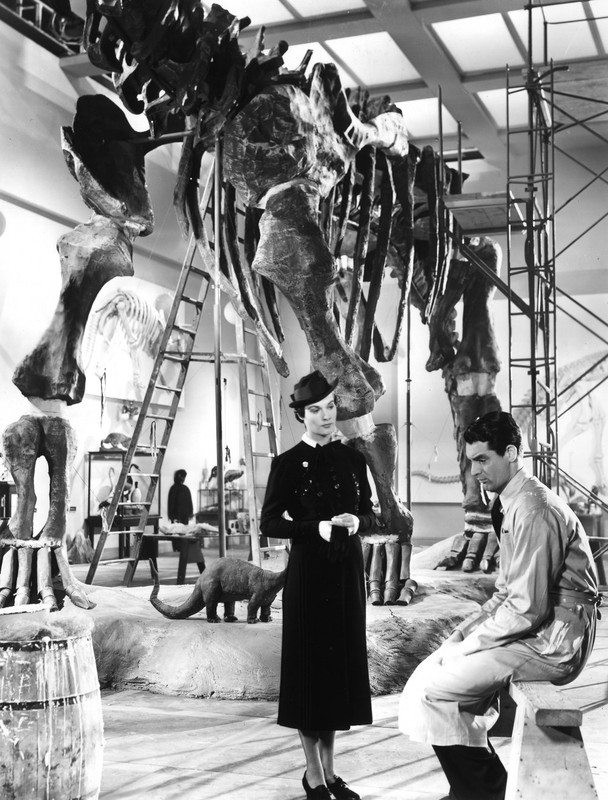
TERRY KELLY PRESENTS... HITCH
FILM NIGHT TOMORROW.
LOCATION AND TIME AS PER NORMAL.
HITCHCOCK HATER TK IS PRESENTING A HITCH 'CLASSIC'. TWO-FACED BASTARD.
LOCATION AND TIME AS PER NORMAL.
HITCHCOCK HATER TK IS PRESENTING A HITCH 'CLASSIC'. TWO-FACED BASTARD.

Robert B. Parker RIP
 January 20, 2010
Robert B. Parker, the Prolific Writer Who Created Spenser, Is Dead at 77
By BRUCE WEBER
Robert B. Parker, the best-selling mystery writer who created Spenser, a tough, glib Boston private detective who was the hero of nearly 40 novels, died Monday at his home in Cambridge, Mass. He was 77.
The cause was a heart attack, said his agent of 37 years, Helen Brann. She said that Mr. Parker had been thought to be in splendid health, and that he died at his desk, working on a book. He wrote five pages a day, every day but Sunday, she said.
Mr. Parker wrote more than 60 books all told, including westerns and young-adult novels, but he churned out entertaining detective stories with a remarkable alacrity that made him one of the country’s most popular writers. In recent years he had come up with two new protagonists: Jesse Stone, an alcoholic ex-ballplayer turned small-town chief of police, who was featured in nine novels written since 1997, including “Split Image,” to be published next month; and Sunny Randall, a fashion-conscious, unlucky-in-love, daughter-of-a-cop private eye created at the request of the actress Helen Hunt, who was hoping for a juicy movie role. No movie was made, but the first Sunny Randall novel, “Family Honor,” was published in 1999, and five more have followed.
It was Spenser, though — spelled “like the poet,” as the character was wont to point out (his first name was never revealed) — who was Mr. Parker’s signature creation. He appeared for the first time in 1973 in “The Godwulf Manuscript,” in which he is hired by a university to retrieve a stolen medieval document, an investigation that triggers a murder. The first pages of the book revealed much of what readers came to love about Spenser — his impatience with pomposity, his smart-alecky wit, his self-awareness and supreme self-confidence.
“Look, Dr. Forbes,” Spenser says to the long-winded college president who is hiring him. “I went to college once. I don’t wear my hat indoors. And if a clue comes along and bites me on the ankle, I grab it. I am not, however, an Oxford don. I am a private detective. Is there something you’d like me to detect, or are you just polishing up your elocution for next year’s commencement?”
A conscious throwback to hard-boiled detectives like Raymond Chandler’s Philip Marlowe, but with a sensitivity born of the age of feminism and civil rights, Spenser is a bruiser in body but a softie at heart, someone who never shies from danger or walks away from a threat to the innocent. Mr. Parker gave him many of his own traits. Spenser is an admirer of any kind of expertise. He believes in psychotherapy. He’s a great cook. He’s a boxer, a weightlifter and a jogger, a consumer of doughnuts and coffee, a privately indulgent appreciator (from a distance) of pretty women, a Red Sox fan, a dog lover. (Mr. Parker owned a series of short-haired pointers, all named Pearl, like their fictional incarnation.)
Most crucially, Spenser is faithful in love (to his longtime companion, Susan Silverman, a psychologist) and in friendship (to his frequent partner in anti-crime, a dazzlingly charming, morally idiosyncratic black man named Hawk). And usually with the two of them as seconds, he has remained indomitable, vanquishing crime bosses, drug dealers, sex fiends, cold-blooded killers, corrupt politicians and several other varieties of villain.
Mr. Parker wrote the Spenser novels in the first person, employing the blunt, masculine prose style that is often described as Hemingwayesque. But his writing also seems self-aware, even tongue-in-cheek, as though he recognized how well worn such a path was. And his dialogue was especially arch, giving Spenser an air of someone who takes very few things seriously and raises an eyebrow at everything else. Mr. Parker’s regular readers became familiar with the things that provoke Spenser’s suspicion: showy glamour, ostentatious wealth, self-aggrandizement, fern bars, fancy sports clubs and any kind of haughtiness or presumption.
Spenser is, in other words, what Marlowe might have been in a more modern world (and living in Boston rather than Los Angeles). Unsurprisingly, Mr. Parker considered Chandler one of the great American writers of the 20th century. (He audaciously finished an incomplete Chandler manuscript, “Poodle Springs”). And he has been often cited by critics and other mystery writers as the guy who sprung the Chandleresque detective free from the age of noir.
“I read Parker’s Spenser series in college,” the best-selling writer Harlan Coben said in a 2007 interview with The Atlantic Monthly. “When it comes to detective novels, 90 percent of us admit he’s an influence, and the rest of us lie about it.”
Robert Brown Parker was a large man of large appetites that were nonetheless satisfied with relative ease. He was as unpretentious and self-aware as Spenser, his agent, Ms. Brann said.
“All he needed to be happy was his family and writing,” she said. “There were always wonderful things in his refrigerator. People were always after him to do cookbooks.” She paused.
“He loved doughnuts,” she said.
He was born in Springfield, Mass., on Sept. 17, 1932, the only child of working-class parents. His father worked for the telephone company. He attended Colby College in Maine, graduating in 1954, then served in the Army in Korea, after the Korean War. He earned an M.A. and Ph.D. in literature from Boston University, and taught there as well as at Northeastern University.
His novels were adapted many times for television and the movies. From 1985 to 1988 Spenser appeared as the central character of a television series, “Spenser: For Hire,” starring Robert Urich. The Jesse Stone series was the inspiration for seven television movies starring Tom Selleck, including one to be broadcast in the spring. “Appaloosa,” a western starring Ed Harris and Viggo Mortensen made from Mr. Parker’s novel of the same name, was released in 2008.
Mr. Parker’s editor, Chris Pepe, said that in addition to the new Jesse Stone novel, Putnam would publish a new western by Mr. Parker in the spring; two additional Spenser novels are in production but unscheduled, she said.
Mr. Parker first met his wife, Joan, at a birthday party when they were 3 years old, or so the story goes; in any case, they encountered each other at Colby and married in 1956. Much of the relationship between Spenser and Susan — including a period of trouble when they are apart — reflects Mr. Parker’s with his wife. She survives him, as do two sons, David, of Manhattan, and Daniel, of Los Angeles.
Every one of his books was dedicated to his wife.
http://www.nytimes.com/2010/01/20/books/20parker.html
See also:
http://www.guardian.co.uk/books/2010/jan/20/robert-b-parker-obituary
http://www.robertbparker.net/
Last night's set list
First gig of 2010 at The Habit, York.
On The Way Home
Love Art Blues
Only Love Can Break Your Heart
Mind Your Own Business
Got the punters to join in with MYOB - they went nuts and demanded an encore: Long May You Run.
Also helped out one of the players who attempted Rocky Raccoon, but forgot the words.
An enjoyable beer-fuelled evening.
On The Way Home
Love Art Blues
Only Love Can Break Your Heart
Mind Your Own Business
Got the punters to join in with MYOB - they went nuts and demanded an encore: Long May You Run.
Also helped out one of the players who attempted Rocky Raccoon, but forgot the words.
An enjoyable beer-fuelled evening.
Wednesday, 20 January 2010
FRIDAY NIGHT BOY COOL #41


 Falling Water
 Massaro House
 Oak Park, Illinois
 La Miniatura
 H. C. Price Company Tower
 Imperial Hotel, Tokyo
 House on Petra Island
 Rookery Lobby, Chicago
 Johnson Wax Corporation
 Lake Forest House

 The Guggenheim, New York
 Photo by Marvin Koner http://marvinkoner.com/
Robert Frost - Home Burial
He saw her from the bottom of the stairs
Before she saw him. She was starting down,
Looking back over her shoulder at some fear.
She took a doubtful step and then undid it
To raise herself and look again. He spoke
Advancing toward her: 'What is it you see
From up there always -- for I want to know.'
She turned and sank upon her skirts at that,
And her face changed from terrified to dull.
He said to gain time: 'What is it you see?'
Mounting until she cowered under him.
'I will find out now -- you must tell me, dear.'
She, in her place, refused him any help
With the least stiffening of her neck and silence.
She let him look, sure that he wouldn't see,
Blind creature; and a while he didn't see.
But at last he murmured, 'Oh' and again, 'Oh.'
'What is it -- what?' she said.
'Just that I see.'
'You don't,' she challenged. 'Tell me what it is.'
'The wonder is I didn't see at once.
I never noticed it from here before.
I must be wonted to it -- that's the reason.'
The little graveyard where my people are!
So small the window frames the whole of it.
Not so much larger than a bedroom, is it?
There are three stones of slate and one of marble,
Broad-shouldered little slabs there in the sunlight
On the sidehill. We haven't to mind those.
But I understand: it is not the stones,
But the child's mound --'
'Don't, don't, don't, don't,' she cried.
She withdrew shrinking from beneath his arm
That rested on the banister, and slid downstairs;
And turned on him with such a daunting look,
He said twice over before he knew himself:
'Can't a man speak of his own child he's lost?'
'Not you! Oh, where's my hat? Oh, I don't need it!
I must get out of here. I must get air.
I don't know rightly whether any man can.'
'Amy! Don't go to someone else this time.
Listen to me. I won't come down the stairs.'
He sat and fixed his chin between his fists.
'There's something I should like to ask you, dear.'
'You don't know how to ask it.'
'Help me, then.'
Her fingers moved the latch for all reply.
'My words are nearly always an offence.
I don't know how to speak of anything
So as to please you. But I might be taught
I should suppose. I can't say I see how,
A man must partly give up being a man
With women-folk. We could have some arrangement
By which I'd bind myself to keep hands off
Anything special you're a-mind to name.
Though I don't like such things 'twixt those that love.
Two that don't love can't live together without them.
But two that do can't live together with them.'
She moved the latch a little. 'Don't -- don't go.
Don't carry it to someone else this time.
Tell me about it if it's something human.
Let me into your grief. I'm not so much
Unlike other folks as your standing there
Apart would make me out. Give me my chance.
I do think, though, you overdo it a little.
What was it brought you up to think it the thing
To take your mother-loss of a first child
So inconsolably- in the face of love.
You'd think his memory might be satisfied --'
'There you go sneering now!'
'I'm not, I'm not!
You make me angry. I'll come down to you.
God, what a woman! And it's come to this,
A man can't speak of his own child that's dead.'
'You can't because you don't know how.
If you had any feelings, you that dug
With your own hand--how could you?--his little grave;
I saw you from that very window there,
Making the gravel leap and leap in air,
Leap up, like that, like that, and land so lightly
And roll back down the mound beside the hole.
I thought, Who is that man? I didn't know you.
And I crept down the stairs and up the stairs
To look again, and still your spade kept lifting.
Then you came in. I heard your rumbling voice
Out in the kitchen, and I don't know why,
But I went near to see with my own eyes.
You could sit there with the stains on your shoes
Of the fresh earth from your own baby's grave
And talk about your everyday concerns.
You had stood the spade up against the wall
Outside there in the entry, for I saw it.'
'I shall laugh the worst laugh I ever laughed.
I'm cursed. God, if I don't believe I'm cursed.'
I can repeat the very words you were saying ,
"Three foggy mornings and one rainy day
Will rot the best birch fence a man can build."
Think of it, talk like that at such a time!
What had how long it takes a birch to rot
To do with what was in the darkened parlour?
You couldn't care! The nearest friends can go
With anyone to death, comes so far short
They might as well not try to go at all.
No, from the time when one is sick to death,
One is alone, and he dies more alone.
Friends make pretence of following to the grave,
But before one is in it, their minds are turned
And making the best of their way back to life
And living people, and things they understand.
But the world's evil. I won't have grief so
If I can change it. Oh, I won't, I won't'
'There, you have said it all and you feel better.
You won't go now. You're crying. Close the door.
The heart's gone out of it: why keep it up?
Amyl There's someone coming down the road!'
'You --oh, you think the talk is all. I must go-
Somewhere out of this house. How can I make you --'
'If--you -- do!' She was opening the door wider.
'Where do you mean to go? First tell me that.
I'll follow and bring you back by force. I will! --'
Robert Frost
Before she saw him. She was starting down,
Looking back over her shoulder at some fear.
She took a doubtful step and then undid it
To raise herself and look again. He spoke
Advancing toward her: 'What is it you see
From up there always -- for I want to know.'
She turned and sank upon her skirts at that,
And her face changed from terrified to dull.
He said to gain time: 'What is it you see?'
Mounting until she cowered under him.
'I will find out now -- you must tell me, dear.'
She, in her place, refused him any help
With the least stiffening of her neck and silence.
She let him look, sure that he wouldn't see,
Blind creature; and a while he didn't see.
But at last he murmured, 'Oh' and again, 'Oh.'
'What is it -- what?' she said.
'Just that I see.'
'You don't,' she challenged. 'Tell me what it is.'
'The wonder is I didn't see at once.
I never noticed it from here before.
I must be wonted to it -- that's the reason.'
The little graveyard where my people are!
So small the window frames the whole of it.
Not so much larger than a bedroom, is it?
There are three stones of slate and one of marble,
Broad-shouldered little slabs there in the sunlight
On the sidehill. We haven't to mind those.
But I understand: it is not the stones,
But the child's mound --'
'Don't, don't, don't, don't,' she cried.
She withdrew shrinking from beneath his arm
That rested on the banister, and slid downstairs;
And turned on him with such a daunting look,
He said twice over before he knew himself:
'Can't a man speak of his own child he's lost?'
'Not you! Oh, where's my hat? Oh, I don't need it!
I must get out of here. I must get air.
I don't know rightly whether any man can.'
'Amy! Don't go to someone else this time.
Listen to me. I won't come down the stairs.'
He sat and fixed his chin between his fists.
'There's something I should like to ask you, dear.'
'You don't know how to ask it.'
'Help me, then.'
Her fingers moved the latch for all reply.
'My words are nearly always an offence.
I don't know how to speak of anything
So as to please you. But I might be taught
I should suppose. I can't say I see how,
A man must partly give up being a man
With women-folk. We could have some arrangement
By which I'd bind myself to keep hands off
Anything special you're a-mind to name.
Though I don't like such things 'twixt those that love.
Two that don't love can't live together without them.
But two that do can't live together with them.'
She moved the latch a little. 'Don't -- don't go.
Don't carry it to someone else this time.
Tell me about it if it's something human.
Let me into your grief. I'm not so much
Unlike other folks as your standing there
Apart would make me out. Give me my chance.
I do think, though, you overdo it a little.
What was it brought you up to think it the thing
To take your mother-loss of a first child
So inconsolably- in the face of love.
You'd think his memory might be satisfied --'
'There you go sneering now!'
'I'm not, I'm not!
You make me angry. I'll come down to you.
God, what a woman! And it's come to this,
A man can't speak of his own child that's dead.'
'You can't because you don't know how.
If you had any feelings, you that dug
With your own hand--how could you?--his little grave;
I saw you from that very window there,
Making the gravel leap and leap in air,
Leap up, like that, like that, and land so lightly
And roll back down the mound beside the hole.
I thought, Who is that man? I didn't know you.
And I crept down the stairs and up the stairs
To look again, and still your spade kept lifting.
Then you came in. I heard your rumbling voice
Out in the kitchen, and I don't know why,
But I went near to see with my own eyes.
You could sit there with the stains on your shoes
Of the fresh earth from your own baby's grave
And talk about your everyday concerns.
You had stood the spade up against the wall
Outside there in the entry, for I saw it.'
'I shall laugh the worst laugh I ever laughed.
I'm cursed. God, if I don't believe I'm cursed.'
I can repeat the very words you were saying ,
"Three foggy mornings and one rainy day
Will rot the best birch fence a man can build."
Think of it, talk like that at such a time!
What had how long it takes a birch to rot
To do with what was in the darkened parlour?
You couldn't care! The nearest friends can go
With anyone to death, comes so far short
They might as well not try to go at all.
No, from the time when one is sick to death,
One is alone, and he dies more alone.
Friends make pretence of following to the grave,
But before one is in it, their minds are turned
And making the best of their way back to life
And living people, and things they understand.
But the world's evil. I won't have grief so
If I can change it. Oh, I won't, I won't'
'There, you have said it all and you feel better.
You won't go now. You're crying. Close the door.
The heart's gone out of it: why keep it up?
Amyl There's someone coming down the road!'
'You --oh, you think the talk is all. I must go-
Somewhere out of this house. How can I make you --'
'If--you -- do!' She was opening the door wider.
'Where do you mean to go? First tell me that.
I'll follow and bring you back by force. I will! --'
Robert Frost
Front by Tom Pickard
there is something so familiar
in what is said I stop and listen,
a traveller's monologue of dark moaning trees,
chopped waters,
deserted street corners,
randomly disturbed light,
raised curtains,
doors flung open,
sudden precipitous avenues,
far away dogs brought near
it is insistent
secures my inner ear
we pick up the old conversation
neither of us understands
Tom Pickard
From The Dark Months of May (Flood Editions, PO Box 3865, Chicago); http://www.floodeditions.com/pickard-catalogue
in what is said I stop and listen,
a traveller's monologue of dark moaning trees,
chopped waters,
deserted street corners,
randomly disturbed light,
raised curtains,
doors flung open,
sudden precipitous avenues,
far away dogs brought near
it is insistent
secures my inner ear
we pick up the old conversation
neither of us understands
Tom Pickard
From The Dark Months of May (Flood Editions, PO Box 3865, Chicago); http://www.floodeditions.com/pickard-catalogue
Tuesday, 19 January 2010
Kate McGarrigle RIP
 Kate McGarrigle, death of a matriarch
 By Neil McCormick
January 19th, 2010
Sad news today that Kate McGarrigle has passed away, after a battle with cancer. To many music listeners, she’s probably best known as the matriarch of the Wainwright clan. Married for some years to influential American singer-songwriter Loudon Wainwright III, she is the mother of popular contemporary singer-songwriters Rufus Wainwright and Martha Wainwright.
Being head of that dynasty might be enough to earn her a place in popular music history, but Kate was a wonderful musician in her own right, recording 10 albums with her sister Anne McGariggle. The sisters had high, thin voices but they weaved around each other in such tight, flowing harmony that the effect was completely magical and bewitching. Bi-lingual Canadians, their repertoire included traditional folk in English and French, and original songs of their own (which are striking enough to have been recorded by such artists as Linda Rondstadt, Maria Muldaur, Kirsty MacColl, Billy Bragg, Alison Moorer, Emmylou Harris, The Corrs, Annie Sophie Von Otter and Elvis Costello. And even her ex-husband, Loudon).
One Kate And Anna McGarrigle album in particular occupies a special place in my heart (and record collection). ‘Entre Lajeunesse et la sagesse’ was released in 1980, and is better known to (English speaking) admirers as The French Record. My editor used to play it in the offices of Hot Press, where I worked as a 19-year-old graphic designer, and I fell in love with it. I speak only high school French, and I really have no idea what these songs are about, but the album just worked its way into my consciousness and my heart. I still have the office vinyl copy, covered in masking tape, cow gum and letraset. The songs just communicate so much that is beyond language, with simple yet zesty, organic arrangements and voices weaving in and out of each other. It is a record shot through with humour and pathos and a kind of wisdom beyond language, the kind of music that bewitches everyone who hears it, no matter what their taste. So give yourself a treat and honour the memory of a great musical artist and, perhaps more significantly, a good mother.
And how do I judge the latter? Well, following a difficult divorce, her gifted children have all taken quite hefty musical pot shots at their father (Martha on ‘Bloody Mother****ing Asshole’ and Rufus on ‘Dinner At Eight’) but have shown nothing but love to their mother. So she must have been doing something right.
I was going to end this with Rest In Peace, but somehow it doesn’t seem appropriate. So how about Rest In Music, Kate.
http://blogs.telegraph.co.uk/culture/neilmccormick/100006239/kate-mcgarrigle-death-of-a-matriarch/


Monday, 18 January 2010
In Paradise

in paradise
I was ordered
to improvise
confident
of my co-operation
they paid in advance
it's the only sweatshop
in town
with a vacancy
Tom Pickard
Hole in the Wall, The Dark Months of May and Ballad of Jamie Allan all available from
http://www.floodeditions.com/
http://floodeditions.wordpress.com/
Robert Frost - Acquainted with the Night
I have been one acquainted with the night.
I have walked out in rain -- and back in rain.
I have outwalked the furthest city light.
I have looked down the saddest city lane.
I have passed by the watchman on his beat
And dropped my eyes, unwilling to explain.
I have stood still and stopped the sound of feet
When far away an interrupted cry
Came over houses from another street,
But not to call me back or say good-bye;
And further still at an unearthly height,
O luminary clock against the sky
Proclaimed the time was neither wrong nor right.
I have been one acquainted with the night.
Robert Frost
I have walked out in rain -- and back in rain.
I have outwalked the furthest city light.
I have looked down the saddest city lane.
I have passed by the watchman on his beat
And dropped my eyes, unwilling to explain.
I have stood still and stopped the sound of feet
When far away an interrupted cry
Came over houses from another street,
But not to call me back or say good-bye;
And further still at an unearthly height,
O luminary clock against the sky
Proclaimed the time was neither wrong nor right.
I have been one acquainted with the night.
Robert Frost
Sunday, 17 January 2010
Prefab Sprout promos

Prefab Sprout -Ride and Earth:The Story So Far (Promo Versions) at the excellent http://tincanpot.blogspot.com/
The Big Lebowski 101

December 30, 2009
Dissertations on His Dudeness
By DWIGHT GARNER
Joel and Ethan Coen’s 1998 movie, “The Big Lebowski,” which stars Jeff Bridges as a beatific, pot-smoking, bowling-obsessed slacker known as the Dude, snuck up on the English-speaking world during the ’00s: it became, stealthily, the decade’s most venerated cult film. It’s got that elusive and addictive quality that a great midnight movie has to have: it blissfully widens and expands in your mind upon repeat viewings.
“The Big Lebowski” has spawned its own shaggy, fervid world: drinking games, Halloween costumes, bumper stickers (“This aggression will not stand, man”) and a drunken annual festival that took root in Louisville, Ky., and has spread to other cities. The movie is also the subject of an expanding shelf of books, including “The Dude Abides: The Gospel According to the Coen Brothers” and the forthcoming “The Tao of the Dude.”
Where cult films go, academics will follow. New in bookstores, and already in its second printing, is “The Year’s Work in Lebowski Studies,” an essay collection edited by Edward P. Comentale and Aaron Jaffe (Indiana University Press, $24.95). The book is, like the Dude himself, a little rough around the edges. But it’s worth an end-of-the-year holiday pop-in. Ideally you’d read it with a White Russian — the Dude’s cocktail of choice — in hand.
More than a few of this book’s essay titles will make you groan and laugh out loud at the same time (“ ‘The Big Lebowski’ and Paul de Man: Historicizing Irony and Ironizing Historicism”). But just as often, the writing here is a bit like the film: amiable, laid-back and possessed of a wobbly Zen-acuity.
In one essay Fred Ashe — he is an associate professor of English at Birmingham-Southern College — profitably compares the Dude to Rip van Winkle, for both his “friendly charisma” and what Washington Irving described as Rip’s “insuperable aversion to all kinds of profitable labor.” Both men, Mr. Ashe notes, expose “the sickness of a straight society premised on the Puritan work ethic.”
In another, “On the White Russian,” Craig N. Owens — he teaches literature and writing at Drake University in Des Moines — divides the world into two factions: those who float the cream on their White Russians (“the floaters”) and those who mix it in (“the homogenizers”). He praises the Dude’s “middle way,” avoiding the hassle of “shaking and straining.”
At times Mr. Owens sounds as if he’s been hitting the minibar himself. He writes about how Leon Trotsky is “doubly implicated” in the White Russian, first because he helped defeat the anti-Communist White Russian army during the Russian civil war, and second because he later fled to Mexico, “Kahlúa’s country of origin.” Mr. Owens suggests that the Dude has a kind of “Trotskian positionality.”
Most of the essays in “The Year’s Work in Lebowski Studies” began as papers presented at the 2006 Lebowski Fest in Louisville. Working at an unhurried, Dude-like crawl, it took the editors three years to wrap these papers up and usher them into print.
“When we first put out a call for papers, we received about 200 proposals,” said Mr. Comentale, an associate professor of English at Indiana University, Bloomington, whose previous books include “Modernism, Cultural Production and the British Avant-Garde” and “T. E. Hulme and the Question of Modernism.”
When putting the book together, Mr. Comentale said, he and his co-editor “immediately cut out all the papers celebrating the Dude as a hippie hero in a postmodern landscape.” That’s a sober choice. Admirers of the Dude are already dangerously close to becoming Internet-age versions of Parrotheads, the weekend-warrior Jimmy Buffett fans who tip back margaritas — and embarrass their children — while wearing flip-flops, board shorts, Hawaiian shirts and coconut bras.
“Trying to impress your academic colleagues and also make a dent in the popular market, that’s a fine line to walk,” Mr. Comentale added. “We wanted these essays to press the connection between the goofy and the profound.”
Reading “The Year’s Work in Lebowski Studies,” it’s hard not to recall some of the profound and not-so-goofy things the novelist Umberto Eco had to say about cult movies in his 1984 essay “ ‘Casablanca’: Cult Movies and Intertextual Collage.”
“What are the requirements for transforming a book or movie into a cult object?” Mr. Eco asked. “The work must be loved, obviously, but this is not enough. It must provide a completely furnished world so that its fans can quote characters and episodes as if they were aspects of the fan’s private sectarian world, a world about which one can make up quizzes and play trivia games so that the adepts of the sect recognize through each other a shared expertise.”
(If the phrases “Nice marmot,” or “You’re entering a world of pain,” or “I can get you a toe” mean anything to you, then “Lebowski” has entered your private sectarian world.)
Mr. Eco certainly seemed to presage the existence of “The Big Lebowski” when he wrote in his essay about “Casablanca” that a cult movie must be “ramshackle, rickety, unhinged in itself.” He explained: “Only an unhinged movie survives as a disconnected series of images, of peaks, of visual icebergs. It should display not one central idea but many. It should not reveal a coherent philosophy of composition. It must live on, and because of, its glorious ricketiness.”
The glue that holds “The Big Lebowski” together, as gloriously rickety as it is, is Mr. Bridges’s performance. Pauline Kael once observed that Mr. Bridges, who is gathering Oscar buzz this month for his performance as a down-on-his-luck country singer in “Crazy Heart,” “may be the most natural and least self-conscious screen actor that has ever lived.”
In an essay in “The Year’s Work in Lebowski Studies,” Thomas B. Byers — he is a professor of English at the University of Louisville — points out that more mainstream actors like Harrison Ford or Kevin Costner or Tom Hanks could not have pulled off the role of the Dude. “What makes Bridges less of a star is precisely what makes him perfect for ‘Lebowski,’ whose particular niche of success depends on its outsider, cult status,” Mr. Byers writes.
As a new generation of “Lebowski” fans emerges, Dude Studies may linger for a while. In another of this book’s essays, “Professor Dude: An Inquiry Into the Appeal of His Dudeness for Contemporary College Students,” a bearded, longhaired and rather Dude-like associate professor of English at James Madison University in Harrisonburg, Va., named Richard Gaughran asks this question about his students: “What is it that they see in the Dude that they find so desirable?”
One of Mr. Gaughran’s students came up with this summary, and it’s somehow appropriate for an end-of-the-year reckoning: “He doesn’t stand for what everybody thinks he should stand for, but he has his values. He just does it. He lives in a very disjointed society, but he’s gonna take things as they come, he’s gonna care about his friends, he’s gonna go to somebody’s recital, and that’s it. That’s how you respond.”
Happy New Year, Dude.
http://www.nytimes.com/2009/12/30/books/30lebowski.html?_r=1&em
Bridges is wirking with the Coens again - this time on a remake of True Grit.
http://www.jeffbridges.com/latestjan10.html
And he's currently in this:
Saturday, 16 January 2010
Out, Out by Robert Frost

The buzz saw snarled and rattled in the yard
And made dust and dropped stove-length sticks of wood,
Sweet-scented stuff when the breeze drew across it.
And from there those that lifted eyes could count
Five mountain ranges one behing the other
Under the sunset far into Vermont.
And the saw snarled and rattled, snarled and rattled,
As it ran light, or had to bear a load.
And nothing happened: day was all but done.
Call it a day, I wish they might have said
To please the boy by giving him the half hour
That a boy counts so much when saved from work.
His sister stood beside him in her apron
To tell them "Supper." At the word, the saw,
As if it meant to prove saws know what supper meant,
Leaped out at the boy's hand, or seemed to leap -
He must have given the hand. However it was,
Neither refused the meeting. But the hand!
Half in appeal, but half as if to keep
The life from spilling. Then the boy saw all -
Since he was old enough to know, big boy
Doing a man's work, though a child at heart -
He saw all was spoiled. "Don't let him cut my hand off -
The doctor, when he comes. Don't let him, sister!"
So. The hand was gone already.
The doctor put him in the dark of ether.
He lay and puffed his lips out with his breath.
And then - the watcher at his pulse took a fright.
No one believed. They listened to his heart.
Little - less - nothing! - and that ended it.
No more to build on there. And they, since they
Were not the one dead, turned to their affairs.
Robert Frost

Friday, 15 January 2010
Bobby Charles RIP
 Bobby Charles, Louisiana songwriter, dies at 71
By Keith Spera, The Times-Picayune
January 15, 2010, 9:00AM
Robert “Bobby” Charles Guidry, the reclusive south Louisiana songwriter of hits for Fats Domino, Frogman Henry and Bill Haley & the Comets, died early Thursday after collapsing at home in Abbeville, his manager said. He was 71.
Known professionally as Bobby Charles, he wrote “Walking to New Orleans,” one of Domino's most beloved songs; “(I Don’t Know Why I Love You) But I Do,” an enduring classic by Henry; and “See You Later Alligator,” a smash for Haley at the dawn of rock ‘n’ roll.
A reluctant performer, Mr. Charles largely disappeared after participating in the Band’s 1976 farewell concert The Last Waltz. He preferred to release the occasional album while living quietly, an enigma whose songs were more famous than he was. Along the way he dealt with a litany of personal disasters ranging from fires to floods to cancer.
Mr. Charles agreed to stage a “comeback” at the 2007 New Orleans Jazz and Heritage Festival presented by Shell, only to back out at the last minute, citing health issues. Mac “Dr. John” Rebennack, Marcia Ball, guitarist Sonny Landreth and other admirers performed his songs in his absence.
"He was the champion south Louisiana songwriter," Landreth said. "Everybody had a favorite Bobby Charles song. He had the gift."
Mr. Charles grew up poor in Abbeville, the son of a gas company truck driver. At 14, he joined a band that entertained at high school dances.
“Nobody in my family wanted me to get into the music business, but I always loved it,” he said during a 2007 interview. “The first time I heard Hank Williams and Fats Domino, it just knocked me down. When I was a kid, I used to pray to be a songwriter like them. My prayers were answered, I guess.”
Leaving a cafe one night, Mr. Charles bid farewell to friends with “see you later, alligator.” As the cafe door closed behind him, a drunken stranger replied, “after ‘while, crocodile.” Not sure he heard correctly, he went back inside and asked the stranger to repeat it.
That couplet inspired him to write “See You Later Alligator.” He sang it over the phone and landed a recording contract, sight unseen, from Chicago blues and R&B label Chess Records. The company’s owners assumed he was black until he stepped off the plane in Chicago.
As a burgeoning teen idol, he hit the road with other Chess artists, the only white guy on the bus. Not all audiences appreciated such integration. The threats soured him on touring. So did the occasional bullet fired his way.
“I never wanted to be a star,” he said. “I’ve got enough problems, I promise you. If I could make it just writing, I’d be happy. Thank God I’ve been lucky enough to have a lot of people do my songs.”
In the 1970s, Mr. Charles wrote a song called “The Jealous Kind.” Joe Cocker recorded it in 1976, followed by Ray Charles, Delbert McClinton, Etta James and Johnny Adams. Kris Kristofferson and Gatemouth Brown covered Mr. Charles’ “Tennessee Blues,” as did newcomer Shannon McNally. Muddy Waters recorded “Why Are People Like That”; so did Houma guitarist Tab Benoit on his Grammy-nominated 2006 album “Brother to the Blues.”
He could not play an instrument or read music. Songs popped into his head, fully formed. To capture them, he’d sing into the nearest answering machine; sometimes he’d call home from a convenience store pay phone.
“I can hear all the chords up here,” he said, pointing to his brain, “but I can’t tell you what they are.”
He counted Bob Dylan, Neil Young, Willie Nelson and James Taylor among his friends and fans. Mickey Raphael, the longtime harmonica player in Willie Nelson's band, appears on Mr. Charles' forthcoming CD. He once encountered Mr. Charles at Nelson's studio outside Austin, Tex.
"He said he wanted to record some music, and he was bringing some musicians," Raphael recalled. "He said, 'This is my guitar player, Neil.' And it was Neil Young.
"He was so unpretentious and laid-back. On further investigation, you'd find out he wrote all these incredible songs."
In his younger years, Mr. Charles raised all kinds of hell. His rogue’s resume included scrapes with the law, a busted marriage, and general excess. “To love and lose -- I know that pain,” he said. “And cocaine killed so many of my friends.”
For a time in the 1970s, he laid low in Woodstock, N.Y. But mostly Mr. Charles holed up in the bosom of south Louisiana, waiting for the next song to come along. Or the next calamity.
For years, he lived on the Vermilion River outside Maurice, La. In the mid-’90s, his house burned down. He moved into a trailer on the grounds of Dockside Studios in Maurice, a favorite haunt. Despondent, he hit the road with one of his four sons and washed up at Holly Beach, a hamlet with 300 permanent residents on the Gulf of Mexico southwest of Lake Charles.
“I’m a Pisces. I love water,” he said. “There’s nothing like a wave to wash away your problems and clean out your mind.”
In Holly Beach, Mr. Charles disappeared for a decade. But in the summer of 2005, Hurricane Rita found him. He escaped just ahead of the storm, then later returned to find his house had washed away.
The reclusive songwriter preferred to live quietly, out of the limelight. He moved to a two-bedroom trailer amid the grand oaks of an eight acre property outside Abbeville. He kept his address and phone number secret, and cast a wary eye toward strangers and acquaintances alike.
“They all want to meet Bob Dylan or Willie Nelson. They say, ‘Man, I got a song for Bob Dylan.’ I think Bob Dylan writes most of his own. So does Willie. I don’t even sing any of mine to them.
“Some people have to depend on somebody else to make a living. And that gets tiresome, man, carrying a load like that. It gets to the point where you’re afraid to open your mouth in front of anybody.”
Despite being swindled out of some publishing rights and songwriting credits along the way, his annual royalties afforded him a comfortable living. When, for instance, Frogman Henry’s version of “But I Do” landed on the “Forrest Gump” soundtrack, Mr. Charles received a royalty check.
Mr. Charles was happiest in the studio. He often scheduled recording sessions to coincide with the full moon. "His approach was unorthodox," said Sonny Landreth, who often recorded with Mr. Charles at Dockside. "It wasn't like recording in Nashville, which is very organized, with musical charts."
Recent compositions occasionally contained ecological messages. The issue of clean water was especially important to him, Raphael said. "He'd call me up and say, 'I'm so mad about this, I had to write a song,'" Raphael said. "You'd listen to the song, and know he was mad as hell, but he always put a positive spin on it."
In 2003, Mr. Charles and Jim Bateman, his manager for the past three decades, gathered recordings spanning 20 years for the double-CD “Last Train to Memphis,” released via Charles’ own Rice ‘n Gravy Records. Guest musicians included Neil Young, Fats Domino, Willie Nelson, Delbert McClinton and Maria Muldaur.
Mr. Charles’ voice, graced with a slight, Randy Newman-esque drawl, remained strong in his later years, as did his gift for pairing lyrics and melody. He was due to release a new album, "Timeless," next month. Co-produced by Mr. Charles and Rebennack, it contains mostly new songs, and is dedicated to Domino. While recording, "he had lots of energy, and was very productive," Landreth said. Rebennack "had that affect on him."
Mr. Charles recently injured his back in a fall, but remained intensely focused on finishing "Timeless." "He kept saying, 'I've got to get this out. I want to hold it in my hands,'" Bateman said. "It's like he had a premonition."
Mr. Charles saw the final design for the album's artwork, but died weeks before its scheduled Feb. 23 release.
Had he lived, he was unlikely to hit the road to promote his new CD. In recent years, he tended to keep to himself. Most days, he ate alone at an Abbeville seafood joint where the waitress mixed his preferred cocktail -- a Grey Goose martini on the rocks -- as he parked his car.
“I don’t really have anybody,” Mr. Charles said in 2007. “I just don’t have a whole lot in common with the people I went to school with. I still love them as my friends, but I don’t have anything to say to ‘em. They wouldn’t believe half the (stuff) that happened to me anyway.
“But when I get around Mac Rebennack or Fats or somebody like that, then I’m in my world.”
http://www.nola.com/music/index.ssf/2010/01/bobby_charles_louisiana_songwr.html
Teddy Pendergrass RIP
 Singer Pendergrass dies aged 59
 Soul singer Teddy Pendergrass has died at the age of 59 following "a difficult recovery" from colon cancer surgery, his son has told the AP news agency.
Teddy Pendergrass II said his father had died at a hospital in Philadelphia.
He was paralysed from the waist down in a 1982 car accident. In 2001, he went on his first tour since the accident.
Pendergrass enjoyed early success with Harold Melvin and the Blue Notes, whose hits included If You Don't Know Me By Now, before going solo in 1976.
He was the first black male singer to record five consecutive multi-platinum albums in the US.
Pendergrass, who has used a wheelchair since his accident, made a return to live performance at the Live Aid concert in Philadelphia in July 1985.
"To all his fans who loved his music, thank you," his son said. "He will live on through his music."
As lead singer with Harold Melvin and the Blue Notes, Pendergrass had his first US hit with I Miss You in 1972.
A string of successful singles in the US, as well as the UK followed, including If You Don't Know Me By Now, later covered by acts including Simply Red, and Don't Leave Me This Way - also a hit for Thelma Houston in 1976 and The Communards in 1986
He quit the band in 1975 and went on to enjoy greater fame as a solo singer known for his soulful ballads. His hits included Love TKO, Close The Door and Turn Off The Lights.
Pendergrass became something of a sex symbol attracting the adulation of enthusiastic young women at his concerts.
Leon Huff, of production and songwriting duo Gamble and Huff - who teamed up with Pendergrass on some of his biggest hits - said he watched Pendergrass's first solo gig and "saw the coming of a superstar".
"When Teddy walked out on the stage, he didn't even open his mouth and the place went crazy with screaming females," he told Philadelphia radio station WDAS.
"He was just so dynamic and, when he started singing, he just blew them away."
After suffering a spinal cord injury in 1982, Pendergrass spent six months in hospital before returning to the studio the following year to record the album Love Language.
“ He never showed me that he was angry at all about his accident. In fact, he was very courageous ” said partner and record producer Kenny Gamble, who paid tribute to "a great baritone singer" with "a real smooth sound".
"He had about 10 platinum albums in a row so he was a very, very successful recording artist and a performing artist," Gamble said.
"He had a tremendous career ahead of him and the accident sort of got in the way of many of those plans."
He added: "He never showed me that he was angry at all about his accident. In fact, he was very courageous."
Pendergrass performed his first solo live dates in almost 20 years in May 2001 in Atlantic City, which were followed by concerts all over the US.
In 2006, Pendergrass told the BBC the tour took an enormous effort.
"For a start, I had to have a group of people with me to look after my health needs," he said.
"But if you add to that the problems of transporting a wheelchair from airport to airport, it was all just too much effort."
He later founded the Teddy Pendergrass Alliance to help people with spinal cord injuries "achieve their maximum potential in areas of education, employment, housing, productivity and overall independence".
He is survived by his wife, his son, two daughters, his mother and nine grandchildren.
http://news.bbc.co.uk/1/hi/entertainment/8458472.stm
Thursday, 14 January 2010
Two Poems by Dean Young

Dean Young has published ten books of poetry, including Elegy on Toy Piano, a finalist for the 2006 Pulitzer Prize, and Primitive Mentor, a fi nalist for the 2009 Griffin Award. The recipient of an Academy Award in Literature from the American Academy of Arts and Letters, he is the William Livingston Chair of Poetry at the University of Texas at Austin.
Three Weeks from
Two Days Ago
Waiting is the moon, waiting the groom
in the little boy. The red minute waits
in the white afternoon, the dream in the daylit
consciousness. Is god what’s waiting
to hear back, we the message sent out
into the void? You wait for something to appear
but in most cases the opposite is true,
wait long enough it’s all gone, the year’s
preparatory nubs on the weeping pussy willow,
pregnant woman in the airport taxi queue
reading a book of names. Alphabet
to be rearranged into the spelling of your name
just as you rearranged me so I thought
let’s have lunch in a tree, winter already
spring, bells to drink champagne from.
I couldn’t wait to see you again
so tried to warp space-time
with sexual energy alone, what a joke,
especially over the phone, sorry.
Slower the shorter days go, the pool
closed a month ago, goldfinches gone
from the coneflowers, coneflowers
brown bent low, hardly any need to mow,
it’s cold, it snows, just a few crab apples
left on the bare tree to ferment so spring
returning waxwings can get drunk enough
to almost touch as I am almost touching you
not wanting to wait.
Instant Recognition
between Strangers
Just because we have birds inside us, we don’t have to
be cages.
But until our names are called, we wait in the dark hall with the
coat trees.
Kafka, Kafka, barks the dog.
The guards forbid kissing the statues lest their spell be broken and
they too feel smothered with joy.
I wish I could have stopped you from getting that tattoo.
I wish I had grown up believing in a god with many arms, but no,
just a lightning bolt.
Dandelion, the sky is burning out again.
They use silver clamps to pluck the bad heart out, then install
the next.
Maybe a lamb’s.
Maybe a crazed motorcyclist’s.
Dread is a drum solo because something reaches out and whacks.
Flower house, flower house, no one can live there long.
From Fall Higher (Copper Canyon Press, 2009).
http://www.narrativemagazine.com/issues/winter-2010/two-poems
Tricky Dicky meets Elvis

latimes.com
Picture of Elvis and Nixon is worth a thousand words
Behind the famous photo is a little-known story of an unlikely meeting in which the king of rock 'n' roll had his wish granted by the president.
By Faye Fiore
January 14, 2010
Reporting from Washington
The National Archives is like a safe-deposit box for America's really important papers -- the Bill of Rights, the Declaration of Independence, the $7.2-million canceled check for the purchase of Alaska, the picture of Richard Nixon and Elvis Presley shaking hands in the Oval Office.
Copies of that photo -- the president in his charcoal suit, the king of rock 'n' roll in his purple velvet cape -- are requested more than just about any of the archives' treasures, including the Constitution.
Yet the story that led to their improbable meeting on Dec. 21, 1970, is as little-known as the picture is famous. In honor of Elvis' 75th birthday last week, one of the president's men, Egil "Bud" Krogh, and one of the king's most trusted friends, Jerry Schilling, met for the first time in almost 40 years at the National Archives to recount the day Elvis came to Washington. A crowd waited in the frigid cold for a seat. (Even in the imperious capital, Elvis can still pack a house.)
It wasn't the glitzy birthday party other cities threw, no giant birthday cards, all-night film festivals or flashy displays of the white jumpsuit called "Snowflake." An Elvis exhibit at the National Portrait Gallery is more Washington's speed. As was this forum, which offered an hourlong window into a simpler time, before Watergate or terrorist attacks, when the world's most famous man asked the world's most powerful one to grant him a wish, and got it.
The story begins Dec. 19, 1970, at Schilling's home in the Hollywood Hills. The phone rings. A voice says, "It's me."
Elvis is at the Dallas airport on his way to Los Angeles and wants Schilling to pick him up at LAX.
"Who's with you?" Schilling asks.
"Nobody," the king says.
It should be noted that Elvis was a man who almost never did anything alone. He wanted at least five guys around him just to sit and watch TV. So Schilling is understandably concerned, all the more so when Elvis proceeds to recite his flight number and arrival time, which is akin to the queen doing a load of laundry.
Schilling heads to the airport and takes Elvis to the singer's mansion on Hillcrest Drive in Beverly Hills. The next morning, it comes out that Vernon, Elvis' father, and Priscilla, his wife, were bugging him about how he spent his money. This aggravated the king, so all by himself he got on the first plane going out, which happened to be bound for Washington. Things did not go well.
For starters, a "smart aleck little steward" with a mustache discovers Elvis is carrying a gun -- it was his habit to carry at least three -- and informs him he cannot bring a firearm on the airplane. Elvis, unaccustomed to being told what to do, storms off and is chased down by the pilot: "I'm sorry, Mr. Presley, of course you can keep your gun." Elvis and his firearm reboard.
Upon arriving in the nation's capital, Elvis decides he wants a doughnut. While waiting for his order, he encounters some unsavory types who notice his five big gold rings and three necklaces.
"That's some nice jewelry," one thug says.
"Yeah, and I aim to keep it," says Elvis, raising one leg of his bell bottoms to reveal a snub-nosed revolver strapped to his right ankle.
At some point, Elvis has enough of this traveling alone stuff and heads to Los Angeles, intent on returning to Washington with one of his Memphis Mafia, namely Schilling.
Schilling, who first met Elvis playing football when he was 12, is accustomed to odd requests from the king. But this one is particularly weird because Elvis is bent on going to Washington but won't say why. Still, because "you don't say no to Elvis," Schilling agrees to go, even though it means missing a day at his new job as an assistant editor at Paramount, which took him a year to get.
They book two first-class seats, but still need cash, and it's a Sunday night in 1970. No ATMs. Elvis' limousine driver, Sir Gerald, arranges for a check to be cashed at the Beverly Hilton Hotel. Schilling writes one for $500, which Elvis signs. Before they leave the house,Elvis, a history buff, takes his commemorative World War II Colt 45 revolver off the wall, bullets included, and stows it in his bag.
They cash the check and head for the airport. A small group of soldiers on leave from Vietnam for Christmas are on the same flight, and Elvis wanders back to coach to talk with one of them. Soon he is back up in first class, nudging Schilling, "Hey man, where's the $500?"
Schilling knows what's coming. Elvis is an unusually generous man. After learning that Schilling was a year old when his mother died, Elvis bought him the house in Hollywood so he would "always have a home." He still lives there today.
OK, so Elvis is on the plane, asking for the $500.
"Elvis, we're going to Washington. That's all we've got," Schilling cautions.
"You don't understand. This man's been in Vietnam," Elvis says, then heads straight to coach and gives the soldier all their cash.
While he's back there, though, Elvis bumps into George Murphy, a song-and-dance man turned U.S. senator from California. They chat for awhile, and Elvis comes back to his seat asking for stationery, which a stewardess gets him. Elvis, who has written only three letters in his life, all while stationed with the Army in Germany, sits down to write the fourth, to the president of the United States.
"Dear Mr. President, First I would like to introduce myself. I am Elvis Presley."
In five pages, Elvis explains he loves his country and wants to give something back and, not being "a member of the Establishment," believes he could reach some people the president can't if the president would only make him a federal agent at-large so he can help fight the war on drugs.
"Sir, I can and will be of any service that I can to help the country out. . . . I will be here for as long as it takes to get the credentials of a federal agent. . . . I would love to meet you just to say hello if you're not to [sic] busy. Respectfully, Elvis Presley."
He asks the president to give him a call at the Washington Hotel, Room 505, where he will be staying under the alias Jon Burrows (a part he played in one of his movies). He provides six private numbers that any one of his fans would have killed for, to his homes in Beverly Hills, Palm Springs and Memphis, as well as three lines for his manager, the Colonel.
The plane lands before dawn and they get in a limo Sir George had arranged before they left, which is a good thing because they have no money. Elvis wants to personally deliver the letter to the White House. "I don't think this is such a good idea," Schilling says, noting the hour.
Next scene: The limo pulls up to the northwest gate. Elvis gets out and hands his letter to a security guard, who sizes up this guy in a cape. Schilling, realizing that in the dark Elvis looks a lot like Dracula, jumps out and explains. The guard agrees to deliver the letter to the president. Elvis and Schilling retire to the Washington Hotel to wait.
Early that morning, the letter finds its way to the desk of Dwight Chapin, special assistant to the president. After a moment of head-scratching, he decides this meeting has to take place. Nixon had already tried to enlist Hollywood's help in fighting the war on drugs by approaching luminaries such as Art Linkletter; Elvis is a definite step up.
So Chapin fires off a memo to Krogh, which Krogh dismisses as a practical joke. Deciding to play along, he calls the hotel, asks for Schilling and is impressed that Chapin has found someone to impersonate an Elvis lackey.
The more they talk, however, the more Krogh realizes this is no joke. He shoots a memo to White House Chief of Staff H.R. Haldeman, suggesting this could be a real boost for the drug war effort, which isn't going so well.
"You must be kidding," Haldeman scribbles in the margin before approving the request. The meeting is on.
Krogh, a big Elvis fan who "never went on a date without him," makes sure he's in the room. "This is history," he thinks to himself.
White House schedulers find five minutes at 11:45 a.m. for Elvis, who, on time for once, enters wearing tight purple velvet pants, the matching cape, a white pointy collared shirt unbuttoned to reveal two enormous gold chains, and a belt buckle the size of Rhode Island.
At 12:30 p.m., the president meets the king. Elvis is taken by the eagles on the ceiling, and Krogh has to give him a little steer toward Nixon.
Soon, though, Elvis is pulling out pictures of his wife and baby, along with photos of assorted police and security badges he has collected over the years. The allotted five minutes pass, and they're still going, bonding over their lowly beginnings -- poverty, challenging childhoods. They commiserate about the burdens of fame, what a hard gig Vegas is (which, weirdly, Nixon seems to know about). Elvis offers to help Nixon fight the war on drugs and restore respect for the flag. Nixon admires Elvis' big cuff links.
Then Elvis asks for what he's been after all along, a big gold badge to add to his collection, the thing that would make him a federal agent at-large for the Bureau of Narcotics and Dangerous Drugs. He had tried to get one from an agency head but was turned down, which is why he decided to go straight to Nixon.
"Can I be one?" Elvis asks his new friend.
"Well, federal agents at-large -- we just don't have those," Nixon stammers.
"I'll look into it," Krogh promises.
Elvis is crestfallen, visibly wilted under the weight of all that gold, a man who could have anything -- cars, women, houses -- except the one thing he wants most.
Nixon takes one look at him and caves.
"Get him the badge."
Elvis is so excited he gives the president a big hug.
"Will you meet my friends?" he asks. Schilling and Sonny West, another of the Memphis Mafia who somehow showed up at the hotel that morning, are waiting in an outer office.
"Come on in, you guys," Elvis says cheerfully. He introduces his rather tall friends to Nixon, who sizes them up, hands on hips, and says, "You got a couple of big ones here, Elvis." They all pose for pictures.
Then it's time for gifts. Elvis pulls out the commemorative Colt 45 he had taken from his wall and carried into the White House, to the dismay of the Secret Service. ("We've got a little problem here; Elvis has brought a gun.") He presents it to Nixon.
The president moves over to a drawer of presents he keeps on the left side of his desk, its contents organized in order of increasing value: golf balls, pens, paperweights in front, and way in the back, 16-karat gold pendants, lapel pins and brooches. Nixon peruses the drawer with Elvis peeking over his shoulder. He pulls out gifts for Schilling and West.
"You know, Mr. President, they have wives," Elvis says. Nixon goes back for more. Elvis motions to the 16-karat stuff. (Schilling's wife still has her brooch.)
It's time to go. The two men agree their meeting is best kept a secret. Nixon is sinking in the polls, Elvis is working on his comeback, and neither of their constituencies was likely to understand. The Leader of the Free World and the King of Rock 'n' Roll say their goodbyes.
For 13 months, the secret is safe. Not a security guard or a staffer, not any of the men with whom Elvis shook hands or the women he kissed when aides took him down to the White House mess for lunch afterward, breathe a word.
It wasn't until columnist Jack Anderson got hold of the galleys of a memoir by Deputy Narcotics Director John Finlator that the news broke: "Elvis Presley, the swivel-hipped singer, has been issued a federal narcotics badge."
Epilogue: Nixon resigned from office under threat of impeachment 3 1/2 years later, on Aug. 9, 1974. When he was subsequently hospitalized with phlebitis, Elvis called to wish him well.
Elvis died at age 42 on Aug. 16, 1977, of a heart attack; 14 prescription drugs were found in his system. Nixon later noted in his friend's defense that those were not illegal drugs.
Schilling wrote a book, "Me and a Guy Named Elvis."
Krogh wrote one too, but "The Day Elvis Met Nixon" is mostly pictures. He also spent four months in prison for his role in the White House plumbers scandal.
Chapin served nearly eight months and Haldeman 18 months for their part in the Watergate coverup.
The commemorative gun is on display at the Nixon Library in Yorba Linda.
The badge, specially prepared by the Bureau of Narcotics and Dangerous Drugs with Elvis' name on it, hangs in his home in Graceland, on the Wall of Gold.
faye.fiore@latimes.com
Denise Kostbar contributed to this report.
Copyright © 2010, The Los Angeles Times
http://www.latimes.com/entertainment/news/la-na-elvis14-2010jan14,0,2101922,full.story
American VI
 Cash's last album to be released on his birthday
Late country music king Johnny Cash's final recordings will be released on what would have been the Ring Of Fire singer's 78th birthday.
American VI: Ain't No Grave will hit record stores on 26 February and feature covers of Sheryl Crow's Redemption Day and Kris Kristofferson's For the Good Times.
The album will also feature the last track Cash ever wrote, I Corinthians: 15:55.
The singer-songwriter died in September, 2003
http://uk.news.yahoo.com/1/20100114/ten-cash-s-last-album-to-be-released-on-c60bd6d.html
Larkin Celebration

Celebration of Philip Larkin's work planned for Hull
For his last 30 years he lived and worked in Hull and fans of his poetry think that more should be done to celebrate his work.
Starting this summer, there will be six months of Larkin inspired events in Hull including a permanent statue and a Philip Larkin tourist trail.
http://news.bbc.co.uk/1/hi/england/8451537.stm
Wednesday, 13 January 2010


Tuesday, 12 January 2010


Subscribe to:
Posts (Atom)