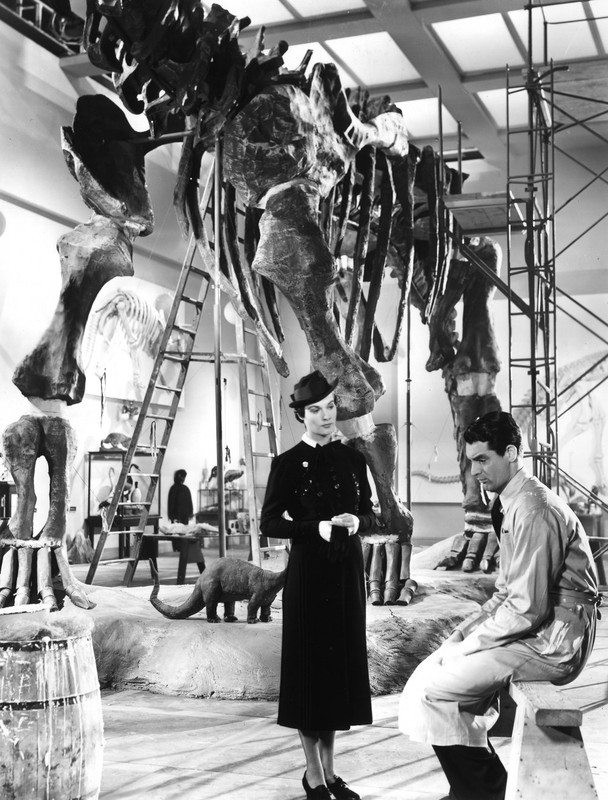
Billy Wilder, one of American cinema’s premiere writer-directors, has always maintained that movies are “authored,” and has always felt that much of a film’s direction ideally should take place in the writing. Like many of the medium’s great filmmakers, Wilder began his career as a writer, yet he is unique in the extent of his involvement in the development of the material he has directed. Indeed, he has cowritten all twenty-four of his films.
Samuel “Billy” Wilder was born June 22, 1906 in Vienna, in the Austro-Hungarian Empire. After years as a reporter—highlighted by a single day during which he interviewed Richard Straus, Arthur Schnitzler, Alfred Adler, and Sigmund Freud—Wilder gravitated to Berlin. There he worked as a crime reporter, drama critic, and (so he claims) gigolo, before he began to produce scenarios for the booming German film industry, finally writing over two hundred, including the notable precursor of neorealism,
People on Sunday (1929). Wilder, driven by Hitler’s ascendancy, left Berlin; his mother, grandmother, and stepfather, who stayed in Vienna, perished later in the Holocaust. He arrived in Hollywood, with only a temporary visa and almost no English, to share a room and a can of soup a day with the actor Peter Lorre. Later he upgraded his quarters to a vestibule near the woman’s restroom at the Chateau Marmont on Sunset Boulevard.
Wilder began his American career at a moment when studios had begun to let some screenwriters direct their own scripts—or, as one film executive said, let the lunatics take over the asylum—a phenomenon that sparked the careers of a number of remarkable writer-directors (Preston Sturges, John Huston, Joseph Mankiewicz). At the time, Ernst Lubitsch, an émigré from the earlier, silent, period, was head of production at Paramount, where Wilder first flourished, the only time a filmmaker has been in charge of a major studio.
As a contract writer at Paramount, Wilder cowrote a number of films with Charles Brackett, among them
Ball of Fire, directed by Howard Hawks,
Bluebeard’s Eighth Wife and
Ninotchka, both directed by Lubitsch. Although he credits the experience of working with Lubitsch for teaching him much of what he knew about film, Wilder grew increasingly exasperated by the misinterpretation of his work by lesser filmmakers. He resolved to become a director himself.
Wilder’s films show an extraordinary range, from film noir to screwball comedy. Although he claims that as a director he aspired to an unobtrusive style of shooting, all his films, nonetheless are marked by a singular vision—elegant dramatization of character through action, distinctive dialogue, and a sour/sweet, or even misanthropic, view of humanity—qualities that stem, for the most part, from the writing. Wilder’s credits as a director and cowriter
include
Double Indemnity,
Sunset Boulevard,
Sabrina,
Ace in the Hole,
Stalag 17,
The Lost Weekend,
Some Like it Hot, and
The Apartment. Four films directed and cowritten by Wilder have been selected by the National Film Registry of the Library of Congress for recognition and preservation. Only director John Ford, with five, has more.
The office where he goes every weekday is a simple suite on the second floor of a low-rise office building. On the wall across from his desk, in gilt letters eight inches high is the question how would Lubitsch do it? A day bed, like an analyst’s couch, is set against one wall. The opposite wall is decorated with personal photos, including a number of him with some of cinema’s other great writer-directors—John Huston, Akira Kurosawa, and Federico Fellini. Wilder points out a Polaroid collage depicting a paper-strewn desk—“David Hockney’s portrait of my office”—and then, with mercurial amusement, a number of his own creations: a goofy series of plaster casts of a bust of Nefertiti, each painted and decorated with the distinctive features of a number of cultural figures—a Groucho Nefertiti, an Einstein Nefertiti, a Little Tramp Nefertiti. Wilder mentions with some pride the “one-man show” of these figurines that had been presented at a gallery nearby.
Asked about his noted art collection, Wilder says, “I didn’t get rich as a director, I got rich selling art. Thirty-four million dollars to be exact, when it went on sale at Christie’s.” When asked for tips on collecting he says, “Sure, don’t collect. Buy what you like, hold onto it, enjoy it.” Later he would offer a number of other get-rich tips: “Back some pornographic films and then, as a hedge to balance your investment should family values rise, buy stock in Disney.” Also, “Bet consistently against the Los Angeles Rams.”
A restless man, taller than expected, Wilder wears large black-framed glasses, and conducts himself with the air of a benevolent, even exuberant, dictator. When firmly settled in a large chair behind his desk, he says, “Now, you wanted to ask me a question.”
INTERVIEWER
You’re known as a writer and director for your sharp eye. Could that have anything to do with your sense of yourself as an outsider?
BILLY WILDER
Everything was new to me when I arrived in America, so I looked closely. I had arrived in the country on a six-month visitor’s visa, and I had great difficulty obtaining an immigration visa that would allow me to stay on. Also, the status of my English was rather poor. I couldn’t rearrange the furniture in my mouth—the tonsils, the curved palate. I’ve never lost my accent. Ernst Lubitsch, who came in 1922, had a much heavier accent than mine, as did Otto Preminger. Children can get the pronunciation in a few weeks, but English is a tough language because there are so many letters in words that are totally useless.
Though and
through. And
tough!
INTERVIEWER
Coming to the American movie industry at a time when many distinguished German directors were working, did you feel part of a special group?
WILDER
There were some excellent German directors, led by Mr. Lubitsch, but I simply met him and shook his hand; he had no interest in me when I arrived. In fact, he was very reluctant to give jobs to Germans; it was only four years later that he hired me. I had written some pictures in Germany, usually working alone. But when I came here I had to have a collaborator on account of my unsteady English and my knowledge of only about three hundred words. Later I found that if I had a good collaborator it was very pleasant to talk to somebody and not come into an empty office. The head of the writers’ department at Paramount had the good idea to pair me with Charles Brackett, a distinguished man from the East, who had gone to Harvard Law School and was about fifteen years older than I. I liked working with him. He was a very good man. He was a member of the Algonquin round table. He had been the movie critic or theater critic on
The New Yorker in the beginning, the twenties.
One day, Brackett and I were called in to see Lubitsch. He told us he was thinking vaguely about doing an adaptation of a French play about a millionaire—a very straightforward law-abiding guy, who would never have an affair with a woman unless he was married to her. So he married seven times!
That would be Gary Cooper. Claudette Colbert was to be the woman who was in love with him, who’d insist “I’ll marry you, but only to be the final wife.” As the meeting was being adjourned, I said, I have a meet-cute for your story. (A “meet-cute” was a staple of romantic comedies back then, where boy meets girl in a particular way, and sparks fly.) Let’s say your millionaire is an American who is very stingy. He goes to a department store in Nice on the French Riviera where he wants to buy a pajama top, but just the top, because he never wears the pants. She has come to the same counter to buy pajamas for her father, who as it happens only wears the pants. That broke the ice, and we were put to work on that picture, which became
Bluebeard’s Eighth Wife.
Lubitsch, of course, would always find a way to make something better. He put another twist on that meeting. Brackett and I were at Lubitsch’s house working, when during a break he emerged from the bathroom and said, What if when Gary Cooper comes in to the store to buy the pajama top, the salesman gets the floor manager, and Cooper again explains he only wants to buy the top. The floor manager says, Absolutely not, but when he sees Cooper will not be stopped, the floor manager says, Maybe I could talk to the store manager. The store manager says, That’s unheard of! but ends up calling the department store’s owner, whom he disturbs in bed. We see the owner in a close shot go to get the phone. He says, It’s an outrage! And as the owner goes back to his bed you see that he doesn’t wear pajama pants either.
INTERVIEWER
When you first met Lubitsch over lunch, did you think of that meet-cute on the spot?
WILDER
No, I already had that. I had been hoping to use it for something, and when he told us the story of the picture I saw how it might fit. I had dozens of meet-cutes. Whenever I thought of one I’d put it in a little notebook. Back then they were de rigeur, a staple of screwball comedies. Every comedy writer was working on his meet-cutes; but of course we don’t do that anymore. Later, I did a version of the meet-cute for
The Apartment, where Jack Lemmon and Shirley MacLaine, who when they see each other every day have this little routine together. And in
Sabrina, where she reappears and the younger Larrabee, William Holden, doesn’t recognize her—him not recognizing her becomes a kind of meet-cute. When Sydney Pollack was remaking that movie, I told him they should make the Larrabee family’s company a bankrupt company, and Sabrina’s competition for the younger Larrabee the daughter of a Japanese prospective-buyer.
INTERVIEWER
You have a gold-framed legend on the wall across from your desk. How Would Lubitsch do it?
WILDER
When I would write a romantic comedy along the Lubitschian line, if I got stopped in the middle of a scene, I’d think, How would Lubitsch do it?
INTERVIEWER
Well, how did he do it?
WILDER
One example I can give you of Lubitsch’s thinking was in
Ninotchka, a romantic comedy that Brackett and I wrote for him. Ninotchka was to be a really straight Leninist, a strong and immovable Russian commissar, and we were wondering how we could dramatize that she, without wanting to, was falling in love. How could we do it? Charles Brackett and I wrote twenty pages, thirty pages, forty pages! All very laboriously.
Lubitsch didn’t like what we’d done, didn’t like it at all. So he called us in to have another conference at his house. We talked about it, but of course we were still, well . . . blocked. In any case, Lubitsch excused himself to go to the bathroom, and when he came back into the living room he announced, Boys, I’ve got it.
It’s funny, but we noticed that whenever he came up with an idea, I mean a really
great idea, it was after he came out of the can. I started to suspect that he had a little ghostwriter in the bowl of the toilet there.
I’ve got the answer, he said. It’s the hat.
The hat? No, what do you mean the hat?
He explained that when Ninotchka arrives in Paris the porter is about to carry her things from the train. She asks, Why would you want to carry these? Aren’t you ashamed? He says, It depends on the tip. She says, You should be ashamed. It’s undignified for a man to carry someone else’s things. I’ll carry them myself.
At the Ritz Hotel, where the three other commissars are staying, there’s a long corridor of windows showing various objects. Just windows, no store. She passes one window with three crazy hats. She stops in front of it and says, “That is ludicrous. How can a civilization of people that put things like that on their head survive?” Later she plans to see the sights of Paris—the Louvre, the Alexandre III Bridge, the Place de la Concorde. Instead she’ll visit the electricity works, the factories, gathering practical things they can put to use back in Moscow. On the way out of the hotel she passes that window again with the three crazy hats.
Now the story starts to develop between Ninotchka, or Garbo, and Melvyn Douglas, all sorts of little things that add up, but we haven’t seen the change yet. She opens the window of her hotel room overlooking the Place Vendôme. It’s beautiful, and she smiles. The three commissars come to her room. They’re finally prepared to get down to work. But she says, “No, no, no, it’s too beautiful to work. We have the rules, but they have the weather. Why don’t you go to the races. It’s Sunday. It’s beautiful in Longchamps,” and she gives them money to gamble.
As they leave for the track at Longchamps, she locks the door to the suite, then the door to the room. She goes back into the bedroom, opens a drawer, and out of the drawer she takes the craziest of the hats! She picks it up, puts it on, looks at herself in the mirror. That’s it. Not a word. Nothing. But she has fallen into the trap of capitalism, and we know where we’re going from there . . . all from a half page of description and one line of dialogue. “Beautiful weather. Why don’t you go have yourselves a wonderful day?”
INTERVIEWER
He returned from the bathroom with all this?
WILDER
Yes, and it was like that whenever we were stuck. I guess now I feel he didn’t go often enough.
INTERVIEWER
You’ve indicated where Lubitsch got his ideas. Where do you get yours?
WILDER
I don’t know. I just get them. Some of them in the toilet, I’m afraid. I have a black book here with all sorts of entries. A little bit of dialogue I’ve overheard. An idea for a character. A bit of background. Some boy-meets-girl scenarios.
While I was working with Mr. Lemmon for the first time on
Some Like It Hot, I thought to myself, This guy’s got a little bit of genius. I would love to make another picture with him, but I don’t have a story. So I looked in my little black book and I came across a note about David Lean’s movie
Brief Encounter, that story about a married woman who lives in the country, comes to London, and meets a man. They have an affair in his friend’s apartment. What I had written was, What about the friend who has to crawl back into that warm bed?
I had made that note ten years earlier, I couldn’t touch it because of censorship, but suddenly there it was—
The Apartment—all suggested by this note and by the qualities of an actor with whom I wanted to make my next picture. It was ideal for Lemmon, the combination of sweet and sour. I liked it when someone called that picture a dirty fairy tale.
INTERVIEWER
Sunset Boulevard?
WILDER
For a long time I wanted to do a comedy about Hollywood. God forgive me, I wanted to have Mae West and Marlon Brando. Look what became of that idea! Instead it became a tragedy of a silent-picture actress, still rich, but fallen down into the abyss after talkies. “I am big. It’s the pictures that got small.” I had that line early on. Someplace else I had the idea for a writer who is down on his luck. It didn’t quite fall into place until we got Gloria Swanson.
We had gone to Pola Negri first. We called her on the phone, and there was too much Polish accent. You see why some of these people didn’t make the transition to sound. We went to Pickfair and visited Mary Pickford. Brackett began to tell her the story, because he was the more serious one. I stopped him: No, don’t do it. I waved him off. She was going to be insulted if we told her she was to play a woman who begins a love affair with a man half her age. I said to her, We’re very sorry, but it’s no use. The story gets very vulgar.
Gloria Swanson had been a big star, in command of an entire studio. She worked with DeMille. Once she was dressed, her hair done to perfection, they placed her on a sedan and two strong men would carry her onto the set so no curl would be displaced. But later she did a couple of sound pictures that were terrible. When I gave her the script, she said, I
must do this, and she turned out to be an absolute angel.
I used stars wherever I could in
Sunset Boulevard. I used Cecil B. DeMille to play the big important studio director. I used Erich von Stroheim to play the director who directed the first pictures with Swanson, which he in fact did. I thought, Now, if there is a bridge game at the house of a silent star, and if I am to show that our hero, the writer, has been degraded to being the butler who cleans ashtrays, who would be there? I got Harry B. Warner, who played Jesus in DeMille’s biblical pictures, Anna Q. Nilsson, and Buster Keaton, who was an excellent bridge player, a tournament player. The picture industry was only fifty or sixty years old, so some of the original people were still around. Because old Hollywood was dead, these people weren’t exactly busy. They had the time, got some money, a little recognition. They were delighted to do it.
INTERVIEWER
Did you ever feel disappointed with your results, that the picture you had imagined or even written hadn’t turned out?
WILDER
Sure, I’ve made blunders, for God’s sake. Sometimes you lay an egg, and people will say, It was too early. Audiences weren’t ready for it. Bullshit. If it’s good, it’s good. If it’s bad, it’s bad.
The tragedy of the picture maker, as opposed to the playwright, is that for the playwright the play debuts in Bedford, Massachusetts, and then you take it to Pittsburgh. If it stinks you bury it. If you examine the credits of Moss Hart or George Kaufman, no one ever brings up the play that bombed in the provinces and was buried after four shows.
With a picture that doesn’t work, no matter how stupid and how bad, they’re still going to try to squeeze every single penny out of it. You go home one night and turn on the TV and suddenly, there on television, staring back at you, on prime time, that lousy picture, that
thing, is back! We don’t bury our dead; we keep them around smelling badly.
INTERVIEWER
Is there one you have in mind?
WILDER
Don’t make me. I may lose my breakfast.
Now, I do have to admit I was disappointed by the lack of success of some pictures I thought were good, such as
Ace in the Hole. I liked the movie very much but it did not generate any “must-see” mood in audiences.
On the other hand, sometimes you’ll have a rough time, and the film will turn out all right. On
Sabrina I had a very rough time with Humphrey Bogart. It was the first time he’d worked with Paramount. Every evening after shooting, people would have a drink in my office, and a couple of times I forgot to invite him. He was very angry and never forgave me.
Sometimes when you finish a picture you just don’t know whether it’s good or bad. When Frank Capra was shooting Claudette Colbert in
It Happened One Night, after the last shot she said, Will that be all Mr. Capra?
We’re all done.
All right. Now why don’t you go and fuck yourself. She thought the picture was shit, but she won the Academy Award for it.
So you’re never quite sure how your work will be received or the course your career will take. We knew we’d gotten a strong reaction at the first big preview of
Sunset Boulevard. After the screening, Barbara Stanwyck went up and kissed the hem of Gloria Swanson’s robe, or dress, or whatever she was wearing that night. Gloria had given such an incredible performance. Then in the big Paramount screening room, Louis B. Mayer said loudly, We need to kick Wilder out of America if he’s going to bite the hand that feeds him. He was with his contingent from MGM, the king then, but in front of all his department heads, I told him just what he could do. I walked out just as the reception was starting.
Although the movie was a great success, it was about Hollywood, exaggerated and dramatized, and it really hit a nerve. So on the way down the steps I had to pass all those people from MGM, the class studio . . . all those people who thought this picture would soil the taste of Hollywood.
After
Sunset Boulevard, Brackett and I parted friends. Twelve years together, but the split had been coming. It’s like a box of matches: you pick up the match and strike it against the box, and there’s always fire, but then one day there is just one small corner of that abrasive paper left for you to strike the match on. It was not there anymore. The match wasn’t striking. One of us said, Look, whatever I have to give and whatever you have to offer, it’s just not enough. We can end on the good note of
Sunset Boulevard. A picture that was revolutionary for its day.
INTERVIEWER
How do collaborators work together?
WILDER
Brackett and I used to share two offices together with a secretary in between. When we were writing he always laid down on the couch in my office while I would walk around with a stick in my hand.
INTERVIEWER
Why the stick?
WILDER
I don’t know. I just needed something to keep my hands busy and a pencil wasn’t long enough. He always had the yellow legal tablet, and he wrote in longhand, then we’d hand it to the secretary. Brackett and I would discuss everything, the picture as a whole, the curtain situations—first act, second act and then the end of the picture—and the curtain lines. Then we would break it down and go to a specific scene and discuss the mood and so forth, then we’d figure out what bit of the story we’d tell in those ten pages of the scene.
INTERVIEWER
Was it the same working with I. A. L. Diamond?
WILDER
Pretty much the same as with Brackett. Discuss the story, break it down into scenes, and then I would dictate and he would type. Or he would sit there thinking, and I would write on a yellow tablet and show it to him.
How’s this? I’d say.
No. No good, he’d say. Never in an insistent way, however.
Or he might suggest something to me, and I’d shake my head. He’d just take it, tear it up, and put it in the wastebasket, and we’d never come back to it.
We had a great deal of trust in each other. But sometimes with writing you just can’t tell, especially if you’re writing under pressure. Diamond and I were writing the final scene of
Some Like It Hot the week before we shot it. We’d come to the situation where Lemmon tries to convince Joe B. Brown that he cannot marry him.
“Why?” Brown says.
“Because I smoke!”
“That’s all right as far as I’m concerned.”
Finally Lemmon rips his wig off and yells at him, “I’m a boy! Because I’m a boy!”
Diamond and I were in our room working together, waiting for the next line—Joe B. Brown’s response, the final line, the curtain line of the film—to come to us. Then I heard Diamond say, “Nobody’s perfect.” I thought about it and I said, Well, let’s put in “Nobody’s perfect” for now. But only for the time being. We have a whole week to think about it. We thought about it all week. Neither of us could come up with anything better, so we shot that line, still not entirely satisfied. When we screened the movie, that line got one of the biggest laughs I’ve ever heard in the theater. But we just hadn’t trusted it when we wrote it; we just didn’t see it. “Nobody’s perfect.” The line had come too easily, just popped out.
INTERVIEWER
I understand your collaboration with Raymond Chandler was more difficult?
WILDER
Yes. Chandler had never been inside a studio. He was writing for one of the hard-boiled serial magazines,
The Black Mask—the original pulp fiction—and he’d been stringing tennis rackets to make ends meet. Just before then, James M. Cain had written
The Postman Always Rings Twice, and then a similar story,
Double Indemnity, which was serialized in three or four installments in the late
Liberty magazine.
Paramount bought
Double Indemnity, and I was eager to work with Cain, but he was tied up working on a picture at Fox called
Western Union. A producer-friend brought me some Chandler stories from
The Black Mask. You could see the man had a wonderful eye. I remember two lines from those stories especially: “Nothing is emptier than an empty swimming pool.” The other is when Marlowe goes to Pasadena in the middle of the summer and drops in on a very old man who is sitting in a greenhouse covered in three blankets. He says, “Out of his ears grew hair long enough to catch a moth.” A great eye . . . but then you don’t know if that will work in pictures because the details in writing have to be photographable.
I said to Joe Sistrom, Let’s give him a try. Chandler came into the studio, and we gave him the Cain story
Double Indemnity to read. He came back the next day: I read that story. It’s absolute shit! He hated Cain because of Cain’s big success with
The Postman Always Rings Twice.
He said, Well, I’ll do it anyway. Give me a screenplay so I can familiarize myself with the format. This is Friday. Do you want it a week from Monday?
Holy shit, we said. We usually took five to six months on a script.
Don’t worry, he said. He had no idea that I was not only the director but was supposed to write it with him.
He came back in ten days with eighty pages of absolute bullshit. He had some good phrases of dialogue, but they must have given him a script written by someone who wanted to be a director. He’d put in directions for fade-ins, dissolves, all kinds of camera moves to show he’d grasped the technique.
I sat him down and explained we’d have to work together. We always met at nine o’clock, and would quit at about four-thirty. I had to explain a lot to him as we went along, but he was very helpful to me. What we were doing together had real electricity. He was a very, very good writer—but not of scripts.
One morning, I’m sitting there in the office, ten o’clock and no Chandler. Eleven o’clock. At eleven-thirty, I called Joe Sistrom, the producer of
Double Indemnity, and asked, What happened to Chandler?
I was going to call you. I just got a letter from him in which he resigns.
Apparently he had resigned because, while we were sitting in the office with the sun shining through, I had asked him to close the curtains and I had not said
please. He accused me of having as many as three martinis at lunch. Furthermore, he wrote that he found it very disconcerting that Mr. Wilder gets two, three, sometimes even four calls from obviously young girls.
Naturally. I would take a phone call, three or four minutes, to say, Let’s meet at that restaurant there, or, Let’s go for a drink here. He was about twenty years older than I was, and his wife was older than him, elderly. And I was on the phone with
girls! Sex was rampant then, but I was just looking out for myself.
Later, in a biography he said all sorts of nasty things about me—that I was a Nazi, that I was uncooperative and rude, and God knows what. Maybe the antagonism even helped. He was a peculiar guy, but I was very glad to have worked with him.
INTERVIEWER
Why have so many novelists and playwrights from the East, people like F. Scott Fitzgerald and Dorothy Parker, had such a terrible time out here?
WILDER
Well, because they were hired for very big amounts of money. I remember those days in New York when one writer would say to the other, I’m broke. I’m going to go to Hollywood and steal another fifty thousand. Moreover, they didn’t know what movie writing entailed. You have to know the rules before you break them, and they simply didn’t school themselves. I’m not just talking about essayists or newspapermen; it was even the novelists. None of them took it seriously, and when they would be confronted by their superior, the producer or the director, who had a louder voice and the weight of the studio behind him, they were not particularly interested in taking advice. Their idea was, Well, crap, everybody in America has got a screenplay inside them—the policeman around the corner here, the waiter in Denver.
Everybody. And his
sister! I’ve seen ten movies. Now, if they would only let me do it my way . . . But it’s not that easy. To begin to make even a mediocre film you have to learn the rules. You have to know about timing, about creating characters, a little about camera position, just enough to know if what you’re suggesting is possible. They pooh-poohed it.
I remember Fitzgerald when he was working at Paramount and I was there working with Brackett. Brackett, who was from the East, had written novels and plays, and had been at Paramount for years. Brackett and I used to take breaks and go to a little coffee joint across the street from the studio. Oblath’s! we used to say. The only place in the world you can get a greasy Tom Collins. Whenever we saw Scott Fitzgerald there, we’d talk with him, but he never once asked us anything about writing screenplays.
Pictures are something like plays. They share an architecture and a spirit. A good picture writer is a kind of poet, but a poet who plans his structure like a craftsman and is able to tell what’s wrong with the third act. What a veteran screenwriter produces might not be good, but it would be technically correct; if he has a problem in the third act he certainly knows to look for the seed of the problem in the first act. Scott just didn’t seem particularly interested in any of these matters.
INTERVIEWER
Faulkner seemed to have his difficulties too.
WILDER
I heard he was hired by MGM, was at the studio for three months, quit and went back home; MGM never figured it out and they kept sending the checks down to Mississippi. A friend of mine was hired by MGM to do a script and he inherited the office where Faulkner had been working. In the desk he found a yellow legal pad with three words on it: Boy. Girl. Policeman. But Faulkner did some work.
At some point he worked with Howard Hawks on
To Have and Have Not, and he cowrote
The Land of the Pharaohs. On that movie they went way over schedule with production and far past their estimated costs. On screen, there were thousands of slaves dragging enormous stones to build the pyramids. It was like an ant heap. When they finally finished the film and screened it for Jack Warner, Warner said to Hawks, Well, Howard, if all the people who are in the picture come to see it, we may break even.
But there were other writers out here who were clever and good and made a little fortune. The playwrights Ben Hecht and Charles MacArthur, for example. Hecht truly endeared himself to the people he worked with. A producer or director would be in a jam . . . the set built, the leads hired, the shooting begun, only to admit to themselves finally that the script they had was unusable. They would bring out Hecht, and he would lie in bed at Charles Lederer’s house and on a yellow tablet produce a pile of sheets, a screenplay ready to go. They’d take that night’s pages from Hecht’s hands, forward them to Mr. Selznick, who’d fiddle with them, have the pages mimeographed and put in the actor’s hands by morning. It was a crazy way to work, but Hecht took the work very seriously, though not as seriously as he would a play of his. They call that sort of thing script doctoring. If Hecht had wanted, he could have had credit on a hundred more pictures.
INTERVIEWER
Does the script you’ve written change as you direct it?
WILDER
As someone who directed scripts that I myself had cowritten, what I demanded from actors was very simple: learn your lines.
That reminds me. George Bernard Shaw was directing a production of his play
Pygmalion, with a very well-known illustrious actor, Sir Something. The fellow came to rehearsal, a little bit drunk, and he began to invent a little. Shaw listened for a while and then yelled, Stop! For Christ’s sake, why the hell didn’t you learn the script?
Sir Something said, What on earth are you talking about? I know my lines.
Shaw screamed back at him, Yes, you know
your lines, but you don’t know
my lines.
On a picture, I would ask the actors to know their lines. Sometimes they would study the part at night and might ask me to come by to discuss things. In the morning, we would sit in chairs around a long table off to the side and read the day’s scene once more. It was wonderful to work with some actors. Jack Lemmon. If we were to start at nine, he’d be there at eight-fifteen with a mug of coffee and his pages from the night before. He’d say, Last night I was running lines with Felicia—his wife—and had this wonderful idea. What do you think here? And he’d go on. It might be wonderful and we’d use it, or I might just look at him, and then he’d say, Well, I don’t like it either. He worked hard and had many ideas, but he never was interfering.
Sometimes I’d have an actor so stubborn that I’d say, All right, let’s do it two ways. We’d do it my way, and I’d say to my assistant, Print that. Then to the actor, All right, now your way. We’d do it his way with no celluloid in the camera.
INTERVIEWER
What was it like working as a writer for a studio?
WILDER
When I was a writer at Paramount, the studio had a swarm of writers under contract—a hundred and four! They worked in the Writers Building, the Writers Annex, and the Writers Annex Annex. All of us were writing! We were not getting big salaries but we were writing. It was fun. We made a little money. Some like Ben Hecht made a lot of money. All the writers were required to hand in eleven pages every Thursday. Why on Thursday? Who knows? Why eleven pages? Who knows? Over a thousand pages a week were being written.
It was all very tightly controlled. We even worked on Saturdays from nine until noon, knocking off half a day so we could watch USC or UCLA play football in the Coliseum. When the unions negotiated the workweek back to five days, the executives ran around screaming the studio was going to go broke.
There was one guy at the studio whom all the writers turned in their work to—a Yale man who was at
Life when his classmates Henry Luce and Briton Haddon founded the magazine. Everyone at the start of the magazine had the option of getting something like seventy-five dollars a week or part of his salary in
Time stock. Some buildings at Yale were built by people who went for the stock. Our guy at Paramount used to say proudly, I went for the cash.
INTERVIEWER
What happened to the thousand-plus pages a week that were being generated?
WILDER
Most of the writing just gathered dust. There were five or six producers, each specializing in different kinds of pictures. They would read the writing over the weekend and make comments.
INTERVIEWER
What were the producers’ comments like?
WILDER
I was talking once with a writer who had worked at Columbia who showed me a script that had just been read by Samuel Briskin, one of the big men at that studio. I looked at the script. On every page, there was at the bottom just one word:
improve.
INTERVIEWER
Like
The New Yorker editor Harold Ross’s imperative “make better.”
WILDER
That would be one word too many for these producers. Just
improve.
INTERVIEWER
What about the “Scheherazades” one hears about?
WILDER
They were the guys who would tell producers stories, or the plots of screenplays and books. There was one guy who never wrote a word but who came up with ideas. One of them was: San Francisco. 1906 earthquake. Nelson Eddy. Jeanette McDonald.
Great! Terrific! Cheers from the producers. A film came out of that sentence.
Do you know how Nelson Eddy ended up with his name? He was Eddie Nelson. He just reversed it. Don’t laugh! Eddie Nelson is nothing. Nelson Eddy was a star.
The studio era was of course very different from today. There were many different fiefdoms scattered around town, each producing its own sort of picture. The Paramount people would not converse with the MGM people; wouldn’t even see each other. The MGM people especially would not consort for dinner or even lunch with the people from Fox.
One night before I was to begin
One, Two, Three I had dinner at the home of Mr. and Mrs. William Goetz, who always had wonderful food. I was seated next to Mrs. Edie Goetz, Louis Mayer’s younger daughter, and she asked what sort of picture I was going to make. I told her it was set in Berlin and we’d be shooting in Germany.
Who plays the lead?
Jimmy Cagney. As it happens, it was his last picture except for that cameo in
Ragtime.
She said, Who?
Jimmy Cagney. You know, the little gangster who for years was in all those Warner Brothers . . .
Oh! Daddy didn’t allow us to watch Warner Brothers pictures. She had no idea who he was.
Back then, each studio had a certain look. You could walk in in the middle of a picture and tell what studio it was. Warner Brothers were mostly gangster movies. For a while Universal did a lot of horror pictures.
MGM you knew because everything was white. Mr. Cedric Gibbons, the head of production design, wanted everything white silk no matter where it was set. If MGM had produced Mr. Scorsese’s
Mean Streets, Cedric Gibbons would have designed all of Little Italy in white.
INTERVIEWER
Film really is considered a director’s medium, isn’t it?
WILDER
Film’s thought of as a director’s medium because the director creates the end product that appears on the screen. It’s that stupid auteur theory again, that the director is the author of the film. But what does the director shoot—the telephone book? Writers became much more important when sound came in, but they’ve had to put up a valiant fight to get the credit they deserve.
Recently, the Writers’ Guild has negotiated with the studios to move the writer’s credit to a place just before the director’s, a more prominent position, bumping aside the producers. The producers are screaming! You look at an ad in the papers and they are littered with the names of producers: A So-and-So and So-and-So Production, Produced by Another Four Names! Executive Producer Somebody Else. Things are slowly changing. But even so the position of a writer working with a studio is not secure, certainly nothing like a writer working in the theater in New York. There a playwright sits in his seat in the empty parquet during rehearsals, right alongside the director, and together they try to make the production flow. If there is a problem, they have a little talk. The director says to the writer, Is it all right if the guy who says, Good morning. How are you? instead enters without saying anything? And the playwright says, No! “Good morning. How are you?” stays. And it stays.
Nobody consults the movie writer. In production, they just go wildly ahead. If the star has another picture coming up, and they need to finish the picture by Monday, they’ll just tear out ten pages. To make it work somehow, they add a few stupid lines.
In the studio era, screenwriters were always on the losing end in battles with the director or the studio. Just to show you the impotence of the screenwriter then, I’ll tell you a story from before I became a director. Brackett and I were writing a picture called
Hold Back the Dawn. Back then, no writer was allowed on the set. If the actors and the director weren’t interpreting the script correctly, if they didn’t have the accent on the right word when they were delivering a gag, if they didn’t know where the humor was, a writer might very well pipe up. A director would feel that the writer was creating a disruption.
For
Hold Back the Dawn, we had written a story about a man trying to immigrate into the U.S. without the proper papers. Charles Boyer, who played the lead, is at rope’s end, destitute, stranded in a filthy hotel—the Esperanza—across the border, near Mexicali or Calexico. He is lying in this lousy bed, holding a walking stick, when he sees a cockroach walk up the wall and onto a mirror hanging on the wall. Boyer sticks the end of the walking stick in front of the cockroach and says, “Wait a minute, you. Where are you going? Where are your papers? You haven’t got them? Then you can’t enter.” The cockroach tries to walk around the stick, and the Boyer character keeps stopping it.
One day Brackett and I were having lunch across the street from Paramount. We were in the middle of writing the third act of the picture. As we left our table to walk out, we saw Boyer, the star, seated at a table, his little French lunch spread out before him, his napkin tucked in just so, a bottle of red wine open on the table. We stopped by and said, Charles, how are you?
Oh, fine. Thank you.
Although we were still working on the script, Mitchell Leisen had already begun to direct the production. I said, And what are you shooting today, Charles?
We’re shooting this scene where I’m in bed and . . .
Oh! The scene with the cockroach! That’s a wonderful scene.
Yes, well, we didn’t use the cockroach.
Didn’t use the cockroach? Oh, Charles, why not?
Because the scene is idiotic. I have told Mr. Leisen so, and he agreed with me. How do you suppose a man can talk to some
thing that cannot answer you? Then Boyer looked out the window. That was all. End of discussion. As we walked back to the studio to continue to write the third act, I said to Brackett, That son of a bitch. If he doesn’t talk to the cockroach, he doesn’t talk to
anybody! We gave him as few lines as possible . . . wrote him right out of the third act.
INTERVIEWER
Was that one of the reasons you became a director, the difficulty of protecting the writing?
WILDER
That was certainly one of the reasons. I don’t come from the theater or any dramatic school like the Strasberg school, and I didn’t particularly have ambitions to be a director, to be a despot of the soundstage.
I just wanted to protect the script. It’s not that I had a vision or theory I wanted to express as a director; I had no signature or style, except for what I learned from when I was working with Lubitsch and from analyzing his pictures—to do things as elegantly and as simply as possible.
INTERVIEWER
If you’d always had more respectful directors, such as Lubitsch, would you have become a director?
WILDER
Absolutely not. Lubitsch would have directed my scripts considerably better and more clearly than I. Lubitsch or Ford or Cukor. They were very good directors, but one wasn’t always assured of working with directors like that.
INTERVIEWER
I see Federico Fellini on your wall of photos.
WILDER
He also was a writer who became a director. I like
La Strada, the first one with his wife, a lot. And I loved
La Dolce Vita.
Up above that picture is a photo of myself, Mr. Akira Kurosawa, and Mr. John Huston. Like Mr. Fellini and me, they too were writers who became directors. That picture was taken at the presentation of the Academy Award for best picture some years back.
The plan for the presentation was for three writer-directors to hand out the award—John Huston, Akira Kurosawa, and myself. Huston was in a wheelchair and on oxygen for his emphysema. He had terrible breathing problems. But we were going to make him get up to join us on stage. They had the presentation carefully orchestrated so they could have Huston at the podium first, and then he would have forty-five seconds before he would have to get back to his wheelchair and put the oxygen mask on.
Jane Fonda arrived with the envelope and handed it to Mr. Huston. Huston was to open the envelope and give it to Kurosawa. Kurosawa was to fish the piece of paper with the name of the winner out of the envelope and hand it to me, then I was to read the winner’s name. Kurosawa was not very agile, it turned out, and when he reached his fingers into the envelope, he fumbled and couldn’t grab hold of the piece of paper with the winner’s name on it. All the while I was sweating it out; three hundred million people around the world were watching and waiting. Mr. Huston only had about ten seconds before he’d need more oxygen.
While Mr. Kurosawa was fumbling with the piece of paper, I almost said something that would have finished me. I almost said to him, Pearl Harbor you could find! Fortunately, he produced the slip of paper, and I didn’t say it. I read the name of the winner aloud. I forget now which picture won—
Gandhi or
Out of Africa. Mr. Huston moved immediately toward the wings, and backstage to the oxygen.
Mr. Huston made a wonderful picture that year,
Prizzi’s Honor, that was also up for the Best Picture Award. If he had won, we would have had to give him more oxygen to recover before he could come back and accept. I voted for
Prizzi’s Honor. I voted for Mr. Huston.
http://www.theparisreview.org/interviews/1432/the-art-of-screenwriting-no-1-billy-wilder