Monday, 8 February 2010

Salinger in Slate


http://www.slate.com/default.aspx?id=3944&qt=salinger

More links...

...have been added.

John Dankworth RIP


Sir John Dankworth

Sir John Dankworth, who died on February 6 aged 82, was a pioneer of modern jazz in Britain, a leading composer of film music, a tireless champion of musical education, regardless of genre, and a superb instrumentalist in his own right.

Published: 11:33AM GMT 07 Feb 2010

Dankworth's care over the shaping and presentation of his music led occasionally to complaints that it was clever, lightweight stuff, lacking the rough passion which many regarded as the mark of authentic jazz, a view summed up by the critic Kitty Grime in the much-quoted phrase "couth, kempt and shevelled". On the other hand, his admirers included such notable figures as Duke Ellington and Dizzy Gillespie.

John Philip William Dankworth was born in Walthamstow on September 20 1927. Smitten by jazz at an early age, he acquired a second-hand clarinet and was playing in semi-professional dance bands while still at school. In 1944 Dankworth passed the audition to study at the Royal Academy of Music.

His extra-curricular interests had to be kept a closely guarded secret, in particular the fact that he now owned a saxophone, an instrument which was rarely even mentioned within the walls of the Academy. Even so, during his final year he contrived to work regularly as a member of Freddie Mirfield's Garbage Men, a novelty band which toured the lower-echelon music halls.

Following National Service in the RASC, much of it spent playing with an army dance band in Cirencester, Dankworth, along with Ronnie Scott and other ambitious young jazz players, joined the Queen Mary as a musician and sailed for New York on the liner's first post-war civilian voyage. The attraction of the job was the ship's fortnightly turn-round period in New York, during which they were able to hear some of the greatest jazz artists at first hand. For the rest of their lives, both Scott and Dankworth were able to recall these brief visits in vivid detail, in particular the revolutionary bebop of Charlie Parker.

Back in London, Dankworth took casual jobs in dance bands and played jazz whenever the opportunity arose. Dankworth, Scott and other young players would hire a rehearsal room to work on their bebop skills. Eventually, in 1948, they formed themselves into two bands, hired a studio in central London, called themselves Club Eleven (10 musicians and a manager) and began charging admission. Extremely avant garde for its time, Club Eleven attracted enough patrons to sustain it as a venue for several years.

In 1950 Dankworth formed his first band, the Johnny Dankworth Seven, containing some of Britain's leading young soloists. The style was neatly arranged bebop, inspired by Miles Davis's band of the time. Although this enterprise almost collapsed in its early days, a modest growth in the audience for modern jazz allowed it to gain a foothold. Within a year, the Seven, and Dankworth himself, figured among the winners in the annual polls conducted by the music press.

Dankworth did his bit for the export drive by playing and endorsing the Grafton Acrylic alto saxophone, an all-British product with an instantly recognisable plastic body. He was playing it in 1951 when the Seven appeared in one of the two inaugural jazz concerts at the Royal Festival Hall. In the same year the Seven recruited a young and totally inexperienced singer, Cleo Laine.

Dankworth broke up the Seven in 1953 and launched his first big band, consisting of eight brass, five saxophones, rhythm section and three vocalists. It was the first serious and deliberate challenge to Ted Heath, Britain's reigning bandleader, whose immaculately polished, bravura style had never been entirely satisfying to dedicated jazz listeners.

Although much of its time was spent in playing for ballroom dancing, Dankworth's band was essentially a jazz orchestra, with a notable contingent of fine jazz soloists. But Dankworth was not happy with the conventional big band format. In 1956 he disbanded and redesigned the orchestra, with a mixed ensemble of soloists in place of the saxophone section.

For this imaginative combination Dankworth and his chief arranger, Dave Lindup, created a uniquely light but firm jazz sound. In its first year the new band had a hit single with Experiments With Mice, the nursery rhyme Three Blind Mice arranged in the styles of various well-known bands. In 1961 Dankworth scored another hit with African Waltz.

In the mid-1950s the orchestra had a long-running radio series in which Dankworth made a point of introducing guests from other musical genres. These were mainly classical virtuosi, such as the clarinettist Jack Brymer and violinist Kenneth Essex, but the one which he recalled with the greatest affection was Gerard Hoffnung, the comedian and cartoonist, who delivered a remarkable performance of There’s A Small Hotel on the tuba.

In 1960 Dankworth gave up full-time bandleading in order to concentrate on composition. He had already made an impressive debut with the score to Karel Reisz's documentary film We Are The Lambeth Boys (1959). Now he composed and conducted the music for Saturday Night And Sunday Morning (Reisz, 1960) and The Criminal (Joseph Losey, 1960). So successful were these, and so distinctive the music, that the Dankworth sound became inseparably linked with the new wave of British cinema in the 1960s.

Among the best known are The Servant (Losey, 1963), Darling (John Schlesinger, 1965), Modesty Blaise (Losey 1966) and Morgan, A Suitable Case For Treatment (Reisz, 1966). To these were added television themes such as The Avengers (1961) and Tomorrow's World (1966), as well as an endless stream of advertising commercials.

Amidst all this activity, Dankworth contrived to assemble ad hoc bands, to write music for them and to record it. What The Dickens (1963), Zodiac Variations (1964), The $1,000,000 Collection (1969) and Lifeline (1974) were among the most successful. He also wrote, in collaboration with Benny Green, a musical version of Lysistrata, performed at the 1964 Bath Featival, a piano concerto, a string quartet and several choral works.

John Dankworth and Cleo Laine were married in 1958 and their careers were intertwined thereafter. From the mid-1970s, in particular, much of his time was taken up by acting as his wife's musical director. A Cleo Laine song is, generally speaking, a John Dankworth arrangement and some of his most beautiful and delicate writing is to found in the accompaniments he devised for her: the voice-and-clarinet duet version of Thieving Boy, the settings of Shakespeare songs, especially the mind-boggling Compleat Works, and the innocent I'm On A See-Saw.

They were also equal partners in the Wavendon Allmusic Plan, an educational and cultural programme launched in 1969 and based at their home at Wavendon, near Milton Keynes, dedicated to bringing together musicians of all styles and cultures. Also on the premises is The Stables, a concert hall presenting international artists.

In later years, Dankworth joined with his son, Alec, in forming the 12-piece Dankworth Generation Band, made up of their favourite musicians, regardless of age. To perform with it, Dankworth revived the C-melody saxophone, an obsolete and almost forgotten instrument, from which he coaxed a delicate and charmingly gawky tone.

John Dankworth continued performing almost until the end of his life, although his mobility became increasingly restricted. Among the activities which he inaugurated at Wavendon in recent years were informal chats about music by him and an invited guest or two. These inevitably produced fascinating, often indiscreet, reminiscences of his long professional career.

John Dankworth was appointed CBE in 1974 and received a knighthood in the 2006 New Year Honours.

He is survived by Dame Cleo Laine and their two children, the double-bassist Alec Dankworth and the singer and actress Jacqui Dankworth.

http://www.telegraph.co.uk/news/obituaries/culture-obituaries/tv-radio-obituaries/7180882/Sir-John-Dankworth.html

Tangled up in Blue - vocal only

Johnny Cash - Ain't No Grave


From his last (or is that lastest, beacause I'm pretty sure I recall Rubin saying the previous one included his final recordings?) album, American VI: Ain't No Grave

http://www.losthighwayrecords.com/artist/detail.aspx?nid=2680&aid=67

Sunday, 7 February 2010

Salinger documentary on the way


Secret J.D. Salinger Documentary Now Revealed

By NIKKI FINKE Friday January 29, 2010 @ 1:20pm

EXCLUSIVE: Judging by the J.D. Salinger obituaries and tributes, there is just as much interest in the Catcher in the Rye author after his death as there was during his life when he shunned the spotlight for reclusion in Cornish, New Hampshire. Now I can report that Shane Salerno, a 37-year-old screenwriter who’s currently writing Fantastic Voyage for Fox and James Cameron, has directed and produced Salinger, a 2-hour documentary locked late last year after 5 years in the making.

Salerno financed the film out of his pocket, interviewed 150 sources, and accumulated so much information that he collaborated on a 700-page companion book with bestselling author David Shields.

The 150 sources interviewed in the film either worked with Salinger at The New Yorker or had contact with him otherwise, or were greatly influenced by him. The famous names include Philip Seymour Hoffman, Edward Norton, John Cusack, Danny DeVito, John Guare, Martin Sheen, David Milch, Robert Towne, Tom Wolfe, E.L. Doctorow, A. Scott Berg, Elizabeth Frank, Gore Vidal, and many other fans, journalists, filmmakers, playwrights, and artists inspired by Salinger's work.

The film -- kept under the radar until now -- wasn’t done in time for consideration at this year's Sundance Film Festival. As a result, the filmmaker hoped to present it at a spring film festival, like Cannes. It will be shopped shortly by WME Entertainment and Robert Offer for distribution and remake. The book, also complete, will be shopped by IPG’s Brian Lipson and literary agent Henry Dunow.

I first learned about the project last year from some sources who'd been interviewed for it. After I approached Salerno for an interview, I saw a nearly completed cut of the documentary on December 9, 2009, in Technicolor's post-production screening room in Hollywood. I was shown it on condition I waited to write until the film was ready to be unveiled, and that I not divulge all the reveals. Yesterday, after Salinger died, I contacted Salerno and told him I was going to write about the documentary now. He expressed concern that it would seem opportunistic. But by day's end it was clear to both of us that the secret would not keep.

I found the film, which doesn't have narration, to be exhaustively researched and arrestingly powerful. Most importantly, it answers a lot of questions I and everyone have had about the author. There is previously unseen footage and photos, and a rich depiction of that unfathomable period in Salinger's career when The New Yorker magazine was able to publish a new "J.D. Salinger" story fairly regularly.

There also are details of: his WWII soldiering in Normandy and interrogation of Nazi prisoners; his love affair with Eugene O’Neill’s daughter Oona, and the crushing disappointment of losing her to Charlie Chaplin while Salinger fought in Europe; Salinger's habit of locking himself away in his New Hampshire cinderblock bunker for weeks at a time to write; his penchant for taking a week to craft a single sentence; the damage his silences caused his family; the futile efforts of friends to re-introduce him to the world; Salinger's protectiveness towards his work; his refusal to sell anything to Hollywood, turning down 8-figure offers and first-class filmmakers like Billy Wilder and Steven Spielberg; his determination to maintain total control over his prose (so that when a New Yorker editor once added a comma, Salinger never spoke to him again).

Even more intriguing, Salerno's documentary also reports on what J.D. Salinger literary works might be in the famed secret vault, where 45 years of unpublished writings are rumored to be kept.

Salerno told me the project began when he purchased the rights to Paul Alexander's book Salinger: A Biography and tried to turn it into a feature. He realized during interviews with Salinger’s peers that these 80+-year-old men wouldn’t be around much longer. That's when he switched focus to the documentary, which was still based on Alexander's book. Salerno succeeded in getting to many sources just before they died, though sadly didn't get there in time for others.

A feature would have been a challenge anyway, since Salinger was so litigious and protective of his privacy. (He sued successfully to stop a book that contained his unpublished letters, and halted a Catcher in the Rye sequel novel by another author.) Salinger never sued over Alexander’s book, however.

But other attempts to put Salinger on the big screen have been unsuccessful. W.P Kinsella’s book Shoeless Joe incorporated Salinger as a kidnapped character. When it was adapted for the screen into Field of Dreams in 1989, Salinger was turned into a fictionalized reclusive author "Terry Mann" played by James Earl Jones. In another project, Sean Connery acknowledged that the inspiration for his role in 2000's Finding Forrester was Salinger, yet that character was fictionalized as "William Forrester".

Salerno went into the documentary expecting it to be a 6-month project. But it grew into a five-year obsession. During that time, the screenwriter made several 7-figure deals for such projects as the Fox sci-fi fantasy Doomsday Protocol, and the Paramount/Skydance action-comedy License to Steal. So Salerno plowed several million dollars of that money into the documentary, working nights and weekends, and hiring the likes of Buddy Squires, the cinematographer for every Ken Burns documentary.

Why spend all that time and money to reveal information on an author who hated fame? Salerno makes clear his own personal obsession with Salinger, and told me he felt more connected to the writer than any other author's work. Like Catcher in the Rye’s Holden Caulfield, Salerno said he was booted from two schools while trying to find his way. But his connection with Salinger was deeper than that. “I loved his work, and how he had the world at his doorstep, and said no thanks,” Salerno told me. “He somehow understood in 1951 the corrosive effect that fame and money could have on his writing. He was singular, and in this Internet age where people pursue their 15 minutes of fame, nobody did what Salinger did: living in the woods in New Hampshire, writing to please only himself. The biggest challenge was, how far do you pull back the curtain on a mythic figure while preserving his legacy? We answered some questions, but other Salinger mysteries will remain unsolved.”

The obvious question is: did Salerno get Salinger on camera? He would not tell me. But I've learned there's a 5-minute section of the film that was held out of early screenings for security reasons.

http://www.deadline.com/hollywood/secret-j-d-salinger-documentary-book-revealed-and-ive-seen-the-film/#more-23930

Saturday, 6 February 2010

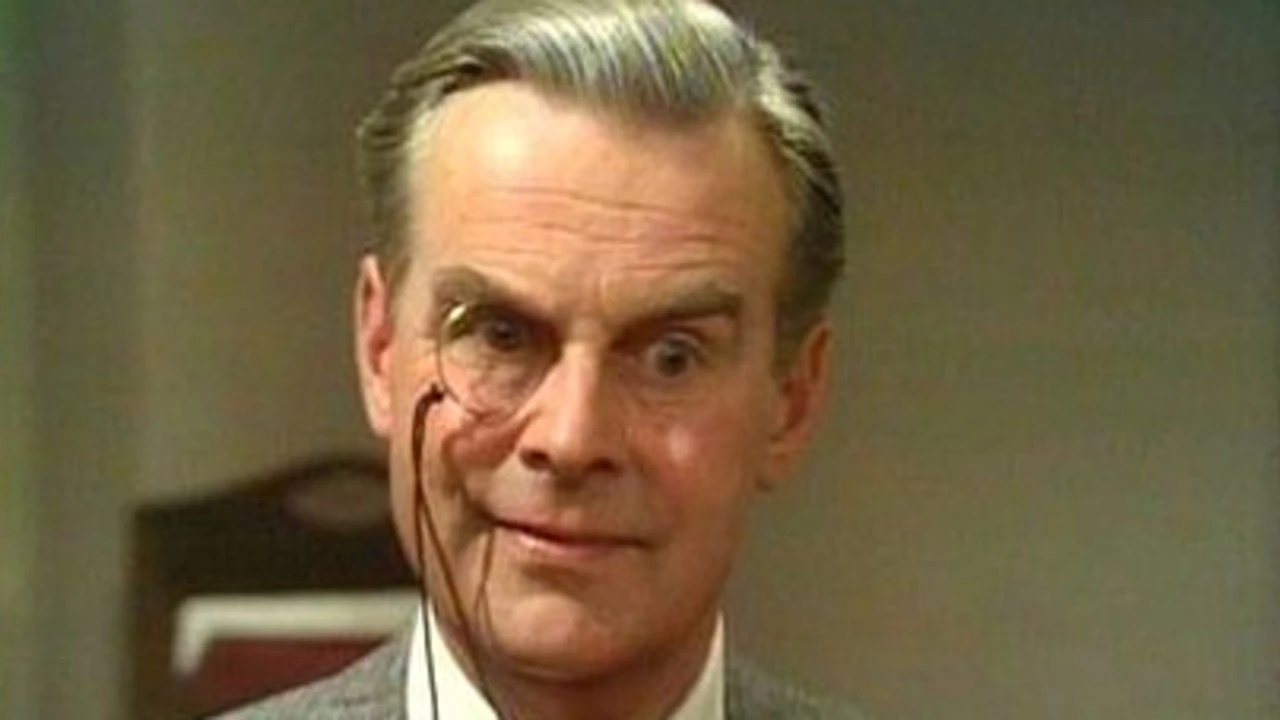
Ian Carmichael RIP


Ian Carmichael as Lord Peter Wimsey

Ian Carmichael

Ian Carmichael, the actor, who has died aged 89, personified with affection and hapless charm the affable, classical silly ass Englishman in scores of revues, light comedies, films and television programmes.

To his wide-eyed boyish grin, bemused courtesy and trusting manner, Carmichael brought an invaluably comic air of innocence to bear on his thousand and one misfortunes. His old-world manners were his technical lifeline, and the lightness of his touch on stage and screen ensured the effect of often-thin material.

He had a particular success in Boulting film comedies of the 1950s. As a conscript in Private's Progress, for example, he immortalised the fears and miseries of a whole generation of national servicemen.

In Brothers In Law he incarnated another gentle innocent at large in a bewildering institution, the legal profession.

But it is probably his portrayals on television of P. G. Wodehouse's dithering Bertie Wooster and Dorothy L. Sayers's elegant Peter Wimsey which etched his gift for the light English comedy of manners most deeply on the nation's imagination.

If he eventually resented his having been type-cast as "the same old bumbling accident-prone clot," the type did his career and the public vivid service and he polished it with care.

Ian Carmichael was born at Hull on June 18 1920. His father was an optician in a family firm of jewellers and silversmiths, and young Carmichael went to preparatory school at Scarborough and Bromsgrove School, Worcestershire. He was not academically inclined.

He preferred to lead the local dance band until the stage took his fancy and he went for a spell to the Royal Academy of Dramatic Art.

After playing a Robot in RUR at the People's Palace, Mile End, in 1939 and Claudius in Julius Caesar (Embassy, Swiss Cottage), he toured in a revue, Nine Sharp, in 1940 before being commissioned for the Army at Sandhurst. During the Second World War he became a major with the 30th Armoured Brigade, and afterwards went back to the theatre. It was while he was touring with the veteran Leo Franklyn in a comic relief double act in The Lilac Domino for seven months in 1949 that he believed he got his best grounding as a light comedian.

After playing Otto Bergmann in a West End revival of Wild Violets, he moved into West End revues, then much in fashion. The Lyric Revue (Lyric, Hammersmith, 1951) transferred to the West End to become The Globe Revue (Globe, 1952). He was the dashingly handsome, song-and-dance star of High Spirits (Hippodrome, 1952). And another Hammersmith revue, At The Lyric, moved to the St Martin's in 1954 under the title of Going To Town.

In these sometimes-brilliant shows which satirised the fashions and foibles of the day, his timing and gravely-expressive features enriched scores of sketches as a polite and easily-embarrassed Briton, trying, say, to change his clothes discreetly or to assemble a recalcitrant deck chair.

Few comedians knew how to look more comically, humanly afraid. His apprehensive subaltern standing rigidly to attention on the parade ground as an off-stage sergeant barked a string of commands which he knew he would never be able, as expected, to repeat to his platoon was a model of silent, facial panic.

Such talent was soon in demand for light comedy, and his harassed television producer in Alan Melville's Simon and Laura (Strand, 1954), trying to prevent the marital tantrums of a famous acting couple from filtering into the soap opera they were performing about their "blissful" marriage, led to other leading West End parts in, for example, Tunnel of Love (Her Majesty's, 1957); The Love Doctor (Piccadilly, 1959), a musical from Moliere; Alec Coppel's murder-farce The Gazebo (Savoy, 1960); Ira Levin's joke about theatre reviewers, Critic's Choice (Vaudeville, 1961); and Melville's Devil May Care (Strand, 1963).

After Carmichael's first New York appearance in the farce Boeing-Boeing in 1965, he was back in London in the Willis Hall-Keith Waterhouse success, Say Who You Are (Her Majesty's, 1965) before what seemed like the only serious-minded play of his career, Shaw's Getting Married (Strand, 1967).

A dullish, two-handed musical comedy in which he played opposite Anne Rogers, I Do! I Do!, (Lyric, 1968) was best remembered for a voice crying out from the front stalls when an off-stage knocking was heard at a door, "For God's sake let them in - whoever it is!"

Carmichael also roved Canada and South Africa in light comedies, and in the 1970s was at the Oxford Festival in Springtime for Henry and in the West End comedy Out On A Limb (Vaudeville) after which he moved back to the North York Moors by the side of the river Esk.

It was the film version of his first straight stage success, Simon and Laura (1955) which established him on the screen. The following year his acting as an artful, conscripted dodger in the Boultings' comedy Private's Progress endeared him to everyone who had ever been called up; and the character occurred, more briefly, again in I'm All Right, Jack (1959).

This time he had just been demobilised and, in looking for work, got caught in a war between capitalists and trades unionists from which he emerged, inadvertently, triumphant.

Meanwhile there had been the title role in the not-very-successfully filmed Kingsley Amis novel, Lucky Jim. Then came Happy Is The Bride, a Boultings joke about rural society weddings, and Left, Right and Centre, in which he played a television personality who stands for Parliament.

In School for Scoundrels (1960) he attended an academy to learn how to shed his gentlemanly in inhibitions in the competition for a young woman's hand, and in Heavens Above (1963) he had a "guest" part as a typically-confused cleric in a Boultings' joke about the Church.

Other films in which he appeared, with variable success, included Light Up The Sky (1960), The Amorous Prawn (1962), Smashing Time (1967), From Beyond The Grave (1972) and The Lady Vanishes (1978) when, somewhat impertinently, he re-created with Arthur Lowe the comic duo of Caldicott and Childers originated by Basil Radford and Naunton Wayne in the Hitchcock original.

Television saved his career in the late 1960s from film roles of increasing predictability; and in The World of Wooster, later known as The World of Wodehouse, he turned with gratitude to Wodehouse's bemused, stuttering Bertie.

With Dennis Price as Jeeves this was something of a triumph. Price may have been the better casting and have given the better performance because he was the better actor but Carmichael could count on his personal charm to see him safely through the 20 highly rated episodes in which both actors played together with matchless skill.

Carmichael also won approval for the series Bachelor Father (1970-71); but he took a special pride in his portrait of Dorothy L. Sayers's fictitious detective, Peter Wimsey, which he played for three years, because he himself had worked so hard to see the stories screened.

Wimsey had always been a hero to him. He envied the sleuth his aristocratic insouciance, his prowess, his style, intellect.

Carmichael directed several televised light entertainments such as Mr Pastry's Progress, It's A Small World and We Beg To Differ.

A cricket lover, he was a member of the MCC and chairman of the Lords' Taverners in 1970. He married Jean Pyman Maclean whom he had met at Whitby during the Second World War. She died in 1983. They had two daughters.

Strange Brew


Brian Wilson, Tony Bennett, Al Jardine and Geordie rapper Canny West sing for Haiti.

Friday, 5 February 2010

Thursday, 4 February 2010

More from the archives

Words of wisdom from Bob - It Takes A Lot To Laugh, It Takes A Train To Cry

WOMEN IN MUSIC #40


The Duke tomorrow (BD wants to watch Sky Sports)

Jim says "I am happy" (Part II)

With regard to the post below titled "Jim says I am happy" I wish to state that when that photo was taken two years ago, I was instructed by the photographer not to look happy, but to look clinically insane. As you can see, I was happy to oblige. For the record, this is a more current picture of me.

Last Night's Set List

On a snowy night in York - at The Habit: -

Falling
Broken Arrow
Tennessee Waltz
Sugar Mountain
Good Phone (
aka Let Your Fingers Do The Walking)
After The Gold Rush

Went to the bar afterwards and the host asked if I knew Neil's song On The Beach. So after the next 'turn' had finished I got up again and performed said song. Thank God he didn't ask for the Chris Rea one. I would have had to leave.

Wednesday, 3 February 2010

Happy Birthday Django Reinhardt

23 January 1910 - okay, so we're a few days late...


Happy Birthday Norman Rockwell


Born 3 February 1894

Photos of the famous

The 'working class hero' proving his arty credentials

Madame Marilyn

Kerouac

Ginsberg

Cher, Sonny and Bob

Some of these are interesting, though I'm not sure they're all 'rare'. Last one's in bad taste, however.

Plenty more here: http://www.cracktwo.com/2010/01/rare-photos-of-famous-people-125-pics.html

Skip James

Born in Time 1994

Monday, 1 February 2010

Jim says: I am happy


Clarity and Memory


I won a Grammy too

The award, for best art direction on a boxed or special limited edition package, was shared by Neil and his art directors Gary Burden and Jenice Heo (pictured left) for the boxed set Neil Young Archives Vol. 1 (1963-1972). Upon his win, Neil told the crowd: “Thanks a lot, everybody.”

The Man of the Hour


I won a grammy


For Best Traditional Folk Album - Vocal or Instrumental

High Wide & Handsome: The Charlie Poole Project [2nd Story Sound Records]
Loudon Wainwright III

Here's a half hour of Loudo recorded following the releaseof Recovery:
http://wpt2.org/media.cfm?id=421&category=30MMH