Showing posts with label Salinger.... Show all posts
Showing posts with label Salinger.... Show all posts
Wednesday, 25 September 2019

Wednesday, 21 August 2019
Previously Unseen Salinger photos emerge

Lotte Jacobi Images of J. D. Salinger displayed at the University of New Hampshire
The University of New Hampshire is excited to announce that a set of photographs of J.D. Salinger, taken by famed female photographer Lotte Jacobi, have recently been digitized and are now available for license. Because of his fierce protection of his privacy, images of Salinger are extremely rare, and the majority of these images have not been seen before.
In 1985, almost 50,000 photographic negatives were bequeathed to UNH by Lotte Jacobi, who spent the last 30 years of her life residing in Deering, N.H. Jacobi is an important figure in the history of photography and had a long and prestigious career. She is famous for her portraits of prominent 20th century figures, such as Albert Einstein, Robert Frost, and J. D. Salinger. Her work is housed in Special Collections at UNH’s Dimond Library.

J. D. Salinger was an American author, most famous for his teenage cult-classic novel, The Catcher in the Rye, although he wrote other stories as well, including Franny and Zooey, and the Nine Stories collection. Like Jacobi, Salinger spent the final years of his life in New Hampshire. Salinger was born in 1919, which makes 2019 the centennial anniversary of his birth.
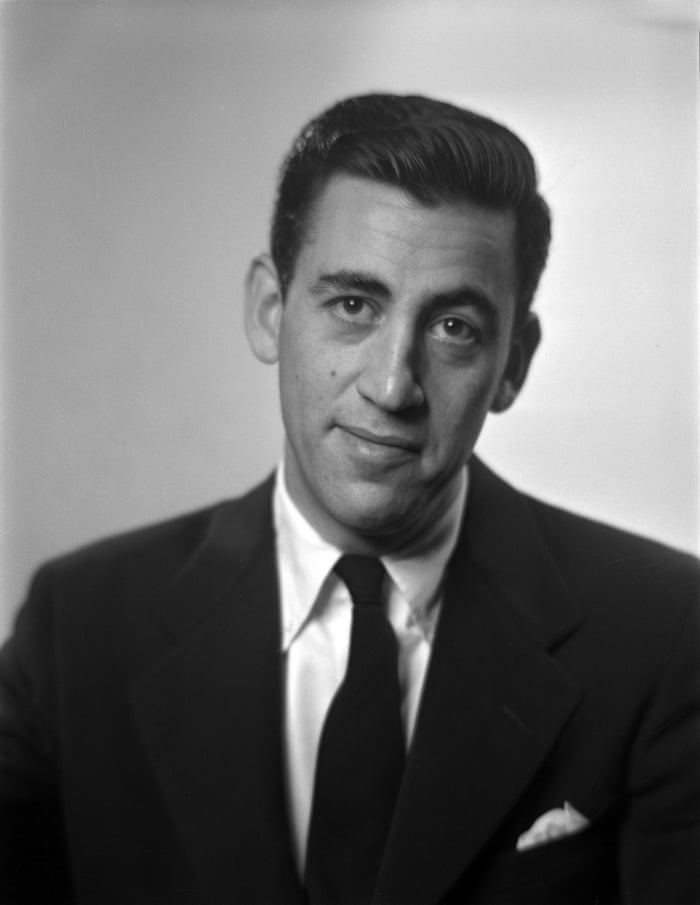
All Images from the Jacobi collection, including the new images of J.D. Salinger, are available for licensing through the UNHInnovation office, for both private and professional use.
Interested parties may contact Beth Sheckler, Licensing Manager of Creative Works, for more information, at beth.sheckler@unh.edu.
J. D. Salinger was an American author, most famous for his teenage cult-classic novel, The Catcher in the Rye, although he wrote other stories as well, including Franny and Zooey, and the Nine Stories collection. Like Jacobi, Salinger spent the final years of his life in New Hampshire. Salinger was born in 1919, which makes 2019 the centennial anniversary of his birth.
All Images from the Jacobi collection, including the new images of J.D. Salinger, are available for licensing through the UNHInnovation office, for both private and professional use.
Interested parties may contact Beth Sheckler, Licensing Manager of Creative Works, for more information, at beth.sheckler@unh.edu.
Others can be seen here:
Wednesday, 14 August 2019
JD Salinger - ebook editions on the way...
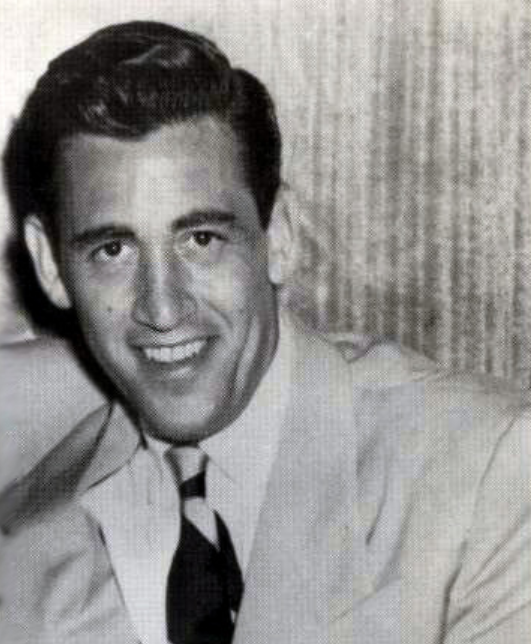
JD Salinger estate finally agrees to ebook editions
Author’s son explains that wish for accessibility has persuaded trustees to look past his father’s dislike of digital media
Sian Cain
After years of refusing to allow publishers to digitise his works, the estate of JD Salinger has announced that the author’s famously small body of work will be published as ebooks for the first time.
Salinger’s son Matt said that the author had always valued accessibility, but preferred the experience of reading a physical book. The Catcher in the Rye author, who died in 2010 at the age of 91, also hated the internet; Matt told the New York Times that he once explained Facebook to his father, who had been horrified that people shared personal information online.
https://www.theguardian.com/books/2019/aug/12/jd-salinger-estate-finally-agrees-to-ebook-editions
Sian Cain
The Guardian
Mon 12 Aug 2019
Mon 12 Aug 2019
After years of refusing to allow publishers to digitise his works, the estate of JD Salinger has announced that the author’s famously small body of work will be published as ebooks for the first time.
Salinger’s son Matt said that the author had always valued accessibility, but preferred the experience of reading a physical book. The Catcher in the Rye author, who died in 2010 at the age of 91, also hated the internet; Matt told the New York Times that he once explained Facebook to his father, who had been horrified that people shared personal information online.
But Matt, who helps run the JD Salinger Literary Trust, said that a letter from a woman in Michigan in 2014, who had a “permanent right-hand disability” and struggled when reading physical books, made him reconsider how best to respect his father’s wishes.
“She took me personally to task in a very sharp but humorous way, and from the moment I read her letter I was committed to figuring out a way to let her read my father’s books, as she so wanted,” Matt said.

“She took me personally to task in a very sharp but humorous way, and from the moment I read her letter I was committed to figuring out a way to let her read my father’s books, as she so wanted,” Matt said.
Matt Salinger by Pascal Perich
“My father always did what he could to keep his books affordable and accessible to as many readers as possible, especially students, and he consistently refused to give up the cheaper paperback editions for more profitable trade paperbacks, even when Hemingway and Fitzgerald and Faulkner had done so, and when Little, Brown was urging him to.
“Making his books accessible to a new generation, many of whom seem to prefer reading on their electronic devices, and – specifically – people with health conditions or impairments that mean they’re unable to read physical books, is a very exciting development, and totally in keeping with his wishes even if he greatly preferred the full tactile experience of a physical book. Would he prefer and encourage readers to stick with the printed books? Absolutely. But not exclusively if it means some not being able to read him at all.”
However, there was no announcement of any official audiobooks. Salinger detested the idea of his books interpreted in any medium beyond the page and often rejected proposals for stage and film adaptations of his work.
Salinger is not the only author to have opposed ebooks. In a 2012 interview, children’s author Maurice Sendak said: “Fuck them, is what I say. I hate those ebooks. They cannot be the future. They may well be. I will be dead, I won’t give a shit.” And in 2009, Fahrenheit 451 author Ray Bradbury told the New York Times: “They wanted to put a book of mine on Yahoo! You know what I told them? ‘To hell with you. To hell with you and to hell with the internet.’”
In February, Matt revealed in the Guardian that decades of unpublished writing by his father will be released over the next 10 years, predicting that it will take five to seven years to finish assembling.
Four works by Salinger will be published as ebooks by Penguin in the UK and Little, Brown in the US on Tuesday: The Catcher in the Rye, Franny and Zooey, For Esmé – With Love and Squalor and Raise High the Roof Beam, Carpenters, and Seymour – An Introduction.
Monday, 4 February 2019
Matt Salinger: "When it's ready, we're going to share it."

Matt Salinger: ‘My father was writing for 50 years without publishing. That’s a lot of material’
In JD Salinger’s centenary year, his son opens up about life with the Catcher in the Rye author – and for the first time, confirms there are unpublished works to come
Lidija Haas
The Guardian
Fri 1 Feb 2019
Among all the dispute and conjecture that has surrounded the life of JD Salinger, one mystery remains especially puzzling. What did he produce after ceasing to publish his writing in 1965, and will it ever be read? It seemed possible that more work would come to light after Salinger’s death in 2010. In 2013 a documentary and accompanying book claimed, among other things, to describe the contents of five new Salinger books that would be forthcoming by 2020 at the latest, yet here we are at his centenary and there has been no sign.
I ask Salinger’s son Matt about the rumours of new material when we meet for breakfast near his home in Connecticut, and he doesn’t mince words. “They’re total trash,” he says. “The specific bullet-point dramatic quote-unquote reveals that have been made are utter bullshit. They have little to no bearing on reality.” He has been reluctant, until now, to talk about his father at all. “I’ve gotten away with not having this kind of conversation for 58 years,” he says. Still, he is ready, now, to confirm that other writing does exist. His father “teemed with ideas and thoughts, and he’d be driving the car and he’d pull over to write something and laugh to himself – sometimes he’d read it to me, sometimes he wouldn’t – and next to every chair he had a notebook.” He assures me that “most all of what he wrote will at some point be shared with the people that love reading his stuff”. When I ask why that moment hasn’t yet arrived, he is disarmingly direct. “It’s not ready. He wanted me to pull it together, and because of the scope of the job, he knew it would take a long time. This was somebody who was writing for 50 years without publishing, so that’s a lot of material. So there’s not a reluctance or a protectiveness: when it’s ready, we’re going to share it.”
Tall and striking, with an air of warmth and amusement that belies his evident doubts about talking to me at all, Matt Salinger is an actor – probably best known for playing Captain America in the 1990 film – and a producer of movies and theatre, most notably Pamela Gien’s The Syringa Tree, which he “put my whole self into for a decade”, producing an international hit. What becomes clear is that he has been immersed in his father’s material for years – pages typed on Underwood and Royal typewriters, as well as what Salinger called “his squibs, or his fragments” on ordinary paper cut into eighths: “a lot of handwritten, very small notes”. When he began work in 2011, Matt never expected it would take eight years. He feels “fortunate”, he says. “Reading this stuff for the first time” has been “an emotional thing”, like having an ongoing dialogue with his father. “A lot of my friends at this age, their parents are dying or have died and they’re just gone, you know. And my father’s not gone. He hasn’t died for me.” Often he will “just have to stop what I am doing”, struck by something “that I recognise that for the right reader, whether it’s millions or hundreds of thousands or tens of thousands or three or one, it could just be the one right reader that needs to read that. I feel the pressure to get this done, more than he did.”
When I ask how much longer it will take, Matt replies: “We’re definitely talking years,” though, he hopes, fewer than 10. “When his widow and I were first gauging what needed to be done after he died, I knew that I wouldn’t be producing any films or theatre for a while and I knew that I would only be doing enough acting to keep my family’s health insurance.” Often people will approach Matt in public, at a ski resort or bike repair shop – “it’s always my credit card that does me in!” – with “a cri de coeur”, pleading to know if or when more work will appear. One older woman said she didn’t want to die without having read what more there is. “If that’s not pressure …” he says. “I don’t take any of this lightly.” He adds, “I don’t owe an apology, I don’t think, but your readers should know that we’re going as fast as we freaking can.”
Of the rumours that have spread, Matt laughs that “anyone that understood my father at all would find the idea hysterically funny that he would write a book about his first brief marriage. It’s so far beyond the realm of plausibility.” He’s unwilling, at this point, to reveal anything specific, though it’s clear that there will be more about the Glass family, who inhabit many of his best published stories. He says there’s “no linear evolution” in the later work: “It becomes clear that he was after different game.” Matt believes the new work “will definitely disappoint people that he wouldn’t care about, but for real readers … I think it will be tremendously well received by those people and they will be affected in the way every reader hopes to be affected when they open a book. Not changed, necessarily, but something rubs off that can lead to change.”
Matt was born in 1960 and immortalised a year later in the dedication to Franny and Zooey (Salinger writes that he offered the book up to the New Yorker’s editor, William Shawn, “as nearly as possible in the spirit of Matthew Salinger, age one, urging a luncheon companion to accept a cool lima bean”). By the time Matt came along, the second child of his father’s second marriage, in 1955, to Claire Douglas, Salinger had already published most of the work on which his monumental reputation rests. After the perennial bestseller The Catcher in the Rye (1951) came For Esmé – with Love and Squalor, Franny and Zooey, Raise High the Roof Beam, Carpenters (the last three mostly consist of stories that appeared in the New Yorker from the late 1940s to 1950s), and then that final New Yorker story, “Hapworth 16, 1924,” in June 1965.
As a child, Matt didn’t hear much about his father’s work. “We were more likely to talk about the Dartmouth football team, or what are we going to do when I pick you up on Wednesday.” He speaks of the respect his father had for children: “He did see the world as something that will just work on fucking you up, if allowed to. He had a real belief and even reverence for the innate intelligence and beauty of kids before they’re homogenised.” Matt’s sister, Margaret, who is four years older than him, offered in her 2000 memoir Dream Catcher a much darker portrait of their parents and childhood, which Matt refuted in print as “gothic tales”. (These days he keeps her informed about plans for the centenary and says: “I only wish her happiness.”) JD Salinger’s first marriage, to a German woman just after the second world war, lasted less than a year. After his divorce from Matt and Margaret’s mother in the 1960s, he eventually married Colleen O’Neill, who now has joint charge of his literary trust with Matt.
That means being on the first line of defence, “fighting lawsuits and tilting at windmills”, fending off what Salinger called “wanters” (I can’t quite tell if the “relentless” Harvey Weinstein, who was “after me forever” to get a film of Catcher off the ground, counts as one of these), and hindering, for instance, the republication of several early stories that Salinger did not want collected. (His father’s feeling about those stories, which were “youthful exercises, part of his process, his development as an artist,” seemed to Matt to be akin to “when you’re having a bad night and you’re trying to go to sleep and you think of things and you just have that wince, ‘Did I really say that?’ or ‘Did I really do that?’ …. There was also more ego in those, he called himself a showoff when he was young.”) Matt has been “keeping up that vigilance. And it’s not a sporting exercise, I don’t do it lightly, it’s no fun. I do it because my father would have done it and out of love for him, and out of love and protectiveness for his work and his books.” He has made himself an expert in international copyright law, and speaks with energy about “European countries where their law came more from Hegel than from Locke.” In the cottage industry of Salinger quasi-biography, he identifies a “weird sort of inverse relationship,” in which “the better somebody knew my father, the less likely they were going to be to talk to anybody. And there was really no middle ground, you either knew him really well and intimately or you just knew him completely casually.” He himself is painstakingly precise in what he says about his father or the work, often second-guessing a word or phrase, reiterating that his father would probably hate what he’s saying and how he’s saying it, or deciding, mid-way through a seemingly harmless sentence, not to finish it. All Salinger’s files, which in his lifetime were kept in a pair of safes in his house – “and thank God they were”, Matt remembers, because otherwise everything would have been lost when Salinger’s house burned down during the 1990s – are now in a high-security storage facility.
Salinger’s desire for privacy, of course, only increased the feverish interest of the press, and his son kept track of the shift in words habitually used to describe him as the decades passed, “seeing when the word recluse started being used. And then that morphed in the common vernacular among journalists to ‘famous recluse’, and then it became ‘infamous recluse’. In the last 10 years, it became ‘notorious recluse’, and if you really think about that word, it’s damning, it has all kinds of psychological overtones, and it’s dishonest, and like so much that’s written, it says more about the person who’s writing it than it does about the subject.” There was nothing sinister or mysterious, Matt insists, in his father’s wish to live and write in private. “He just decided that the best thing for his writing was not to have a lot of interactions with people, literary types in particular. He didn’t want to be playing in those poker games, he wanted to, as he would encourage every would-be writer to do, you know, stew in your own juices.” Salinger gives a vivid, impromptu impression of his father, on the phone, clearing his throat: “Sorry Matt, God, I haven’t used my voice in three days.” Time alone was simply “what he needed for his work, and his work was everything to him”. The rest, Matt says, “is just noise and mythologising and pathologising and people’s own neurosis”.
At one point he shows me a copy of one of the small, handwritten notes that he came across recently, as “an offering or a gesture” to Salinger’s readers. “Anyone that loved his writing and thinks they cared for him in a certain way might have been alarmed or concerned at so much of what’s been written,” he thinks, and he wants them to get “a glimpse” at how Salinger was feeling late in life. The piece, “like a haiku in a way”, describes a moment of unexpected and “still, not disquieting” happiness while resting, having been up working at the typewriter since six that morning: “and, through the window by the bed he saw that snow was falling without rush but copiously into the grayness, the December unsunniness of the late afternoon, and it was suddenly, bliss, sheer bliss, to be alive and watching and about to fall asleep, nearing sleep. Bliss. Thank you, God!”
He is currently deciding what should be included in an exhibition at the New York Public Library in October – “talk about things that go against my nature!” – that will have some manuscripts, photographs, objects, letters. But, he promises: “We’re never going to be merchandising anything. There’s never going to be a Salinger vodka.” Going through some of the hundred or so letters his father wrote him, “often funny as hell”, dating from the early 1970s to 2009, he offers to read some to me. A letter from 1976 links an interpretation of Shakespeare’s Julius Caesar with the TV journalist Dan Rather’s soppy coverage of Nixon’s resignation and with a tennis match between Chris Evert and Evonne Goolagong, whom he sees as “like some Star Trek girl from outer space ... Too peace-loving, too placid to be effective against any of the hustlers from Earth.” He writes:
“There’s probably no limit to the extremes of infantile and Zoo-like behavior adults will take to, or revert to, if they’re in a group (which means any number of people in excess of two – and on some occasions two’s a mob, especially if there’s booze around), and if the organised shit-throwing is given the permissive, O.K. general heading of Fun & Games, or if it’s vaguely categorized as Letting Off a Little Steam Once in a While Never Hurt Anybody, Mac. Oh, groups at large give me the willies, Da. Group enthusiasm, of any kind, either for cheering or lynching, makes me very uneasy …”
Elsewhere he expresses delight in catching one of Matt’s appearances on TV (he praised his honesty and brilliance, “right in the middle of all that SHIT!!”). Other letters are very emotionally direct. Going through “all those old papers and letters yesterday made me all the more aware how happy and relieved I am to be living in the present, not the past. I can’t say I cared much for the War or military school or my childhood. These Cornish years with you and Peggy and this house and you and the fields and my notebooks and work and you and Lili and Schotland and Nice Doggie and Rosie and you and Sri. R. and the Nuremberg Egg and our trips to London and Lake Placid and Dublin and Montreal and Andover – these years have been what I would call my real life.”
The preparation of his father’s writing is, Matt feels, the most meaningful work he could be doing. “You’re only given one life. Most of the movies that I produced were crap.” He also assures readers that “when my father said that everything he has to say is in his fiction, believe it – it’s there. I think when more of his writing is made accessible, he covers everything that the discerning reader would care about. My job is to help that happen as soon as it can, and stay out of the way.” He adds: “Whatever I have to offer up on his behalf, I’ll certainly do with more belief and faith and love than I offered that lima bean to whoever it was. And hope.”
Tuesday, 15 May 2018
J. D. Salinger and the Nazis
I know, I know... the title sounds like one of those God-awful Channel 4 type documentaries where you can substitute 'Pyramids' or 'Sharks' for 'Nazis,' but...

J. D. Salinger and the Nazis
Eberhard Alsen
Uncovering the impact of Salinger's World War II experience
Before J.D. Salinger became famous for his 1951 novel The Catcher in the Rye and infamous as a literary recluse, he was a soldier in World War II. While serving in the U.S. Army's Counter Intelligence Corps (CIC) in Europe, Salinger wrote more than twenty short stories and returned home with a German war bride. Eberhard Alsen, through meticulous archival research and careful analysis of the literary record, corrects mistaken assumptions about the young writer's war years and their repercussions. Though recent biographies and films claim that Salinger regularly participated in combat, Alsen cites military documents showing that his counterintelligence work was well behind the front lines.
Alsen, a longtime Salinger scholar who witnessed the Nazi regime firsthand as a child in Germany, tracks Salinger's prewar experiences in the army, his work for the CIC during significant military campaigns, and his reactions to three military disasters that killed more than a thousand fellow soldiers in his Fourth Infantry Division. Alsen also identifies the Nazi death camp where Salinger saw mounds of recently burned bodies. Revealing details shed light on Salinger's outspoken disgust for American military leaders, the personality changes that others saw in him after the war, and his avoidance of topics related to the Holocaust.
Eberhard Alsen is a professor emeritus of English at Cortland College, State University of New York. He is the author of several books, including A Reader's Guide to J.D. Salinger and Salinger's Glass Stories as a Composite Novel.
Monday, 7 May 2018
Pari: J. D. Salinger's Franny and Zooey in Iran

Sasha von Oldershausen
The Paris Review
5 April 2018
I had a bad experience in Hollywood once. —J. D. Salinger
To understand J. D. Salinger’s opinion of Hollywood, one needn’t look much further than his stories. Holden Caulfield launches into an invective against the industry on the second page of The Catcher in the Rye. Of his brother D. B., Holden says, “Now he’s out in Hollywood, D. B., being a prostitute. If there’s one thing I hate, it’s the movies. Don’t even mention them to me.”
Salinger’s own profound aversion to the industry began when he sold the film rights to his short story “Uncle Wiggily in Connecticut” to the producer Samuel Goldwyn. The story, first published by TheNew Yorker in 1948, offers a scathing portrait of upper-middle-class American society. In Salinger’s opinion, Goldwyn missed the point entirely in the campy and hyperromanticized 1949 Hollywood feature My Foolish Heart.
From that moment on, Salinger vowed to never have his work adapted to the screen again. He refused to sell any more film rights, and he successfully fought a series of copyright-infringement lawsuits over the unauthorized adaptation of his works in film and in any other medium. The current trustees of the Salinger estate include his widow, Colleen M. Salinger, and his son, Matthew R. Salinger, who have been just as unyielding as the author himself. The infamously litigious estate has fought off the many Western filmmakers who have wanted to adapt Salinger’s work and likely will continue to do so for some time: U.S. copyright law ensures that intellectual property is protected for the lifetime of the author plus an additional seventy years. Yet in the nineties, a gap in international copyright laws enabled one unlikely director to slip through the cracks.
The virtually nonexistent relations between the United States and Iran extend to their copyright relations. While many countries have agreed to international standards such as the Berne Convention, which affords foreign artists the same copyright protections countries offer to their own artists, Iran has not. And this is how the Iranian director Dariush Mehrjui—one of the premier auteurs of Iran’s New Wave cinema—seized the opportunity that no Western filmmaker could.
In 1995, Mehrjui released his film Pari, a composite of Franny and Zooey and “A Perfect Day for Bananafish,” from Salinger’s Nine Stories. Mehrjui, who was educated in the United States and studied at UCLA, no doubt read Salinger throughout his schooling there, if he hadn’t already done so in his homeland. In Iran, certain Western artists are exalted to mythic proportions. It’s almost impossible to find any one of the small smoke-filled Tehran coffee shops that hasn’t played Pink Floyd’s Dark Side of the Moon at least once this week. And at any given bookstore, one would be likely to find translations of Salinger, Steinbeck, and Sontag nestled among Iran’s own literary giants—Forough Farrokhzad, Sadegh Hedayat, Hafez, Ferdowsi, and Rumi.
In classic Iranian New Wave fashion, Mehrjui’s visual retelling of Salinger’s stories is allegorical and poetic. He uses symbolism to translate the incisive and dialogue-heavy characterizations for which Salinger is famous. Due to the Islamic regime’s rules about the expression of modesty, Mehrjui could not shoot his Zooey character steeped in a bathtub, as he appears in Salinger’s work, and so the director explores the symbolic potential of water and submersion elsewhere. The film opens with a waterlogged dream sequence in which Pari, the Iranian Franny, is forced underwater by a band of her classmates. In the book, Franny only mentions the dream in passing. In the film, it sets the tone, and the perpetual symbol of murky water recurs throughout.

Mehrjui’s film projects Salinger’s original postwar narratives onto an Iran still reeling from the aftermath of the Iran-Iraq War. Mehrjui’s version of Zooey, here known as Dadashi, is an aspiring actor who for much of the film is dressed for the part of a soldier wielding a gun—a sober reminder of a not-too-distant past. The film’s final scenes culminate in a metanarrative in which Dadashi, acting on set as a fallen soldier who lies dying on a hill, cranes his neck to see women carrying jugs of water up and over the other side.
Yet there are also scenes that seem almost directly lifted from the original stories, with just a touch of Iranian flair. In Salinger’s original, Franny sits across from her boyfriend, Lane, at an upscale restaurant in New Haven, where she’s barely touched the chicken sandwich she ordered, and tells him about the book she is reading, The Way of a Pilgrim, about a monk in Russia who finds solace in a prayer. In Mehrjui’s rendition, Pari does the same opposite her fiancé (lest the Islamic regime come down on the film for its depiction of extramarital relations), telling him about a Sufi book while her chicken kebab grows cold.
Pari struggles with the same critical questions of identity and belief as Franny, only within a much different sociopolitical and cultural milieu. In fact, Salinger’s stories provide Mehrjui with a strange but fitting framework through which to depict the condition of the modern Iranian woman, which in the nineties was rapidly changing. By the year 2000, more women in Iran were attending universities than were men. Pari, like Franny, is depicted as educated and outspoken and vehemently challenges the academic patriarchy. Even her fiancé, who speaks highly of his own work, is bent on getting Pari’s approval. He is visibly injured when she does not sufficiently stroke his ego, but Pari could not care less.
Conversations about belief and spirituality function as a through line in Franny and Zooey. In Pari, the Iranian city of Esfahān provides an idyllic and sacred backdrop for that negotiation. Pari imbibes the silence and space in Esfahān’s most beautiful, iconic mosques.
Child protagonists are as much a key feature of Iranian New Wave cinema as they are of Salinger’s stories. In “A Perfect Day for Bananafish” and in Mehrjui’s adaptation, Seymour—Assad in the film—has encounters with a little girl, who acts as the dulcet foil for the adult tragedy to come. The narrative builds to Seymour’s/Assad’s psychological undoing and eventual suicide. In the story, he shoots himself; in the film, he self-immolates.
It’s possible that Salinger might actually have liked Pari had he watched it. The Iranian film industry is decidedly not Hollywood, and Mehrjui’s sensibilities are subtle and self-aware. But Salinger never did. He was oblivious to the film’s existence until 1998, when Lincoln Center planned to screen the film during a three-week festival celebrating Iranian cinema. Publicity around the event brought the film to Salinger’s attention. Representatives of Salinger responded immediately with a letter, stating that the screening would constitute a copyright breach. Though Lincoln Center might have contested the warning, they decided instead to cancel the screening, perhaps wary of the legal track record of past Salinger adaptations.
In a New York Times article published in response to the controversy, the Iranian director expressed bewilderment over the decision. “I don’t want to distribute the film commercially,” Mehrjui said. “It’s kind of a cultural exchange. I just want to let the film be seen for the critics and the people that follow my work.”
He added, too, that he had written the reclusive author seeking permission to use the material for his movie and, when he hadn’t heard back, decided to move forward with the project. “In our country, we don’t have copyrights,” he said. “We feel free to read and do whatever we want.”
This is, of course, not entirely true. Iran does indeed have domestic copyright laws in place, though they are nearly half a century old, and in many ways, they have failed to provide artists and businesses with the protections they require. These laws, however, do not extend to any work produced outside the country, and Iran boasts a bustling market of pirated films. In busy corridors of Tehran, young boys sell stacks of pirated DVDs in plastic sleeves, their cover art badly photocopied, for less than a dollar. Truth be told, I’ve probably seen more Hollywood blockbusters during my stints in Iran than I have in my lifetime in the United States.
The so-called intellectual freedom Mehrjui described has come at a major cost for Iran in recent years—most especially for Iranian software developers, who, because of the country’s abstention from these international copyright standards, have struggled to target an international market. Recently, Iran has been forced to reconsider and reconfigure its laws. In November 2017, the Ministry of Communications and Information Technology announced that it would draft a new copyright bill for submission to Parliament, which could bring the country one step closer to joining the Berne Convention. Even if Iran does enter these agreements, U.S.-based artists will still likely have a hard time reaping their royalties thanks to ironclad economic sanctions that have made financial transactions with the country impossible.
But were it not for the lack of copyright relations between the United States and Iran, this oblique dialogue between two major artists from seemingly disparate cultures would not exist at all. A couple of years ago, the film was available in its entirety on YouTube, though that’s since been taken down. At Columbia University’s library, an uncirculated copy of Pari has an aggressive-looking FBI sticker slapped across the front that warns of copyright infringement, an offense punishable by up to five years in prison and/or a $250,000 fine.
If you really want to find the film, though, you just have to look. But I won’t tell you where. With all due respect to Mr. Salinger, I, for one, would like to live in a world where both the stories and the film they inspired can coexist.
I had a bad experience in Hollywood once. —J. D. Salinger
To understand J. D. Salinger’s opinion of Hollywood, one needn’t look much further than his stories. Holden Caulfield launches into an invective against the industry on the second page of The Catcher in the Rye. Of his brother D. B., Holden says, “Now he’s out in Hollywood, D. B., being a prostitute. If there’s one thing I hate, it’s the movies. Don’t even mention them to me.”
Salinger’s own profound aversion to the industry began when he sold the film rights to his short story “Uncle Wiggily in Connecticut” to the producer Samuel Goldwyn. The story, first published by TheNew Yorker in 1948, offers a scathing portrait of upper-middle-class American society. In Salinger’s opinion, Goldwyn missed the point entirely in the campy and hyperromanticized 1949 Hollywood feature My Foolish Heart.
From that moment on, Salinger vowed to never have his work adapted to the screen again. He refused to sell any more film rights, and he successfully fought a series of copyright-infringement lawsuits over the unauthorized adaptation of his works in film and in any other medium. The current trustees of the Salinger estate include his widow, Colleen M. Salinger, and his son, Matthew R. Salinger, who have been just as unyielding as the author himself. The infamously litigious estate has fought off the many Western filmmakers who have wanted to adapt Salinger’s work and likely will continue to do so for some time: U.S. copyright law ensures that intellectual property is protected for the lifetime of the author plus an additional seventy years. Yet in the nineties, a gap in international copyright laws enabled one unlikely director to slip through the cracks.
The virtually nonexistent relations between the United States and Iran extend to their copyright relations. While many countries have agreed to international standards such as the Berne Convention, which affords foreign artists the same copyright protections countries offer to their own artists, Iran has not. And this is how the Iranian director Dariush Mehrjui—one of the premier auteurs of Iran’s New Wave cinema—seized the opportunity that no Western filmmaker could.
In 1995, Mehrjui released his film Pari, a composite of Franny and Zooey and “A Perfect Day for Bananafish,” from Salinger’s Nine Stories. Mehrjui, who was educated in the United States and studied at UCLA, no doubt read Salinger throughout his schooling there, if he hadn’t already done so in his homeland. In Iran, certain Western artists are exalted to mythic proportions. It’s almost impossible to find any one of the small smoke-filled Tehran coffee shops that hasn’t played Pink Floyd’s Dark Side of the Moon at least once this week. And at any given bookstore, one would be likely to find translations of Salinger, Steinbeck, and Sontag nestled among Iran’s own literary giants—Forough Farrokhzad, Sadegh Hedayat, Hafez, Ferdowsi, and Rumi.
In classic Iranian New Wave fashion, Mehrjui’s visual retelling of Salinger’s stories is allegorical and poetic. He uses symbolism to translate the incisive and dialogue-heavy characterizations for which Salinger is famous. Due to the Islamic regime’s rules about the expression of modesty, Mehrjui could not shoot his Zooey character steeped in a bathtub, as he appears in Salinger’s work, and so the director explores the symbolic potential of water and submersion elsewhere. The film opens with a waterlogged dream sequence in which Pari, the Iranian Franny, is forced underwater by a band of her classmates. In the book, Franny only mentions the dream in passing. In the film, it sets the tone, and the perpetual symbol of murky water recurs throughout.
Mehrjui’s film projects Salinger’s original postwar narratives onto an Iran still reeling from the aftermath of the Iran-Iraq War. Mehrjui’s version of Zooey, here known as Dadashi, is an aspiring actor who for much of the film is dressed for the part of a soldier wielding a gun—a sober reminder of a not-too-distant past. The film’s final scenes culminate in a metanarrative in which Dadashi, acting on set as a fallen soldier who lies dying on a hill, cranes his neck to see women carrying jugs of water up and over the other side.
Yet there are also scenes that seem almost directly lifted from the original stories, with just a touch of Iranian flair. In Salinger’s original, Franny sits across from her boyfriend, Lane, at an upscale restaurant in New Haven, where she’s barely touched the chicken sandwich she ordered, and tells him about the book she is reading, The Way of a Pilgrim, about a monk in Russia who finds solace in a prayer. In Mehrjui’s rendition, Pari does the same opposite her fiancé (lest the Islamic regime come down on the film for its depiction of extramarital relations), telling him about a Sufi book while her chicken kebab grows cold.
Pari struggles with the same critical questions of identity and belief as Franny, only within a much different sociopolitical and cultural milieu. In fact, Salinger’s stories provide Mehrjui with a strange but fitting framework through which to depict the condition of the modern Iranian woman, which in the nineties was rapidly changing. By the year 2000, more women in Iran were attending universities than were men. Pari, like Franny, is depicted as educated and outspoken and vehemently challenges the academic patriarchy. Even her fiancé, who speaks highly of his own work, is bent on getting Pari’s approval. He is visibly injured when she does not sufficiently stroke his ego, but Pari could not care less.
Conversations about belief and spirituality function as a through line in Franny and Zooey. In Pari, the Iranian city of Esfahān provides an idyllic and sacred backdrop for that negotiation. Pari imbibes the silence and space in Esfahān’s most beautiful, iconic mosques.
Child protagonists are as much a key feature of Iranian New Wave cinema as they are of Salinger’s stories. In “A Perfect Day for Bananafish” and in Mehrjui’s adaptation, Seymour—Assad in the film—has encounters with a little girl, who acts as the dulcet foil for the adult tragedy to come. The narrative builds to Seymour’s/Assad’s psychological undoing and eventual suicide. In the story, he shoots himself; in the film, he self-immolates.
It’s possible that Salinger might actually have liked Pari had he watched it. The Iranian film industry is decidedly not Hollywood, and Mehrjui’s sensibilities are subtle and self-aware. But Salinger never did. He was oblivious to the film’s existence until 1998, when Lincoln Center planned to screen the film during a three-week festival celebrating Iranian cinema. Publicity around the event brought the film to Salinger’s attention. Representatives of Salinger responded immediately with a letter, stating that the screening would constitute a copyright breach. Though Lincoln Center might have contested the warning, they decided instead to cancel the screening, perhaps wary of the legal track record of past Salinger adaptations.
In a New York Times article published in response to the controversy, the Iranian director expressed bewilderment over the decision. “I don’t want to distribute the film commercially,” Mehrjui said. “It’s kind of a cultural exchange. I just want to let the film be seen for the critics and the people that follow my work.”
He added, too, that he had written the reclusive author seeking permission to use the material for his movie and, when he hadn’t heard back, decided to move forward with the project. “In our country, we don’t have copyrights,” he said. “We feel free to read and do whatever we want.”
This is, of course, not entirely true. Iran does indeed have domestic copyright laws in place, though they are nearly half a century old, and in many ways, they have failed to provide artists and businesses with the protections they require. These laws, however, do not extend to any work produced outside the country, and Iran boasts a bustling market of pirated films. In busy corridors of Tehran, young boys sell stacks of pirated DVDs in plastic sleeves, their cover art badly photocopied, for less than a dollar. Truth be told, I’ve probably seen more Hollywood blockbusters during my stints in Iran than I have in my lifetime in the United States.
The so-called intellectual freedom Mehrjui described has come at a major cost for Iran in recent years—most especially for Iranian software developers, who, because of the country’s abstention from these international copyright standards, have struggled to target an international market. Recently, Iran has been forced to reconsider and reconfigure its laws. In November 2017, the Ministry of Communications and Information Technology announced that it would draft a new copyright bill for submission to Parliament, which could bring the country one step closer to joining the Berne Convention. Even if Iran does enter these agreements, U.S.-based artists will still likely have a hard time reaping their royalties thanks to ironclad economic sanctions that have made financial transactions with the country impossible.
But were it not for the lack of copyright relations between the United States and Iran, this oblique dialogue between two major artists from seemingly disparate cultures would not exist at all. A couple of years ago, the film was available in its entirety on YouTube, though that’s since been taken down. At Columbia University’s library, an uncirculated copy of Pari has an aggressive-looking FBI sticker slapped across the front that warns of copyright infringement, an offense punishable by up to five years in prison and/or a $250,000 fine.
If you really want to find the film, though, you just have to look. But I won’t tell you where. With all due respect to Mr. Salinger, I, for one, would like to live in a world where both the stories and the film they inspired can coexist.
See https://www.nytimes.com/1998/11/21/movies/iranian-film-is-canceled-after-protest-by-salinger.html
Saturday, 6 January 2018
J. D. Salinger: still waiting...

By Matthew Haag
The New York Times
25 October 2017
After decades of silence, the famously reclusive writer J. D. Salinger finally had something to tell the world: Leave me alone.
It was November 1974, and Mr. Salinger briefly stepped out from his secluded life in a small New Hampshire town to denounce the unauthorized release of his early works. In that interview, one of his last before his death in 2010, he confirmed he was still writing — long hours and every day, he said.

J. D. Salinger called a reporter at The New York Times in November 1974 to criticize the unauthorized release of some of his early writings.
After decades of silence, the famously reclusive writer J. D. Salinger finally had something to tell the world: Leave me alone.
It was November 1974, and Mr. Salinger briefly stepped out from his secluded life in a small New Hampshire town to denounce the unauthorized release of his early works. In that interview, one of his last before his death in 2010, he confirmed he was still writing — long hours and every day, he said.
J. D. Salinger called a reporter at The New York Times in November 1974 to criticize the unauthorized release of some of his early writings.
Nothing new by Mr. Salinger has been published since 1965, and no one close to him has suggested after his death that anything ever will be. But in 2013, a documentary about the author and a related book offered a bold assertion: He had not only continued writing, but also left detailed notes to his trust about releasing the material between 2015 and 2020.
The blockbuster claim sent a ripple through the publishing world and became the subject of numerous news stories. “Rebel in the Rye,” a new film about Mr. Salinger released in theaters last month, makes clear that he continued to write long after his last work was published.
But it is almost 2018 and no books have been released. So where are they?
“Yeah, what came of those?” Matthew Salinger, the author’s son, said in a brief phone interview this month.
When the author’s widow, Colleen O’Neill, answered the phone at her home in New Hampshire this month, she said, “I’m sorry, I can’t take this phone call,” and hung up.
Mr. Salinger, who controls the J. D. Salinger Literary Trust along with Ms. O’Neill, shares his father’s disdain for the public spotlight. Did his father continue writing late into his life? Did he leave anything to be published?
“You are not going to get an answer from me,” Mr. Salinger said. Before hanging up, he added, “I would consider the source.”
The source was “Salinger,” the 2013 documentary and book by the same name, by David Shields and Shane Salerno, who spent nine years researching and producing them. In the last pages of the book, they cite two “independent and separate” anonymous people who assert that J. D. Salinger left instructions “authorizing a specific timetable” for the release of five additional works.
Over the years, a friend of Mr. Salinger’s, a former lover and even his daughter, with whom he had a difficult relationship, said he continued to write, both exploring new tales and picking up where his published stories had ended. His daughter, Margaret Salinger, wrote in her 2000 memoir, “Dream Catcher,” that her father had shown her his “vault” in his home, where he wrote in privacy and marked manuscripts with colored dots indicating what was to be edited, published or discarded after his death.
Ms. Salinger could not be reached for comment, and her book publicist said she had not worked with Ms. Salinger in years and did not know how to find her.
But all of the claims lacked specificity until “Salinger,” which detailed what Mr. Salinger was said to have written, edited and prepared for publication. The five works came from what Mr. Salinger compiled from 1941 to 2008, according to “Salinger.”
One new book, “The Family Glass,” is said to include five new stories about the Glass family, who also appeared in the 1961 book “Franny and Zooey” and other stories. There would also be a novel set during World War II and based on his first marriage; a novella about his time in the war; and a retooled version of the short story “The Last and Best of the Peter Pans” that would include new stories about the Caulfields, the fictional family in “The Catcher in the Rye,” his signature 1951 book that remains required reading for high school students every year.
Mr. Salerno, who produced and directed the documentary, said in a recent interview that he stood by the claims. He said the veracity of the assertions in “Salinger” could be questioned only if nothing were published by Jan. 1, 2021.
“How did I ever manage to get any of this stuff without Matthew Salinger?” Mr. Salerno wrote in an email. “It’s very simple, despite his fervent hope to be the only source about his father, Matthew Salinger is ultimately just one source. It’s critical to point out the following: Matthew Salinger has never disputed a single fact contained in either the book or film.”
Throughout his life, J. D. Salinger craved control over his writings. When he broke his silence in 1974, he agreed to an interview with The New York Times so he could condemn the publication of “The Complete Uncollected Short Stories of J. D. Salinger, Vols. 1 and 2,” an unauthorized release of his early writings. (“Some stories, my property, have been stolen,” he said.)
His last published work, “Hapworth 16, 1924,” appeared in The New Yorker in June 1965, but Mr. Salinger decided in the mid-1990s to release it as a novella. He chose a small publishing company, Orchises Press, and demanded that the distribution be limited, that bookstores could not discount the price and that his name not be included on the cover.
But shortly before the work’s release, a reporter uncovered details about it in a Library of Congress catalog, and the story spread. Afterward, Mr. Salinger never called Orchises Press to finalize the publication and it was never released, Roger Lathbury, the company’s owner, recounted in New York magazine after the author’s death.
The author’s son and widow have continued to exert strict control over Mr. Salinger’s writings. His literary trust objected when a publisher in Tennessee compiled three of Mr. Salinger’s earliest stories, which it claimed were no longer under copyright, and printed them in an e-book and then in paperback. Two of the stories were first printed in the 1940s in the magazine Story, whose editor, Whit Burnett, is portrayed by Kevin Spacey in “Rebel in the Rye.”
The Tennessee publisher wanted to sell the book, “Three Early Stories,” overseas but claimed the author’s literary trust had worked with international publishers and literary agents to thwart its publication. The publisher, the Devault-Graves Agency, sued the trust but dropped the case in 2015.
As for whether Mr. Salinger’s fans should believe new books are coming, his son declined to say. Maybe one day he will reveal if any exist, Matthew Salinger said.
Monday, 6 November 2017
This is J.D. Salinger and no, he won't be returning your call...

Salinger’s Nightmare
An unemployed actor tracked down Salinger to get his permission to adapt The Catcher in the Rye.
Bill Barich
The trip to New Hampshire proved exhausting. Traveling on the cheap, Mahan boarded a small, piston-driven plane in Burbank that stopped twelve times en route to New York, where he made his way to the Saint Regis Hotel. His sister Colleen, a secretary to David O. Selznick, was staying there with her boss and some other staffers. Selznick was out for the evening, so Mahan took a shower, ordered a chicken sandwich, and helped himself to a drink from the well-stocked bar, careful to choose an off-brand vodka rather than the premium Smirnoff. But he wasn’t cautious enough. Selznick returned early—“a big man,” as Mahan describes him, “expensively dressed, with a heavy shock of pure white hair”—and gently chastised him for drinking the imported Russian vodka instead of the much cheaper domestic stuff.
When Colleen told her boss that Bill was headed to see J. D. Salinger, Selznick was incredulous. “Salinger!” he exclaimed. “I can’t even get near him.”
“I got a telegram from him just the other day,” Mahan said, dipping into his pocket to show it off.
“Let me know how you make out,” said Selznick before heading off to bed.
From Idlewild Airport, Mahan flew to Manchester, New Hampshire, then rented a car and drove the hundred or so miles to Cornish. He wasn’t impressed: the place lacked any amenities and didn’t strike him as a “real town,” just a hamlet. Most residents, Salinger included, conducted their business affairs on the other side of the Connecticut River in Windsor, Vermont. In his early days in Cornish, before he became more withdrawn, Salinger was known to be reasonably sociable. He liked to hang out with a group of Windsor High students, inviting them to his place to watch movies and listen to records, but when he agreed to be interviewed for the school paper, the subsequent uproar and attention convinced him to cut off all contact.
Mahan checked into a Windsor hotel and pumped the locals at a corner bar for directions to Salinger’s house. He had no trouble finding it: a roomy, wood-frame place he recognized from the photos that had accompanied a recent spread in Life magazine. The house had a gambrel roof, a Jeep in the yard, and a superb view of Mount Ascutney. The gate was wired shut, but Mahan opened it and knocked on the front door. No one answered. He suspected Salinger might be working in a smaller cinder-block house nearby, also pictured in Life, and started for it only to change his mind. Interrupting a writer who was concentrating might be unwise. He returned to his hotel to clean up and rest.
On his second run to the house, he spotted the Jeep crossing the bridge to Windsor and followed it. Sure enough, Salinger was at the wheel. He parked by the Windsor News general store and walked in. Mahan jotted in his journal, “About six feet one, maybe even two. Very slender. Gaunt bony face … He was wearing regular businessman’s hat and a light colored raincoat. Light brown I think. He is very heavy bearded.” He took up a position outside the store, ready to intercept Salinger when he left.
Mahan recorded the ensuing conversation in minute detail. It bears a fair resemblance to a one-act play bound for the theater of the absurd. Both men were so “deadly serious” that they were unable to find the humor in a situation whereby Salinger steadfastly refused to see the man he was in fact seeing at that very moment. Mahan’s strategy, such as it was, appeared to be based on the same boyish charm that had won him favor as little Bobby Jones. He greeted Salinger by saying, “Hi! I came anyway.”
“Who are you?” Salinger asked, no doubt startled. “What do you want? Who are you?”
“I’m Bill Mahan.”
One can only imagine Salinger’s despair on hearing those words. “Oh, you didn’t,” he said. “Why did you come?”
“Well, I thought if I came to see you personally,” Mahan explained, “you might at least listen to what I have to say.”
“Well, I won’t,” Salinger insisted. “I just don’t see why you came here. What are you going to do?” He was so uncomfortable he looked to Mahan “like someone on the brink of a seizure. He speaks with a heavy New England accent and when he gets excited (which is most of the time) the voice goes up and is as squealy as hell.” Salinger continued, “I don’t understand you people. You wrote to me and I even went to the trouble of sending you a telegram saying no.”
“I know. I remember it. In fact I can quote it verbatim,” said Mahan, probably hoping to score a point.
“I remember it, too. Why didn’t you contact my agent? … You’re all so selfish.” Salinger paused to correct himself. “I can’t say that though. I certainly understand selfishness.”
After a few more volleys, Mahan grasped the error of his ways and admitted he shouldn’t have come. “I’m terribly embarrassed about the whole thing now,” he apologized.
“There’s no point in being embarrassed. We’re both grown men. It’s just that I don’t want to see anyone. What are you going to do?” Salinger repeated, obviously concerned about the welfare of his uninvited guest and what to do about it.
“I don’t really know.”
“Where’s your wife?”
“She’s home.”
“My God, she must think you’re a nut or something.”
“No,” Mahan assured him. “I gambled that I might have a chance at the book. It’s really pretty great, you know.”
Salinger refused to discuss it. “I’m just terribly irritated by the fact that you came after I said no.”
“I’m terribly sorry, too. I didn’t realize that it would upset you like this.”
With rising frustration, Salinger delivered a long lament: “People won’t seem to let me alone. They hang around the house and peek in the windows and upset my wife. They throw beer cans on the lawn. They even bother my children. Reporters follow me on the road … I just feel terribly about this whole thing—that long trip and everything.” He asked again: “What are you going to do now?”
“You don’t have to feel responsible for me,” Mahan suggested.
“But I do feel responsible.” This was a telling moment. In writing a novel that had touched and even altered the lives of so many people, Salinger was forced to consider to what extent he might be responsible for its effect on them. What drew so many pilgrims to his doorstep? (Almost twenty years later, Mark David Chapman would invoke Catcher as his “statement” after assassinating John Lennon.) His rigorous discipline clashed with a desire to be decent, to treat Mahan kindly. There was a monstrous element to his selfishness and isolation, and he appears to have known it. “You made this long trip,” he reiterated, in the grip of an obsession, “and I can’t see you.”
“Right here,” Mahan noted perceptively, “he looked like a really sad little boy with a terrible problem that he could neither solve nor run away from.”
The conversation ground to a halt. As a parting shot, Mahan put yet another request to Salinger. Would he read a story his mother had published in Good Housekeeping ten years ago? To his great credit, Salinger didn’t lose his temper or laugh out loud. Instead he voiced a weary resignation.
“I can’t. I really can’t,” he all but sighed. “It would just lay around and probably get lost. I’m sure it’s valuable to you.” Walking toward the store, he turned back and said, “Please don’t leave it in my car.”
Mahan checked out of his hotel, but he couldn’t tear himself away from Cornish. Despite Salinger’s firm denial, he seemed not at all displeased with the results of his trip; he lingered in its aftermath. Musing over a cup of coffee at Windsor News, he felt he should write a farewell letter to Salinger and deliver it himself. So he did: trudging through the snow with his flashlight to the wired gate.
Through a kitchen window, he could see Salinger fixing dinner, whistling and looking happy. As Mahan looked on, a big white Samoyed bounded out of nowhere, pinning him to the ground and exploring his ear with its tongue. The dog was friendly but disinclined to budge, so Mahan was forced to cry for help.
“Mr. Salinger!” he shouted. “Oh-ooh, Mr. Salinger!”
Salinger came to the rescue. He can’t have been delighted. “My God, it’s you again! What do you want?” He accepted the letter and pulled Mahan to his feet. They proceeded to the porch.
“Since you delivered it in person, I may as well read it,” Salinger said, leaving Mahan to wait outside, still unable to give him the boot, and retreating into the house. On his return, he made no mention of the letter. Instead he spoke with Zen-like economy, saying only four words, “Seven inches expected tonight,” as a light snow began to fall.
They shook hands, and Salinger waved goodbye. Six hours later, Mahan was at the Saint Regis again, regaling David O. Selznick with the tale of his adventure in Cornish. Selznick, impressed with his chutzpah, offered him a job in South America selling a block of twenty-one movies he owned.
But Mahan wasn’t done with Salinger just yet. In May of 1963, Mike Connolly of The Hollywood Reporter ran an item in his column:
J. D. Salinger descended from his ivory tower and slipped his Catcher in the Rye screen rights to producer Bill Mahan, having previously spurned such top moviemakers as Elia Kazan and David O. Selznick. Salinger will be technical advisor. On camera, as narrator, he’ll be portrayed by Kier Dullea.
Whether Mahan was involved in placing the item, an old Hollywood ploy, isn’t known, but he was quick to write Salinger and deny it. “I had nothing to do with it,” he swore, “and I am terribly sorry that misinformation got into print.” The trip to Cornish had turned out to be good luck, he confided, leading to his success with Selznick and his new position as the director Henry Koster’s assistant on the feature film, Take Her, She’s Mine. He closed with a paragraph that must’ve had Salinger pulling out his hair by the roots.
The more I think about it, at the end of this job I believe I’ll come and see you again, and maybe this time you will at least give me the chance to tell you what I would like to do with your book.
Salinger wrote back two days later. Why did he bother to keep the connection alive? It would’ve been easy enough to say nothing. But maybe Mahan’s charm had worked, and Salinger now saw the humor and absurdity of the situation. Certainly the tone of his letter is bemused, even if its message is firm. There would be no movies based on his work, and no further visits from Mahan.
Afterward, Bill Mahan had a checkered career in and around Los Angeles. In 1963, he served as a producer on Strange Lovers, a B-movie about gay men that carried the tagline “a deep penetration into the world of unnatural love.” He also became a successful syndicated newspaper columnist, covering movies, TV, and entertainment. For convincing the actor Jeff Hunter to play the lead in No Man Is an Island, he earned ten thousand dollars and twenty weeks of work on the film. He wrote an autobiography about being a child star, The Boy Who Looked Like Shirley Temple, and, with his sister Colleen, a novel, The Moviola Man.
Fiction was on Mahan’s mind on April 3, 1984, when he composed one last letter to Salinger. His mood was melancholy. He’d gone through a divorce and he was still out there hustling. He addressed Salinger as “Jerry,” spoke of trying to imitate him as a writer, and enclosed a copy of a novel, presumably The Moviola Man. “You’ll enjoy it and you’ll relate,” he asserted. “You are responsible for it.” Responsible—that word again. “It should kind of make you proud because it is a good novel—my new one is even better.” Mahan was ever the optimist: “Not yet sold but it will be.” And he added, “Just wanted you to know that you are (as you were, many years ago worried about) responsible for me—only in a different way.”
This time Salinger chose not to reply.
Digital reproductions of select material from the Bill Mahan Papers (Collection Number 10045) are unrestricted, open to the public, and available online at the American Heritage Center, University of Wyoming. The quotes, letters, and observations attributed to Mahan in this essay, along with the verbatim record of his conversation with Salinger, can be found in Box 3, Folder 4 (J. D.Salinger 1961–70), except for Mahan’s last letter to Salinger from Box 3, Folder 1 (Personal Correspondence 1962–1984).
Bill Barich’s books include Big Dreams, A Pint of Plain, and the racetrack classic Laughing in the Hills.
Bill Barich
The Paris Review
13 April 2017
In 1953, J. D. Salinger fled Manhattan for rural Cornish, New Hampshire, hoping to protect his privacy and find the solitude he needed for his work. The Catcher in the Rye, which spent thirty weeks on the New York Times’ best-seller list, had generated immeasurable publicity and adulation for Salinger, who wanted none of it. Among his new suitors were such Hollywood bigwigs as Samuel Goldwyn and David O. Selznick, both vying for the screen rights to Catcher. They failed to secure Salinger’s approval, as did many others, in turn—but that didn’t stop Bill Mahan, an unemployed former child star and devoted fan from Los Angeles, from giving it a shot. In the early sixties, he resolved to claim the film rights himself, even if it meant disturbing Salinger at home.
Mahan’s account of his unlikely adventure can be found in his papers at the University of Wyoming’s American Heritage Center. On December 1, 1961, he wrote to Salinger by registered mail to share his vision for turning Catcher into an independent feature, with the author retaining “artistic control.” At the age of thirty-one, Mahan had no credits as a producer or a director, and very little money, so he proposed to shoot the film “art-house” style, without changing a word of dialogue. Given the shoestring budget, Salinger would, of course, have to grant him the rights for free. In hopes of sealing the deal, Mahan wrote that he would arrive in Cornish on December 13, whether he’d heard from Salinger or not.
Salinger had fielded more than his fair share of oddball requests over the years, and he knew how to ignore them—but Mahan’s pluck must’ve convinced the author that he really would show up. On December 7, he fired off a telegram that spelled out, in no uncertain terms, his utter disinterest in the proposal. He urged Mahan to stay home.
The message fell on deaf ears. Overjoyed to receive any response at all, Mahan seized on the telegram as a positive sign and decided to go ahead with the plan, believing he could “sell anything to anybody.” He’d learned to rely on his charm—and he had vast stores of confidence, having risen to fame as a child star. From 1936 to 1940, he’d featured in eighteen pictures as Bobby Jones, the youngest member of the Jones family. It was a lucrative comedy franchise, and the public loved little Bobby; a studio press book described the one-hour comedies as “energetic hokum … tolerably amusing in an entirely inconsequential way.” Now, decades later, Mahan had resolved to take that “energetic hokum” of his on the road: he was heading east.
Young Bill Mahan in The Jones Family at The County Fair
The trip to New Hampshire proved exhausting. Traveling on the cheap, Mahan boarded a small, piston-driven plane in Burbank that stopped twelve times en route to New York, where he made his way to the Saint Regis Hotel. His sister Colleen, a secretary to David O. Selznick, was staying there with her boss and some other staffers. Selznick was out for the evening, so Mahan took a shower, ordered a chicken sandwich, and helped himself to a drink from the well-stocked bar, careful to choose an off-brand vodka rather than the premium Smirnoff. But he wasn’t cautious enough. Selznick returned early—“a big man,” as Mahan describes him, “expensively dressed, with a heavy shock of pure white hair”—and gently chastised him for drinking the imported Russian vodka instead of the much cheaper domestic stuff.
When Colleen told her boss that Bill was headed to see J. D. Salinger, Selznick was incredulous. “Salinger!” he exclaimed. “I can’t even get near him.”
“I got a telegram from him just the other day,” Mahan said, dipping into his pocket to show it off.
“Let me know how you make out,” said Selznick before heading off to bed.
From Idlewild Airport, Mahan flew to Manchester, New Hampshire, then rented a car and drove the hundred or so miles to Cornish. He wasn’t impressed: the place lacked any amenities and didn’t strike him as a “real town,” just a hamlet. Most residents, Salinger included, conducted their business affairs on the other side of the Connecticut River in Windsor, Vermont. In his early days in Cornish, before he became more withdrawn, Salinger was known to be reasonably sociable. He liked to hang out with a group of Windsor High students, inviting them to his place to watch movies and listen to records, but when he agreed to be interviewed for the school paper, the subsequent uproar and attention convinced him to cut off all contact.
Mahan checked into a Windsor hotel and pumped the locals at a corner bar for directions to Salinger’s house. He had no trouble finding it: a roomy, wood-frame place he recognized from the photos that had accompanied a recent spread in Life magazine. The house had a gambrel roof, a Jeep in the yard, and a superb view of Mount Ascutney. The gate was wired shut, but Mahan opened it and knocked on the front door. No one answered. He suspected Salinger might be working in a smaller cinder-block house nearby, also pictured in Life, and started for it only to change his mind. Interrupting a writer who was concentrating might be unwise. He returned to his hotel to clean up and rest.
On his second run to the house, he spotted the Jeep crossing the bridge to Windsor and followed it. Sure enough, Salinger was at the wheel. He parked by the Windsor News general store and walked in. Mahan jotted in his journal, “About six feet one, maybe even two. Very slender. Gaunt bony face … He was wearing regular businessman’s hat and a light colored raincoat. Light brown I think. He is very heavy bearded.” He took up a position outside the store, ready to intercept Salinger when he left.
Mahan recorded the ensuing conversation in minute detail. It bears a fair resemblance to a one-act play bound for the theater of the absurd. Both men were so “deadly serious” that they were unable to find the humor in a situation whereby Salinger steadfastly refused to see the man he was in fact seeing at that very moment. Mahan’s strategy, such as it was, appeared to be based on the same boyish charm that had won him favor as little Bobby Jones. He greeted Salinger by saying, “Hi! I came anyway.”
“Who are you?” Salinger asked, no doubt startled. “What do you want? Who are you?”
“I’m Bill Mahan.”
One can only imagine Salinger’s despair on hearing those words. “Oh, you didn’t,” he said. “Why did you come?”
“Well, I thought if I came to see you personally,” Mahan explained, “you might at least listen to what I have to say.”
“Well, I won’t,” Salinger insisted. “I just don’t see why you came here. What are you going to do?” He was so uncomfortable he looked to Mahan “like someone on the brink of a seizure. He speaks with a heavy New England accent and when he gets excited (which is most of the time) the voice goes up and is as squealy as hell.” Salinger continued, “I don’t understand you people. You wrote to me and I even went to the trouble of sending you a telegram saying no.”
“I know. I remember it. In fact I can quote it verbatim,” said Mahan, probably hoping to score a point.
“I remember it, too. Why didn’t you contact my agent? … You’re all so selfish.” Salinger paused to correct himself. “I can’t say that though. I certainly understand selfishness.”
After a few more volleys, Mahan grasped the error of his ways and admitted he shouldn’t have come. “I’m terribly embarrassed about the whole thing now,” he apologized.
“There’s no point in being embarrassed. We’re both grown men. It’s just that I don’t want to see anyone. What are you going to do?” Salinger repeated, obviously concerned about the welfare of his uninvited guest and what to do about it.
“I don’t really know.”
“Where’s your wife?”
“She’s home.”
“My God, she must think you’re a nut or something.”
“No,” Mahan assured him. “I gambled that I might have a chance at the book. It’s really pretty great, you know.”
Salinger refused to discuss it. “I’m just terribly irritated by the fact that you came after I said no.”
“I’m terribly sorry, too. I didn’t realize that it would upset you like this.”
With rising frustration, Salinger delivered a long lament: “People won’t seem to let me alone. They hang around the house and peek in the windows and upset my wife. They throw beer cans on the lawn. They even bother my children. Reporters follow me on the road … I just feel terribly about this whole thing—that long trip and everything.” He asked again: “What are you going to do now?”
“You don’t have to feel responsible for me,” Mahan suggested.
“But I do feel responsible.” This was a telling moment. In writing a novel that had touched and even altered the lives of so many people, Salinger was forced to consider to what extent he might be responsible for its effect on them. What drew so many pilgrims to his doorstep? (Almost twenty years later, Mark David Chapman would invoke Catcher as his “statement” after assassinating John Lennon.) His rigorous discipline clashed with a desire to be decent, to treat Mahan kindly. There was a monstrous element to his selfishness and isolation, and he appears to have known it. “You made this long trip,” he reiterated, in the grip of an obsession, “and I can’t see you.”
“Right here,” Mahan noted perceptively, “he looked like a really sad little boy with a terrible problem that he could neither solve nor run away from.”
The conversation ground to a halt. As a parting shot, Mahan put yet another request to Salinger. Would he read a story his mother had published in Good Housekeeping ten years ago? To his great credit, Salinger didn’t lose his temper or laugh out loud. Instead he voiced a weary resignation.
“I can’t. I really can’t,” he all but sighed. “It would just lay around and probably get lost. I’m sure it’s valuable to you.” Walking toward the store, he turned back and said, “Please don’t leave it in my car.”
Mahan checked out of his hotel, but he couldn’t tear himself away from Cornish. Despite Salinger’s firm denial, he seemed not at all displeased with the results of his trip; he lingered in its aftermath. Musing over a cup of coffee at Windsor News, he felt he should write a farewell letter to Salinger and deliver it himself. So he did: trudging through the snow with his flashlight to the wired gate.
Through a kitchen window, he could see Salinger fixing dinner, whistling and looking happy. As Mahan looked on, a big white Samoyed bounded out of nowhere, pinning him to the ground and exploring his ear with its tongue. The dog was friendly but disinclined to budge, so Mahan was forced to cry for help.
“Mr. Salinger!” he shouted. “Oh-ooh, Mr. Salinger!”
Salinger came to the rescue. He can’t have been delighted. “My God, it’s you again! What do you want?” He accepted the letter and pulled Mahan to his feet. They proceeded to the porch.
“Since you delivered it in person, I may as well read it,” Salinger said, leaving Mahan to wait outside, still unable to give him the boot, and retreating into the house. On his return, he made no mention of the letter. Instead he spoke with Zen-like economy, saying only four words, “Seven inches expected tonight,” as a light snow began to fall.
They shook hands, and Salinger waved goodbye. Six hours later, Mahan was at the Saint Regis again, regaling David O. Selznick with the tale of his adventure in Cornish. Selznick, impressed with his chutzpah, offered him a job in South America selling a block of twenty-one movies he owned.
But Mahan wasn’t done with Salinger just yet. In May of 1963, Mike Connolly of The Hollywood Reporter ran an item in his column:
J. D. Salinger descended from his ivory tower and slipped his Catcher in the Rye screen rights to producer Bill Mahan, having previously spurned such top moviemakers as Elia Kazan and David O. Selznick. Salinger will be technical advisor. On camera, as narrator, he’ll be portrayed by Kier Dullea.
Whether Mahan was involved in placing the item, an old Hollywood ploy, isn’t known, but he was quick to write Salinger and deny it. “I had nothing to do with it,” he swore, “and I am terribly sorry that misinformation got into print.” The trip to Cornish had turned out to be good luck, he confided, leading to his success with Selznick and his new position as the director Henry Koster’s assistant on the feature film, Take Her, She’s Mine. He closed with a paragraph that must’ve had Salinger pulling out his hair by the roots.
The more I think about it, at the end of this job I believe I’ll come and see you again, and maybe this time you will at least give me the chance to tell you what I would like to do with your book.
Salinger wrote back two days later. Why did he bother to keep the connection alive? It would’ve been easy enough to say nothing. But maybe Mahan’s charm had worked, and Salinger now saw the humor and absurdity of the situation. Certainly the tone of his letter is bemused, even if its message is firm. There would be no movies based on his work, and no further visits from Mahan.
Afterward, Bill Mahan had a checkered career in and around Los Angeles. In 1963, he served as a producer on Strange Lovers, a B-movie about gay men that carried the tagline “a deep penetration into the world of unnatural love.” He also became a successful syndicated newspaper columnist, covering movies, TV, and entertainment. For convincing the actor Jeff Hunter to play the lead in No Man Is an Island, he earned ten thousand dollars and twenty weeks of work on the film. He wrote an autobiography about being a child star, The Boy Who Looked Like Shirley Temple, and, with his sister Colleen, a novel, The Moviola Man.
Fiction was on Mahan’s mind on April 3, 1984, when he composed one last letter to Salinger. His mood was melancholy. He’d gone through a divorce and he was still out there hustling. He addressed Salinger as “Jerry,” spoke of trying to imitate him as a writer, and enclosed a copy of a novel, presumably The Moviola Man. “You’ll enjoy it and you’ll relate,” he asserted. “You are responsible for it.” Responsible—that word again. “It should kind of make you proud because it is a good novel—my new one is even better.” Mahan was ever the optimist: “Not yet sold but it will be.” And he added, “Just wanted you to know that you are (as you were, many years ago worried about) responsible for me—only in a different way.”
This time Salinger chose not to reply.
Digital reproductions of select material from the Bill Mahan Papers (Collection Number 10045) are unrestricted, open to the public, and available online at the American Heritage Center, University of Wyoming. The quotes, letters, and observations attributed to Mahan in this essay, along with the verbatim record of his conversation with Salinger, can be found in Box 3, Folder 4 (J. D.Salinger 1961–70), except for Mahan’s last letter to Salinger from Box 3, Folder 1 (Personal Correspondence 1962–1984).
Bill Barich’s books include Big Dreams, A Pint of Plain, and the racetrack classic Laughing in the Hills.
Monday, 9 January 2017
J. D. Salinger and his fans...

Hey Mr Salinger
For a year in 1996, Joanna Smith Rakoff was in charge of answering JD Salinger's fanmail. Salinger was famously reclusive, wanting nothing to do with his fans and Rakoff was supposed to send out a standard letter. But as she read the letters she found herself pulled into their lives, and secretly, surreptitiously she started answering them.
In this confessional documentary Joanna rediscovers the letters she answered and meets the people who wrote them. She introduces us to the teenager struggling at school, told by her teacher she would get an A for English if she received a reply from Salinger. We hear about the Japanese girl who wrote two letters, one in Japanese and one in English because she thought that Salinger was so smart he would probably know Japanese. Joanna remembers the woman whose daughter loved the short story 'A Perfect Day For Bananafish'. When her daughter died young, her mother wanted to set up a literary magazine and asked if she could call it 'Bananafish'. As Joanna says "if at first I found [them] weird, after a few months I found [them] - well, still weird, but also many other things: sad, sweet, stupid, hopeful, obsessive."
Until she worked at Ober, Rakoff was not a fan of Salinger's, but through reading his correspondence she saw what an incredible connection he made with his readers. She found herself reading Catcher in the Rye and Franny and Zooey with new eyes, seeing it as not the cutesy fiction she remembered, but as something more honest and troubled. It helped her move from being an uptight critic to becoming a writer.
And once, during one of his rare visits to New York, she even met the great man himself. We hear how tempted she was to give him one of the most touching and personal letters she ever received and why she decided not to
Producer: James Crawford
A Loftus production for BBC Radio 4.
Wednesday, 21 December 2016
J. D. Salinger's For Esmé - with Love and Squalor on television? Perhaps not...

The film J. D. Salinger nearly made
What happened when a TV producer got the writer’s permission to adapt a beloved short story?Jill Lepore
The New Yorker
21 November 2016
In the woods, someone had built a labyrinth, a maze edged with stones. It began where a spoked handwheel, rusted red, had been pressed into the dirt as if it were a sundial, a clock, stopped. The path was overgrown with ferns. It twisted and turned and snaked around in a coil until it ended at a murky well fed from a spring where a person, quiet of heart, is meant to meditate. That person is not me. Nearby, a stone Buddha the size of a small girl watched from the crooked stump of a fallen birch.
I saw the place one summer, an eighteenth-century farmhouse in Vermont on a hillside that was once a farm but had become a forest. Ruins were everywhere. The overgrown labyrinth; stone walls; the foundations of barns; a pine shack, collapsed; abandoned roads; a junk yard at the bottom of a ravine, a little village of bathtubs and glass bottles and old stoves and washbasins; dumped cars, a Plymouth of indiscernible vintage, a Volkswagen Karmann Ghia, its hood and trunk popped open, like an upturned deerstalker cap. Grapevines climbed up the mopey branches of a willow. Wasps had lain siege to the barn. There was a wooden rocking horse in the shed, a faded Victorian settee in the attic, and, crammed in between the rafters, resting on plaster made of lime and horsehair, there were corncob husks that had been fashioned into Colonial dolls, folded and tied into the shape of skirted girls.
Usually, I need to know who lived in an old place or else the curiosity bores through my bones. I pore over deeds. I dig up gardens. I once found, beneath the floorboards of a three-story Queen Anne, an issue of “The Golden Library of Choice Reading for Boys and Girls,” from 1886. I figured out the name of the little girl who must have owned it, and when I found her gravestone I read her a story. Everyone has a labyrinth. History is mine.
I discovered that the man who built the farmhouse, in 1779, felled trees and hewed timbers in a wilderness where an alarming number of settlers quite entirely lost their minds. One filled his house with thousands of books, declared it a college, and then tried to beat his brains out with an axe; a surgeon saved him by drilling a hole in his skull, but the poor man later cut his throat with a razor and lay down to die between two hemlock logs. Another man left town, cut his throat in a field, regretted it, and tried to stuff grass into the wound but was unable to stanch it.
More recently, there was Henry. He lived in the farmhouse, very happily, until his death, in 2003, when he was nearly eighty. “Henry used to have a big vegetable garden over there,” neighbors told me, pointing to a cleared field. The woodstove in the barn? That was Henry’s. The labyrinth? Built by Henry’s wife. Henry had been a miller. Henry once had a cow. Henry made cheese. People called him Henry the Cheeseman. Henry read stories to schoolchildren; he did all the voices. He wrote and performed in a one-man play about Thoreau. Henry wasn’t his real name; he may have taken it from Thoreau. Henry, when he was younger, and in Hollywood, was named Peter Tewksbury. He directed Elvis, Fred MacMurray, Danny Thomas. And, when he was Peter Tewksbury, Henry the Cheeseman persuaded J. D. Salinger to make a movie of “For Esmé—With Love and Squalor.”

Peter Tewksbury going over the script with some of the cast of It's a Man's World
I walked back to the labyrinth. “Esmé” is a story read in the middle of the twentieth century by girls of unquiet heart sometime after reading “Ramona the Pest” and “Harriet the Spy” but before reading “Emma” and whichever one of the Judy Blume books is the one that has sex in it. (“For Esmé,” my best friend wrote, inscribing for me a copy of “The Phantom Tollbooth.”) I eyed the Buddha. I’d have to find Esmé and dig her up. I got out my spade and my axe.
J. D. Salinger’s eight-thousand-word story, “For Esmé—With Love and Squalor,” appeared in The New Yorker on April 8, 1950. It’s one of his best stories, and one of his shortest; at the last minute, he cut six pages. Not much happens in it except that a terribly lonely man writes a story for a terribly clever girl. Salinger is sometimes compared to Lewis Carroll; Esmé was his Alice. The New Yorker rejected a lot of his stories but loved “For Esmé,” and Salinger got more letters about it than he received for anything else he’d ever written. “The Esmé story was just the shot in the arm I needed,” he told his editor, the boost that made it possible for him to finish the book he was trying to write; “The Catcher in the Rye,” Salinger’s only novel, was published a year later. There was talk of a movie. Billy Wilder wanted to make it, but Salinger refused. He told Elia Kazan, “I fear Holden wouldn’t like it.” (“If there’s one thing I hate, it’s the movies,” Caulfield says on page 2.) Salinger didn’t hate the movies, but he regretted having sold an earlier story, “Uncle Wiggily in Connecticut,” to Samuel Goldwyn, who padded it into a daffy romance called “My Foolish Heart.” “My contempt for Hollywood is immeasurable,” Salinger wrote. Also, he didn’t think “The Catcher in the Rye” would necessarily make a good movie. “There are readymade ‘scenes,’ ” he explained to one rights-inquirer, but “the weight of the book is in the narrator’s voice.” To another, he sent a testy telegram: “im afraid the answer is emphatically no repeat emphatically.”

In the woods, someone had built a labyrinth, a maze edged with stones. It began where a spoked handwheel, rusted red, had been pressed into the dirt as if it were a sundial, a clock, stopped. The path was overgrown with ferns. It twisted and turned and snaked around in a coil until it ended at a murky well fed from a spring where a person, quiet of heart, is meant to meditate. That person is not me. Nearby, a stone Buddha the size of a small girl watched from the crooked stump of a fallen birch.
I saw the place one summer, an eighteenth-century farmhouse in Vermont on a hillside that was once a farm but had become a forest. Ruins were everywhere. The overgrown labyrinth; stone walls; the foundations of barns; a pine shack, collapsed; abandoned roads; a junk yard at the bottom of a ravine, a little village of bathtubs and glass bottles and old stoves and washbasins; dumped cars, a Plymouth of indiscernible vintage, a Volkswagen Karmann Ghia, its hood and trunk popped open, like an upturned deerstalker cap. Grapevines climbed up the mopey branches of a willow. Wasps had lain siege to the barn. There was a wooden rocking horse in the shed, a faded Victorian settee in the attic, and, crammed in between the rafters, resting on plaster made of lime and horsehair, there were corncob husks that had been fashioned into Colonial dolls, folded and tied into the shape of skirted girls.
Usually, I need to know who lived in an old place or else the curiosity bores through my bones. I pore over deeds. I dig up gardens. I once found, beneath the floorboards of a three-story Queen Anne, an issue of “The Golden Library of Choice Reading for Boys and Girls,” from 1886. I figured out the name of the little girl who must have owned it, and when I found her gravestone I read her a story. Everyone has a labyrinth. History is mine.
I discovered that the man who built the farmhouse, in 1779, felled trees and hewed timbers in a wilderness where an alarming number of settlers quite entirely lost their minds. One filled his house with thousands of books, declared it a college, and then tried to beat his brains out with an axe; a surgeon saved him by drilling a hole in his skull, but the poor man later cut his throat with a razor and lay down to die between two hemlock logs. Another man left town, cut his throat in a field, regretted it, and tried to stuff grass into the wound but was unable to stanch it.
More recently, there was Henry. He lived in the farmhouse, very happily, until his death, in 2003, when he was nearly eighty. “Henry used to have a big vegetable garden over there,” neighbors told me, pointing to a cleared field. The woodstove in the barn? That was Henry’s. The labyrinth? Built by Henry’s wife. Henry had been a miller. Henry once had a cow. Henry made cheese. People called him Henry the Cheeseman. Henry read stories to schoolchildren; he did all the voices. He wrote and performed in a one-man play about Thoreau. Henry wasn’t his real name; he may have taken it from Thoreau. Henry, when he was younger, and in Hollywood, was named Peter Tewksbury. He directed Elvis, Fred MacMurray, Danny Thomas. And, when he was Peter Tewksbury, Henry the Cheeseman persuaded J. D. Salinger to make a movie of “For Esmé—With Love and Squalor.”
Peter Tewksbury going over the script with some of the cast of It's a Man's World
I walked back to the labyrinth. “Esmé” is a story read in the middle of the twentieth century by girls of unquiet heart sometime after reading “Ramona the Pest” and “Harriet the Spy” but before reading “Emma” and whichever one of the Judy Blume books is the one that has sex in it. (“For Esmé,” my best friend wrote, inscribing for me a copy of “The Phantom Tollbooth.”) I eyed the Buddha. I’d have to find Esmé and dig her up. I got out my spade and my axe.
J. D. Salinger’s eight-thousand-word story, “For Esmé—With Love and Squalor,” appeared in The New Yorker on April 8, 1950. It’s one of his best stories, and one of his shortest; at the last minute, he cut six pages. Not much happens in it except that a terribly lonely man writes a story for a terribly clever girl. Salinger is sometimes compared to Lewis Carroll; Esmé was his Alice. The New Yorker rejected a lot of his stories but loved “For Esmé,” and Salinger got more letters about it than he received for anything else he’d ever written. “The Esmé story was just the shot in the arm I needed,” he told his editor, the boost that made it possible for him to finish the book he was trying to write; “The Catcher in the Rye,” Salinger’s only novel, was published a year later. There was talk of a movie. Billy Wilder wanted to make it, but Salinger refused. He told Elia Kazan, “I fear Holden wouldn’t like it.” (“If there’s one thing I hate, it’s the movies,” Caulfield says on page 2.) Salinger didn’t hate the movies, but he regretted having sold an earlier story, “Uncle Wiggily in Connecticut,” to Samuel Goldwyn, who padded it into a daffy romance called “My Foolish Heart.” “My contempt for Hollywood is immeasurable,” Salinger wrote. Also, he didn’t think “The Catcher in the Rye” would necessarily make a good movie. “There are readymade ‘scenes,’ ” he explained to one rights-inquirer, but “the weight of the book is in the narrator’s voice.” To another, he sent a testy telegram: “im afraid the answer is emphatically no repeat emphatically.”
The infamous British edition...
For a long time, Salinger had the same policy for “Esmé.” A month after the story appeared, “an English film maggot,” as Salinger called him, said he wanted to make a movie out of it; Salinger wasn’t interested. In 1953, “Esmé” was reprinted in Salinger’s “Nine Stories,” a collection whose U.K. edition was titled “For Esmé—With Love and Squalor: And Other Stories.” The following year, the BBC tried to acquire the rights to adapt “Esmé” for a radio drama series hosted by Laurence Olivier. Salinger said no. In 1958, Salinger’s U.K. publisher sold paperback rights to the story collection to a publishing house that issued a cheap pocketbook whose flashy cover pictured Esmé as a dishy blonde, with the tagline “Explosive and Absorbing—A Painful and Pitiable Gallery of Men, Women, Adolescents, and Children.” Salinger never spoke to the publisher again.
“Some of my best friends are children,” Salinger wrote in 1955. “In fact, all of my best friends are children.” There were two kinds in his work: earlier versions of himself, and girls. Some Salinger stories, Norman Mailer once said, “seem to have been written for high-school girls,” which was untrue but seems to have been the worst insult Mailer could think of. Salinger was among a crowd of postwar writers whom Leslie Fiedler called Teenage Impersonators, along with Mailer, Jack Kerouac, and William Burroughs. One reason that Salinger’s writing can seem juvenile is that it contains no adult sexuality, which is not the case with Mailer, Kerouac, and Burroughs. Sex would have ruined Salinger’s girls, narratively speaking, since their purpose is to serve as moral housekeepers, the cleaners of men’s souls. As Fiedler pointed out, “The series which begins with ‘Esmé’ goes on through ‘A Perfect Day for Bananafish,’ where the girl-savior appears too late to save Seymour, oldest of the Glass family; and reaches an appropriate climax in ‘Catcher in the Rye,’ where the savior is the little sister.” When I was a little sister, girls who were readers had, as a rule, two choices: stories about boys or stories about unsullied girls. (So many little Nells, so few Elizabeth Bennetts.) Salinger knocked my kneesocks off, at least until “Lolita” ruined him for me, which wasn’t Salinger’s fault. But these things happen.
The Teenage Impersonator impersonated only boys. Salinger is Holden, but Salinger is not Esmé. Salinger wasn’t worried that Esmé wouldn’t like a film about her; he was worried that he wouldn’t. In any event, it’s hard to imagine “For Esmé—With Love and Squalor” as a film, because it’s mainly narration, with only three ready-made scenes; four, tops. The story is brief. In April, 1944, an unnamed sergeant, an American soldier stationed in Devon before the invasion of Normandy, wanders into a church where a children’s choir is rehearsing. Esmé is a singer in the choir. “She was about thirteen, with straight ash-blond hair of ear-lobe length.” After the rehearsal, the sergeant goes to a nearby tearoom, where Esmé turns up. “She was with a very small boy, unmistakably her brother, whose cap she removed by lifting it off his head with two fingers, as if it were a laboratory specimen.” She joins the sergeant at his table:
I remarked that it was certainly a terrible day out.
“Yes; quite,” said my guest, in the clear, unmistakable voice of a small-talk detester.
Esmé’s father has been killed in North Africa. She wears his watch on her wrist. She asks the sergeant what he did before the war. He tells her that he’s a short-story writer:
She nodded politely. “Published?” she asked.
It was a familiar but always touchy question, and one that I didn’t answer just one, two, three. I started to explain how most editors in America were a bunch—
“My father wrote beautifully,” Esmé interrupted. “I’m saving a number of his letters for posterity.”
They agree to correspond, and she asks him to write a story for her. “ ‘Make it extremely squalid and moving,’ she suggested. ‘Are you at all acquainted with squalor?’ ” The second half of the story, the squalid part, takes place six weeks after V-E Day, in a house in Germany, the onetime home of a Nazi official. The sergeant, having witnessed untold horrors, is unkempt, sleepless, half-mad. At his writing table, he fingers a copy of Joseph Goebbels’s 1941 book, “Die Zeit Ohne Beispiel.” (“Time Without Precedent”). A package arrives from Devon, containing a letter from Esmé, with a note from her little brother, who is learning to spell—“hello hello hello hello hello hello hello hello hello hello love and kisses”—and, wrapped in tissue, her father’s watch, its crystal smashed, time stopped. He writes to Esmé, “You take a really sleepy man, Esmé, and he always stands a chance of again becoming a man with all his fac—with all his f-a-c-u-l-t-i-e-s intact.”
Then, in 1962, Salinger got a letter from Peter Tewksbury, he of the cheese, an Emmy Award-winning television director, best known for “Father Knows Best” and “My Three Sons.” Salinger had a 16-mm. projector at his house. He borrowed reels from the Dartmouth library; he loved to watch old movies, like “The Lady Vanishes.” But the only TV show that Salinger watched in 1962, according to Tewksbury, was his new series, “It’s a Man’s World.” Tewksbury wanted to adapt “Esmé.” Salinger agreed.
J. D. Salinger was born in New York in 1919, Peter Tewksbury in Cleveland in 1923. They both attended prep school; after high school, Salinger went to N.Y.U., Tewksbury to Dartmouth. Then began the war. A generation of young men knew death before they knew sex, love as salvation. Salinger was drafted in 1942, Tewksbury in 1943, the same year as my father, who, like Salinger and Tewksbury, came back broken. After the war, there were girls, to help fix them. Salinger and Tewksbury got married. Salinger wrote stories; Tewksbury directed plays. Tewksbury turned to television in 1954, when he directed an episode of “Life with Father.” In the nineteen-fifties, while Salinger wrote about the Glass family, who had appeared, as children, on a quiz show called “It’s a Wise Child,” Tewksbury directed a hundred and thirty-four episodes of “Father Knows Best.” He won an Emmy in 1959. He and his wife had three sons and a daughter. In 1960, he produced and directed “My Three Sons.” No director is more intimately responsible for television’s vision of American family life during the Cold War.
In May, 1961, Newton Minow, the chairman of the F.C.C., dared an audience of American broadcasters to watch a full day of their own programming, which he described as “a vast wasteland . . . a procession of game shows, formula comedies about totally unbelievable families, blood and thunder, mayhem, violence, sadism, murder, western bad men, western good men, private eyes, gangsters, more violence, and cartoons.” Tewksbury was stirred. Having earned a great deal of money and acclaim for NBC, he got free rein to develop a new series with the working title “The Young Men,” an hour-long drama about four boys—two teen-agers and two college students—living on their own in a houseboat on a river in the Midwest. (The college scenes were shot at Marietta College, in Ohio.) He wanted nothing phony: no infallible fathers, no staginess, no hammy dialogue, no fake kids. “We want to do young people as they really are,” Tewksbury said. “Kids solving problems without family authority.” From Universal City, he sent out a casting call to talent agents: “Since we are not looking for established, so-called ‘stars’ or ‘name actors,’ we intend to explore not only all of your clients, but to find and talk to every possible actor we can whether or not he has an agent and whether he lives in this area or Chicago or Slapout Holler, Arkansas.”
Tewksbury travelled across the country by bus. He found Randy Boone, a folksinger, working in a coffee shop in North Carolina, and cast him as Vern, a modern-day Huck Finn. Glenn Corbett, who’d done a few small parts in movies, played Wes, who was working his way through college while raising his younger brother, Howie, played by thirteen-year-old Michael Burns. For the role of Tom-Tom, a college student from a wealthy family in Chicago, Tewksbury cast Ted Bessel, a stage actor who’d been training in New York with Sanford Meisner, who, in 1961, made a recording of Gene Wilder and Mary Mercier performing a dramatic reading of “Esmé.” Tewksbury wrote Bessel a letter, in the voice of Tom-Tom, signed it “Caulfield,” and added a postscript: “If you think you would like to play the role of the man who wrote the enclosed letter, call me.”
To Tewksbury’s dismay, NBC changed the show’s title to “It’s a Man’s World.” The first episode aired in September, 1962. Kennedy was in the White House, Salinger was America’s favorite author, Bob Dylan had just released his first album. The network’s publicity department was hard-pressed to describe what Tewksbury was up to. “The series features offbeat, super-realistic drama,” a brochure ventured. One TV critic told readers that he’d been unable to get NBC to show him the pilot: “No one at the network or the agency level would green-light a preview.”
“It’s a Man’s World” is an amazingly strange and interesting television show. On the set, Tewksbury was a fanatic: wiry, dishevelled, intense, and a little terrifying. “Peter Tewksbury is a mid-century modern artifact,” Michael Burns told me. He was a director of the old school. He refused to call the actors by their real names, even off set. “He always called me ‘Howie,’ even thirty years later when we lived in Vermont,” Burns said. When he needed tears, he drove actors to tears; when he needed fear, he raged at them. Tewksbury had a lot at stake in the experiment, and a sense of calling; his actors rallied behind him, passionately. “This is not a show,” Corbett said. “It’s a cause.”
Much of the dialogue was improvised. Plot is minimal. Here’s Nora, Tom-Tom’s girlfriend, a bohemian artist played by Ann Schuyler, twenty-five, entering a middle-class living room: “Beethoven on the bed, Beiderbecke in the bathroom, Brubeck on the bread box. Let me out!” (“Schuyler” was a stage name; the actress had once been Tewksbury’s children’s babysitter.) In one episode, Vern, lonely and restless, borrows Wes’s Jeep to drive to the city of Exeter to get a tattoo. He brings Howie along, leaving word of where they’ve gone. Neither of them realizes that “driving over to Exeter” is a euphemism for losing your virginity. (There are prostitutes in the city.) Wes and Tom-Tom and their girlfriends, in a panic, follow Vern and Howie to Exeter, hoping to rescue the boys from a too-early experience of “female companionship.” The story ends with Vern deciding to use the money he was going to spend on a tattoo to call his parents from a pay phone. Later, he bounds onto the houseboat, where the other three boys are asleep in their bunks like so many Lost Boys of Neverland. He wakes them up to tell them the news from home, a monologue that runs to eight uninterrupted pages in the script, with bits like this: “Grandma Hodges has been right sick. She was visiting over at Uncle Benny’s and she was climbing over this stile and she fell down and tore something loose in her side. They had to take her to the hospital in Raleigh but she didn’t want to go. She said she was afraid she’d die down there and she didn’t want to go with a bunch of strangers around her. So momma went down and stayed with her. And now she’s on the mend. My Uncle Luther and his wife Aunt Honey were staying with my folks this weekend. My Daddy kind of let on that he’d be glad when they left.” (The script was written by Earl Hamner, who went on to create “The Waltons,” recalling his John-Boy childhood.) “The Beverly Hillbillies” débuted the same month as “It’s a Man’s World”; where it had mockery, “It’s a Man’s World” had tenderness.
Early praise was lavish. The Washington Post’s TV column ran with the headline “new series aiming at salinger’s types.” Critics gushed: “A disarming lack of pretension.” “Bowled me over with its charm and its decency.” “A revolutionary program idea starring nobody . . . almost documentary in form . . . an unprecedented television experiment.”
The ratings, though, were terrible, and in November NBC announced that the show would be cancelled. Tewksbury was devastated. He’d left his wife and children for Schuyler, who was fifteen years younger than he was. Tewksbury read stories aloud every night. “He’d do all the voices,” one of his kids told me. One night, he was reading “Esmé” to Schuyler at the kitchen table. She later explained that Tewksbury put the book down on the table and said, “My God, this would make such an extraordinary film.” So he sent a package to Salinger, containing two 16-mm. reels, episodes of “It’s a Man’s World,” and a letter noting his debt—“This series would never have occurred had I not been so influenced by your work”—and inquiring about the film and television rights to “Esmé.” Salinger didn’t reply.
Meanwhile, Tewksbury was waging a campaign to save “It’s a Man’s World.” He called the network’s decision a slap in the face of Newton Minow. He put together a press release, amassing evidence of the show’s popularity with high-school and college students. He wrote to hundreds of newspaper editors, called critics, and took out classified ads. He insisted that the ratings were meaningless. Bessel and Boone drove across the country in Wes’s Jeep, stopping at college campuses and at rallies, where protesters carried signs that read, “No Cancellation Without Representation.” Bessel said, “Look, it’s everything everybody’s been yelling about, Minow and the rest. We’re the first film show that put improvisations on the air.” Tens of thousands of fans wrote letters of protest to NBC.
Some critics said good riddance. “Even the trailers for ‘Man’s World’ are confusing,” one wrote, and “the show itself ends up being what, for the want of a nastier word, we’ll call heart-warming.” But many threw their support behind Tewksbury. NBC’s chairman, Robert Sarnoff, was forced to defend the decision. He insisted that ratings were the only way for a network to make scheduling decisions, and that the alternative—government regulation of the entertainment industry—amounted to a violation of freedom of speech. Tewksbury fought on. Congress opened an investigation into the ratings system.
The last episode of “It’s a Man’s World” aired on January 28, 1963. One stormy night, Tewksbury and Schuyler flew to Manchester, New Hampshire, and rented a car. They drove to Windsor and stopped at the general store, where they got Salinger’s address (according to accounts given by Schuyler, in interviews recorded a few years before her death, in 2014). They knocked on the door. Salinger answered.
“I’m Peter Tewksbury, and I want to make a film of Esmé.”
“You’re the one who made ‘Man’s World’?”
Tewksbury said yes.
Salinger took Tewksbury and Schuyler into the kitchen. They talked about “It’s a Man’s World,” and then about “Esmé.”
“You could practically lift it off the pages just the way it’s written,” Tewksbury said. “So filmic.”
“What do you think about Esmé?” Salinger asked.
“She’s right on the edge between the innocent wise child and the woman,” Tewksbury said. “And the whole story rests on that moment. It is like an in-breath the moment before it’s an out-breath, or a minor chord that builds up to that peak moment before it becomes a major.”
Salinger agreed to allow Tewksbury to make the film on one condition: Salinger would cast Esmé. Tewksbury went home and began working on the script. He broke the story into scenes and made some changes to their sequence. He sent a draft to Salinger. Three days later, Salinger returned it, having undone every change to the original story. Tewksbury revised the first two scenes, making slight changes to the dialogue, and sent Salinger another draft. Back it came, with every alteration reverted.
In March, Congress convened hearings as part of its investigation into the ratings industry. Tewksbury was the first person to testify. He was questioned by a congressional staffer named Rex Sparger:
Mr. Sparger. Comparing the amount of promotion done by the network in relation to “My Three Sons,” what percentage of that promotion for “It’s a Man’s World”—how would you relate these two?
Mr. Tewksbury. Well, just as a guess, without being able to be that specific, really, on that question, I would say that maybe “It’s a Man’s World” got 5 or 10 percent of what we got on “My Three Sons.”
Mr. Sparger. What is the effect, in your opinion, from your experience of promotion of a show?
Mr. Tewksbury. Well, I think that is an excellent way to buy a good rating. In fact, I think it has been pretty true all throughout that if you want to get a good rating, you will hire yourself a bunch of publicity men, and, by golly, there is your rating for you.
Tewksbury charged that ratings could be bought; entertainers complained that Nielsen was destroying television (Johnny Carson testified: “You have to project your career on a set of numbers”); Congress was concerned that ratings were inaccurate. The hearings lasted for months. It later turned out that Sparger was writing an exposé called “How to Rig TV Ratings for Fun and Profit”; Nielsen sued, asking for $1.5 million in damages.
Tewksbury left Washington. He’d been hired to direct an M-G-M film, “Sunday in New York,” starring Jane Fonda. But he kept working on the “Esmé” script. After more back-and-forth, he acceded to Salinger’s demands. He told Schuyler, “We’ll just film this exactly as he wrote it, because if we don’t, we won’t be doing this film.”
Salinger admired Tewksbury, and not just for “It’s a Man’s World.” “Tewksbury is a young director on the way up, and all that,” Salinger wrote, “but he’s also quite a thoughtful guy, in a nice sense.” Salinger had another reason for working with Tewksbury, though. There was a girl.
She was the daughter of a New Yorker writer, Peter De Vries. Salinger and De Vries had been friends since the nineteen-forties and had grown close in the nineteen-fifties, when they both lived in Westport, Connecticut. Salinger rented a house down the road from De Vries’s, and spent a lot of time there while he was writing both “The Catcher in the Rye” and “For Esmé.” De Vries and his wife had four children, two boys and two girls. They adored Salinger. In 1959, one of the children, Emily, aged ten, was diagnosed with leukemia. Her parents took her to Sloan Kettering for treatment. De Vries wrote to Salinger, “We are now asked to consider a universe to which beautiful children and villainous single cells that destroy them are of equal significance—or indifference.” The treatments were brutal. De Vries wrote to James Thurber, “When Emily had no longer any spine left she supported herself on her sternum.”
In an autobiographical novel, “The Blood of the Lamb,” De Vries wrote of sitting in children’s wards with children as wasted as scarecrows, of watching mothers making wigs for their daughters out of dolls’ hair, of X-rays and methotrexate, and of his prayers: “I ask, my Lord, permission to despair.”
When Emily fell ill, De Vries’s other daughter, Jan, was the age of Esmé. She was something like Esmé: solemn and bookish. She got interested in acting. “How we revel in her enchantment with her newfound theatrical world,” De Vries wrote to Salinger. “She is lovely. Oh, how can everything be so utterly wonderful at the same time that it is so unutterably awful?” Emily died in 1960. Salinger began writing to Jan De Vries, and she began visiting him in New Hampshire. When he came to New York, they spent time together. He told her that she’d be perfect for the part of Esmé.
In July, 1962, The New Yorker published a story about Emily, written by De Vries’s wife, Katinka Loeser. It ends with a mother in a chair by her daughter’s empty hospital bed, her hands in her lap: “And she sat there and waited for the little girl to come back.” Jan De Vries wrote to Salinger. She was about to start college, at Boston University. She wanted to be an actress. He wrote back in September. He gave her advice. Salinger met with Tewksbury in January. Jan De Vries dropped out of college. “Production discussions with Peter Tewksbury,” Salinger wrote to her that spring: “A very nice guy, and most forbearing. A good understanding of things, or so I feel.” Some time later, after they’d settled on the script, he arranged for Tewksbury to meet her. By now, Jan De Vries was eighteen. Tewksbury called Salinger, and told him, “I really wish I didn’t have to say this but I do: she’s too old. So there will be no film.” In July, 1964, Salinger wrote Jan a rambling, three-page letter of explanation—a tangle of regret, apology, and misdirection. “A long talk on the phone with Peter Tewksbury,” he began. “What he mainly said to me was that at this point in your life you would have to act your way through the part of Esmé, and he felt certain in his own mind that there was something not really suitable about that. He really meant, I think, that you’ve grown up into a full-fledged ingénue.” She was distraught.
On June 19, 1965, The New Yorker published a very long Salinger story, “Hapworth 16, 1924,” which took the form of a letter from summer camp written by the young Seymour Glass. After that, Salinger refused to publish another word. He turned away reporters. He was an avid letter writer; sometimes he wrote to young women. Some of those letters found their way into archives; others remain in private hands; some have been sold. In 1986, Salinger sued Random House and blocked the publication of a biography by arguing that it violated the copyright he held in his unpublished letters. Jan De Vries died in 1997, at the age of fifty-two. She never had an acting career. Through Salinger, she’d become passionate about holistic medicine and New Age spiritualism. She was a psychic; she wrote a book about shamanism. She’d kept his letters. At her death, Salinger sent her family a letter of condolence but, instead of the original, he sent a photocopy, so that no one could sell it.
Salinger died in 2010. His unpublished stories, rumored to run to many volumes, are allegedly stored in a bunker where he did most of his writing. The script of “For Esmé—With Love and Squalor” could be there, too. Tewksbury wondered, not long before his own death, whether his two reels of “It’s a Man’s World” might be in that bunker.
After the Esmé project, Tewksbury made more television shows, and a few more films. Toward the end of the nineteen-sixties, he threw his Emmy out the window of a car and left Hollywood. He and Schuyler moved to a farm in Vermont, then to California, then to Canada, then back to Vermont. They had two children. They bought a cow. Schuyler became a Tai Chi master. She laid those stones and made that labyrinth, out in the woods. Tewksbury learned to make cheese by driving from dairy to dairy, talking to farmers. He got a job at the Brattleboro Food Co-op as a dishwasher. He worked his way up to the cheese counter. “I know the cheeses and I know the people,” he wrote, in his only book, “The Cheeses of Vermont.” In 2001, a reporter from the Times found him after calling every Tewksbury in the phone book. Tewksbury agreed to meet him at the co-op. He came out from behind the cheese counter with his hat on and sat down. He gave the reporter fifteen minutes, the length of his break. He did not mention J. D. Salinger.
I left the labyrinth and went back to the barn. I laid my spade on the floor. I hung up my axe. I wondered who owned that Karmann Ghia. I crammed a jackknife into my pocket and went back to the woods. I figured I might be able to pry open the glove compartment.
Tuesday, 19 July 2016
The enduring influence of J. D. Salinger...

Emma Michelle and Anne Maxwell
26 January 2016
Today marks six years since celebrated writer J. D. Salinger passed away at his home in Cornish, New Hampshire, at the age of 91. Famously shunning all aspects of public life for decades prior to his death, he published no new work after 1965 and gave no interviews after 1980. Yet he apparently continued to write every day with a religious diligence.
In 1972 a girlfriend observed “he has completed at least two books, the manuscripts of which now sit in the safe".
Unsealed portions of depositions taken in 1986 showed Salinger confirmed under oath that he was writing “Just a work of fiction. That’s all”.
And then after his death, a 2013 book and documentary detailed five new works he approved for publication between 2015 and 2020, however so far none have eventuated.
Today on the anniversary of his death, we reflect on how J. D. Salinger’s writing first influenced the world and how it continues to do so now.
The Catcher in the Rye and young-adult fiction
For many teenage readers The Catcher in the Rye was a revelation. The earliest critics called protagonist Holden Caulfield a “lout,” his angst and suffering “cute,” and his rebellious nature “the differential revolt of the lonesome rich child,” though none could overlook the 1951 novel’s commercial success and popularity with adolescents.
The Catcher in the Rye has sold 65 million copies worldwide and continues to sell 250,000 more each year, frequently as a prescribed text in high school curricula.
Salinger’s pre-eminence as a youth writer is mainly attributed to the way he successfully captures the language of young people and depicts themes that appeal to teenage sensibilities. John Green – perhaps the most popular contemporary author of young-adult fiction – said last year that “anybody who writes about teenagers does so in the shadow of Salinger".
Rarely (if ever) does a list of the best young-adult fiction omit the novel and, as David Levithan wrote in 2010:
The Catcher in the Rye was one of the first books on the shelf of our young adult [sic] literature, and for almost sixty years we’ve written plenty more in an attempt to keep it company.
Controversy: the death of John Lennon
Once a text gains a diehard following it is vulnerable to extremes of interpretation. When Mark David Chapman shot John Lennon in December of 1980 he was found reading The Catcher in the Rye at the scene. Inside the book he’d written “This is my statement” and signed off as Holden Caulfield.
Months later, John Hinckley Jr. tried to assassinate President Ronald Reagan and police found a copy of the novel in his hotel room.
Salinger never gave public comment on the shootings during his lifetime. Yet by all accounts he despised critics misreading his texts, and one could assume that murder is a most extreme misreading of Holden stood for. Critics have rightly asserted that Holden’s rebellion “never quite transcends the adolescent pique at wrong guys and boring teachers,” and that Holden:
… wanders through New York with a genuine desire, to quote an old Beatles tune, to “take a sad song and make it better”, but he doesn’t know how to begin […]. Simply put, it appears Chapman misread The Catcher in the Rye.
Film and the work of Wes Anderson
The Catcher in the Rye has inspired leagues of on-screen stories – notably Rebel Without a Cause (1955) and Six Degrees of Separation (1990 play and 1993 film). A drama about Salinger’s life has been announced and will address “the birth of The Catcher in the Rye,” despite his insistence that a film adaptation of the novel must never arise.
This film is supposedly based on a 2011 biography, perhaps an interesting way of circumventing the writer’s wishes.
Yet nowhere is his influence in film felt more than the work of Wes Anderson. Salinger’s Glass family (who feature heavily in his later work) are reconstructed in Anderson’s The Royal Tenenbaums (2001) as three child prodigies struggle to adjust to adult life.
Margot’s bathtub conversation, The Royal Tenenbaums.
Margot’s bathtub conversation with her mother is clear homage to a scene in Salinger’s 1957 novella Zooey, and even her favourite coat finds its twin in a Salinger story.
The precocious young lovers in Anderson’s Moonrise Kingdom (2012) replicate numerous child figures in Salinger’s fiction. Children in Salinger’s work are equal parts characters and symbols of virtue, where the integrity and innocence of childhood is idealised and broken adults can find salvation in their “wonderful directness“.
Anderson’s film is no different, with Suzy and Sam repeatedly shown as“resourceful, optimistic, capable of loyalty and love – all the qualities with which their elders struggle".
Despite the prospect of forthcoming titles, 2015 came and went and the world was left wanting. The J. D. Salinger Literary Trust was busy fighting a small publisher over foreign licensing rights for some old short stories, and any schedule for forthcoming Salinger books is still to be confirmed.
However, despite this absence, there remains abundant evidence of his influence in the contemporary world.
Subscribe to:
Posts (Atom)





