Friday, 11 September 2015

Stan Laurel letters up for auction in Newcastle

Stan Laurel letters to his cousin set to be sold off by Newcastle auction house
The Tynemouth-schooled comedian enjoyed a full correspondence with his cousin Nellie Bushby until his death in 1965

Will Metcalfe
7 September 2015

He was the North East’s king of comedy*, and now letters from comedy legend Stan Laurel are set to be auctioned for a princely sum.

Newcastle auction house Anderson and Garland are set to sell off the correspondence from the Laurel and Hardy star, who went to school in Tynemouth and Bishop Auckland, with a guide price of between £8,000 and £12,000.

The collection of 41 letters and envelopes were sent to his cousin Nellie Bushby, who lived in the Cumbrian town of Ulverston, are all hand signed and addressed from his California home and tours of Britain and France, dating from between May 1947 and January 1965.

Stan’s candid letters discuss illness, touring and the death of his “dear pal” Oliver Hardy in 1957.

The letters are being sold on behalf of Laurel and Hardy fans Rodney and Margaret Hardcastle, from York, who have built up a huge collection of memorabilia over 40 years after they won them in an auction at Sotheby’s in 1998.
Letters from Stan Laurel to his cousin Nellie Bushby set to go under the hammer in Newcastle on September 16

As well as the death of George VI and the succession of Elizabeth II the correspondence discusses illness cutting a 1954 show short, his stroke in 1955, and working on four feature films.

The last letter states that someone from Australia claimed to be his brother but “Joe Laurel” was unlikely to be family as Stan was born Jeffries, and that he was still unwell. He died five weeks later.

A second lot containing six letters from Stan to Peter Preece, a fan from Portslade, in Sussex, will also be put up for sale including a picture of his boat in California and his honorary membership of the Shoreham Angling Club.

A signed letter sent from Stan Laurel to a Mrs Miller thanking her for a belated Christmas card depicting Tynemouth Pavilion sold for £1,400 on September 16 last year.

The letters will be sold off on September 16.

http://www.chroniclelive.co.uk/news/north-east-news/stan-laurel-letters-cousin-set-10004790

* Even by the Chronic's dismal standards, this is pushing it...

Wednesday, 9 September 2015

Dennis Wilson - Pacific Ocean Blue: an aural tapestry...


Hear the colors of Dennis Wilson’s ‘Pacific Ocean Blue’
From “River Song” and its amazing vocal layers to the moody soundscape of “Moonshine” to the life-affirming zest-for-life composition “Rainbows,” the 1977 record showcased brilliant aural tapestries.

Chris Shields
SCTimes
2 September 2015

On Aug. 22, 1977, a rather important album was released.

It wasn’t a top seller by any means.

And it didn’t feature any hit singles.

And the guy who released it wasn’t exactly a household name.

But Dennis Wilson’s “Pacific Ocean Blue” did excite critics, and it was the first solo album released by a member of the Beach Boys.

The first solo album from the group — and arguably the finest.

Through the 1960s, Dennis Wilson was the sex symbol of the Beach Boys. He was a genuine surfer, he was the drummer, he was tall and muscular and had a mischievous smile. He seemed to attract trouble (you can fire up Google and look into his connections with Charles Manson; I won’t go into them here) and few took him seriously as an artist in his own right.

But starting with his song “Little Bird” in 1968, Dennis’ talent blossomed into an amazing tour de force. Rich in arrangement, palpably emotional, soulful to the extreme, and full of unconventional changes and structures, Wilson’s material in the 1970s rivaled that of his older brother Brian. That is no small feat.

In fact, considering Brian’s withdrawal from band activities and his frequent absence from the studio, it is fair to suggest that Dennis was the most important composing Wilson in the Beach Boys in the 1970s (though younger brother Carl also contributed some dynamite songs).

Contributing a song here, a few songs there, Dennis amassed quite a collection of compositions from 1968 through 1974. But it was 1977’s “Pacific Ocean Blue” that really showed that Dennis had come into his own.

Brian Wilson had a solo single under his belt (1966’s “Caroline, No,” from the Beach Boys’ “Pet Sounds” album) and Dennis Wilson had a 1970 single released (“Sound of Free” / “Lady”), but none of the other active members in the 1976-77 configuration of the band had released anything outside of the Beach Boys’ name.

To have a full album, 12 songs, without the Beach Boys brand to market under or gather interest — that was major. Other than Brian Wilson, none of the Beach Boys had widespread household recognition (and even then, Brian Wilson was no John Lennon or Mick Jagger). Why not contribute these songs to a Beach Boys album? Surely they’d get more attention that way?

In 1976, the Beach Boys launched the “Brian’s Back” campaign. After Brian’s well-chronicled decline into drug abuse, depression and mental illness, the Beach Boys soldiered on and became songwriters and producers in their own right. But the release of the greatest-hits compilation “Endless Summer” and the love for the classic goodies in live shows forced a demand for a new Brian Wilson product. After the services of Eugene Landy were secured and Brian’s health and activity improved, the albums “15 Big Ones” and “The Beach Boys Love You” were released. Brian was back in the spotlight, and the other group members were subordinates again.

That would probably have been all well and good, provided the quality of those albums had satisfied the group members. But Dennis and Carl were particularly unhappy with the song selections, performances and production on “15 Big Ones,” and that had them riled up a bit.

They’d been carrying the torch since 1967-68, they’d been writing and producing quality material, why take the back seat to recordings like “TM Song” and “Blueberry Hill” and the rest? The brothers knew that this material wouldn’t live up to the “Brian’s Back” hype and expectations (could any music have lived up to it?), and that a lot of it didn’t live up to a standard they’d been bringing to Beach Boys records since the “Friends” album.

So Dennis took his quality songs and he crafted his masterpiece. “Pacific Ocean Blue” peaked at No. 96 on the U.S. charts, which is pretty respectable considering the content (funky, emotional songs going against disco and punk) and the lack of name recognition.
From album opener “River Song” and its amazing vocal layers and straight-from-the-heart emotional immediacy to the moody soundscape of “Moonshine” to the beautiful ballad “Thoughts of You” to the funky rock of “Pacific Ocean Blues” and the life-affirming zest-for-life composition “Rainbows,” the 1977 record was a series of marvelous, brilliant, jaw-dropping aural tapestries.

“Pacific Ocean Blue” had fans and critics alike dizzy in anticipation of future works. And while Dennis did work on a follow-up album, the unfinished “Bambu,” his personal life, his drug demons and his emotional and mental issues piled up on him. He would contribute songs to Beach Boys albums through 1979’s “L.A. (Light Album),” but never again would he scale the solo heights of his 1977 album.

On Dec. 28, 1983, Dennis drowned. He was 39.

But “Pacific Ocean Blue” would see greater days. In 2008, a deluxe two-disc edition of the album was released on the Legacy Recordings imprint. This edition featured bonus tracks and included several songs from the “Bambu” sessions. The release thrust Dennis back into the spotlight, and contemporary critics and new fans alike sang its praises. The package also rose to No. 8 on Billboard’s Top Pop Catalog Albums chart.

Previously unissued songs like “Tug of Love” almost transcend words, being such remarkable pieces of audio craftsmanship. When Dennis croons “the world loves you, yes they do,” one wonders if Wilson himself knew just how much he was loved, how much his work was loved. The heart aches at the thought.

It is 2015 and we’re nearing the 40-year anniversary of “Pacific Ocean Blue.” There are Dennis Wilson songs stretching back to the late 1960s that remain unreleased in the vaults (thankfully we’ve gotten some gems on box sets and oddities releases, including the gorgeous “Wouldn’t It Be Nice (to Live Again)”).

As we get closer to the anniversary, perhaps more people will pick up the album, be exposed to this amazing music and lend their voices to the choir of fans pleading for every last note of Wilson’s music they can get.

“Pacific Ocean Blue” is the single greatest distillation of Dennis’ music that one can buy, and it shows the quality of such songs as “Forever,” “Celebrate the News,” “Slip on Through,” “Cuddle Up” and “Baby Blue” were not only sustainable in an album form, but that they could create a record of such magnificent depth and emotion as to affect the hearts and steal the ears of listeners 38 years later.

Let the sounds of “River Song” envelop you. Hang out with the white punk on “Friday Night.” And sadly, let go of Dennis with the sublime “Farewell My Friend.” I defy anyone to listen to this album and not be moved.

http://www.sctimes.com/story/entertainment/music/2015/09/01/hear-colors-dennis-wilsons-pacific-ocean-blue/71500856/

Tuesday, 8 September 2015

Judy Carne RIP

Judy Carne, actress - obituary
Actress who married Burt Reynolds and became the popular fall girl on Rowan & Martin’s Laugh-In

07 Sep 2015

Judy Carne, who has died aged 76, was a bouncy, auburn-haired British actress who won overnight fame in the 1960s as the Sock It To Me girl on the hit television show Rowan & Martin’s Laugh-In; she returned, albeit briefly, to the limelight in 1985 when she published an autobiography in which she told of her volatile relationship with her first husband Burt Reynolds, confessed to a string of affairs with members of both sexes and chronicled battles with drug addiction.

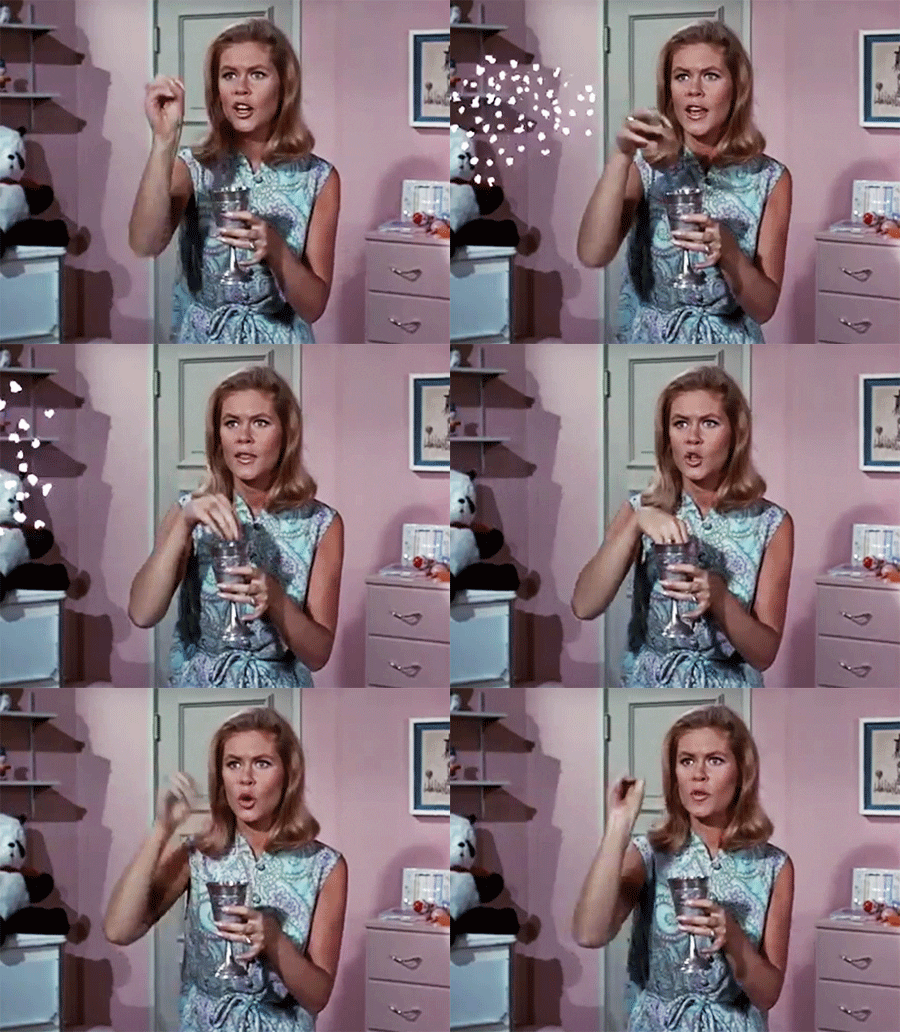
A fairly successful television actress when she joined the cast of Laugh-in in 1968, as the Sock It To Me girl Judy Carne became the most popular person on the show for her zany, daffy, mini-skirted comic persona, continually getting doused with a bucket of water, or subjected to some other humiliation, every time she uttered the words “Sock it to me!”

Judy Carne remained with the show for two years but left in the middle of the third series complaining that it had become “ a big, bloody bore”, though it was noted that her disenchantment coincided with the emergence of Goldie Hawn as the show’s female star.

After she left Laugh-In Judy Carne became a heroin addict and her career went into a tailspin. Her problems worsened to the extent that when she published her autobiography Laughing on the Outside, Crying on the Inside (written with the help of a former companion, Bob Merrill), one reviewer remarked that “for a person with evidently no sense of judgment about people and… no sense of internal perspective, it is noteworthy enough that [she] lived long enough to tell such a tale, much less publish it.”

Judy Carne herself once observed: “I’m a 1960s flowerchild who has refused to grow up. Mature and responsible are words I don’t understand.”

She was born Joyce Audrey Botterill on April 27 1939 and brought up at Kingsthorpe, near Northampton, where her parents ran a greengrocer’s shop. As a child she showed a talent for acting and dancing and went on to train at the Bush Davies Theatrical School for Girls at East Grinstead. She made her West End debut in 1956 in the revue For Amusement Only and her television debut the same year in The First Day of Spring.

She went on to build a solid career on British television, including appearing as a panellist on Juke Box Jury and in the sit-com The Rag Trade. In 1961 she appeared in the film comedy A Pair of Briefs. Her conquests at this time, she claimed, included Vidal Sassoon, Stirling Moss and the actor Anthony Newley. “How lucky to be 18 years old and go with Vidal Sassoon. And to be with Stirling Moss at 19. What a privilege,” she recalled.

Moving to the United States in the early 1960s, she was first introduced to American audiences as Heather Finch, a British exchange student, in the television comedy series Fair Exchange (1962). She went on to play the daughter of a tycoon who falls in love with a poor boy in The Baileys of Balboa (1964-5) and had a small part as a “nameless broad” found in bed with James Coburn in the film The Americanisation of Emily (1964). She also appeared in The Man from U.N.C.L.E and in the ABC sitcom Love on a Rooftop (1966-67).

After leaving Laugh-in, Judy Carne starred as Polly in The Boyfriend on Broadway and appeared on talk and game shows. Yet by the mid-1970s she was making headlines for all the wrong reasons.

In 1963 she had married Burt Reynolds, recalling that when they first met “we were immediately in love, so we immediately made love. I was engulfed by him, my small body lost in his large frame.” After their marriage, he became abusive, she alleged. They divorced in 1966.

There followed one-night stands with Steve McQueen and Warren Beatty, and what she described as “a meaningful relationship with a woman for a year and a half”, before 1970 when she married Robert Bergmann, a unemployed man she described as “very bright – he’s been an assistant producer, done modelling and handled stocks”. The marriage lasted for six months, but Bergmann came back into her life in the late 1970s. “We helped each other,” she told an interviewer. “We went to a dance class, and to a group therapy class where you shout your angers.”

By this time, an experimental use of drugs had developed into full-blown addiction. Her life hit rock bottom in 1977 and 1978 when, in the space of four months, she was busted three times – on charges ranging from drug possession to car theft. At the end of March 1978 she was rushed to hospital after collapsing with “vertigo and nausea”, owing to a possible drug overdose. In June that year, while celebrating her acquittal on charges of heroin possession, she and Bergmann (who was driving) were involved in a near-fatal car accident which left her with a broken neck.

The following year she was charged with heroin possession and prescription forgery. She was acquitted of the heroin charge. When the jury couldn’t reach a verdict over the forgery, a new trial was set but Judy Carne failed to show up for it, so she was charged with contempt of court and a warrant was issued for her arrest.

It was around this time that she moved back to Northampton, where she began work on her book. She claimed that the process of writing had helped her to put her life back together again, but it would be some time before her troubles were properly resolved.

In later life, however, Judy Carne did find an element of peace in the village of Pitsford, Northamptonshire, where she lived a quiet life with two dogs and was much liked by her neighbours.

Judy Carne, born April 27 1939, died September 3 2015

http://www.telegraph.co.uk/news/obituaries/11849234/Judy-Carne-actress-obituary.html

Sunday, 6 September 2015

J. D. Salinger's The Stranger and World War II: "Don’t let any civilian leave you, when the story’s over, with any comfortable lies..."


Coming Home
How JD Salinger said goodbye to World War II

Nicolaus Mills
2 September 2015

Seventy years to the day after Japan’s surrender, a look back at how Salinger, himself a veteran, pictured a World War II homecoming in a little-known 1945 short story.

Seventy years ago, on September 2, 1945, World War II came to an official end in a surrender ceremony between the Allied powers and Japan aboard the battleship Missouri in Tokyo Bay.

“The entire world is quietly at peace. The holy mission has been completed,” declared General Douglas MacArthur, who presided over the signing of the surrender documents.

But for many who fought in World War II, there would be no peace when they returned home. Few writers understood this phenomenon as well as J.D. Salinger, himself a veteran, and as we mark the 70th anniversary of the end of World War II, it’s a good time to take a close look at Salinger’s little-known short story about a World War II homecoming, “The Stranger,” which also marks its 70th anniversary this year.

The story appeared in the December 1, 1945, issue of Collier’s magazine. Salinger never included it in his 1953 collection, Nine Stories, and so “The Stranger” remains largely unread today, even by Salinger diehards. But the passage of time has not dimmed the story’s prescient depiction of what we now call post-traumatic stress disorder (PTSD).

Salinger knew that difficulty firsthand. Earlier in 1945, he had checked himself into a military hospital in Nuremberg, Germany, believing, as he wrote in a letter to Ernest Hemingway, whom he became friends with during the war, it would be a good idea to talk to “somebody sane.”

Salinger’s “The Stranger” bears no resemblance to French writer Albert Camus’s novel of the same title. The basis for Salinger’s short story is the combat he experienced as a sergeant in the Fourth Infantry Division during the period between D-Day and Germany’s surrender.

“The Stranger” takes place in New York City shortly after the war and centers on a returning G.I., Babe Gladwaller, who feels he must deliver a poem his buddy has written to his buddy’s former girlfriend and tell her how his buddy died.

Babe, who earlier appeared in Salinger’s wartime stories “Last Day of the Last Furlough” and “A Boy in France,” bears a striking resemblance to Salinger. As Salinger’s biographer Kenneth Slawenski, who has analyzed “The Stranger” with great care, has pointed out, Babe shares Salinger’s Army serial number, 32325200, as well as his feelings about the trauma of combat.

Babe knows that on some level he is not merely delivering a keepsake and a memory. He is acting in response to his own confused needs. He confesses to his buddy’s former girlfriend, who is now married, “I can’t tell you he was happy or anything when he died. I’m sorry—I can’t think of anything good—Yet I want to tell you the whole business.”

Babe then proceeds to describe how his buddy was killed by a mortar shell that struck him and three other men. There was no time for his buddy to say anything before he died. The last thing the two of them spoke about before the mortar shell exploded was getting wood to start a fire.

When the former girlfriend hears the story, she starts to cry, but Babe is unsure how much she has really taken in. “What’s a mortar? Like a cannon?” she asks. Babe answers her question, but in a way that remains cold.

“Your mind, your soldier’s mind, wanted accuracy above all else,” Babe says to himself. “Don’t let any civilian leave you, when the story’s over, with any comfortable lies. Shoot down all the lies.”

After handing the girlfriend the poem his buddy wrote on a G.I. airmail envelope and being thanked by her, Babe himself begins to cry. There is no happy ending in “The Stranger” as there would be a year later in William Wyler’s Academy Award-winning film, The Best Years of Our Lives, in which three G.I.’s return to the small, Midwestern town of Boone City and find a niche for themselves.

As far as Salinger was concerned, even “good wars” cannot save those who fight them from suffering lasting damage. He is adamant on this point. The most hopeful moment in “The Stranger” comes at the end of the story in the pleasure Babe takes in his little sister, whom he has brought with him on his visit and who is too young to have been burdened by the war.

When she asks him if he is glad to be home, Babe replies, “Yes, baby.” But his little sister’s innocence cannot alter Babe’s memories of the war or the power of the remark his buddy made in “Last Day of the Last Furlough” before they shipped off together to Europe. “G.I.’s—especially G.I.’s who are friends—belong together these days. It’s no good being with civilians anymore,” his buddy had said. “They don’t know what we know and we’re no longer used to what they know.”

Babe has not finally brought solace to his buddy’s former girlfriend, nor, within the context of “The Stranger,” has he provided a good explanation for why he feels so little empathy for her. He is not being too harsh on himself when he says, “I probably shouldn’t have come…I had the best and worst motives.”

Small wonder, then, that Salinger didn’t find “The Stranger” worth including in his Nine Stories. On literary grounds there can be no faulting Salinger’s judgment. He knew how much richer his later writing was. But what makes “The Stranger” worth reading today is that its imperfections—its hero’s inability to acknowledge the full extent of his bitterness over the war—anticipate our growing awareness of PTSD’s capacity for inflicting damage that never goes away.

http://www.thedailybeast.com/articles/2015/09/02/how-j-d-salinger-said-goodbye-to-world-war-ii.html

Friday, 4 September 2015

E. L. Doctorow by Michael Chabon...

EL Doctorow opened a magical new door in American literature
When fiction seemed a choice between dirty realism or blank postmodernism, by incorporating history into his novels, Doctorow showed a way out

Michael Chabon
Thursday 23 July 2015

Every self-respecting cartoon hero knows that when you find yourself hemmed in on all sides or lost in an endless blank expanse all you need for liberation is the stub of a pencil. You stand back. You take the measure of the problem. Then on the very fabric of reality itself – your reality, the one that imprisons you – you draw an upright rectangle. You fit an inner edge of the rectangle with a little circle about halfway down. Then you grab hold of the doorknob you just made, give a push, and make your escape. Before, there were only walls, only confinement and prohibition and discouragement; or there was nothing at all, a blank of infinite impossibility. Now, thanks to you, there is a door.

When great writers pass through the doorways that they have made they leave them open, behind them, so that others can follow. Every young writer setting out to find a means of egress from the walls and stifling blanknesses of whatever box he or she has been born into knows how it feels to come upon one of these doorways and catch a glimpse of blue sky, and feel a cool breeze blowing in from the other side. If you are a Jewish American writer of my generation then you will have passed through a door that was made by Saul Bellow, or Cynthia Ozick, or Bernard Malamud, or Philip Roth. Those Jewish writers and their peers opened a way into American literature that had not been there before them. If you want to write works of literature that are also unabashed works of fantasy or science fiction – an ambition for which the world will often seek to imprison you in its darkest boxes, fence you around with its most forbidding blanks – there is no sweeter relief than stumbling on the door left open for you by Ursula K LeGuin, whose space operas and heroic fantasies set a standard of beauty and intensity and depth of understanding to which all literature aspires. And if you came of age, as I did, in a culture hungover and embittered from the lingering effects of a century-long bender triggered by the realisation that history and truth, as we have always known or received them, are – to put it politely – works of fiction, then the way out – at least for me – was opened by EL Doctorow.

Doctorow’s trick, worthy of Bugs Bunny himself, was to turn that melancholy equation inside out, like an old grey cartoon trenchcoat that, when you reverse the lining, turns into a circus tent or a working pair of feathered wings. If history is to be encumbered with all the perceived liabilities of fiction – subjectivity, incompleteness, the fact that it’s all a bunch of made-up bullshit – then fiction might as well avail itself of the discarded privileges that history once arrogated to itself: an air of objectivity, a tone of authority or cultural omniscience, and most usefully an irresistible glamour of being true – lowercase t. When Doctorow came along those privileges were, after all, just kind of lying around in pieces on the floor. Nobody was really using them.

And so, shyly or slyly at first, with 1971’s The Book of Daniel and then in 1975with such stunning audacity that I can still remember my parents’ awed dinner-table conversation, that summer, about a novel they were reading, called Ragtime, that went up to the overgrown wall enclosing the garden of fiction and opened the doorway to history. Into that walled garden all manner of strange creatures came creeping: Harry Houdini, JP Morgan, Emma Goldman, Booker T Washington and, not least, Doctorow’s own imagination, disillusioned but not disheartened, hip to history’s lies without any loss in his dispassionate sympathy for the human weakness that underlies them.

In opening that particular door, Doctorow made a startling discovery: done properly, the incorporation of historical figures into a fictional context did not come off as some kind of smart-ass critique of subjectivity and the fictive nature of history. Done properly it just made the lies you were telling your reader – with his or her full and willing consent, of course – sound that much more true. And that small-t truth then became a powerful tool for getting across whatever Truth, subjective and fragmentary though it might be, that you felt you had it in you to express.

When I started to work on the novel that became The Amazing Adventures of Kavalier & Clay, I knew that I wanted readers to believe, at least while they were inside the novel, that Joe Kavalier and Sam Clay were real people, had been real people. That there really had been an Escapist Comics Inc, headquartered in the Empire State Building, which had prospered for a brief moment in the 1940s because of the success of a costumed superhero character who had been a real-life rival, in the newsstand marketplace, to Superman and Captain America. That I knew such a trick was at least possible, and that I understood the means, at least, by which it could be pulled off, was entirely due to Doctorow and his books – not just Ragtime but Loon Lake and The Waterworks and Billy Bathgate and World’s Fair, with its stunning and clever child’s-eye fictional redeployment of the Hindenburg disaster.

By presenting, with a straight face, the interaction between its invented characters and people like Orson Welles, Salvador Dali, anti-comics crusader Dr Frederic Wertham, and composer Raymond Scott, Kavalier and Clay could assert its factitious factuality, ensnaring a reader in a tangle of pleasurable doubt about what was real and what was not – or so I hoped – while smuggling into this work of fiction a true accounting of the cultural milieu and influences that had helped shape the comic-book medium in its formative years.
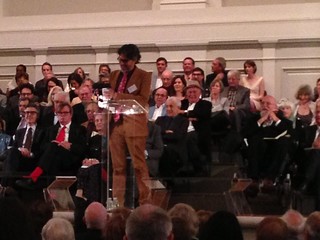
Michael Chabon, delivering the Blasford Lecture, American Academy of Arts & Letters | by jstheater
I had the opportunity to sit next to Doctorow a couple of years ago, as a large group photograph was taken at an annual literary event in New York City to which we’d both had the honour of being invited. In the few minutes that I could be sure I would have before the moment came to sit still and shut up for the picture-taking, I tried to tell Doctorow how crucial – how salvational – his work had been to me, from the moment I had first read Ragtime and in particular as I was setting out to write Kavalier & Clay. I wanted to explain how I had come of age, as a writer, in a time when American fiction could sometimes feel like a choice one had to make between the airless box of so-called “dirty realism” and the blank, mirrored expanse of so-called postmodernism; how Doctorow’s work – playful with the “facts” of history in a postmodern way, gimlet-eyed as the dirtiest realism about the fact that history, unmediated and un-narrated, was a bloody mess – had seemed, like no other writer’s, to offer a magic way out.

God knows what I actually said; not that. Doctorow listened graciously and politely as I nattered, but I could see he was ready to get going. He knew from past experience that the afternoon’s program, to follow the photoshoot, promised to be long and slow-moving. His placement beside me, it turned out, was the chance result of his having requested a seat at the end of a row, to facilitate an early and unobtrusive escape. When I was done babbling, Doctorow thanked me, clasped my hand in both of his. They were the hands of an old man; and I was older, so much older, than I had been when I first fell in love with Ragtime. I looked down at those bent and spotted hands enfolding my middle-aged one, and felt the messy truth about history.

“Thank you,” he said. “That means a lot.”

We fell silent, and sat still, and held our smiles for the required interval as the photographer clicked away. Then Doctorow patted me on the shoulder, ducked his head, and stood up. He held up a couple of fingers in a little farewell salute.

“I’m outta here,” he said, already moving toward the door.

http://www.theguardian.com/books/2015/jul/23/el-doctorow-opened-a-magical-new-door-in-american-literature

Thursday, 3 September 2015

Last night's set lists

At The Habit, York: -

Ron Elderly: -
Autumn Leaves
Need Your Love So Bad
Always On My Mind

Da Elderly: -
Out On The Weekend
Are You Ready For The Country?
Heart Of Gold

The Elderly Brothers: -
If Not For You
Then I Kissed Her
When Will I Be Loved

Bring It On Home To Me
I Saw Her Standing There

A packed night from the off, meant only 3 songs for each player until the backlog had cleared (at just gone 11pm). There was, yet again, a wonderful mix of players and styles on show. Yours truly threw in a Harvest only set. But a definite first for The Habit was a guy playing trippy sounds on a didgeridoo!!


Wednesday, 2 September 2015

Rebel in the Rye - J. D. Salinger biopic on the way...

Possibly a really bad idea...

Nicholas Hoult to play JD Salinger in new biopic
Rebel in the Rye is set to explore the birth of the reclusive writer’s best-known work

Ben Child
Tuesday 1 September 2015

Nicholas Hoult is to play JD Salinger in a new biopic which will tell the story of the creation of the reclusive author’s classic novel of teenage disaffection, Catcher in the Rye, according to the Hollywood Reporter.

Rebel in the Rye will be based on Kenneth Slawenski’s biography JD Salinger: A Life, which explores the writer’s life prior to the publication in 1951 of his most famous work. Danny Strong, co-creator of the hit television show Empire, has adapted the screenplay from Slawenski’s book, and will also direct.

“The Catcher in the Rye is a classic coming of age story which continues to make a significant impression six generations later,” said Alex Walton of sales company Bloom, which will tout the film to potential buyers at the upcoming Toronto film festival. “The world has long been fascinated with JD Salinger, who the talented Nicholas Hoult will bring to life, in this enigmatic role.”

Slawenski’s biography largely focuses on Salinger’s life up to the publication of Catcher in the Rye in 1951 at the age of 32, after which the writer gradually withdrew from public life. Blurb about the book on the website of publisher Penguin Random House reads:

Kenneth Slawenski explores Salinger’s privileged youth, long obscured by misrepresentation and rumour, revealing the brilliant, sarcastic, vulnerable son of a disapproving father and doting mother. Here too are accounts of Salinger’s first broken heart – after Eugene O’Neill’s daughter, Oona, left him – and the devastating World War II service that haunted him forever. JD Salinger features all the dazzle of this author’s early writing successes, his dramatic encounters with luminaries from Ernest Hemingway to Elia Kazan, his office intrigues with famous New Yorker editors and writers, and the stunning triumph of The Catcher in the Rye, which would both make him world-famous and hasten his retreat into the hills of New Hampshire.

Salinger, who died in 2010 at the age of 91, was famously protective of film rights to his greatest work, turning down offers from Billy Wilder, Harvey Weinstein, and Steven Spielberg during his lifetime. However, he was clear that Catcher in the Rye represented an autobiographical statement, telling a high school newspaper in 1953: “My boyhood was very much the same as that of the boy in the book ... [It] was a great relief telling people about it.”

Wokingham-born Hoult, 25, has been steadily building a career in the US, largely with strong supporting turns, since transferring to Hollywood following early success in the British television series Skins and as a child actor in 2002’s About a Boy. His best known film roles include a turn as a zombie redeveloping human instincts in the horror-romance Warm Bodies, as furry blue mutant Beast in the X-Men films and as a brainwashed, shaven-headed desert warrior in this year’s critically-acclaimed sci-fi reboot Mad Max: Fury Road.

Rebel in the Rye is the second Salinger biopic to be announced in recent years. In 2013 the BBC reported that Hollywood super-producer Harvey Weinstein’s The Weinstein Company was set to work with film-maker and author Shane Salerno, who wrote the New York Times bestselling biography Salinger and its accompanying documentary, on a new movie. However that project appears to have since become caught up in development hell.

http://www.theguardian.com/film/2015/sep/01/nicholas-hoult-rebel-in-the-rye-jd-salinger#comment-58613883

Tuesday, 1 September 2015

Wes Craven RIP

Wes Craven, Nightmare on Elm Street and Scream director, dies at 76
Veteran Hollywood horror director, who made the A Nightmare on Elm Street and Scream film franchises, dies after being diagnosed with brain cancer

Monica Tan
Monday 31 August 2015

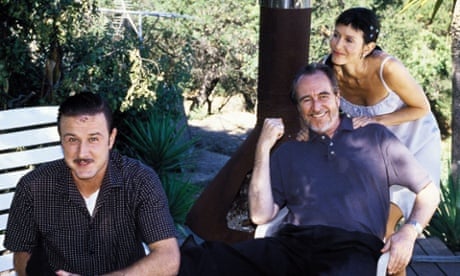
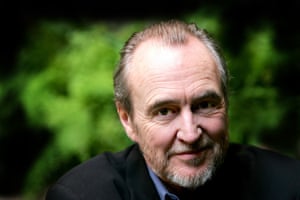
Wes Craven, veteran writer and director of some of Hollywood’s most famous successful film franchises, has died at the age of 76.

The director of A Nightmare on Elm Street and Scream died on Sunday night at his Los Angeles home after being diagnosed with brain cancer, the Hollywood Reporter confirmed.

Craven was born in Cleveland, Ohio, and directed his first feature film, The Last House on the Left, in 1972 following a master’s degree in philosophy and writing at Johns Hopkins University and an early career in teaching.


With 1982’s Swamp Thing, Craven moved into directing big-budget films, and had a huge hit when he wrote and directed A Nightmare on Elm Street two years later.

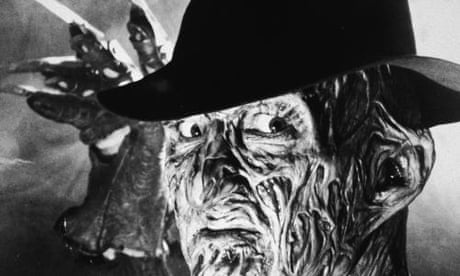
The popularity of the film and its terrifying antagonist Freddy Krueger established Craven’s reputation as a director of the teen slashers, able to blend gore with wry humour and create memorable film villains.

His mantle as the king of horror continued throughout the 90s, with his Scream franchise setting the tone for numerous imitators. Scream took $173m in worldwide box office takings, with its 1997 sequel falling just short of half a million in matching its predecessor.

Craven only occasionally strayed from the horror genre, including the sentimental Music of the Heart starring Meryl Streep, and his 2005 psychological thriller Red Eye.

Director of Bridesmaids and the Ghostbusters reboot Paul Feig tweeted his respects, calling Craven “one of a kind” and thanking him for “all the years of scares and fun”. Leigh Whannell, co-creator of the blockbuster horror film franchise Saw, tweeted: “any horror fan says goodbye to Wes Craven with a heavy heart. He gifted my generation with so many memories”.

Actor Rose McGowan tweeted that Craven was “the kindest man, the gentlest man, and one of the smartest men I’ve known” and hoped the news had “a plot twist”.

Jamie Kennedy, who played Randy Meeks in Scream, credited Craven with launching his career. “Thank you for believing in me and giving me a chance,” he tweeted.

Craven was remembered for uncovering fresh talent, casting a relatively unknown Johnny Depp for A Nightmare on Elm Street and is credited with giving Sharon Stone (Deadly Blessing, 1981) and Bruce Willis (an episode of The Twilight Zone) their first featured roles.

In a 2014 interview with Filmmaker Magazine, Craven said he was amazed by A Nightmare on Elm Street’s longevity in popular culture. He reflected on his life and career, including leaving graduate school having only seen “maybe three films in the theatre” due to his strict religious upbringing.

His move to a small town in upstate New York, where he frequented an art theatre that showed European films, set him on a new career course. “It just knocked me off my chair, the imagination and everything … guys like Bergman and Fellini really appealed to me and the idea of film-making just somehow rang my bell,” he said.

Craven is survived by his wife, Iya Labunka, a film producer and production manager. The pair were married in 2004 and worked together on 2011’s Scream 4. He has two children, Jonathan and Jessica Craven, from his first marriage to Bonnie Broecker. He also has a stepdaughter, Nina Tarnawsky.

http://www.theguardian.com/film/2015/aug/31/wes-craven-nightmare-on-elm-street-and-scream-director-dies-at-76

The late Wes Craven, pictured in 2005.
Wes Craven: the mainstream horror maestro inspired by Ingmar Bergman
It was the Swedish auteur who prompted the late director to pursue a career in movie-making. His influence can be traced right through Craven’s brilliant, chilling career

Peter Bradshaw
Monday 31 August 2015

Wes Craven’s career is a startling link between the European arthouse and Hollywood exploitation horror. This was no movie brat, growing up obsessively watching movies on VHS, getting steeped in trash-celluloid lore, knowing scenes by heart and shooting his own homemade version on Super 8 at the age of nine in the way we might expect of a hugely successful genre director.

In any case, his upbringing was before the era of video (he was born in 1939) and his strictly religious parents hardly let him go to the cinema at all. In fact, after an initial plan to go into teaching, Craven’s move to New York from his hometown of Cleveland as a young man introduced him to arthouse theatres where he was electrified by the work of directors like Ingmar Bergman: it was this that inspired him to go into film-making and he had the idea of remaking Bergman’s 1960 film Virgin Spring as The Last House on the Left in 1972 — three years before Woody Allen’s Love and Death pastiched Bergman, among other high European masters, in an obviously cod-reverential way.

Craven took from Virgin Spring the idea of people enacting revenge for the rape and murder of their daughter, but in a more obviously secularised, ironised and sensational style. Wes Craven could be said to have invented, or at least popularised the modern rape-revenge genre and ironically did so in the same era when the name “Bergman” became a widely understood talk-show punchline for jokes about Hollywood trash vs highbrow Europeans.

Despite helping Meryl Streep to an Oscar nomination with his atypical 1999 movie Music of the Heart, a syrupy film about an inspirational teacher, Craven of course became a horror maestro, with a flair for developing sequel-spawning properties. He began his career with the potent, influential The Hills Have Eyes about the family being targeted by a sinister group in the desert.
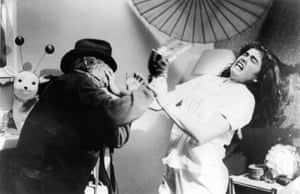
Nancy Thompson struggles with her attacker, Freddy Kreuger.
But it was his great franchises Nightmare on Elm Street and Scream (co-written with Kevin Williamson) which gave him his legendary status. Nightmare on Elm Street was an endlessly quotable, malleable phrase for headline-writers all over the English-speaking world, especially in the UK where “Elm” was always being replaced with “Downing”. Each franchise crucially had its horribly familiar, nightmarishly recognisable villain-hero: Freddy Krueger and Ghostface.

Nightmare on Elm Street had the brilliant idea of the demon haunting one’s dreams – that grotesque figure in a hat, burned face and clawed glove. The young Johnny Depp was in the first Nightmare: did Freddy Krueger inspire a kind of romanticised, Jekyllised version in Edward Scissorhands? Nightmare collapsed the distinction between dreams and reality, and perhaps even hinted at an awareness of the horror genre’s own status as the culturally licensed bad dream.

But it was actually Scream which was the really playfully self-referential movie series, a franchise which became a key text for the 1990s fashion for postmodernism and all things meta. It spoofed and pastiched the scary genre itself, drawing attention to its own tropes and tricks, knowingly tipping the wink to fans. The title was originally going to be Scary Movie, a tag gratefully picked up by the Wayans brothers in their own out-and-out send-up movie series.

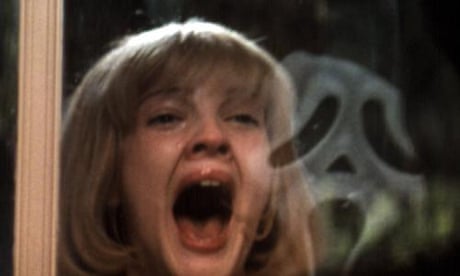
Again, Craven was a pioneer: he popularised this element of sophistication, laying the groundwork for a picture like, say, The Cabin in the Woods, scripted by Joss Whedon and Drew Goddard. But Scream isn’t just a comedy. There is something genuinely disturbing about the elongated dropped jaw of Ghostface, distended in its endless silent scream. When I saw this film first, I thought of the ghost of Jacob Marley in A Christmas Carol: taking off the bandage around his head, his lower jaw drops down to his chest.

Not everyone admired Craven’s style. David Thomson wrote: “… the postmodern self-reflection of Wes Craven’s New Nightmare and the Scream pictures … amounts to a frenzied redoubling of nastiness because no one really believes in it.” Well, it is an accusation which could be perennially levelled at all horror movies or even fairground rides: dark, scary thrills do not have much in the way of moral edification. But horror films can be lethally brilliant, immersive experiences. Those are what Wes Craven provided.

http://www.theguardian.com/film/filmblog/2015/aug/31/wes-craven-the-mainstream-horror-maestro-inspired-by-ingmar-bergman

Monday, 31 August 2015

Issue 52 of the Bob Dylan magazine The Bridge - now available

The Bridge Issue 52

Fulla good stuff...

CONTENTS

Comrades From The North:

Hello and a very warm welcome to the latest issue of The Bridge. Many of you may have had the opportunity to catch Dylan in his recent round of European shows so we hope that you enjoyed what you saw. This time around multiple concert-goers were treated to a modicum of variety in the song selection including one or two surprises along the way. Having said that, there remained a high degree of rigidity in the set-lists, with 20 songs being utilised in twelve or more of the 19 shows on the itinerary. Whenever Dylan incorporates festival gigs (which are often a tad shorter that normal shows) he tends to vary things – not always but certainly he did again this time around. In fact there were 19 songs which were played only a handful of times – 6 of which were played only the once. Amongst the one-offs were That Lucky Old Sun last played in 1985 but included on the recent Shadows In The Night album and a couple of debut performances namely Sad Songs And Waltzes (a Willie Nelson number)and Where Are You? (also from Shadows In The Night). So, all in all, sounds like promising developments for the European shows to come in the Autumn.

If there is one constant in the Dylan multiverse it is that there is always some rumour in circulation. The most recent one to grab the attention may well turn out to have more than an iota of truth about it. It concerns the next release in the wonderful Bootleg Series. Stories have circulated for some time that the next project could/would be the Blood On The Tracks sessions or the sessions for Blonde On Blonde. Either of those would be most welcome, of course, but this latest rumour suggests that we might get the studio sessions from 1965 and 1966. Given that this would cover what many regard as the most fertile, ground-breaking and influential period of Dylan’s career, this would be a major release should the whisperings prove to have substance. The rumoured format is a 2- CD package, a 6-CD box set and an extensive, multi-CD set, perhaps up to 18 discs, covering the whole period comprehensively. Whilst this latter box might seem somewhat unlikely, it is worth pointing out that it would be odds-on that Sony/Columbia would be releasing Copyright Collection sets at the end of 2015 and 2016 to protect recordings from 1965 and 1966 respectively so why not do it properly and make money out of it at the same time. For goodness’ sake, how much would they be charging for an 18-CD set?!!! If any of this does happen, expect an October 2015 release – in time for the Christmas market no doubt.

The highly respected UK music magazine Mojo produces a (very) occasional side issue entitled Mojo '60s. Issue number 3 hit the shelves in June and features a 20-page special on Dylan in 1965 entitled Revolution In His Head. The piece uses the basic tenet that Dylan invented rock music when he recorded Bringing It All Back Home in January 1965 and it traces what it believes are some of the musical developments prior to this which led up to that seminal work. Not everyone would swallow the claim wholesale, given that one side of the album was practically acoustic and a lot of the first side was not full-blown rock music and some might point to the sessions for Highway 61 Revisited as being the key works, others Newport 1965, others the release of the single Like A Rolling Stone. The magazine also contains a stiff-card promo poster for Don’t Look Back as well as loads of other great features on artistes of the period. Worth seeking out.

And so it remains for us to wish you a pleasant and peaceful summer time or a warm winter for those in the southern hemisphere. Here in the UK we had one week of heat-wave and a pretty soggy time since then. Take care and hope that you enjoy this issue.

May you climb on every rung ..........

Mike & John

THE BRIDGE INTERVIEW: DAN FIALA
By Scott Marshall

FLOOD SONGS, DYLAN AND THE MISSISSIPPI BLUES: Part 1
By Philip Horne

CONVERSATION WITH PAUL SEYDOR
By Vince Farinaccio

LOOKING UP DYLAN’S SLEEVES PART EIGHT
By Rod MacBeath

NO TIME LIKE THE PRESENT
By Roy Kelly

Jotting Down Notes
Compiled by: John Wraith, Mike Wyvill and Terry Kelly

Subscribe here:
http://www.two-riders.co.uk/

Sunday, 30 August 2015

Bob Dylan's A Hard Rain's a-Gonna Fall manuscript for sale at Sotheby's


Bob Dylan early draft for A Hard Rain's a-Gonna Fall shows telling changes
Never-before-seen manuscript up for auction at Sotheby’s shows Dylan’s restless revising as song originally had far more insistent ending

Mark Brown
Monday 24 August 2015

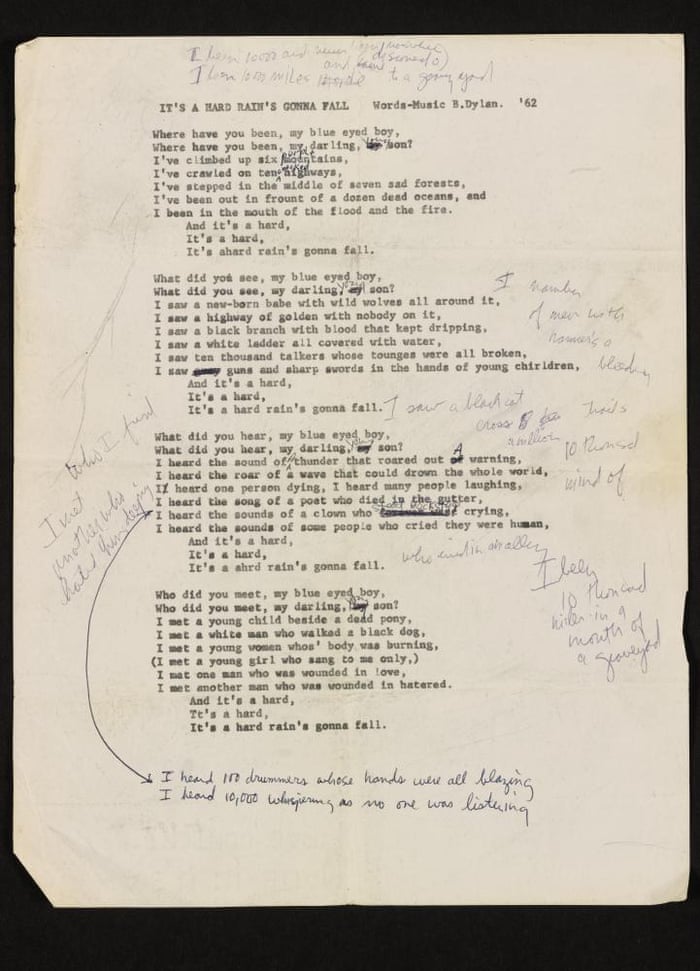
Bob Dylan originally contemplated climbing six purple mountains rather than stumbling on the side of 12 misty ones and the ending to one of his greatest songs was far more insistent than it later became.

The fascinating changes he made to his 1962 anti-war anthem A Hard Rain’s a-Gonna Fall can be revealed as Sotheby’s auctions a never-before-seen early manuscript.

The two neatly typed pages represent a remarkable and exciting document, according to Gabriel Heaton, Sotheby’s books and manuscripts specialist.

It would have been intended as a version to show others. “You can see it was not originally intended as a working draft,” Heaton said. “It was meant to be a final version of the song but when he starts reading it again, he clearly is unhappy with it and starts reworking, starts revising … more ideas start spilling out of his brain.”

The draft being sold reveals that Dylan’s original opening was: “Where have you been, my blue eyed boy/ Where have you been, my darling young son.” In the final version, recorded in December 1962, it became: “Oh, where have you been, my blue-eyed son/ And where have you been, my darling young one.”

The next lines were also changed. Instead of “I’ve climbed up six purple mountains/ I’ve crawled on 10 crooked highways”, it later became: “I’ve stumbled on the side of 12 misty mountains/ I’ve walked and I’ve crawled on six crooked highways.”
Dylan was only 21 when he wrote A Hard Rain’s a-Gonna Fall, in which he warned of the impending apocalypse.

The version being sold comes from the heart of the Greenwich Village folk scene. “It was the kind of place where you could write this crazy poem, show it to someone who would go, ‘Wow, this is amazing,’” said Heaton. “It was an environment which fostered this kind of creativity.”

It would have been written in an office – described as “a hide-out room” – above the legendary Gaslight folk club on a typewriter belonging to Dylan’s friend Hugh Romney, or Wavy Gravy as he is better known.

Dylan clearly discarded the draft and it came into the possession of Romney’s then wife, Elizabeth, and has been passed down through the family since then.

Heaton said the manuscript shone a fascinating light on Dylan’s creative processes and restless spirit, on how he was always trying to change, revise and improve. “You can really see him creating here, you can see just how easily these amazing lines seem to have come to him … they just spill out. What a mind!”

The song, described by Rolling Stone magazine as “the greatest protest song by the greatest protest songwriter of his time”, has often been associated with the Cuban missile crisis – an idea helped along by Dylan, who has both claimed it and denied it in subsequent interviews.

The reality is that it was written before the crisis and was first performed at Carnegie Hall in September 1962, a month before the world moved to the brink of nuclear war.

Dylan’s question and answer template for the song was taken from a traditional Scottish folk ballad called Lord Randall, whose repeated lines were: “O where ha you been, Lord Randall my son?/ And where ha you been my handsome young man?”

The manuscript includes memorably evocative lines which Dylan scribbled down as they occurred to him, including “I heard 100 drummers whose hands were all blazing/ I heard 10,000 whispering as no one was listening.”

Interestingly, Dylan decided against the ending he wrote in this early draft, in which the narrator’s prophetic tone takes on a moral imperative. Instead of “gonna”, he wrote more insistently: “And it’s a hard,/ It’s a hard,/ It’s a hard rain must fall.”

The newly discovered manuscript is one of three known to exist. One is in the Morgan Library in New York and another, the final handwritten working manuscript, was sold at Sotheby’s New York last year for $400,000 (£254,000).

The manuscript will be sold at Sotheby’s rock and pop sale in London on 29 September.

http://www.theguardian.com/music/2015/aug/24/bob-dylan-early-draft-for-a-hard-rains-a-gonna-fall-shows-telling-changes