Sunday, 22 June 2014

Saturday, 21 June 2014

Friday, 20 June 2014
Gerry Goffin RIP

Gerry Goffin, US lyricist, dies at 75
Goffin penned more than 50 top 40 hits, including (You Make Me Feel Like) A Natural Woman and Savin' All My Love for You
Kevin Rawlinson
The Guardian
http://www.theguardian.com/music/2014/jun/19/gerry-goffin-us-songwriter-lyricist-dead

Goffin penned more than 50 top 40 hits, including (You Make Me Feel Like) A Natural Woman and Savin' All My Love for You
Kevin Rawlinson
The Guardian
Friday 20 June 2014
The Oscar-nominated songwriter Gerry Goffin, whose hits included Will You Love Me Tomorrow and (You Make Me Feel Like) a Natural Woman, has died aged 75, his wife Michelle said. Goffin, who was previously married to his writing partner Carole King, was also behind Up on the Roof and Savin' All My Love for You.
In all, Goffin was responsible for more than 50 top 40 songs in the US. He and King married in 1959 when they were teenagers. They divorced in 1968, but their productive partnership led them to be inducted into the Songwriters Hall of Fame in 1987 and the Rock and Roll Hall of Fame three years later.
In a statement, King said he was her "first love" and had a "profound impact" on her life. "Gerry was a good man with a dynamic force, whose words and creative influence will resonate for generations to come," King said. "His legacy to me is our two daughters, four grandchildren, and our songs that have touched millions and millions of people, as well as a lifelong friendship."
Among Goffin's other compositions were Pleasant Valley Sunday, recorded by the Monkees, and Some Kind of Wonderful by the Drifters. He was also behind Take Good Care of My Baby, which was recorded by Bobby Vee, and The Locomotion for Little Eva, which was also a hit for Kylie Minogue.
The love affair between Goffin and King became the subject of the Tony Award-nominated musical Beautiful: The Carole King Musical, on Broadway. King, while backing the project, avoided seeing it for months because it dredged up such sad memories. She finally sat through it in April this year, the Associated Press reported.
The musical shows the two composing their songs at Aldon Music, the Brill Building publishing company in Manhattan that also employed Neil Sedaka, Howard Greenfield and Carole Bayer Sager. The show ends just as King is enjoying fame for her groundbreaking solo album, Tapestry. Though it also alleges that Goffin's womanising and mental instability were causes of the breakup, he happily attended the opening of the musical.
After their divorce, Goffin garnered an Academy Award nomination with Michael Masser for the theme to the 1975 film Mahogany for Diana Ross. He also earned a Golden Globe nomination for So Sad the Song in 1977 from the film Pipe Dreams.
Goffin was born in Brooklyn in 1939 and was working as a chemist when he met King at Queens College.
"She was interested in writing rock'n'roll, and I was interested in writing this Broadway play," Goffin told Vanity Fair in 2001. "So we had an agreement where she would write [music] to the play if I would write [lyrics] to some of her rock'n'roll melodies. And eventually it came to be a boy-and-girl relationship. Eventually I began to lose heart in my play, and we stuck to writing rock'n'roll."
He is survived by his five children and his wife.
• This article was amended on 20 June 2014 because an earlier version said Gerry Goffin wrote Crying in the Rain. The lyrics for that song were written by Howard Greenfield.
Gerry Goffin: the poet laureate of teenage pop
A vivid lyricist and masterful songwriter, the composer of sublime girl group hits made listeners feel as if they were not alone with their emotions
Richard Williams
Gerry Goffin, a trainee chemist who became the poet laureate of teenage pop, specialised in coming up with a great opening line to grab the audience’s attention. Plenty of people will remember the first time they heard “Tonight you’re mine completely/ You give your love so sweetly,” from Will You Love Me Tomorrow, or “Looking out on the morning rain/ I used to feel so uninspired," from (You Make Me Feel Like) A Natural Woman. But he didn’t stop there.
Buried a little deeper in those wonderful songs are the lines that really touched his young listeners’ hearts. The words to the bridge, or middle section, of that first Shirelles hit from 1960 were almost like poetry: “Tonight with words unspoken/ You say that I’m the only one/ But will my heart be broken/ When the night meets the morning sun?” And when Goffin presented Aretha Franklin with the second verse of A Natural Woman – “When my soul was in the Lost and Found, you came along to claim it” – he gave countless ordinary lovers a way to express their deepest feelings.
Misleadingly, they are often called “Carole King songs”. She wrote the tunes, and later on she would sing them when, after Goffin and King divorced, she embarked on a hugely successful solo career. But whenever King sang her own, gentler versions of the Chiffons’ One Fine Day or the Drifters’ Up on the Roof, she was still singing Goffin’s words. They were written by the man she had met when she was 17 and he was 20, and with whom she had two daughters while they lived in an apartment in the Queens housing project LeFrak City – and with whom she travelled to work in Manhattan every day at their cubicle in the offices of Aldon Music at 1650 Broadway, where they pumped out hit after hit after hit.
Goffin’s lyrics were so vivid and their potency so enduring that they were sometimes even borrowed for the titles of films: Some Kind of Wonderful for Howard Deutch’s 1987 high-school romance, for example, or One Fine Day for the Michael Hoffman's 1995 adult romcom, starring Michelle Pfeiffer and George Clooney.
Other phrases remain lodged in the collective memory: “It might as well rain until September”; “You leave me crying in the rain”; “Everybody’s doing a brand-new dance now”; “Girls grow up faster than boys do”; and “I think I’m goin’ back/ to the things I learned so well in my youth.” The title of his most controversial song, the Crystals’ He Hit Me (And It Felt Like a Kiss), appears, without attribution, in a lyric on Lana Del Rey’snew album.
Goffin’s talent was not just confined to his partnership with King. Even in the mid-60s, when they were at their most successful and prolific, he could work with other composers to come up with jewels that glitter more brightly with the passing years. With his friend Russ Titelman he wrote I Never Dreamed, recorded by the Cookies, and What Am I Gonna Do With You (Hey Baby), best known in its versions by the Chiffons and Lesley Gore but most perfectly (if obscurely) realised in 1967 by the Inspirations. Sublime examples of New York girl-group music, both of them are much cherished by collectors.
He was a useful producer, too. Freddie Scott’s version of Hey Girl, which he supervised in 1963, remains a classic of uptown soul, with the kind of sound that eluded the many British groups who covered the songs of Goffin and King. The originals – whether Chains by the Cookies, Earl-Jean’s I’m Into Somethin’ Good or Maxine Brown’s Oh No Not My Baby – invariably stand the test of time better than versions by the Beatles, Herman’s Hermits and Manfred Mann.
Those who accept the conventional wisdom that nothing happened in pop music between Elvis and the Beatles should listen to these marvellous records – and to the outpouring of memories of a man who did the best thing a pop songwriter can do: made listeners feel they are not alone with their emotions.
http://www.theguardian.com/music/musicblog/2014/jun/20/gerry-goffin-the-poet-laureate-of-teenage-pop
A vivid lyricist and masterful songwriter, the composer of sublime girl group hits made listeners feel as if they were not alone with their emotions
Richard Williams
theguardian.com
Friday 20 June 2014
Gerry Goffin, a trainee chemist who became the poet laureate of teenage pop, specialised in coming up with a great opening line to grab the audience’s attention. Plenty of people will remember the first time they heard “Tonight you’re mine completely/ You give your love so sweetly,” from Will You Love Me Tomorrow, or “Looking out on the morning rain/ I used to feel so uninspired," from (You Make Me Feel Like) A Natural Woman. But he didn’t stop there.
Buried a little deeper in those wonderful songs are the lines that really touched his young listeners’ hearts. The words to the bridge, or middle section, of that first Shirelles hit from 1960 were almost like poetry: “Tonight with words unspoken/ You say that I’m the only one/ But will my heart be broken/ When the night meets the morning sun?” And when Goffin presented Aretha Franklin with the second verse of A Natural Woman – “When my soul was in the Lost and Found, you came along to claim it” – he gave countless ordinary lovers a way to express their deepest feelings.
Misleadingly, they are often called “Carole King songs”. She wrote the tunes, and later on she would sing them when, after Goffin and King divorced, she embarked on a hugely successful solo career. But whenever King sang her own, gentler versions of the Chiffons’ One Fine Day or the Drifters’ Up on the Roof, she was still singing Goffin’s words. They were written by the man she had met when she was 17 and he was 20, and with whom she had two daughters while they lived in an apartment in the Queens housing project LeFrak City – and with whom she travelled to work in Manhattan every day at their cubicle in the offices of Aldon Music at 1650 Broadway, where they pumped out hit after hit after hit.
Goffin’s lyrics were so vivid and their potency so enduring that they were sometimes even borrowed for the titles of films: Some Kind of Wonderful for Howard Deutch’s 1987 high-school romance, for example, or One Fine Day for the Michael Hoffman's 1995 adult romcom, starring Michelle Pfeiffer and George Clooney.
Other phrases remain lodged in the collective memory: “It might as well rain until September”; “You leave me crying in the rain”; “Everybody’s doing a brand-new dance now”; “Girls grow up faster than boys do”; and “I think I’m goin’ back/ to the things I learned so well in my youth.” The title of his most controversial song, the Crystals’ He Hit Me (And It Felt Like a Kiss), appears, without attribution, in a lyric on Lana Del Rey’snew album.
Goffin’s talent was not just confined to his partnership with King. Even in the mid-60s, when they were at their most successful and prolific, he could work with other composers to come up with jewels that glitter more brightly with the passing years. With his friend Russ Titelman he wrote I Never Dreamed, recorded by the Cookies, and What Am I Gonna Do With You (Hey Baby), best known in its versions by the Chiffons and Lesley Gore but most perfectly (if obscurely) realised in 1967 by the Inspirations. Sublime examples of New York girl-group music, both of them are much cherished by collectors.
He was a useful producer, too. Freddie Scott’s version of Hey Girl, which he supervised in 1963, remains a classic of uptown soul, with the kind of sound that eluded the many British groups who covered the songs of Goffin and King. The originals – whether Chains by the Cookies, Earl-Jean’s I’m Into Somethin’ Good or Maxine Brown’s Oh No Not My Baby – invariably stand the test of time better than versions by the Beatles, Herman’s Hermits and Manfred Mann.
Those who accept the conventional wisdom that nothing happened in pop music between Elvis and the Beatles should listen to these marvellous records – and to the outpouring of memories of a man who did the best thing a pop songwriter can do: made listeners feel they are not alone with their emotions.
http://www.theguardian.com/music/musicblog/2014/jun/20/gerry-goffin-the-poet-laureate-of-teenage-pop


Thursday, 19 June 2014
Last night's set lists
At The Habit, York: -
Set 1 - Ron: -
Make You Feel My Love
Autumn Leaves
No Expectations
Set 2 - Da: -
Is It Only The Moonlight?
Till There Was You
Heart Of Gold
Set 3 - The Elderly Brothers: -
Crying In The Rain
Love Hurts
So Sad (To Watch Good Love Go Bad)
You Got It
Handle Me With Care
You Got A Friend
Then I Kissed Her
Surfin' USA
A full house from the off, this was a welcome return to The Habit open mic night of old. Maybe it was the fine weather or the current surfeit of football that drew folks out, but who cares. Perversely there were fewer players than in previous weeks, so between us we racked up a total of 14 songs, including the 'new' You Got A Friend. The last turn of the evening was a lass with a fine voice and a tuneful guitar technique. Her final number was Tom Jones' Sex Bomb; a guy came forward from the audience and produced a Bb cornet to accompany a rather surprised songstress! It was like disco meets Buena Vista. It's why we keep going!
Horace Silver RIP

Horace Silver dies at 85; pioneering jazz pianist and composer
Jocelyn Y. Stewart
18 June 2014
Horace Silver, the prolific jazz pianist and composer who cofounded the legendary Jazz Messengers, pioneered the genre known as hard bop and mentored scores of musicians, has died. He was 85.
Silver died Wednesday at his home in New Rochelle, N.Y., of natural causes, according to his son, Gregory.
Through classic compositions such as “Song for My Father,” “Nica's Dream” and “Señor Blues,” Silver influenced generations of musicians with a style that encompassed all his musical loves: gospel, blues, Latin rhythm. It was music that, in Silver's words, “cooked” and “burned.”
His works also kept Silver contemporary: a bridge between the jazz greats of his generation and musicians who weren't even born when he began recording.
“As far as playing, composing, band leading, arranging, Horace Silver's got to be one of the most influential musicians in the history of jazz,” said bassist Christian McBride. “No matter what style of jazz that you tend to gravitate toward, Horace Silver always touches you.”
Throughout his decades-long career, Silver fought against what he called getting “hung up on one approach,” even when it proved popular and profitable to do so.
“He was not only prolific, he was a unique composer,” said Phil Pastras, editor of Silver's 2006 book, “Let's Get to the Nitty Gritty: The Autobiography of Horace Silver.” “Even an ordinary 12-bar blues in his hands turned into something magical.”
Silver was born Sept. 2, 1928, in Norwalk, Conn. His father, John Tavares Silver, was an immigrant from Cape Verde, an island group off the west coast of Africa. Growing up Silver heard the folk music of his father's homeland and black gospel music of his mother's church. But it was listening to the Jimmie Lunceford band at a local amusement park when he was 11 years old that placed Silver squarely onto the path of music.
“When I heard that band play, I said to myself, ‘That's for me. I want to be a musician,’ “ Silver wrote in his autobiography.
Silver began his study of music on an old upright piano that an uncle salvaged. By the time he was a teenager, Silver was playing scores and composing.
On occasion he ditched school and hopped a train to New York to indulge in the city's music scene. He heard pianist Art Tatum play at the Downbeat Club and later wrote that it was “like watching and listening to a miracle in progress.”
Never shy about expressing his respect and admiration for other artists, Silver's list of “piano inspirations” was long: Tatum, Thelonious Monk, Bud Powell, Teddy Wilson, Nat King Cole.
In composing works, Silver found inspiration from all around — nature, people, the events of his life. Listening to a cricket inspired the record “Philley Millie.” The whistle of a boiling kettle of water was the muse for “Serenade to a Tea Kettle.” Sometimes songs came from “just doodlin' around on the piano.” But the source of other compositions was what Silver called “the spirit.”
In 1949 tenor saxophonist Stan Getz offered a 21-year-old Silver his first professional job as a sideman and a chance to play with top-ranked musicians. From the start Silver defined himself as a composer. In his time with Getz the group recorded three of his compositions: “Penny,” (1951) “Potter's Luck,” and “Split Kick.
After a year with Getz, Silver left and began freelancing, playing gigs with Coleman Hawkins, Lester “Prez” Young and Art Blakey. For recording sessions in 1954 and 1955 Silver brought together a quintet that included Art Blakey on drums, Hank Mobley on tenor sax, Kenny Dorham on trumpet and Doug Watkins on bass. The recording sessions produced two albums originally released as “The Horace Silver Quintet,” and gave birth to what would become the Jazz Messengers. Silver called them “most definitely one of the greatest groups I've ever had the privilege of recording with.”
During the 1950s and ’60s Silver produced a body of work that would years later earn him recognition as a founder of hard bop, generally described as music that draws on the rhythmic and harmonic principles of bebop but with heavy influences of gospel, blues and R&B.
Jazz historian Nat Hentoff described Silver's music then as “soul jazz,” a reaction by Silver, Blakey and others to “West Coast Jazz,” which was being played by “white guys who were getting all the attention,” Hentoff said.
In reaction, some black musicians returned to their roots, the gospel music of the church. At an early rehearsal of the Jazz Messengers, some of the musicians said, “that's one thing those white cats on the West Coast can't copy,” Hentoff said in an interview. In 1955, the band had a hit with “The Preacher.”
For Silver, who cared little for the labels applied to describe music, what he and others were doing were simply “exploring, extending and developing the innovations of the previous generation.”
After a year and a half Silver left the Jazz Messengers and would eventually form another Horace Silver Quintet that included Mobley, trumpeter Art Farmer, bassist Doug Watkins and drummer Louis Hayes. Donald Byrd often subbed for Farmer.
The quintet produced the album “Six Pieces of Silver,” which included the hit “Señor Blues,” now a jazz standard, as well as the albums “Silver's Blue” in 1956 and “Further Explanations” in 1958.
Silver was equally adept at spotting and introducing new talent. He made a point of encouraging young musicians and giving them an opportunity to develop with more experienced performers, said saxophonist Bennie Maupin, who played with Silver on the “Six Pieces of Silver” album.
Maupin, who had grown up listening to Silver's music on the radio and jukeboxes, recalled him as “a real taskmaster.” Band members were required to memorize every piece of music the group played so that no music sheets were ever seen on stage, Maupin said. Maupin, who called Silver “Boss Man,” would go on to play with other bands, but retained the practice of memorizing the music.
While Maupin learned from his mentor, he also taught Silver about yoga, vegetarianism and metaphysics. By the 1970s Silver's spiritual quest had found its way into his music. Always restless and eager to try something different, he explored different forms of instrumentation, such as the electric keyboard, and added vocal music, working extensively with singer Andy Bey.
A three-album set titled “The United States of Mind” was released in the early 1970s. The first album did not sell well and its lyrics were criticized as “preachy,” Pastras wrote. To complete the series Silver had to fight with Blue Note executives who wanted him to return to his previous works.
The music mesmerized vocalist DeeDee Bridgewater. Bridgewater was a 20-year-old new bride, married to Cecil Bridgewater, a trumpeter who was a member of Silver's band in the early 1970s. Traveling with the group she heard the music nightly and longed to sing it, an honor that belonged only to Bey.
“I would sit in the back of the club,” Bridgewater said in an interview with the Los Angeles Times. “I just fell in love with his music. I thought his music was so hip and so modern and so advanced and so funky.”
In 1980, Silver formed his own label, Silveto, “that was dedicated to the spiritual, holistic, self-help elements in music — music with a spiritual principal,” he said in a 1993 Chicago Tribune interview.
“But there aren't too many people interested in that — the world is still afraid of the spiritual side of jazz,” he said.
After Silveto he formed Emerald Records, for straight-ahead jazz, but that label failed to catch on.
Though he remained highly productive during those years of recording under his own label, much of his post-1970 music is difficult to find today, Pastras said. Critics also focus — wrongly, Pastras said — on his works of the ’50 and ’60s. The quality of the work on his independent labels rivals that of his earlier years, but simply went unnoticed, Pastras said.
“He never got away from the element of fun in his music,” said McBride, who in 2007 organized a tribute to Silver at Disney Hall. “In an art form where fun is sometimes perceived as not being serious, I think Horace proved otherwise with his music.”
Silver is survived by his son.
http://www.latimes.com/local/obituaries/la-me-horace-silver-20140619-story.html#page=1
Wednesday, 18 June 2014
Paul Buchanan on The Blue Nile, music and life... 2014 interview

Colours and Aspects: An Interview with Paul Buchanan
Stay true to yourself is good advice, because I think most people have a relationship with their creativity; it’s probably different for everyone, and I’d like to ask people how they work, or how they know when they are on the right track. For me, the better ideas are their own boss, but I’ve learned that the hard way, and forgotten it a hundred times.
Is songwriting or practicing a daily activity for you?
I play every day. When bursts of ideas come, I work all the time, but every day I at least check in with the guitar or piano. I cannot say there is a clear pattern at all. I can be reluctant to switch the equipment on if I am demoing, but once I’ve overcome that reluctance I work to the exclusion of everything else. Afterwards I might look back at a notebook and find the song referenced in advance in a word or phrase I’d written down weeks or months before and forgotten about.
Is it true that The Blue Nile used a Roland Juno 8 on much of its early work? What was it about this instrument that attracted you to it?
The Jupiter 8 was the synthesiser we used almost exclusively for a long time; other than that we generated a lot of our own samples from objects. I was not the keyboard expert, but there was a warmth and flexibility in programming that I always enjoyed hearing, and the sounds were not identifiable, which was an advantage in our aims of timelessness and place.
It seems like there is a touch of a mythological world in your work – something almost like a mythological city that is straight out of Raymond Chandler: dark, rainy, illuminated by neon signs or streetlights. There is almost a quality of synesthesia to your work – I visualize a kind of version of New York City late at night when I hear your music. Are there imagined settings like this that you’re trying to express or describe through the music?
I think at our best in the band we shared some nameless territory, though we were all different, and we expressed that to each other in visual terms — often, as you say, in seeing moments from a city, often with New York as our mythological or ultimate Western city. Sometimes we felt the songs were taking place in approaching the city, or in going there, or in smaller towns. But yes, often we imagined them in the heart of it. We would be concerned with colors and vertical or horizontal aspects, and lyrically we tried to maintain the integrity of the conversation or inner monologue rather than have the voice step outside of the thoughts to describe where the moment was taking place. We talked about it in very plain terms, and were happy when sometimes people saw the same things we saw even if they weren’t directly mentioned. I suppose there was synesthesia in it, because the sounds represented colors or aspects of the landscape. But it was important not to force it or be contrived. You did your best, and if it worked, it worked, but you couldn’t impose yourself onto it. Quite the opposite. You served the idea, the idea did not serve you. Mid Air was about what I felt looking from my window at night. So many people with their kitchen lights on late at night. If you are lucky you express what we share.
What is your ideal sound, and what would it convey? What does the perfect composition look like to you?
These are an interesting questions you ask: What does a perfect composition look like? Maybe black dots and lines hanging or dancing on a piece of paper and if you scrunch your eyes up the whole content is there? Certainly music is architectural. After extra ideas are cleared away, I’m always surprised how simple the remaining lines are…
An ideal sound? Again, invisible. Whatever expresses you in that moment… the rush of euphoria and the sense of compassion?
In a related question, what artists in other areas of creative work really inspire you? Who are your favorite writers, filmmakers, poets, philosophers, painters?
I have fallen far behind in recent years, particularly in going to the cinema. Walt Whitman, Matisse, Jenny Holzer, Dickens, Elmore Leonard, Andre Kertesz… for every person I can remember right now there are many more.
Lastly, what in life gives you the most joy? When are you happiest?
You saved the hardest question ’til last. For now, I will say feeling connected — with yourself, and with others.
http://www.secretdecoder.net/features/2014/06/16/colors-and-aspects-an-interview-with-paul-buchanan/?utm_source=rss&utm_medium=rss&utm_campaign=colors-and-aspects-an-interview-with-paul-buchanan
Jordan Anderson
16 June 2014
Among musical artists of the last half-century, few have made as genuinely beautiful, ground-breaking work as Paul Buchanan and the band he spent much of his recording career with, The Blue Nile. With roots in Glasgow, Scotland, Buchanan has nonetheless situated his songs in a kind of archetypal dream world that is immediately recognizable and yet remains ambiguous and undefined. Songs like “A Walk Across the Rooftops” (from The Blue Nile’s album of the same name) and “From a Late-Night Train” (from the group’s album Hats) are as much about the ideas and dreams we have cities as they are about the actual experience of being in a place like New York; we can imagine the neon colors and rainy streets even if we’ve never been there.
Following four stellar LPs released over long stetches between 1984 and 2004, The Blue Nile disbanded, leaving Buchanan to turn to solo work making way for the critically-acclaimed 2012 album, Mid Air. The remarkable songwriter recently shared his thoughts on musical creation and what makes the writing of music such a special part of life with Decoder via e-mail.
Jordan Anderson: Chords and melodies seem to be vehicles for emotion in your work. What do you look for in a chord progression or melody when you’re composing?
I suppose I tend to lean towards certain chord progressions without realizing it. Once the melody is established over that, small alterations seem to matter. I probably like patterns because they form a canvas for the event to take place, but I really don’t know enough about music to objectively identify them. Stumbling on them is the fun. Once in a while, the rhythm of the melody, and the lyrics, seem to fall into the right place against chords, and that is a song.
Who would you say are the songwriters who inspire you to push forward?
I don’t feel in the same league as the many outstanding best songwriters. There is a compulsive element to creativity, but I wonder why I keep going. If you have a song in your head you have to get it out I suppose. Mid Air was a series of very short songs I first recorded onto a dictaphone and noted in a notebook without really understanding… I was working on something else altogether. When I listened back it seemed they belonged together, so I recorded them exactly as they were, no re-writes, in the hope they made sense as a whole and separately. Perhaps sometimes music expresses parts of us that are slightly unconscious, to do with memory and senses what we cannot always easily describe, but which are universal and personal, and which we feel very strongly about.
The instruments you’ve used with The Blue Nile albums as well as your solo album seem to occupy their own clear, bright spaces within the atmosphere of the records. On ‘Mid Air,’ the use of piano, strings, vocals, etc. is sparse but clear and present, for example. What leads you to these compositional choices?
Time can be an element — music can sometimes bend time, or make it stand still. Each note has a value and so it is necessary to establish the space within which each note, and then the relationship between those notes, has a simultaneous meaning to the listener’s imagination. So sometimes, the space is as important as the note. If sound has emotional value, like melody and intonation, it can be good to clear the space for our emotional intelligence to have room to cherish and react. Whether it’s The Beach Boys or Mahler, I think the best music assumes the best of us and lets us feel, or encourages us to feel. Music serves so many purposes for us, though; its very existence says something.
Looking back on your musical work, is there anything you would have done differently? What advice would you give musicians who are starting with their own body of work?
I would have done some things differently in terms of career, but if I think of re-recording actual songs I realize I’ve moved on, even if I think I missed what I’d hoped for. On reflection I’d say that “A Spell in the Limelight” perhaps wasn’t the best thing artistically. I admire people who can receive attention and keep producing their best work and I admire people who remain true to their goals without attention. An influx of other considerations and people can affect everyone differently, and perhaps unselfconsciousness becomes harder. It’s human to be glad of some approbation, but in many ways I was happiest when we were starting out.
Stay true to yourself is good advice, because I think most people have a relationship with their creativity; it’s probably different for everyone, and I’d like to ask people how they work, or how they know when they are on the right track. For me, the better ideas are their own boss, but I’ve learned that the hard way, and forgotten it a hundred times.
Is songwriting or practicing a daily activity for you?
I play every day. When bursts of ideas come, I work all the time, but every day I at least check in with the guitar or piano. I cannot say there is a clear pattern at all. I can be reluctant to switch the equipment on if I am demoing, but once I’ve overcome that reluctance I work to the exclusion of everything else. Afterwards I might look back at a notebook and find the song referenced in advance in a word or phrase I’d written down weeks or months before and forgotten about.
Is it true that The Blue Nile used a Roland Juno 8 on much of its early work? What was it about this instrument that attracted you to it?
The Jupiter 8 was the synthesiser we used almost exclusively for a long time; other than that we generated a lot of our own samples from objects. I was not the keyboard expert, but there was a warmth and flexibility in programming that I always enjoyed hearing, and the sounds were not identifiable, which was an advantage in our aims of timelessness and place.
It seems like there is a touch of a mythological world in your work – something almost like a mythological city that is straight out of Raymond Chandler: dark, rainy, illuminated by neon signs or streetlights. There is almost a quality of synesthesia to your work – I visualize a kind of version of New York City late at night when I hear your music. Are there imagined settings like this that you’re trying to express or describe through the music?
I think at our best in the band we shared some nameless territory, though we were all different, and we expressed that to each other in visual terms — often, as you say, in seeing moments from a city, often with New York as our mythological or ultimate Western city. Sometimes we felt the songs were taking place in approaching the city, or in going there, or in smaller towns. But yes, often we imagined them in the heart of it. We would be concerned with colors and vertical or horizontal aspects, and lyrically we tried to maintain the integrity of the conversation or inner monologue rather than have the voice step outside of the thoughts to describe where the moment was taking place. We talked about it in very plain terms, and were happy when sometimes people saw the same things we saw even if they weren’t directly mentioned. I suppose there was synesthesia in it, because the sounds represented colors or aspects of the landscape. But it was important not to force it or be contrived. You did your best, and if it worked, it worked, but you couldn’t impose yourself onto it. Quite the opposite. You served the idea, the idea did not serve you. Mid Air was about what I felt looking from my window at night. So many people with their kitchen lights on late at night. If you are lucky you express what we share.
What is your ideal sound, and what would it convey? What does the perfect composition look like to you?
These are an interesting questions you ask: What does a perfect composition look like? Maybe black dots and lines hanging or dancing on a piece of paper and if you scrunch your eyes up the whole content is there? Certainly music is architectural. After extra ideas are cleared away, I’m always surprised how simple the remaining lines are…
An ideal sound? Again, invisible. Whatever expresses you in that moment… the rush of euphoria and the sense of compassion?
In a related question, what artists in other areas of creative work really inspire you? Who are your favorite writers, filmmakers, poets, philosophers, painters?
I have fallen far behind in recent years, particularly in going to the cinema. Walt Whitman, Matisse, Jenny Holzer, Dickens, Elmore Leonard, Andre Kertesz… for every person I can remember right now there are many more.
Lastly, what in life gives you the most joy? When are you happiest?
You saved the hardest question ’til last. For now, I will say feeling connected — with yourself, and with others.
Tuesday, 17 June 2014
L. S. Lowry in Berwick and Northumberland

L.S Lowry in Berwick & Northumberland
The Granary Gallery, Friday 20 June, 12noon.
The Granary Gallery, Friday 20 June, 12noon.
Berwick Visual Arts Press Launch
L.S Lowry is one of the UK’s best loved artists famous for his industrial scenes of the North of England. It is less well known that he had a great love for the North-East of England and was a regular visitor to Northumberland and Berwick-upon-Tweed from the 1930’s onwards.
'L.S. Lowry in Berwick & Northumberland' brings a number of these original works of Berwick-upon-Tweed to the town for the first time, alongside works that capture wider Northumberland and his fascination with the sea.
You are invited to join us for the press launch of this new exhibition which includes loans from The Lowry, Salford; The Lowry Estate and Sunderland Museum & Art Gallery and will celebrate Lowry's unique connection to the town of Berwick and the wider North-East.
Claire Stewart, Curator of The Lowry Collection, Salford will be present to discuss Lowry's connections to the area in more detail with journalists and refreshments will be served courtesy of the YHA Granary Bistro.
Please confirm you attendance to berwickvisualarts@maltingsberwick.co.uk or 01289 333 075 no later than 12noon on Thursday 19 June.
If you require more information about the exhibition please contact James Lowther, Head of Visual Art - Berwick Visual Arts on 01289 333 075 or email james.lowther@maltingsberwick.co.uk
Image: L.S Lowry Self Portrait 1925 - The Lowry Collection, Salford
http://us2.campaign-archive2.com/?u=ef3f6f6a236e35cf4805dfe4a&id=1c2d7a4b90&e=L.S Lowry is one of the UK’s best loved artists famous for his industrial scenes of the North of England. It is less well known that he had a great love for the North-East of England and was a regular visitor to Northumberland and Berwick-upon-Tweed from the 1930’s onwards.
'L.S. Lowry in Berwick & Northumberland' brings a number of these original works of Berwick-upon-Tweed to the town for the first time, alongside works that capture wider Northumberland and his fascination with the sea.
You are invited to join us for the press launch of this new exhibition which includes loans from The Lowry, Salford; The Lowry Estate and Sunderland Museum & Art Gallery and will celebrate Lowry's unique connection to the town of Berwick and the wider North-East.
Claire Stewart, Curator of The Lowry Collection, Salford will be present to discuss Lowry's connections to the area in more detail with journalists and refreshments will be served courtesy of the YHA Granary Bistro.
Please confirm you attendance to berwickvisualarts@maltingsberwick.co.uk or 01289 333 075 no later than 12noon on Thursday 19 June.
If you require more information about the exhibition please contact James Lowther, Head of Visual Art - Berwick Visual Arts on 01289 333 075 or email james.lowther@maltingsberwick.co.uk
Image: L.S Lowry Self Portrait 1925 - The Lowry Collection, Salford
L.S Lowry in Berwick & Northumberland
The Granary Gallery, 2nd Floor, Berwick YHA, Dewars Lane,
Berwick-upon-Tweed, TD15 1HJ
Open 11am-5pm every Wednesday to Sunday
Free admission
The Granary Gallery, 2nd Floor, Berwick YHA, Dewars Lane,
Berwick-upon-Tweed, TD15 1HJ
Open 11am-5pm every Wednesday to Sunday
Free admission
Sunday, 15 June 2014
Francis Matthews RIP

Francis Matthews obituary
Glamorous star of the BBC's Paul Temple and voice of Captain Scarlet
Gavin Gaughan
The Guardian
Glamorous star of the BBC's Paul Temple and voice of Captain Scarlet
Gavin Gaughan
The Guardian
Sunday 15 June 2014
Tall, slender and with a quietly amused expression, Francis Matthews, who has died aged 86, was ideally suited to play Francis Durbridge's gentleman sleuth Paul Temple, in the popular television adaptations of the 1960s and 70s. But his 60-year career also spanned horror films, comedy and modern classics, and as the voice of Captain Scarlet he reached a new generation of admirers.
Paul Temple, which started in 1969 and ran for 64 episodes, was one of BBC1's first colour series. From its second season onwards it was co-produced with a West German company, enabling extensive film sequences and overseas locations, the glamour of which, as well as being beyond the reach of the BBC alone, transferred to Matthews and his co-star Ros Drinkwater, playing his wife, Steve. The couple appeared almost impossibly elegant to television audiences of the day, George Sewell as their down-at-heel sidekick helping to underline their suavity.
His Home Counties image notwithstanding, Matthews was a man of the north, born in York, to Henry, a shop steward at Rowntree, and Kathleen. Visits to the theatre were a childhood highlight, and after a Jesuit education at St Michael's college in Leeds, his entreaties for backstage work at that city's Theatre Royal paid off. He first acted in a Bradford production of The Corn Is Green in 1945, before national service in the Royal Navy intervened. Following a countrywide tour with Dame Flora Robson in 1954 of No Escape, by the Welsh novelist Rhys Davies, Matthews made his West End debut in 1956. His television debut, for the BBC in its single-channel days, was in Prelude to Glory (1954). For Durbridge, he first did My Friend Charles (1956), as a seemingly affable fellow revealed in the last episode to be a drug-dealing villain.
Matthews's first film was the Raj tale Bhowani Junction (1956), directed by George Cukor for MGM, in which he played one of the men in Ava Gardner's life. He later told Gardner's biographer, Lee Server, that he was briefly involved with the star. His clean-cut qualities were also at work in several horror movies. He was an eager assistant to Peter Cushing in Hammer's The Revenge of Frankenstein (1958), then played Boris Karloff's son in Corridors of Blood (1958), with Christopher Lee. Matthews grappled with Lee, on the same sets, in Dracula: Prince of Darkness (1965) and Rasputin the Mad Monk (1966).
While making The Dark Island (1962), a BBC Scotland thriller series with Robert Hardy, Matthews became engaged to his fellow actor Angela Browne. They married the following year. Matthews was on Broadway in September 1966, but Help Stamp Out Marriage!, by Keith Waterhouse and Willis Hall, ran for less than a month at the Booth Theatre.
On and off screen, he enjoyed himself with the comedians Morecambe and Wise – particularly Eric Morecambe, with whom he shared the hobby of making home movies. He was a Secret Service stooge in the pair's debut film The Intelligence Men (1965) and at their request he had a cameo, fawning over Eric, in That Riviera Touch (1966). He worked with them again on several of their television shows, including their 1971 and 1977 Christmas specials
.
Overhearing an interview in which Matthews did a jokey impression of Cary Grant, the producer Gerry Anderson cast him in his puppet saga Captain Scarlet and the Mysterons (ATV, 1967-68). Matthews, who once listed "talking to children" among his hobbies, was probably pleased with the series' enduring appeal, although later, participating in conventions and interviews, he observed of the fans: "They dress up and stare at you when you're signing the autograph, as if you're some kind of extraordinary god!"
Having worked with the writer Alan Plater and producer David Rose on Z-Cars (1965), he did two series of Trinity Tales (1975) for them. In this reimagining of the Canterbury Tales, with boozy rugby fans replacing pilgrims, Matthews called on his working-class upbringing to play Eric the Prologue.
There was a touch of Reggie Perrin in Middlemen (1977), in which Matthews floated ideas for absurd businesses. Charles Wood's autobiographical Don't Forget to Write! (1977-79), starring George Cole as a playwright with low self-esteem, was much liked within the industry and by the discerning public. Graham Greene's May We Borrow Your Husband? (1986), adapted by and starring Dirk Bogarde, cast him as one of a gay couple. There were paternal roles in Heartbeat (2002) and The Royal (2003), and a Rik Mayall vehicle, All About George (2005). On radio, Matthews played Charles Paris, Simon Brett's ham actor turned detective.
Stage work included roles in My Fair Lady, as Higgins, on a European tour, in Frederick Lonsdale's Aren't We All?, with Rex Harrison and Claudette Colbert, at the Theatre Royal, Haymarket (1984), Middle Age Spread at the Apollo (1980) with Rodney Bewes, Badger in the National Theatre's Wind in the Willows at the Old Vic (1995) and The Kingfisher at the Yvonne Arnaud, Guildford, and on tour (2006), with Honor Blackman. The following year, he played Herr Schultz in the Lyric's revival of Cabaret, with Blackman again.
His wife died in 2001. He is survived by their three sons, Paul, Damien and Dominic, and five grandchildren.
• Francis Matthews, actor, born 2 September 1927; died 14 June 2014
Sam Kelly RIP

Sam Kelly, star of Porridge and 'Allo 'Allo, dies aged 70
Tributes have been made by numerous stars of screen and stage
Nadia Khomami
theguardian.com
http://www.theguardian.com/tv-and-radio/2014/jun/14/sam-kelly-dies-aged-70
Tributes have been made by numerous stars of screen and stage
Nadia Khomami
theguardian.com
Saturday 14 June 2014
British actor Sam Kelly, star of comedy series Allo 'Allo and Porridge, has died at the age of 70.
The Manchester-born actor's agent, Lynda Ronan, said Kelly died peacefully Saturday morning after a long illness. He was reported to have been admitted to a hospice on Friday.
She said: "He does not leave any family but a host of friends who were his chosen family. His death is a great loss to them and the profession."
Former Doctor Who actor Colin Baker, who attended the London Academy of Music and Dramatic Art with Kelly in the 1960s, paid tribute to his colleague on Twitter. "Cannot believe that lovely Sam Kelly has died," he wrote. "We were at drama school together – lovely, funny, talented chap. So sad."
A tribute also came from film and TV actor Phil Davis, who said: "So sad to hear that Sam Kelly has died, a wonderful actor, a proper gent and one of the funniest men I ever had the pleasure of working with."
Kelly played prisoner Bunny Warren in the BBC's Porridge between 1974 and 1978 and Nazi captain Hans Geering in the first four series of Allo 'Allo between 1982 and 1987. As Captain Geering he was best remembered for his cry "tler!" – an unenthusiastic salute to Hilter.
His other roles include the sitcoms Barbara and On the Up, as well as the 1993 prisoner of war TV comedy Stalag Luft, in which he played Hitler alongside Stephen Fry and Nicholas Lyndhurst.
Upon reports of Kelly's death, Fry tweeted: "Very saddened to hear about Sam Kelly's death. He played a splendid Hitler".
Throughout his career Kelly also received plaudits for his theatrical performances which included roles at the National Theatre and Old Vic. In February he withdrew from his part as the Wizard of Oz in the hit West End play Wicked due to ill health.
Jacqueline Hughes, who starred with Kelly in Wicked, paid tribute on Twitter, writing: "So terribly saddened by the death of Mr Sam Kelly. I feel so lucky to have had the chance to work with such an inspiring gentleman xxx"
Other friends and colleagues also expressed their sadness at Kelly's passing. Natalie Anderson from the TV soap Emmerdale said: "Totally devastated to hear of the sad news of my friend and 'Wizard' Sam Kelly's passing!!! A truly wonderful and incredible gentleman!"
And writing on Twitter before he was about to go on stage in the West End stage show Dirty Rotten Scoundrels, Robert Lindsay, star of Citizen Smith and My Family, said he would dedicate the performance to Kelly.
He said: "Feel so depressed about the amazing Sam Kelly's passing how do we manage a second comic musical tonight? we dedicate it to him RIP".
Sherlock actor Mark Gatiss said: "Desperately sad news that the wonderful Sam Kelly has left us. Such a funny, talented man and one of the good guys. RIP Bunny Warren".
Comedy actress Rebecca Front, star of The Thick Of It, tweeted that Kelly was a "lovely actor".
Stage and screen actress Susan Penhaligon added: "Words cannot describe how sad I feel today, the glorious, funny, talented Sam Kelly has gone. He was a friend."
Magician Paul Daniels wrote: "RIP Sam Kelly. You were a funny guy."
And actress Caroline Sheen said: "No one has ever made me laugh more or taught me more about comedy than the brilliant Sam Kelly. I can't bear that he has left us. Dear man."
He stole the show as Senex in the 2004 production of A Funny Thing Happened on the Way to the Forum.
Friday, 13 June 2014
Wednesday night's set lists
At The Habit, York: -
Set 1 - Da: -
Is It Only The Moonlight?
Falling
Set 2 - Ron: -
Autumn Leaves
You Better Move On
Set 3 - The Elderly Brothers: -
True Love Ways
Sea Of Heartbreak
The Sound Of Silence
The Boxer
Walk Right Back
Yet another quiet start to the evening with your dynamic duo performing solo spots to kick things off. By 10:30 the place had livened up considerably. There were several new players - always good to see/hear. After 12 an unplugged session ensued with some Bonzos songs making a welcome appearance.


Wednesday, 11 June 2014
I Left My Heart in Roker Park (Extra Time at the Stadium of Light) by Tom Kelly - review by Terry Kelly

Stage play will feature Paolo Di Canio’s reign at Sunderland
Ther controversial reign of former Sunderland manager Paolo Di Canio will come under the spotlight in the revival of a play by a South Tyneside writer.
I Left My Heart in Roker Park (Extra Time at the Stadium of Light) will be performed at several regional venues later this year.
Written by Jarrow-born playwright and lifelong Sunderland fan Tom Kelly, the play is centred on the pain, heartache and occasional joy of Black Cats’ fan Kevin Halliday.
The lead role in the revamped football drama will be taken by South Shields-based actor and Sunderland supporter Paul Dunn.
Updated since it was last staged a decade ago, the play includes a lighthearted look at Di Canio’s 13-game reign at the Stadium of Light, plus “miracle manager” Gus Poyet and the team’s battle against relegation from the Premiership.
Di Canio’s time at the club was mired in controversy from the day he was appointed manager in March last year, with the alleged political views of the former forward for Lazio, Juventus and AC Milan sparking the resignation of club vice-chairman MP David Miliband.
Tom Kelly is reluctant to be drawn on too many details of his play’s depiction of Di Canio’s brief tenure at the Stadium of Light, other than the Italian’s dislike of his players having too much eye contact with anyone in the tunnel before going on to the pitch.
He said: “But we did make Match of the Day during his time at the club, including Di Canio’s famous slide. And let’s be fair – we also beat Newcastle!”
The one-man play also explores the team making this year’s League Cup Final, partly inspired by Kelly’s own trip to Wembley to see his side beaten by Manchester City.
But the play ends on a high with the Black Cats successfully avoiding the drop.
Kelly added: “What brought me back to the play? I suppose the truth is that it has never really left me. It was performed magnificently by Ray Spencer in the 1990s and then again by David Whitaker in 2004. Now it’s back with Paul Dunn at the helm.
“Listening to Sunderland away games, I often shout at the radio. SAFC are a part of me.This play is my attempt to give us ordinary fans a voice.”
•I Left My Heart in Roker Park (Extra Time at the Stadium of Light) will be at the Customs House, South Shields, on September 19 and 20, followed by the Arts Centre, Washington, on September 25 and the Gala Theatre, Durham, on September 28.
Terry Kelly
5 June 2014Ther controversial reign of former Sunderland manager Paolo Di Canio will come under the spotlight in the revival of a play by a South Tyneside writer.
I Left My Heart in Roker Park (Extra Time at the Stadium of Light) will be performed at several regional venues later this year.
Written by Jarrow-born playwright and lifelong Sunderland fan Tom Kelly, the play is centred on the pain, heartache and occasional joy of Black Cats’ fan Kevin Halliday.
The lead role in the revamped football drama will be taken by South Shields-based actor and Sunderland supporter Paul Dunn.
Updated since it was last staged a decade ago, the play includes a lighthearted look at Di Canio’s 13-game reign at the Stadium of Light, plus “miracle manager” Gus Poyet and the team’s battle against relegation from the Premiership.
Di Canio’s time at the club was mired in controversy from the day he was appointed manager in March last year, with the alleged political views of the former forward for Lazio, Juventus and AC Milan sparking the resignation of club vice-chairman MP David Miliband.
Tom Kelly is reluctant to be drawn on too many details of his play’s depiction of Di Canio’s brief tenure at the Stadium of Light, other than the Italian’s dislike of his players having too much eye contact with anyone in the tunnel before going on to the pitch.
He said: “But we did make Match of the Day during his time at the club, including Di Canio’s famous slide. And let’s be fair – we also beat Newcastle!”
The one-man play also explores the team making this year’s League Cup Final, partly inspired by Kelly’s own trip to Wembley to see his side beaten by Manchester City.
But the play ends on a high with the Black Cats successfully avoiding the drop.
Kelly added: “What brought me back to the play? I suppose the truth is that it has never really left me. It was performed magnificently by Ray Spencer in the 1990s and then again by David Whitaker in 2004. Now it’s back with Paul Dunn at the helm.
“Listening to Sunderland away games, I often shout at the radio. SAFC are a part of me.This play is my attempt to give us ordinary fans a voice.”
•I Left My Heart in Roker Park (Extra Time at the Stadium of Light) will be at the Customs House, South Shields, on September 19 and 20, followed by the Arts Centre, Washington, on September 25 and the Gala Theatre, Durham, on September 28.
Tuesday, 10 June 2014
Rik Mayall RIP
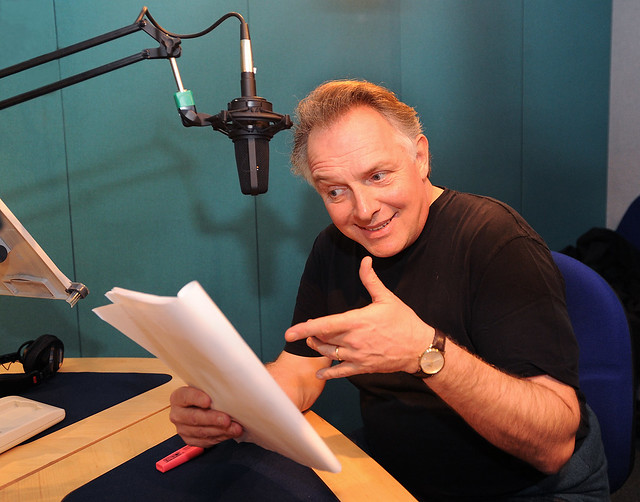
Rik Mayall obituary
Comedian and actor best known for The Young Ones, The New Statesman and Bottom
Michael Coveney
The Guardian
Rik Mayall, who has died suddenly aged 56, was a phenomenal and outrageous performer, a leading light of the "alternative" comedy circuit that emerged from the Comedy Store in the 1980s, and a not inconsiderable comic actor, playing in Beckett and Simon Gray on the West End stage and in Gogol at the National Theatre. Part of his success lay in the timing. His crude persona Rick in the breakthrough television series The Young Ones (1982-84), written with Ben Elton and Lise Mayer, was a gimlet-eyed, nose-picking lunatic who nonetheless carried a terrible plausibility as a prissy radical student of the day.
Long gone were the serious political protests and scabrous, intelligent revues of the 60s student generation; here, student life was parodied as grotty and anarchic, with Mayall surrounded by Ade Edmondson as Vyvyan, a crypto-Nazi, Nigel Planer as Neil, a cartoon, out-of-date hippie in a haze and Christopher Ryan as Mike, a miniature smoothie; a bunch of total prats, in fact. Mayall even lived this role off-stage, telling an interviewer (half-seriously, no doubt) that he threw his satchel in the Severn on the day he heard he had got a place at Manchester University and resolved never to read a book again.
Television, and its audiences, was just ready for this sort of onslaught and Mayall and Edmondson – the two met at Manchester and remained longterm writing and performing partners – scored a major popular success, too, with Filthy Rich and Catflap (1987), written by Elton, alongside Planer; and again in Bottom (1991-95), which ran for three series but also became a fixture of the touring circuit in the live show version.
Mayall had another television hit as the cheating, monstrous Tory MP Alan B'stard in The New Statesman (1987-92), written by Laurence Marks and Maurice Gran, an irresistibly grotesque performance (for which he won a Bafta award), later transforming B'Stard into a New Labour convert in another touring stage show, The Blair B'Stard Project.
After a brief appearance in the first series of Blackadder in 1983 as Mad Gerald, he returned as the boisterous adventurer Lord Flashheart, full of sexual innuendo and flirting with Queenie, in Blackadder II (1986); then, with the same name, as a first world war flying ace in Blackadder Goes Forth (1989).
In 1998, he sustained a fractured skull after crashing a quad bike into a concrete wall on his farm in East Allington, south Devon. He was "technically dead" for five days, but made a good recovery, allegedly saying to the first doctor he saw as he came round: "So, you're the bastard who keeps sticking needles into me."
Mayall, born in Harlow, Essex, was the second of four children of John and Gillian Mayall, both drama teachers, and grew up in Droitwich, Worcestershire. At the age of five, he played a peasant in Brecht's The Good Woman of Setzuan and pulled faces when told not to sing (because he couldn't) in the school choir, aged 10; he soon knew what he wanted to do when he didn't grow up.
He was educated at the King's school, Worcester, and took a degree in drama at Manchester, where he formed a comedy partnership with Edmondson that became known on the circuit as the Dangerous Brothers, then Twentieth Century Coyote. A lot of their comedy was in reaction to Margaret Thatcher, or "Thatch" as Elton, their fellow Manchester student, dubbed her, but a lot of it was sheer high-energy nonsense and gooning about. Mayall and Edmondson wrote a very short play, The Wart (1979), in response to Ken Campbell's 24-hour epic, The Warp, which prompted the critic James Fenton to hail Mayall as "a talented maniac".
After the madness of his TV success, he joined the National Theatre in 1989 to play the deluded lead character in Gogol's The Government Inspector, duping a small town and its mayor, played by Jim Broadbent. This performance, wildly energetic though it was, I found distinctly unfunny; he was much better, two years later, in the West End, as Vladimir in Beckett's Waiting for Godot, with Edmondson as Estragon, in a surprisingly tender and melancholic revival directed by Les Blair and designed by Derek Jarman.
He had established a rapport with the playwright Gray in a revival of The Common Pursuit (he played a would-be theatre critic lapsing into glossy high-end journalism and lung cancer) and followed through in Gray's Cell Mates (1991) at the Albery (now the Noël Coward) as the Irish petty criminal, Sean Bourke, who befriends the spy George Blake in prison; Blake was played by Stephen Fry, who defected when the reviews came out.
Mayall received far worse notices for several films: Edmondson's Guest House Paradiso (1999), in which the pair of them played sociopaths running a horrid hotel near a nuclear power plant; John Henderson's Bring Me the Head of Mavis Davis (1997), in which Mayall played a vile record producer realising that his protege, sung by Jane Horrocks, would be more valuable to him dead; and his turn as Peeves the Poltergeist in Harry Potter and the Sorcerer's Stone (2001), which hit the deck in the editing suite.
And there was one disastrous excursion to Hollywood in Ate de Jong's Drop Dead Fred (1991), a high-energy low comedy about a grown woman (Phoebe Cates) revisited by the imaginary friend of her childhood (Mayall) on a mission to cheer her up. He only made things worse.
But Mayall bounced back from this into Bottom and, in 2005, published a spoof, Alan Partridge-style autobiography, Bigger than Hitler, Better than Christ, and also made a surprisingly "soft" TV series, All About George, written by Cold Feet author Mike Bullen, charting his struggle to keep up with the rigours of family life; being nice in this show was a professional first.
Mayall married the make-up artist Barbara Robbin in 1985, and is survived by her and their three children, Rosie, Sidney and Bonnie.
• Richard Michael Mayall, comedian and writer, born 7 March 1958; died 9 June 2014
http://www.theguardian.com/tv-and-radio/2014/jun/09/rik-mayall
Comedian and actor best known for The Young Ones, The New Statesman and Bottom
Michael Coveney
The Guardian
Monday 9 June 2014
Rik Mayall, who has died suddenly aged 56, was a phenomenal and outrageous performer, a leading light of the "alternative" comedy circuit that emerged from the Comedy Store in the 1980s, and a not inconsiderable comic actor, playing in Beckett and Simon Gray on the West End stage and in Gogol at the National Theatre. Part of his success lay in the timing. His crude persona Rick in the breakthrough television series The Young Ones (1982-84), written with Ben Elton and Lise Mayer, was a gimlet-eyed, nose-picking lunatic who nonetheless carried a terrible plausibility as a prissy radical student of the day.
Long gone were the serious political protests and scabrous, intelligent revues of the 60s student generation; here, student life was parodied as grotty and anarchic, with Mayall surrounded by Ade Edmondson as Vyvyan, a crypto-Nazi, Nigel Planer as Neil, a cartoon, out-of-date hippie in a haze and Christopher Ryan as Mike, a miniature smoothie; a bunch of total prats, in fact. Mayall even lived this role off-stage, telling an interviewer (half-seriously, no doubt) that he threw his satchel in the Severn on the day he heard he had got a place at Manchester University and resolved never to read a book again.
Television, and its audiences, was just ready for this sort of onslaught and Mayall and Edmondson – the two met at Manchester and remained longterm writing and performing partners – scored a major popular success, too, with Filthy Rich and Catflap (1987), written by Elton, alongside Planer; and again in Bottom (1991-95), which ran for three series but also became a fixture of the touring circuit in the live show version.
Mayall had another television hit as the cheating, monstrous Tory MP Alan B'stard in The New Statesman (1987-92), written by Laurence Marks and Maurice Gran, an irresistibly grotesque performance (for which he won a Bafta award), later transforming B'Stard into a New Labour convert in another touring stage show, The Blair B'Stard Project.
After a brief appearance in the first series of Blackadder in 1983 as Mad Gerald, he returned as the boisterous adventurer Lord Flashheart, full of sexual innuendo and flirting with Queenie, in Blackadder II (1986); then, with the same name, as a first world war flying ace in Blackadder Goes Forth (1989).
In 1998, he sustained a fractured skull after crashing a quad bike into a concrete wall on his farm in East Allington, south Devon. He was "technically dead" for five days, but made a good recovery, allegedly saying to the first doctor he saw as he came round: "So, you're the bastard who keeps sticking needles into me."
Mayall, born in Harlow, Essex, was the second of four children of John and Gillian Mayall, both drama teachers, and grew up in Droitwich, Worcestershire. At the age of five, he played a peasant in Brecht's The Good Woman of Setzuan and pulled faces when told not to sing (because he couldn't) in the school choir, aged 10; he soon knew what he wanted to do when he didn't grow up.
He was educated at the King's school, Worcester, and took a degree in drama at Manchester, where he formed a comedy partnership with Edmondson that became known on the circuit as the Dangerous Brothers, then Twentieth Century Coyote. A lot of their comedy was in reaction to Margaret Thatcher, or "Thatch" as Elton, their fellow Manchester student, dubbed her, but a lot of it was sheer high-energy nonsense and gooning about. Mayall and Edmondson wrote a very short play, The Wart (1979), in response to Ken Campbell's 24-hour epic, The Warp, which prompted the critic James Fenton to hail Mayall as "a talented maniac".
After the madness of his TV success, he joined the National Theatre in 1989 to play the deluded lead character in Gogol's The Government Inspector, duping a small town and its mayor, played by Jim Broadbent. This performance, wildly energetic though it was, I found distinctly unfunny; he was much better, two years later, in the West End, as Vladimir in Beckett's Waiting for Godot, with Edmondson as Estragon, in a surprisingly tender and melancholic revival directed by Les Blair and designed by Derek Jarman.
He had established a rapport with the playwright Gray in a revival of The Common Pursuit (he played a would-be theatre critic lapsing into glossy high-end journalism and lung cancer) and followed through in Gray's Cell Mates (1991) at the Albery (now the Noël Coward) as the Irish petty criminal, Sean Bourke, who befriends the spy George Blake in prison; Blake was played by Stephen Fry, who defected when the reviews came out.
Mayall received far worse notices for several films: Edmondson's Guest House Paradiso (1999), in which the pair of them played sociopaths running a horrid hotel near a nuclear power plant; John Henderson's Bring Me the Head of Mavis Davis (1997), in which Mayall played a vile record producer realising that his protege, sung by Jane Horrocks, would be more valuable to him dead; and his turn as Peeves the Poltergeist in Harry Potter and the Sorcerer's Stone (2001), which hit the deck in the editing suite.
And there was one disastrous excursion to Hollywood in Ate de Jong's Drop Dead Fred (1991), a high-energy low comedy about a grown woman (Phoebe Cates) revisited by the imaginary friend of her childhood (Mayall) on a mission to cheer her up. He only made things worse.
But Mayall bounced back from this into Bottom and, in 2005, published a spoof, Alan Partridge-style autobiography, Bigger than Hitler, Better than Christ, and also made a surprisingly "soft" TV series, All About George, written by Cold Feet author Mike Bullen, charting his struggle to keep up with the rigours of family life; being nice in this show was a professional first.
Mayall married the make-up artist Barbara Robbin in 1985, and is survived by her and their three children, Rosie, Sidney and Bonnie.
• Richard Michael Mayall, comedian and writer, born 7 March 1958; died 9 June 2014
Monday, 9 June 2014
JD Salinger and Me...

JD Salinger and me: Joanna Rakoff on her extraordinary coming-of-age memoir of New York's literary world
The story of her year working for The Catcher in the Rye author's agent is one of the most highly anticipated books of the year – but Rakoff insists she never wanted to write it
Rachel Cooke
The story of her year working for The Catcher in the Rye author's agent is one of the most highly anticipated books of the year – but Rakoff insists she never wanted to write it
Rachel Cooke
The Observer
Sunday 1 June 2014
Joanna Rakoff, author of the memoir all literary America is talking about, lives in a first-floor flat in a pretty but rather creaky clapboard house in Cambridge, Massachusetts. Its door release mechanism being somewhat temperamental, when I ring her bell one dank morning in May, she must skip downstairs to greet me – something she does barefoot, the skirt of her primrose broderie anglaise dress gathered girlishly in her hands. Rakoff, 42, is an acclaimed poet and novelist, an experienced journalist, and a mother of two. But at first glance, you would never know it. Wide-eyed, tentative and much given to confidences – her voice falls to an eager whisper when she's really dishing – she seems far younger than her years. "Would you like tea?" she asks, once we're safely upstairs and she is dancing busily between kitchen counter and refrigerator. Translated, what this means is: Be prepared: I've a lot to tell you.
It's hard to believe that her memoir, My Salinger Year, has not yet been published (it comes out this week). So much noise already surrounds it. "Girls meets Mad Men!" shouts her publisher, with only partial accuracy. For months, the emails have been pouring in. Will she write this or that piece? Will she appear on this or that radio show? The other day, she was photographed for American Vogue: stylist, hair, makeup, the lot. Naturally, all this has added greatly to her pre-publication nerves. "I didn't read any of the reviews of my first book [a novel called A Fortunate Age]. But that was relatively easy to do. This time, it will be harder. It's more personal, this book, and there is the issue of Salinger, too. He was one of the reasons I resisted writing it for so long. I didn't want to be seen as yet another person capitalising on his life, and I worry about being perceived that way even though I don't feel this is at all a story about Salinger." She sips her tea. "People love Salinger. They're ferociously devoted to him. So it's important that they understand that I'm not one of those who wants to take him down. He wasn't a psychotic weirdo. He wasn't this jerk, screaming at people in fits of temper like Sean Penn or something. He was kind, gentle, patient and respectful, and I wanted to convey that."
Rakoff's title is shrewd; Salinger sells. But it is also, as she has suggested, misleading. The author of The Catcher in the Rye makes only a few, fleeting appearances among its pages – and even then, he is mostly just a befuddled, too-loud voice on the end of a telephone line. In fact, she has written a coming-of-age story: an involving, evocative tale that will have bookish women everywhere shuddering in recognition. Like Rona Jaffe's novel of the 50s, The Best of Everything – a book that Rakoff loves and reread before she started work on My Salinger Year – it is concerned with what it feels like to move to the big city, to take on your first job, and to struggle to survive on a tiny salary when all the while your dreams are seemingly being snuffed out at every turn, and your love life is spiralling into muddle and mayhem. It is about that heady, never-forgotten period in every girl's life when fear and elation seem almost to be the same thing. The freedom! Anything might happen, out there in the wide world. But how to fit in? How to speak up? How to make it clear that you're capable of being more than typist?
Rakoff's version of this story, however, comes with an extra, gossipy twist – particularly for those readers who move in New York media circles. The job she describes in her book, hard-won and pitifully badly paid, is as an assistant to a literary agent whose most important client is JD Salinger, aka Jerry, that most famous of recluses – a man with whom she is strictly forbidden to engage in casual conversation (on pain of death is she to reveal details of his life to the outside world). Who is this agent? In My Salinger Year, Rakoff refers to her only as "my boss" and to her workplace only as "the agency", a calculated anonymity that adds to the reader's sense that its heroine has joined the literary equivalent of a religious cult. Tap the relevant details into Google, though, and the real names soon appear before your eyes: the boss in question, stern and yet oddly quixotic, is Phyllis Westberg of Harold Ober Associates. Westberg is still alive, the agency at which she works sails on, and the Salinger estate (he died in 2010) remains on its books.
Its continued existence seems like a minor miracle once you've read Rakoff's book, which is set in 1996, or thereabouts. This is the era of the dotcom boom and, in the literary world, the rapid expansion of the list of Andrew Wylie, the agent known as "the Jackal" for his rapacity; a time of dizzying auctions, huge advances for authors, and newly short lunches. Across Manhattan, authors, editors and agents alike work on computer, and make full use of email as a means of avoiding embarrassing and vulgar conversations. But at "the agency", the dark ages continue unabated. The office, wood-panelled and quiet as a grave, contains not a single computer. When Rakoff arrives on her first day, she is given a baffling and clunky Selectric typewriter and a Dictaphone machine, which must be operated by foot pedal. When manuscripts go out, their progress is recorded not on a screen, but on pale pink index cards, a Sanskrit-ish shorthand denoting which editor at which house is currently reading the draft in question (at one point, she finds the card for the manuscript of The Catcher in the Rye, which reveals that a publisher rejected it). "Most of the publishers listed on those cards no longer even existed," says Rakoff, with a laugh. "For HarperCollins we used the initials HR, which stood for Harper & Row, its previous incarnation. The pace was so slow. We were in the Palaeolithic era."
If Rakoff's boss and her colleagues grasp that things are different outside, they give no outward sign. Their attitude is resolutely superior, as if to say: we do things differently here. Sometimes, this backfires. Rakoff watches in horror as Judy Blume, the bestselling children's author, takes her business elsewhere, apparently fed up with the agency's antediluvian approach. Mostly, though, they are content to struggle on, calcified and unyielding. Rakoff's boss, in particular, seems to have come from another age, to the point where her new assistant is unable to work out exactly how old she is (she could be 40 or… 60). She wears mink coats and headscarves, smokes all the day long, and reminds Rakoff simultaneously of Don Corleone and Lauren Bacall. She reveals nothing at all of her private life or even of her feeling for books – "She was more like a mortician than an agent," says Rakoff – and seems only to come truly alive when Jerry is on the line. Jerry, by the way, has decided to allow his last published story, "Hapworth 16, 1924", to be reissued by a tiny publisher in Virginia. Does Rakoff's boss tell him this might be a bad idea? No, she does not. (As Rakoff puts it now: "Anyone else would have said: this guy isn't even minor league; he's peewee league!") What Jerry says goes, and she and the rest of her staff can only watch as the unlikely deal predictably ends in disaster, the publisher in question having talked to a local newspaper about his exciting news, at which point a furious Salinger pulls out.
Salinger, when Rakoff finally plucks up the courage to converse with him, is indeed kind to her. He is extremely deaf, and gets her name wrong. But he also encourages her to keep writing her poetry (he reveres poets). She meets him only once, when he comes to the agency to have lunch with her boss; she notices that his hair is neatly combed, but she is too agog to take in much more. Amazingly, she has not yet read his books – an epiphany lies in the near future on that score – but she is sucked in by his mythology nevertheless. Forbidden to forward to him the hundreds of fan letters he still receives every week, it is part of her job to send form letters to their authors. The only trouble is that once she has read these notes – they are so personal, so heartfelt, so tender – she cannot resist sending a proper letter back. Sometimes, quite firm, she provides advice; at others, she offers words of encouragement. "I kept only one," she says, when I ask if she still has any of these letters. "It's in my bedroom right now. In the book I guess you could say I recreated them. At one time, I did have more, because it felt strange and bad to throw them away, and they were the one thing the agency didn't file. But I left them all in Don's apartment when I moved out."
Ah, yes, Don. On the rebound from her devoted and kindly college boyfriend, a composer called Keeril, Rakoff moves in with Don, a chippy socialist and wannabe writer with junkie friends and big ideas about the novel he is writing – so big, in fact, that he cannot be bothered to get a proper job, with the result that Rakoff must bankroll him. They move into a strange apartment deep in Brooklyn which has no kitchen sink and is sub-zero in winter. When they do finally persuade their antisemitic Polish landlady to install a heater, it leaks gas so badly, Rakoff has to move out for 24 hours. Don has a wandering eye and a pretty tough line in put-downs – "he used to say to me: 'I'm not going to listen to some dentist's daughter from Scarsdale!'" – but she stays with him because she is lonely and at sea. Her parents, upset at her rejection of her college boyfriend, won't help her financially – her post-college debts are huge – and her friends are slowly drifting away. Jenny, with whom she went to school, works at a publisher in New York, but she is turning into Bridezilla before Rakoff's very eyes, her only ambition to join her fiance in Cleveland.
Was it easy to put all this on the page? The book is so gripping and funny, you feel sure she had only to twitch her nose to be back there, Selectric and all. But Rakoff shakes her head. "I didn't want to write this book," she says. "My agent didn't want me to write it either." So how did it happen? "Well, in 2001, I lost my job on a magazine called Lingua Franca, which folded. I went freelance, but I was having a hard time making a living. So I went to see this legendary reporter on the New York Times, Ralph Blumenthal, to ask for some advice, and in the course of the conversation I mentioned that I'd once answered JD Salinger's fan mail. He said: 'You should write about that.' So I did. I wrote a 6,000-word piece for a glossy magazine. That was the start of it." The piece in question got a lot of attention, and publishers began writing to her asking if she might turn it into a book. Her agent, though, warned her against being "a Salinger girl, another Joyce Maynard or something" (Maynard published a controversial memoir of the months she spent living with the much older Salinger as a teenager.) She should finish her novel instead.
"Years passed, and still I would get letters: 'I saw your piece in a magazine while I was visiting my friend's beach house', etc, etc. But still I couldn't see how it could be a book. So, cut to 2010. My father was dying, I was married to the wrong person [not Don, but not Keeril either], things had really deteriorated in my life. I wrote another piece about Salinger for Slate, and I did a piece on National Public Radio, and then the BBC wrote and said would I make a documentary about him for Radio 4? So I did that, too. It was mostly about his fans. We even hired a private detective to track one down." But if she thought this programme would draw a final line under the whole business, she soon found she was back to square one: yet again, publishers wrote begging her to turn the story into a book. At which point, her agent capitulated. She took Rakoff to lunch and told her she had changed her mind.
"I was hesitant, and I had a lot of trouble of writing it. It was painful, going back. I'm so much happier being 42 than 22. I also had all these fears. I'm not someone who likes to write about myself, and I felt loyal to the agency, even though I didn't really have anything horrible to say about them. The first year I was supposed to be working on it, I did ridiculous amounts of research, trying to put off starting. But then two things happened. The first was that I decided not to use real names. I told myself this was a novel, and these people were characters. That helped. The second was that I started to realise this is a universal story. I got my opening pages, in which I describe all these girls going to work all over Manhattan. It's not just about me. It's about women alone in the world. I was thinking about that a lot, that feeling of being unmoored."
Is her boss likely to read the book? And how would that make Rakoff feel? After all, she has invaded her privacy, describing among other things the day she fails to come to work, her married lover having shot himself in her apartment while she – Rakoff's boss – was in the next room. Rakoff frowns. "I don't know. I hope that if she does, she'll feel that she was portrayed accurately and in a holistic way. Someone said to me: everyone is comparing your book to The Devil Wears Prada. But it isn't like that. I can't feel negatively about her. I feel only sympathy. The playing field isn't level [for women], we know that. People do what they have to do." She pauses. "When I wrote that first essay, I heard that she had read it, and that she was tickled. But I remember then that I was more worried she would be upset by my revealing things about the agency than about her. It's complicated. When I worked there, I would go back and forth with my feelings. I would have moments when I felt intense love for the agency. I would go to [my friend] Jenny's office, which was all cubicles and pods and emails, and I would think: the agency seems more fun than this. But then, at other times, I was so painfully aware of how things were outside."
Salinger's death in 2010 took her by surprise; when she heard the news, she broke down. By this time, of course, she had long since left the agency – she worked there for only a year – and she had left Don, too. But her marriage to another writer, Evan Smith Rakoff, was also in trouble, and she was desperate to leave him. Salinger's end only added to her agitation. "Keeril [her college boyfriend] would come to New York, and I would collapse in his arms. 'I want to be with you,' I would tell him." This went on for years until, finally, last year, she plucked up the courage to leave her husband. She told him in a therapist's office, and as soon as the school term ended, she took her two children and went to Cambridge [Keeril teaches at Massachusetts Institute of Technology]. My Salinger Year, then, was written against a backdrop of huge emotional turmoil – and perhaps it's really thanks to this that it feels, in places, so raw and so true. What, though, will "Don" have to say about it? Gosh. Her voice drops to a whisper as she tells me a lot more. (Her opening line: "It was like I had been conked over the head by a caveman… ")
Not a day goes by, she tells me, without someone asking her about Salinger. Often, they will preface their remarks with a comment along the lines of: "I liked The Catcher in the Rye when I was young and angry, but when I read it again later, I found it so mannered, so annoying." Rakoff, though, doesn't feel this way. She read the stories and the novel first as an adult, and in the years since, turning to them again and again, she has never felt herself to have outgrown them. "I love them all, though the character I still identify with most is Franny [in Franny and Zooey]." She is wary of a literary culture that turns on those who, like Salinger, refuse fully to participate in it, and to those who believe that on some level he must have wanted the attention – who insist, as I do, that his behaviour made him more visible, not less – she is apt to point out that never before or since has a single novel had such an instantly dramatic reception as The Catcher in the Rye. "It was a cultural moment," she says. "Nothing else can be compared to it." Who could blame him if his response to fame wasn't always consistent? She isn't pious about this; her attitude, smiling and thoughtful, happily acknowledges her hypocrisy. His name is on the jacket of her book, after all. Rakoff, too, has used him – though I, for one, am inclined to forgive her. My Salinger Year is a treat even Jerry might have enjoyed.
Sunday, 8 June 2014
Glory In The Fire
'Glory in the Fire' is a collaboration of: -
Photography and video from Donna-Lisa Healy,
Poetry, Tom Kelly,
Music Ian Ravenscroft
and the film was edited by Andrew Hagan.
It is the re-imagined past of James Robert Henderson, a Jarrow man who faced the atrocities of the First World War.

Saturday, 7 June 2014


Friday, 6 June 2014
Poem for D-Day: Chanson d'Automne

The long sobs
Of the violins
Of Autumn
Wound my heart
With a monotonous
Languor.
All choked
And pale, when
The hour chimes,
I remember
Days of old
And I cry
And I'm going
On an ill wind
That carries me
Here and there,
As if a
Dead leaf.
Dead leaf.
- Paul Verlaine
Subscribe to:
Posts (Atom)