THE Friday Boys are a disparate group of men spread across Tyneside who meet once a week - 'always on a Friday' - to talk about the arts, raise a glass to recently departed heroes and villains and, at the evening's end, down a whisky or two. The FBs have only one golden rule - talk of the working week is strictly off-limit.
Bob Dylan releases new poem — to be read out on the Isle of Wight 50 years after his legendary 1969 appearance
By Lori Little
8 August 2019
Isle of Wight County Press
BOB Dylan has released a new poem — exclusively for the Isle of Wight — 50 years after his legendary appearance at the Isle of Wight Festival.
He is sending the words to be read out at the Million Dollar Bash — the new event which honours the anniversary of the 1969 festival.
The remarkable gesture means a previously unpublished and unheard Dylan composition will be heard exclusively for the first time at the event on Saturday, August 31.
Dylan famously turned his back on the Woodstock Festival in New York State to perform instead on the Isle of Wight in front of more than 150,000 fans.
Half a century later, to the day, Million Dollar Bash has been organised to salute that legendary event when Dylan was joined by a stellar bill including The Band, The Who, The Moody Blues, Julie Felix, The Nice, Tom Paxton and Free.
Dylan made contact with Million Dollar Bash’s curator, Ashley Hutchings, a founder member of Fairport Convention, to pass on a special poem and acknowledge the work going into the event.
Ashley has put together a one-off band, Dylancentric, to pay tribute to Dylan’s songs, and assembled a high-class bill.
Ashley said: “I got some very touching and personal messages from Bob, much of which must remain personal, but I can say he has passed to me a special poem, fittingly something he wrote about 50 years ago, for me to pass on to fans when we play at Million Dollar Bash.
“This is going to be a great celebration. I will read out Bob’s poem, a composition that is previously unpublished and unheard. I am looking forward to it.”
Hutchings said Dylan’s messages also indicated he acknowledged the hard work going into the Bash’s salute to his 1969 appearance and that he fondly recalled his own time on the Island 50 years ago.
Million Dollar Bash, promoted by All Wight Now, takes place at the County Showground.
Discounted Island tickets are available from Dimbola Galleries and Museum, Freshwater Bay, and That 60’s Place, High Street, Cowes.
A new book, Bob Dylan at The Isle of Wight Festival, 1969, by Bill Bradshaw, has been published by Medina to commemorate the 50th anniversary.
D.A. Pennebaker, Pioneer of Cinéma Vérité in America, Dies at 94
By John Williams
The New York Times 3 August 2019
D. A. Pennebaker, the groundbreaking documentary filmmaker best known for capturing pivotal moments in the history of rock music and politics, including Bob Dylan’s 1965 tour of England and Bill Clinton’s first presidential campaign, died on Thursday at his home in Sag Harbor, N.Y. He was 94.
His death was confirmed by his son Frazer.
Mr. Pennebaker was part of a close-knit group of pioneering filmmakers in the 1960s who helped bring cinéma vérité to the United States. Michael Moore, presenting Mr. Pennebaker with an Oscar for lifetime achievement in 2012, said Mr. Pennebaker, along with Robert Drew, Albert Maysles and Richard Leacock, had “invented nothing less than the modern documentary.”
The key development in that invention was the advent of synchronous-sound cameras, which allowed the filmmakers to move more freely with and among their subjects, and to do away with the postproduction voice-over model of narrative.
“You wanted to drive the stories by what people said to each other,” Mr. Pennebaker once said, “not by what you thought up on a yellow pad.”
In 1965, Mr. Dylan’s manager, Albert Grossman, approached Mr. Pennebaker about following Mr. Dylan on a British tour.
“I didn’t really know much about Dylan,” Mr. Pennebaker told The A.V. Club in a 2011 interview. “I had heard one of his songs on the radio.”
“Dont Look Back,” the ensuing movie, is regularly cited as one of the best documentaries ever made. Between brief performance clips, Mr. Pennebaker’s camera follows Mr. Dylan as he antagonizes the press (“I don’t need Time magazine,” he tells a Time reporter), outruns mobs of fans and loudly types over the voice of Joan Baez while she gently sings in a hotel room.
The movie, in black and white, begins with an oft-imitated scene in which Mr. Dylan flips through a series of cardboard placards that display the lyrics of his song “Subterranean Homesick Blues.” That opening was Mr. Dylan’s idea.
The critic Pauline Kael pointed out in The New Yorker in 1968 that the entire movie was more complicated (and compromised) than some viewers might appreciate.
“Sequences that in a Hollywood movie would have been greeted with snickers — like Bob Dylan in the throes of composition — got by because of the rough look,” she wrote. “Audiences seemed to accept the new cinéma vérité convention that the camera was an intruder in the idol’s life, though it must have been obvious that Dylan had arranged to star in this film.”
Mr. Pennebaker had absorbed these techniques in 1960 while working on the crew of “Primary,” directed by Mr. Drew, which followed Hubert H. Humphrey and John F. Kennedy campaigning in Wisconsin for the Democratic presidential nomination. Decades later, while preparing to make “The War Room,” about Bill Clinton’s 1992 presidential campaign, Mr. Pennebaker found that politicians had become decidedly less accessible and more wary.
“I could see right away that you couldn’t actually occupy space with a person who intended to become president in a very interesting way,” he told The A.V. Club. “They were constrained to act; as soon as the camera appeared, they had to pretend to be something else.”
Mr. Pennebaker focused instead on George Stephanopoulos, James Carville and other then-little-known (and less camera-shy) operatives. The result, Janet Maslin wrote in The New York Times, was “a revealing film and an invaluable document.”
His political films are now part of the canon, but the scenes from Mr. Pennebaker’s catalog that still circulate most widely are of pop culture figures in action: Jimi Hendrix lighting his guitar on fire in “Monterey Pop”; Elaine Stritch in “Original Cast Album: Company,” exhausted and straining to record “The Ladies Who Lunch” while Stephen Sondheim and others look on in despair; Mr. Dylan showing up the softer-edged singer Donovan in a hotel room crowded with their hangers-on; and the actor Rip Torn (who died last month) attacking Norman Mailer with a hammer at the end of “Maidstone” (1970), one of three eccentric movies directed by Mr. Mailer, for which Mr. Pennebaker served as a cameraman.
Mr. Mailer’s films from that era are mostly notable as oddball vanity projects (in The Times, Vincent Canby called “Maidstone” “a very mixed bag” that “doesn’t make a great deal of sense”), but Mr. Pennebaker’s relationship with the author would pay dividends down the line. In 1971, he accepted Mr. Mailer’s suggestion that he film a panel discussion that Mr. Mailer was holding at Town Hall in Manhattan. The topic would be the state of feminism.
Mr. Mailer was his pugnacious self as he battled with, among others, the author Germaine Greer and the journalist Jill Johnston before a raucous audience. At one point two women from the audience took the stage and kissed and groped Ms. Johnston, an activist for lesbian rights, before all three tumbled to the floor.
The footage of the night remained on a shelf for nearly a decade, but when it was released as “Town Bloody Hall” in 1979, it was called a remarkable time capsule of a colorful moment in New York’s intellectual and cultural history. The filmmaker Chris Hegedus, Mr. Pennebaker’s third wife (they married in 1982) and creative partner, edited the footage, which she once called “incredibly rough.”
“There was so much sexual tension going on between Norman and Germaine in it,” Ms. Hegedus said, adding, “I almost edited it as a love story, in a certain way.”
Mr. Pennebaker liked to maintain the image of a journalist for hire. Discussing the genesis of his 1989 documentary about the rock band Depeche Mode (“Depeche Mode 101”), he said, “Somebody called us up and said, ‘Would you like to film Depeche Mode?’ and I sort of said, ‘What’s that?’ ”
Donn Alan Pennebaker, known as Penny to friends and colleagues, was born on July 15, 1925, in Evanston, Ill., to John Paul Pennebaker, a commercial photographer, and Lucille (Levick) Pennebaker.
He served in the Navy and studied engineering at M.I.T. and Yale. After working as an engineer for about a year, he was shown “N.Y., N.Y.,” a short, impressionistic color film by his friend Francis Thompson chronicling “a day in New York,” as the subtitle says. “In about 15 minutes I saw right away that filmmaking was what I was going to do for the rest of my life,” Mr. Pennebaker said in a 2006 interview about that moment.
Thompson’s work motivated Mr. Pennebaker to complete the color documentary short “Daybreak Express,” not quite six minutes of footage of elevated train tracks along Third Avenue in Manhattan. Opening against a blazing orange sunrise, the film is set to music by Duke Ellington.
Mr. Pennebaker would go on to work with Mr. Drew making films for Time-Life before branching out to make his own features.
His many other films include close-up looks at David Bowie (“Ziggy Stardust and the Spiders From Mars,” from 1973), John Lennon (“John Lennon & the Plastic Ono Band — Live in Toronto ’69”) and Jane Fonda (“Jane,” from 1962, when she was 25 and enduring a starring role in a flop on Broadway).
In addition to his son Frazer (a producer of many Pennebaker documentaries), Mr. Pennebaker is survived by his wife, Ms. Hegedus; seven other children, Stacy, Linley, Jojo, Chelsea, Zoe, Kit and Jane, all with the surname Pennebaker; 13 grandchildren; and two great-grandchildren.
Mr. Pennebaker believed that the best documentary films were those in which the filmmaker’s presence is least felt.
“If you’re setting up lights and tripods and you’ve got three assistants running around, people will want to get you out as fast as they can,” Mr. Pennebaker told Time magazine in 2007. “But if you go the opposite way, if you make the camera the least important thing in the room, then it’s different. I’ve left it on the floor. Sometimes I’ll shoot with it on my lap. Other times I’ll put it on a table and turn it on. You don’t make it a big issue.”
Da Elderly (1): - Magical Days (new song) Heart Of Gold
Da Elderly (2): - Need Your Love So Bad I Don't Want To Talk About It Medley: - Baby What You Want Me To Do Hound Dog Kansas City Shake Your Money Maker Bright Lights Big City
Ron was away this week and he missed a crackin' night. The place was old-style rammed from the off with a virtually full play list. Others arrived later and we went through to the close, with host Simon asking me to finish off the show. Regular Dave (pictured) really surprised me with a rare Neil song - the title track from 1999's CSNY album Looking Forward. I debuted a new song written at the weekend. Host Simon joined me on the final medley adding some hot solos to the 12-bar riffs.......and we finished spot on midnight! There were several Neil/CSN lovers in the audience and we sang on unplugged for the next hour. The Habit at its best.
Wednesday 7 August:
Ron Elderly: - Need Your Love So Bad Cry To Me
Da Elderly: - Once An Angel One Of These Days
The Elderly Brothers: - Then I Kissed Her No Reply Proud Mary Medley: Sweet Caroline/Hi Ho Silver Lining I Saw Her Standing There
The Elderly Brothers returned to The Habit on a warm night in York. Plenty of folk were out for a good time and the Wednesday open mic seemed to fit the bill as the bar was full for most of the night. There were enough players too, with just 3 getting a second sitting at the mic. Regular Dave gave us Stephen Stills' Johnny's Garden from 1972's Manassas album and Graham Nash's Teach Your Children. The Elderly's finished off the show with some upbeat numbers, which were well received by the excitable but attentive audience.
Da Elderly: - You're Sixty You've Got A Friend Harvest Moon
The Elderly Brothers: - Mailman, Bring Me No More Blues Walk Right Back Bird Dog Dead Flowers I Saw Her Standing There
The bar was full for most of the evening on a steamy summer's night in York. There weren't too many players, but the decision to offer 3 songs each from the off proved wise, as we kept going all night without repetition. Regular Deb surprised us with S&G's Bleeker Street. Taxi driver Chris, supported by two lads on guitar and bass (pictured) brought the house down with an energetic Tainted Love. Politics dominated the post-show discussions.....that and Neil v Bob at Hyde Park!!
Coinciding with the tenth anniversary of his passing, a new stage play about former Magpies boss Sir Bobby Robson is heading to Newcastle in early August.
Bobby Robson Saved My Life was penned by Jarrow playwright Tom Kelly and involves a trio of characters whose lives bring them into contact with Bobby.
Tom Kelly and director Jamie Brown
Described by one reviewer as "funny, humane and occasionally very moving", there are performances at the Tyne Theatre & Opera House on Westgate Road on Friday 2nd and Saturday 3rd of August.
A proportion of every ticket sold will be donated to further the work of Sir Bobby Robson Foundation.
The Bonzo Dog Doo-Dah Band want to get tgeir name back!
Please help The Bonzos, Modern Romance and the Musicians' Union change UK trademark law!
In 2017 the Bonzo Dog Doo-Dah Band discovered that in 2015 an entity had registered their name as a 'figurative trademark' ; the name that they have been associated with since the 1960s when they had a Paul McCartney produced hit ‘I’m the Urban Spaceman’ and appeared in the crossover Monty Python TV show ‘Do Not Adjust Your Set’. The Bonzo Dog Doo-Dah Band trademark registration legally entitles the owner to both the name and the associated goodwill and was registered without the consent or the knowledge of the band.
As a result of the grant of the trademark The Bonzos may never be able to record an album or perform a concert under their name ever again. In the two years which have elapsed since this dispute began one member of the band, Sam Spoons, has sadly passed away. The band are challenging the decision to grant the trademark but need your help. Please contribute now and share this page on social media with fans of the band, lovers of music, musicians and friends.
This is not an isolated incident. The 1980's band Modern Romance are known for their hits 'Best Years of Our Lives' (re-recorded by the Baha Men for Shrek) 'Ay Ay Ay Moosey' and 'Everybody Salsa'. Recently they had to fight a two year battle to get back their name. They lost thousands of pounds worth of live work after someone registered Modern Romance as a trademark without their permission. Aside from the stress and loss of earnings the battle also cost them £20,000 in legal costs.
How can this happen?
Under current UK legislation anyone can register a band's name, i.e their Intellectual Property, by simply logging on to the IPO (Intellectual Property Office) website, paying a fee of £200 and ticking a box that confirms they are the owner of the name. The IPO does not ask applicants to provide any evidence of ownership, and unless the name has already been registered, a trademark is granted to the applicant. The next time the rightful owner decides to use the name, they can be held to ransom by the new owner.
THIS SITUATION IS RIDICULOUS. THE LAW MUST BE CHANGED SO THAT BAND NAME TRADEMARK APPLICANTS ARE REQUIRED TO PROVIDE PROOF OF OWNERSHIP.
Immortalised in their 1967 hit "The Intro and The Outro" the surviving members of The Bonzos - Rodney Slater, Sam Spoons, Roger Ruskin Spear, Neil Innes, "Legs" Larry Smith and Vernon Dudley Bowhay-Nowell –have since 2017 been trying to prove their claim to the name they invented.
To make matters worse The Bonzos are also facing a lawsuit by the trademark owner that asserts the band does not own the name and that their attempt to win it back through the IPO Tribunal service amounts to a fraudulent conspiracy. The band are vigorously contesting this COSTLY claim AND URGENTLY NEED YOUR HELP.
Even when the Bonzos win, the legal loophole in the UKs Trademark laws that threatens artists and their intellectual property in every sphere of the industry will remain.
In the light of this fact The Bonzos, Modern Romance and the Musician's Union are working together to highlight, in Westminster, the issue of the faulty trademark legislation. A number of MPs have taken up the cause to change the law so that trademark applicants have to provide clear evidence of ownership when they register the name of a band. Already a question has been asked of the Rt. Hon Chris Skidmore MP who is the minister responsible.
We need a new law that protects bands. The Bonzo's Law.
How much do the band need to raise and why?
Unfortunately this whole episode is very expensive. Being unable to work for two years now the band are struggling to afford the costs. Initially the band are seeking to raise £3000 to cover the costs of dealing with this issue and raising the awareness of the problem in Parliament. They must go on to raise a further £12,000 in order to take this matter to completion.
The band are appealing to their fans, musicians and lovers of music to help by contributing what they can to assist them in their struggle.
This is an issue critical to every performing artist in the country.
Whatever you can give will be put towards ensuring that these National Treasures are able to retain the name that they believe is rightfully theirs, as well as amending the arcane legislation which is currently ripe for exploitation and causing widespread harm and expense to the artistic community in the UK.
If you are a performing artist or are in a band you are at risk.
Help us make The Bonzo's Law a reality!
The campaign needs to reach the target of £3000 within the first month to go ahead. After that a further target will be set.
Please donate to 'Save The Bonzos' and protect your favourite artists.
Those who donate will be updated of progress throughout.
If the band is successful in retaining their name they plan a very special celebration to which you will be invited.
PLEASE HELP BY DONATING TO THE BAND IF YOU CAN
If you donate please also leave your comments of support as this will greatly help the campaign
ON BEHALF OF PERFORMING ARTISTS EVERYWHERE .... THANK YOU!
We hope this finds you safe and well on this glorious English day. As the title states, we are now in the final week of our Crowdfunder to cover our legal bills.
As things stand we still need to raise £2,066 and so we ask those of you who can afford to, to please consider pledging again in order to SAVE THE BONZOS!
As you may have seen the other day there was an excellent article in the latest MOJO Magazine covering our plight and we have also now had a hearing date set by the Intellectual Property Office of September 5th.
Once that is out of the way they will deliver their ruling within 4-8 weeks and, with a little luck and a lot of hard work, we should once again be able to raise the flag on the good ship Bonzo and - crucially - continue to work with the Musicians' Union and Westminster to change the law so that this pernicious loophole, which threatens all artists, is closed once and for all!
News soon, and once again THANK YOU for SAVING THE BONZOS!!
A complex of 1980s concrete blocks in Yasenevo, Moscow. Photograph: Alexander Veryovkin
A Soviet mosaic on residential blocks in the Shuliavka neighbourhood, in the Shevchenkivskyi district of Kiev
Renovated plattenbau (German for pre-cast panel block) 1970s tower blocks in Lichtenberg – one of the largest postwar modernist districts of former East Berlin
Za Żelazną Bramą in Śródmieście, built between 1965 and 1972, is one of Warsaw’s largest housing estates and one of the city’s post-war landmarks
A typical panelház (Hungarian for pre-cast panels) residential block. The concrete water tower, built in 1984, is a landmark of the suburban estate of Csepel, Budapest. Photograph: Balázs Csizik
Early 1980s residential blocks in Obolonskyi, Kiev
The Novosmolenskaya housing complex, St Petersburg, built in 1986. Photograph: Alexander Veryovkin
The House on Chicken Legs, a residential block designed by V Andreev and T Zaikin, was built in 1968 and towers above busy Prospekt Mira in Moscow’s Alexeyevsky district. Photograph: Alexander Veryovkin
The Torwar estate, designed by Jan Zdanowicz, is composed of three X-shaped high-rise blocks built between 1971 and 73 in Solec, Warsaw
Club 100, an abandoned late-70s complex owned by the Russian embassy, in the Warsaw district of Mokotów
Unless otherwise stated, all photos by David Navarro and Martyna Sobecka.
Not my cup of vodka, but far more interesting than the bastardized version often seen in the UK - look no further than the area around the Gateshead flyover, for example.
Ron Elderly: - Just My Imagination Make You Feel My Love
Da Elderly: - I'm Just A Loser On The Beach
The Elderly Brothers: - When Will I Be Loved Bus Stop Then I Kissed Her True Love Ways The Price Of Love I Saw Her Standing There
On an unexpectedly wet evening in York, The Habit was full-ish to full for most of the night. There were plenty of players too, enough for the whole show. There were one or two new faces including a young lass whose delivery reminded me of Kathryn Williams, Little Black Numbers period. Regular Deb sang a song of her own and a lovely interpretation of The Beatles' Golden Slumbers. Our previous host Dave (pictured) returned with his newly refurbished Washburn acoustic guitar and brought the house down with three superbly executed songs, accompanied by current host Simon. Ron gave us a fine reading of Dylan's Make You Feel My Love, much truer to the original than Bob's rendition (other descriptions are available) at Hyde Park last Friday! And I couldn't resist telling the tale of Neil's first band rendition of On The Beach since 1974, as delivered just for me in Antwerp last week. It went down surprisingly well considering its theme.....musings on his career ending imminently in abject failure....."...the world is turnin', I don't want to see it turn away". The Elderlys' set went down well too, compliments from some of the regulars, which was nice and a lady punter bought us a bevvy each. Deepjoy!!
Three albums and a compilation will all be made available once again on vinyl
Christian Eede
The Quietus
4 July 2019
Prefab Sprout will reissue four albums from across the '80s and '90s this September.
Amongst the reissues are the three albums Swoon (from 1984), From Langley Park to Memphis (from 1988) and Jordan: The Comeback from 1990. The re-releases are rounded out by a compilation, Life of Surprises: The Best of Prefab Sprout, which dates back to 1994.
The reissues will be released via Sony Legacy on September 27, and all of them have been overseen by the group's chief songwriter Paddy McAloon. There is also a new album, titled Femmes Mythologiques, coming later this year.
Rip Torn, an Outsize Presence Onstage and Off, Is Dead at 88
Anita Gates
The New York Times 9 July 2019
Rip Torn, who earned a glowing reputation as a versatile actor on both stage and screen, but who never quite shed a less savory one as an inveterate troublemaker, died on Tuesday at his home in Lakeville, Conn. He was 88.
His publicist, Rick Miramontez, announced the death.
Mr. Torn made his reputation as a gifted actor in the works of Tennessee Williams and in roles as diverse as Walt Whitman, Richard Nixon and Judas Iscariot. But no role brought him more fame than that of the bullying producer on “The Larry Sanders Show,” one of the most acclaimed television comedies of the 1990s.
As the gruff Artie on “Larry Sanders,” which starred Garry Shandling as the neurotic star of a late-night talk show and which ran from 1992 to 1998 on HBO, Mr. Torn stole practically every scene he was in.
Artie was so loyal to Larry that when Larry’s wife locked her husband out of their bedroom, it was Artie who broke down the door. When a drunken writer half Artie’s age tried to rush the stage while the show within a show was on the air, he tackled the young man to the floor without a second’s hesitation.
Mr. Torn’s outsize performance brought him six Emmy Award nominations for outstanding supporting actor in a comedy series. He won the award in 1996.
Mr. Torn with Garry Shandling in an episode of the HBO series “The Larry Sanders Show,” one of the most acclaimed television comedies of the 1990s
Almost 30 years earlier he had received Obie Awards for his Off Broadway work, as an actor in Norman Mailer’s “The Deer Park” (1967) and as the director of Michael McClure’s “The Beard” (1968). But despite the critical accolades he consistently received in the following decades, other awards were elusive.
His last performance on Broadway, as a self-deluding Texan in Horton Foote’s drama “The Young Man From Atlanta” (1997), was warmly received. Ben Brantley of The New York Times cited Mr. Torn’s “imposing quality of emotional largeness,” which he said “brings mythic dimensions to this small-scale drama without bursting its seams.” But to the surprise of many, Mr. Torn was not nominated for a Tony Award.
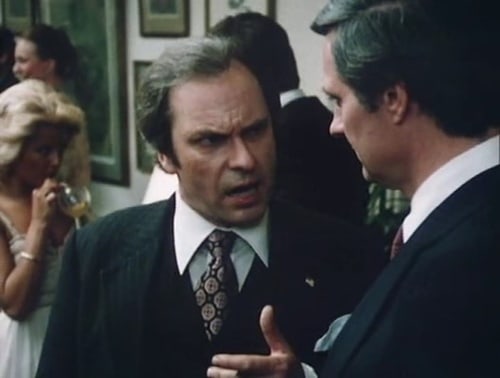
Torn and Alan Alda in The Seduction of Joe Tynan, 1979
In fact, in a long stage and screen career, he was nominated only once for a Tony, for his performance as a sadistic young man in Williams’s “Sweet Bird of Youth” (1959), and only once for an Academy Award, for his turn as a hard-drinking backwoodsman in “Cross Creek” (1983), Martin Ritt’s drama about the author Marjorie Kinnan Rawlings (played by Mary Steenburgen). He did not win either time.
His reputation for volatility was one possible explanation. As he once acknowledged, “I get angry easily.”
He lost his cool most notably in 1968, when he was filming “Maidstone,” an underground film written and directed by Mailer. Mailer was also the star, playing a writer running for president. Mr. Torn played his half brother. In a decidedly unscripted moment, and for reasons that have never been made precisely clear, Mr. Torn struck Mailer with a hammer on camera; Mailer responded by attacking Mr. Torn and biting his ear. The fight became the centerpiece of the film.
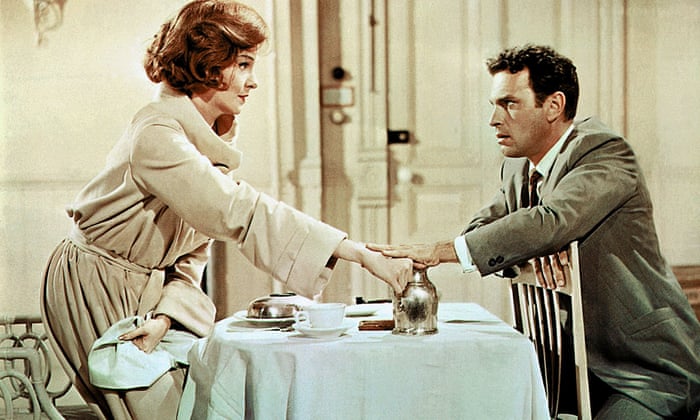
Torn with Shirley Knight in the Broadway production of Horton Foote’s “The Young Man From Atlanta” in 1997
Later in life, Mr. Torn professed to have mellowed. In 1997 he told The Los Angeles Times: “I just don’t give people trouble anymore. I say, ‘Excuse me, I only fight with friends.’ And I walk away.”
Or at least he had moved on to fighting in court. Dennis Hopper told a story on “The Tonight Show” in 1994 about how Mr. Torn had pulled a knife on him during an argument in the 1960s. (It was apparently as a result of this argument that Jack Nicholson and not Mr. Torn was cast as the Southern lawyer in Mr. Hopper’s hit film “Easy Rider.”)
The way Mr. Torn remembered it, Mr. Hopper had pulled a knife on him, not the other way around, so he sued for defamation. He won.
Yet Mr. Torn maintained his bad-boy image to the end. He was arrested on drunken-driving charges several times in his 70s. In 2010 he was arrested after breaking into a Connecticut bank at night with a loaded gun in his possession. Explaining that he had been intoxicated and thought the bank was his house, he pleaded guilty to reckless endangerment, criminal trespass, criminal mischief and illegally carrying a firearm. He was given a suspended sentence and placed on probation for three years; during his probation he was subject to random drug and alcohol testing.
His brushes with the law may have defined Mr. Torn’s image for many people; he often suggested that this image and his political activism — he was an avid leftist — cost him work.
Torn as Judas Iscariot, speaking with the director Nicholas Ray during the filming of “King of Kings” in 1961
Elmore Rual Torn Jr. was born on Feb. 6, 1931, in Temple, Tex., a small city north of Austin, to Elmore and Thelma (Spacek) Torn. (The actress Sissy Spacek was a cousin of hers.) He inherited the nickname Rip from his father, an economist.
The younger Rip attended what is now Texas A&M University, where he studied agriculture, before transferring to the University of Texas and switching his focus to drama. After graduating, he served in the Army for two years and then moved to New York to study at the Actors Studio.
Early on, Mr. Torn played a small, uncredited part in Elia Kazan’s Southern Gothic film “Baby Doll” (1956), written by Williams, and a credited one in “Time Limit,” a 1957 drama starring Richard Widmark as an Army officer accused of treason. He also became a familiar face on television anthology series like “The United States Steel Hour” and “Kraft Theatre.”
Torn with Geraldine Page and Muni Seroff in a 1972 television version of Chekhov’s “A Marriage Proposal"
His first two Broadway appearances were in Williams plays directed by Kazan. In 1956 he took over the lead male role, Brick, in “Cat on a Hot Tin Roof” toward the end of its run. Three years later he was in the original cast of “Sweet Bird of Youth.”
That play was good to him: Tony-nominated for his supporting performance as Tom Finley, the brother of the lead character’s old girlfriend, Mr. Torn eventually took over the lead role, the drifter Chance Wayne, from Paul Newman.
With Geraldine Page in Sweet Bird of Youth, 1962
Mr. Torn, Newman and Geraldine Page, Mr. Torn’s future wife, who played the faded movie star whom Chance takes up with, all reprised their original Broadway roles in the 1962 movie version. When “Sweet Bird of Youth” was adapted for television in 1989, Mr. Torn played yet another role: the vengeful Boss Finley, Tom’s father. Among his other TV roles was the dying Southern patriarch Big Daddy in a 1984 adaptation of “Cat on a Hot Tin Roof.”
Mr. Torn’s nine other Broadway appearances included three acclaimed revivals: Williams’s “The Glass Menagerie” (1975) and two plays by Eugene O’Neill: “Strange Interlude” (1963) and “Anna Christie” (1993). He also appeared frequently Off Broadway in the 1960s and ’70s.
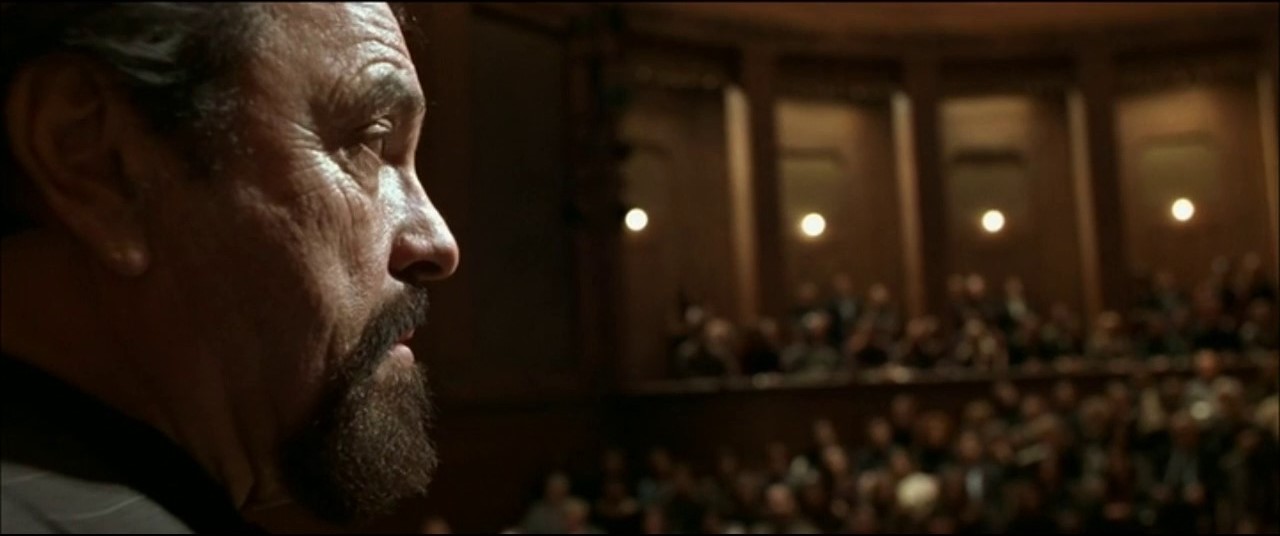
The Wonder Boys, 2000
His movies ranged from the gritty drama “The Cincinnati Kid” (1965) to the biblical blockbuster “King of Kings” (1961), in which he played Judas, to escapist fare like “The Beastmaster” (1982) and “RoboCop 3” (1993).
His performance as Nixon came in the 1979 CBS mini-series “Blind Ambition,” based on a book by the former White House counsel John Dean (played by Martin Sheen). He was Walt Whitman in the 1990 movie “Beautiful Dreamers.”
Mr. Shandling said it was Mr. Torn’s performance as Albert Brooks’s unconvincingly reassuring afterlife lawyer in the comedy “Defending Your Life” (1991) that won him his role on “The Larry Sanders Show.”
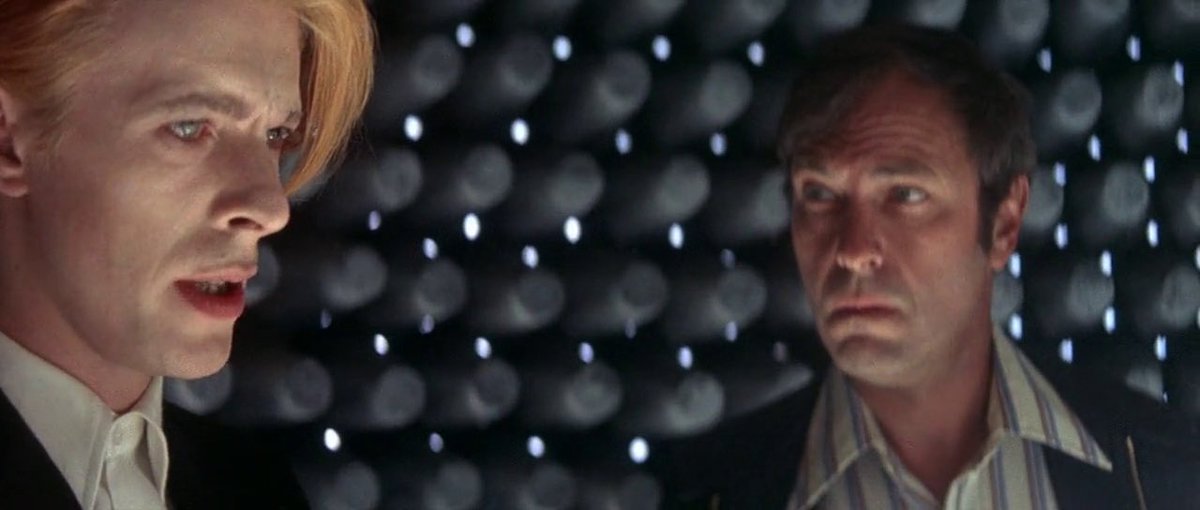
With David Bowie in The Man Who Fell to Earth, 1976
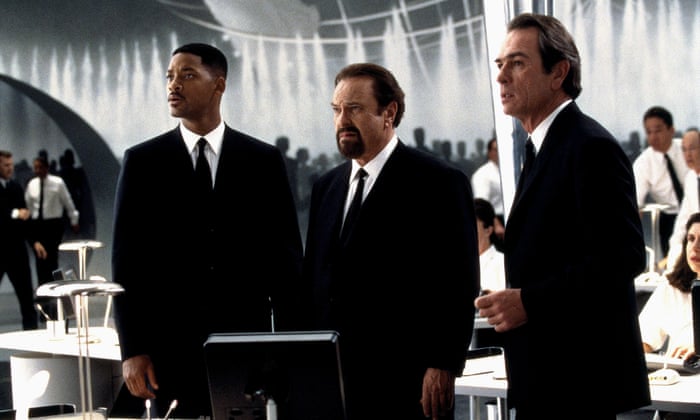
Among Mr. Torn’s better-known movies were two science-fiction hits. In the dark “The Man Who Fell to Earth” (1976), he was a cynical scientist who befriends the title character, a space alien played by David Bowie; in the lighthearted “Men in Black” (1997), he headed an organization supervising extraterrestrials who secretly live on Earth. He reprised the role in the film’s 2002 sequel.
Will Smith, Torn and Tommy Lee Jones in The Men in Black, 1997
But he seemed to earn his best reviews and his most passionate audiences for films that were not hits.
“Payday” (1973), a road movie about a ruthless country singer, did not fare well at the box office but developed a cult following. His performance as an aging Memphis record producer in the 2005 drama “Forty Shades of Blue” was critically praised but also little seen. In his Times review of that film, A. O. Scott called Mr. Torn “a crafty and powerful actor” who was “easily the peer of Jack Nicholson or Tommy Lee Jones.”
Mr. Torn’s last screen roles included a lascivious Louis XV in Sofia Coppola’s “Marie Antoinette” (2006) and a blustery network chief, a character reminiscent of his Emmy-winning Artie, on the sitcom “30 Rock.” In 2016 he played the voice of a talking letter M wearing a top hat on the offbeat animated series “TripTank.” As President Richard M. Nixon, with Martin Sheen as the White House counsel John Dean, in the 1979 CBS mini-series “Blind Ambition”
Mr. Torn married the actress Ann Wedgeworth in 1955. He married Ms. Page in 1963, two years after he and Ms. Wedgeworth divorced. They remained married until her death in 1987, but by then Mr. Torn had already begun a long-term relationship with the actress Amy Wright, who worked with Mr. Torn and Ms. Page’s Sanctuary Theater Workshop in New York.
In addition to Ms. Wright, Mr. Torn is survived by four daughters: Danae, from his first marriage, the actress Angelica Page, from his second, and Katie and Claire, from his relationship with Ms. Wright; two sons, Anthony and Jonathan, both from his second marriage; his sister, Patricia Alexander; and four grandchildren.
In a 1997 interview with The Times, Mr. Torn credited Geraldine Page with teaching him the secret of emotional health.
“I learned from Gerry that all you need is time on the stage,” he said. “No matter how I felt, no matter what anyone said about me, I always had the audience.” Jacey Fortin contributed reporting.