Saturday, 14 April 2018

Milos Forman RIP

Related image
Milos Forman, Oscar-Winning Director of ‘One Flew Over the Cuckoo’s Nest,’ Dies at 86

Michael Cieply
The New York Times
14 April 2018

LOS ANGELES — Milos Forman, a filmmaker who challenged Hollywood with his subversive touch, and twice directed movies that won the Oscar for best picture, died on Friday. He was 86.

His death was confirmed by Vlastislav Malek, a representative of his hometown, Caslav, in the Czech Republic, and by his wife, Martina Formanova, who told the Czech News Agency that he had died after a short illness in the Connecticut town of Hartford.

A native of what was then Czechoslovakia, Mr. Forman came to the United States in the late 1960s as a rebellious young filmmaker whose satirical bent was little welcomed at home in the wake of the 1968 Soviet invasion.

Just a few years later, Mr. Forman’s “One Flew Over the Cuckoo’s Nest” — a tragicomic story of revolt and repression in a mental institution — won five Oscars, including those for best director and best picture.

The film put Mr. Forman in the front rank of those who struggled to make big, commercial films with countercultural sensibilities. His sympathy for the odd man out was always apparent, even as his movies grew in scope.

“Amadeus,” a 1984 adaptation of Peter Shaffer’s stage play, presented Wolfgang Amadeus Mozart as a genius who undermined authority with his art. Again, Oscars for best director and best picture were among its many honors.

Still, Mr. Forman, by then a United States citizen, said one of his greatest pleasures from the film — which was shot in the Czech Republic — was the chance to return in triumph to his homeland.

“I’ve always done everything in my life to win,” Mr. Forman said of himself in a 1994 biography, which was entitled “Turnaround: A Memoir,” and was written with Jan Novak.

Mr. Forman was caught up in the turmoil of German occupation not many years after his birth, in Caslav, on Feb. 18, 1932. Both his mother, born Anna Suabova, and the man he believed to be his father, a teacher named Rudolf Forman, had been separately seized by the Germans and killed in death camps.

For years, Mr. Forman vaguely told interviewers that he believed himself to be half-Jewish, though both parents attended a Protestant church. It was Mr. Novak, in researching “Turnaround,” who ended the mystery.

After the 1964 release of his first feature film, “Black Peter” — about the misadventures of a teenager beginning his work life — Mr. Forman was contacted by a woman who had been with his mother in Auschwitz, Mr. Novak learned and eventually reported. The woman explained that Mr. Forman was actually the son of a Jewish architect with whom Mr. Forman’s mother had an affair. In time, Mr. Forman found his biological father, who survived the war and was living in Peru.

Raised by foster parents, Mr. Forman attended film school in Prague, and first made his mark with his work on a film and theater presentation at the 1958 Brussels World Exhibition. An early feature, “The Loves of a Blonde,” won attention on the international festival circuit in 1965. Another, “The Firemen’s Ball,” two years later, rubbed Czech officials the wrong way with its spoof of the firefighting bureaucracy, though Mr. Forman was already turning his attention to opportunities abroad.

When the Soviets invaded in August of 1968, Mr. Forman was in Paris negotiating to make a Hollywood film. His first American feature, a youth comedy called “Taking Off,” was released by Universal Pictures in 1971. It did so poorly, Mr. Forman later said, that he wound up owing the studio $500.Photo

Through the early 1970s, Mr. Forman — a hearty bon vivant without means for the good life — went through a period of self-described depression. For much of that time, he holed up in New York’s Chelsea Hotel, sleeping through the days and communicating with émigré friends.

By then, he had been married twice, first to an actress, Jana Brejchova, then to another performer, Vera Kresadlova, who had remained in Czechoslovakia with their two sons, Petr and Matej.

In addition to Ms. Formanova and Petr and Matej, he is survived by his twin sons, James and Andrew, with Ms. Formanova, his third wife.

In his memoir, Mr. Forman said the producers of “Cuckoo’s Nest,” Michael Douglas and Saul Zaentz, sought him out because “I seemed to be in their price range.” In fact, they had made a perfect match between filmmaker and material, in this case a cult novel by Ken Kesey.

Jack Nicholson was the movie’s star. But Mr. Forman — who liked to coax star performances out of lesser-known actors — did exactly that with Louise Fletcher, who won an Oscar for her portrayal of the dictatorial Nurse Ratched.

“Hair” and “Ragtime,” which came next, left less impression, but kept Mr. Forman on the list of directors whom executives were willing to trust with their more sophisticated projects. In 1978, meanwhile, Mr. Forman joined Frantisek Daniel, another Czech, as co-director of the film program at Columbia University’s school of the arts.

It was for Mr. Zaentz that Mr. Forman next struck gold, with “Amadeus.” The film won eight Oscars, and Mr. Forman later wrote, left him with a bittersweet, and ultimately correct, sense that his career had peaked.

“Valmont,” based on an 18th-century novel by Pierre Ambroise François Choderlos de Laclos, was overshadowed in 1989 by the previous year’s release of “Dangerous Liaisons,” a film by the director Stephen Frears, which used the same underlying material.

Mr. Forman next made a series of films each of which pushed Hollywood out of its comfort zone.

“The People vs. Larry Flynt” pressed the limits of tolerance for an antihero with its sympathetic portrait of the Hustler magazine publisher Larry Flynt. Released by Columbia Pictures in 1996, it was a box-office bust, with domestic ticket sales of only about $20 million.

In 1999, “Man on the Moon,” Mr. Forman’s complex portrait of the comic Andy Kaufman and his alter-ego Tony Clifton, did only a little better for Universal Pictures. Yet the film left a mark on Mr. Forman’s personal life. Shortly before its release, he married Martina Zborilova, who had worked with him earlier as a production assistant. He became the father of twin sons, whom the couple named Andrew, for Mr. Kaufman, and James, for Jim Carrey, the movie’s star.

Mr. Forman’s next film, “Goya’s Ghosts,” for Samuel Goldwyn Films, was an intricate examination of persecution in Spain in the era of religious persecution and Napoleonic conquest. The film found a minuscule audience when it was released on American screens in 2007.

But it appeared to play out themes from Mr. Forman’s life, as its heroine, an artist’s model, was imprisoned and tortured because of what were claimed to be her hidden Jewish habits and roots.

In an interview with a writer for The Star Tribune of Minneapolis, Mr. Forman talked of Goya’s vacillation between unfettered expression and a desire to please in terms that recalled a tension between his own artistic urges and the lure of success.

“Torn between protest and preservation,” Mr. Forman said of Goya, “he is the most courageous coward.”

Friday, 13 April 2018

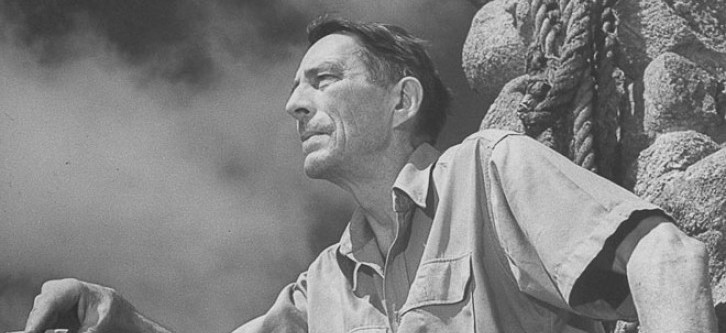
Dead Poets Society #72 Robinson Jeffers: Hurt Hawks

Image result for robinson jeffers

Hurt Hawks by Robinson Jeffers

I

The broken pillar of the wing jags from the clotted shoulder,
The wing trails like a banner in defeat,

No more to use the sky forever but live with famine
And pain a few days: cat nor coyote
Will shorten the week of waiting for death, there is game without talons.

He stands under the oak-bush and waits
The lame feet of salvation; at night he remembers freedom
And flies in a dream, the dawns ruin it.

He is strong and pain is worse to the strong, incapacity is worse.
The curs of the day come and torment him
At distance, no one but death the redeemer will humble that head,

The intrepid readiness, the terrible eyes.
The wild God of the world is sometimes merciful to those
That ask mercy, not often to the arrogant.

You do not know him, you communal people, or you have forgotten him;
Intemperate and savage, the hawk remembers him;
Beautiful and wild, the hawks, and men that are dying, remember him.

II

I'd sooner, except the penalties, kill a man than a hawk;
but the great redtail
Had nothing left but unable misery
From the bone too shattered for mending, the wing that trailed under his talons when he moved.

We had fed him six weeks, I gave him freedom,
He wandered over the foreland hill and returned in the evening, asking for death,
Not like a beggar, still eyed with the old
Implacable arrogance.

I gave him the lead gift in the twilight.
What fell was relaxed, Owl-downy, soft feminine feathers; but what
Soared: the fierce rush: the night-herons by the flooded river cried fear at its rising
Before it was quite unsheathed from reality.


Thursday, 12 April 2018

Last night's set lists at The Habit, York

Ron plays Wild Horses

Ron Elderly: -
You Better Move On
Wild Horses


Da Elderly: -
Romancing Tonight
Out On The Weekend


The Elderly Brothers: -
Love Hurts
All My Loving
When Will I Be Loved
I Saw Her Standing There


It was a cold, damp, misty night in York. Nevertheless, there were enough players and punters willing to venture out to the open mic. Occasional visitor Dave from Leeds gave us a medley from Frampton Comes Alive. Regular Deb closed the show with two new self-penned songs. There were some Neil Young fans in the audience, so the after-show jam turned into a bit of a Neil-fest.

Wednesday, 11 April 2018

Diane Arbus: A box of ten photographs at The Smithsonian


Stephen Frank, Diane Arbus with her photograph Identical twins, Roselle, N.J. 1966, during a lecture at the Rhode Island School of Design in 1970. © Stephen A. Frank


Diane Arbus' daring early work: 'It was a story that went untold, until now'
The photographer’s largely unseen set of 1960s photos focusing on outcasts of society is now on view at the Smithsonian

Nadja Sayej
The Guardian
Mon 9 Apr 2018

In 1970, Diane Arbus was a struggling magazine photographer in New York City. She wanted to make more money, so she put together a series of photos in a plexiglass box, which she called “A box of ten photographs by Diane Arbus”, priced at $1,000.

The photos highlight the outcasts of American society, such as giants, dwarves and transvestites. Arbus’s photos shocked and disgusted art crowds to the point they were spat on when exhibited. As Norman Mailer observed: “Giving a camera to Diane Arbus is like putting a live grenade in the hands of a child.”
Stephen Frank, Diane Arbus with her photograph A young Brooklyn family going for a Sunday outing, N.Y.C. 1966, during a lecture at the Rhode Island School of Design in 1970
Stephen Frank, Diane Arbus with her photograph A young Brooklyn family going for a Sunday outing, N.Y.C. 1966, during a lecture at the Rhode Island School of Design in 1970. © Stephen A. Frank

This controversial series, taken from 1962 to 1967, are now on view at the Smithsonian American Art Museum in Washington DC. Diane Arbus: A box of ten photographs showcases the original photo series – which was purchased from GH Dalsheimer Gallery in 1986 – alongside accompanying ephemera that traces Arbus’s meteoric rise to fame as an art star.

“I was amazed by this body of work, which I had never seen before,” said John Jacob, the curator of the exhibition who stumbled upon Arbus’s series in storage. “My immediate instinct was, ‘We have this treasure, let’s get it up.’”
The series features a photo of identical twins from New Jersey named Cathleen and Coleen Wade, from 1967, which inspired the twin ghosts in Stanley Kubrick’s film The Shining, was referenced in Harmony Korine’s movie Gummo and was recreated by photographer Sandro Miller, with John Malkovich as the model. Arbus’s photo sold for $478,000 in 2004.
Stephen Frank, Diane Arbus with her photograph Retired man and his wife in a nudist camp one morning, N.J. 1963, during a lecture at the Rhode Island School of Design in 1970
Stephen Frank, Diane Arbus with her photograph Retired man and his wife in a nudist camp one morning, N.J. 1963, during a lecture at the Rhode Island School of Design in 1970. © Stephen A. Frank

The series also includes a shot of a nudist couple sitting in their living room – but while we cannot see it, the photographer was also naked. “How does she do it?” asked Irving Penn while reporting on Arbus. “She put a camera between those bare breasts and photographed those nudists.”

Another photo features Eddie Carmel, a Jewish giant at home with his parents in the Bronx. The 1970 photo inspired Carmel’s cousin to make an audio documentary about him in 1999. A print of this photo was sold at auction for $421,000 in 2007.

Though she was a modestly recognized magazine photographer trying make it in the art world, Arbus wasn’t alone. In fact, she was part of a small community of photographers trying to have their photos taken seriously.

“Photography in contemporary art today came from Diane Arbus, she crossed the bridge first from editorial to the museum world,” said Jacob. “She is a pioneer who opened the door of the photograph being a fine artwork that is collectible.”

Diane Arbus, A woman with her baby monkey, N.J. 1971, 1971, gelatin silver print, 14 7/8 x 15 in. Smithsonian American Art Museum; Museum purchase. © The Estate of Diane Arbus

Arbus was known for pushing the traditional boundaries of portraiture to include people who were not accepted in the mainstream. Art critic Susan Sontag wrote of her photographic subjects that they were “pathetic, pitiable, as well as repulsive”.

Arbus never saw her work as perfect, and once compared them to a stain. “My photos are proof that something was there, which no longer is,” she said in 1971. “You can turn away but when you come back, they’ll still be there looking at you.”

This series was special because Arbus curated everything about it. “When she did magazine work, she worked with art directors – they created a narrative out of her work,” said Jacob. “This was the only time she selected her own images, it’s a range of subject matter of her known and some less-known pictures.”
Diane Arbus, Boy with a straw hat waiting to march in a pro-war parade, cover of Artforum, May 1971
Diane Arbus, Boy with a straw hat waiting to march in a pro-war parade, cover of Artforum, May 1971, 10 ½ x 10 ½ in. Smithsonian American Art Museum; Museum purchase. © The Estate of Diane Arbus © Artforum, May 1971, “Five Photographs,” by Diane Arbus. Photo by Mindy Barrett

While the series was meant to be an edition of 50, there were only four editions created before Arbus took her own life in 1971 at age 48. The four were sold to prominent artists and art directors, including Ansel Adams and Jasper Johns.

“Of those four, this is the only one held in a public museum,” said Jacob. “This is the first time it’s been looked at as a portfolio in a public space; our set is the only one she made, sold and gave to a person who was a friend. It has 11 prints, instead of 10.”

The three-room exhibition features more than 50 pieces of ephemera, outlining her background in photography, her inspiration and even her hustle. She shares her excitement of the photos in letters written to her husband, and in letters to fans, where she tries to convince them to buy the box. “It’s an untold story, but an important one to help us understand how we look at photography today,” said Jacob.
Stephen Frank, Diane Arbus with her photograph A family on their lawn one Sunday in Westchester, N.Y. 1968, during a lecture at the Rhode Island School of Design in 1970
Stephen Frank, Diane Arbus with her photograph A family on their lawn one Sunday in Westchester, N.Y. 1968, during a lecture at the Rhode Island School of Design in 1970. © Stephen A. Frank

When she was alive, Arbus was seen as a freakshow photographer, but when she died, she was recognized for finding the divinity in the everyday. Just one year after her death in 1972, Arbus was the first American photographer ever to show at the Venice Biennale. It was a sensation with rave reviews, long lineups and landed her a cover story of Artforum magazine. “It was the thing that propelled her posthumous career,” said Jacob. “Photography in contemporary art today came from this moment.”

Sadly, Arbus didn’t live to see the success of how far these 10 photos took her. “It was a story that went untold, until now,” said Jacob. “This portfolio was the big bang in her career. Even though she is no longer with us, her work is taking on new proportions.”

Diane Arbus: A box of ten photographs will be exhibited at the Smithsonian in Washington DC until 21 January


John Gossage, Diane Arbus in Central Park, 1967
John Gossage, Diane Arbus in Central Park, 1967, gelatin silver print, 20 x 24 in. Private Collection. Photo © John Gossage

Diane Arbus: A box of ten photographs
APRIL 6, 2018 — JANUARY 21, 2019
Smithsonian American Art Museum (8th and F Streets, NW)

“They are the proof that something was there and no longer is. Like a stain. And the stillness of them is boggling. You can turn away but when you come back they’ll still be there looking at you.”

—Diane Arbus, 1971

In late 1969, Diane Arbus began to work on a portfolio. At the time of her death in 1971, she had completed the printing for eight known sets of A box of ten photographs, of a planned edition of fifty, only four of which she sold during her lifetime. Two were purchased by photographer Richard Avedon; another by artist Jasper Johns. A fourth was purchased by Bea Feitler, art director atHarper’s Bazaar, for whom Arbus added an eleventh photograph.

This exhibition traces the history of A box of ten photographs between 1969 and 1973, using the set that Arbus assembled for Feitler, which was acquired by SAAM in 1986. The story is a crucial one because it was the portfolio that established the foundation for Arbus’s posthumous career, ushering in photography’s acceptance to the realm of “serious” art. After his encounter with Arbus and the portfolio, Philip Leider, then editor in chief of Artforum and a photography skeptic, admitted, “With Diane Arbus, one could find oneself interested in photography or not, but one could no longer. . . deny its status as art. . . . What changed everything was the portfolio itself.”
Stephen Frank, Diane Arbus with her photograph A young man in curlers at home on West 20th Street, N.Y.C. 1966, during a lecture at the Rhode Island School of Design in 1970
Stephen Frank, Diane Arbus with her photograph A young man in curlers at home on West 20th Street, N.Y.C. 1966, during a lecture at the Rhode Island School of Design in 1970. © Stephen A. Frank

In May 1971, Arbus was the first photographer to be featured in Artforum, which also showcased her work on its cover. In June 1972, the portfolio was sent to Venice, where Arbus was the first photographer included in a Biennale, at that time the premiere international showcase for contemporary artists. SAAM organized the American contribution to the Biennale that year, thereby playing an important early role in Arbus’s legacy.

John Jacob, the McEvoy Family Curator for Photography at SAAM, organized the exhibition. The forthcoming catalogue, copublished with the Aperture Foundation, features an in-depth essay by Jacob that presents new and compelling scholarship correcting errors by Arbus’s biographers and adding significant detail to the period between her death and the 1972 posthumous retrospective at MoMA.

Friday, 6 April 2018

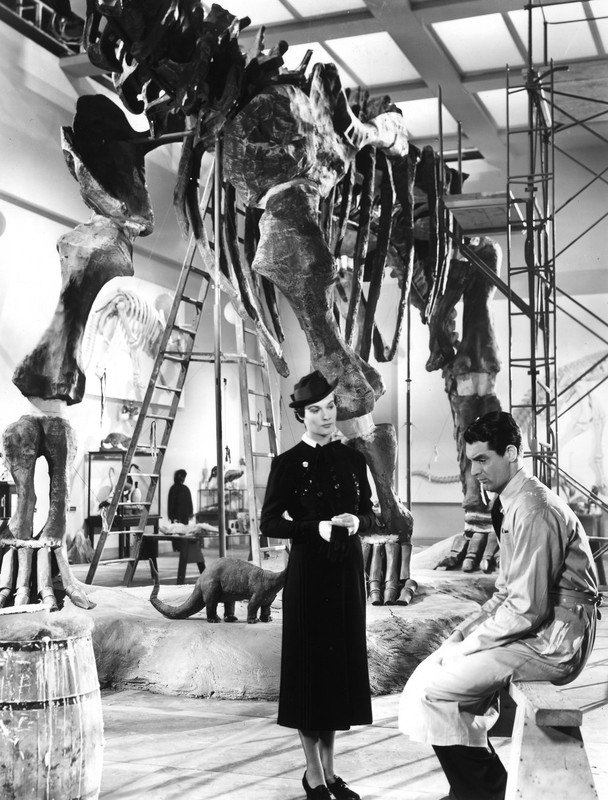
The Old Dark House (James Whale, 1932) - restored and reviewed

Image result for the old dark house restored
The Old Dark House’ Is Creepy. Its Occupants? Downright Kooky

J. Hoberman
The New York Times
5 October 2017

“The Old Dark House,” James Whale’s comic horror film, may not have invented a particular subgenre in which a group of travelers find themselves trapped in a mansion haunted by weirdos, but its title named one.

Released for Halloween 1932, this film adaptation of J.B. Priestley’s novel was the witty forerunner to less elegant vehicles for the Bowery Boys and Bob Hope; TV sitcoms like “The Addams Family” and “The Munsters”; and, most notably, “The Rocky Horror Picture Show.”
Image result for the old dark house film poster
“The Old Dark House,” now in an excellent 4K digital restoration, opens on a dark and stormy night with a bickering young couple, Margaret Waverton (Gloria Stuart) and her husband, Philip (Raymond Massey), and their insouciantly wisecracking friend, Roger Penderel (Melvyn Douglas), motoring through rural Wales. After the weather forces them to abandon their car, they seek shelter at an ominous-looking house. The hulking creature that opens the door (an unrecognizable Boris Karloff) would scare anyone back into the monsoon.
Image result for the old dark house film poster
The film initially pits these characters against a bizarre threesome: Karloff’s sinister, bulked-up butler named Morgan, and a creepy brother-sister pair, Horace and Rebecca Femm, each loathing the other while hinting of dark family secrets. (Horace, the more hospitable of the two, is played by Ernest Thesiger, the waspish Dr. Pretorius in Whale’s 1935 film “Bride of Frankenstein”; Eva Moore, an English actress and suffragist, plays the morbidly religious Rebecca.) Presently, another couple arrives out of the storm — a flirtatious chorus girl (Lilian Bond) and a boisterous local aristocrat who, as embodied by Charles Laughton, is a force of nature to rival the weather.
Image result for the old dark house restored
As the night goes on, more members of the Femm family appear, including Horace and Rebecca’s 102-year-old paterfamilias (credited as “John Dudgeon” albeit played by the actress Elspeth Dudgeon) and a cackling pyromaniac (Brember Wills). Meanwhile, Morgan gets soused and, eyes rolling up into his head, begins chasing Margaret who has since changed into evening dress. The New York Times reviewer Mordaunt Hall thought Ms. Stuart’s gown “a trifle out of place” but “a stunning creation” nonetheless.
Image result for the old dark house restored
The film historian William K. Everson suggested that “The Old Dark House” is best seen twice, the better to dispose of the plot and enjoy Whale’s atmospheric lighting and musty Victorian mise-en-scène. In addition to assorted nut-cases and scaredy-cats, “The Old Dark House” is well-stocked with warped mirrors, gargoyle banisters and a canine statue suggesting the Egyptian god Anubis.
Image result for the old dark house restored
Haunted-house movies generally have something to do with a guilty past, whether that of a particular family, as in “House of Usher,” or that of a nation (see “The Shining”). Priestley’s novel was a critique of Britain’s post-World War I society. A bit of that sentiment remains — Mr. Douglas’s jaunty character is revealed to be a traumatized veteran — but, some amusing parody of the British gentry aside, “The Old Dark House” is essentially about its own plot devices and narrative sleight of hand.

While not as epochal as Whale’s “Frankenstein” (1930) or the equal of his two great horror comedies, “The Invisible Man” (1933) and “Bride of Frankenstein” (1935), it’s an extremely credible entertainment that, creaking along at a smart pace, applauds itself with shrieks, thuds and thunderclaps.


Image result for the old dark house film poster


Thursday, 5 April 2018

Last night's set lists at The Habit, York


Ron Elderly: -
The River
Love Is The Drug


Da Elderly: -
I Don't Want To Talk About It
You've Got A Friend


The Elderly Brothers: -
True Love Ways
I'll Get You
When Will I Be Loved
I'm Into Something Good
Sloop John B


On a cold, wet and windy night in York, it was a surprise that so many people turned out for the open mic.......albeit most were players. There were one or two new faces including a young Geordie lass who surprised us with an excellent Come Together. The duo pictured above gave us some excellent guitar and flute/recorder instrumental tunes. The Elderlys dug out some songs which we hadn't played in a while, everyone singing along with Sloop John B. The evening ended on a sombre note; to mark the untimely passing (over Easter) of talented local musician Ann Dunford-Smith we all sang Let It Be.

Wednesday, 4 April 2018

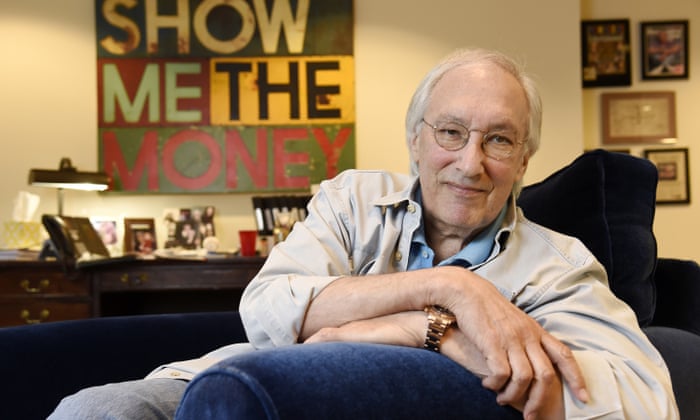
Steven Bochco RIP

Steven Bochco, Producer of ‘Hill Street Blues’ and ‘NYPD Blue,’ Dies at 74


Matthew Haag and Chrsitopher Mele
The New York Times
2 April 2018

Steven Bochco, a celebrated television writer and producer whose sophisticated prime-time portrayals of gritty courtrooms and police station houses redefined television dramas and pushed the boundaries of onscreen vulgarity and nudity, died on Sunday in the Los Angeles neighborhood of Pacific Palisades. He was 74.

The cause was complications of cancer, a family spokesman said. He had received a stem cell transplant in October 2014 for leukemia.

Over three decades starting in the early 1980s, Mr. Bochco, whose earlier shows “Hill Street Blues” and “L.A. Law” upended the traditional hourlong drama, was one of Hollywood’s most prolific and sought-after producers. He mixed elements of daytime soap operas — like story lines that stretch over multiple episodes and feature a rich ensemble of characters — with a true-to-life visual style and colorful language.

The television and movie critic David Bianculli called Mr. Bochco “one of the most important figures in the history of television.” Mr. Bianculli, who has covered the entertainment industry for more than 40 years and runs the website TV Worth Watching, said on Sunday that television police dramas could be divided between those that came before and after “Hill Street Blues.”

“We wouldn’t have the excellence on TV, on cable, broadcast and streaming if it wasn’t for what Steven Bochco did on broadcast TV,” Mr. Bianculli said. “He was a pioneer.”

On “Hill Street Blues” in the 1980s and on “NYPD Blue” a decade later, Mr. Bochco lent a realism to police dramas and introduced twisting, sophisticated story lines and subplots.

Police detectives did not solve crimes in a single episode, and they had flaws just like the bad guys. They drank, swore and had messy personal lives — provocative portrayals that caused some episodes to carry “explicit warnings,” scared off some advertisers and led some network affiliates to refuse to broadcast episodes.

But his style forever changed the format.

“The idea of almost every other cop show was that the private lives of these folks was what happened the other 23 hours of the day that you weren’t watching them, and we turned that inside out,” Mr. Bochco said in a 2014 interview with The New York Times about the creation of “Hill Street Blues” and its lasting influence.

But “Hill Street Blues” was not an overnight success. After its first season, in 1981, the show ranked 87th out of 96 television series in the ratings. But a few months later, it won eight Emmy Awards, including for best drama, giving “Hill Street Blues” momentum that carried the series another six seasons on NBC. It also propelled Mr. Bochco’s career.

In 1986, he applied his trademark method to courtrooms, creating “L.A. Law” on NBC. It was no “Perry Mason.” The show brought a realism to lawyers and law firms and accurately portrayed legal issues, all while tackling tough and sensitive subjects like capital punishment and AIDS.

By the late 1980s, Mr. Bochco was in high demand. In 1987, ABC lured him away from NBC with a first-of-its-kind network exclusive: a $50 million deal to create 10 series over eight years. Two shows were hits, “NYPD Blue” and “Doogie Howser, M.D.”

In “Doogie Howser,” a teenage doctor, played by Neil Patrick Harris, tried to balance his personal and professional life. A comedy-drama, the show veered into new territory for Mr. Bochco, but it stuck with a core trait of his shows: pushing the boundaries on television. Some people criticized a 1991 episode about the title character and his girlfriend losing their virginity.

But nothing shocked like “NYPD Blue.”

Months before the show had its premiere in September 1993, Mr. Bochco predicted that its nudity and explicit language would make it the first “R rated” show on network television. In what might have been a marketing ploy, ABC came under tremendous fire in an orchestrated outcry that included full-page newspaper ads. When the first episode aired, it carried only a handful of national advertisers, and 57 of ABC’s 225 affiliates did not broadcast it.

Shortly before the premiere, Mr. Bochco told The Times that he believed that “NYPD Blue” did “break ground, though only because it goes a little farther that anything that’s gone before.” But, he added, “It is a cop show, after all.”

Insisting that viewers be treated like adults, Mr. Bochco sparred with network executives and censors over details such as what percentage of a woman’s breast could appear onscreen or how many times a profanity could be repeated.

The show, about detectives in the 15th Precinct in Manhattan, survived the backlash, winning numerous awards over 12 seasons.

It did not take long for other networks to copy the format, leading to shows like the hospital drama “ER” on NBC. Critics said “NYPD Blue” had lost its groundbreaking luster by the early 2000s.

By then Mr. Bochco had also helped created “Murder One,” a well-received 1990s drama about criminal defense lawyers.

Mr. Bianculli said that one of Mr. Bochco’s lasting contributions was making characters real and relatable. Detective Andy Sipowicz on “NYPD Blue,” played by Dennis Franz, starts out “almost irredeemable but ends up being the soul” of the show, he said.

Without that precedent, viewers might not have been prepared for the likes of Walter White in “Breaking Bad” or Tony Soprano in “The Sopranos,” he said.Photo

Steven Ronald Bochco was born on Dec. 16, 1943, in New York City. His father, Rudolph, was born in Poland, came to the United States at 3 and was a concert violinist. His mother, Mimi, was a painter. The couple also had a daughter, Joanna.

Mr. Bochco is survived by his wife, Dayna; two sons, Jesse Bochco and Sean Flanagan; a daughter, Melissa Bochco; and two grandchildren. Mr. Bochco was previously married to the actress Barbara Bosson, who played Fay Furillo, the ex-wife of Capt. Frank Furillo, on “Hill Street Blues.”

Mr. Bochco grew up in New York City, attended Manhattan High School of Music and Art and then the Carnegie Institute of Technology, now known as Carnegie Mellon University, in Pittsburgh. In an interview with Mr. Bianculli for his book “The Platinum Age of Television: From ‘I Love Lucy’ to ‘The Walking Dead,’ How TV Became Terrific,” Mr. Bochco said his parents had had “zero interest” in buying a television set.

“It was quite the contrary: They were in the minus territory,” he said. Eventually, a group of friends and neighbors pitched in to buy a television for his sister and him.

After college, Mr. Bochco moved with his first wife to Los Angeles and began a writing job at Universal Studios. He wrote the script for the introductory episode of the detective series “Columbo” in 1971, working with Steven Spielberg on it. He moved to the production company MTM Enterprises in the late 1970s and was later chosen to help write a police drama ordered by NBC.

Mr. Bochco said that for “Hill Street Blues,” he had studied a police documentary and aimed to make the series “dimensional,” filling every part of a scene and a frame with something important.

He told Mr. Bianculli: “I always thought that with the success of ‘NYPD Blue’ we would bust open the door for broadcast television to really come into the 21st century properly. And it never happened. And I was amazed then, as I am now, that it didn’t seem to give broadcast television the license to get significantly more adult in their programming.”

He continued: “But the interesting thing is, I think ‘NYPD Blue’ created the cable drama world. I think that’s the door that it opened.”


I remember seeing some kind of BBC review after the show debuted in the U.K. and the 'critics', which I think included John Thaw and Ludovic Kennedy, said they preferred the single story per show type of police programme because this was too difficult to follow...

Saturday, 31 March 2018

Dead Poets Society #71 Ken Kesey: Geometry

Image result for ken kesey poet

Geometry by Ken Kesey

If you draw a line
Precisely safe and parallel to mine,
We can sail together
Clear on past the stars
And never meet.
And since the holes between
These points of distant heat
Are deep and blind,
Sight a course for collision
And hang on tight!
... the precision of our loving
Is the lethal kind.


Thursday, 29 March 2018

Last night's set lists


At The Habit, York: -

Ron Elderly: -
Good Year For The Roses
Always On My Mind

Da Elderly: -
One Of These Days
Harvest Moon


The Elderly Brothers: -
Crying In The Rain
Handle With Care
Yes I Will
Bring It On Home To Me


What started looking like a very quiet night in The Habit turned into a busy one, the last hour or so being particularly enjoyable. The duo pictured above gave us Spanish guitar instrumental versions of While My Guitar Gently Weeps and Hotel California. After the Elderlys' set I was joined by regular Chris, who had asked me to accompany him on Birds and Only Love Can Break Your Heart. Deb finished off the open mic with a set including Love Is Like A Butterfly, the theme tune from the late 70s, early 80s TV comedy Butterflies. The after-show jam rolled on as usual and a splendid time was guaranteed for all.....as someone nearly said on a Beatles album sleeve.