Wednesday, 14 March 2018

Stephen Hawking RIP

Image result for stephen hawking star trek


Obituary: Stephen Hawking

Stephen Hawking - who died aged 76 - battled motor neurone disease to become one of the most respected and best-known scientists of his age.

A man of great humour, he became a popular ambassador for science and was always careful to ensure that the general public had ready access to his work.

His book A Brief History of Time became an unlikely best-seller although it is unclear how many people actually managed to get to the end of it.

He appeared in a number of popular TV shows and lent his synthesised voice to various recordings.
Stephen William Hawking was born in Oxford on 8 January 1942. His father, a research biologist, had moved with his mother from London to escape German bombing.

Hawking grew up in London and St Albans and, after gaining a first-class degree in physics from Oxford, went on to Cambridge for postgraduate research in cosmology.

He was diagnosed with motor neurone disease while at university

As a teenager he had enjoyed horse-riding and rowing but while at Cambridge he was diagnosed with a form of motor neurone disease which was to leave him almost completely paralysed.

As he was preparing to marry his first wife, Jane, in 1964 his doctors gave him no more than two or three years of life.

But the disease progressed more slowly than expected. The couple had three children, and in 1988 - although Hawking was by now only able to speak with a voice synthesiser following a tracheotomy - he had completed A Brief History of Time - a layman's guide to cosmology.

It sold more than 10 million copies, although its author was aware that it was dubbed "the most popular book never read".

Celebrity

Hawking discovered the phenomenon which became known as Hawking radiation, where black holes leak energy and fade to nothing. He was renowned for his extraordinary capacity to visualise scientific solutions without calculation or experiment.

But it was perhaps his "theory of everything", suggesting that the universe evolves according to well-defined laws, that attracted most attention.

"This complete set of laws can give us the answers to questions like how did the universe begin," he said. "Where is it going and will it have an end? If so, how will it end? If we find the answers to these questions, we really shall know the mind of God."

Hawking's celebrity status was acknowledged even by The Simpsons - he was depicted drinking at a bar with Homer, suggesting he might steal Homer's idea that the universe is shaped like a doughnut.

He also appeared as himself in an episode of the BBC comedy series, Red Dwarf and as a hologram of his image in Star Trek: The Next Generation.

The rock group Pink Floyd used his distinctive synthesised voice for the introduction to Keep Talking, on their 1994 album The Division Bell.

Undeterred by his condition, he continued his work as Lucasian Professor of Mathematics at Cambridge University, and in 2001, his second book - Universe in a Nutshell - was published.

Erratic

He believed his illness brought some benefits; he said before he developed the disease he had been bored with life.

But his condition inevitably made him dependent on others. He often paid tribute to his wife, who had looked after him for more than 20 years, and friends and relatives were shocked when he left her for one of his nurses, whom he married in 1995.

By 2000, Hawking was a frequent visitor to the emergency department of Addenbrooke's Hospital in Cambridge, seeking treatment for a variety of injuries. Police questioned several people about allegations that he had been subjected to verbal and physical abuse over a period of years.

He was known to be an erratic, almost reckless driver of his electric wheelchair, and Hawking insisted his injuries were not caused by abuse. No action was taken.

In 2007, he became the first quadriplegic to experience weightlessness on board the so-called "vomit comet", a modified plane specially designed to simulate zero gravity. He said he did it to encourage interest in space travel.

"I believe that life on Earth is at an ever-increasing risk of being wiped out by a disaster such as sudden nuclear war, a genetically engineered virus, or other dangers. I think the human race has no future if it doesn't go into space. I therefore want to encourage public interest in space."

In 2014, the film The Theory of Everything was released, based on Jane Hawking's account of their courtship and marriage. Hawking himself met Eddie Redmayne as part of the actor's preparation for taking on the role of the scientist.

In a series for the Discovery Channel, he said it was perfectly rational to assume there was intelligent life elsewhere but warned that aliens might just raid earth of its resources and then move on.

He once wrote that he had motor neurone disease for practically all his adult life but said that it had not stopped him having an attractive family and being successful in his work.

"It shows," he said, "that one need not lose hope."

Monday, 12 March 2018

Ken Dodd RIP

Related image

Sir Ken Dodd obituary
Comedian with an endless desire to make people laugh known for his tickling sticks, Diddymen and marathon stage performances

Michael Coveney
The Guardian
Mon 12 Mar 2018

The last great “front-cloth” comic of our times, and the last standing true vaudevillian, Ken Dodd, who has died aged 90, was even more than that – a force of nature, a whirlwind, an ambulant torrent of surreal invention, physical and verbal, whose Liverpudlian cheek masked the melancholy of an authentic clown. “This isn’t television, missus,” he’d say to the front stalls, “you can’t turn me off.” And then he would embark on an odyssey of gag-spinning that, over five hours, would beat an audience into submission, often literally, banging a huge drum and declaring that if we did not like the jokes he would follow us home and shout them through the letter-box.

He entered the Guinness Book of Records in 1974 with a marathon mirth-quake at the Royal Court Liverpool lasting three hours, 30 minutes and six seconds. But his solo shows, in which he would perform three 90-minute-plus sets between magic acts, or a female trumpeter (the formidable Joan Hinde), or a pianist playing country music (his partner Anne Jones), frequently lasted much longer. One good thing, he would say, was that you always went home in the daylight. “And the sooner you laugh at the jokes,” he would say, “the sooner you can go home,” as if we were in school. He admitted that his was an educational show – when you did get home you would think: “That taught me a lesson!”

The jokes went on: the usherettes would shortly be taking orders for breakfast, and will forms were under the seats. I was sitting in his dressing room before show time in High Wycombe when the house manager knocked on the door to tell him that a party of 76 pensioners would have to leave the theatre at 11pm precisely. “What,” exclaimed a miffed Doddy, “before the interval?” On another occasion I greeted him at the stage door in Bromley with the news that a full and expectant audience was gathering. “You mean to say there are 2,000 pregnant women out there tonight?”

He had a gag for every occasion and would usually try out six new ones in each performance. He kept voluminous note books of jokes, and a record of how they had gone down, and where, and how long the laughter.

There was nothing improvised or “on the wing”, the whole routine planned with military precision: the placement of the songs (accompanied, in later years, by a moth-eaten duo in tuxedos on keyboard and drums – “The Liverpool Philharmonic after Arts Council cuts”), delivered in his Italianate tenor with a tear-inducing éclat; his throwback social world of seaside boarding houses, funny foreigners and fearsome mothers-in-law.

His cheeky little men, the Munchkin-like Diddymen, were inspired by his own plump little Uncle Jack, who wore a bowler, and were played by children before the chaperoning and logistics became impracticable, on the road at least. The whole experience, as the Dodd aficionado Michael Henderson once wrote, was like plunging down a waterfall in a barrel, swept away on the tide of his boundless energy.

This never came across on television, where he appeared merely to be a crackpot zany. On stage, there was something deeply atavistic about his mastery of the revels, his physical appearance of Bugs Bunny teeth (the result of a childhood cycling accident), sticking-up hair like an astonished ice-cream cone, the gentle sway of his shoulders to encompass the house, the transformations from a one-man band (drum, horn, union flag and pig whistle) in khaki fig doing the old variety song On the Road to Mandalay, to the floor-length red Diddyman coat made from “28 moggies – all toms” (sniff, pong, funny face) that is whipped off to reveal a dazzling yellow jacket and smart dark trews for the next segment.

This outrageous Lord of Misrule’s tickling stick, a red, white and blue feather duster, was the equivalent of the medieval jester’s pig’s bladder, laid as in a ritual at the front of the stage then thrust between his legs from behind: “How tickled I am, under the circumstances. Hello, missus [stick a-tremble], have you ever been tickled under the circumstances?” The art of innuendo was his stock-in-trade, and he would use it to bemoan his fall from TV popular grace: “Alternative comedy is where you’re supposed to laugh at every other joke. I’m not in the top 100 lists any more. In the last one, Dale Winton and Julian Clary were ahead of me. Mind you, I’m glad they weren’t behind me!”

Dodd was one of three children of a coal merchant, Arthur Dodd, and his wife, Sarah; he continued to live in the 18th-century former farmhouse he was born in, a run-down double-fronted manse with adjoining cottages and a large garden in the suburb of Knotty Ash in Liverpool. The coal – “sex is what posh people have their coal delivered in” – was stored on the premises, and accounted for his asthmatic cough, as distinctive a characteristic as the crack in his lyrical voice.

He was known for walking backwards to Holt high school and attending dance classes with his sister, June. He left school aged 14 and, with his elder brother, Billy, humped bags of coal for his father, a part-time saxophonist and clarinettist who gave Ken his first ventriloquist’s dummy.

At the age of 19, he branched out as a self-employed salesman, knocking on doors with his own Kay-Dee brand of disinfectant while developing his ventriloquist act. He joined a juvenile concert party run by Hilda Fallon, who also “discovered” Freddie Starr and Bill Kenwright, the actor turned theatre producer, and began performing in clubs and hotels around Liverpool and Birkenhead. He extended his stomping ground to Manchester, having acquired an agent, David Forrester (he never signed a contract in the 19 years they stayed together), which led to more open doors through contact with Bernard Delfont and the Stoll Moss group.

He made his professional debut in September 1954 at the Empire theatre, Nottingham, on a bill with the singer Tony Brent and the jazz trumpeter Kenny Baker, adopting the persona of Professor Yaffle Chuckabutty, operatic tenor and sausage knotter, and driving around in a van on which was painted: “Ken Dodd – the Different [printed upside down] Comedian.” In summer 1955 he was on the Central Pier at Blackpool and then, for eight years, in variety and pantomime in venues from Blackpool and Great Yarmouth to Torquay and Bournemouth.

In those days, there was a distinct cultural divide between north and south – Max Miller, on being invited to play the Glasgow Empire, said he was a comic, not a missionary – and although two of Dodd’s heroes, Arthur Askey and Ted Ray, both Scousers, were huge radio stars already, it was Dodd more than anyone who broke down the barriers: his 42-week season at the London Palladium in April 1965, Doddy’s Here, took him to the top of the pop charts (Tears dislodged the Beatles and stayed there for six weeks) and the Royal Variety Performance, and won him the Variety Club’s showbusiness personality of the year.

Suddenly, in addition to playing the Palladium twice nightly and three times on Saturdays, he was on the radio, on television and cutting more records – he had four top 10 hits in the next few years. He was visited backstage by the prime minister, Harold Wilson (he would report in the show that Wilson had gone into hospital to have his mac off), analytically reviewed in the New Statesman by Jonathan Miller and lionised by the “legit” theatre when John Osborne took a crowd of Royal Court actors along to see him. For once, the critics had got there first; as early as 1957, John Barber had saluted “this restless loon with the wild hair and kempt voice” in the Daily Express, and there has been an unofficial critics’ fan club ever since.

In a way, the rest of Dodd’s career was a series of adjustments to this sensational Palladium season. Increasingly, going solo in a breakaway from the variety show format, he mined the elements of endurance in his performance and our attendance. He suspended the conventional parameters of time as daringly as Robert Wilson in the avant-garde world: “Some of those Japanese shows go on for seven hours,” he exclaimed. “We can do better than that!”

And he always undercut the gravity of theatrical architecture (“This magnificent shed” was his phrase at the Palladium) while reinforcing the immediacy of theatrical experience. When he played the Open Air theatre in Regent’s Park he marvelled at his predicament: “Forty years in the business, and I’m standing in the middle of a field in a theatre that can’t afford a roof.” In Croydon, he congratulated the audience on their new one-way system: “They’ll never find you now.”

In the 1980s, his television profile fading, there were fewer summer shows and pantos, many more one-night stands (“One night is all they can stand”). A cloud crossed over at the end of the decade when he faced charges of cheating the Inland Revenue and of false accounting. He was acquitted after a five-week trial, but the humiliation in his home city, where his grandmother had been Liverpool’s first female magistrate, was hard to bear.

The image of a man who had never made a psychological separation from his parents in order to become an adult, and one who was innately stingy and kept his money in shoe-boxes under the bed (“I like to collect pictures of the Queen”) as well as in offshore accounts, was initially tragic; but after paying his defence counsel, George Carman, £1m, and approximately the same amount to the Revenue, he bounced back with a stash of new material: “Income tax was invented 200 years ago, at two pence in the pound. My trouble was I thought it still was … so I’ve had problems, but nothing compared to those of the trapeze artist with loose bowels.”

In a panto kitchen scene, Dodd’s Idle Jack was asked by the Dame if he was kneading the dough. “About a million quid,” he shot back.

In 2001, he was given the Freedom of the City of Liverpool. He was then voted the greatest Merseysider in a poll on local radio and in the Liverpool Echo (Lennon and McCartney were runners-up) and in 2009 his statue, complete with tickling stick – and that of the battling Labour MP Bessie Braddock – were cast in bronze on Lime Street station.

Dodd was restored on television, to some extent, by two Audience with … programmes in 1994 and 2001, in which he refracted some of his act through a Q & A with a crowd of celebrities; they are wonderfully poignant, revealing programmes, and are often repeated. In 1971 he had been an admired Malvolio in Twelfth Night at the Royal Court in Liverpool – one of several theatres he has actively campaigned to save from disintegration or demolition – and he returned to Shakespeare as Yorick the jester in Kenneth Branagh’s 1996 film of Hamlet; Yorick is a only a skull in the play, but we see this peerless clown in full (though silent) stream with his “flashes of merriment that were wont to set the table on a roar”.

The most touching part of his act was always the expert and hilarious duet with his vent doll Dicky Mint, the Diddyman who was perhaps the little “sonny boy” he never had in real life. And if his signature tune was Happiness, he would always leave you with a lament in Absent Friends for loved ones and the departed music hall stars in whose wake he so gloriously trailed. He really was the last in the line, and acknowledged by his peers as one of the greatest ever. He was made OBE in 1982, an honorary fellow of John Moore University, Liverpool, in 1997, an honorary DLitt at Chester in 2009, and was knighted, after a sustained public campaign, last year.

He was a deeply private man, which is why the two court cases hurt him so much. There was no luxury lifestyle, and he usually drove home in the small hours after each show, wherever he was in the country, to save on hotel bills. He had two successive fiancees: Anita Boutin, a nurse, from 1955 until her death from a brain tumour in 1977; and Anne Jones, who survives him, a former Bluebell dancer who often appeared in his shows as “Sybie Jones”, playing the piano and singing, in between running his affairs and stage management.

He married Anne last Friday, once he had returned to the Knotty Ash home where he had been born, after spending 10 weeks in hospital with a chest infection.

• Kenneth Arthur Dodd, comedian, born 8 November 1927; died 11 March 2018

https://www.theguardian.com/stage/2018/mar/12/sir-ken-dodd-obituary

Friday, 9 March 2018

Dead Poets Society #69 Edward Thomas: Rain Poem

Image result for edward thomas poet

Rain Poem by Edward Thomas

Rain, midnight rain, nothing but the wild rain
On this bleak hut, and solitude, and me
Remembering again that I shall die
And neither hear the rain nor give it thanks
For washing me cleaner than I have been
Since I was born into this solitude.
Blessed are the dead that the rain rains upon:
But here I pray that none whom once I loved
Is dying to-night or lying still awake
Solitary, listening to the rain,
Either in pain or thus in sympathy
Helpless among the living and the dead,
Like a cold water among broken reeds,
Myriads of broken reeds all still and stiff,
Like me who have no love which this wild rain
Has not dissolved except the love of death,
If love it be towards what is perfect and
Cannot, the tempest tells me, disappoint.

Thursday, 8 March 2018

Last night's set lists

The Habit, York:

Ron Elderly: -
Try A Little Tenderness
You Were Always On My Mind

Da Elderly: -
Once An Angel
I Don't Want To Talk About It


The Elderly Brothers: -
Chains
Medley: Sweet Caroline/Hi Ho Silver Lining
Bye Bye Love
Mailman Bring Me No More Blues


Despite the inclement weather, The Habit was packed for most of the night and stayed so until chucking-out time. We heard sets from regulars Tony and Debbie plus the trio Small Screen, who once again went down a storm. A spur of the moment duo (pictured) gave a spirited rendition of Hotel California. Debbie joined the Elderlys for an hour-long unplugged session after the open mic finished and we were joined by several punters who sang along. Another enjoyable Wednesday night at The Habit.

Tuesday, 6 March 2018

David Ogden Stiers RIP

Image result for charles emerson winchester iii
David Ogden Stiers, Major Charles Emerson Winchester III on ‘M*A*S*H,’ Dies at 75

Anita Gates
The New York Times
4 March 2018

David Ogden Stiers, the tall, balding, baritone-voiced actor who brought articulate, somewhat snobbish comic dignity to six seasons of the acclaimed television series “M*A*S*H,” died on Saturday at his home in Newport, Ore., a small coastal city southwest of Salem. He was 75.

His death was announced on Twitter by his agent, Mitchell K. Stubbs, who said the cause was bladder cancer.

Mr. Stiers joined the cast of “M*A*S*H” in 1977, when Larry Linville, who had played the pompous and inept Maj. Frank Burns, left the show. The series, a comedy-drama set in a Mobile Army Surgical Hospital during the Korean War, required a foil for its raucous, irreverent, martini-guzzling leads, Hawkeye Pierce (Alan Alda) and B.J. Hunnicutt (Mike Farrell), and Mr. Stiers’s imperious Maj. Charles Emerson Winchester III seemed to fit the bill.

Winchester’s upper-class Boston priggishness, however, turned out to be balanced by impressive medical skills, a heartfelt appreciation of the arts, real wit and a surprising level of compassionate humanity. Winchester was, unlike Frank Burns, a worthy adversary.

From the beginning, Mr. Stiers said, he felt confident about playing Winchester. “It’s just a matter of isolating the traits” from others in his own personality, he told The Salt Lake Tribune in 1977. But he confessed to one definite difference between himself and his aristocratic character. “Where he wears a smoking jacket to bed,” he suggested, “I often wear nothing but socks.”

The role earned Mr. Stiers two Emmy nominations (in 1981 and 1982). He was nominated a third time, in 1984, for his lead role in “The First Olympics: Athens in 1896,” a dramatic mini-series.

In a statement after his death, Loretta Swit, who played Maj. Margaret (Hot Lips) Houlihan on “M*A*S*H,” called Mr. Stiers “my sweet, dear shy friend,” adding, “Working with him was an adventure.”


David Allen Ogden Stiers was born on Oct. 31, 1942, in Peoria, Ill., the son of Kenneth Stiers and the former Margaret Elizabeth Ogden. The family later moved to Eugene, Ore., where David graduated from high school.

After briefly attending the University of Oregon, he headed to California to pursue an acting career and worked with the Santa Clara Shakespeare Festival in California for seven years. In the late 1960s, he moved to New York to study drama at Juilliard.
There he became a member of John Houseman’s City Center Acting Company, making his Broadway debut with the company in 1973. He appeared in “The Three Sisters,” “The Beggar’s Opera” and three other plays, which ran in repertory.
He continued to appear on the New York stage in the 1970s and returned to Broadway later in his career, playing a beloved wartime general in the 2009-10 holiday run of “Irving Berlin’s White Christmas.”

Mr. Stiers had made his film debut with a small role in Jack Nicholson’s counterculture classic “Drive, He Said” (1971). That year, his voice was heard as the announcer in George Lucas’s debut feature film, the dystopian sci-fi drama “THX 1138.”


Voice roles went on to become an important part of Mr. Stiers’s career. He was in the cast of about two dozen Disney animated films, including “Lilo & Stitch” (2002), as the villain Jumba Jookiba, and “Beauty and the Beast” (1991), in which he was the voice of Cogsworth, a strong-willed pendulum clock. That character, often described as “tightly wound” and “ticked off,” suggests to the Beast at one point that he woo his love with “flowers, chocolates, promises you don’t intend to keep.”

Other movie work included roles in “Oh, God!” (1977), “The Man With One Red Shoe” (1985), “The Accidental Tourist” (1988) and four Woody Allen films. (He was a peculiar hypnotist in Mr. Allen’s “The Curse of the Jade Scorpion.”) His last screen appearance was in “The Joneses Unplugged,” a 2017 television movie about technology overload.

Like his “M*A*S*H” character, Mr. Stiers was a devoted fan of classical music. He conducted frequently and was the resident conductor of the Newport Symphony Orchestra (formerly the Yaquina Chamber Orchestra) in Oregon.

He never married. Some reports have suggested that he is survived by a son from an early relationship.

In early 2009, at 66, Mr. Stiers announced that he was gay and “very proud to be so” in a blog interview that was reported by ABC News. His secrecy, he said, had been strictly about the fear that openness about his sexuality might affect his livelihood. Now he regretted that.

“I wish to spend my life’s twilight being just who I am,” he said.
  

Alan Alda:
David Ogden Stiers. I remember how you skateboarded to work every day down busy LA streets. How, once you glided into Stage 9, you were Winchester to your core. How gentle you were, how kind, except when devising the most vicious practical jokes. We love you, David. Goodbye.


Monday, 5 March 2018

Sir Roger Bannister RIP

Image result for roger bannister
Sir Roger Bannister obituary
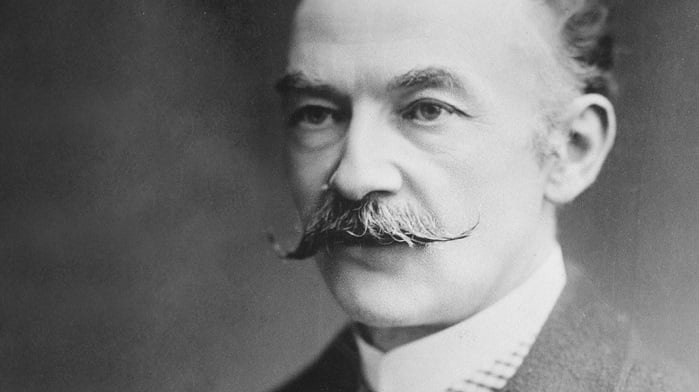
First athlete to run a mile in under four minutes and an eminent neurologist

Nick Mason and Caroline Richmond
The Guardian
Sun 4 March 2018

On a blustery spring evening in Oxford in the 1950s, Roger Bannister, who has died aged 88, became an athlete of world renown, establishing himself as the most celebrated British sportsman of the period following the second world war. He never won an Olympic title, he set only one individual world record (which he relinquished after barely six weeks) and he retired from running at the height of his powers when he was only 25. But on 6 May 1954, on the Iffley Road cinder track that he had helped to lay as an undergraduate a few years earlier, he ran a mile in under four minutes, a target that had begun to assume almost superhuman proportions in the eyes of the public, the media and many athletes, too.

Runners in Europe, the US and Australia had whittled down their mile times as the world record assumed an ever-increasing importance. In the US, Wes Santee clocked 4min 2.4sec, and some weeks later failed in a widely publicised attempt at a four-minute mile. In Australia, John Landy ran four separate races in and around 4min 2sec. Bannister himself, with the help of Christopher Chataway, broke the British record in Oxford with 4min 3.6sec.

But nobody came really close to the four-minute mark; indeed, no one seriously threatened the world record of 4min 1.4sec set in 1945 by the Swede Gunder Hägg. Early in 1954 Landy announced that he would spend the early part of the summer training – and racing – in Finland. Expectations of a four-minute mile were now at boiling point, and Bannister knew he had to strike fast. With two friends providing the most elite pacemaking squad that could be imagined – Chataway, who later that summer took the 5000m world record, and Chris Brasher, who won an Olympic gold medal in the steeplechase two years later – Bannister devised an even-paced three-and-a-quarter-lap schedule that would leave him to capitalise on his speed and strength in the final 350 or so yards.

On that momentous evening, with the stiff breeze moderating and the showers stopping barely an hour before the race, the plan worked. Brasher led for a metronomic two laps, Chataway for the next one, and a bit more. Bannister, always on the leader’s shoulder, needed to run the final quarter-mile in 59 seconds. He collapsed at the finish, and revived to hear another friend, the statistician Norris McWhirter, announce over the public address: “a track record, English Native record, British National, British All-Comers, European, British Empire and World record; the time: three …” (the rest drowned out by cheering) “… minutes, 59.4 seconds.”

Hägg’s record had stood for almost nine years. Bannister’s lasted just 46 days before Landy, running from the front at a meeting in Turku, Finland, posted an astounding 3min 58sec, to set up the “Mile of the Century” at the British Empire Games (as they were still called) in Vancouver early in August. The two milers arrived in Canada to a media frenzy, and there was a real danger that the race itself would prove a dismal anticlimax. But their widely differing strategies ensured that the final, far from descending into a cat-and-mouse tactical duel, would produce one of the great confrontations in the sport’s history. Landy needed to run the finish out of Bannister; Bannister needed to run even-paced laps and conserve enough energy for the sustained power of his sprint.

Landy led from the gun, increased his lead as the first two laps progressed to seven yards, 10 yards, 15 yards at one point. Then gradually, halfway through the third lap, Landy began to slow and Bannister’s even stride pulled the gap tighter and tighter. By the bell he was back to Landy’s shoulder, but tired. At the end of the final bend he flung himself past Landy’s right shoulder just, as chance would have it, Landy glanced anxiously over his left. He was away, the Australian could not respond, and the Mile of the Century was Bannister’s. Both men, applauded to the skies by the packed stadium, had run under four minutes.

Bannister trained on for one final triumph at the end of August, a prestigious, hard-fought but ultimately comfortable victory in the European 1500 metres in Berne, Switzerland, in a championship record – a commanding exhibition from a thoroughly confident athlete in a week when he was the only British man to win a gold medal. And that was it. He never competed again.

Bannister, whose long career as a distinguished neurologist overlapped his short athletic career, was born in Harrow, north London, the son of Ralph Bannister, a worker from the depressed cotton towns of Lancashire who had landed a clerical post in the civil service in London, and his wife, Alice. The family was evacuated to Bath during the second world war, before moving back to London, where Roger attended University College school, Hampstead. There, he played rugby, rowed a bit, and ran the legs off everyone else, older and younger; but he was equally enthusiastic about medicine; as a teenager he listed his role models as Louis Pasteur, Marie Curie and England’s favourite middle-distance runner, Sydney Wooderson.

Pushed hard by his school, he sat his university entrance exams at 16, and won a scholarship to begin medical studies at Exeter College, Oxford, in 1946. He was only 17, at a time when many of his fellow freshmen were experienced, sometimes battle-scarred, ex-servicemen. He took a BA in physiology before moving to St Mary’s hospital, London, for his clinical studies, having been awarded a scholarship by the dean, Lord Moran.

As an athlete at Oxford, it said much for this shy, willowy young upstart that his fellow students embraced him without rancour. While still a teenager, he was elected president of the university athletic club and was instrumental in re-instituting the prewar athletics matches between joint teams from Oxford and Cambridge and America’s Ivy League universities. More significantly, he drove forward the conversion of Oxford’s running track from an uneven, 586-and-a-bit-yard (three laps to the mile) monster which, in the face of all received convention, was run clockwise, to a new flat, six-lane quarter-mile cinder track on which runners travelled the “right” way round.

By the time the track was opened in 1950, Bannister had established himself as the best mile and 1500m runner in Britain, with several important American and European scalps to his name. He was, without a doubt, among the favourites for the 1952 Olympic title at 1500m at Helsinki. However, he finished a disappointing fourth. Many observers concluded that, when faced with the supreme test, Bannister’s nerve had let him down. He certainly entered the final in a negative frame of mind – and with good reason.

In combining his work at St Mary’s with his build-up to the Games he had made do with the barest minimum of training, often no more than 35 minutes a day at lunchtime – very little in the 1950s; inconceivable today. This, he reckoned, would sustain his speed and strength over a heat, a rest day and a final. But the Olympic organisers not only added a semi-final to the schedule, but declared that the three rounds would be run on consecutive days. Bannister knew that his chances had plummeted and, just as he dreaded, his legs gave out after three laps of the final. To the press and the public and, to an extent, to himself, this was a failure. However, for Bannister, British athletics and history, it ended up being a merciful failure. Roger Bannister in 1957, when, as part of his national service, he did research into the cause of deaths among young soldiers in hot climates. 

If he had won his gold medal at Helsinki, there is every chance that he would have retired from athletics there and then. Running was important and challenging, but medicine was paramount. As it was, he decided to stay in training for just one more two-year cycle: to aim for the Empire and the European championships of 1954, and prove, as much to himself as to the rest of the world, that he was indeed championship material.

He had passed his exams for his basic medical qualification – MRCS LRCP – a month after the victory over Landy in Vancouver. A year later, in 1955, he got his medical degrees of BM BCh, was appointed CBE, and published his first book, The First Four Minutes. From 1955 to 1957 he did his house physician and house surgeon jobs. The first was under the physician Sir George Pickering at St Mary’s, who became a lifelong friend and whom, 30 years later, he succeeded as master of Pembroke College, Oxford. The second was in surgery at Oxford. This was followed by a spell back in London at the Hammersmith hospital under another eminent physician, Sir John McMichael, and ending at the Brompton hospital under the brilliant cardiologist Paul Wood.

From 1957 to 1959 he did his national service, which he had delayed until he had passed the exams to obtain membership of the Royal College of Physicians and could enter in a specialist medical grade. For the first year he worked at the army hospital in Millbank, London, looking after senior officers.

Then he volunteered to go out to Aden, using his physiological experience to investigate deaths among young soldiers. He found that young soldiers were susceptible to potentially fatal infections if they were put through strenuous exercise before they had acclimatised. To prove this hypothesis he carried out research at the London School of Hygiene and Tropical Medicine, and published the outcome in two Lancet papers.

In 1959, when he left the army, he started his training in neurology as a registrar at the National Hospital for Neurology and Neurosurgery in London. In 1962 he was awarded a Radcliffe travelling fellowship from Oxford University to Harvard University, where he spent a year doing research on oxygen shortage on blood circulation in the brain. On his return, he was appointed consultant neurologist at the Western Ophthalmic (now Eye) hospital and St Mary’s hospital in London. He remained there until 1985. During this time he became a fellow of the Royal College of Physicians.

His particular research interest and expertise lay in the autonomic nervous system, which unconsciously controls all the automatic systems of the body from digestion to the heartbeat. In the course of this, he carried out research into multiple system atrophy (also known as Shy–Drager syndrome), a potentially fatal condition, finding that many patients benefited from sleeping with their heads raised.

As a consultant at two London teaching hospitals, he acquired a reputation not only for the effective treatment of patients, but also for his ability to organise resources and run medical committees. These talents soon led him to the higher realms of hospital administration.

In 1974, when he was 45, he was halted cruelly by a serious motor accident. He was in a car when it was hit by another that had crossed a motorway’s central reservation. Recovery was slow (he had difficulty in walking comfortably for the rest of his life); he abandoned all private practice and directed his energies towards his autonomic nervous system research, a speciality that had tended to fall between cardiology and neurology.

He founded the Autonomic Research Society, lectured widely in the US and Europe, and edited Autonomic Failure: A Textbook of Clinical Disorders of the Autonomic Nervous System, a standard work that ran into multiple editions (he co-edited later editions with Christopher Mathias). He was also editor of the textbook Clinical Neurology for several years. In 1975 he was knighted, and 10 years later returned to Oxford as master of Pembroke College, where he served until his retirement in 1993.

Nonetheless, he continued working as honorary consultant physician at the National Hospital for Neurology and Neurosurgery. He was a rather formal person – though liked by his colleagues and juniors – and it is said that he arrived in his Daimler punctually at 9am and expected to see his house surgeon waiting for him at the door.

As chairman of the Sports Council (1971-74, now Sport England), he introduced the highly sensitive radio-immunoassay test for anabolic steroids. He was president of the International Council for Sport and Physical Recreation (1976-83), and served on many committees and advisory bodies including Oxford regional and district health authorities, a government working party on sports scholarships, and a Ministry of Health committee on drug dependence. As well as maintaining many of these activities well into his retirement, he wrote for the Sunday Times and for the American magazine Sports Illustrated.

Bannister returned to the Iffley Road track, now named after him, in 2012, bearing the Olympic torch. In 2014 he published his autobiography, Twin Tracks. The same year he revealed that he was suffering from Parkinson’s disease.

In 1955 he married Moyra Jacobsson, an artist. She survives him, along with their two sons, two daughters and 14 grandchildren.

• Roger Gilbert Bannister, athlete and neurologist, born 23 March 1929; died 3 March 2018

Saturday, 3 March 2018

Dead Poets Society #68 Thomas Hardy: Snow in the Suburbs

Image result for thomas hardy poet


Snow in the Suburbs by Thomas Hardy

Every branch big with it,
Bent every twig with it;
Every fork like a white web-foot;
Every street and pavement mute:
Some flakes have lost their way, and grope back upward when
Meeting those meandering down they turn and descend again.
The palings are glued together like a wall,
And there is no waft of wind with the fleecy fall.

A sparrow enters the tree,
Whereon immediately
A snow-lump thrice his own slight size
Descends on him and showers his head and eye
And overturns him,
And near inurns him,
And lights on a nether twig, when its brush
Starts off a volley of other lodging lumps with a rush. 

The steps are a blanched slope,
Up which, with feeble hope,
A black cat comes, wide-eyed and thin;
And we take him in.


Saturday, 24 February 2018

The future of education...


I swiped this from Steve Hoffman's Twitter...

Wednesday, 21 February 2018

Re-shooting The Big Sleep

Mystery of 'The Big Sleep' Solved

William Grimes
The New York Times
9 January 1997

Some film classics are born. Others are made. ''The Big Sleep,'' Howard Hawks's classic mystery starring Humphrey Bogart and Lauren Bacall, falls into the second category.

The 1946 film that audiences have known and loved is actually a revised version of an unreleased ''Big Sleep'' that was made in late 1944 and early 1945 and left forgotten in the Warner Brothers vaults for nearly half a century.

The original film was discovered several years ago by Bob Gitt, the preservation officer of the Film and Television Archive at the University of California at Los Angeles.

The revised film, which was cut to accommodate 18 minutes of new material, ran 114 minutes, making it 2 minutes shorter than the 1945 version of the Chandler story. It played up the glamour and sex appeal of Ms. Bacall by adding more of the saucy back-and-forth between her and Bogart that audiences had loved in her first film, ''To Have and Have Not'' (1944). It also added a scene between Bogart and Martha Vickers, who plays Ms. Bacall's sex-crazed sister, Carmen.

To make room for the added Bogart-Bacall material, Hawks cut an important scene, more than nine minutes long, in which Bogart and Regis Toomey review the facts of the case for the district attorney and a police detective. As a result, the 1946 version of the film has always confounded viewers trying to figure out the plot. ''The 1946 version is definitely a more enigmatic film, and there's more of Lauren Bacall in it,'' said the critic Leonard Maltin. ''The original is more linear, a bit clearer and somehow a little less intriguing. Stylistically it's less exotic.''

Mr. Maltin saw the original film in July when it was shown for the first time since 1945 at the Festival of Preservation, an annual event organized by the University of California Film and Television Archive.

The road from ''Big Sleep I'' to ''Big Sleep II'' is a twisted one. The original version was ready for release in March 1945, when historical events and the iron will of Ms. Bacall's agent, Charles K. Feldman, intervened.

''With World War II coming to a close, Warner Brothers was concerned that films with wartime themes would be dated, so they rushed them into release,'' said Mr. Gitt. One such film was ''Confidential Agent,'' Ms. Bacall's second film, which was put ahead of ''The Big Sleep'' on the studio's release schedule. Unfortunately, the film was a failure that put her career in jeopardy.

''She was universally panned,'' said Mr. Gitt. ''The critics said the acting was wooden and that she was miscast.''

In November 1945, Feldman, who represented Ms. Bacall and Hawks, wrote to Jack Warner, the head of Warner Brothers, urging him to reshoot several Bacall scenes in ''The Big Sleep,'' especially her entrance, in which her face was hidden by a heavy black veil.

''Give the girl at least three or four additional scenes with Bogart of the insolent and provocative nature that she had in 'To Have and Have Not,' he wrote. Feldman added a warning: ''Bear in mind, Jack, that if the girl receives the same type of reviews and criticisms on 'The Big Sleep,' which she definitely will receive unless changes are made, you might lose one of your most important assets.''

Warner agreed, halted release of the film and ordered a reshoot, although the 1945 film was shown to American servicemen stationed overseas, who customarily saw Hollywood films before the general public. In February 1946, Warner watched a sneak preview of the new version, which ''comes off great,'' he wrote in a wire to the studio's New York executives. ''In my opinion we have a 100 percent better film,'' he added.

The new, sharpened Bacall scenes worked magic. ''It's not that the role expanded or that there's more depth to it,'' said Mr. Maltin. ''She has a couple more good scenes with Bogart. It's as simple as that.''

Sharp-eyed viewers will notice several other changes. In the 1945 version, when Bogart returns to the Sternwood house holding the semiconscious Carmen, he has a conversation with the butler; in the 1946 version, the scene plays between Bogart and Ms. Bacall. In the film's final scene, in the hideout of the gangster Eddie Mars, Mars's wife, played by Peggy Knudsen in the 1946 version, is played by Patricia Clarke in the earlier version.

Mr. Gitt, meanwhile, continues to rummage. ''It's always interesting what you find in studio vaults,'' he said.

http://www.nytimes.com/1997/01/09/movies/mystery-of-the-big-sleep-solved.html