Thursday, 20 November 2014

Jimmy Ruffin RIP

How Jimmy Ruffin made Motown's best-ever single
With its wracked yet stoical vocal and a melody like a tolling bell, What Becomes of the Brokenhearted connected Motown to the blues to devastating effect

Mark Hagen
theguardian.com
Thursday 20 November 2014

“As I walk this land with broken dreams
I have visions of many things
But happiness is just an illusion
Filled with sadness and confusion
What becomes of the brokenhearted?”

It should never have worked.

Written for the Spinners but hijacked by a no-hope singer on a Motown subsiduary label who’d been passed over for the vacant berth in the Temptations in favour of his little brother.

Cursed with a long (for 1966) intro created only because the original spoken word intro was deemed to be too irredeemably corny for top 40 radio, and with a doom-laden lyric that suggested nothing quite so much as the result of locking Smokey Robinson in the Detroit basement of Hitsville USA with only the works of TS Eliot for company, it was wildly at odds with the rest of the Sound Of Young America.

And yet, and yet ...

I first heard What Becomes of the Brokenhearted in 1974, then on its second go round in the UK charts; I was 16, in thrall to Alex Harvey and Mott the Hoople. Over the past 40 years nothing has happened to alter my initial impression that this was one of the greatest records I had ever heard, and certainly the best that Motown had ever produced.

I had never listened to Jimmy Ruffin – who has just died aged 78 – before, and I haven’t bothered to investigate any of his other records since because I knew they wouldn’t be, couldn’t be like this.

The Mississippi-born Ruffin delivers a staggering performance, lunging at the song and its tolling bell of a melody without ever losing control. It’s this inherent fatalism, this stoicism, this idea that he’s a cursed man in a blasted world who can’t do a damn thing about it, that harks back to the blues and gives the song one half of its astonishing power.

The other half, of course, comes from the music, which plays out in a taut counterpoint to that vocal, moving on up from its stately beginning with a glorious, swirling logic that says it doesn’t have to be like this, things can be better, things will be better.

That performance contains worlds: the North, the South, slavery and freedom; an America riven by the Vietnam war and the Civil Rights struggle; the small world of an English teenager living in the three day week and even, yes even, how rubbish you feel when you break up with your partner.

It’s as simple and as complicated as you want to make it - but it’s all there in the record. And that’s why Jimmy Ruffin will live forever.

http://www.theguardian.com/music/musicblog/2014/nov/19/how-jimmy-ruffin-made-motowns-best-ever-single?CMP=share_btn_tw

Motown singer Jimmy Ruffin dies at 78
Jimmy Ruffin may have missed out on a dream gig in the 1960s, but he went on to have a long career with Motown Records.

Randy Lewis
19 September 2014

Any suspicions that soul singer Jimmy Ruffin might have harbored hard feelings after his younger brother, David, snatched one of the great gigs in 1960s pop music out of his hands would have been dispelled when the siblings came together in 1970 to collaborate on a harmonious update of Ben E. King's signature ode to solidarity, "Stand By Me."

Jimmy Ruffin, who died Monday in a Las Vegas hospital at age 78, had been in the running to join the lineup of Motown Records' great male vocal group the Temptations in 1964. But when the other members of the group heard David sing, they gave him the job for his slightly grittier sound.

That didn't sideline Jimmy for long: He heard a song that Motown writers William Weatherspoon, Paul Riser and James Dean had crafted with the Spinners in mind, and persuaded them to let him record it.

"What Becomes of the Brokenhearted," a lament for the anguish a man feels in the face of love that has departed, gave Ruffin his first Top 10 hit on the Billboard Hot 100 singles chart. It ignited a solo career that comprised 10 other charted singles, the last of which, "Hold On to My Love," brought him back to the Top 10 in 1980 during a new round of popularity, the result of his move to England to further his career overseas.

"Jimmy Ruffin was a phenomenal singer," Motown founder Berry Gordy said in a statement Wednesday. "He was truly underrated because we were also fortunate to have his brother, David, as the lead singer of the Temptations, who got so much acclaim. Jimmy, as a solo artist, had 'What Becomes of the Brokenhearted,' one of the greatest songs put out by Motown and also one of my personal favorites."

Early on, Jimmy and David Ruffin sang gospel music in the Dixie Nightingales while growing up around rural Collinsville, Miss., where Jimmy was born on May 7, 1936.

Jimmy Ruffin worked his way north to Detroit, then joined the rapidly growing stable of artists at Motown Records in 1961 — signed to its Miracle subsidiary label. But his career was put on hold when he was drafted and spent two years in the Army.

Upon being discharged, Ruffin had his brush with the Temptations, as members Eddie Kendricks, Paul Williams, Melvin Franklin and Otis Williams were searching for a replacement for fifth member Elbridge Bryant. Shortly after adding David to the lineup in 1965, the Temps scored the first No. 1 hit for a male vocal group at Motown with "My Girl," which featured David's lead vocal.

The following year, Jimmy made his rise up the chart with "What Becomes of the Brokenhearted," which he followed with "I've Passed This Way Before," which peaked at No. 17 in Billboard.

Not long after David left the Temptations in 1968, he and Jimmy recorded an album, "I Am My Brother's Keeper," as the Ruffin Brothers, including their version of "Stand By Me," which reached No. 61 in Billboard in 1970.

But Jimmy's solo career never sustained or surpassed that initial burst of success from "What Becomes of the Brokenhearted," so Ruffin decided to focus on the following that his recordings had established in Europe. He moved to London and spent much of the 1980s and '90s there.

English music fans' affinity for Ruffin's music paved the way for the Bee Gees' Robin Gibb to produce for Ruffin an album, "Sunrise," in 1980, which yielded "Hold On to My Love." His final chart hit, a duet with Maxine Nightingale on "Turn To Me," came in 1982.

On Wednesday, Ruffin's children Philicia Ruffin and Jimmy Lee Ruffin Jr. released a statement on their father. "Jimmy Ruffin was a rare type of man who left his mark on the music industry," the statement said. "My family in its entirety is extremely upset over his death. He will truly be missed. We will treasure the many fond and wonderful memories we all have of him."

No details on the cause of death were immediately available. David Ruffin died in 1991 at 50 of a drug overdose.

http://www.latimes.com/local/obituaries/la-me-jimmy-ruffin-20141120-story.html

Monday, 17 November 2014

Blue Note: Uncompromising Expression review

Genius of Modern Music Volume 1 by Thelonious Monk
Thelonious Monk – Genius of Modern Music
After the second world war, the edgy modernism of bebop began to guide Blue Note. Pianist Thelonious Monk’s leadership debut in 1952 introduced classic originals such as Straight No Chaser and Round Midnight. The cover was Paul Bacon’s, who would later create the iconic first-edition design for the novel Catch-22.

Blue Note: Uncompromising Expression review – a lavishly illustrated history of the great jazz label
Richard Havers’s book about Blue Note records, with its details of the inspirations and excesses of the label’s major talents, amounts to a history of jazz itself

Peter Conrad
The Observer
Sunday 16 November 2014

A blue note is a flattened or – in the terminology of jazz – a “worried” note, which dips below the major scale to vouch for the intensity of an emotion; Blue Note is a record label which, since its foundation 75 years ago, has recorded the bluest and most worried jazz performers. Shaded by nocturnal melancholy, blue is the preferred tonality of their music. A classic album by Miles Davis was called Kind of Blue, and Blue Note later recorded the guitarist Kenny Burrell’s Midnight Blue, attuned to the mood of a moonlit sky seen through the glare of urban streetlights.
Blue Note Jazz Classics Vol 1 Sidney Bechet

Sidney Bechet– Jazz Classics Vol 1
Blue Note’s first records were launched in New York in March 1939 by German-Jewish emigre Alfred Lion. Photographer Francis Wolff, an old Berlin friend who escaped the Nazis, joined Lion in October. Their first releases featured the earliest jazz stars, including New Orleans sax pioneer Sidney Bechet.


Uncompromising Expression, the phrase from Blue Note’s mission statement that Richard Havers applies to his lavishly illustrated history of the label, also serves as a definition of jazz. Duke Ellington actually proposed renaming the music played by his band, because “jazz” to him was a smutty synonym for having sex. He preferred to describe his repertoire as “the American Idiom, or the Music of the Freedom of Expression”.
Miles Davis Volume 1
Miles Davis – Vols 1 & 2
Miles Davis was trying to kick heroin and kickstart his career in 1952 when these sessions began. The trumpeter was tiptoeing closer towards how jazz after bebop might sound. John Hermansader created the cover with his assistant Reid Miles, who would later become Blue Note’s most celebrated designer.

Yet as Havers explains, that American idiom – used, like abstract expressionist painting, as propaganda for go-getting Yankee liberties during the cold war – owed its preservation on records to a Berliner. Blue Note was founded in 1939 by Alfred Lion, the son of a Jewish architect who settled in New York in 1933 after fleeing from the capital of the Third Reich. Lion slept rough at first in Central Park, and when he could afford to rent a room immediately installed a Victrola gramophone to play the jazz records he bought on excursions uptown to Harlem.

In Hitler’s Germany, jazz was reviled as Negermusik, a savage un-Teutonic din. Escaping to America, Lion heard in bop, boogie-woogie and honky-tonk a rowdy proof of his adopted country’s impromptu, endlessly self-renovating energy. That faith persisted at Blue Note even after he gave up control of the label, and it was proclaimed all over again in 1986 by Spontaneous Inventions, a collection of “vocal gymnastics” in which Bobby McFerrin teamed up with the manic Robin Williams, who scatted, rapped and wordlessly burbled through a track called Beverly Hills Blues. The result was not so much spontaneous invention as demented free association.
A Night at Birdland by Art Blakey
Art Blakey – A Night at Birdland
Blue Note hired gifted designers, but co-owner Francis Wolff’s subtle photographs of musicians on and off the bandstand also forged the label’s instantly recognisable style. This 1954 set by drummer Art Blakey introduces the urgent gospelly “hard bop” sound, which became a Blue Note speciality.

Lion became, as Havers says, an “evangelist” for America’s home-grown music, with jazz as his gospel. Among the bands he recorded was Art Blakey’s Jazz Messengers, who adapted the “funky church stuff” of black religion to preach on behalf of the blues. Another Blue Note pianist offered a mystical revelation: Lion regarded Thelonious Monk as “the holy grail of jazz”, and said he was proud to be “the first to put his radical and unorthodox ideas on wax”, which makes it sound as if recording was a way of trapping spirit in material form. Like the pianist Andrew Hill, Havers enrols Monk’s later followers in a holy order that Hill himself punningly entitled the New Monastery. Many Blue Note musicians played at a triangular den in downtown New York called the Village Vanguard; with the same sense of jazz as a sacred calling, the pianist Jason Moran has called it “the place where Mohammed and Moses and Jesus walked!”
Page One by Joe Henderson
Joe Henderson – Page One
Saxophonist Joe Henderson’s 1963 leadership debut revealed his sinewy Sonny Rollins-inspired phrasing and improv fertility – as well as the soulful, bluesy sound that even got him hired by Blood Sweat and Tears. A 23-year-old McCoy Tyner was on piano, and Henderson’s Recorda Mebecame a jazz standard.

Cecil Taylor - Unit Structures
Cecil Taylor – Unit Structures 
Blue Note advanced its commitment to the 60s avant garde, and Reid Miles’s cover nailed matters again in catching the scalding moment-to-moment intensity of pianist Cecil Taylor’s music. Taylor was steeped in modern classical music and jazz, and an implacable logic steered his most feverish flights.

Monk considered all musicians to be “subconsciously mathematicians”, and Lion was proud of Blue Note’s intellectualism. Cecil Taylor’s first album for Blue Note was entitled Unit Structures, and presented itself as an experiment in Einsteinian physics, with “time measurement as isolated matter abstracted from mind”: no matter how syncopated your steps are, it’s hard to dance or even tap your feet to a demonstration of the relativity theory. An album led by the percussionist Tony Williams drummed out a more metaphysical plaint. The liner notes claimed that Williams’s timpani, woodblocks, maracas and triangle made audible a cosmic uproar: “Everything which the universe has given life has a right to that life and a right to propel into that life all the values it can.” Remember that next time a neighbour turns up the volume of a boom box at three in the morning.
Midnight Blue by Kenny Burrell
Kenny Burrell – Midnight Blue
Blue Note was so confident, so good at doing the right thing, that the co-proprietor could see his famous photos shrunk to postage stamps – with designer Reid Miles popping some hip typographics in their place. Guitarist Kenny Burrell beautifully balanced soul power and elegance in this sensuous session.


The expressiveness of Lion’s musicians demanded lengthier recording sessions and longer-playing records: he favoured 12-inch, not 10-inch discs because, as he said, “these guys need more room to stretch out”. He may have been a little too indulgent towards his self-willed virtuosi. These evangelical messengers and monastic pianists came to rely on drugs as fuel for their instrumental fantasias, and Havers’s chronicle, despite its emphasis on the contribution of “musical searchers” like Wayne Shorter, can’t help noticing a succession of tormented lives and premature deaths.
At the Golden Circle by The Ornette Coleman Trio
Ornette Coleman Trio – Live at the Golden Circle
Blue Note took a chance with these live recordings from Stockholm. Saxist Coleman was a controversial figure who rejected the bebop tenets associated with the label, and the music was uncompromisingly wild. But Down Beat magazine voted it 1966 record of the year. This is free-jazz empathy at its best.

A sorry conclusion comes with the fate of the trumpeter Lee Morgan, who dispensed “soul jazz to the max” until in 1972 he was unsoulfully gunned down at the age of 33 by his commonlaw wife during a gig at Slug’s Saloon in the East Village. His wounds were superficial; Havers primly omits to mention that he bled to death on the floor because the ambulance was reluctant to venture into the lawless no-go area where Slug’s was located. Not all jazz clubs were as stylishly avant garde as the Village Vanguard.
The Sidewinder by Lee Morgan
Lee Morgan – The Sidewinder
When acid jazz hit dancefloors in the 1990s, trumpeter Lee Morgan’s funky 1964 blues theme The Sidewinder made a comeback – but it was big from the start. Alfred Lion pressed fewer than 5,000 copies at first, but he soon upped the numbers and the tune made the single charts.

Despite Lion’s admiration for “American vitalism”, jazzmen like Morgan proved to be rather too freely expressive and uncompromising for their own good. Shaw called music the brandy of the damned, and it’s all the more addictive if combined with heroin and cocaine. Blue is the colour of lush, sensual midnight, and also of a bleary, bruised, hungover dawn.

Blue Note: Uncompromising Expression is published by Thames & Hudson.

http://www.theguardian.com/books/2014/nov/16/blue-note-uncompromising-expression-review-richard-havers


Blue Train by John Coltrane
John Coltrane – Blue Train
That Francis Wolff shot of John Coltrane – pensive, self-absorbed, maybe imagining an elusive sound yet to be made on a saxophone – showed how Blue Note artwork could bring a musician’s interior journey into view. Blue Train, from 1958, foresaw the breakthroughs Coltrane would make in the 1960s.


Blue Note: Uncompromising Expression review – classics in single measures
(Blue Note)

John Fordham
The Guardian
Thursday 13 November 2014

Jazz listeners expect their heroes to play the long game, so a box of 75 singles tracks from jazz’s most famous label might sound almost frivolous. But for all its memorable (and memorably designed) albums, Blue Note has always been in the singles business – heavyweights like Thelonious Monk, Miles Davis and John Coltrane released them, and creative idiom-colliders like Robert Glasper and Derrick Hodge reach out to new audiences via downloads today. 
Black Radio by Robert Glasper Experiment
Robert Glasper Experiment – Black Radio
Pianist Glasper calls Blue Note a “unique and very special family”. The appeal of his deep jazz awareness to the cognoscenti, and his direct line to a 21st-century hip-hop audience, reflects Blue Note’s legacy and its enduring instinct for keeping a finger on the pulse. 

This five-CD set is a companion to Thames & Hudson’s glamorous book of the same title, and Glasper, Hodge, Jason Moran and others star in a Blue Note celebration at the London jazz festival on 22 November. This box isn’t aimed at old jazz hands, but offers newcomers a wealth of succinctly delivered diversity. 
Empyrean Isles by Herbie Hancock
Herbie Hancock – Empyrean Isles
Herbie Hancock was the biggest star Blue Note launched, his 1962 debut, Takin’ Off, showing he was a rare blend of improv genius and hitmaking songwriter. Empyrean Isles came two years later, with the 24-year-old boldly mingling hard bop, funk and free-jazz on just four long tracks.


Sidney Bechet’s shimmering, snarling 1939 version of Summertime, Monk’s stuttering, skidding, three-minute Thelonious, and Herbie Hancock’s ever-irresistible Watermelon Man are among 60 or so jazz classics, and if the final disc’s sweep across classic funk and contemporary pop has some lightweight moments, charismatic newer recruits such as Glasper, Bobby McFerrin, Cassandra Wilson and Gregory Porter make sure there aren’t that many.

http://www.theguardian.com/music/2014/nov/13/blue-note-uncompromising-expression-review

Mode For Joe by Joe Henderson
Joe Henderson – Mode for Joe
Current Blue Note president Don Was discovered jazz through this title tune as a teenager. He says the“conversational” call-and-response exchanges were what turned him on. Saxophonist Henderson, a key contributor to many Blue Note sessions, inimitably blended hot and cool.

Come Away With Me by Norah Jones
Norah Jones – Come Away With Me
Jazz sales slumped in the late 1960s, Alfred Lion sold up, Francis Wolff died, and Blue Note hibernated under various owners. But, as always, jazz came back. New boss Bruce Lundvall and producer Michael Cuscuna imaginatively revived the label for a new public in 1985, and Norah Jones’s 25m-selling album in 2001 secured the future.

Bop glasses ad featured in  Uncompromising Expression: Blue Note: 75 Years of The Finest in Jazz by Richard Havers
Bop glasses ad
The 1940s bebop movement was a hipster subculture and a musical revolution. Rejecting 1930s swing’s commercialism, beboppers sought tougher technical challenges, weirder chords, fusions with 20th-century classical music and intellectual respectability. Berets, goatee beards and specs became the uniform.

http://www.theguardian.com/music/gallery/2014/nov/14/blue-note-75-years-of-the-coolest-visuals-in-jazz-gallery


If only...

Sunday, 16 November 2014

Don Siegel - Invasion of the Body Snatchers

Image result for invasion of the body snatchers 1956 poster
Invasion Of The Body Snatchers: Don Siegel’s fatalistic masterpiece
Pessimistic and potent, this cold war chiller is still a touchstone for the sci-fi genre nearly 60 years after its release

John Patterson
The Guardian
Saturday 25 October 2014

It scared me to death when I was nine, and 40 years later it’s still a pretty hair-raising experience to watch Don Siegel’s Invasion Of The Body Snatchers. A poorly reviewed $380,000 sci-fi film shot in 23 days in 1956, then wantonly interfered with by its backers, who bookended it with sequences aiming to temper its extreme pessimism, it has since risen, quite rightly, to the first rank of unquestioned science fiction classics, spawning three remakes along the way.

The debate still rages as to whether the movie is an indictment of a creeping proto-communist mentality in America, a portrait of Eisenhower-era complacency or a look at the infectious hysteria attendant upon McCarthyism. I’d opt for the latter (Siegel confirmed those were his instincts but always maintained that he wasn’t a message man) since the blacklist was then still a recent, very personal and horribly invasive experience for the whole industry, but the metaphor is potent however you read it.

Context being everything, I’d place Invasion in several different career chronologies and sequences of movies. Firstly, it takes pride of place in a chain of 1950s sci-fi classics of the questioning, doubting, paranoid variety, including Christian Nyby’s The Thing From Another World, Them!, The Incredible Shrinking Man and I Married A Monster From Outer Space. Its noirish visuals – no effects, no process shots – make it a twin to Robert Aldrich’s Kiss Me Deadly (which, with an atom bomb as its MacGuffin, is already halfway to sci-fi) and its apocalyptic, end-of-the-world fatalism anticipates both The Birds and Night Of The Living Dead.

Its screenwriter Daniel Mainwaring also co-wrote the seminal noir film Out Of The Past (from his own novel), as well as The Big Steal, the caper that kickstarted Don Siegel’s career. Mainwaring was remembered by director Joseph Losey as an alcoholic blacklistee, but by his widow as an alcoholic “front” for other blacklisted screenwriters. Whichever it was, his screenplay for 1954 tabloid smash The Phenix City Story might be the most brutal indictment of American racism and political corruption ever made; it probably looked “Un-American” to its marrow.

And would you just look at the series of cockeyed B-movie masterpieces Siegel made in the same period? Their titles alone give you some idea of his worldview: Riot In Cell Block 11, Private Hell 36 (about corrupt cops), Crime In The Streets, Baby Face Nelson and The Lineup (Siegel’s on-set dialogue director in this period was one Sam Peckinpah). The man who made the greatest movie about the nightmarish erasure of personality had a directorial personality you could never erase. There were no pods in Don Siegel’s basement, count on it.

http://www.theguardian.com/film/2014/oct/27/invasion-of-the-bodysnatchers-1956


Invasion of the Body Snatchers
A TALE FOR OUR TIMES

By John W. Whitehead

Look! You fools! You’re in danger! Can’t you see? They’re after you! They’re after all of us! Our wives…our children…they’re here already! You’re next!—Dr. Miles Bennell

In Body Snatchers, the pod people, who, like McCarthy and the other red-baiters, look like typical, fine upstanding Americans, search out rebels like Miles who refuse to conform to what has been newly defined as the "American Way"—just as McCarthy and HUAC destroyed the lives of those who refused to knuckle under to their directives. The mob hysteria, the sense of paranoia, the fascist police, the witch hunt atmosphere of the picture certainly mirrors the ills of McCarthy’s America.

The changes brought about by World War II were swift, and they profoundly disturbed people’s understanding of life—especially now that humanity was living in the shadow of the atomic bomb.

Before the bomb and subsequent scientific advances, western humanity knew and accepted the inevitability of death. Seen and experienced by both men and women, young and old, death occupied the realm of the immediate. It was utterly real and visible.

The bomb’s dehumanizing influence, however, made death invisible, abstract and threatening. While the older generation may have viewed the atomic bomb as the pinnacle of human achievement and worldwide peace, the succeeding generation realized that it might possibly be an insurmountable barrier to the future. Suddenly, death was no longer a wispy, terrifying phantom that chose its victims at random but instead became a calculated, mechanical weapon that obliterated humanity en masse.

Amidst the threat of atomic death from on high, the western world was embroiled in the Cold War. Although both the American and Soviet governments were painting a horrendous picture of a possible hot war, the so-called Cold War was, for all intents and purposes, a political fabrication. In fact, mutual threats and brinkmanship supported a relatively stable international system, symbolized by the 1963 installation of the telephone "hot line" linking the White House to the Kremlin.

The Cold War scenario, of course, led to the "Red scare" and the American hysteria over the danger of Communist subversion in the United States. This hysteria culminated in the hearings before the House Committee on Un-American Activities, where hundreds were called to testify about their so-called Communist affiliations. The Committee was led by the then-junior Republican senator from Wisconsin, Joseph McCarthy, who specialized in sensational, unsubstantiated accusations about Communist infiltration of the American government. As a result of the hearings, many lost their jobs and families and some even committed suicide.

Much like the mass hysteria that has spread over the United States since the terrorist attacks on the World Trade Center and the Pentagon, many McCarthy-era government officials were calling for and enacting extreme measures to combat a perceived threat. And the real question at the time—as it is for the present—was whether people would retain their basic freedoms and avoid the dredge of conformity that threatens our very humanity.

Various films attempted to covertly address the paranoia sweeping the country during the 1950s. One in particular, Don Siegel’s 1956 classic Invasion of the Body Snatchers, captured the ideology and politics of this time period perfectly.

Body Snatchers is set in the small California town of Santa Mira, which is infiltrated by pods from outer space that replicate and take the place of humans. Miles Bennell (Kevin McCarthy), the main character in the film, is a local doctor who resists the invaders and their attempts to erase humanity from the face of the earth. Body Snatchers—now available on DVD and digitally remastered—brought respectability to the science fiction genre that emerged in the post-war era, a genre that was exploding on screens around the country, partly due to the numerous post-Roswell UFO sightings. Filmed with only seven days of rehearsal and twenty-three days of actual shooting, Body Snatchers, as such, is still considered the greatest of all the horror and science fiction classics of the 1950s. It continues to fascinate modern filmmakers, having been remade twice (1978 and 1994), and has served as a model for a myriad of films and television shows. And Carmen Dragon’s film score has influenced filmmakers and television directors alike. In fact, Dragon’s haunting piano chords can be heard in such television shows as The X-Files and Buffy: The Vampire Slayer.

Perhaps the effectiveness of Body Snatchers can be explained by its fine ensemble cast—Kevin McCarthy, Dana Wynter, Carolyn Jones, King Donovan and Sam Peckinpah (also the dialogue coach), among others (all essentially unknown actors at the time). Or perhaps it was the crafty manner in which director Siegel avoided the use of special effects. Or maybe it was the strong story provided by Jack Finney and Daniel Mainwaring’s screenplay. Whatever the reason, Body Snatchers—an 80-minute trip loaded with information—has become one of the most analyzed films of its kind. Film students today still attempt to untangle the film’s metaphors, claiming that the film can be seen as a symbol for AIDS and other contagious and venereal diseases or that its power stems from a lingering fear of the mysteriousness of nature. Despite extensive critical analysis and faulty proposed philosophies concerning the film’s meaning, reviewers still strive to understand Siegel, Finney and Mainwaring’s deeper message.

Body Snatchers invokes at least a double reading. It was both a mirror of a particular moment in history and a compass indicating the symptoms of a growing societal illness. Following World War II, the atomic bomb and the Korean War, Americans were confused and neurotically preoccupied with international political events—much like they are today. Siegel’s film addressed the dehumanization of individuals—a sensitive subject in an age filled with tales of political brainwashing of American soldiers by the Koreans—and the horrifying possibility which arose in the 1950s where humanity could become infused as part of the machine.

The film’s ideology is focused well to the left of center, despite the fact that Jack Finney’s story is centrist in nature. It was Daniel Mainwaring who followed out the pessimistic strain underlying Finney’s paranoid fantasy. As Al LaValley writes in Invasion of the Body Snatchers, "Mainwaring’s despair is the despair of a onetime strong leftist over the America of the fifties." Indeed, the House Un-American Activities Committee had decimated Hollywood and the Hollywood Ten had gone to jail. A blacklist was in force, and everyone was being asked to sign a pod-like loyalty oath to prove they were "good" Americans and not Commie subversives. A chilling pod-like uniformity reigned in Hollywood. LaValley notes, "Risk was no longer acceptable; perhaps serious social subjects could be approached only in disguised form through the crime and science fiction genres."

It was Mainwaring who added Miles’ important speech, central to the film and without antecedent in the book. While hiding from the aliens, Miles says to Becky (Dana Wynter), "In my practice I see how people have allowed their humanity to drain away…only it happens slowly instead of all at once. They didn’t seem to mind…. All of us, a little bit. We harden our hearts…grow callous…only when we have to fight to stay human do we realize how precious it is."

Thus, for Mainwaring there was no overt anti-Communist message in the film. To Mainwaring, we are the villains. And Communism was a scapegoat, an imaginary villain reflecting the fears and tensions of the Right. "If the pods in Invasion seem to incarnate the popular image of a communist totalitarian state," LaValley points out, "it is only because the government-dominated, bureaucratic, and conformist fifties was itself creating an America like this picture of Soviet Russia."

The only resistance to the perceived repression was an embattled individualism, something Siegel could identify with. He, too, saw hope in the defiant individual. However, unlike Mainwaring, Siegel saw the conflict between society and the individual as a perpetual one—more a metaphysical battle than a political one. And the villains were not so much on the other side of the world, as all around us. The real enemy was, therefore, totalitarian conformity. And resistance must be against all kinds of conformity, no matter the shape, size or color of the package it comes in. If not, the enemy lulls us into giving up our individuality, not merely taking up an alien cause.
Insidious illusion ... Kevin McCarthy and Dana Wynter in Invasion of the Body Snatchers.
Siegel, however, understood the irrational fears of the day and manifested conspiratorial paranoia himself. In fact, he changed the ending of Finney’s novel to intensify the paranoiac aspect. Rather than follow Finney’s ending that depicted pods rising from a field and away from the earth, Siegel showed a lone, seemingly madman in a rage. Where Finney provided hope, Siegel presented conspiracy and destitution.

Why were viewers so attracted to Siegel’s pessimistic message? David J. Skal in The Monster Show: A Cultural History of Horrornotes that the film, which pretended to scare viewers, actually comforted them. Audiences found an understandable world reassuring, even if such understanding was only a monstrous plot or cover-up. Joseph McCarthy and his anti-Communist banter used the same rationale.

No matter the criteria of those who made the film, many saw Body Snatchers as presenting an overt Communist metaphor: the alien pod people perfectly fit McCarthy’s profile of Russians and, not coincidentally, American schoolteachers. The Soviets were considered ice cold, outwardly peaceful but very authoritarian and emotionless. Many Americans even considered Russians a different species who, because of their disbelief in God, were soulless and wanted to destroy Americans or turn them into Communist clones. The film’s villains and the public’s view of the Communists presented limitless parallels. As Danny Peary recognizes in Cult Movies:

The unraveling of the pod conspiracy has the flavor of an FBI exposé. The pod people represent a completely regimented society. Metaphorically, they are all alike as "two peas in a pod" because they have been sapped of their emotional individuality. The vegetarian metaphor literalizes Red-scare rhetoric of the "growth" of Communism as well as the idea that revolutions are made by planting seeds. There is a scene in which the pod people are assembled in the town square, where a loud speaker reads off the day’s orders; it is the quintessential fifties image of socialism. And, of course, the simile that without freedom of thought people are…vegetables is a central theme of the narrative.

While Peary’s interpretation of the movie is the most widely held, an anti-McCarthian message also emerges that presents the fascistic pod people as the American majority: the central government, law enforcement agencies and communication regulators that dictate America’s political line, including Joe McCarthy. According to Peary, government officials, not the Communists, posed the true threat.

Body Snatchers may also be interpreted as anti-scientific, reflecting the fears of a particular decade. During America’s early space exploration, many Americans feared space would invade the earth and viewed the movie as a warning of the dangers of science and inventions like the hydrogen bomb. People realized scientific advances often negatively influenced the culture. Miles, at one point in the film, says, "So much has been discovered the past few years. They may be the result of atomic radiation or weird alien organisms."

In this general category of science, a fear of psychiatry should not be excluded. The psychiatrist-alien in the film pronounces the death of God by banishing the idea of the individual soul.

While these various interpretations may be compelling, they seldom mention the ideas of the book’s author, Jack Finney, who claimed that he did not read, write or even like science fiction. He was interested instead in the ability of technology, modernization and fragmentation to disenfranchise people and make them lose their ability to act human.

Finney was concerned that humans had ceased being the masters of their own inventions and that, even more fundamentally, they had lost the ability to master anything at all. He saw traditional morals and values as victims of a "rush to modernize, bureaucratize, streamline and cellophane-wrap." Finney’s traditionalism is easily mistaken for anti-Communist rhetoric since McCarthyites used conservatism to battle the evils they felt were destroying America (such as desegregation, Social Security, obscenity, progressive education and liberal Protestantism). Ironically, intellectuals ultimately rejected traditionalism because of its association with McCarthy. Finney attempted to answer the question of survival in a post-war world and believed that true humanness required one to "assert [his] individuality to the fullest, express [his] real feelings, and embrace the human values of pride, dignity, friendship, and love more strongly."

While Siegel admitted that his films showed the conflict between individuals and varied forms of mindless authority, he denied an anti-Communist motive. In defense of Body Snatchers, he stated, "I think the world is populated by pods and I wanted to show them." He also believed that humans had lost much of their sensitivity because of the advance in military weaponry and the atrocities of recent wars. Dr. Bassett, the film’s unsympathetic doctor, exemplifies an individual who acts like a pod. Siegel explained the pod’s representation:

People are pods. Many of my associates are certainly pods. They have no feelings. They exist, breathe, sleep. To be a pod means that you have no passion, no anger, the spark has left you…of course, there’s a very strong case for being a pod. These pods, who get rid of pain, ill-health and mental disturbances are, in a sense, doing good. It happens to leave you in a very dull world but that, by the way, is the world that most of us live in. It’s the same as people who welcome going into the army or prison. There’s regimentation, a lack of having to make up your mind, face decisions…. People are becoming vegetables. I don’t know what the answer is except an awareness of it. That’s what makes a picture like Invasion of the Body Snatchersimportant.

http://www.gadflyonline.com/11-26-01/film-snatchers.html

Thursday, 13 November 2014

Last night's set lists

At The Habit, York: The Elderly Brothers: -

Set 1: -
To Know You Is To Love You
Sea Of Heartbreak
Never Be Anyone Else But You
Green, Green Grass Of Home
Walk Right Back
I Saw Her Standing There
You Got It

Set 2: -
I'm Into Something Good
If Not For You
The Sound Of Silence
Surfin' USA
Crying In The Rain


A splendid debut by new host David Ward Maclean made this a very enjoyable open mic night. A nice variety of players added to the fun and a surprise visit by a party from Tyneside was the icing on the cake. This party included a founder member of the Friday Night Boys seen on the right of the picture (taken by the host during the after-show sing-along). As it was Neil Young's 69th birthday (Happy Birthday Neil!!) the sing-along consisted almost entirely of Neil covers, interspersed with the odd comic ditty and a version of He'll Have To Go by The Elderly Brothers. A crackin' night!

Warren Clarke RIP

Warren Clarke obituary
Actor best known as a gruff, hard-drinking detective in the TV series Dalziel and Pascoe

Anthony Hayward
The Guardian
Wednesday 12 November 2014

Warren Clarke, who has died aged 67 after a short illness, was a burly actor with a hangdog expression who came to prominence in anti-establishment films and stage plays before becoming one of television’s best-known faces.

He exploded on to the screen in Stanley Kubrick’s futuristic drama A Clockwork Orange (1971), the film based on Anthony Burgess’s 1962 novella set in a Britain facing mass juvenile delinquency. Clarke played Dim, one of the “droogs” in the gang led by a charismatic sociopath (Malcolm McDowell) whom the state tries to rehabilitate through brainwashing. The scenes of rape, murder and mugging were passed for screening by the film censors, but subsequent claims that the film led to copycat violence caused Kubrick – who described the story as a “social satire” – to withdraw it from British distribution in 1974. Only after the director’s death in 1999 was it again screened in cinemas.

Clarke appeared alongside McDowell again in the satire on capitalism O Lucky Man! (1973). It was directed by Lindsay Anderson, with whom Clarke had worked at the Royal Court theatre, in London, which over the previous decade had become a home to the new voices challenging the old order in British society. Like many of the cast, Clarke took several roles.

It was another two decades before the actor became a star in his own right – portraying a character firmly on the right side of the law. He played the hard-drinking Detective Superintendent Andy Dalziel in all 12 series of the BBC crime drama Dalziel and Pascoe (1996-2007), based on the books by Reginald Hill. “The man’s a chauvinist pig whose idea of a good night out is swilling back 10 pints in the pub, with his supper waiting for him and the little woman tucked up in bed with a welcoming smile,” Clarke told the Daily Mirror in 1997. “Blokes like Dalziel just see women as sex objects.”

He was born Alan Clarke in Oldham, Lancashire. His father was a stained-glass window maker and his mother a secretary. On leaving school at 15, he took a job as a copy boy on the Manchester Evening News, but he wanted to become an actor and performed with amateur companies. He also worked at Huddersfield Rep. When, aged 18, Clarke took the role of Huckleberry Finn in Tom Sawyer at the Liverpool Playhouse (1965), he was one of the few cast members to emerge unscathed from the Guardian critic’s review, which noted that he “plays him with placid deliberation … against the surrounding cacophony, but the style is right”. Clarke then turned professional.

He started his screen career at Granada Television, based in Manchester, with three different bit parts in both the sitcom Pardon the Expression (1965, 1966) and Coronation Street (1965, 1966, 1968). Further character roles came in popular series such as The Avengers (1968) and Callan (1970). He also had an uncredited role in the film The Virgin Soldiers (1969).

In 1970, before being cast in A Clockwork Orange, Clarke played a childlike asylum patient in the David Storey stage play Home, directed by Anderson at the Royal Court. Anderson also directed him in Storey’s The Changing Room (1971). Another of the Angry Young Men of stage and cinema, Tony Richardson, directed Clarke, as Caligula, in John Mortimer’s adaptation of I Claudius (Queen’s theatre, 1972). In 1975, Clarke was in the Anthony Shaffer play Murderer at the Garrick theatre. He then spent two seasons (1976-77) at the National Theatre in plays including Volpone (directed by Peter Hall) and Lark Rise (by Bill Bryden).

However, when a string of screen roles came his way, Clarke virtually left the stage behind. Although he appeared in films such as Hawk the Slayer (1980), Top Secret! (1984) and ID (1995), he found greater satisfaction in television. As well as one-off character roles, he played Josiah Beaumont in The Onedin Line (1978), Paul England in three series of the sitcom Shelley (1980-82), “Sophie” Dixon in The Jewel in the Crown (1984), Colonel Werner Krieger in the first run of the wartime drama Wish Me Luck (1988) and Boythorn in the 2005 BBC adaptation of Bleak House.

Over 20 years, Clarke also had lead roles as the football club chairman Martin Fisher in The Manageress (1989-90), the trade unionist and former KGB agent Albert Robinson in Sleepers (1991), Jim Morley in the greyhound-racing sitcom Gone to the Dogs (1991) and Winston in its follow-up, Gone to Seed (1992), Roland Pierce in The Locksmith (1997), Brian Addis in the first two series (2000-2001) of the rural drama Down to Earth, Syd Woolsey, one of the two retired master burglars, in the comedy-drama The Invisibles (2008) and the corrupt police officer Bill Molloy in Red Riding (2009), based on the books by David Peace. From 2000, Clarke was consulting producer on Dalziel and Pascoe and directed three episodes.

He returned to the stage to play Winston Churchill – a role he had previously taken on television in the 1974 drama Jennie: Lady Randolph Churchill – in Three Days in May (Trafalgar Studios, 2011), about deliberations in the British war cabinet at the time of Dunkirk.

Clarke’s final role was as Charles Poldark, uncle of the 18th-century Cornish squire Ross Poldark, in a BBC remake of its popular 1970s period drama Poldark, which will be screened next year.

He is survived by his second wife, Michele, and their daughter, Georgia, as well as Rowan, the son from his first marriage, which ended in divorce.

• Warren Clarke (Alan James Clarke), actor, born 26 April 1947; died 12 November 2014


Wednesday, 12 November 2014

Screaming Steel: World War One Art and Poetry at the Hatton Gallery, Newcastle University

Screaming Steel: Art, War and Trauma 1914-1918 exhibition opens at the Hatton Gallery, Newcastle University
First World War poets and artists are focus of poignant Newcastle exhibition
Personal diaries and love letters offer insight into experiences of both British and German artists at Newcastle University's Hatton Gallery

Barbara Hodgson
18 October 2014

The horrors of the First World War as seen by some of the finest creative minds of the generation are laid bare in an exhibition of poignant art, personal diaries and hand-written letters at Newcastle University’s Hatton Gallery.

Personal views of famed war poets such as Siegfried Sassoon and Wilfred Owen are revealed in the Screaming Steel exhibition, alongside those of artists from the German trenches, similarly traumatised by the mud and blood of trench warfare.

Screaming Steel: Art, War and Trauma 1914-18 explores “their response to the killing fields of Europe which resulted in some our most important 20th Century art and literature”, say organisers.

But it is the individual detail that most leaves its mark: the portrait photograph of the famously “beautiful” Rupert Brooke which looks like it could have been taken yesterday and the display of five olive leaves taken by a member of the funeral party from the site of his grave in Greece.

There are letters from Sassoon, who was nick-named Mad Jack for his brave actions in battle but, disturbed by the bloodbath of the Somme, threw his Military Cross into the Mersey and spoke out against the war.

To protect him from the backlash, friend and fellow poet Robert Graves helped convince people he was suffering from shellshock and Sassoon was sent off to convalesce in Craiglockhart war hospital in Edinburgh, where, in a 1917 letter, he recalled: “the people in Liverpool insisted on treating me as an amiable idiot, which was a little annoying” and where he met Owen, the man said to be the greatest English poet of the First World War.
Ruins Between Bernafay Wood and Maricourt, Adrian Hill, 1918 © Imperial War Museums

Both later returned to the Front, and Owen also received a Military Cross before his death at the very end of the war.

Their famous poems are written out on the gallery walls, while the first draft of Owen’s Anthem for Dead Youth (later changed to Doomed Youth), written at Craiglockhart in 1917, can be seen with friend and advisor Sassoon’s hand-written annotations.

There are bold oil paintings of gnarled, shelled landscapes, tenches and tanks - early technology in 1917. Among them Irishman William Orpen, an established portrait artist before the war, turns his attention to A Grave in the Trenches.

Others made use of whatever was to hand, such as Isaac Rosenberg in his self-portrait made in black chalk on a piece of brown wrapping paper.

A print called Die Granate (The Grenade) by a volunteer medical orderly called Max Beckmann is a jumble of faces and guns following an explosion, while fellow German George Grosz expressed his despair and post-war contempt for mankind in graphic paintings of drunkards, prostitutes and suicides.

There are conscience-pricking recruitment posters too, featuring children shown asking their father: “Daddy, what did you do in the Great War?”

The olive leaves are on show alongside a 1915 letter from Brooke to his love interest, an actress called Cathleen Nesbitt.

Written March 18, while “off Gallipoli”, he seemed to sense his impending death, writing “thank God I met you” and “Goodbye”.

He died on St George’s Day at the Greek island of Skyros, where he is buried, and an accompanying letter, dated April 26, is written to Nesbitt by Brooke’s friend W Denis Browne. Browne enclosed olive leaves, saying: “An olive tree is over his head, of which I send you a spray”.

The exhibition, which includes loans from major London collections including the British Museum, British Library, National Portrait Gallery and Tate, will run until December 13 with a linked programme of workshops, poetry readings and tours.

http://www.chroniclelive.co.uk/news/north-east-news/first-world-war-poets-artists-7955574

Tuesday, 11 November 2014

Margaret Postgate Cole's The Veteran - Poem for Armistice Day

The Veteran (1916)

We came upon him sitting in the sun
Blinded by war, and left. And past the fence
There came young soldiers from the Hand and Flower,
Asking advice of his experience. 

And he said this, and that, and told them tales,
And all the nightmares of each empty head
Blew into air; then, hearing us beside,
"Poor chaps, how'd they know what it's like?" he said. 

And we stood there, and watched him as he sat,
Turning his sockets where they went away,
Until it came to one of us to ask 
"And you're-how old?"
"Nineteen, the third of May." 

Margaret Postgate Cole

Monday, 10 November 2014

Billy Name at Andy Warhol's Factory

Bob Dylan, 1965
Bob Dylan, 1965 ‘Bob Dylan arrived at the Factory with Bob Neuwirth to negotiate with Andy, who wanted Dylan to star in one of his films. Dylan tensely agreed to a screen test, during which this shot was taken. Afterwards, Dylan picked up one of Andy’s Elvis paintings – ‘I’ll take this, man’ – and drove away with the painting tied to the car.’


Magic with mirrors: Billy Name’s window into the world of Andy Warhol
In 1964, Andy Warhol’s dingy Manhattan studio was transformed by Billy Name, a lighting designer who became the artist’s live-in lover and photographer of the Factory’s most darkly glamorous years. Glenn O’Brien, a former member of Warhol’s circle, looks back at a relationship that yielded a treasure trove of pictures

Glenn O'Brien
The Observer
Sunday 9 November 2014

Andy Warhol met Billy Linich when he was a waiter at Serendipity 3, one of Andy’s hangouts in his commercial artist days and a place where he had exhibited his work. A few years later the artist Ray Johnson, a key figure in the early pop art scene, took Billy to the Brooklyn Academy of Music to see a show and they ran into Andy there. After that Billy began hanging out with Andy at his house uptown and going to openings and movies with him. “I was sort of like Andy’s boyfriend,” Billy says.
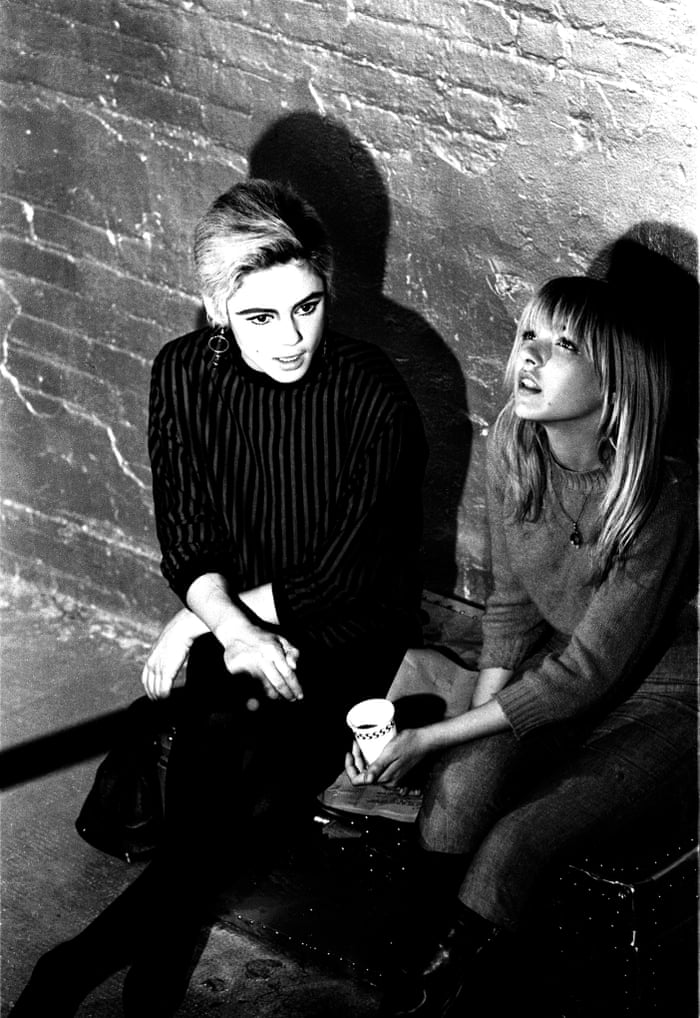
Edie Sedgwick and Bibbe Hansen
Edie Sedgwick and Bibbe Hansen filming Prison, 1965 ‘Bibbe met Andy at a restaurant with her father, pop artist Al Hansen. She told him about her time in jail and being a juvenile delinquent. Andy was so impressed he offered to make a movie based on her tales. Soon the 15-year-old found herself at the Factory filming with Edie Sedgwick.’


At the time, Billy had an apartment downtown that he shared with Ondine, who became one of the first leading men in Andy’s films, and with the dancer Freddie Herko. One day, Ondine gave Billy some amphetamine. “All of a sudden I had energy to get up off the floor and start doing things,” he says. One of the first things Billy did was redecorate the apartment as an art work, turning the whole thing silver with aluminium foil and spray paint. “I even painted the silverware silver.”

Andy Warhol with self-portrait, 1967 (detail). Photograph: Billy Name


Ray took Andy to Billy’s apartment for a haircut. By then, Billy was the lighting designer for the Judson Dance company. Billy had regular haircutting parties at his apartment (his father was a barber by trade), where he would do whoever came for free. Billy recalls: “Andy saw how spectacularly brilliant the place looked and he said, ‘Oh Billy, I just got a new loft space. Would you come and do this to my new loft?’”

Billy checked out the former hat factory at 231 East 47th Street; down the street from the UN, it was a totally non-art neighbourhood – and, in January 1964, he transformed the artist’s dark and dingy new quarters. As he had done downtown, he hung Reynolds aluminium foil on the walls, and, where he didn’t hang it, he sprayed everything silver with Krylon spray paint.
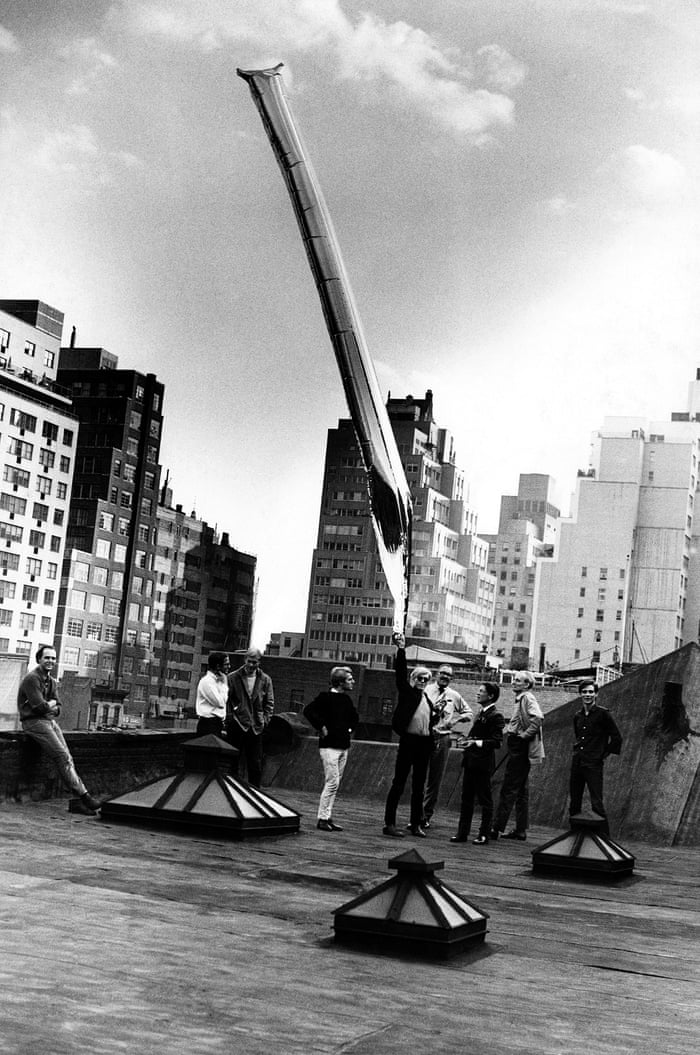
Andy Warhol with silver balloon sculpture, the factory 'Andy, Gerard Malanga and onlookers release the silver ‘cloud’ from the Factory rooftop on 47th Street. Factory regulars would occasionally sneak up there to smoke cannabis but on this day Andy released a floating work of art to the sky.'
Andy Warhol with silver balloon sculpture, the Factory, 1964
‘Andy, Gerard Malanga and onlookers release the silver ‘cloud’ from the Factory rooftop on 47th
Street. Factory regulars would occasionally sneak up there to smoke cannabis but on this day Andy released a floating work of art to the sky.’


“It was like constructing this environment – for me the whole place was a sculpture,” Billy says. “And each time I added a piece to it was like adding another gem to the collection. I always did a maximal job.”
Stephen Shore and Ivy Nicholson
Stephen Shore and Ivy Nicholson, 1966
‘The quiet, shy teenage Stephen Shore, discreetly taking his photos at the Factory after school, alongside the glamorous model Ivy Nicholson who had recently arrived in New York from Europe… I remember Stephen didn’t like this photo because he thought he looked like a gangster.’


The only things that came close to conveying the look of the Factory, aside from the movies, were Billy's photographs - Andy Warhol

Creating the Factory was a big job, so Billy asked Andy if it would be OK if he moved into the place. He did, and he stayed for years. Billy, who had been Andy’s sometimes lover and walker, became his principal architect and decorator, as well as his secretary, his archivist, his studio manager, his security man, night watchman and bouncer, his casting director, his handyman, his photographer, his electrician and his magician. Billy was the one Andy counted on. By 1966, he’d changed his surname from Linich to Name, feeling that Billy Name sounded more like a “Warhol Factory character”. “It was a superstar-type name,” he says.

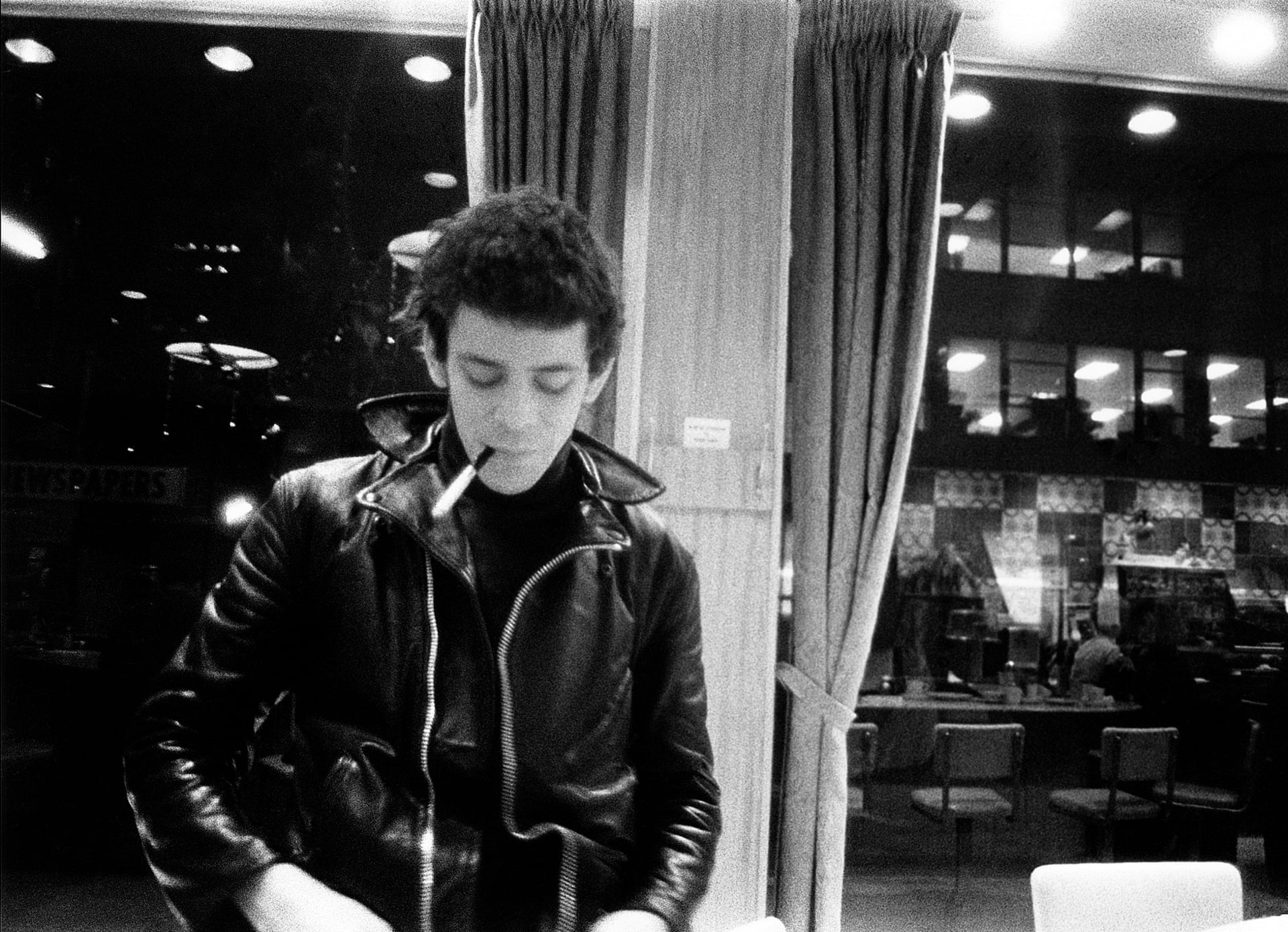
Lou Reed at the luncheonette on the corner of 47th Street and 3rd Avenue, 1967
‘Lou and I had a special kind of connection, almost like we knew what the other was thinking and could communicate with our thoughts rather than words.’


That same silverness that he brought to the Factory’s interior comes through in Billy’s black and white pictures, no matter how they’re printed. Even when they have the strong black and white contrast that looks like a Xerox, they have that reflective, mirror quality. They are optically true.

Andy wrote in his 1980 memoir POPism: “Billy loved reflecting surfaces – he’d prop broken bits of mirror here and there and paste little sections of them on to everything… the mirrors weren’t just decoration. They got used a lot by everybody priming for parties. Billy especially spent a lot of time looking at himself. He positioned the mirrors so he could see his face and body from every angle. He had a dancer’s strut that he liked to check in motion.
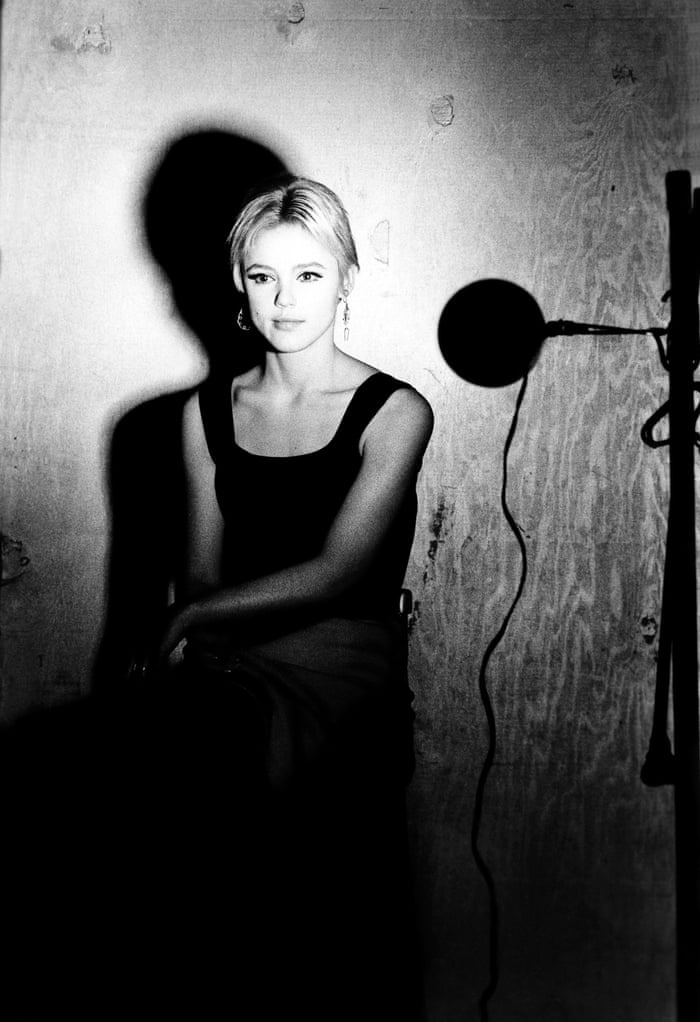
Edie Sedgwick during the filming of one of her screen tests
Edie Sedgwick during the filming of one of her screen tests, 1965
‘The Factory lights would be turned down, the harsh spotlight fixed on Edie’s perfect features. Andy turns on his 16mm Bolex movie camera and walks away for the duration of a single roll of silent film, nearly three minutes.’


For Billy, the camera was all about making magic with mirrors. He recalls: “[Warhol] had been carrying around a Honeywell Pentax 35mm SLR but, when he got the movie camera, he handed me the Pentax and said: ‘Billy, you do the photography now because I’m going to do movies.’”

As the Factory photographer, Billy was also the set decorator and casting director. He created photos as magic tableaux vivants that established the superstars as much as the films did. Andy later writes in POPism: “The only things that ever came close to conveying the look and feel of the Factory then, aside from the movies we shot there, were the still photographs Billy took.”
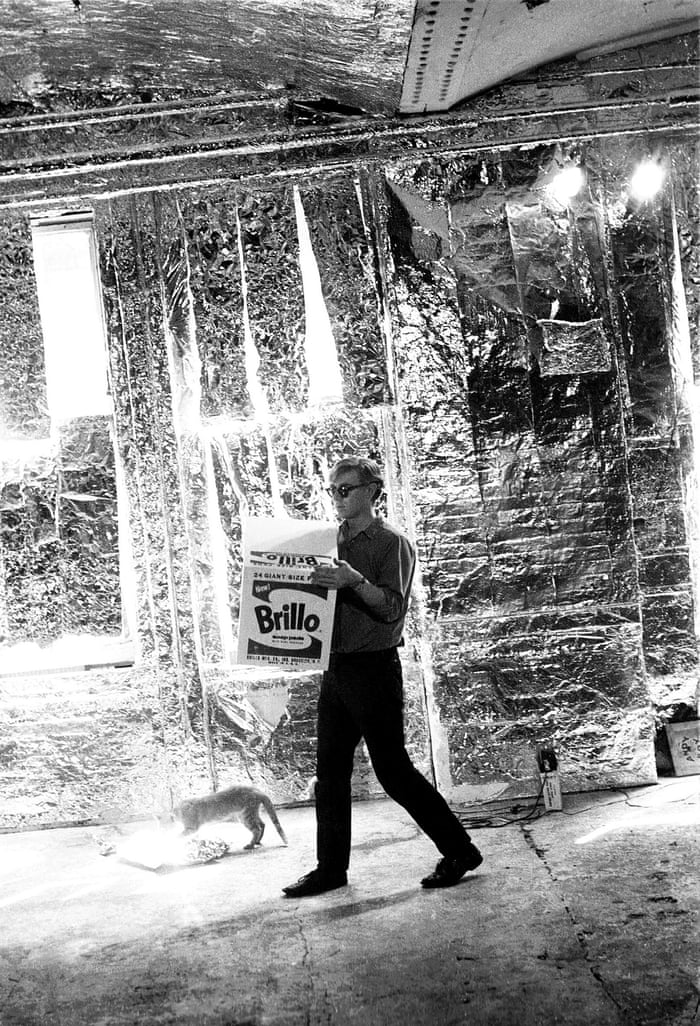
Andy warhol with brillo box sculpture
Andy Warhol with Brillo Box sculpture and Ruby the cat, 1964‘Andy carrying a freshly painted Brillo box into the Factory, the silver foil reflecting the dancing light that pours in from the windows. Ruby would walk all over Andy’s paintings, so I had to find a new home for her; she ended up in an orphanage in the North Carolina countryside.’


The Factory was Andy’s studio, but it was also the centre of the scene. Everyone thought it was people hanging around Andy; he thought he was hanging around them. But Billy managed it all, kept it all under control. The actress and writer Mary Woronov, who starred in many Factory films, has called Billy “protector of the chaos”. In POPism, Andy writes: “Billy was different from all the other people on speed because he had a manner that inspired confidence: he was quiet, things were always very proper with him, and you felt like you could trust him to keep everything in line, including all his strange friends. He had this way of getting rid of people immediately if they didn’t belong. If Billy said ‘Can I help you?’ in a certain way, people would start to actually back out.”

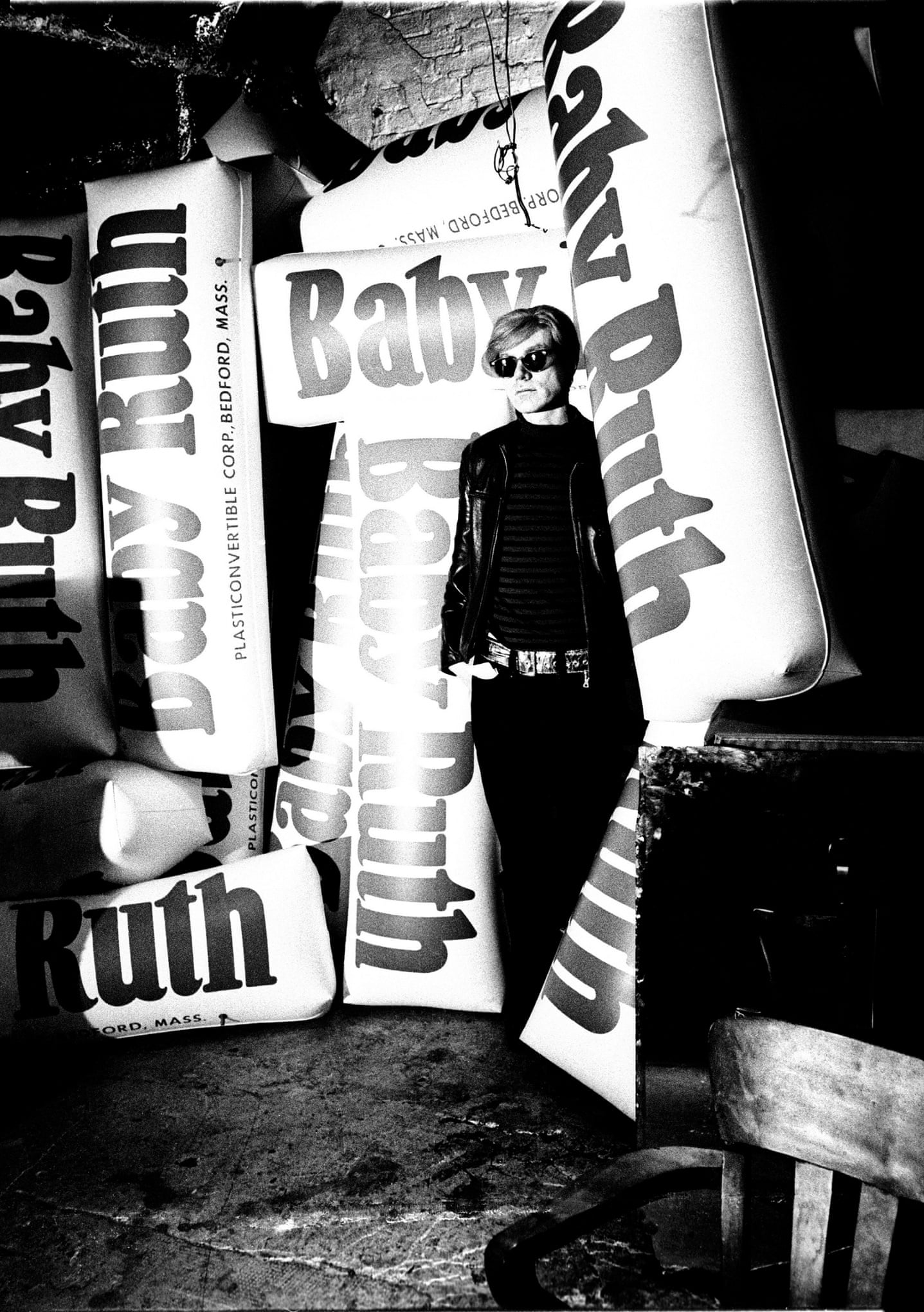
Andy Warhol with giant inflatable Baby Ruth bars, 1966


Billy recalls: “It was my duty to be Andy’s arms and legs. I was usually so synchronised with him that he didn’t have to tell me what he needed, but I was aware that if he was working with someone who wasn’t in tune with him, he’d say, ‘Oh, no, no, no’ and tell them precisely what to do.”

Billy ran the Factory, doing what needed to be done, until 1968, when Andy moved to new quarters at 33 Union Square West, a clean, smart space. There wasn’t much room to paint, but Andy had declared he had given up painting. This was more like the offices of a film studio, and where Billy had run things uptown, here the new director of Warhol’s films, Paul Morrissey, and Fred Hughes, who was Andy’s social secretary and art agent, were ascendant. Billy had a darkroom in the back where he spent more and more time, the sole holdover from the silver Factory. This is the place where Andy was shot – where, wounded and bleeding, he told Billy to stop laughing because it was making him laugh and it hurt. Until he realised Billy was crying. Andy survived, but it changed everything.

The silver Factory was glamorous in the extreme. The dark centre of the world

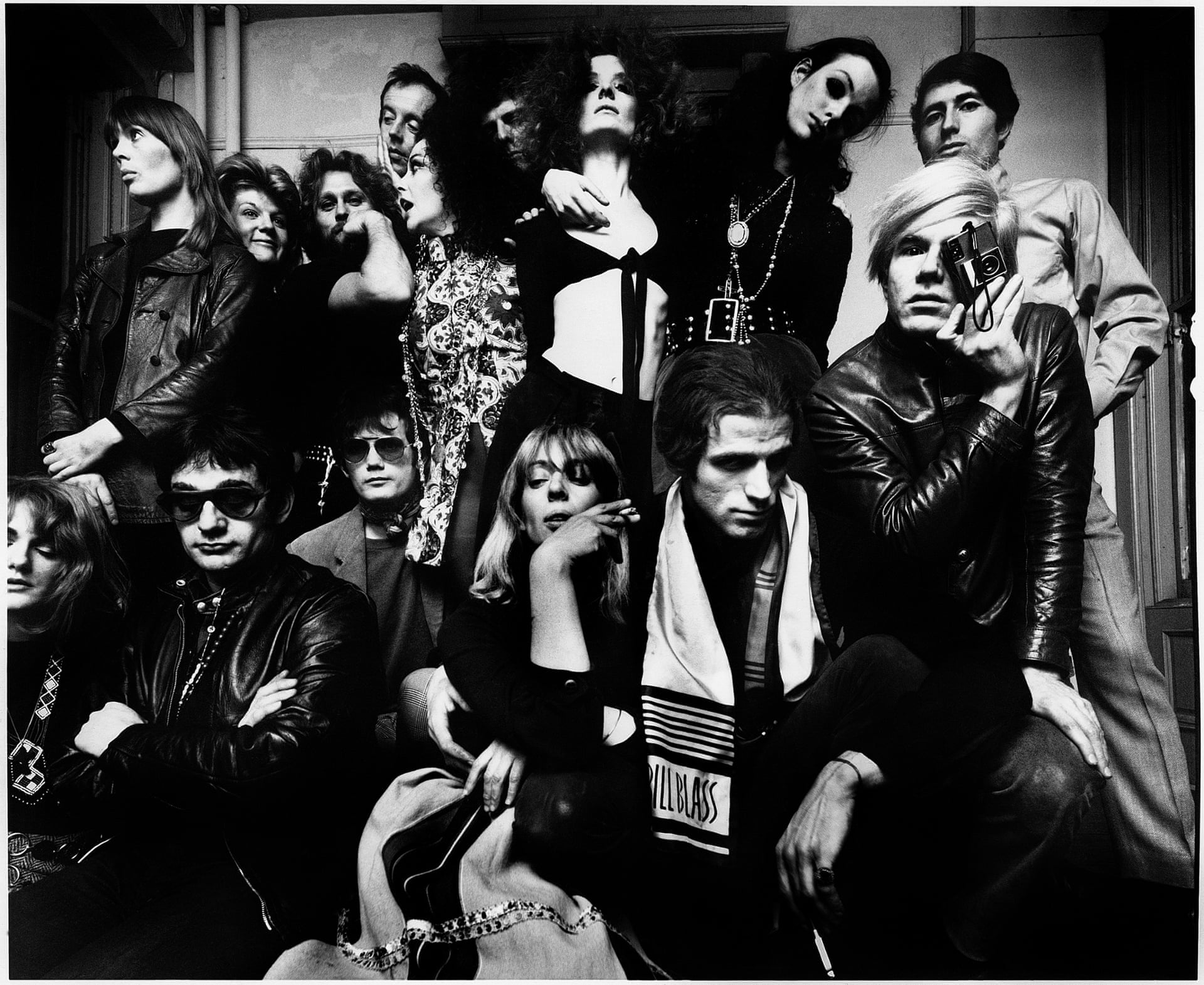
Factory group shot, 1968‘This is one of the many “family photos” taken at the Factory. The people hanging around were always creative and photogenic characters. Clockwise from Andy: me [Name], Tiger Morse, Tom Baker, Ondine, Ingrid Superstar, Nico, Brigid Berlin, Louis Waldon, Taylor Mead, Ultra Violet, Paul Morrissey, Viva and Susan Bottomly.’


I guess I found my future through Billy Name’s eye. I saw his pictures of the Warhol Factory when I was in college and thought, “Oh that’s the place to get to. Everyone is so beautiful and it looks brilliant and complicated – art, music, film, but most of all a kind of wild life.” It looked like the future as I imagined it.
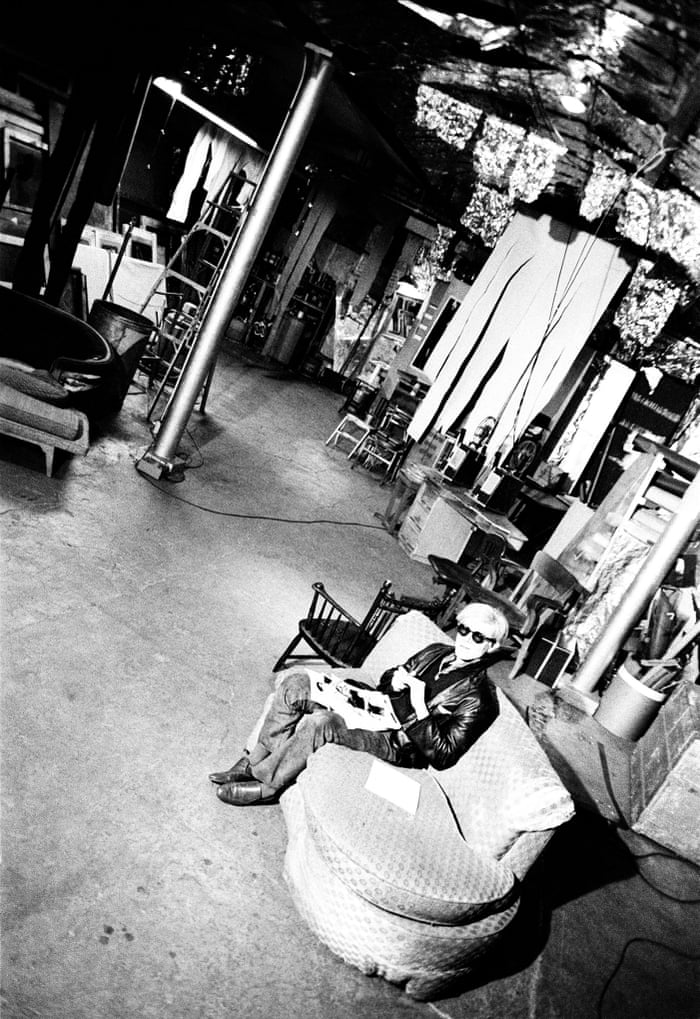
Andy Warhol on the couch
Andy Warhol on the couch at the Factory, 1967


I was obsessed with the flowers book, a phone book-sized hunk of photos, by Billy and Stephen Shore. There was something about Billy’s pictures that was particularly magical. Black and white and silver all over. The silver Factory was glamorous in the extreme. The dark centre of the world.
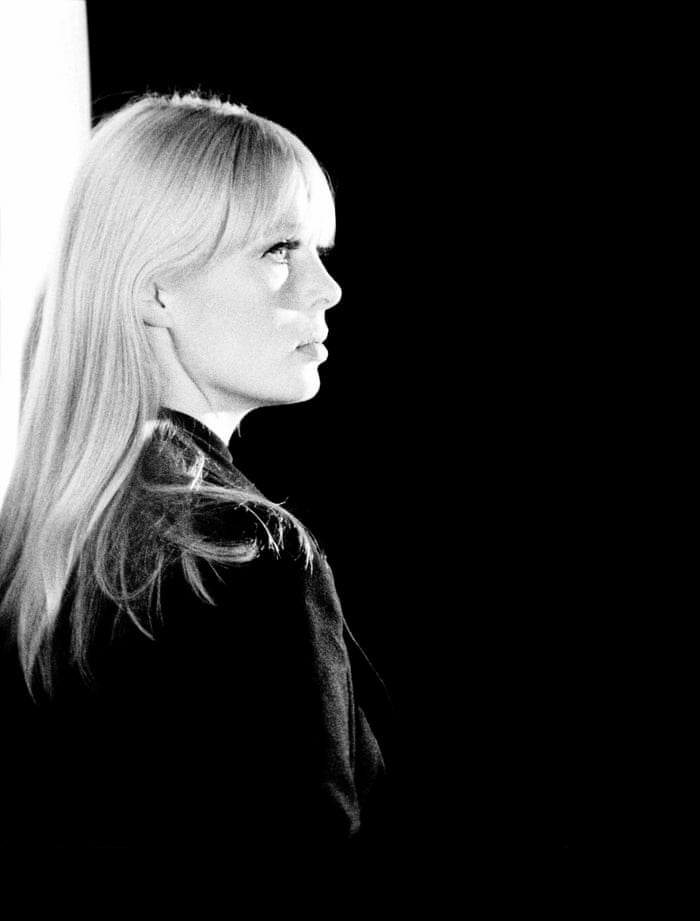
nico
Nico, 1967
‘Nico caught in the spotlight, Andy quietly behind her in the dark.’


By the time I got to the Factory, Andy had moved into the new, less industrial space. It was more like a prototype of the rich person’s loft. Andy had moved on. Billy had gone into his darkroom and not come out for a year and a half, seeing no one but Lou Reed and Ondine, and only venturing out for food at night. He was like a ghost, haunting the place. And then, one day soon after I arrived, he was gone. The door was open. His silver-painted trunk was still there, filled with photos and astrology books and charts and some prints stamped © Factory Foto.

I think of Billy (as I do of Ray Johnson) as being Andy’s equal – the great unsung artist and behind-the-scenes magician of the scene. It’s almost that Billy and Ray refused everything that Andy accepted. Billy was the negative Andy was peeled from. It was as if Billy gifted his vision and great gifts to Warhol out of something like pure love. Andy sold it; Billy gave it away.
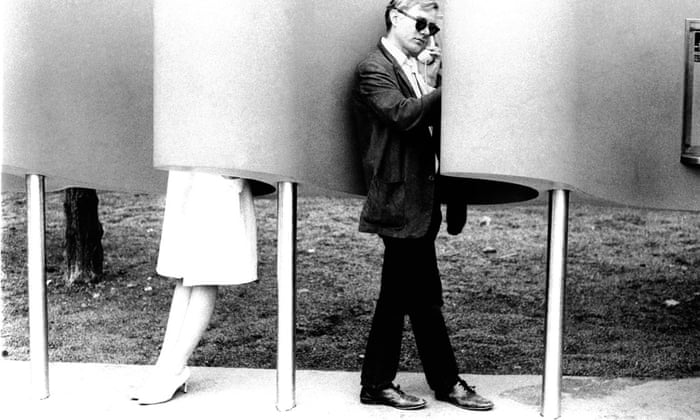
Andy Warhol on a payphone
Andy Warhol on a payphone at the 1964 World’s Fair
‘Andy spent an afternoon with me and art dealer Ivan Karp at the World’s Fair in Queens, New York. Here, he takes a break from exploring to make a phone call on the uniquely designed Bell telephone booths.’


When Billy left the Factory for good in 1970, he left a note on the door of the darkroom. “Andy, I am not here any more but I am fine. Love, Billy.”
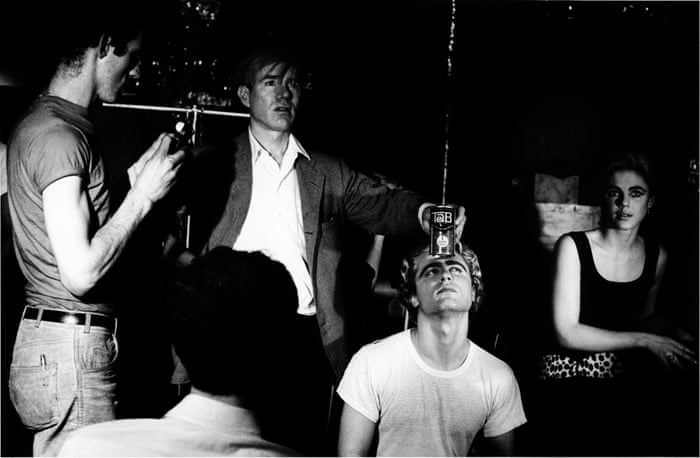
Andy Warhol and filming Billy Name
Billy Name, Andy Warhol, Gerard Malanga and Edie Sedgwick during the tech set-up for Vinyl, 1965


Now Andy is not here any more. Except in these pictures. He lives in our heads and in the work, and we can conjure him from these pictures. He never looked better than he did in these silver pictures, surrounded by all the beauties, shining like a full moon in their reflected light.

Billy Name: The Silver Age: Black and White Photographs from Andy Warhol’s Factory is published by Reel Art Press (£60).

http://www.theguardian.com/artanddesign/2014/nov/09/magic-with-mirrors-andy-warhol-pictures-billy-name-silver-age

http://www.theguardian.com/artanddesign/gallery/2014/nov/09/andy-warhol-nico-beyond-billy-names-factory-photographs