Monday, 18 November 2013

Doris Lessing RIP

Doris Lessing obituary
Visionary, prophet, feminist icon and Nobel prizewinner given to constant literary reinvention

Lorna Sage
The Guardian
Sunday 17 November 2013

Doris Lessing, who has died aged 94, was one of the major fiction writers of the second half of the 20th century and one of the most vividly representative literary figures of our times. She was not a committee woman of letters – far from it – but she stood for what it meant to be a writer throughout that long, noisy "now".

She lived through some momentous transformations of her own vocation, from communist social realist to reluctant feminist, to Sufi seeker, to Cassandra, to self-appointed cosmic anthropologist. Her broad brow and steady gaze graced thousands of interviews and profiles. She talked with shrewd mockery about our fascination with artists' lives – "they are our alter egos, because they are seen as free 'Oh, for the life of a gypsy, Oh!'". But then again (in a 1987 polemic, Prisons We Choose to Live Inside), she wrote : "I see writers generally in every country, as a unity, almost like an organism, which has been evolved by society as a means of examining itself."

And anyway Lessing was a nomad, a tent-dweller. She did seem free, she allowed herself to be inconsistent – obsessive, humble, brilliant, banal, serene, truthful, teasing by turns. In the mid-1980s she perpetrated a hoax on her publishers Jonathan Cape, submitting a manuscript under the name Jane Somers, which they promptly rejected (The Diary of a Good Neighbour by Jane Somers was eventually published by Michael Joseph, Lessing's first publisher). This, she argued, showed what's in a name. Unknowns could not get a fair share of attention.

But in fact, one could read this characteristically maverick gesture in quite another way – that Lessing spoke compulsively by now in tongues, in other people's voices, and it was the dialogue among them that was the most fascinating thing. Splitting off one voice, the old-fashioned realist one, would no longer do the trick.

This restless power of self-invention may prove to have been her most distinctive quality. She was from the beginning a short-story writer and novelist of formidable originality – The Grass Is Singing (1950), the Children of Violence sequence (1952-69), many of the short stories set in Africa (This Was the Old Chief's Country, 1951) and above all The Golden Notebook (1962) are 20th-century classics.

The science-fiction series Canopus in Argos (1979–83) was a post-imperial allegory with disconcertingly timely mental maps. One-offs such as The Memoirs of a Survivor (1974), The Good Terrorist (1985) and Love, Again (1996), so different from each other, and from the books belonging to schemes and series, revealed her enduring fascination with literary experiment.

And yet the story behind Lessing's oeuvre remained riveting. She herself seemed open to change in a new way – not only creating characters to populate the times with symbols, but being one herself, as if the very business of putting pen to paper had become a confidence trick for conjuring a future. She was always losing old readers, gaining new ones, regaining others. Even her talent for demolition and her habit of cutting her losses were not to be relied upon. She was adept at tracing sly signs of continuity where that particular path through the narrative woods had been overgrown and bypassed time out of mind – not least by Lessing.

When she came to write her autobiography, in the 90s, she was walking a tightrope: "We're all made up of different souls, but one person writes this book ... somebody standing back, amused or appalled, but it's the same voice." Some critics felt they had at last caught her out, particularly members of the left she had left behind.

Born Doris Tayler in Tehran, the capital of what is now Iran, she had a lot of practice in moving on. Her father, a captain in the first world war, had met her mother while she was a nurse and he was recovering from having a leg amputated; he then became a clerk with the Imperial Bank of Persia. In Alfred and Emily (2008), Doris imagined different outcomes for them. In the event, when she was five, after the family had returned to Britain they set off to farm maize in Southern Rhodesia (now Zimbabwe), "a society more short-lived than most". This supplied her with a "myth country" – not a place she could possess, and therefore one that possessed her all the more powerfully.

She wrote marvellously about their mud house, which was meant to serve for five years and lasted 20, about her father's dreams, her mother's deluded expectations of elegant living. Mother was the practical, ambitious one, and it was in order to disappoint her that Doris left school at 14, went off to the capital Salisbury (now Harare) and married young in 1939. But when suddenly, with the second world war, British servicemen and European refugees turned up, she discovered a world she had known only through books.

Lessing and her first husband, Frank Wisdom, were divorced in 1943 (their children, John and Jean, stayed with their father) and, fired with political passion, she became a member of a communist group whose leading light, a German-Jewish refugee, Gottfried Lessing, she married in 1945. In 1949 they too divorced, and she left for London with their son, Peter. "The horizon conquerors now set sail ... for England," the empire was about to implode.

Contemporary English writing, she announced coolly to an interviewer, was "small, well-shaped and with too much left out". The books pages greeted The Grass Is Singing and its author with excitement and respect. She had brought colour to grey, postwar London in more senses than one, for the colour-bar in Africa was topical; she was a reporter from that frontline – and also, thanks to her self-education in communist circles, a bold realist with a grand narrative about oppression, modelled on the epic novelists of the 19th century. The Daily Graphic chose her as their first "book find of the month" – "£20 in her handbag – and a manuscript in her suitcase" – and described her as "a dark, placid young woman of 30, of slow grace and deliberation", as though the glamour of black Africa had rubbed off.

Lessing, for her part, fell hungrily on the theatre, music, museums, but in other ways found London frighteningly flattened, people's energies leeched away by rationing and having to cope. She would later (In Pursuit of the English, 1960) describe it as a shaken, see-through city – "as the trains went past ... shock after shock came up through brick and plaster, so that the solid walls had the fluidity of dancing atoms". The flats and houses in which she lived were stopping-off points for fellow members of CND, black African political exiles, wandering ex-communists. And she would soon find herself playing "house-mother to teenagers looking for alternative families" (one of them grew up to be the novelist Jenny Diski).

The pivotal literary event of the end of the 50s was writing The Golden Notebook, the most formally compelling novel she would ever produce and the book that chronicled her personal cultural revolution. Instead of living stoically and ironically with her "contradictions", she broke ranks to explore the creative possibilities of disintegration: mental illness, political apostasy, the sex war, and the cold war between generations. She was, initially, deeply disappointed that different groups of readers only "saw" one of the books in the book – generally the one about women, or the one about madness – when she had so inventively battered them into unity. This was the beginning of a new kind of response to her fiction, and she had trouble reconciling herself to it, but gradually she entered into a more quarrelsomelydemocratic dialogue with her readers.

Some were appalled by her new nakedness. In Vogue, Siriol Hugh-Jones deplored the way women novelists were deserting discretion and good humour. Iris Murdoch and Muriel Spark were bad enough, but Lessing was the worst. The Golden Notebook was "dismal, drab, embarrassing, sodden with a particularly useless form of self-pity ... the sort of book which seriously sets the tide of female emancipation, if you care about the thing at all back a good long way". Hugh-Jones was certain that women should reconcile themselves to the real world, keep their dignity and obey the rules about plausible plotting and round characters. However, in the 60s Lessing became a bestseller throughout the English-speaking world precisely because she cracked the glaze. She had exposed her private self – her love affair with the Czech ex-communist she calls "Jack" in the autobiography, a psychiatrist at the Maudsley hospital in south London whose family had died in the gas chambers and her shared excursion into craziness with the American writer Clancy Sigal.

Sigal described years later what it felt like to be "raw material": "I told her she had to stop writing about me, or rather 'Saul Green', the macho American she had extracted from my rib. It wasn't right for her to use our moments of intimacy in her book. 'You can't do it!' I shouted. 'Oh, can't I?' she shouted back. 'Why not – it's my work, isn't it?'" The main end of the punishing affair was to feed their writing.

So the work spilled into life, and Lessing became the kind of writer she described in her autobiography – "one who uses the processes of writing to find out what you think, and even who you are". She told an American interviewer in 1969: "I've floated away from the personal ... I don't believe any more that I have a thought. There is a thought around."

Her alternative reading list included RD Laing, Idries Shah, Buddhism, Zoroastrianism and the speculative fiction that would inspire her 70s and 80s novels. But did she believe in it? Not really. Commitment was one of the things from which she weaned herself away in the extraordinary self-transformation that was her "change", her mid-life crisis. She infuriated ex-CND friends by writing to the Guardian, saying people should build nuclear shelters, for instance. Readers of her space fiction knew that this was because it was important to think survival, not because you would survive.

But there was continuity, too. She never left Africa behind. The space-odyssey is about taking apart colonialism's mind-set. African Laughter (1992) revisited

Zimbabwe and her intransigent family. She was not adopted as a tribal "mother" like her old friend Naomi Mitchison – she had become too elusive for that. Her love for the country had a no-entry sign against it: no going back in time.

Being a connoisseur of the transience of world pictures gave her an authority-against-authority. She was always taking the long view, the overview, speaking for "us", though what she saw from her eyrie kept changing. She inhabited this paradox with panache. Jeanette Winterson spoke for many younger readers and writers when she wrote (in 1988): "What Lessing shows is that no one knows what evolutions are necessary for the development of the psyche. We only know that movement is the key."

Meeting her, her energy and stillness were impressive – she had studied people's body language. In London, which she came to love, but lightly, as a kind of theatre, she shared a house in West Hampstead with Peter, and was always on the move, travelling, talking, listening, looking. Her autobiographies had it both ways, as did she – "between the efficient young housewife of my first marriage and the rackety 'revolutionary' of 1943, 44, 45, there seems little connection. Even less between those two and the young woman who – still always in crowds of people who changed, came from everywhere in the world, were always on the move – was developing the habit of privacy, writing when she could ... And yet we all know what the connection was: it is the sense of self, always the same."

Her two sons predeceased her, and she is survived by Jean and two granddaughters.

• Doris May Lessing, writer, born 22 October 1919; died 17 November 2013

http://www.theguardian.com/books/2013/nov/17/doris-lessing

Sunday, 17 November 2013

Hollywood in Kodachrome

Images from  Hollywood in Kodachrome, a new book by photographic preservationist David Wills and designer Stephen Schmidt (It Books, £24.99): a digitally restored portfolio of rare and previously unseen colour photographs of silver-screen idols from the industry's golden era.

Hollywood in kodachrome: Hollywood in kodachrome
Errol Flynn, 1940

Hollywood in kodachrome: Hollywood in kodachrome
Elizabeth Taylor, 1949

Hollywood in kodachrome: Hollywood in kodachrome
Rita Hayworth, 1946

Hollywood in kodachrome: Hollywood in kodachrome
Ann Sheridan, 1941

Hollywood in kodachrome: Hollywood in kodachrome
Humphrey Bogart, 1942

Hollywood in kodachrome: Hollywood in kodachrome
Ava Gardner, 1944

Hollywood in kodachrome: Hollywood in kodachrome
Lucille Ball and Gene Kelly, 1943

Hollywood in kodachrome: Hollywood in kodachrome
Trudy Marshall, Jeanne Crain, Gale Robbins, June Haver and Mary Anderson, 1944

Hollywood in kodachrome: Hollywood in kodachrome
Guy Maddison, 1947

Hollywood in kodachrome: Hollywood in kodachrome
Lucille Ball, 1946

http://www.theguardian.com/artanddesign/gallery/2013/nov/17/hollywood-in-kodachrome-in-pictures#/?picture=422590795&index=6

John Wayne

Frank Sinatra

Guy Maddison and Shirley Temple

Danny Kaye and the Goldwyn Girls

Fred Astaire

Marlene Dietrich

Gregory Peck

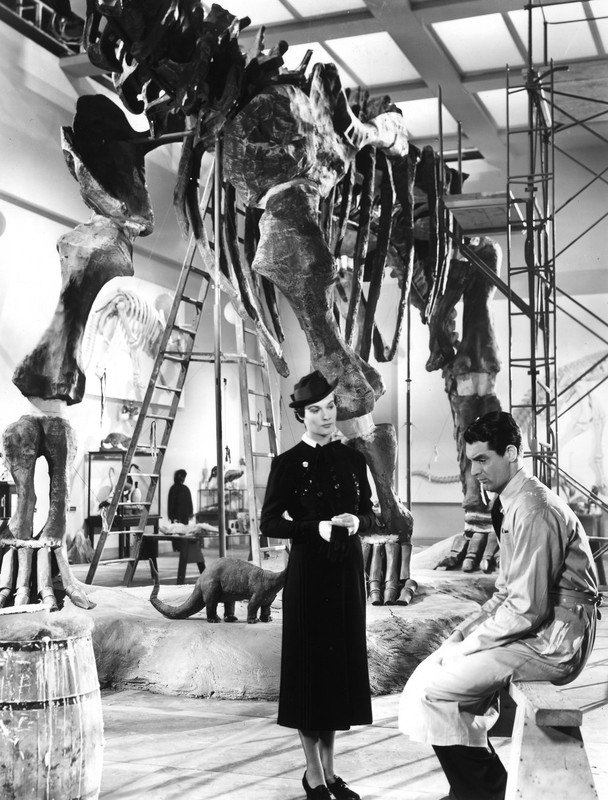
Cary Grant

Yvonne De Carlo

Lucille Ball

http://www.vanityfair.com/hollywood/2013/11/rare-photographs-sinatra-lucille-ball-dietrich-kodachrome

Judy Garland in 1945, from Hollywood in Kodachrome - pre-order now and get it in time for the holidays.
Judy Garland, 1945

Frank Sinatra in 1945, from Hollywood in Kodachrome
Frank Sinatra, 1945

image
Rita Hayworth, 1944

Saturday, 16 November 2013

Donald Fagen - Eminent Hipsters - another review and an interview with David Fricke


Eminent Hipsters by Donald Fagen – review
Moments of musical transcendence and life on the road … this dry white whine from the Steely Dan singer is a memoir to savour

Anthony Quinn
The Guardian
Thursday 14 November 2013 

This book is a piece of pure bliss, and it's not even the book I thought or hoped it would be. When they said a memoir by Donald Fagen was on the way it seemed reasonable to assume that the co-founder of Steely Dan would be reflecting on the run of seven LPs between 1972 and 1980 that constitute one of the greatest oeuvres in American rock, and would thereby shine a light on the famously enigmatic lyrics with which he and his partner Walter Becker used to bamboozle us. For instance, in "Brooklyn Owes the Charmer Under Me", who or what was the charmer? Could it be true that the strolling blues "Chain Lightning", from their 1975 album Katy Lied, was actually about two old Nazis surreptitiously meeting in a Uruguayan square to mark the 40th anniversary of Hitler's rise to power? Oh, and can pretzel logic be taught?

The book isn't telling. The one Steely Dan song discussed at any length here is "Deacon Blues", and then only in the context of a tune Fagen worries about not rehearsing for a concert in Alabama. Crowds there used to yell for it because it contains the line "They call Alabama the Crimson Tide". (They don't yell for it now.) Instead, Eminent Hipsters is partly a chance for Fagen to go reeling through the years of his nerdy, nervy youth in suburban New Jersey to consider "how the stuff I read and heard when I was growing up affected (stretched, skewed, mangled) my little brain". You may, as a Dan fan, care to spot the songs in his reminiscences. Even if you don't, you will hear his voice – that sardonic dry white whine – distilled in just about every sentence.

For the young Donald, an upbringing in a New Jersey housing development was more or less a prison. Or, as he puts it: "I'd been framed and sentenced to a long stretch at hard labour in Squaresville." His escape route was SF, books and, of course, music. The first half of Eminent Hipsters comprises a series of mini-essays on his early listening. Henry Mancini's music for TV and film (Touch of Evil, Breakfast at Tiffany's) was a jazz neophyte's introduction to "cool", while the improvised routines of hipster DJ Jean Shepherd enthralled him and many another disaffected youth tuning a radio beneath the bedclothes. Casting around for a comparison to this now-forgotten cult figure, Fagen alights on a Midwestern storyteller like Mark Twain. But whereas most would leave it at that, he elaborates the thought with a modern twist: "say, Mark Twain after he'd been dating Elaine May for a year and a half". Sometimes inspiration comes from an unexpected source; one of the most charming pieces recounts his affection, inherited from his musician mother, for the Jazz Age trio the Boswell Sisters, whose (white) New Orleans background and technical virtuosity gave old songs a startling refit. (I immediately downloaded their version of  "We Just Couldn't Say Good-bye", and Fagen is right, it's brilliant.)

Later on, as the 50s swing into the 60s, he crossed the river to discover jazz clubs, notably the Village Vanguard where "gods" strutted the stage – Miles Davis, Coltrane, Sonny Rollins, Bill Evans, Monk, Mingus. By then he had another DJ on the brain, Mort Fega, "laid-back, knowledgeable and forthright, the cool uncle you always wished you had" and clearly a precursor of Fagen's own late-night jazz DJ from his debut solo albumThe Nightfly (1982). What makes this tour of the pantheon so refreshing is that Fagen, for all his cynical patter, retains the steady, unfakeable rigour of the true enthusiast. He takes his old idols seriously, and wants us to understand why they mean so much. The book reaches its hero-worshipping apogee in his consideration of Ray Charles, about whom he makes two extraordinary claims. When, in 1954, Charles hijacked gospel and "replaced God with a woman", the resulting music, according to Fagen, "rescued a generation from the deadly, neurotic suppression of feeling that had afflicted the nation after world war two". Woah. Who knew? And he's not finished. "Georgia on My Mind" may be a great song to you and me, but for Fagen and his generation "it just may have been the most beautiful three minutes and 39 seconds in all of 20th century music".

Hang on to that near-hallucinatory moment of transcendence, because the second half of the book brings us crashing right down to earth. "With The Dukes of September" is his journal of a tour undertaken in summer 2012 with his old friends Boz Scaggs and Michael McDonald (ex-Doobie Brothers). Fagen remembers himself at college as "a first-tier nerd, and pitifully lonely". Now, a 64-year-old band-leader on a tour bus, he's a first-tier grump – and pitifully lonely. Away from his long-suffering wife Libby he frets and moans about almost anything – aches and pains, quitting smoking, the inadequacy of painkillers, altitude sickness, hotels with grungy swimming pools and smelly bedsheets, the rotten acoustics of old concert halls, his inability to get a wink of sleep. "A miserable night in the Grand Hyatt. How can I be the adorable host, the sensitive accompanist, the more or less competent vocalist I'm expected to be under these conditions?" As for the audiences, don't get him started. First they're too old. At Santa Rosa, "the crowd looked so geriatric I was tempted to start calling out bingo numbers". In Vancouver, "they must have bused in people from nursing homes". But worse are the too young, who just scream for the hits they remember from college. Fagen calls this lot "TV babies", meaning people born after 1960 "when television truly became the robot caretaker of American children and therefore the principal architect of their souls".

At times you wonder how he manages to get out of bed, let alone do a gig every other night. It's tough being Donald. Yet even at his most audience-weary and misanthropic he saves himself with a killer turn of phrase: "If these people could only see into the mind of the viperous Robespierre they had invited into their midst …" Viperous Robespierre! By the end of August he's smoking again, his blood pressure's up and he's swallowing painkillers faster than ever. Eventually he diagnoses himself as suffering from Acute Tour Disorder, the result of "severe vocational distress". Perhaps it's in the Fagen DNA. He tells us that when his parents moved to Ohio in the late 60s they found themselves an apartment on ("wait for it") Chagrin Boulevard. So why does he put himself through it? To make a living is the obvious answer: he and Becker are touring again this autumn with the reformed Steely Dan. And just occasionally (he admits it) because there's no better job around: "When everything's working right, you become transfixed by the notes and chords and the beautiful spaces in between. In the centre of it, with the drums, bass and guitar all around you, the earth falls away and it's just you and your crew creating this forward motion, this undeniable, magical stuff that can move ten thousand people to snap free of life's miseries …"

Musician, heal thyself.

http://www.theguardian.com/books/2013/nov/14/eminent-hipsters-donald-fagen-review

Fagen interviewed by David Fricke at Barnes and Noble

Thursday, 14 November 2013

Last night's set lists

At The Habit, York: -

Ron: -
Autumn Leaves
Need Your Love So Bad

Da: -
Love Letters In The Sand
Too Far Gone

The Elderly Brothers: -
So Sad (To Watch Good Love Go Bad)
Love Hurts
Crying In The Rain
Bye Bye Love

A busy night with plenty of players including several new faces. An Everlys-only salvo from The Elderly Brothers was well received. After hours 'discussions' went on until about 1:30am, aided and abetted by some rather fine Cameron's ale. No, not that Cameron!

Wednesday, 13 November 2013

Pat Ffrench (The Ochid House Project) - Fascinating Facts from the World of Plants...

Pat Ffrench of Orchid House Project fame (see elsewhere on the blog for his musical output), has recently finished writing a book, Fascinating Facts from the World of Plants, and has just made it available on Kindle (on Amazon).

His literary agent, one P. Kelly, would like you to buy it as he is currently living on 15% of thin air.

That's not Pat on the cover, by the way, but he does have that outfit.

Tuesday, 12 November 2013

Keith Crombie: The Jazz Man Documentary

THE JAZZ MAN DOCUMENTARY - a Kickstarter Appeal

by Abi Lewis

A character driven feature length documentary looking at the man behind the legendary Jazz Cafe in Newcastle.

This is the portrait of a man who stands like an island against the stream of modern culture; an unbending, uncompromising enigma fighting a rearguard action in defence of his beloved jazz.

This is the story of a club, a dishevelled and cluttered monument to a bygone age. A shabby beacon, calling out to the lost souls in search of a refuge, a bottle of warm booze, and free flowing music. Trad, swing, be-bop or avant-garde; all are welcome.

This is the story of the modern age; of a lost heart of music.

This is the story of the small, disparate but determined community whose fight is to preserve the venue that they cherish.

This film is the collection of said stories and more.

However, ultimately this is the story of one man. Keith Crombie: The Jazz Man.
The Jazz Man Poster

The story behind it

I've known Keith all of my life. In 1978 whilst my mother was in labour, my father and his closest friend Keith waited in a near-by pub. When the news came through that I had arrived, the pair laced with alcohol came to the hospital to meet me. On arrival Keith captured the first ever pictures taken of me and 35 years later I filmed the last ever interview that Keith recorded…. and that's how it started!

I always thought I knew my godfather well, the man I’ve literally known all of my life. I was wrong.

This is my take on the unravelling story of one man. Keith Crombie: The Jazz Man.

What inspired the film?

Keith! He was such an eccentric interesting character and the venue itself was like nowhere else I know. So I felt both needed to be documented.
Keith Crombie 'The Jazz Man'

It was so much more than a Jazz Café, it was Keith’s business and his home, being allowed into the building was like being invited into Keith’s living room, a place that just happened to have live jazz playing three nights a week.

As I started to film with Keith I found out about his colourful past; stories which stem back to the late 50’s early 60’s. Originally a ten minute short, it quickly escalated into the feature length documentary it has now become.

Characters like Keith’s are an anomaly, an endangered species and need to be remembered and documented.

The journey so far …

I was originally driven to make the documentary THE JAZZ MAN as, like Keith himself, the jazz cafe was becoming old and worn and my gut feeling told me it was time someone documented Keith and the history of the venue before it was too late.

Fortunately I began filming at the right time and over a two year span captured some fantastic moments with Keith and the other characters that frequented the jazz café. It was easy to find the right subjects, as the place was a Mecca for interesting and quirky characters.
The Jazz Cafe

Since the sudden and shocking passing of Keith in late 2012 the story has become so much more poignant and is a real tribute to Keith and what he stood for.

This year we have concentrated on some final interviews that needed to be filmed to help tell the story and connect Keith back to his roots in the live music scene of 60s Newcastle.

The interest we have had in the film since the launch of the trailer has been phenomenal. The Jazz Man doc has already been exposed to an international audience of thousands through various channels: local and regional media; printed and online jazz press such as Jazz Wise Magazine and many international jazz blogs including Jazz Wax, Jazz Lives and Jazz Shaped.

We have also had interest from various independent music venues and cinemas around the UK who are interested in screenings and the support of organisations such as Jazz Services for the project.

Participants Summary

For this film we have interviewed people from all parts of Keith’s life.

We speak to icons such as Eric Burdon from The Animals and film director Mike Figgis who tell us their memories of 1960’s Newcastle and a young Keith.
Eric Burdon from 'The Animals'

Greg Hicks from the Royal Shakespeare Company, who used the place as an after-show club for fifteen consecutive seasons in Newcastle.
Greg Hicks - RSC

We also hear from the cast of characters who were drawn into Keith's world, these include local musicians, artists, poets and members of the general public, who shared this quirky corner of Bohemia and tell stories of visiting international jazz legends such as Wynton Marsalis and Harry Connick Jnr.

Music

The music featured in the film includes acts that are home to the North-East; Gypsy Dave, The Safe Sextet, and the Budtones. All artists showed support by kindly contributing tracks gratis to help the production of this low-budget film.
The Jazz Cafe, Pink Lane, Newcastle upon Tyne

Quotes

“As traditional jazz's musical heyday skulks surreptitiously into the past, those still championing the genre appear evermore distanced, even alienated, against the trajectory of popular culture. Not many people seem to fit the above description more than Newcastle's Keith Crombie, the subject of film maker Abi Lewis' new documentary 'The Jazz Man'. There is something fantastically quirky about the set-up of the film, the reluctance to show Keith's face in the trailer gives grounds to his air of elusivity … I'm looking forward to this one.” Jazz Shaped

“The trailer is lively, moving, energized, unsentimental. I look forward to its release and distribution." Jazz Lives

Biggest Challenge

One of the biggest challenges so far has been to fund the film on a micro budget. Luckily I have had the support of extremely talented crew from the region, who all worked gratis from the start. This film has really been a labour of love to all involved especially my close-knit team who I could not have done without!

What is the money for?

Up to now everything has been self funded and helped by a team providing their expertise and equipment for free.

We are now in post-production which is expensive - I have been lucky enough to get industry discount for the post production - edit, sound and colour grade to broadcast standard. The money raised will pay for this.

Anything extra (which would be amazing) will go towards commercial music and archive footage.

Future plans

Message from the director

I would like to take this opportunity to thank everyone who has already supported The Jazz Man documentary. I have encountered extreme generosity over the past 3 years from individuals who have happily given their time and equipment without charge. This just goes to show what an impact Keith Crombie and the jazz cafe has had on so many people. We couldn’t have got this far without your help, thank you!

We are now at the last hurdle. I am excited to get to this stage and even more excited knowing the film will be complete early 2014.

If you can support us by giving money in return for rewards then fantastic; if you’re not in a position to do this, you can still help support the film by raising the profile of the this documentary by sharing the links with your friends and family!

Many Thanks

Abi Lewis
Producer/Director

Abi has been working in the TV and film industry for 10 years; starting out as an assistant director in drama television and went onto work as a production manager across documentaries, commercials, music videos, and promotional films. The Jazz Man will be her debut as a producer/director.

Monday, 11 November 2013

John Cole RIP

John Cole: a man to make you believe again in journalism
The former deputy editor of the Guardian and the Observer, and a national figure on the BBC for years, inspired trust and respect right across the political spectrum

Peter Preston
The Observer
Sunday 10 November 2013

John Cole, who died last week, was deputy editor of the Guardian, then deputy editor of the Observer, and a dear friend to many of us here. But he will be remembered countless more times over by the millions who watched his stint as BBC political editor. It wasn't the rich Ulster accent that made him special in Oxbridge world. That was just standard fodder for satirists seeking a cheap shot. It was his obvious, manifest integrity. And that brings something special to current debates.

Does journalism, set against a lurid backcloth of courtrooms, seem somehow grubby and dingy, a trade without faith or scruples? Is the BBC – the biggest newsroom in Britain – in thrall to leftwing hacks peddling their wares under cover of fairness rulebooks? Two baleful themes of the times.

But draw other lines in the sand, lines that John Cole himself might have traced. John never made any secret of his own politics. He was Labour (mostly Old Labour) through and through. He'd been a brilliant labour correspondent of the Guardian when following union leaders and strikes was a top news job. His views on Northern Ireland were, unsurprisingly, equally resolute. Heaven knows what today's BBC-bashers would have said if he'd been made political editor now.

Yet Margaret Thatcher and her surrounding Conservative government said none of these things when John Cole covered her pomp and, most memorably, her fall. He was scrupulously honest. Everyone talked to him and trusted him. And, at the moment of Thatcher's departure, he became a kind of national interlocutor, an interpreter we could all follow – not because he balanced the bromides or wove the whispers, but because his judgment was out there for all to see.

Remember John, and you remember that good journalism can be an inspiriting thing. It's a message in need of more messengers. Heather Brooke, a great, digging journalist herself, has just launched a series of lectures called In Defence of Journalism at City University. She began, the other night, with Andrew Norfolk from the Times, who exposed the grooming and sexual exploitation of young girls in the north when nobody else seemed minded to cross that street. And you only need to see this year's entries for the British Journalism Awards to see that Norfolk is not alone.

On the contrary, as Brooke puts it: "Journalists are good at telling other people's stories, but we've failed to tell our own". If, like me, you've been reading this year's entries, you know that there is such a story to be told. John Cole would have told it brilliantly.

http://www.theguardian.com/media/2013/nov/10/john-cole-believe-journalism-again

Saturday, 9 November 2013

Donald Fagen - Eminent Hipsters reviews and interview 2013

Eminent Hipsters
by Donald Fagen
Released: October 14, 2013
Publisher: Viking Adult (176 pages)

Reviewed by Michael Pucci

“. . . several degrees more substantial than the typical musician tell-all.”

The Steely Dan sound, a staple of FM radio and instantly recognizable, has been a canny blend of two ingredients: impeccably crafted, rigorously complex jazz-rock performed only by the best musicians money can buy.

But there has always been another, equally important element lurking beneath the smooth exterior: their lyrics, owing as much to Beat culture and science fiction as to Dylan, are the group’s real secret weapon, laced with black humor and cryptic allusions (and delivered in Donald Fagen’s inimitable sneer).

It’s as if Mr. Fagen and Walter Becker, Steely Dan’s masterminds, were actually fiction writers who preferred to tell their stories musically.

It comes then as no surprise that Mr. Fagen’s new quasi-memoir is several degrees more substantial than the typical musician tell-all.

Eminent Hipsters is not one of those “as told to” cash-ins detailing drug-fueled exploits or a groupie confessional. Dubbed by its author an “art-o-biography,” it’s a thoughtful collection of essays about the artists who most influenced a young Donald Fagen growing up in the Jersey suburbs during the 1950s, the folks “whose origins lie outside the mainstream or creatively exploit material from the margin.”

Opening with a profile of the obscure yet influential Boswell sisters, Mr. Fagen sets the tone for the book to follow: as he describes the “subversive genius” of this nearly-forgotten vocal group, a favorite of his mother’s, he writes with the knowing detachment of a hip jazz critic who’s apparently heard every jazz album known to man. Any reader will be hard pressed not to queue up YouTube for the Boswells after reading this deserving tribute.

He follows with similar reminiscences of Ray Charles, Ike Turner, Henry Mancini, and jazz deejay Mort Fega. These pieces all feature the autumnal tone of someone who outgrew all of his idols long ago but still feels great affection toward them, as in the case of Jean Shepherd.

Best known for writing what would became the holiday standard A Christmas Story, Shepherd for years performed a series of monologues on WOR radio that belied the beloved film’s rose-colored wistfulness and instead offered up slices of childhood unvarnished for kids growing up during the height of the Cold War.

“Shep made it clear he was just as dazed, enraged and amused as you were, that he noticed what you noticed. He established himself as one of a handful of adults you could trust,” Mr. Fagen remembers, which makes the revelation felt after seeing his hero in the flesh years later all the more poignant.

The true highlight of Eminent Hipsters is its final piece, a tour diary of Mr. Fagen’s 2012 tour with Michael McDonald and Boz Scaggs as a rock-and-soul revue called the Dukes of September.

Taking up nearly half the book, the candidly funny travelogue documents the author suffering through what he calls Acute Tour Disorder, criss-crossing the country to perform for audiences filled with nostalgic baby boomers (“Tonight the crowd looked so geriatric I was tempted to start calling out bingo numbers”) or younger people (“TV babies”) who have never heard the soul music the Dukes spend much of their shows covering.

This humor is tempered, however, by a genuine melancholy, putting in perspective the price paid by a spotlight-averse 64 year old still on the touring grind:

“For a lot of performing artists, every night in front of an audience, no matter how exhilarating, is a bit of a ritual slaying. Without necessarily letting it show, you use every bit of your marrow, every last atom of your energy in an attempt to satisfy the hungry crowd. On some level, you’re trying to extinguish yourself. Because, corny . . . as it may seem, that’s what you are, and they need it. And it’s exhausting.”

Steely Dan is still a working outfit, having just completed a summer tour, though for how much longer remains unclear. But 40 years after asking if we were reelin’ in the years, Mr. Fagen proves with his generous collection that his wry voice is still worth listening to, with or without a killer rhythm section.

http://www.nyjournalofbooks.com/review/eminent-hipsters


Eminent Hipsters by Donald Fagen, review
'Eminent Hipsters' is a witty, erudite selection of essays by Steely Dan’s grumpy old frontman, Donald Fagen
Jonathan Cape, 159pp


By Bernadette McNulty
18 Oct 2013

I remember the first time a friend presented me with a Steely Dan CD. It was both a gift and a test, an initiation into music beyond what then, among Nineties rave bleeps and grunge guitars, was considered anywhere near remotely cool. The sound baffled me at first – with its closeted atmosphere, noodly jazz structures, and slightly reedy, elliptical lyrics it sounded like the Eagles reimagined by Woody Allen – but there was also enough to intrigue me and, ultimately, enough to keep me going back to songs for which, like jazz or wine, you eventually develop a taste.


I imagine that is a description band frontman Donald Fagen would approve of from a person he would dismiss as “a TV baby”, an expression he admits to borrowing from the film Drugstore Cowboy to describe anyone born after 1960, “when television truly became the robot caretaker of American children and therefore the principal architect of their souls”. In his account of a 2012 tour with his side project, the Dukes of September Rhythm Revue, Fagen spends a lot of time being tormented by TV babies. They provoke his ire by turning up to gigs expecting Steely Dan’s greatest hits, or worse, waving their camera phones about: “The TV Babies have morphed into the Palm People… sending instant videos to their friends: 'Look at me, I must be alive, I can prove it, I’m filming this s---.’ You know what? I refuse to look at you. You’re a corpse. And you prove that every day, with everything you do and everything you say.”

As you can tell from this, the 65-year-old American, a proud snark in his youth, has matured into a rabidly grumpy old man. But thankfully age has not stripped him of his keen wit and nose for elegant prose. Rock stars are not necessarily sensitive wordsmiths or deep self-analysts by nature – their life stories, documenting a rake’s progress through narcotics and women, tend to be tossed off as record sales dwindle. In his usual contrary fashion, Fagen has decided instead to create a collage of writing made up of critical essays (some previously published) on the cultural heroes or “eminent hipsters” of his youth, combined with his recent tour diary.

Fagen describes himself as someone who could have easily followed another career as a journalist or an English teacher, although going on the transcript of a profoundly unilluminating audience he had with Ennio Morricone, he was better off sticking to the clever lyric writing.


None the less, his “art-o-biography”, much like his music, is nerdishly clever, entertainingly original and even a moving reconfiguration of the memoir format. The early scholarly bombardment of the essays feels partly designed to shake off the casual browser, rhapsodising over obscure, cult figures of the 20th century, including jazz singer Connie Boswell, science fiction writer AE van Vogt and radio DJ Jean Shepherd. Fagen’s fanboy discussions are worth sticking with, though, as he teases out fascinating nuances and connections. He perceives in Boswell, born in the same year as Frida Kahlo, and also disabled, a similar impulse in her singing to “pull apart” her source material, “reorganise its parts and reshape it into something richer than the original”.

His vivid portrayal of growing up in Fifties and Sixties America includes snapshots of the rapid implosion of San Francisco’s flower children, and of suburban houses clad in so much wall-to-wall beige carpet that he remembers “the coolest girl in high school would crawl across her mom’s floor croaking, 'Water… water!’” For the baby boomers, science fiction was seen not as escapism but as a realistic depiction of their ideological alienation from their parents’ generation, a perception that L Ron Hubbard would use when he created Scientology.

Fagen, for all his waspish antagonism to groups and conventions, shows an almost tender sympathy towards his idols’ flaws, whether it be Henry Mancini’s squareness or Ike Turner’s destructive Faustian pact. It’s a mix that flourishes best in the tour diary, as he depicts the indignities and disappointments of being an ageing rock star on the road who has basically detested touring since his youth.

Descending his way through dodgy hotel swimming pools, shrinking venues and increasing onstage meltdowns – let alone those superficial TV babies – Fagen succumbs to what he calls Acute Tour Disorder, or what others would call hypochondria, misanthropy and the severe grumps. But he presents it with such style and humour, you’re almost willing him back on the tour bus, if only to get another volume like this out of him
http://www.telegraph.co.uk/culture/books/artsandentertainmentbooksreview/10382567/Eminent-Hipsters-by-Donald-Fagen-review.html


Steely Dan singer Donald Fagen just 'being honest' in new book
In new book Donald Fagen lets his thoughts roam- and they're not all kind

Christopher Borrelli
October 23, 2013|

Ever wonder what the typical rock star is thinking about on stage? Playing the same songs played a million times before? To the same audiences? Night after night? Year after year?

Donald Fagen, 65, co-founder of literate, aggressively dyspeptic jazz-rock mainstay Steely Dan, may be no one's idea of the typical rock star . But for the unvarnished thoughts of an iconic rock stalwart, decades into a successful career? Let us turn to the latter half of Fagen's newly released book, "Eminent Hipsters," which is given over to the remarkable diary that Fagen maintained during a 2012 oldies tour with Michael McDonald and Boz Scaggs.

"I'd been imagining a flash theater fire that would send the entire audience screaming up the aisles, trampling each other to get to the exits, ending up in a horrible scene outside on the sidewalk with people on stretchers, charred and wrinkled … I guess I'm getting more and more thin-skinned as the tour goes on."

Chicago — of which Steely Dan once cryptically declared: "There ain't nothing in Chicago/For a monkey woman to do" — gets off lightly. Fagen writes that, while backstage at the Ravinia Festival, deeply agitated, he took a toke from a joint before the show, smoothing the wheels for a dull, "tight and polite" performance. Which is nicer than his description of Vancouver, its audience so old that "there were people on slabs …"

To say Fagen is a crank is like saying the sun also rises.

Or that, somewhere, right now, a Steely Dan song is playing in a supermarket. Some truths are self evident.
Late in the summer, while Steely Dan was in town for shows at Ravinia, Fagen took some time out to talk about books, his violent onstage thoughts, and hating rock music . Walking from his Gold Coast hotel, he was hunched, mumbling, his lips squashed into a pancaked scowl. He was not fond of having his photo taken ("I don't do acting") or being recognized by fans ("I'm suspicious of the committed ones"), but he was also not mean, angry or caustic. He was simply himself: funny, awkward, droll, in skinny black dress pants and white sneakers, the kind of guy whose idea (with Steely Dan partner Walter Becker) of a nostalgic song about going back to his old school promises: "California tumbles into the sea, that'll be the day I go
back …"

Not a typical rock star.

Even that term, he groaned, "'rock star,' people forget that it wasn't used widely until — well, I forget when, but there wasn't this institutionalized careerism in rock that there is now. I don't like rock music , to be frank. I know David Byrne, and I once heard Nirvana, I think. But anthemic rock music is inherently fascist — anything intended to move huge masses of people is politically offensive to me."

He headed up Rush Street.

Asked if he was hesitant to release "Eminent Hipsters," with its polarizing portrait of the audience, he crossed his hands in front of him, slowed his pace and nodded. He thought a moment, then shrugged: "I never kept a tour diary before. And I'm not that social. I think my friends know how I talk. My natural motive is irony. I was a little afraid Mike and Boz would be mad, but I sent it to them. Mike thought it was funny and Boz had reservations. It is exaggerated somewhat — audiences in Canada aren't actually mummified. It's just me being honest, and me feeling old, and I have to say, if you want to know the truth, I just don't care.

"The thing is," he continued, "during that tour, I was on the road and I wasn't with Walter, my usual pal. Mike and Boz are great but this was less upscale than a typical Steely Dan tour, and I am used to a certain level of comfort on the road — not Rolling-Stones nice, just nice. We were traveling by bus, and … it wasn't good."

Among the things that Fagen complains about in his tour diary: the tour bus, hotel swimming pools, Apple AC cords, poor ventilation, Canadians in general, blue type in emails, pay-per-view, dressing rooms, expensive sound equipment in old music halls, unresponsive audiences, paranoia, insomnia, the shabbiness of the Toledo Zoo, playing corporate gigs and staying in lousy hotels ("Isn't there some rule that says the floral pattern on the wallpaper can't be duplicated on the carpet?"). He also remarks that, when he is touring with Steely Dan, the band "usually stays in somewhat cruddier hotels, and the crew, God bless 'em — I don't know where they stay."

All of which, to an extent, is in keeping with a co-founder of Steely Dan, a virtuosity-minded band that, after starting in 1972 and recording several block-party-weekends' worth of FM hits ("Reeling in the Years," "Hey Nineteen," "Rikki Don't Lose That Number"), complained about the inconsistent sound of rock concerts and refrained from touring for years. Fagen and Becker, who mostly avoided putting their faces on album covers, became magents for music nerds, as well as nerd-nerds — gods of esoterica. The name of the band? A nod to a sex device in William S. Burroughs' famously difficult novel "Naked Lunch." The name of Fagen's book? A nod to "Eminent Victorians," a famously skewering 1918 biography of Victorian figures.

Indeed, Fagen, who grew up in New Jersey and met Becker while studying at Bard College, may be one of the few rock stars who gets book recommendations from his fans. He thought he would become a journalist, or an English teacher. He once wrote a satiric screed against dodge ball for his high school newspaper: "The phys ed teacher said, 'Don, why did ya do it, Don?' And I said, 'Look, I'm sorry, but this (dodge ball) thing is scary.'"

He spoke truth to power.

"Yeah, I guess," he said, rolling his eyes. "But it was important. I remember I didn't feel as though I had done anything wrong. It gave me confidence to write, though I stopped for years to write songs with Walter."

When he started writing again, in the 1980s, then off and on ever since, it was for the movie magazine Premiere, Harper's Bazaar, Slate, "which calls whenever an important musician dies." Several of these pieces make up the first half of "Eminent Hipsters": Appreciations of Ike Turner, Ray Charles, radio legend Jean Shepherd (who wrote "A Christmas Story"), thoughts on jazz clubs and 1950s science-fiction novels.

At Barnes & Noble, Fagen stopped and went inside. He drifted to the sci-fi section, picking up a paperback of Ray Bradbury's "The October Country," with its spare, autumnal image of orange trees. "Nice cover. Better than a picture of a girl who looks like Charo being chased by a lizard …" He browsed the shelves. "I don't know most of these guys in this section now …. And I don't like fantasy. I love Philip K. Dick. This guy (William Gibson, who wrote the classic 'Neuromancer'), big Steely Dan fan. And this guy (Robert Heinlein, who wrote the classic 'Starship Troopers'), big fascist — sci-fi guys are either liberal or very conservative."

He crossed in front of a stack of memoirs ("I doubt I could do a real one without Walter") and stopped before a wall of music books. He slouched, sipped his Starbucks and considered each title: "I haven't read (Bob Dylan's) 'Chronicles' yet, but I should. And that Miles Davis book, not great."

He thought of something: "You know, my book, it's not about a musician facing down his audience but an older musician feeling alienated from the world he's forced into. I get into a car now, everyone is immediately looking at phones. What the (expletive)? I have tech rage. Daniel Day-Lewis, whom my wife (singer Libby Titus) knows, doesn't have a cellphone. I resisted email a long time. It's destructive to the human soul."

He looked around.

"Where's the, you know, books?"

At the Nabokov shelf, he brightened.

"Nabokov, this is a good test of someone," he said, "whether or not they like Nabokov. Walter and I loved 'Lolita.' My mother had a copy and insisted she never got through it. 'Pale Fire,' Walter and I were inspired by that, this false document, annotated, the annotation having nothing to do with anything. It's hilarious."

He grew bored and left.

On the sidewalk, he bummed a cigarette from his tour manager. "I don't smoke," Fagen said, smoking.

http://articles.chicagotribune.com/2013-10-23/entertainment/chi-donald-fagen-20131023_1_rock-music-walter-becker-steely-dan