Tuesday, 22 June 2010

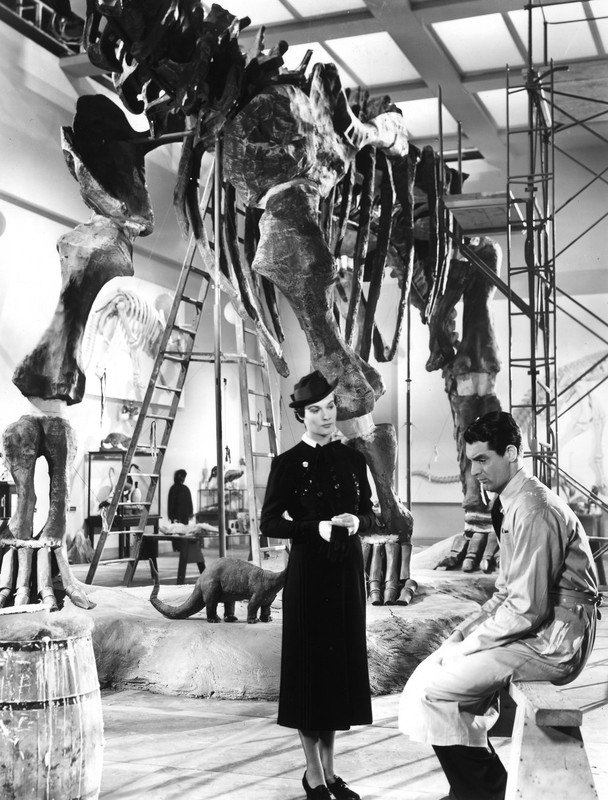
Ronald Neame RIP

Ronald Neame obituary
Producer, director and cinematographer of many well-loved British film classics, including Oliver Twist, Tunes of Glory and The Prime of Miss Jean Brodie

Ronald Bergan
guardian.co.uk
Sunday 20 June 2010 18.38 BST

The producer, director, writer and cinematographer Ronald Neame, who has died aged 99, played an important role in British cinema for more than half a century. The critic Matthew Sweet once called him "a living embodiment of cinema, a sort of one-man world heritage site". Neame was assistant director to Alfred Hitchcock on Blackmail (1929), the first British talkie; he was the cinematographer on In Which We Serve (1942), Noël Coward's moving tribute to the Royal Navy during the second world war; he co-produced and co-wrote David Lean's Brief Encounter (1945) and Great Expectations (1946); and he directed Alec Guinness in two of his best roles, in The Horse's Mouth (1958) and Tunes of Glory (1960). As if this wasn't enough, Neame also conquered Hollywood with one of the first and most successful disaster movies, The Poseidon Adventure (1972).

Neame came from a film-making family. His father, Elwin, was a well-known photographer who directed four films starring Ronald's mother, Ivy Close. She acted in dozens of silent pictures, including Abel Gance's innovative La Roue (The Wheel, 1923), of which Jean Cocteau pronounced: "There is cinema before and after La Roue, as there is painting before and after Picasso." Although none of Ronald Neame's films could claim as much, cinema was part of his DNA. "You could say I was really born in a film studio," he explained. "My mother was making a film up to six weeks before I was born ... She took me on the set when I was just two or three months old, rather proudly."

His father was killed in a motorcycle accident in 1923, and around this time his mother withdrew from acting, so Neame left school aged 15 to find work. His first job was as an office boy with the Anglo-Persian Oil Company. His mother used her influence at Elstree Studios to get him taken on as a messenger boy, and he soon graduated to gofer, clapper boy and assistant director. From 1933, Neame was the cinematographer on dozens of cheap thrillers, musicals and many comedies starring the toothy, ukulele-playing Lancastrian comic George Formby.

He became director of photography on Gabriel Pascal's Major Barbara (1941), Neame's first film of real quality, with a screenplay by George Bernard Shaw, adapted from his own play. The editor was David Lean. Neame and Lean worked together again, as director of photography and editor respectively, on Michael Powell and Emeric Pressburger's One of Our Aircraft is Missing (1942), for which Neame was Oscar-nominated. Lean then made his debut as a director on In Which We Serve, photographed by Neame.

Anthony Havelock-Allan, the associate producer of that film, joined Lean and Neame to form a production company, Cineguild, an independent unit within the Rank Organisation. The company's initial intention was to produce adaptations of Coward plays, directed by Lean and photographed by Neame. The first of these was This Happy Breed (1944), a saga of the lower middle-classes, followed by Blithe Spirit (1945), a well-performed version of the supernatural farce. Both were shot in splendid pastel Technicolor by Neame, who also contributed to the scripts.

Blithe Spirit was Neame's last film as a cinematographer. He co-produced and co-wrote Brief Encounter, one of the most telling juxtapositions of the romantic and the mundane in cinema, and two of the finest Dickens adaptations, Great Expectations and Oliver Twist (1948), with Guinness as Herbert Pocket and Fagin respectively.

Neame directed a taut, low-budget murder mystery, Take My Life, in 1947 for Cineguild. However, the company broke up after Lean decided to direct The Passionate Friends (1948) himself, despite having promised to give Neame his first chance at directing a major film. Neame's second movie, The Golden Salamander (1950), an exotic thriller partially shot in Tunisia, was a tepid affair despite the presence of a 17-year-old Anouk Aimée. Neame then teamed up with Guinness on The Card (1952), a witty adaptation (by Eric Ambler) of Arnold Bennett's rags-to-riches 1911 novel.

The Horse's Mouth (1958) provided Guinness with the plum role of Gulley Jimson, an archetypal portrait of the artist as nonconformist. With rasping voice, tipsy gait and roguish eyes, Guinness gave a larger-than-life performance as Jimson, who exploits everyone for the sake of his paintings (provided by John Bratby), which were rendered appropriately visionary in Technicolor.

Tunes of Glory (1960), the film of which Neame was most proud, caught the intrigues and jealousies in the officer's quarters of a Highland regiment. At its centre is the conflict between the wild, hard-drinking, red-haired major Guinness, a man who has risen from the ranks, and colonel John Mills, ex-Eton and Oxford, a stoical disciplinarian.

Neame was assigned several British films featuring Hollywood stars, presumably to attract American audiences. The Million Pound Note (1954), with Gregory Peck, was among the best, because Neame brought the touch of an Ealing comedy to Mark Twain's story of a man who is given a fortune but finds that he cannot spend it. The Man Who Never Was (1956) proved to be an enjoyable espionage drama. A few of Neame's other films suffered from the dead hand of the Rank Organisation in the 1950s, and American companies in Britain in the 1960s, who insisted on what could be termed Anglo-American puddings. Among these was Escape from Zahrain (1961), set in the Middle East but filmed in the Mojave desert in California, with Yul Brynner as a revolutionary Arab leader; the rather stagy version of Enid Bagnold's play The Chalk Garden (1964), with Deborah Kerr; Mister Moses (1965), in which Robert Mitchum implausibly led the people of an African village, about to be flooded by a new dam, to the promised land; and a crime caper, Gambit (1966), with Michael Caine and Shirley MacLaine. What they proved was that Neame could handle large resources and big stars.

Neame survived the mood swings of Judy Garland during the making of her last film, I Could Go On Singing (1963), which was almost a parody of her own life, but still captured the frenetic feel of her stage performances. Neame recalled that, in one sequence, "Suddenly, Judy had become the real Judy. It was no longer acting, and it was absolutely wonderful. She bared her heart ... Whilst we were shooting, I thought, 'My God, what am I going to do?' Because this was a one-time thing. So I kept the camera running right through the whole six minutes, and everybody on the set was in tears when we said cut. I said, 'That's it. We'll never ever get that again'."

He steered Maggie Smith towards her Oscar for best actress in The Prime of Jean Brodie (1969), an adaptation of Muriel Spark's novel. It was the first film role worthy of Smith's talents. Neame's last film before going to America was Scrooge (1970), a return to Dickens and Guinness (who plays Marley's ghost), but undermined by redundant songs and dances.

Neame was then asked by 20th Century-Fox to save the production of The Poseidon Adventure, which was in trouble after the original director walked out. Much of his direction was submerged by the impressive sets and special effects, but this story, about 10 passengers trying to escape from an ocean liner overturned by a freak wave, made a great deal of money. Neame took 5% of the huge box-office takings, giving him financial security for the rest of his life.

Perhaps that was why he only made five more features over the next 14 years. These included an adaptation of the Frederick Forsyth thriller The Odessa File (1974); Meteor (1979), a sci-fi disaster movie, as much of a flop as Poseidon was a success, from which Neame tried in vain to have his name removed; and two inconsequential vehicles for the grouchy talents of Walter Matthau, Hopscotch (1980) and First Monday in October (1981). He was appointed CBE in 1996 and published his autobiography, Straight from the Horse's Mouth, in 2002.

Neame married Beryl Heanly in 1933; they divorced in 1992. The following year, he married Donna Friedberg. She survives him, along with his and Beryl's son, Christopher, and a grandson, Gareth. Both Christopher and Gareth are television producers.

Ronald Neame, film producer and director, born 23 April 1911; died 16 June 2010

http://www.guardian.co.uk/culture/2010/jun/20/ronald-neame-obituary

La Cage Aux Folles

THE BULLSHITE BOYS ARE BACK!

The hot news in Hollywood is that the Bullshite Boys have announced they're getting together for another movie: a remake of La Cage Aux Folles. This promises to be a riotous affair with our two garrulous guys in great form at a recent press conference.

"We hadn't seen each other in ages, but fell back into our old routines immediately," laughed Henderson.

"I love the sketch we used to do where I have to get Jimmy's round in," Kelly exclaimed.

"So do I," added Henderson.

It's clear that even after such a long lay-off and Kelly's tragic tour of the provinces with Lenny Henry in Lady Windermere's Fan, these guys love still love each other and have that old magic!

Here's to another 50 years, boys!

FRIDAY NIGHT BOY COOL #63


Monday, 21 June 2010

Brian Duffy RIP

Brian Duffy obituary
Photographer whose stylish images helped define the spirit of the swinging 60s

Eamonn McCabe
guardian.co.uk
Sunday 6 June 2010 17.58 BST

The photographer Brian Duffy, who has died of pulmonary fibrosis aged 76, captured the swinging 60s in a series of stylish and iconic images, but then disappeared from the world of glamour for 30 years. With David Bailey and Terence Donovan, he broke the mould of fashion photography. The three men became far more famous than many of the models with whom they worked, and were – for a while – bigger than the glossy magazines that published their pictures. The photographer Norman Parkinson called Duffy, Bailey and Donovan the "black trinity". There was some merit in the label. The cravat-wearing old guard felt threatened by these freewheeling young men in leather jackets, who took their models on to the streets and snapped them with newfangled, small 35mm cameras.Their inventive compositions were looser than the stiff, stuffier studio portraits of the 50s. Duffy later explained: "Before 1960, a fashion photographer was tall, thin and camp. But we three are different: short, fat and heterosexual. We were great mates but also great competitors. We were fairly chippy and if you wanted it you could have it. We would not be told what to do."

Duffy was argumentative and awkward, but never grumpy, as he is often portrayed. Bailey remembers him being "sublime at solving technical problems". He expected high standards from everybody around him, but he liked his models to have a drink, and even to sing when they were being photographed. "He was very scary, but he was the business," recalled Joanna Lumley, who posed for him in the 1960s.

Nobody ever called any of the three photographers by their first names. Unlike Donovan and Bailey, Duffy was not born in the East End. One of five siblings, he grew up in north London with his Irish parents. One of his sisters died of meningitis at the age of three. His family moved to East Ham when he was five.

His education did not run smoothly. However, one of the schools he attended ran a scheme to introduce troublemakers to culture, including trips to art galleries. This led Duffy to apply to St Martins School of Art, in 1950, with the intention of becoming a painter. Once there, he was stunned by how good the other students were and switched to dress design, influenced largely by the number of good-looking women on the course.He went to work as an assistant designer for Susan Small Dresses and for Victor Stiebel, which proved useful when he came to photograph models because he knew how their clothes should hang. After a trip to France in 1954, he was offered a job in Paris with Balenciaga, the fashion house. He did not take it, as his wife, June, whom he married in 1956, was pregnant.

In the mid-50s, he began freelancing as a fashion artist for Harper's Bazaar where he became fascinated by the photographic contact sheets passing through the art department. He failed to get a job with the studio photographer John French (who was later to hire Bailey) but got a start as an assistant at Carlton Studios. As restless as ever, he joined Cosmopolitan Artists and then worked as assistant to the photographer Adrian Flowers. He got his first photographic commission from Ernestine Carter, then the fashion editor of the Sunday Times. In 1957, he was hired by Vogue, where he remained until 1963. There he worked with the top models of the period, such as Jean Shrimpton.
Duffy worked for Glamour and Esquire magazines and newspapers including the Observer, the Times and the Daily Telegraph. His work included social reportage at home and abroad, but he remains best known for his illustrious line of portrait sitters in the 60s, which included everyone from Harold Wilson to Reggie Kray. Among the many musicians and actors who sat for Duffy were Sammy Davis Jr, Michael Caine, Tom Courtenay, Nina Simone, John Lennon, Sidney Poitier, Harold Wilson, Charlton Heston and Brigitte Bardot. The French especially liked his work, and he had two spells with Elle magazine during the decade.
By the late 60s, David Puttnam, soon to turn film producer, was his agent. Duffy himself began to dabble in films, setting up a company with the novelist Len Deighton in 1967 and producing Only When I Larf (1968). After dragging Bailey into a performance of Oh! What a Lovely War at the Theatre Royal, Stratford East, Duffy was smitten with the play and wanted to film it. Bailey reluctantly agreed to put some money into the project, directed by Richard Attenborough, but soon got cold feet. Duffy realised that the film business was not for him – he was better off working on his own.
His work for the Pirelli calender opened his eyes to the earning potential of the commercial world. When invited to photograph the album cover for David Bowie's Aladdin Sane (1973), he and Celia Philo – his partner in the newly established Duffy Design Concepts – used the best printers in England and the best dye transfer workers in Switzerland. It paid off.

Duffy also liked the challenge of advertising work and shot award-winning campaigns for Smirnoff vodka and Benson and Hedges cigarettes in the 70s. One Benson and Hedges advertisement featured a huge cigarette packet and a tiny mouse hole, all done before the days of computerised image manipulation.

In 1979, after being told by an assistant that the studio had run out of toilet paper, Duffy flipped: "Do I have to worry about things like this?" He later admitted to having a breakdown of sorts. He gathered up all his negatives and tried to burn them in the front garden. They were slow-burners and smoke billowed over Swiss Cottage, north-west London. The council was soon in attendance, and many images were saved.

Myth has it that Duffy then ran an antiques store in Islington; in fact he opened a workshop in Camden, where he restored 18th-century furniture to his own high standards. He trained for three years to join the British Antique Furniture Restorers' Association and often lectured on furniture restoration for the association.

Last year, the first exhibition of Duffy's work opened at the Chris Beetles gallery in central London. In an accompanying BBC Four documentary, The Man Who Shot the 60s, Duffy was asked how he would like to be remembered. He answered with a mischievous smile: "He wasn't as steady as a tripod."

He is survived by June, two sons and two daughters, and nine grandchildren.

David Puttnam writes: Brian Duffy was far more than a gifted photographer; he was a uniquely constructive "social anarchist" who, through sheer force of personality, helped push the stultifying conservatism of the 1950s into permanent retreat. They may not know it, but every participant in what today would be referred to as the "creative industries" will be forever in his debt. Being around Duffy could be explosive and even alarming; but it was never, ever, dull.

How can I ever adequately thank the person who, with his wife June, opened the window to a whole set of possibilities that, in north London of the early 60s, seemed entirely unattainable? He questioned the validity of everything and was courageous enough to challenge just about every received convention he ran up against. In some, that can be an insufferable trait, but in Duffy it was nothing short of inspirational; it allowed those he influenced to develop the type of informed self-belief that can move mountains.

Irreverent, loving and irresistible, he was unquestionably the brightest person to illuminate the young life of my family and myself.

Brian Duffy, photographer, born 15 June 1933; died 31 May 2010

http://www.guardian.co.uk/artanddesign/2010/jun/06/brian-duffy-obituary

Frank Sidebottom RIP

Frank Sidebottom creator Chris Sievey dies aged 54
Comedian and musician whose bulbous-headed alter ego had a string of hits in the 1980s and 90s collapsed at home

Maev Kennedy
guardian.co.uk
Monday 21 June 2010 19.51 BST

The creator of the man with the biggest head in showbusiness, Frank Sidebottom, has died.

Sidebottom was the bulbous-headed alter-ego of comedian and musician Chris Sievey, who eclipsed the fame of his creator. Sievey, 54, diedtoday after collapsing at his home in Hale, Greater Manchester, where he was recovering from surgery for a tumour on his chest.

Sidebottom, an aspiring pop star from neighbouring Timperley whose style was cramped by a lack of talent, an old-fashioned suit and the fact he lived at home with his mother, was intended as a one-off promotional gimmick for a band.

The character took on a life of his own and became a major star in the late 1980s and early 1990s through television, radio and live appearances.

Only last week he launched a World Cup anthem, Three Shirts on my Line.

Another invented monster, Caroline Aherne's Mrs Merton, began life as a sidekick to Sidebottom on his radio show, and Chris Evans was at one point billed as driver for his band.

Sievey kept his fans up to date with his cancer progress in cheerful blogs in character: "I've got a few weeks off from live shows now to have a couple of ops and get shut," he explained. His last communication was a tweet on Sunday, in which he admitted: "I'm still feeling very poorly."

Mark Alston, 34, a close friend for many years who helped organise Sievey's appearances as Frank Sidebottom, said: "He was a big comedy name in Greater Manchester, one of the biggest. He was also a musical genius and a good friend to many. He was a legend in the region and will be missed. He was saying that he was going to get shut of the cancer and not to cancel any more bookings."

http://www.guardian.co.uk/stage/2010/jun/21/frank-sidebottom-creator-chris-sievey-dies

Unknown Chaplin work to be screened

Arlington's Slapsticon festival to screen Chaplin rarity: 1914's 'Thief Catcher'
By Jacqueline Trescott
Washington Post Staff Writer
Sunday, June 13, 2010

A rare Charlie Chaplin film, "A Thief Catcher," discovered by chance at a Michigan antiques fair last year, will be shown next month at a local film festival devoted to comedic silent films.

The organizers of Slapsticon in Arlington said Tuesday that they believe no one has seen this film, a 10-minute Keystone Studios silent comedy, since its 1914 release.

"This is the only print that anyone knew of, and no one knew of it, until it was found," said Richard Roberts, the festival programmer. Chaplin plays a policeman but all the elements of his trademark Little Tramp character are evident, said Roberts.

It will be shown July 17 at the Rosslyn Spectrum Theatre.

Late last year, Paul E. Gierucki, a film historian and producer, was digging through a pile of movies at a fair. "He bought several cans of film, several for me, several for himself. It was marked Keystone, but wasn't marked Chaplin." A few weeks went by before Gierucki examined the reel. "He called me and said it looks like Chaplin. Then he scanned the film and sent it to me. It looked like him but I said, I have to see him move. Paul made a down-and-dirty digital transfer. I looked at it two seconds and said, yep, it's Chaplin," said Roberts, recalling the eureka moment.

He said they verified the identification with other film historians and then let the small niche world of silent comedy buffs know about the special find.

Chaplin, the British-born comedian, was a master of physical moves and was one of the most popular stars of the early movie industry. He joined Mack Sennett's comedy stars at Keystone in 1913.

The film was shot Jan. 5 though 26, 1914. Chaplin made a third film with Keystone that was released before "A Thief Catcher," and that timing, Chaplin and tramp imitators, and the use of a similar title of another movie have led to confusion over the years.

"This film fell through the cracks pretty quickly," Roberts said. "In the late 1930s, the British Film Institute was doing a Chaplin filmography, and 'A Thief Catcher' was dropped off. Chaplin never listed it in his own filmography. But when he was doing interviews for 'A Countess From Hong Kong,' he remembered he had played a cop." His work as a Keystone Kop had faded with all the famous work that came later."

In the short, Chaplin appears for about three minutes. "The print is in decent condition," said Roberts. The film features actors Ford Sterling, Mack Swain and Edgar Kennedy.

Slapsticon, now in its seventh year, will be held from July 15 to 18. The festival serves the small niche of fans, historians and film critics who follow the earliest days of moviemaking. In recent years the festival has attracted about 200 people, but organizers hope to convert a few more fans.

The programming will also include more Chaplin and screenings of rediscovered work from Abbott and Costello, Harpo Marx and Roscoe "Fatty" Arbuckle.

"A Thief Catcher" screens at 8 p.m. on July 17 as part of the festival's "Chaplin Rarities" program. Visit http://www.slapsticon.org/

http://www.washingtonpost.com/wp-dyn...061106255.html

Your round or mine?

New Donald Fagen album

Donald Fagen hopes to do it again with new album

By Mark Egan Mark Egan – Fri June 11

NEW YORK (Reuters) – Donald Fagen, one-half the hit-writing duo behind rock perfectionists Steely Dan, says he will release his fourth solo record in 2011 with an album largely recorded on computers away from conventional studios.

Fagen, who with Walter Becker wrote the seminal 1970s hits "Reeling' in the Years" and "Do It Again" told Reuters he is recording in New York at the home of Steely Dan trumpet player Michael Leonhart, who is co-producing the album.

Fagen, 62, was prolific in the 1970s with Steely Dan, which was named after a sex toy featured in William Burroughs' book "Naked Lunch." But solo, his critically-acclaimed output has been roughly one album per decade -- "The Nightfly" in 1982, "Kamakiriad" in 1993 and "Morph The Cat" in 2006.

"Those albums were a trilogy," Fagen said, noting his first solo record was themed around the 1950s, the second about the current day and his third was futuristic.
"This one does not have a theme but they are good stories -- most of my songs have a plot," he said. "The album, or CD, or whatever they call it these days should be out next year."

Fagen said the as-yet untitled album is being recorded on computer using Pro Tools software. Some overdubs have been done at New York's Stratosphere Sound studio. He said the album will be released by Warner Bros Records as the final obligation under his contract with the recording giant.

Asked why he took so long between solo records, Fagen said he hated the 1980s and then was distracted by Steely Dan reunions. "I didn't feel like doing too much in the 1980s because they were so depressing," he said.

And, he said, he suffered from depression.

"I went to a shrink for a while in those days. I went for seven years during the '80s," he said. "I had various neurotic problems since I was a little kid."

"When you're young you have a youthful energy that allows you to ram your way through bad times...but when I got to my mid-30s I ran out of that energy and had to grow up," he said.

"DUKES OF SEPTEMBER" TOUR

Fagen currently is promoting his upcoming tour with Michael McDonald, formerly of the Doobie Brothers and Steely Dan, and Boz Scaggs known for the hits "Lowdown" and "Lido Shuffle," playing together as "The Dukes of September Rhythm Revue."

"The Dukes," backed by a band and horn section, begin a nationwide tour on August 19 in Danbury, Connecticut and stay on the road through October 2, when they play Las Vegas.

Fagen said the show will be evocative of the tours the threesome did with a large cast of collaborators from 1989 to 1993 called the New York Rock and Soul Review, which released the record "Live at the Beacon" in 1991.

The concerts will feature several hits each from Fagen, McDonald and Scaggs and then focus on the type of classic songs that drew the trio to music in the first place -- hits by the likes of Ray Charles, Chuck Berry and Wilson Pickett.
Tour promoters plan to announce the lineup of venues and dates for the concerts on Monday.

Like Fagen, McDonald is also trying out something new -- releasing some unusual songs he has recorded, one at a time on iTunes along with live videos of the songs on YouTube.

"These songs are so odd for me -- a lot of them are songs I wrote on guitar that I don't think record companies would be interested in," McDonald told Reuters. "My experience is record companies want you to be who they perceive you to be."

http://news.yahoo.com/s/nm/20100611/...5hbGRmYWdlbmg-

On the Planet of the Yellow People, immigration officials greet a man from another dimension

Saturday, 19 June 2010

More good news on the architectural front...

Get Carter car park demolition could start soon

Jun 18 2010
by Peter McCusker
Evening Chronicle

AFTER a 10-year wait, the revamp of Gateshead town centre has moved closer. The demolition of the Get Carter car park could begin within weeks.

The news comes after supermarket giant Tesco signed an agreement with Gateshead Council on a £50m-plus town centre redevelopment.

In its place, the regeneration of Gateshead town centre will see the development of a 100,000sqft Tesco supermarket, around 40 small shops, accommodation for over 1,000 students, a new car park, public space, restaurants and cafes.

Tesco is expected to submit a planning application for the development of the 3.5 hectare Trinity Square site in the coming weeks.

This will have to be approved by Gateshead Council.

But work to demolish the prominent Gateshead town centre structure, made famous in the 1971 film Get Carter starring Michael Caine, is expected to begin within three weeks.

Gateshead Council leader Coun Mick Henry said: “This agreement brings with it the confidence of one of the UK’s most significant investors – which will hopefully trigger further development.

“It is hoped that this will turn Trinity Square into a vibrant centre that meets the long-held aspirations of Gateshead people.

“Gateshead town centre has been in need of regeneration for some time and we’ve sought research and recommendations over recent years on how we should go about delivering a town centre that will be a great place for visitors and local people.

“This agreement follows careful but complicated negotiations in which we have both taken into consideration economic change, changes in shopping habits, how and when people travel and what they expect from visiting an urban centre.

“Our ambition is for a development that would offer more facilities than simply replacement retailing and have a major impact on the regeneration of the town centre – we hope to receive a planning application soon.”

Spenhill, the regeneration subsidiary of Tesco, announced it had reached an agreement with the council yesterday.

Doug Wilson, corporate affairs manager for Spenhill, said: “The development agreement signals our confidence in the future prosperity of Gateshead.

“Our proposals will include a range of facilities with new public spaces, shops, student housing, offices, a new town centre car park and a Tesco store. This will transform Trinity Square into somewhere that the people of Gateshead can be proud of and want to visit.”

Yesterday’s announcement follows the launch of the 1PLAN this week – a 20-year masterplan for Newcastle and Gateshead that sets out a vision to improve the area’s competitiveness, where business can grow and flourish and drive forward economic development.

http://www.chroniclelive.co.uk/north-east-news/evening-chronicle-news/2010/06/18/get-carter-car-park-demolition-could-start-soon-72703-26679070/

Don't hold your breath. I'm just saying...

Jeff Bridges and Family Values

Jeff Bridges: My family values
The Hollywood actor talks about his family

Elaine Lipworth
The Guardian
Saturday 19 June 2010

My father encouraged all his kids to go into showbiz. Not for vicarious reasons but because he enjoyed it so much. And like most kids, I didn't want to do what my dad told me. I didn't want to stand out, to be special. As a kid, you don't want people saying, "Oh, you think you're so great because your dad is Lloyd Bridges." You don't want to be a product of nepotism, which I surely am.

My mother and father were both very nurturing people and wonderful examples of how to live your life. I was incredibly lucky to be born in that particular bed. But the hardest thing as an actor is getting your foot in the door, and the reason I got my foot in the door was because of who my dad was – it's as simple as that.

My father taught me the basics of acting, but the main thing I learned from him was non-verbal. He approached the work with such joy and love of it. Whenever he'd come on the set, there was a vibe. The quality of everybody's work would go up a notch. I am glad I took my dad's advice and went into showbiz because I love it now and getting the Oscar this year for Crazy Heart was terrific; to be acknowledged by people who do what I do for a living.

Because of how my dad handled it, I didn't want to do the same with my own kids when they were young. My three daughters aren't at home any more – one daughter is studying to be a designer, another is studying child psychology and the third is involved in music – but we are very close and love being together. Then when they were 20 or 21 and they were wondering what to do, I said: "You could try acting. I'll certainly help you." And they all said: "Nah." I'm sorry in some ways that I didn't encourage them to act earlier. Every once in a while I will ask them to cue me on a script, and I can tell they've got it. Acting is like falling off a log for all of them.

I'm not real good at romance. My brother, Beau, for instance, loves to buy his wife clothes, but it's just not my style. I rub my wife's back at night. She deserves so much more. But I carry around her picture – that's kind of romantic, isn't it?

It was love at first sight for Susan and me. We have been together 36 years. I was making a movie in Montana, and one day I noticed a gorgeous girl who had two black eyes and a broken nose – she'd been in a car crash. Somehow the bruises juxtaposed with that beauty were amazing. I couldn't take my eyes off her. Finally, I get up my courage to ask her out and she says: "No – it's a small town, maybe I'll see you around." Two days later, we met in a bar and fell in love.

Now we cut to 15 years after that, I'm at my desk opening up mail and I get a letter and photo from the makeup guy on that film who had found the photo of me asking a local girl out. So I have a photo of the first words I ever said to my wife. It's unbelievable, and I always carry it around.

If you're married you'll have tough times. It's what you do when you reach those times that makes a strong marriage. You draw a line and then if your partner crosses that line do you say "Well, that's it!" or "Am I going to enlarge my concept of what love is?" If you open your heart, then the object of your love becomes so precious because you are so open. And that philosophy, that caring, spreads.

Crazy Heart is available on DVD on 14 June

http://www.guardian.co.uk/lifeandstyle/2010/jun/19/jeff-bridges-my-family-values

Crazy Caption Competition

THE MANY HATS OF MICHAEL EDWARD LOVE

Friday, 18 June 2010

Escape and Suspense!

Vintage Radio Broadcasts of Dangerous Adventure, Urban Legends, and Tales of Fear and Trembling, featuring episodes of the old CBS radio series 'Escape' and 'Suspense' available for download.

http://www.escape-suspense.com/

Thursday, 17 June 2010

Pilgrim Street to get a much needed facelift

Bulldozers set to start work on Pilgrim Street
Jun 8 2010
by Amy Hunt
Evening Chronicle

DEMOLITION of eyesore buildings on a major Newcastle street is set to start.

Bulldozers should move into Pilgrim Street later this month to begin flattening properties and kick off the redevelopment of the area.

The former Bank of England and Bank House will be the first well-known buildings to be demolished.

The Bank of England site, at the bottom of Pilgrim Street next to the Swan House Roundabout, is earmarked for a new seven-storey office development, though it is unclear how quickly rebuilding work could start.

The former Odeon Cinema and the Dex car park opposite the new city Library are also set to be pulled down in the longer term.

The landmark buildings, which once made Pilgrim Street the “gateway to Newcastle”, are considered by council chiefs to be unsightly and an obstacle to improving the look of the area.

Developer Brookfield has yet to firm up plans for much of the East Pilgrim Street redevelopment area, but new shops, offices, hotels and student flats could be built.

Alan Peach, director of Brookfield, which owns much of the land in the area, said demolition of the first buildings was due to begin at the end of this month or early next. He said: “The first work that those visiting the city centre will see will be at the south end of the site.

“The Bank of England is an excellent headquarters office site and by demolishing it it’s bringing us to the stage of getting it back into use.”

Coun Bill Shepherd, the council’s executive member for regeneration, said: “It sounds to me like everything is going to plan and I’m delighted it is moving forward.”

The plans for East Pilgrim Street have proved controversial, not least because they involve the demolition of the art-deco Odeon, which conservation groups are desperate to protect.

Opened in 1931, the cinema was listed in 1999, on the advice of English Heritage, but was controversially de-listed by the Department for Culture, Media and Sport less than eight months later, following an appeal by the building’s then owners Cinven. A campaign to re-list it failed.
In January Newcastle City Council admitted it could not stop the demolition but would work to see if there were any features inside worth saving.

Mr Peach said Brookfield had met with local interest groups and the city council over the cinema and how the history of the building could best be preserved.

Photo from http://newcastleupontynedailyphoto.com/index.php/2010/04/05/dex-garage/ The art-deco Dex car park on New Bridge Street was also the subject of failed efforts to get it listed last year.

Meanwhile hundreds of workers are in the process of moving out of Carliol House, on the corner of Pilgrim Street and Market Street.

Energy firm npower is moving all 900 staff from the city centre site to new offices at Rainton Bridge business park in Sunderland.

The Grade II-listed building, which was built in the 1920s, is now earmarked for renovation as part of the development of the East Pilgrim Street area.

The aim is to turn it into a four-star hotel, although work is unlikely to start for another nine to 12 months and the property is likely to remain empty until then.
Carliol House began life as the purpose-built headquarters of the Newcastle-upon-Tyne Electric Supply Company, which later became Northern Electric.

The offices were sold to Innology, a subsidiary of npower, in 2000. In 2002 Innology was acquired by RWE and became RWE npower, the UK energy business of the RWE Group.

As previously reported in the Chronicle, council chiefs have also written to the owners of other buildings on Pilgrim Street asking them to make repairs and make them look better while the regeneration is going on.

http://www.chroniclelive.co.uk/north-east-news/evening-chronicle-news/2010/06/08/bulldozers-set-to-start-work-on-pilgrim-street-72703-26610181/2/

If memory serves, the Odeon was listed on the strength of its art-deco interior, which was then stripped by its owners so they - allegedly - could sell the place for redevelopment. Or something like that.

Most of Pilgrim Street, barring the Tyneside Cinema, Alderman Fenwick's House and the nearby block housing the Italian bars and restaurants, has been in a wretched state for years, either because of long-term neglect or because the buildings were awful when they were built, like the Bank of England and Bank House and the dreadful Commercial Union building next to the Odeon. Who'd have thought the Monkey Bar, with its blistered exterior, was a town house dating from the 1740s? Mind you, I suspect some have the regulars have been there almost that long...

FRIDAY NIGHT at the Bodega

In an effort to kick start one of the dullest - though loudest - World Cups ever (unless you're Dutch or German), the next meeting of the FNB will convene at the Bodega for the Engerland game at 7.30 on Friday, as Gerrard and Rooney try to inspire a bunch of has-beens and blowhards to their first win of the competition.

WOMEN IN MUSIC #59