Thursday, 22 October 2009

WOMEN IN MUSIC #26


A wandering minstrel I

Last night's set list at The Habit, York

Give Me Strength
Falling
I Don't Want To Talk About It
Country Girl

Wednesday, 21 October 2009

The Shaving Scene

FRIDAY BOYS SHOW THEIR MEDALS

THE Friday Boys will meet at Tilleys on Friday. Wear your medals with pride. Apart from Da who was a conscientious objector (he can't stand the sight of blood).

Tuesday, 20 October 2009

FRIDAY NIGHT BOY COOL #28


The Central RIP


For the time being, anyway:

Head of Steam buy up Central Hotel in Gateshead
Oct 13 2009 by Dan Warburton, Evening Chronicle

AN ICONIC Tyneside pub dubbed “The Coffin” is being lined-up for a £1.1m revamp.

The Central Hotel on Half Moon Lane, in Gateshead, is known to thousands because of its position close to the Tyne Bridge.

Now it has been snapped-up by local pub group The Head of Steam Ltd, and the Grade II-listed building is set for a mass renovation – with a new top-tier terrace bar replacing a section of the dilapidated roof.

Tony Brookes, managing director of The Head Of Steam Ltd, said the venture would help regenerate the area.

He said: “It’s a brilliant building, but it’s become really run down. We want to turn it in to the most beautiful Victorian pub in the area. The whole area has undergone renovation and this can only help that.” The Central sits on its own island site, with five front elevations in total. It was built in 1856 and the roof is now leaking, the windows are falling out and the stonework is crumbling away in lots of places.

A bid to brighten up the building in the 70s with a paint job led to even more decay. Head of Steam – which already runs the Head of Steam, Cluny and Tilleys bars in Newcastle, plus pubs in Durham, Huddersfield and Liverpool – is to due to plough £700,000 into the venture, with a further £400,000 grant coming from the Townscape Heritage Initiative, which is funded by the Heritage Lottery Fund.

Jean Sauvary, Townscape Heritage Initiative’s project manager of Gateshead Council, said: “From the outside this looked like an easy thing to do, but it’s so difficult for so many reasons. It’s an incredible building and we need something like this in Gateshead.”

As part of the scheme the first-floor rooms will be returned to their original grandness and scale as function rooms. Work on the outside is due to start next week.

This work will not be completed until the end of February 2010 at the earliest, but in the meantime the pub has been closed for changes to the bars and products sold. It will re-open in about a month and trade while works goes on.

From http://www.chroniclelive.co.uk/north-east-news/todays-evening-chronicle/2009/10/13/head-of-steam-buy-up-central-hotel-in-gateahead-72703-24917561/

See also: http://www.gateshead.gov.uk/Council%20and%20Democracy/news/News%20Articles/MajorGrantforIconicGatesheadPub.aspx

I like this: "Councillor Mick Henry, Leader of Gateshead Council and Chair of the Town Centre Partnership, says: “This is a really exciting development.

“The Central is one of the largest and most striking buildings in Gateshead’s historic core, yet its condition has been a cause of serious concern. Now at last we have the chance of helping this unique building to become one of the highlights of Gateshead’s revitalised Town Centre, aided by a successful local company with a track record of innovative and sensitive restoration.

“This is great news for Gateshead. We have great aspirations for this area of our Town Centre – working with The Head of Steam to restore this landmark building and help make the Central Bar a popular destination once more will give a significant boost to our ambitions.”"

You have took at the tip that is the centre of Gateshead and wonder what the hell the council have been doing over the last God-knows-how-many-years. And when's that bloody car park finally coming down?

Vic Mizzy RIP

Film and TV composer who wrote, amongst other numbers, 'The Addams Family' theme song.
See:
http://www.latimes.com/news/obituaries/la-me-vic-mizzy20-2009oct20,0,1713293.story

Sunday, 18 October 2009

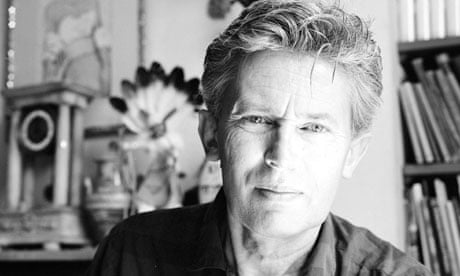
Hugo Williams


Interviewed by Phil Brown in Horizon Review:

http://www.saltpublishing.com/horizon/issues/03/text/brown_phil.htm

Hugo Williams


Interviewed by Phil Brown in Horizon Review:

http://www.saltpublishing.com/horizon/issues/03/text/brown_phil.htm

George Tuska RIP


George Tuska, whose career in comics dates back to 1939 and his work in Will Eisner's studio, died around midnight on October 16 at the age of 93. The son of Russian immigrants, Tuska was born in Hartford, Connecticut on April 26, 1916 and grew up to attend the National Academy of Design. Even before graduation, he was assisting on the Scorchy Smith newspaper strip and making his way into the then-new form known as the comic book. In addition to the Eisner-Iger shop, he worked for a half-dozen other publishers and studios, including Fiction House, Fawcett, Harvey and Standard.
Drafted into the army, he served during World War II working as a technical illustrator at Fort Jackson, South Carolina. By the time he got back to New York and civilian life, the trend in comics was swinging from super-heroes to crime comics. He went to work drawing gangster stories for Lev Gleason and quickly became the star artist for that publisher's best-selling books, including the ironically-titled (because of how well it sold) Crime Does Not Pay. Not only did he draw most lead features and the occasional cover but other artists imitated his style. One, an illustrator named Pete Morisi, went so far as to call Tuska and ask for permission to draw like him. Tuska was flattered and told him to go right ahead.

Though Lev Gleason kept him busy, Tuska chose to freelance occasionally for other publishers, especially for Stan Lee at Timely Comics. When the comic book industry imploded in the mid-fifties, he segued to newspaper strip work, taking over Scorchy Smith for a time, followed by a long run drawing Buck Rogers. In the sixties, he was tapped to draw for Tower Comics on T.H.U.N.D.E.R. Agents and returned to work for Stan Lee at the newly-successful Marvel line. Lee found him to be a valuable utility man and he worked on many titles including The Avengers, X-Men, Captain America and Daredevil. He was the first artist on Luke Cage, Hero for Hire and became the primary artist on Iron Man for some ten years. From time to time, he picked up assignments for DC, where he was usually assigned to "team" comics including Challengers of the Unknown, Teen Titans, Justice League of America and the Legion of Super-Heroes.

At times, Tuska was regarded as a solid "work horse" artist — dependable but not spectacular. One month, DC assigned a Legion story to a young artist who was considered "hot" in the business but who was not particularly reliable. The young artist missed his deadline and at the last minute, the DC editors turned to Tuska to quickly draw the same script. To the relief of the staff, Tuska delivered efficiently...and the same day his pages arrived in the office, the young artist suddenly delivered his — so DC had two versions of the exact same story. The editors studied both, decided that Tuska's was more skillfully drawn...and published the Tuska version. In the late seventies, they also employed him to draw a newspaper strip featuring Superman and other star characters called The World's Greatest Superheroes.

Tuska was much admired by his fellow professionals for his drawing skills. A few openly admitted to envy at something else. Apparently, as Al Williamson once put it, "George couldn't walk into the office without all the secretaries wanting to sleep with him." But Tuska remained faithfully wed to his charming wife Dorothy for 61 years. He is survived not only by her but by three children and an unknown number of grandchildren and great-grandchilden.


From Mark Evanier's blog at http://www.newsfromme.com/index.html
See also:
http://www.comicsreporter.com/index.php/george_tuska_1916_2009/
http://www.twomorrows.com/alterego/articles/09tuska.html
http://robot6.comicbookresources.com/2009/10/r-i-p-george-tuska-1916-2009/

Happy Fortieth, Monty Python


New York Times article:
http://www.nytimes.com/2009/10/04/arts/television/04mcgr.html?_r=1

Saturday, 17 October 2009

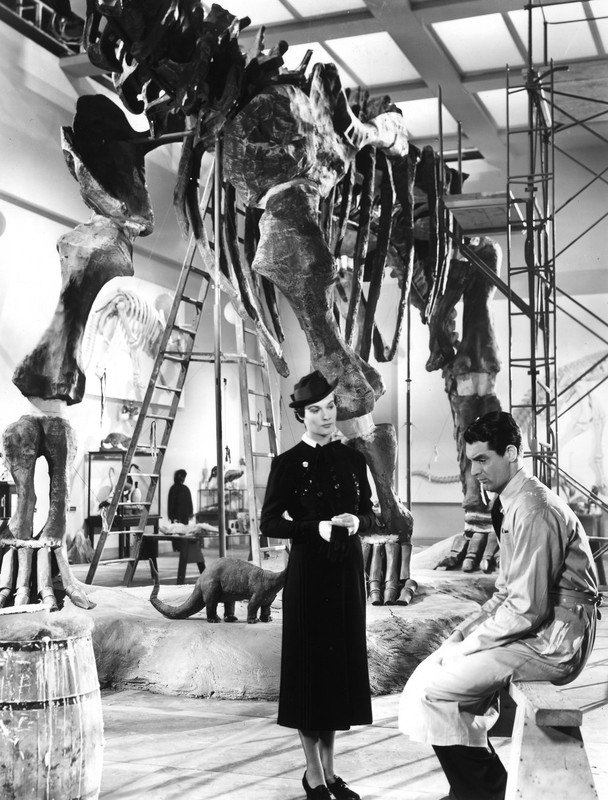
Early footage of Kelly and Henderson discovered!


Long thought to show vaudeville stars Wheeler and Wolsey, this politically incorrect clip has now been revealed as early footage of those Bullshite Boys, Kelly and Henderson. Thanks to a liberal dose of fine ale, the FNB archivist was able to discern the features of our boys in the grainy black and white film, which dates from 1933. The song is by Bert Kalmar and Harry Ruby, who wrote Hooray for Captain Spalding for Groucho Marx in Animal Crackers. It's believed that the blonde is Danny LaRue in his earliest role.

Fans of the duo should note that the distinctive glasses and suit were last worn by Paul when the duo staged an drink-inspired impromptu show at Hexham Golf Club as recently as August of this year.

Friday, 16 October 2009

Thursday, 15 October 2009

Nobby Solano retires from international football

Nobby scores against Liverpool. Those were the days...

"Nobby Solano meanwhile took to the field for the last time as a Peru player, as they beat Bolivia 1-0 in Lima. The veteran skipper received a massive ovation from the home crowd when substituted in the 69th minute.

In over 15 years representing his country, Nobby earned 95 caps in all competitions and scored 20 goals."
From http://nufc.com/

Sadly we haven't had anyone who can pass the ball with any degree of accuracy or consistency, from either defence or midfield, since he left St James' Park...

Wednesday, 14 October 2009

FRIDAY NIGHT

The Bridge?!

WOMEN IN MUSIC #25


Tadcaster Broon

I'm not a fan of Newcastle Brown, but a lot of tears are being shed over the move of the Scottish and Newcastle brewery to Tadcaster. It does raise the issue of trades' description act, but I'm not sure how much of their stuff is still brewed in Scotland, so losing the Newcastle bit probably isn't a stretch. On top of that, a lot of our 'imported' beer is brewed under licence by British brewers (including S&N) anyhow. Let's face it, they messed around with Theakston's when they brewed it - to the extent that you'd have to be in a pub that really knew how to keep ales to get anything from it. They also messed with John Smith's, which hasn't always been the ubiquitous insipid nitrokeg non-handpulled bilge that it is now. No doubt the Chronic will soon be full of tales about the gnashing of the teeth of the 'Geordie Nation' - most of whom probably drink John bloody Smith's anyhow - and MPs and councillors jumping on the bandwagon, even though the move has been on the cards for a long time and Brown hasn't been made in Newcastle itself for a few years.

Maybe we should send Brown-fan Clint Eastwood around. Or maybe we should patronise genuine 'local' breweries that produce better beers like Mordue, Jarrow, Wylam or Hexhamshire etc etc.

As if we haven't got enough to worry about with the football!

See http://www.chroniclelive.co.uk/north-east-news/todays-evening-chronicle/2009/10/13/s-n-to-close-newcastle-brown-ale-brewery-72703-24916782/

Tuesday, 13 October 2009

FRIDAY NIGHT BOY COOL #27


Irving Penn in The New Yorker


In the postwar years, America was unduly blessed by its art dealers, who offered an open door to the avant-garde, and by its fashion magazines, in which a handful of photographers managed to turn fashion pictures into another kind of high art. Chief among them was Irving Penn, who died last week, at the age of ninety-two. There are many instinctive romantics among popular artists, the Gershwins and the Chaplins who, through force of spirit and originality of style, take by storm the balcony and the boxes alike. Penn was something rarer, an instinctive popular classicist, with a magical gift for visual rhythm, for making something insignificant—a pattern of cigarettes and ashes, each ash miraculously in its one best place—look as formally inevitable as an eighteenthcentury still-life. If Richard Avedon, his great rival and competitor, was a snapshot Delacroix, all fire and figures, Penn was Ingres with a Leica, all ravishing edges and perfect composition and a quality of deep color that was the envy of every other photographer.

Yet there was a vein of humane insight in his work, too. He loved showing people caught in corners, and though this was partly a formal device for breaking the fatuous foregroundversus-background opposition of the usual magazine photograph, it also conveyed a quiet edge of claustrophobia, as if his people had been backed into traps of their own devising.

Penn’s subject—as in “Woman with Long Black Neck (Jean Patchett),” New York, 1951—is not performance but inner poise, and the dignity of appearances became his central theme. His work is a memorial of a specially privileged era, where the duties of a fashion photographer and the ambitions of an artist could coexist in one serenely realized surface, an age that in retrospect seems to have been one of fine silver, coolly applied. ♦

http://www.newyorker.com/reporting/2009/10/19/091019fa_fact_gopnik


Thanks to TK

Sunday, 11 October 2009

Autumnal Beauty: Joan Baez at The Sage by Terry Kelly

Joan Baez

The Sage Gateshead


MORE than 40 years ago, Bob Dylan and Joan Baez were crowned the King and Queen of folk music. While Baez's romantic relationship with Dylan eventually petered out, she still includes songs by her former beau in her set.

So a capacity and reverent crowd at The Sage were treated to such Dylan classics as
Farewell Angelina, With God on Our Side and Love Is Just a Four Letter Word. But her best Dylan cover version of the evening was Forever Young, which Baez sang when her elderly parents remarried after 30 years.

At 68, Baez is still performing at the top of her game, backed by a superlative band, including her son, Gabriel Harris, on percussion. Her famous soaring soprano voice - which was not to everyone's taste in the 1960s - has mellowed and deepened into a thing of great autumnal beauty, as demonstrated on moving versions of the 16th century Child ballad, Mary Hamilton, the opening number, The Lily of the West, and her Dylan-inspired best original song, Diamonds and Rust.

But possibly the highlight of the night was Just the Way You Are, by band member, Dirk Powell, with Baez wringing every ounce of emotion from the moving song.

The encores ended with Baez and her musicians harmonising on an a cappella version of the bluegrass standard, Angel Band, the adoring audience rising to applaud a woman who remains a true Queen of folk music.

Terry Kelly

Mr Muckle

Lions In My Own Garden (Exit Someone)

One Christmas, Paddy McAloon sent handwritten lyrics and guitar tabs for this song to Lloyd Cole...


Courtesy of http://tincanpot.blogspot.com/

The depleted Friday Boys have done got the Christmas blues

Saturday, 10 October 2009

Friday, 9 October 2009

Irving Penn RIP


Fashion, celebrity photographer Irving Penn dies
By VERENA DOBNIK, Associated Press Writer
Wed Oct 7, 7:01 pm ET

NEW YORK – Irving Penn, whose photographs revealed a taste for stark simplicity whether he was shooting celebrity portraits, fashion, still life or remote places of the world, died Wednesday at his Manhattan home. He was 92.

The death was announced by his photo assistant, Roger Krueger.

"He never stopped working," said Peter MacGill, a longtime friend whose Pace-MacGill Galleries in Manhattan represented Penn's work. "He would go back to similar subjects and never see them the same way twice."

Penn, who constantly explored the photographic medium and its boundaries, typically preferred to isolate his subjects — from fashion models to Aborigine tribesmen — from their natural settings to photograph them in a studio against a stark background. He believed the studio could most closely capture their true natures.

Between 1964 and 1971, he completed seven such projects, his subjects ranging from New Guinea mud men to San Francisco hippies.

Penn also had a fascination with still life and produced a dramatic range of images that challenged the traditional idea of beauty, giving dignity to such subjects as cigarette butts, decaying fruit and discarded clothing. A 1977 show at the Metropolitan Museum of Art presented prints of trash rescued from Manhattan streets and photographed, lovingly, against plain backgrounds.

"Photographing a cake can be art," he said at the 1953 opening of his studio, where he continued to produce commercial and gallery work into the 21st century.

Penn's most recent work was a series of still-life photos made of ceramics that he and his wife had collected in Europe. "They were as dynamic and as powerful as anything he had done in his 70-year career," MacGill said.

Thirteen of Penn's photographs are being auctioned Thursday at Christie's, including "Guedras in the Wind," a 1971 image of two Moroccan women, with an estimated pre-sale price of $40,000 to $60,000. A Penn photo, "Cuzco Children," sold for $529,000 last year, including an auction house premium of 20 percent.

Penn's career began in the 1940s as a fashion photographer for Vogue, and he continued to contribute to the magazine for decades thereafter.

He stumbled into the job almost by accident, when he abandoned his early ambition to become a painter and took a position as a designer in the magazine's art department in 1943. Staff photographers balked at his unorthodox layout ideas, and a supervisor asked him to photograph a cover design.

The resulting image, on the Oct. 1, 1943, cover of Vogue, was a striking still-life showing a brown leather bag, a beige scarf, gloves, oranges and lemons arranged in the shape of a pyramid.

In subsequent photographs for the magazine, Penn further developed his austere style that placed models and fashion accessories against clean backdrops. It was a radical departure at a time when most fashion photographers posed their subjects with props and in busy settings that tended to draw attention from the clothes themselves.

The approach made him a star at the magazine, where his work eventually appeared on as many as 300 pages annually. Penn believed his success depended on keeping the reader — rather than the model — in mind.

"Many photographers feel their client is the subject," he explained in a 1991 interview in The New York Times. "My client is a woman in Kansas who reads Vogue. I'm trying to intrigue, stimulate, feed her. ... The severe portrait that is not the greatest joy in the world to the subject may be enormously interesting to the reader."

He left the magazine in 1944 to join the military — serving with the American Field Service in Italy and then as a photographer in India — but returned to Vogue in 1946, taking travel assignments in addition to his fashion work.

Penn relished the chance to work in foreign locales, recalling in his 1974 book, "Worlds in a Small Room," that he had often daydreamed "of being mysteriously deposited (with my ideal north-light studio) among the Aborigines in remote parts of the earth."

In the 1950s, Penn moved into portraiture. He photographed not only the famous — actors, musicians and politicians — but also ordinary people. He published a series of pictures in 1950-1951 featuring plumbers, salesmen and cleaning women in New York City, Paris and London. The Getty Center in Los Angeles currently is exhibiting some of the photos.

His celebrity portraits included closely cropped images of Miles Davis, Spencer Tracy, Georgia O'Keeffe and Pablo Picasso, the last peering apprehensively from beneath a wide-brimmed hat. He once said that his formula for capturing meaningful portraits was to photograph his subjects relentlessly, often over a period of several hours, until they were forced to let down their guard.

A 2000 exhibit organized by the Art Institute of Chicago on his portraiture work said, "Penn's manipulation of formal design elements such as light and shadow, and his ability to capture a significant gesture, expression, or mood, ultimately reveal something intriguing about his subjects."

An exhibit of 14 large prints of cigarette and cigar butts at the Museum of Modern Art in 1975 was more controversial. It was lauded by some critics as a powerful elevation of the banal to the monumental, but criticized by others as self-indulgent.

"A beautiful print is a thing in itself, not just a halfway house on the way to the page," he once said.

Accordingly, he spent countless hours in his studio creating prints with costly platinum salts — a process that had been mostly abandoned at the turn of the 20th century, but favored by Penn because of its glowing results. (Most photographic prints use a solution of silver on the paper rather than platinum.) He would paint the platinum solution on the paper himself to create the effects he sought.

"Over the years I must have spent thousands of hours silently brushing on the liquid coatings, preparing each sheet in anticipation of reaching the perfect print," Penn wrote in his 1991 book "Passage: A Work Record."

Penn donated photographs to the National Portrait Gallery and the National Museum of American Art in Washington, and his archives are at the Art Institute of Chicago.
Born in Plainfield, N.J., in 1917, Penn studied at the Philadelphia Museum School of Industrial Art from 1934 to 1938, and worked as an assistant at Harper's Bazaar in 1939.

Penn married fashion model Lisa Fonssagrives in 1950, and for decades afterward she remained one of his favorite subjects. She died in 1992. One of his 1950 photos of her sold at auction in 2004 for more than $57,000.

Penn was the older brother of filmmaker Arthur Penn, who directed "The Miracle Worker," "Bonnie and Clyde" and "Night Moves."

He had a son, Tom, with Fonssagrives. His wife also had a daughter, Mia, from a previous marriage.

http://news.yahoo.com/s/ap/20091007/ap_on_en_ot/us_obit_irving_penn/print


See also:
http://www.telegraph.co.uk/news/obituaries/culture-obituaries/6272245/Irving-Penn.html
http://arttattler.com/archivepenn.html